Toffee apples

Tags

, , , , , , , , , ,

This is what I will miss: bonfire night and toffee apples. Bonfire night, toffee apples and funfares, to be precise. Specifically, the moment when the glassy seal of toffee is broken, and soft splinters fall onto the tongue, followed by the sharp, merciless crunch of sweet apple – what a heady combination that is. It shouldn’t work, but it does.

We would eat them with the searing heat of the bonfire reddening our hands and face, while leaving the rest of us frozen. There were fireworks too, and sparklers, but I’m probably getting all my Pagan festivals mixed up. We didn’t really have Halloween back then, it being essentially an American import that took off in the 80s. What we had instead was the Tar Barrel tradition. This was peculiar to our town Ottery St. Mary, in Devon, where we lived. Men would run down the main street on November 5th – bonfire night, to celebrate the burning of Guy Faulks – carrying a barrel of tar on their backs that had been set alight. I remember the flames pouring out from behind them as they ran, their hugely mittened hands blackened and charred, and the screams as they collided with onlookers. One man ran into the wall next to us and the barrel exploded with sparks and detritus. There was a maniacal glee about the proceedings, an undercurrent of bravado and violence.

I won’t miss that especially, but there are other things impossible to carry with me on the plane – the chill in the air, and coming in from the cold, the train, being a passenger again, crisp leaves, conkers on the ground, always a glossy chestnut-brown, round and firm like a horse’s rump. Shelves and shelves of chocolate. My first wet walnuts. Salt and vinegar crisps. Views of hugeness from small bays and ports. I will miss my DNA.

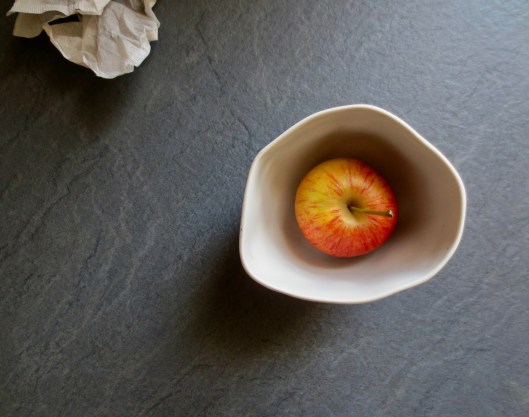
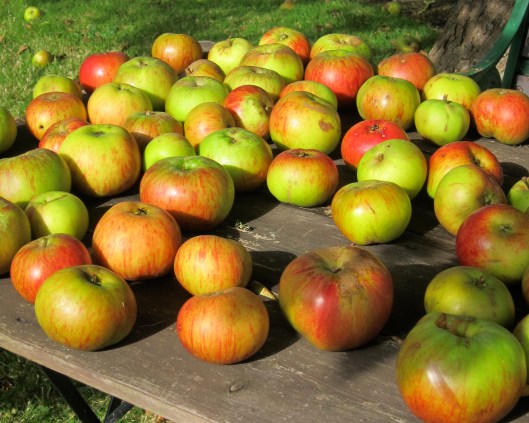
And apples. I can’t get enough of them, though so far I have been largely enamoured with the tart and sour varieties – ‘cookers,’ such as the Bramley. The sweeter, gentler, dessert apples work better here, like Early Windsor, Falstaff and Discovery.  So, apples, I will miss you. Wet and windswept, rough-cheeked, and a bit the worse for wear, peppered with holes where small things have burrowed. Hope to see you next year.

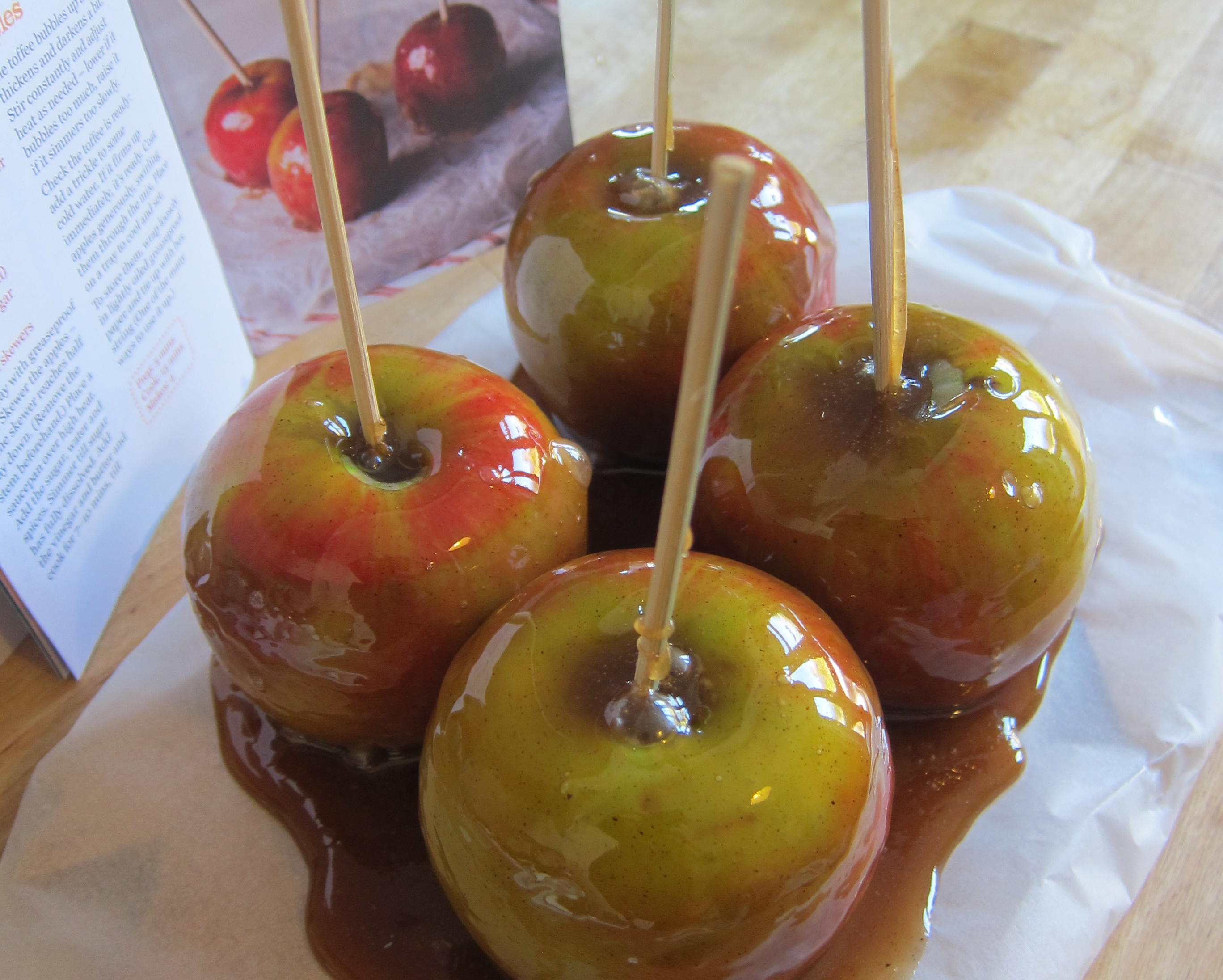
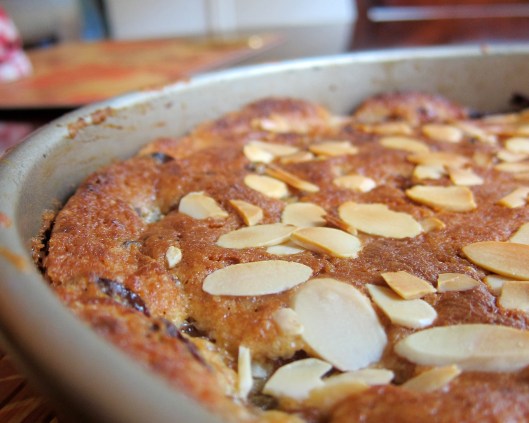
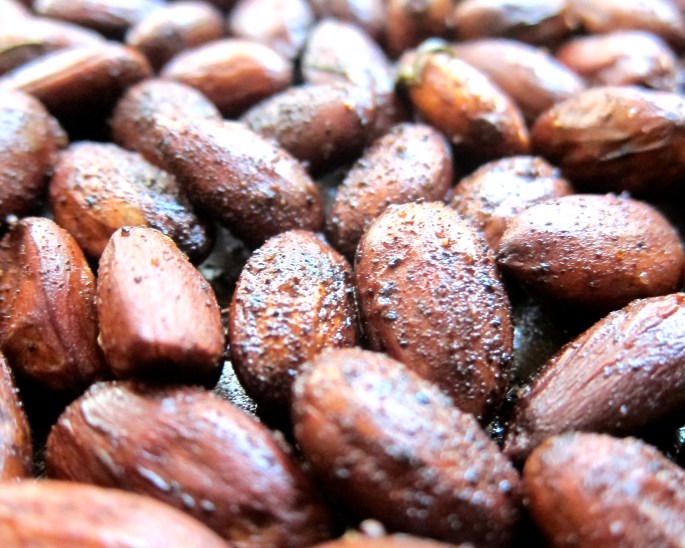
Be prepared for a puddle or two when making the toffee apples (see top picture). The homemade version lacks the thick umber coating and square ‘seat’ at the base that you get with the commercial ones. You will also need to prise the toffee from any surface it has been in contact with – the upside is that it’s a bit like sucking a Werther’s Original from the odds and ends bin. The photo of the shelled wet walnuts, above, is not quite as random as it seems. I think they go well with a smattering of toffee apple.

Toffee apples

Adapted from Abel & Cole, http://www.abelandcole.co.uk

4 dessert apples

225g demerara sugar (or any soft, brown sugar)

110ml water

2cm slice of peeled ginger (optional)

1 cinnamon stick (optional)

3 cloves (optional)

1 tsp cider vinegar

25g butter

4 wooden skewers

Line a tray with greaseproof paper. Skewer the apples until it reaches half way down (remove the stem beforehand). Place a pan over a high heat. Add the sugar, water and spices. Simmer until the sugar has fully dissolved. Add the vinegar and butter and cook for 7-10 minutes. The toffee will start to bubble and thicken and darken a bit, which is what you want. Stir constantly. Check the toffee is ready by adding a trickle of it to water. If it firms up immediately, it’s done. Coat apples generously, swirling them through the mixture. Place them on the lined tray. The toffee will go everywhere. Leave them to set. To store, wrap loosely in lightly oiled greaseproof paper and tie with string.
Hedgerow crumble

Tags

, , , , , , , ,

I’m in England and it’s autumn, my favourite time of year. September in particular is lovely in Sussex; soft air and bursts of sunshine (everyone is wearing sunglasses in brief interludes) in between the torrential downpours and foggy breath. Cobwebs stretch for miles it seems – it’s like being surrounded by endless pairs of gossamer tights.

On my walks so far I have seen crab apples, rose hips, elderberries, haws from the hawthorn bush, the first blackberries and what looked like small, blushing quinces. The last time I was here there was a fox lying in the brambles nearby. It was a beautiful orangey-red with streaks of black. Apparently it had signed up with the local vet and was receiving regular meals from neighbours. Every time I passed by that spot, it was there.

This time it was gone. But there are cats everywhere, large and languid, stalking their way through the golf course. The sea is one big, frothy grey drink. People stare at it through their windscreens and eat sandwiches. It reminds me of Victoria Wood’s story about the English couple who visited the Taj Mahal and said, “It’s nice, but I think it would look better with a tax disc and some windscreen wipers.” I am craving a Yorkie bar. I am also thinking about pork pies.

Whenever I come back from LA, I am amazed by how easy it is to walk to the shops and buy things. How small and green it is here, how different. The space we occupy involves other people who you must always take into account. When you walk, you may be barring someone else. This happened as I was looking for the right luggage carousel at Heathrow and I heard my first muttered “tsk”. Not yet through Nothing to Declare and I had already got in the way. I think he also rolled his eyes as he overtook me and then stood waiting for his suitcase, which failed to arrive. I left first.

Next to all these small places and quiet maneuverings, LA feels like a giant’s enclosure. Everyone seems very big over there now – too tall for proper eye contact. Maybe it’s the cars and the wide, scary freeways. I feel like a Lilliputian among my own people again.

IMG_0458

Apples have been a worry in England. Too much rain has soaked the orchards and they have been slow to appear. But our local greengrocer has some fine-looking varieties. The tart and chunky Bramley, the ruddy Cox, and Russets, grey-green and alabaster smooth. For all the concern about the tardiness of this year’s crop, in almost every garden I passed I saw a tree laden with apples. Nice for me at least.

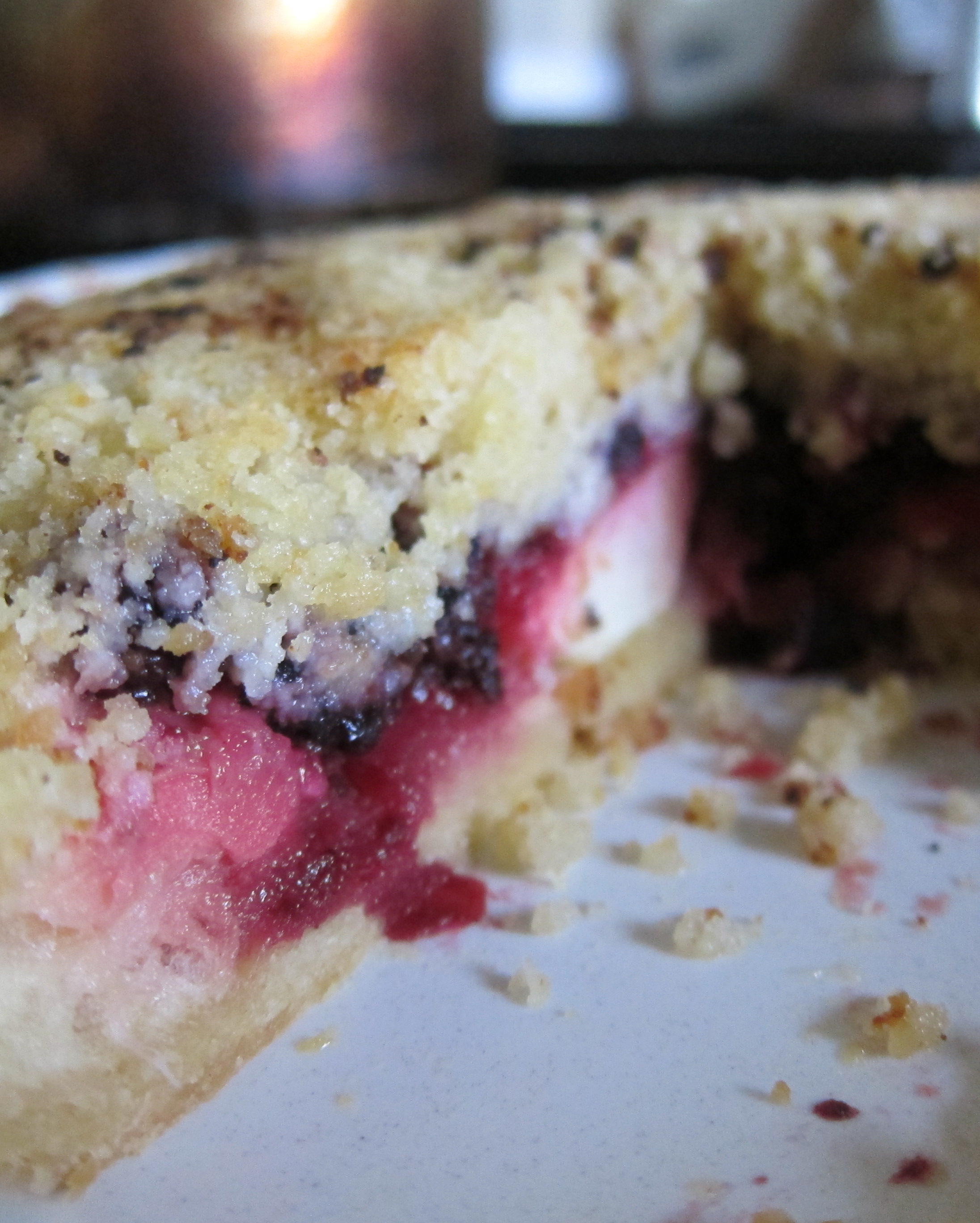
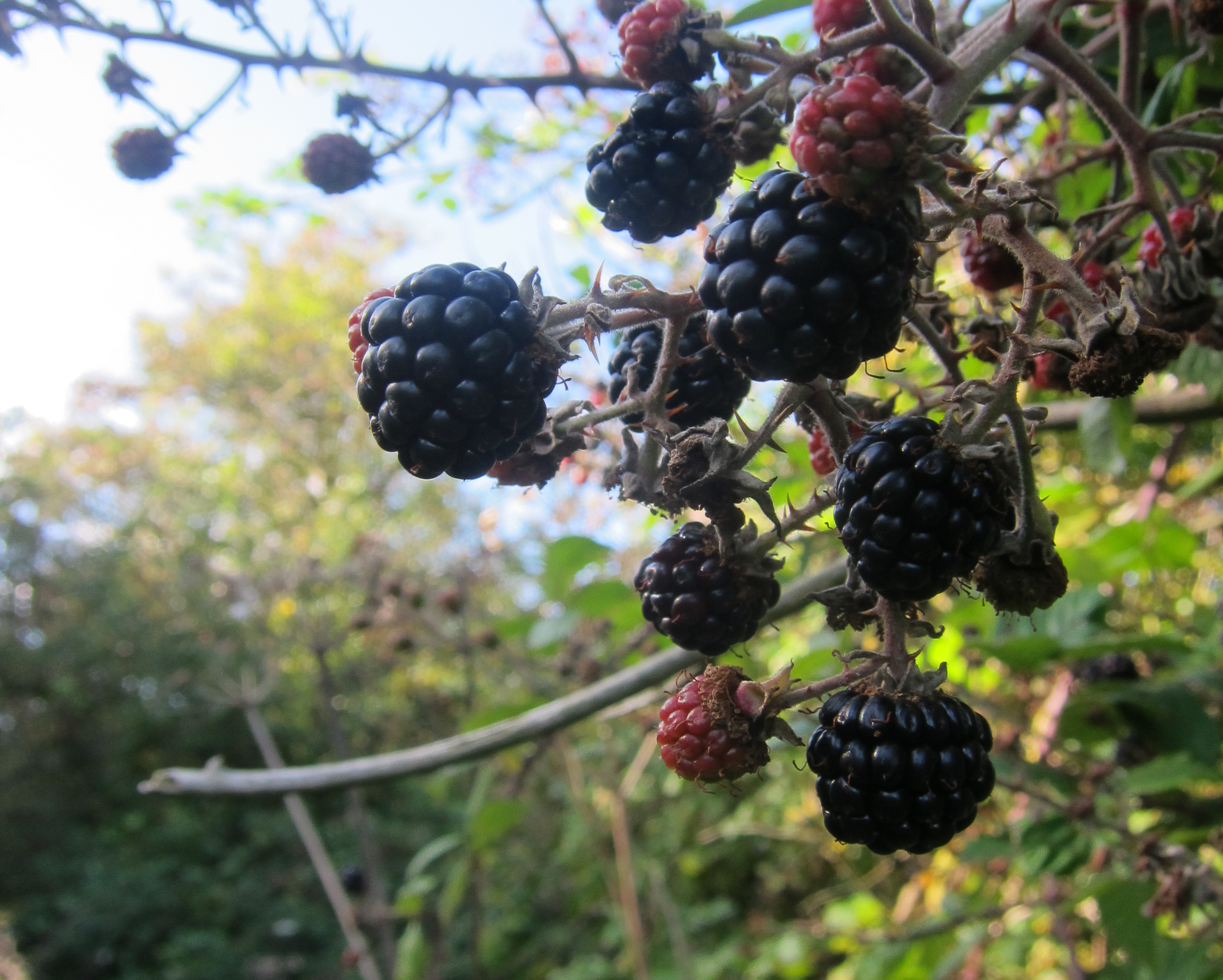
Crumble is such an English staple that I thought it was the obvious choice: it’s warming, beautifully simple and not too sweet. I have used blackberries my mum and I picked while out on a walk and a mixture of apples I ‘scrumped’ (stole). Quinces, if you had them, would need to be pre-cooked. Damsons are the ultimate in hedgerow treasure. They are a relation to the garden plum, wild, dark and dusky and brilliant in crumbles and cobblers. They also make a phenomenal jam. Spit the stones out.

Hedgerow crumble: blackberry and apple

Inspired by Hugh Fearnley-Whittingstall, All Change, The Guardian

Serves 8-10

6-8 tart apples (around 750g)

35g butter

2 tbs soft brown sugar

225g blackberries

For the sweet shortcrust pastry (this is optional, but dresses it up a bit)

200g icing/powdered sugar

Pinch of salt

125g cold, unsalted butter, cubed

1 large egg yolk

50-75ml cold wtaer (or milk)

For the crumble (not optional)

100g plain flour

75g unsalted butter

50g light brown sugar

50g ground hazelnuts or almonds

To make the pastry, put the flour, sugar and salt in a food processor and blitz to combine. Add the butter and blitz again (or rub in with your fingertips) until the mixture resembles breadcrumbs. Add the egg yolk and enough milk or water to bring the mixture into clumps. Knead this into a ball and wrap in clingfilm/plastic wrap and chill for 30 minutes.

Heat the oven to 190C/375F. Roll out the pastry quite thinly, to fit a 24cm tart tin. Prick all over with a fork and chill for 10 minutes, then line the pastry with greaseproof paper or foil and baking beans, or rice, and bake blind for ten minutes. Remove the beans/rice and paper, and cook for about 10 more minutes, until lightly browned. Trim the edges if need be.

Quarter and core the apples, then slice thickly. Heat the butter in a large pan until foaming, then add the apples. Fry gently for five minutes, tossing them about until they start to soften. Sprinkle over the sugar and stir so it dissolves into the apples and the juices. Spread this mixture over the baked pastry case, and scatter over the blackberries.

For the crumble, sift the flour into a bowl and rub in the butter until the mixture resembles breadcrumbs. Add the sugar and ground nuts, squeeze into lumps and then scatter over the tart to give it a rough topping. You can improvise here and add spices such as cinnamon or grated nutmeg and even finely chopped rosemary to the crumble topping. Bake the lot for 30 minutes until golden brown and bubbling. Serve warm with cream or ice cream.

Roasted squash

Tags

, , , , , ,


IMG_9954

I could live on this. I’m already perilously close to overkill. I have it for breakfast with an omelette, on its own at lunch. It slumps in a devil-may-care way next to all sorts of meat and fish. It’s so over me. I’m praying it goes out of season soon, or suddenly becomes unavailable, so I can kick the habit. The fact that butternut squash is good for you is all the more confusing. Sweet, plump, comforting and the kind of neon orange I haven’t seen since my 1976 flares took my parents’ breath away, it heralds the start of the cooler months, climaxing on Thanksgiving in November.

I don’t think I was properly aware of squash before I came to America, in the sense of the entire ‘family’ of vegetables. In England, we have courgettes and marrows, and of course pumpkins. But here in California there is summer squash and winter squash, and so many sub-genres in between I could really do with a manual. In a nutshell, summer squash has a thinner skin, is tender and glossy (think courgettes) and winter squash, the butternut for example, is firm with a thick, tough rind.

The thing butternut squash most loves is ham. Boiled, then roasted, basted and then glazed with a treacly syrup. Both are sweet and soft, rich and caramelized, chunky and substantial. Interestingly, squash is not particularly starchy, so though it eats like a sweet potato, it has none of the fibrous load.

On our first Thanksgiving* as a couple in LA, three years ago, we had somehow missed all the invitations to join in with other families celebrating, and found ourselves a deux. We bought a ham from Trader Joe’s and some squash, and proceeded to have ourselves a party. Not having this tradition in England, it was hard to tap into the spirit. My only previous Thanksgiving reference had been the movie Planes, Trains and Automobiles, where Steve Martin’s character struggles to get home in time, with podgy irritant John Candy tagging along. My favourite line is when the two of them are sharing a bed, and Steve Martin says: “Those aren’t pillows”. It is a funny film, tinged with sadness, and I loved John Candy’s shower curtain ring salesman. I can never remember if they do make it back in time, but I was left with a memory of those awful, corporate hotel rooms, piles of snow, and men screaming in car parks.

That ham gave me terrible wind. Afterwards, we went for a walk in Runyon Canyon and watched people working out. There were families – shoals of them – walking off their feast, laughing and shouting to one another. We sat on a bench and looked out at the sea of buildings below and beyond, everything indistinguishable. I think we realized then that it was tantamount to missing Christmas. The timing was off, but the squash was good. I am still giving thanks for it.

Roasted Squash

Adapted from Jamie Oliver, Jamie’s Italy

1 large butternut squash

1 dried red chilli

Sea salt and freshly ground black pepper

A large handful of sage leaves

1 stick of cinnamon

Olive oil

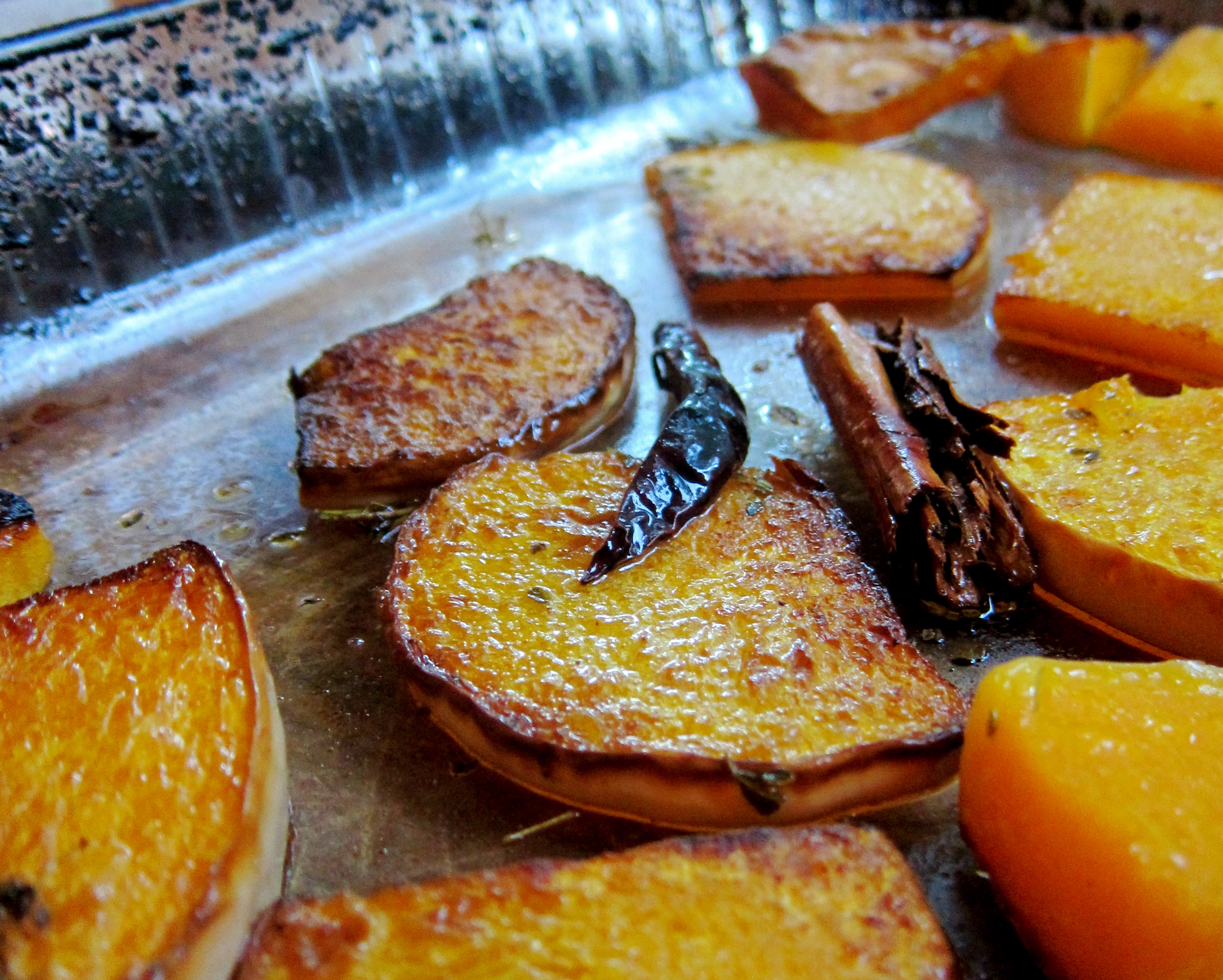
Preheat your oven to 180C/350F/Gas 4. Halve the butternut squash, remove and reserve the seeds, then cut the squash into slices or chunks with the skin left on. Using a pestle and mortar, or a metal bowl with a rolling-pin, bash up the dried red chilli with a good pinch of salt. Add the whole sage leaves, the cinnamon and enough olive oil to loosen the mixture, and rub the whole lot over the squash pieces, so they are well covered.

Place the squash in one layer (this is important) in a roasting tray and season lightly with salt and pepper. Sprinkle over the seeds, cover tightly with tin foil and bake for 30 minutes, or until the skin of the squash is soft, then remove the foil and cook for another 15 minutes until the squash is golden and crisp. Remove the cinnamon and tuck in.

*Thanksgiving takes place on the fourth Thursday of November in the US. You could say it’s the original harvest festival, started by the pilgrims and puritans emigrating from England in the early 17th century, and assisted by the Wampanoag Native Americans who provided seeds and fish.

Apple and sultana cake

Tags

, , , , , , , ,

IMG_2585

And now back to cake. This recipe belongs to my cousin, Lucas Hollweg, and you can find it in his book Good Things to Eat, which I think should be re-titled Fricken Amazin Things to Eat. Buttery and brisk, this cake is, and full of sharp and sweet delights. The apples are soft and fluffy and there is a lovely lemony sourness running throughout. The spices and sultanas make me think of Christmas and long, cold nights. Lucas calls the flavours “strudelish,” which I tried out on our recent German guests. Thinking they wouldn’t understand the “ish” I simply said “strudel” and spent the rest of the conversation backtracking. “It’s cake!” I said, finally, and we were all happy with that.

So to apples. My very first apple I do remember, because my dad knocked it out of the tree with a hoe. I think I told people we had “an orchard,” when actually it was two trees in the corner of our garden. It was also around this time that I invented a sister called Melanie which, you can imagine, took a lot more effort to conceal. Melanie was away a lot. Or she was sleeping. Then she died, which was a relief. But my love of apples only increased.

This first apple was my downfall. It was pale green, almost dun in appearance, and smooth and dry to the touch. This was what made the biting of it so exciting, because inside, once my teeth pierced the skin and those first droplets formed on my lips, was the sweet ivory flesh, full of crunch and juice. The bitter mahogany pips, the toughened core was something to work around, gnaw at until almost nothing remained; a little twig dangling from my stubby fingers. I discovered apple shampoo while on a French campsite a year or two later, and I marvelled at how they could have captured the fragrance so perfectly. There was probably not a single natural ingredient in the bottle, but to me it was like having a frothing orchard in my hair. So, apples remind me of being young, and of ‘firsts.’ And how I launched myself at things like a missile.

This cake takes me back to that first, and best ever, apple. It’s incredibly easy to make, yet rich and plump and gorgeous. It’s a happy cake.

IMG_0146

Just so you know, I have also made this cake with quince compote, left over from the quince paste I made, and it was wonderfully aromatic. I have also used plumped-up (soaked) raisins in place of sultanas, which are trickier to find in LA. As to Bramleys – there is no real substitute. Look for sour and tart apples that cook down well.

Apple and Sultana Cake

Lucas Hollweg, Good Things to Eat

For 4-6

125g (4½ oz) butter, plus extra for greasing

125g (4½ oz) light brown or light muscovado sugar

125g (4½ oz) self-raising flour

1 medium egg

200g (7 oz) Bramley apples (1-2 depending on size)

2 handfuls of sultanas

Finely grated zest of 1 small lemon

½ tsp ground cinnamon

Fresh nutmeg

A handful of flaked almonds

“Preheat the oven to 180C/350F/Gas Mark 4. Grease an 18cm (7in) cake tin and line the bottom with a circle of baking parchment. Put the butter and 100g (3½ oz) sugar in a saucepan and stir over a gentle heat until the butter has melted and the sugar dissolved. Quickly stir in the flour and beat in the egg. You’ll end up with something that looks like what it is – flour mixed with melted butter – rather than normal cake mixture. Don’t worry, it’s meant to look like that.

Spread half the mixture over the bottom of the cake tin, then arrange the apple slices on top. Scatter with 3 tablespoons sugar, then add the sultanas, lemon zest and spices (you want to grate in about one-eighth of a whole nutmeg). Spread the remaining cake mixture over the top, smoothing it out as best you can. Scatter with the flaked almonds and put the tin in the oven for 35-40 minutes, or until it’s a deep gold and firm to the touch.

Have a look after 30 minutes and cover the top with a bit of foil if it’s browning too quickly. Remove from the oven, and leave to stand in the tin for 10 minutes, then turn out and cool on a rack for at least quarter of an hour. It’s best while still just warm.”

First ever quince

Tags

, , , , , , , , , ,

IMG_0076

My first ever quinces. My first ever quince paste, or membrillo. It didn’t go the deep red I had been reading about, and hoping for, no matter how long I cooked it, but rather a dark, rosy gold. In Mexico it is seen as candy, and it candies as you cook it. It feels and looks like a humongous boiled sweet, the way it wraps itself around your wooden spoon. Gradually, it solidifies, becomes harder to manage and your forearm sweats and reddens. I felt like one of those glass blowers by the end, with roasted arms. And then you must unwrap it, flatten it into a block and cool it on a baking sheet, smoothing it out with wet hands. It’s a tough little thing, and you need to prize it off in cubes. Some suggest burying it in sugar and cinnamon. I was interested in the Spanish version, where you serve it with Manchego, a chalky sheep’s cheese, which you dribble either with honey or olive oil. What I love about Manchego is the crystalline quality when it dissolves on the tongue – there is sharpness, it is intense, but crumbly, frail, reminiscent of ragged, yellowing parchment.

Quinces when they are cooking are startlingly honeyed and musky, almost ‘heavy’ smelling, but it is also an astringent fruit and you are left with traces of acid long after the sugar has gone. The best paste is a reminder of the fruit’s essence. Thin slices of Manchego, a hunk of bread, a few jellied sheets of membrillo – a tapa we would get for free en route to our house in Picena, southern Spain, and a bar stop demanded by the driver, Pepe el taxista. If you bought a drink, you’d get the food for free. Amazing if you think about it, and I doubt it still exists in quite the same way now.

I remember patatas a lo pobre – poor man’s potatoes – served in terracotta dishes, cakes of sweet onion tortilla and chunks of melting lamb. It was just enough to stave off hunger, and the alcohol would make everything nice and blurry. A lot of people died on that mountain road. No barriers, alcohol, a few stray goats. Everything was crumbling and dry. On average, a person a year from the village careered off the mountain side to their death, and travellers were picked off with horrible ease. But I always remember the food first, and only later the slow, lurching ascent into the clouds.

Quinces (cydonia oblongata) were the original ingredient in marmalade; the word marmelo is in fact the Portuguese word for quince. It wasn’t until 1790 that oranges were used, and all marmalade recipes before then were based on quinces, even in England. These days they are considered too tart, dry and tannic to eat raw (blame the advent of sugarcane). Cooked is the only way to eat them, unless already ‘bletted’ – beyond ripe and softened by decay.

They flummox people. What are they, exactly? For many years, they were thought to be a relative of the pear, and though most pears are grown on quince rootstock, they are not pears and will not hybridise with them. They are a separate species, full of mythology, and loved by preserve-makers and food enthusiasts. They are hard, yellowy, blocky, sometimes shaped like commas, thick-set. Imagine a great aunt with a plinth-like bosom called Enid. Anyway, they are very exciting to cook with because they transform, becoming glassy and gorgeous and they work well with fatty meats. The ones above are green and would benefit from a long sit for a few weeks until they become a mellow yellow.

Quince paste with Manchego

Adapted from Sam and Sam Clark, Moro – The Cookbook & Nigel Slater, Tender

2kg (4lb) quinces

Caster sugar

Juice of 2 lemons

Remove the down/fur on the quinces, wash them and cut them up. Don’t bother to remove the core or peel them, you will sustain injuries. Put the fruit into a heavy pan and just cover with cold water. Bring to the boil, and then simmer until tender. Strain off any excess water and push the quinces through a sieve, removing pips and core as you go, letting the purée collect in a bowl beneath. This can take some time. Alternatively, if you have one, use a mouli, but remember to use the disc with the smallest possible holes, or you will be eating fibres and grit.

Weigh the purée and add to it half the weight again of sugar; the Moro cookbook calls for equal weights of fruit and sugar, and I have adhered to their recipe for years, but having tried this Nigel Slater version, from Tender, I find the paste has more flavour, tang and quincy character and still keeps its shape.

Place both the sugar and the fruit purée in the same (but washed) pan. Return to the stove, and heat gently until the sugar has completely dissolved. Now raise the heat and let the mixture bubble, stirring constantly with a wooden spoon (wear an oven glove to protect your hand). Add some lemon juice to taste. It is ready when it starts to come away from the sides of the pan, attaching itself to your spoon like a thick, deep orange wand. By the end, you can hardly move your spoon through the paste.

Now, remove the mixture and spread it out in a centimetre (½ inch) layer on a baking tray lined with greaseproof paper. Push it out to the sides as evenly as possible. When it has cooled slightly, wet your hands and smooth it down. Switch the oven to its lowest heat and dry it out for a couple of hours, or simply air dry it. It should be tacky dry and firm enough to be cut into solid pieces. Pack it in greaseproof paper and store in an airtight container. Refrigeration should not be necessary and it keeps for many months.

Traditionally, the sheep’s cheese Manchego is served in thin triangles with the rind left on. The quince paste is sliced and then placed on top of the cheese, with a thread of extra virgin olive oil alongside. Honey is also lovely here if you fancy it.

IMG_0098

A good nut butter

Tags

, , , , ,

IMG_9939

There is nothing like a good nut butter. Consistency is all; it must be smooth and almost – but not quite – runny. It must seize on the spoon, as if afraid to jump. At its best, it is reminiscent of set honey about to liquefy. Thickness is important. The test is whether you can speak afterwards. If you can, it’s not thick enough. At least five minutes should go by before you can unglue your tongue from the roof of your mouth.

I first tried simmering the nuts in milk, which softens them, but renders them too lactic for my taste. The result had a milky, cereal-like texture and the nut got buried (thanks, Thomas Keller). I was afraid that in their hard and whole state they would behave like ball-bearings in the blender, but the paste soon comes.

Supermarket shelves here (in LA) groan with nut butters of every description and every possible combination. The truly hideous gingerbread concoction Speculoos is currently doing the rounds, but of course peanut butter wins hands down. Most commercial ones are full of sugar, the nuts themselves having been stripped of any nutritional value by the time they are potted. They’ve done an amazing job at marketing something that takes seconds to make at home; I too have been wedded to shop-bought jars since childhood.

I remember eating peanut butter sandwiches (with butter, of course) while reading the adventures of Milly Molly Mandy. When I found a copy many years later, most of the pages were soldered together with thick, brown goo. I remember my muddy fingers on the edges of the print, the silence and muffled chomping. I revisited the stories of my heroine and her little-friend-Susan endlessly. Their decisions and errands, counting their pennies, visiting the haberdashers, growing mustard and cress. I always read and ate alone, and later slipped the plate under the bed to join the rest of the crockery and unwanted crusts. I forgo bread these days in favour of eating it straight from the spoon, and treat it as a dip. Actually, I treat it as I did then: as something clandestine but comforting.

I chose almonds for this recipe because the state of California is essentially Almond Central, and also because I think it can be the most disappointing of all the butters to buy. Virtuous ingredient list and folksy labels notwithstanding, almond butter tends to look murky, and taste granular and mealy; brown sludge surrounded by a moat of oil. This version is a real departure. The trick is, when blitzing, to go beyond gravel, beyond sand, to the shimmering, oily depths.

You can use whole, raw almonds, with the skin on, or blanched, slivered/flaked, spiced, what you will. Skin-on will be meatier, richer, and roasting them beforehand makes them sing. Marcona almonds are a Spanish import – fatter, softer and rounder than the Californian variety, and often toasted with olive oil, spices and herbs. Their naturally high oil content and sweetness puts them closer to macadamias. Worth a try if you can find them.

Almond butter (or any nut)

I haven’t given amounts here because it’s all feel, as far as I’m concerned. For what it’s worth, I always use blanched almonds, and if I’m feeling very virtuous I buy whole almonds which I put in boiling water and then slide off their skins. It is tedious and irritating and only occasionally meditative, but I find skin-on almonds harder to digest. I also prefer the blonde colour of the butter.

Whole almonds (blanched or skin-on)

Sea salt

Sterilised jar or glass to store but not essential

Method

Toast the almonds – spread out in one layer – in a frying pan or large saucepan over a gentle heat until they start to smell nutty and look slightly burnished. They burn very easily, so stick around and be prepared to take them off the heat immediately. Whizz them in a grinder for approx 30 seconds to one minute, or until the almonds are finely ground. Taste and watch; some like their nut butter on the dry side, others like it sloppier. The longer you grind the looser the mixture will become. You can add melted coconut oil if you like, for lubrication, but it isn’t necessary.

I make my own peanut butter as well as cashew butter and have occasionally been known to grind macadamias. It is criminally simple – the only caveat is they need to be roasted and salted beforehand (as in, buy a packet). Store in a sterilized jar or simply eat the stuff, still warm, with a cup of tea, as I do. What is not to love?

Apple mousse, lpq style

Tags

, , , , , , , ,

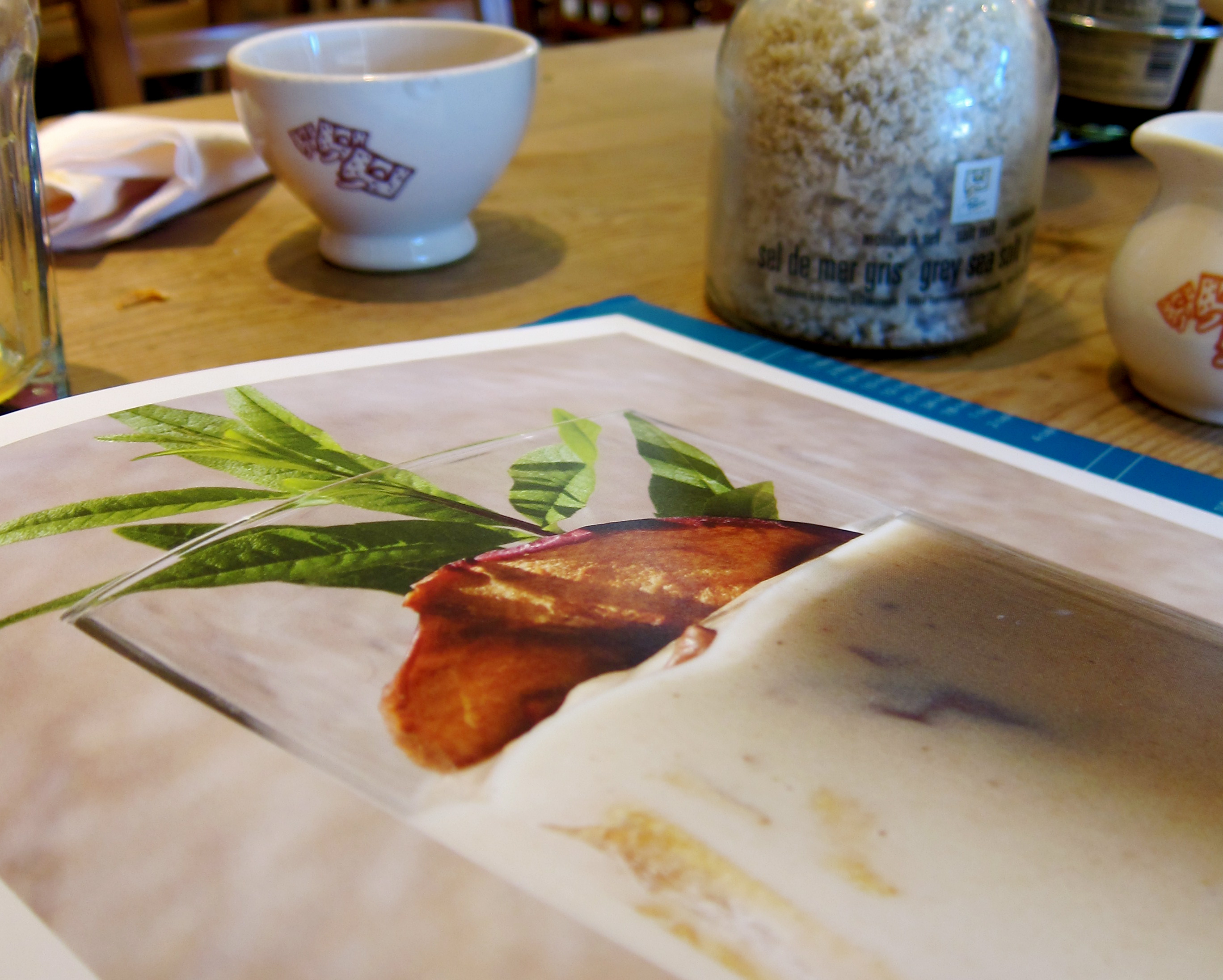
This is a recipe from Alain Coumont’s cookbook. He is the founder of the cafe Le Pain Quotidien, and his book is dotted about the tables in a civilized and welcoming (ok, manipulative) way for you to peruse. I’ve worked out that if I go there once a week for the next 6 months, I’ve got every recipe. It’s Belgian, he’s Belgian, and the whole enterprise is as civilized as you can get – in my opinion – in LA. The chairs and tables are made of wood, the walls of brick. Just like humans are made of flesh and blood, he decided that the basics shouldn’t really be messed with, and I agree. I’m a great fan of being able to hear the person sitting opposite me, and not the screeching sound of metal chairs slicing open my cerebral cortex. I also like books and reading and taking my time, which if you leave books lying around is the implicit message; I’m less likely to leave when I’m halfway through the history of sourdough, so I simply order another cup of Brussels breakfast tea, and stare out of the door for a few seconds, thinking about the pleasures of yeast.

It amazes me that something so simple is so hard to get right. All I want is somewhere to go that is unpretentious, that serves well-made, thoughtfully produced food, without millions of other possibilities, all of them involving soy. I also don’t want the server to get so far into my psyche that we have to arrange a separate meeting just to unpack it all. And all the recipes, by the way, are in grams. No conversion chart, no nothing. This man has balls. Also, given his success at creating a chain, I was expecting a businessman in a pinny, but reading his book, he’s clever and genuine about food, with quite messy hair.

This recipe is so simple and soothing, it’s almost convalescent food. It also reminded me of toffee apples. Cool and fudgy and very ‘appley’ – it’s lovely for breakfast or as a lazy pudding. Apples are in season here, especially the crisp and aromatic California Gravensteins from Sonoma, which are peaking as we speak. Feel free to experiment with spices and sweetness, but my feeling with apples is always the tarter the better. I want even my pulped apple to have some bite. The overall blondeness of cashews is pleasing, but if you don’t mind dark brown pudding, I imagine it would also work with almonds.

Apple mousse with cashew butter*

Adapted from Alain Coumont’s Communal Table

Fills 4 small bowls or glasses

400g apple compote

150g cashew nut butter

4 tbsp acacia honey

Juice of 1/2 a lemon

1 cinnamon stick or a sprinkle of ground cinnamon

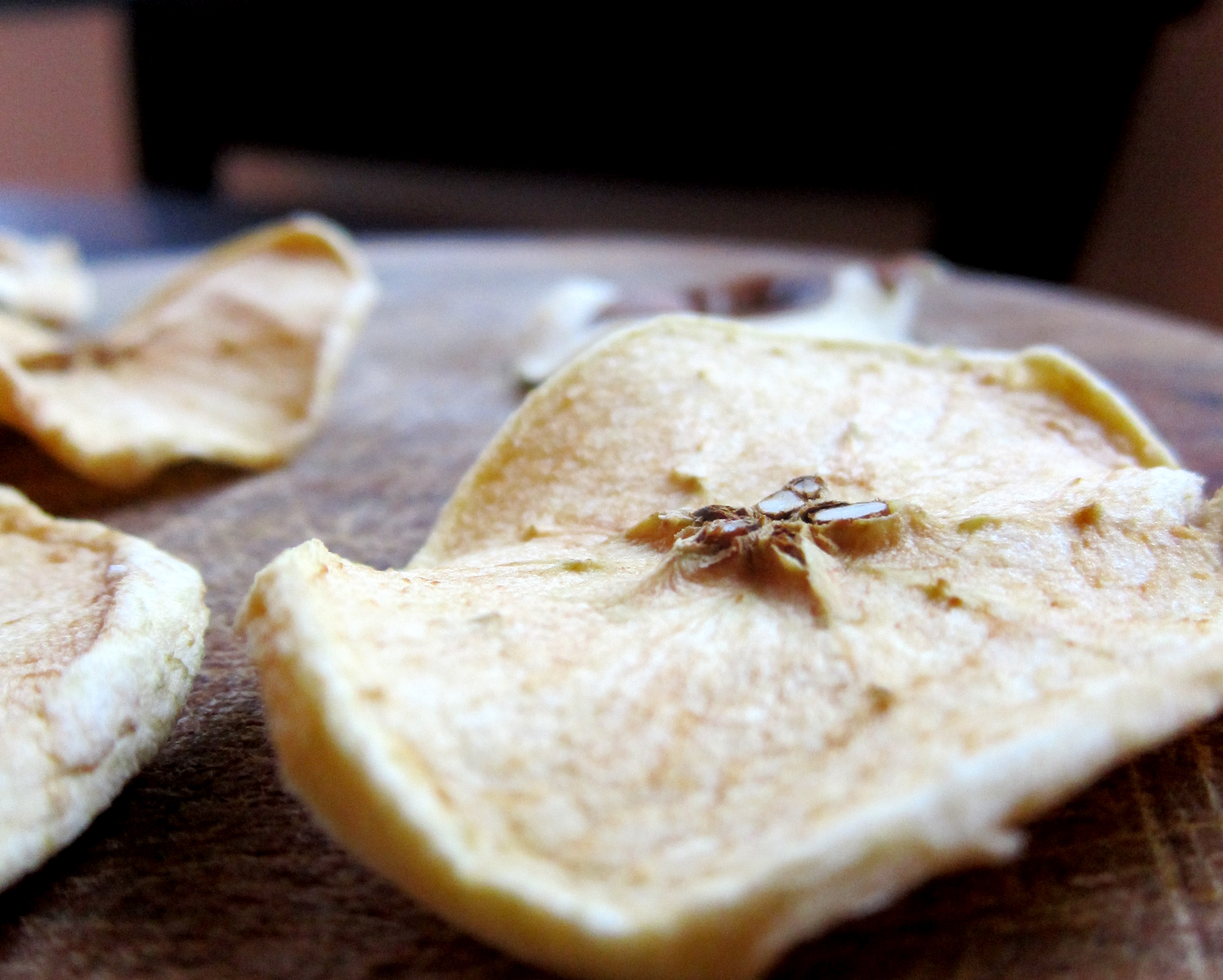
For the garnish: 75g dried apples and verbena or basil flowers

For the compote, core and peel 5-6 small apples, and then slice them finely. Add them to a solid pan with 3 tablespoons of water and the cinnamon, and put a tightly fitting lid on. Cook over a gentle heat for about 15 minutes until they have softened and become fluffy. Fork them up a bit, remove the cinnamon stick, and process/blend the apples along with the cashew butter, honey and lemon juice. Much depends on the sweetness of your apples, so taste as you go. Divide out into the bowls or glasses and refrigerate for 6 hours. Serve with a dried apple ring and a verbena flower, if you can remember.

*(1st Sept) I initially thought Coumont had withheld amounts in this recipe; in fact, I got distracted while people watching at LPQ and forgot to write them down. I now include his very sensible measurements. My apologies.

Dried apples for the garnish

Adapted from Jane Grigson’s Fruit Book

If you want to dry the apples yourself, it’s fun to do and not difficult at all, though easy to forget about; you open the oven door a week later to find some wizened ears. Prepare the apples (you choose the number) as you would for the compote, and cut into rings. The point is to slowly remove all moisture from the fruit, without cooking it. A low and steady source of heat is what is needed. The plate-warming part of the oven is good, a warm airing cupboard, or keep the apple rings in the oven on a cake rack at the lowest possible temperature, with the door slightly ajar. The temperature should be between 50 to 60C (120 to 150F). You’ll know they’re done because they’ll be leathery, and will not give up any juice when you cut into them. Cool the fruit before packing away in a paper bag – anything totally airtight will encourage moisture and mould. Store in a cool, dry place. The flavour is quite different to fresh and it’s worth doing if you have a glut.

Dark chocolate gelato

Tags

, , , , , , ,

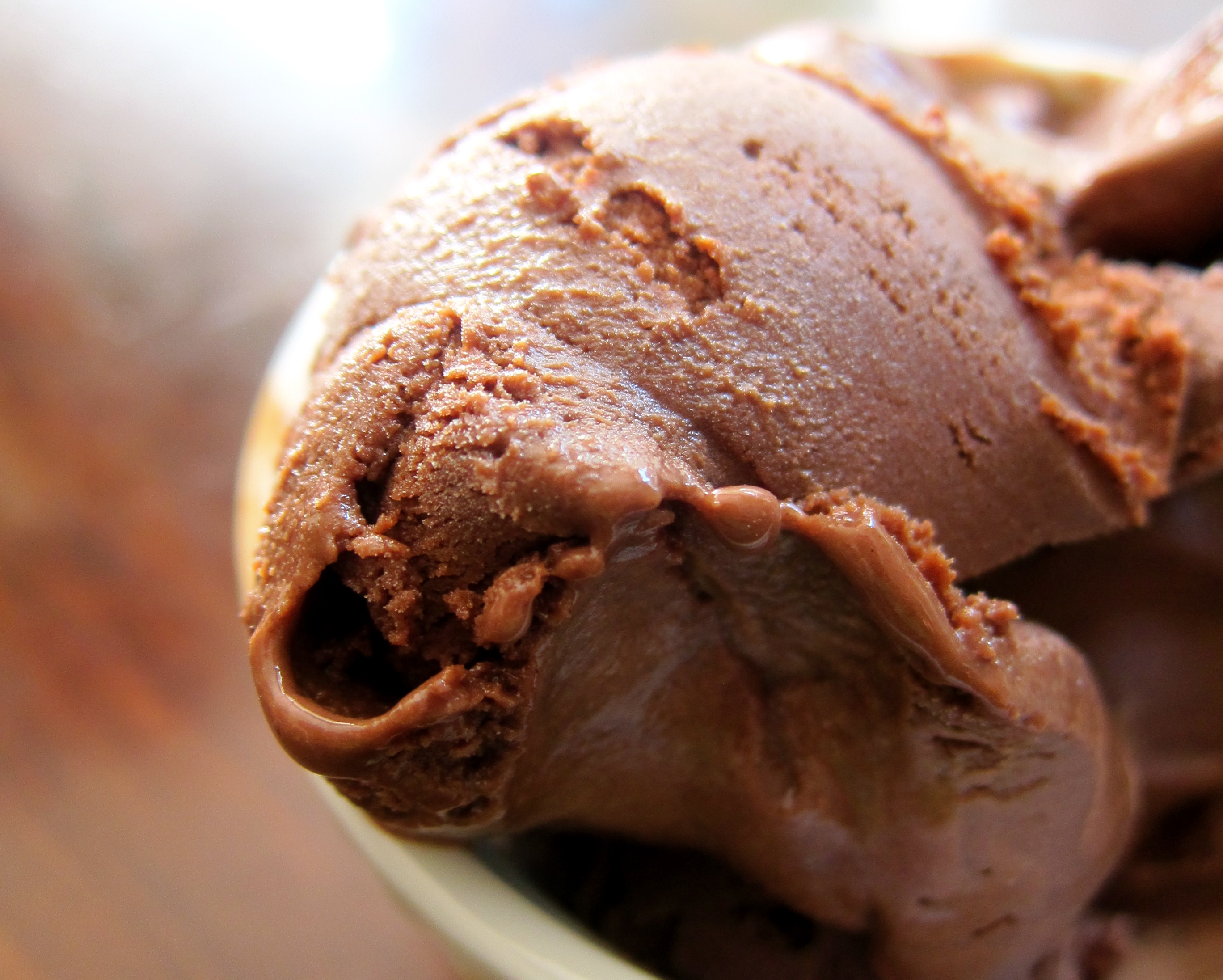
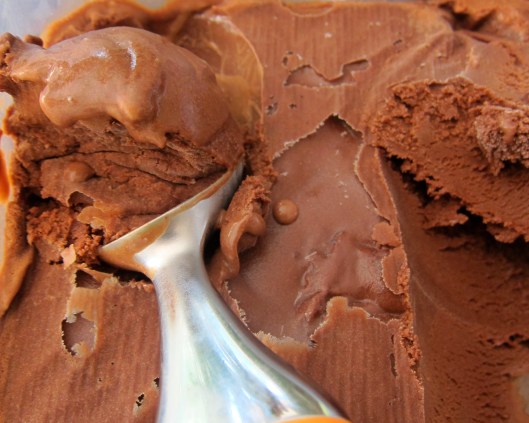
Apparently, green tea smells of old cars. Anything red is a no. No also to green and crunchy, to onions, to fruit. But this chocolate gelato was a winner. “Really nice,” said Oscar, my nephew, who had come to stay along with his two brothers. Homemade is always a bit suspicious to children, I’ve noticed. Because you’ve had some input and this is scary to them. And this is grown-up stuff; it has a dark, strong caffeine hit, almost –  but not quite –  bitter. It is salty, why I don’t know, but it makes you head straight for the tap afterwards and glug water like a person found wandering for days in the desert. It is rich, velvety, it has a tinge of red, like dried blood; it glistens, it drips from the spoon and forms dark, chocolatey pools. I thought it would get lost in all the fast food, the junk, the Twinkies and Oreos, the ice cream sandwiches. But it did not go unnoticed. They nodded wisely in between mouthfuls, the spoon tinkling like a bell and growing more insistent as the bowl emptied. There was silence, focus.

“I had a banana three months ago. It was in a smoothie. That was so I didn’t have to taste it,” said Oscar, in defense of fruit. I never realized food could hold such trepidation. I ate snails as a child, picked them out of their shells and dipped them in garlic butter. I ate earth – whole mouthfuls – and peeled chewing gum off the floor. I peeled it off the pavement and popped it in my mouth. I ate ratatouille and sweetbreads. I ate chalk. I was fearless, verging on deranged. And I lived. The only thing I wouldn’t eat was cheesecake and that was because of the name.

Dark chocolate gelato doesn’t seem like much of a stretch, but I think it was a surprise. Perhaps it went with all the other new things: the road signs, the accents, the crazy heat, the big waves, the seals, cars, loud women and lady boys. And they ate other stuff too – homemade tacos with spicy beef and sour cream, Mexican cheese, Orangina, chillies. They were brave in the sea and came back with bashed knees and bloodied feet. Being in a strange new land on another continent makes you more inclined to try new things perhaps; you are not quite yourself.

We ended up in a Thai restaurant, which was where the green tea debate began.

“It smells like a reptile enclosure,” said Ben.

It did in fact smell quite nasty. Dank, musty, old. Also, it was hot, and we were hot, overheated you could say, sweating and limp with fans not quite disguising the wet walls, the presence of steam. Why drink hot green tea and not water? But I have developed  a taste for it; I like the weirdness, the way it heats my throat as it goes down, makes me wince. Maybe it’s the daredevil in me. It helps me remember when I was invincible.

IMG_9383

I will try to shed some light on the difference between gelato and ice cream. In Southern Italy, gelato is traditionally made without eggs, using mainly milk rather than cream. As I wrote about in the Fior di Latte recipe, the base of many Sicilian ices consists of a milk pudding thickened with cornstarch (I used a little cream, because I wanted some richness). The homogenized fats in milk are what creates a lighter texture, with that lovely melting quality. Ices made with more cream and less milk or equal amounts, though luxuriously buttery, can coat the mouth in a way that gelato never does. It can also mask flavours. In Northern Italy, eggs are used, but the principle of milk over cream remains. If you go to a gelateria, you’ll find the gelato light yet dense. This is due to the speed at which it is churned, keeping a lot of the air out.

Dark chocolate gelato

Adapted from Marcella Hazan, Marcella’s Kitchen

Makes 2 ½ cups (600ml)

4 large egg yolks

½ cup (100g) plus 2 tbs extra-fine sugar

2 ¼ cups (500ml) whole milk

3 ½ oz (100g) dark chocolate (70% cocoa solids) broken into pieces

½ cup (50g) unsweetened cocoa powder

In a heatproof bowl, beat (using an electric whisk) the egg yolks with ½ cup (100g) of sugar until thick and creamy. Heat the milk gently in a saucepan until it looks as if it’s starting to rise to a boil. Remove from the heat and add only a little milk to the egg mixture, to temper the eggs, then gradually add the rest. Beat well.

Melt the chocolate in a heatproof bowl over a saucepan of barely simmering water. Resist the temptation to stir. When no lumps remain, beat the melted chocolate into the egg mixture, followed by the cocoa powder. Place the bowl over the pan of barely simmering water again, and stir with a wooden spoon until the mixture coats the back of  it. Remove from the heat. Meanwhile, in a small saucepan, make a caramel by combining 2 tablespoons of sugar with 2 tablespoons of water. Boil the mixture until it turns a dark amber, but isn’t burnt. Swirl the pan as it darkens and watch it like a hawk.

Whisk the caramel into the chocolate until fully incorporated. It will sizzle. Leave to cool, then cover the surface of the bowl with plastic wrap/cling film and chill in the fridge for at least 1 hour, then churn in an ice cream maker, according to the manufacturer’s instructions. At this point you can serve it as it is – it will be soft and slightly sloppy. Alternatively, transfer to a freezer container, cover the surface with plastic wrap and freeze.

IMG_9768

Banana & raisin bread

Tags

, , , , , , ,

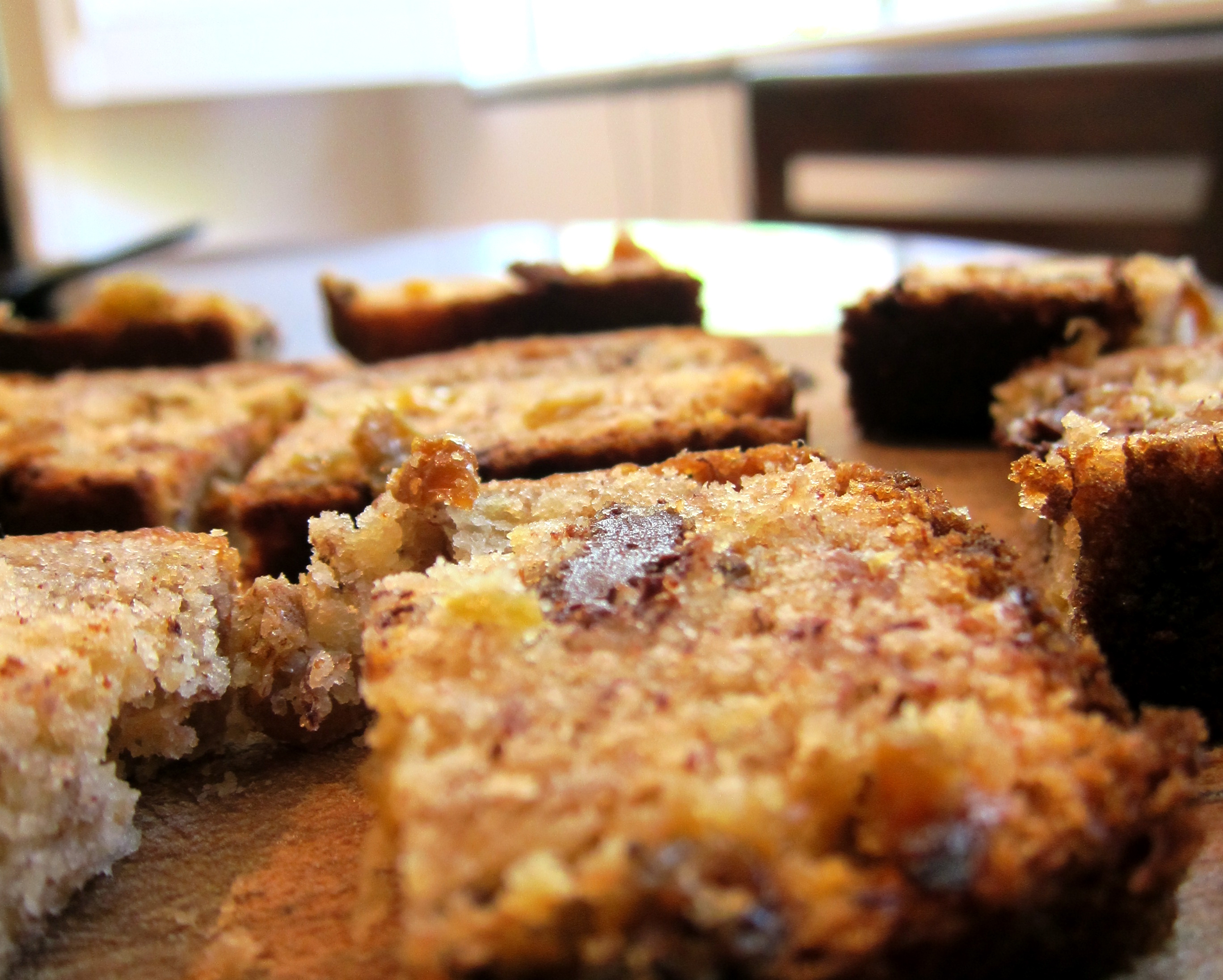
This is a lovely cake to make if you are at a loss. A few blackening bananas are all that is required, along with the standard store cupboard ingredients. I made it constantly when I first arrived in LA. It was both escape and focus. I gave almost all of it away to neighbours, who seemed to take longer and longer to get to the door. Perhaps they read into the gesture some of the desperation I was feeling. I didn’t drive and I couldn’t walk anywhere – the sidewalk around where we live peters out after five minutes. And walking has always been my lifeline. I sort out my thoughts that way, or I discover what my thoughts actually are. So the cake was my version of lowering knotted bed sheets out of the window – one of these neighbours would be my escape route, they would be my friend, hopefully give me a lift somewhere, and I could walk.

It never happened – they had jobs. And besides, I’m not a huge fan of the LA genre of walking, which is to spend most of your time in your car looking for somewhere to park. A corner shop, that’s what I wanted. A street, some grass, a view or two. Eventually I was forced behind the wheel, passing my test with white knuckles, my face a sheet of terror and disbelief. I hoped it was a one-off – the driving thing. I wanted to keep on taking the bus, scrambling over medians and edging my way along roads. But to say you don’t drive in LA is like saying ‘I don’t really breathe’.

It’s nothing like walking, but occasionally when the road is emptying out and I see long, luxurious gaps up ahead, or I turn a corner and see a blank space for me to play with, accelerate into, I get a similar feeling in the car – a presence of mind, strangely empty of thought. Sometimes I like to cruise downhill, my foot hovering over the brake pedal, the breeze under my hair, and it’s like sailing and in those moments, I get it. I get California, and the invention of the car and why I’m here. I get the rush. And on the days that I don’t, I bake banana bread.

IMG_0866

Banana and Raisin Bread

Adapted from Nigella Lawson, How To Be a Domestic Goddess

100g raisins (or sultanas)

75ml dark rum, bourbon or PX sherry

175g plain flour

2 teaspoons baking powder

½ teaspoon bicarbonate of soda

½ teaspoon salt

125g unsalted butter (melted)

150g caster sugar

2 large eggs

4 small very ripe bananas (mashed)

60g chopped walnuts (or pieces of dark chocolate)

1 teaspoon vanilla extract

Put the raisins and rum/bourbon (or Pedro Ximenez sherry) in a smallish saucepan and bring to the boil. Remove from the heat, cover and leave for an hour if you can, or until the raisins have absorbed most of the liquid, then drain.

Preheat the oven to 170ºC/gas mark 3/325ºF and get started on the rest. Put the flour, baking powder, bicarb and salt in a medium-sized bowl and, using your hands or a wooden spoon, combine well. If you don’t like the taste of bicarb then leave it out.

In a large bowl, mix the melted butter and sugar and beat until blended. Beat in the eggs one at a time, then the mashed bananas. Then, with your wooden spoon, stir in the walnuts and/or chocolate, drained raisins and vanilla extract. Add the flour mixture, a third at a time, stirring well after each bit.

Scrape into a loaf tin (23 x 13 x 7cm / 9 x 5 x 3 inches) and bake in the middle of the oven for 1-1¼ hours. When it’s ready, an inserted toothpick or fine skewer should come out cleanish. Leave in the tin on a rack to cool, and eat thickly cut with a cup of strongly brewed builders’ tea.

Lemon sherbet

Tags

, , , , , , , , ,


Remember these? Frozen lemons volcanically erupting with white, sugary snow. Except I never tasted one. I saw them, ogled them from afar; they nested indolently  – hard, little yellow bricks stacked in carts outside French bistros. I could never get up the courage to ask for one. Perhaps I secretly knew it was too adult for my taste. One bite and it would all be over and then I’d feel bad.

But at every port we sailed into in Brittany, I would go through the same internal dialogue, the slow build, the beginning of bravery, starting with, “Dad, can I ask you a question?” To which he would answer “Yes.” “Actually, it doesn’t matter.” Silence. “You’ll probably say no.” “I won’t know what it is until you ask me.” “It’s fine.” What I wanted was for it to be dragged out of me. My mind to be read. Perhaps if I just looked lingeringly in the direction of the ice creams he’d get the idea. But I was taken at my word, and remained lemonless.

Each port town we sailed away from – Paimpol, Tréguier, Lezardrieux – I would imagine finding the courage for the next place, and then the next. But suddenly – or gradually, tortuously – we were sailing back home, where there were no frozen lemons.

So it remains a foreign food, a still life. And actually making it myself, though it looks gorgeous with its lemon hat and sticky, oozing syrup, it remains something I long to see for sale. There would need to be barriers to acquiring it – a foreign language, a shaky grasp of the currency perhaps. Some pointing would be necessary. My own frozen lemon, paid for in cash.

Strictly speaking, I was talking about sorbet, but sherbet has more fizz, more of a creamy wave to it, so I have opted for that. To clarify, sorbet is the ‘mother ice’ from which many others have issued. It is made from a sugar syrup with the juice of fruit added. Originally, sorbet was snow infused with flowers.

Sherbert, on the other hand, is really the first ever recorded ice cream. The name is most likely an attempt at the Arabic word sharbat. It has a small amount of cream added to a sorbet base. It is light and soft, cold as hell, with a wonderful citrus tang. I know we shouldn’t think of those lemon sherbets – lozenges that melt into a sweetly-sour plateau on the tongue, the kernel of which contains an explosion of fizzing sugar – but I can’t help myself.

Lemon Sherbet

Adapted from Jamie Oliver, Jamie’s Italy

Makes enough for 6

200g/7oz sugar

200ml/7fl oz water

200ml/7fl oz lemon juice

zest of 1 lemon

1 heaped tablespoon mascarpone or crème fraîche

Pre-freeze a shallow 20-25cm/8-10 inch container (if you don’t have an ice cream maker), or the shells of the lemons, if you like the look.

Put the sugar and water in a pan and bring to the boil, then turn the heat down and continue to simmer for 5 minutes. Once the liquid is clear and syrupy, remove it from the heat and allow it to cool for 15 minutes, then add the lemon juice and zest. Taste it and see if you find it palatable – it needs to be sour, but not horribly so. Add more sugar if you think it needs it. Next, add the mascarpone or crème fraîche and stir until completely combined.

Chill in the fridge. If you don’t have an ice cream maker, pour the mixture into your pre-frozen dish and return it to the freezer – leave it for at least an hour before you check it. If it has started to freeze, fork it up a bit. Do this every hour for the next 3 hours, after which it’ll be ready to eat. It can be kept for a couple of days in the freezer, but it will start to get ice crystals soon after. If you have an ice cream maker, follow the instructions, and decant into the lemon shells if you want to be a bit French about it.

Juice: Instead of lemon you can experiment with grapefruit, blood orange, clementine, or mandarin juice. A couple of tablespoons of sweet sherry (Pedro Ximénez has a strong taste of raisins and molasses) would also be a warming component, if the spirit takes you. Chilling dulls flavour, so taste before freezing and be bold.