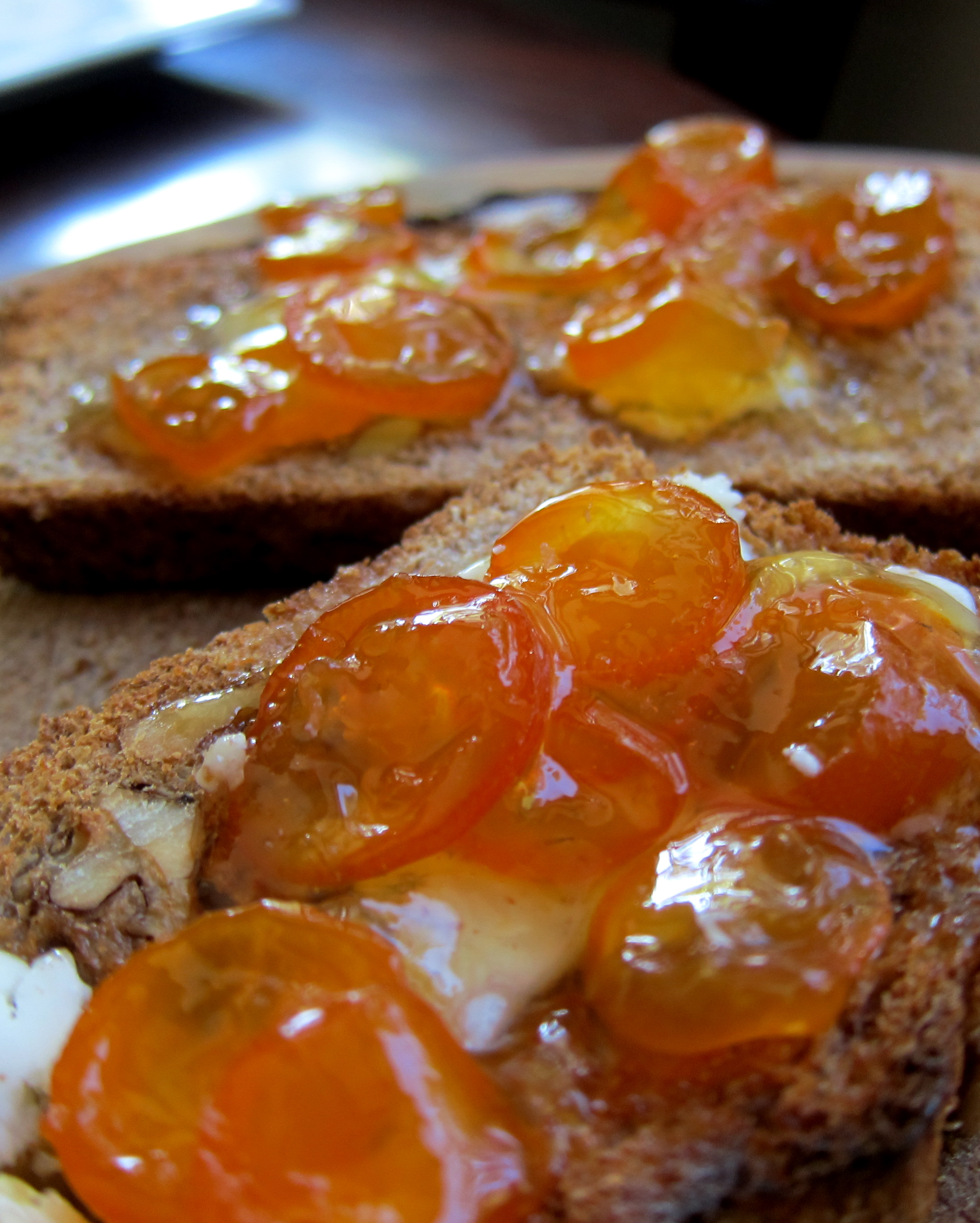
Fior di Latte

Tags

, , , , , , , , ,

IMG_9273

“August is a wicked month,” said Edna O’Brien, and how right she was.
Here in LA, nothing moves or grows. Plants sit and wilt under the warping heat. The cicadas begin their nightly throb. The trees just stand there as if embalmed. I dream of water, the sea, wet, swishing grass and cooling breezes, chlorophyl.

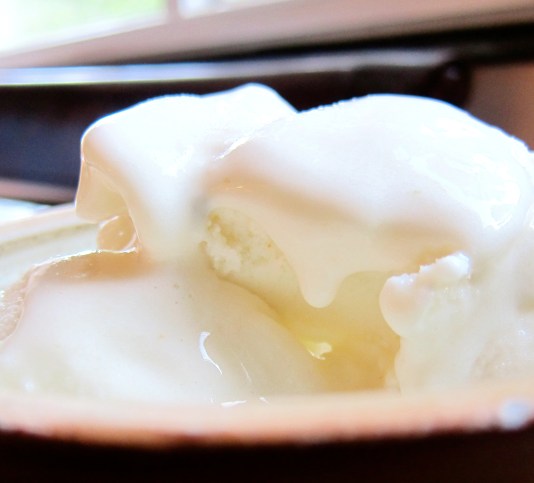
And ice cream. I first tasted fior di latte – (literally “flower of milk”) as a child in London and spent the next twenty years explaining to people what it was like. “White ice cream,” I called it. I mean, it was white to look at. It tasted white. People were confused, as was I, and for a long time I believed I had misremembered it. And then I found it again quite by chance in Venice.

Strictly speaking, fior di latte is a gelato, with no eggs and very little or no cream – in fact, there is a cream version called fior di panna. Originally a Sicilian invention, the base, known as crema rinforzata, is a sweet pudding of milk thickened with cornstarch. In its gelato form, it is soft, but dense, almost chewy, cold but melting.

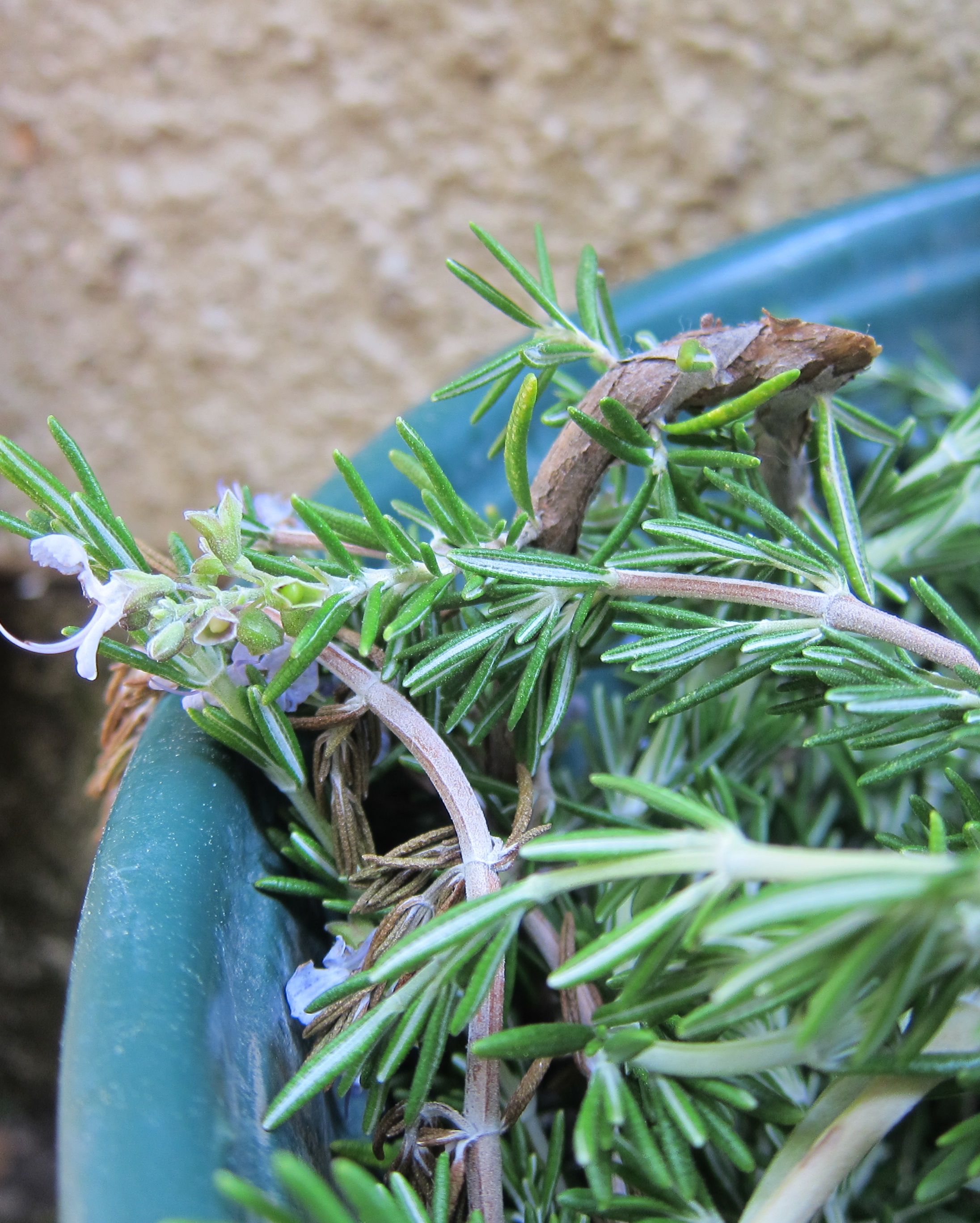
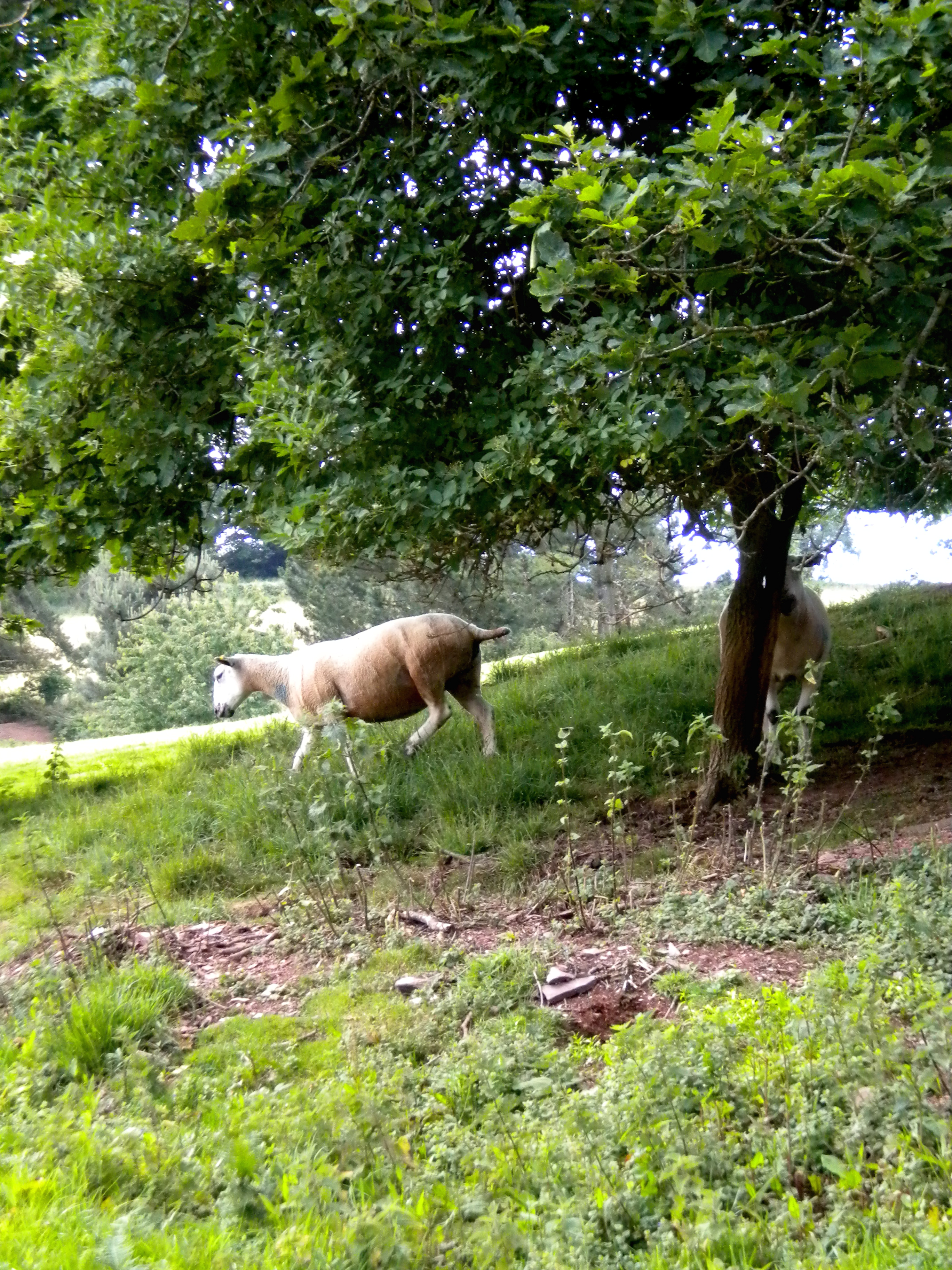
Here is the recipe. It’s monastically simple. For this reason, it showcases herbs beautifully, particularly the woody variety – the dryness and astringency of thyme, bay or rosemary is offset by the soothing balm of milk. Citrus peel is also a winner. You still get the endless, uninterrupted whiteness – all evidence is strained out before freezing. You can experiment with different ‘milks’ too. Sheep’s milk is exceptional here, though I have given up trying to find it in LA. It is rich and sweet and highly nutritious and reminds me of the softness of Exmoor, those green hills washed by the sea.

If I were a millionaire, I would board a plane today and go to Minehead in West Somerset, position myself at the front of the queue at the Styles ice cream van and buy every single tub of their sheep’s milk ice cream. I would then eat it standing on the beach looking out over the Bristol channel, and watch the sun sink slowly into the choppy waves. That would be a good August.
Fior di latte

Adapted from David Lebovitz, The Perfect Scoop

Serves 6

500 ml (2 cups) whole milk

250 ml (1 cup) cream*

150 gr (¾ cup) sugar

pinch of sea salt

2 heaped tablespoons of cornstarch

*I have used cream here, but you can forgo it and up the milk quota if you prefer more of a ‘milk ice.’

Method

Warm the milk, sugar and sea salt in a non-stick saucepan. Bring to a slow simmer and make sure everything has dissolved. Turn off the heat. If you are introducing herbs, spices or citrus rind, add them here. Fill the sink about 3cms full with cold water – add some ice cubes to get it extra cold. Whisk the cornstarch with the cream until it has dissolved completely – the best way of doing this is to gradually introduce the cream into the cornstarch to prevent lumps. Stir the cream mixture into the milk and then slowly reheat, stirring frequently until it begins to bubble and froth up. Transfer to a heat-proof bowl and plunge into the cold water, stirring to prevent a skin from forming. Stir every now and then for about 20 minutes, or until it has reached room temperature. Cover with plastic wrap and chill in the fridge.

Leaving it overnight will really encourage the herbal, citrus additions to give up their flavour. If you are keeping it plain, simply chill for about 2-3 hours. In either case, strain the very cold liquid into the ice cream maker and then follow the instructions. Transfer to an airtight container, place plastic wrap directly on the gelato and freeze. This will keep for a few days, but it’s at its best eaten fairly quickly (on the day, really).

A word about herbs and spices and that

With some of the woody herbs – notably rosemary – a little goes a long way, so you’ll have to do some detective work to discover the right balance. A couple of sprigs of rosemary would be enough to impart quite a strong taste. Thyme can be used more flagrantly (up to 10 sprigs). Bay, sage and lavender also work well. Other herbs are worth investigating too: basil (and other members of the basil family such as cinnamon basil, anise basil etc), mint and also scented geranium (such as chocolate, nutmeg and rose geranium).

Citrus peel – a couple of thick-ish pieces of lemon, lime or orange rind infuse well. You could also try any of these spices – a cinnamon stick, some grated, fresh nutmeg, a clove, a few cardamom pods, some saffron threads, blanched fresh ginger, or a vanilla bean.
D091F467-D6F5-4399-9055-CF3161731A35


The first figs

Tags

, , , , , , , , ,

I never know what to make of figs. They look slightly obscene, but then purple always does (think of aubergines). They are so delicate, shaped like an engorged teardrop, with that satiny, touchy skin. Each fruit contains, not seeds, but a mass of curled-up flowers that will never be. Certain things they like, I’ve noticed. Like honey, a scattering of thyme leaves, a slake of lemon juice, walnuts. I feel on safer ground when they are tarred by the heat of the oven, reduced to their buttery essence. They blister and bead – droplets of sap line the fruit’s seams. They eventually cave in, turning to jam with only the slightest provocation.

Of course if you have a fig tree, you need do nothing but tear one open and suckle, especially if it has already been warmed by the sun. Forget fruit salads, and cold of any sort. Figs are usually a late summer crop, but ‘breva’ figs* (meaning ‘first fruit of the fig tree’) are with us now. They grow on last year’s wood, a couple of months before this season’s crop ripens. They are not quite as spectacular as the ‘higo’ (second crop), not quite as burstingly succulent, less beauteous to the eye, but they are worth investigating.

I first tried breva figs when I was lost on a mountainside in southern Spain. I wasn’t particularly hungry or thirsty, but they were hanging about us as we tramped along the road and so it passed the time. I was wearing corduroy shorts – a fashion fad that lasted about a week in 1991 – and in the midday sun it was like wearing a pair of blankets. I remember the fig’s sweetness, and the way we popped each plump little confection whole into our mouths, the flesh turning into a dewy, flowery syrup. So I associate them with heat and dust and a certain wildness of spirit.

Our house, bought for £2,000 in Las Alpujarras in Spain, was white and chalky and if you brushed past a wall, part of it would come off on your clothes. Swallows nested in the beams. The rats never came upstairs. They preferred the bathroom that had been built in the middle of the cellar, with a makeshift wall around it, like a turret. We had no transport so hitched lifts with the postwoman or a friendly tractor driver, or walked. Occasionally, somebody would throw fruit through our window. This was if they were unfriendly and wanted us to go away. Locals who liked us, and owned fincas in the area, came to the door and handed us their harvest directly. Tomatoes, oranges, lemons, peppers, garlic, figs, sometimes nuts, everything was saddled to the mule standing morosely in the background while they did the deed.

Children played outside our window until 2am. The afternoons were always dead while the whole village slept. Pigs were slaughtered, also outside our window, and the children continued to play under a canopy of dead pig, strung up by its hooves. But it was also easy to disappear. The village was surrounded by farmed terraces, and acequias – streams of melted snow from the Sierra Nevadas – and we dunked ourselves in whenever the heat got too much. No one was about, apart from the local shepherd and his goats, the bell around their scruffy necks sounding their arrival. We picked figs and thought nothing of it.

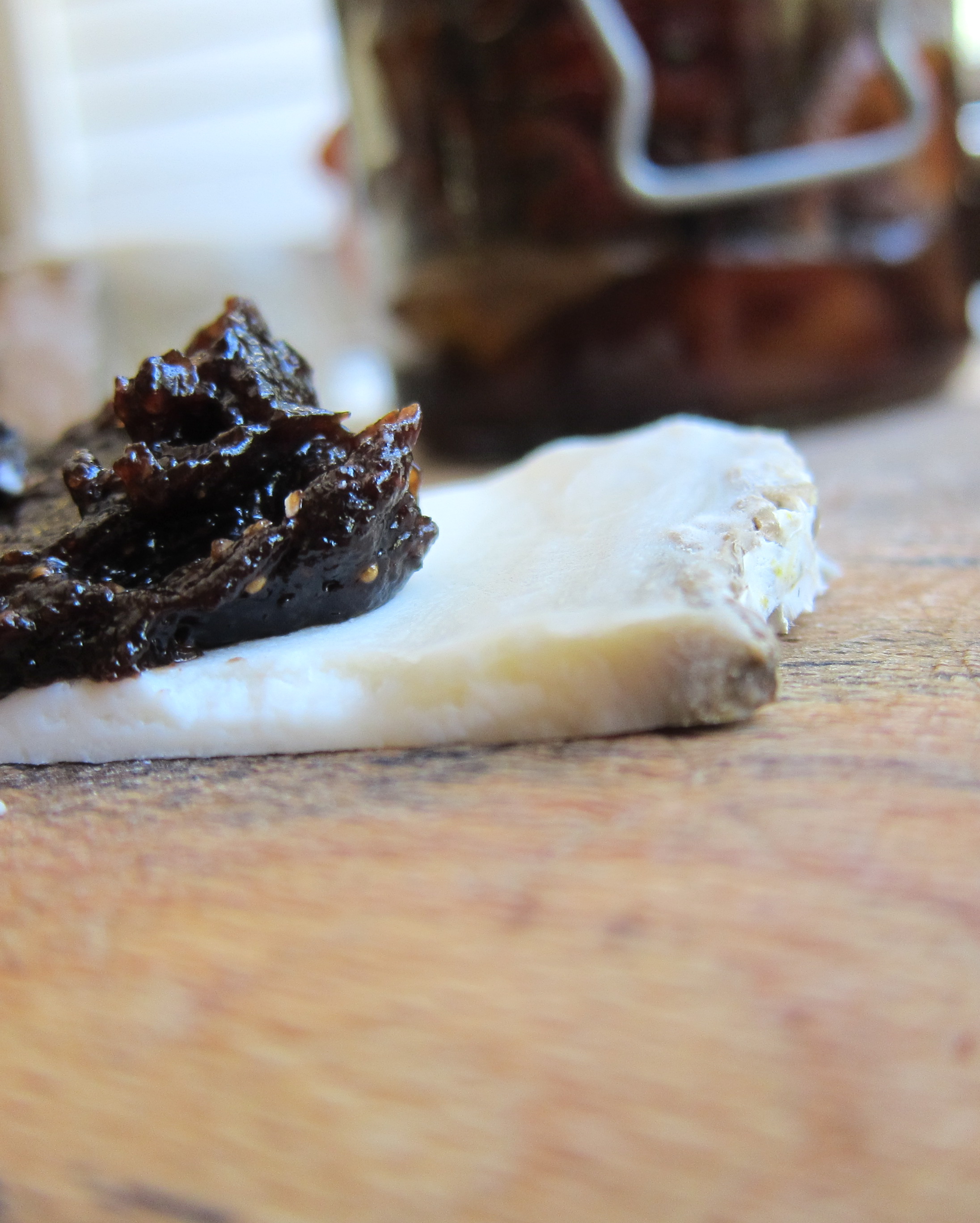
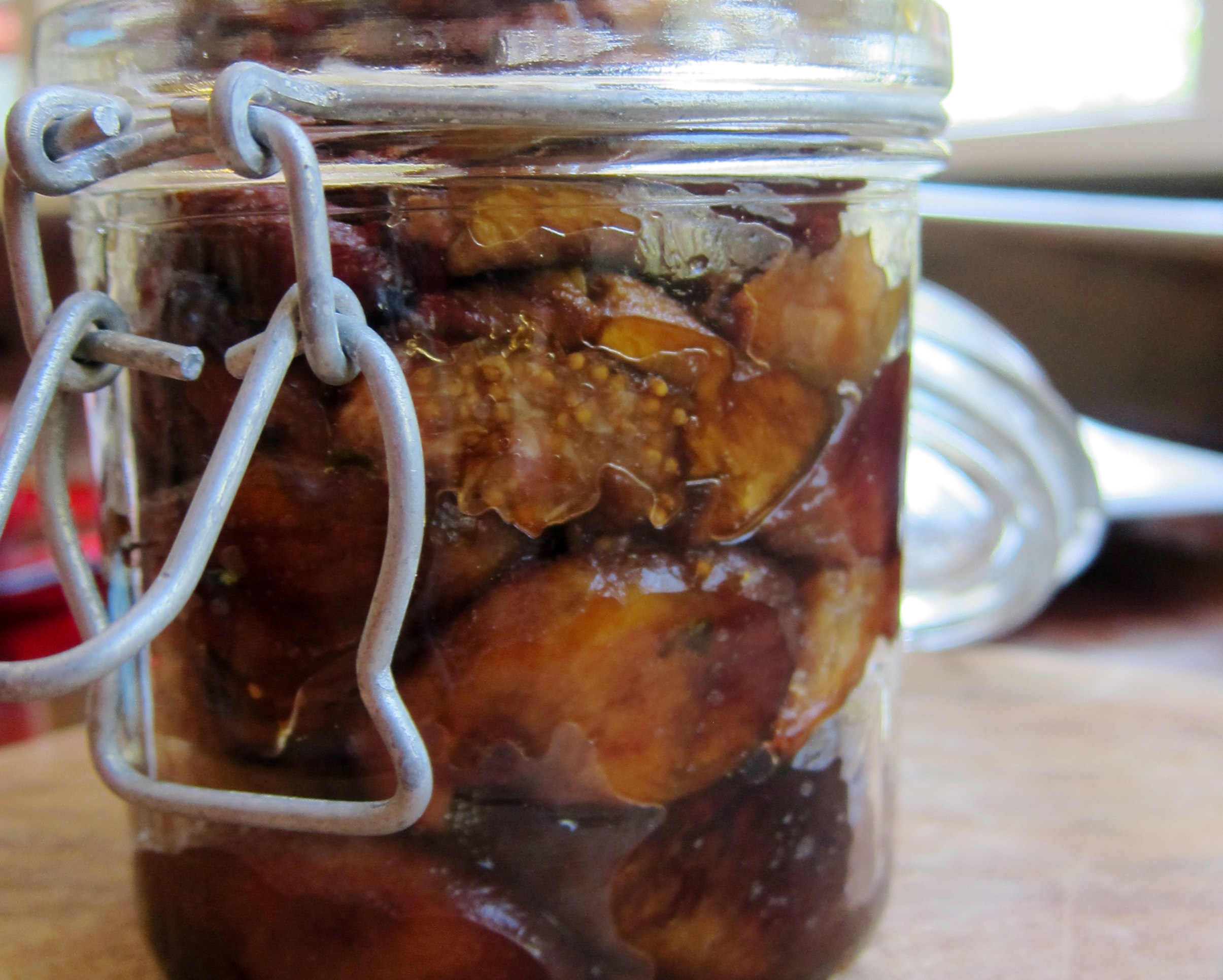
Figs do well in southern California, having come here in the eighteenth century via Spanish missionaries, hence the name, Black Mission. I am being quite brutish, roasting them with gay abandon, but there are many applications for these treacled beauties and they hang around for ages; dolloped on ice cream, smushed through a sieve and turned into fig butter, partnered with tangy goat’s cheese, piled on hot, yeasty bread, or thrown into a bread dough or cake batter. Or simply potted up and eaten one by one like sticky, gummy candies.

Roasted figs with honey and thyme

Serves 4

I committed the cardinal sin of leaving fresh figs in the oven overnight so they looked like tarmac. They tasted divine, though, so I suggest you do the same.

12 figs (or thereabouts)

3 tbs of clear honey

Walnut-sized knob of butter

A posy of thyme (about 15 sprigs)

Juice and zest of a lemon

1 roasting pan

Preheat the oven to 350F/180C. Bruise the lemon zest and thyme leaves together using a wooden spoon or pestle and mortar. Fish out any woody stems, but don’t worry too much if some remain. Put the butter, honey, thyme leaves, lemon juice and zest in a small saucepan. Heat gently, stirring until liquid. Take off the heat and leave to infuse for about 15 minutes. Cut off the stem at the top of each fig. Cut a deep cross down into each one, then squeeze the sides to expose the flesh. Place them upright in a roasting pan. It’s fine if the pan is crowded, but each fig should be resting on the bottom. Pour over the liquid. Roast for at least half an hour, then turn the oven off and let the figs stew in their own juices. Because first-crop figs can be a hit-and-miss affair, you can be quite brazen about the roasting, and general neglect here. These are not jewels, and they taste better for the wait.

“They say that the Fig-tree, as well as the Bay-tree, is never hurt by lightning; and also if you tie a bull, be he ever so mad, to a Fig-tree, he will quickly become tame and gentle. As for such figs that come from beyond the sea, I have little to say, because I write not of exotics; yet some authors say, the eating of them makes people lousy.

Nich. Culpeper, Gent., The English Physician Enlarged, 1653

* Also known as ‘breba’ figs.

Walnut bread

Tags

, , , , , , , ,

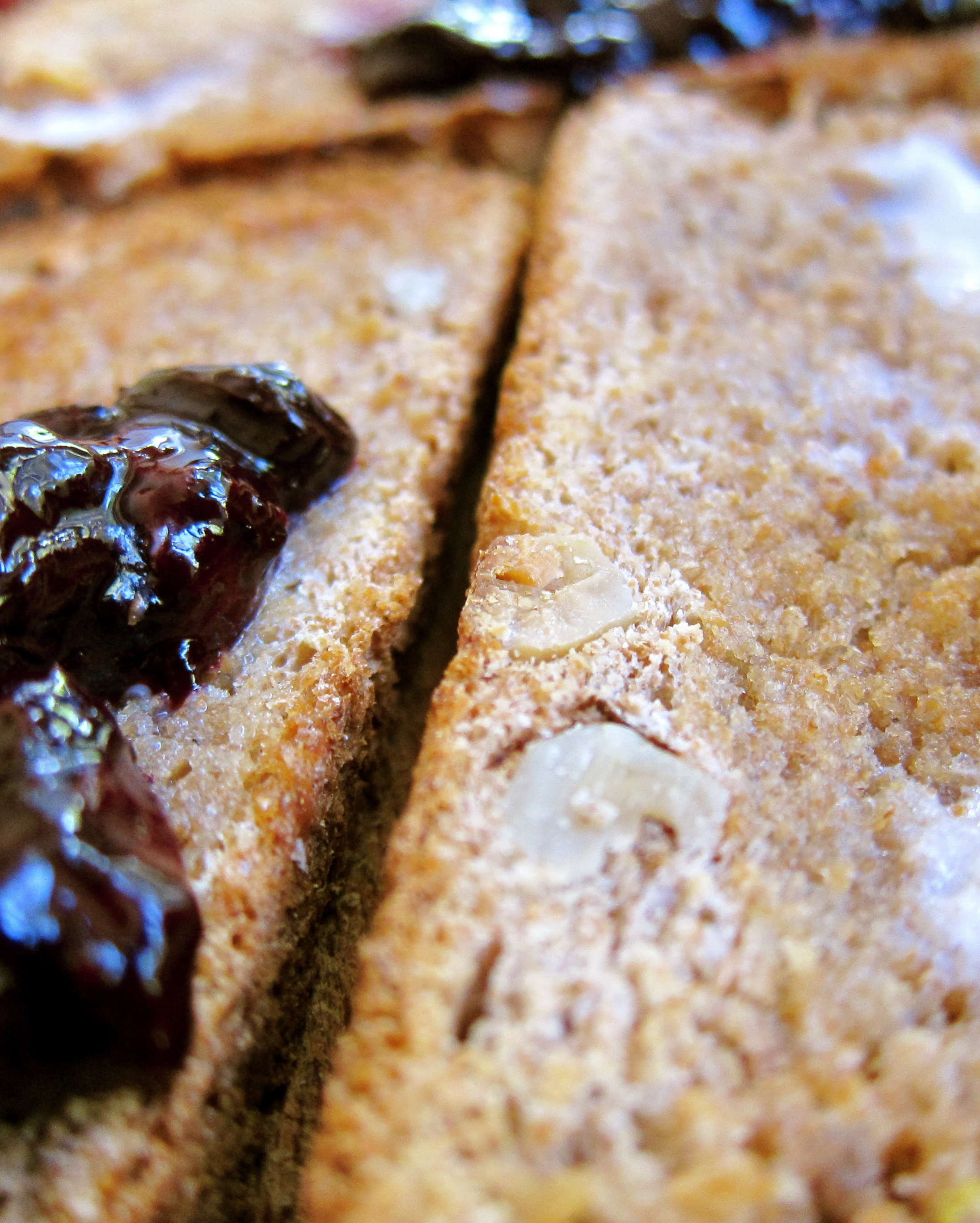
God, I miss bread. I don’t eat it much anymore. Maybe it’s because so much of it is that pre-sliced, flaccid, crustless variety sweating into its plastic bag. But the real thing is always worth it no matter how much you long for sleep afterwards, your legs leaden and your eyes drooping like a bloodhound. We don’t eat as much bread as we once did, perhaps because we’re not going down the pit anymore, or walking up mountains on a regular basis. So we forget what sustenance it provides. And good bread is real food, a meal in itself.

I have a memory of bread, toasted. It was homemade. It came in a mound, brown and slightly dusty. It filled the room with the most extraordinary fragrance. The bread belonged to our new neighbours in Exeter. They were a family of five: two boys and a girl. She was my age. The fact they lived next door meant there was some sort of unspoken rule that their daughter should accompany me to school. I was about seven and I was new to the area, my parents freshly divorced. So I would hover in the doorway to the kitchen while they finished up their breakfast. And what a breakfast! I was still digesting my porridge, but I could have sat down and started all over again in this new place.

The smell of hot, cakey bread, the dark husks still evident on their plates, and jellied spoonfuls of the bitterest marmalade sliding over the top of creamy, salted butter – the combination almost brought me to my knees. It still does.

Freya – for that was her name –  was given the task of ‘walking me’ (like a dog) along the back lanes to school. She lasted all of a day doing this. But still she went through the charade of leaving the house with me, walking to the end of the street and then when the coast was clear leaving me there. Every day at the allotted time though, I hovered and inhaled. I think there were seeds in the bread; it smelled nutty. A kind of charcoal splendour drifted daily from the toaster. I felt weak with longing.

They had a cat called Orlando who was an orange ball of hatred and bile. Like the rest of the family he carried about him an unmistakable aura of status. Our cat, Smudge, never stood a chance. They fought daily, one paw resting on the fence for balance, the other taking slightly camp swipes at the other’s face. It was obvious who would win.

Freya when the time came went on to her posh, all-girls school and I went to the local comprehensive. I never saw her again. Not properly. We did occasionally bump into the family. Freya’s mum did contemporary dance as a hobby (her dance group were on the local news!). Freya’s dad – an orthodontist – fitted me and my brother with braces. What a start though every day to eat homemade bread, toasted and smothered in some gorgeous preserve. The five of them sat there like warriors. How could you ever be miserable when you had a family like that?

Walnut Bread

Adapted from Rick Stein’s Food Heroes

1 tbs dried yeast

1 tbs dark soft brown sugar

450 ml (15 fl oz) lukewarm water

600g (1 lb 6 oz) wholemeal/whole wheat stone-ground flour

2 teaspoons of salt

20 g (¾ oz) butter, melted

40 g (1½ oz) walnut pieces

2 tsp sesame seeds or sunflower seeds

1 egg, beaten

To make a ferment or ‘sponge’, whisk the yeast and 1 teaspoon of sugar in 150 ml (5 fl oz) of the lukewarm water. The temperature is important; too hot and it will kill the yeast, but too cold and the yeast won’t activate. It needs to be ‘finger hot.’ The best way to achieve this is to measure two-thirds cold tap water, pour into a jug and top up with one-third boiling water.

Leave the yeast to bubble in a warm place until the surface has about 2 cm (¾ in) of froth on it. It will take about 15 minutes. It should begin bubbling after about 5 minutes – if it doesn’t, the chances are the yeast won’t work. Put the flour, remaining sugar and salt in a large bowl. Pour on the yeast ferment, the remaining water and the melted butter, and mix together until you have a soft, sloppy dough. Knead for about 5 minutes, adding the walnuts right at the end. You can toast the walnuts lightly in a dry pan beforehand if you would like to accentuate their richness in the bread, and also throw in a few more if you like abundance.

Cut the dough in half and form 2 fat sausage shapes. Put them into 2 buttered 450 g (1 lb) loaf tins. Cover each with cling film/plastic wrap or put in a large plastic bag and leave in a warm place for about 45 minutes, until the dough has risen to the top.

Preheat the oven to 230C/450F. Wash the tops of the loaves gently with egg (the dough can easily deflate) and sprinkle with the seeds. Bake in the centre of the oven for 25-30 minutes. Remove the loaves from their tins and return them to the oven for a further 5 minutes to crisp up. Leave to cool on a wire rack. Wrap in cling film/plastic wrap and freeze if you are not going to eat them right away.

Walnuts and flour

Walnuts admittedly belong to the quieter, fall months. I hope you will forgive this seasonal lapse – I wrote this during a white-hot, muggy spell in LA when it felt as if the earth would crack and we would be showered with all our possessions. The smell of autumn – hot bread, wet grass and cool cheeks – seemed preferable.

Now to flour – I know it seems obvious, but you can’t make good bread with the substandard stuff. Fresh, stone-ground whole wheat flour will transform a loaf from okay to unforgettable. Because stones grind the flour more finely than metal cylinders, there are more bran particles in the bread, which gives it a more pronounced flavour and texture (that lovely crunch). The germ is also more present, enhancing the flour’s nutritional value. The bread doesn’t last as long, though, because of the high oil content, so you have to eat it quickly (shame).

Peach cake

Tags

, , , , , , , ,

Continuing the cake inventory I started last week, I think this may be The Best Cake I’ve Ever Made. This expression gets bandied about a lot, I admit, and often I make pronouncements that later have to be revised, such as my adolescent belief that Five Star (a pop combo from Romford who all looked like versions of Michael Jackson) were “brilliant.”

That said, I think this is one of the best cakes I’ve made so far, and I take no credit for it at all. It’s all Nigel Slater, except for the almond extract and a redeployment of the blueberries. I’ve always been a fan of almonds – the only drawback being that an excess of ground almonds in a cake can make all the ingredients collapse into a kind of almond-induced stupor. I love moist, but I don’t really want a cake to drip. The almond’s strength is that it mitigates against the dryness of flour. Whenever I’ve made an all-flour cake, a few hours after it’s cooled it’s like eating hunks of stale bread. And dry cake is always disappointing, no matter how much you try to bury it beneath an avalanche of icing. Too much ground almond though, and it’s wet sand, so balance is all. This recipe captures the perfect ratio of crumbly and cakey with an almond-rich warmth.

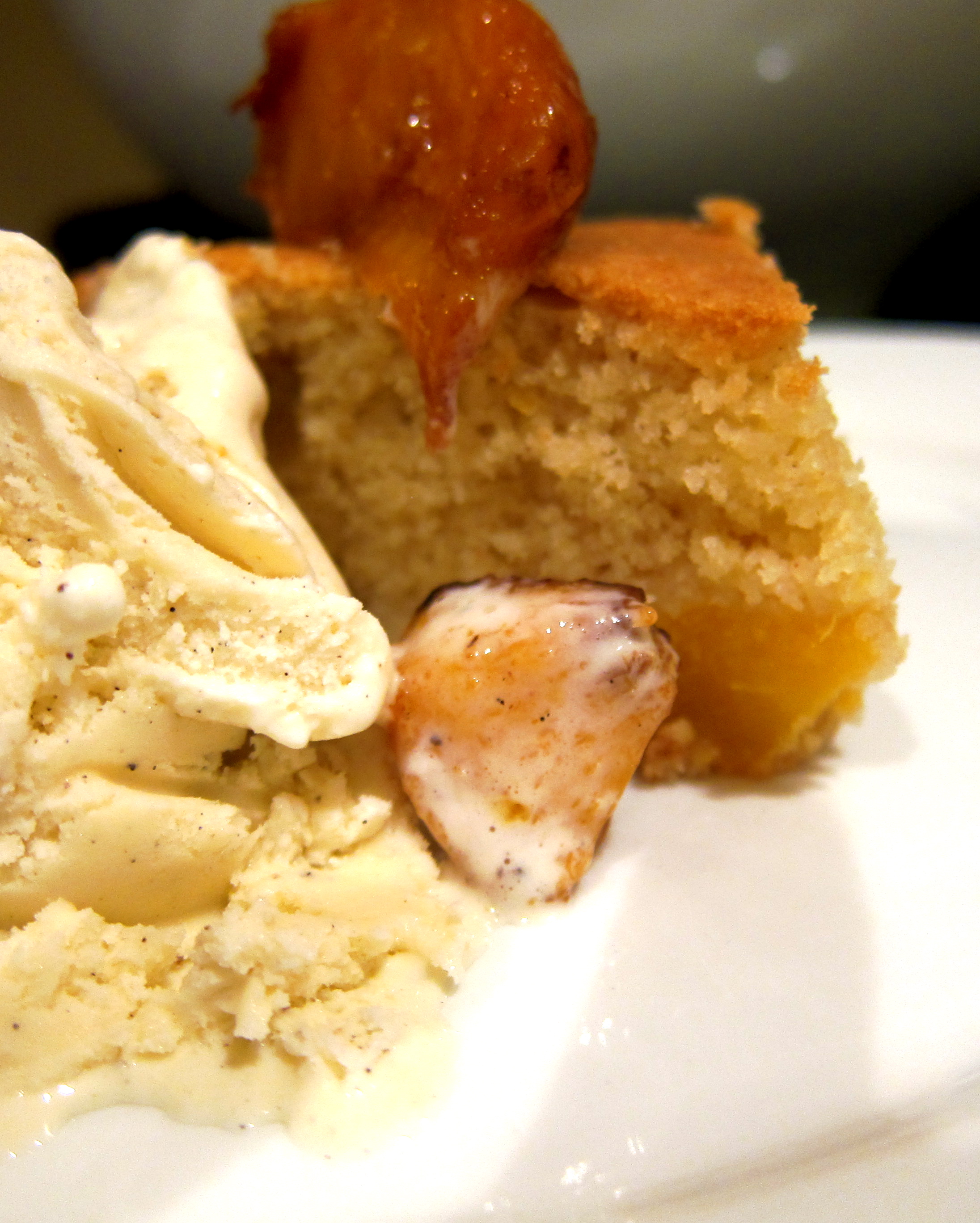
Now to the idea of peaches and sponge – it feels as if the textures would be at war with one another. However, the peaches hang in the cake, discrete, plump and surprising. And because stone fruit and almonds are related (they belong to the Drupe family), the flavours speak sympathetically to each other. Of course, most of the fruit falls to the bottom of the cake – I would love to know how to prevent this: maybe make the pieces smaller – but apart from this one aesthetic gripe, it is a thing of gentle, rustic beauty and our guests ate it in silence. Always a good sign. The smell is wondrous, it is the pale golden-brown of a wheat field and icebergs of peach are still visible through the sponge.

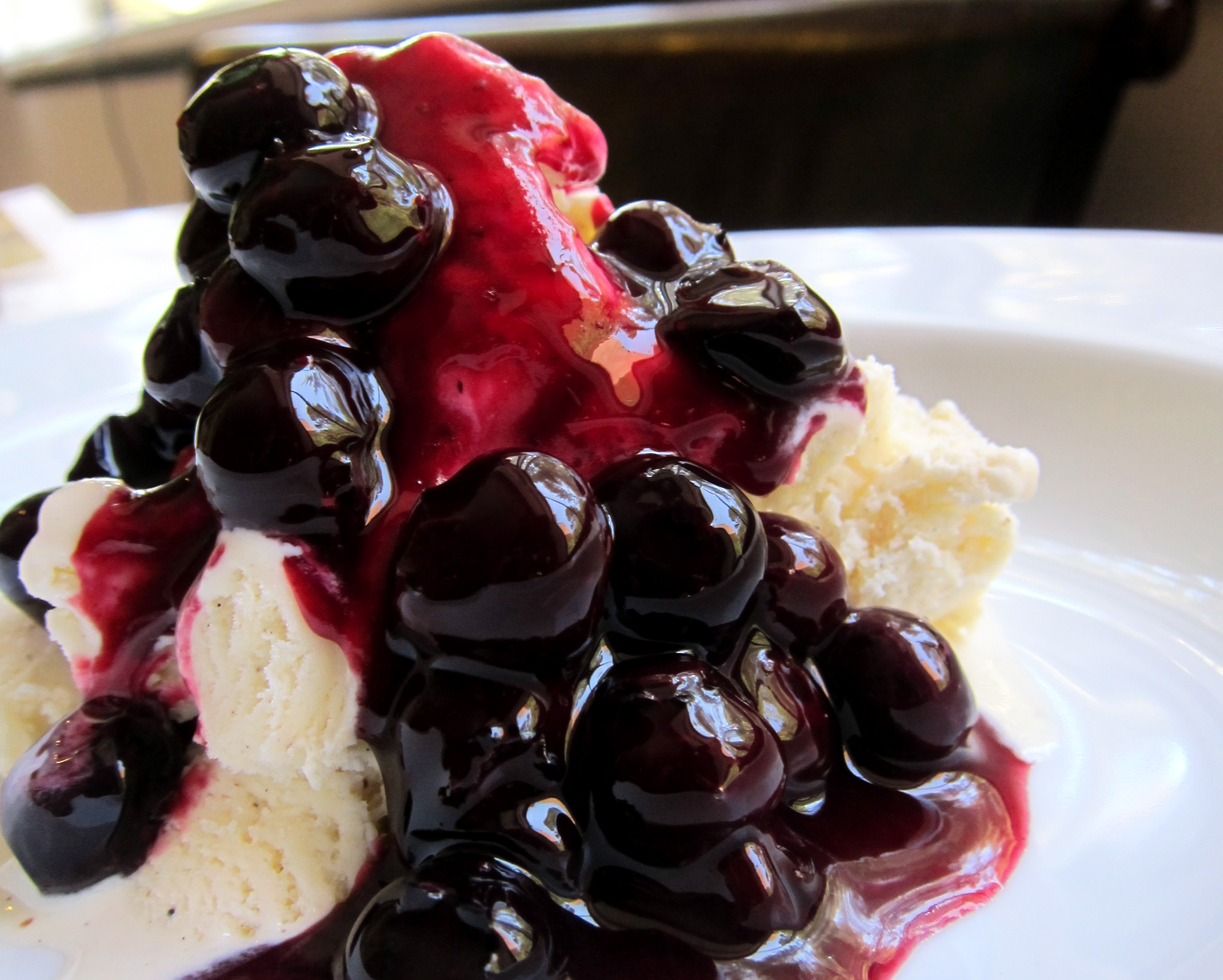
In Nigel Slater’s version, the blueberries and peaches are all jumbled up together, but the blueberry needs its own stage, I feel. It is the colour of midnight, a sombre, ink-blue (Robert Frost said “I taste in them sometimes the flavour of soot”), and I don’t want it to have to share the limelight. Its true home is the American cobbler, and it seems happiest when it can seep and bubble, turning a deep, hot, liquid pink. I’ve used it here as a compote to douse the ice cream. Many feel it lacks the acidic surge, the sheer clout of other berries, and it can underwhelm. I have added lemon juice and bay leaves to the compote to counter this. It is very fine.

Peach Cake

Adapted from Nigel Slater, Summer Cake Recipes, The Observer

Serves 8-10

175g butter, softened

175g golden caster sugar

225g ripe peaches

2 large eggs at room temperature

175g self-raising flour (or 1 tsp baking powder for every 125g of plain flour)

100g ground almonds

1 tsp grated orange zest

a few drops of almond extract

150g blueberries (optional)

Method

Butter and line the base of a 20cm (8 in) loose-bottomed cake tin with baking paper. Set the oven at 170C/350F.

Cream the butter and sugar together until pale and fluffy. Peel, halve, stone and roughly chop the peaches. If the peaches are very ripe, the skin will peel off easily. Otherwise, scald them in boiling water, lift out using a slotted spoon, and peel off the skin when it has cooled slightly. Beat the eggs lightly then add, a little at a time, to the creamed butter and sugar. If there is any sign of curdling, stir in a tablespoon of the flour.

Mix the flour and almonds together and fold into the mixture, in two or three separate lots. Add the orange zest and almond extract, and once they are incorporated add the chopped peaches and blueberries (if using).

Scrape the mixture into the cake tin and bake for about 1 hour. Test with a skewer – if it comes out relatively clean, then the cake is done. Leave the cake to cool for 10 minutes or so in the tin, run a palette knife around the edge, then slide out on to a plate, decorating as the fancy takes you; fresh berries, fruit compote, ice cream, thin single cream, the possibilities are endless. This is also lovely for breakfast.

Blueberry Compote

Adapted from Jane’s Grigson’s Fruit Book

1lb blueberries

Grated zest and juice of a lemon

¼ tsp ground cinnamon or 1 cinnamon stick

¼ tsp freshly grated nutmeg

Pinch of salt

60g/2oz/¼ cup cane sugar or maple sugar

2 bay leaves

1 tsp cornstarch or arrowroot

Method

Put sugar, spices, cornstarch, salt and bay leaves into a heavy saucepan, and mix together with 150ml (5 fl oz/⅔ cup) water. When smooth, put in the blueberries and set over a moderate heat. Stir until the liquid clears and thickens. Add extra water if you want a runnier consistency. Stir in the zest and lemon juice gradually to taste. Let it cool. Keep chilled. The flavours will intensify over time.

Addendum added 20/7/12

This blueberry compote also makes a glorious jam. Place it over a medium high heat and reduce until the liquid is about half. A couple of splashes of balsamic vinegar and a sprig of basil or tarragon also lifts the flavours and makes the blueberry sparkle. Pot it up and keep in the fridge.


Floury fingers – in memory of cake

Tags

, , , , , , , , ,

IMG_8809

I recently read about a three year old French child who bakes her own cupcakes. I imagine she needs help putting them in the oven, but apart from that she’s her own pastry chef. Much has been written recently about the difference between French and American children, and the way the French like to ignore their offspring.

I remember teaching English to a Parisian lady (and mother) who told me outright that she found ‘pre-language’ children uninteresting. They were simply beneath her until they could find the right words to keep her in the room. So the idea of a small child not just able to feed herself, but preparing baked goods was interesting to me. The French idea is that children should learn to be self-sufficient from a young age, resourceful and able to deal with periods of boredom and frustration – periods of aloneness, without setting fire to themselves or the house.

I too have memories of long, starchy afternoons, when time would linger and there was nothing much to do and no one around. This was before the days of constant adult supervision –  or in the words of the late, great Nora Ephron, before parenting became “a participle.” My refuge was reading, and making concoctions from scrag ends of food and my mother’s baking chocolate, which was like snacking on tar. It wasn’t just unsweet, but rock hard, greasy and impossible to either bite into or break off. I think she got it from a wholesaler called Norman’s in Budleigh Salterton. I don’t remember it ever being employed in a cake, but perversely for something inedible, she always hid it so it could only ever be accessed by balancing on a stool, hoisting myself up onto the counter and rummaging through packets of dessicated coconut and paprika until my hand landed on a wrapped lump the texture and weight of a horse-shoe. I cut my gums on it.

My nana from Australia sent me my first cook books. Floury Fingers by Celia Hinde did interesting things with fondant, but left me with a lifelong suspicion of cup sizes. The second book, though, became my friend, babysitter and an endless source of material both for my cooking life and beyond.

It was called the Kids’ Own Book of Stories and Things to Do. It was an absolute treasure trove. I think it was seasonal because one section was all about ice lollies and then another one had pictures of snow and mittens. There were stories of betrayal, wallabies, children of different ethnic backgrounds, slides, kites and all sorts. I loved the recipes the best and returned year after year to try them out. I rarely had the right ingredients. Sugar was banned in our house, except for muscovado that turned tea to treacle, though it was nice on porridge. We kept goats, whose warm (and occasionally hairy) milk softened our cornflakes in a way that I can only describe as off-putting. Raspberries were picked fresh from the bush for breakfast. There was ratatoullie and lambs’ brains. I wasn’t particularly appreciative.

What I wanted was cake. Preferably with thick slopes of icing and cut into giant-sized wedges. I do remember being terribly sick but still managing to swallow a few slabs of chocolate cake at another child’s birthday party, the sweat beading across my brow, twin flares of fiery red on each cheek. So slabs it must be here – as an homage to what I would have baked had I had the requisite ingredients. I did my best. I made chocolate logs that my dad said looked like dog turds, and rock cakes that lived up to their name. Had I not had huge swathes of time to explore, I probably would not have made them at all, so I’m grateful I was allowed to get on with the business of childhood without too many interruptions.

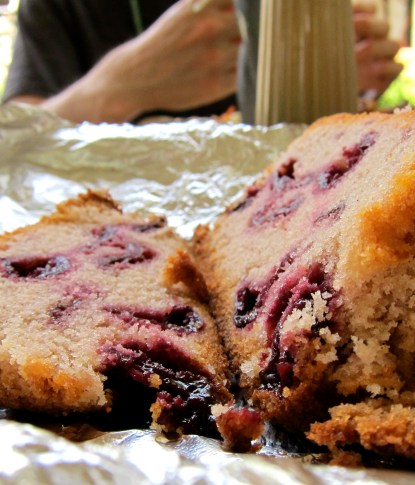
I am still in search of the perfect cake, even now. Something you can eat for breakfast (toasted, with butter), for elevenses, or brunch, for afternoon tea, and of course, for pudding. Beginning with this cherry-almond loaf cake, the cataloguing has officially begun.

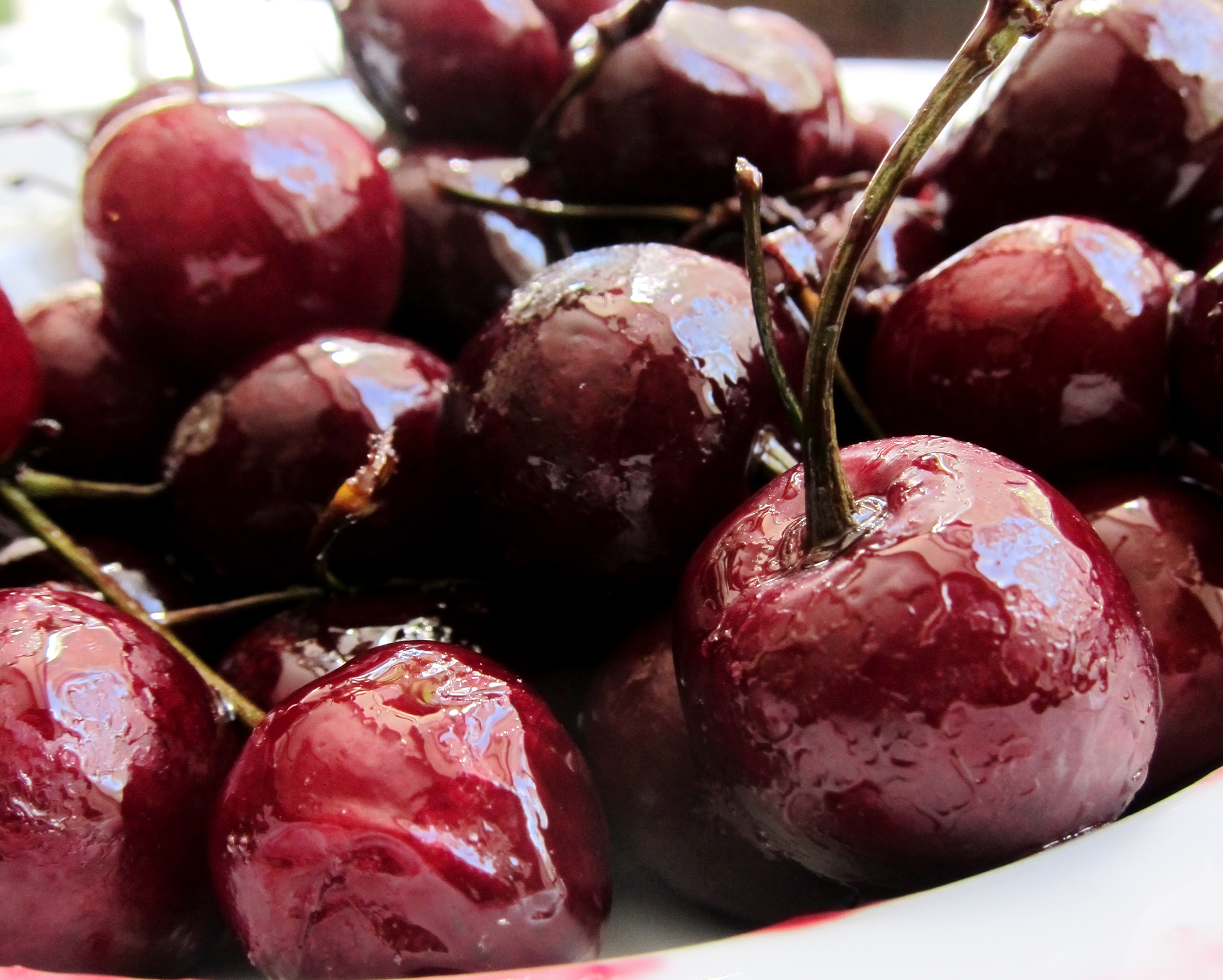
Now’s the time for cherries – the Bing variety has that deep, glossy coat, almost mahogany in hue, but any cherry can be made into a decent compote. The trick is no water, only a little sugar and a splash of balsamic vinegar. The cherries should keep their shape and not be overcooked. If you already have a jar of such things, or you have some (preferably undyed) glacé cherries, you can skip this bit.

Cherry compote

Adapted from Lindsey Shere, Chez Panisse Desserts

1lb ripe cherries

2 tbs sugar

2 tsp balsamic vinegar

Method

Put the cherries, stems and all, in a colander, pick out any bad ones, rinse and pat dry. Put them in one layer in a pan. Sprinkle the fruit with sugar and shake over a medium high heat for about 5-10 minutes. The sugar will melt and the cherries will feel soft to the touch. Don’t go to mush.  Sprinkle with the balsamic vinegar, and shake for a minute or so more. Scrape the cherries, together with their juice, into a container and let them cool before chilling. You can serve them as they are (they love ice cream), or stone and stem them for use in the cake.

Cherry-almond loaf cake

Adapted from Nigella Lawson, How To Be a Domestic Goddess

Here, I’ve reverted to grams; going back to my roots.

200g cherries (stoned, stemmed and halved)

250g self-raising flour

(or add 1tsp of baking powder to every 125g/4oz of plain flour)

225g softened butter

175g cane sugar

3 large eggs, beaten

2-3 drops of almond extract

100g ground almonds

6tbs milk

9x5ins or 23x13x7cm loaf tin, lined and buttered

Method

Preheat the oven to 325F/170C. Cream the butter and sugar until light and fluffy. Gradually add the beaten eggs and almond extract, alternating with the flour and ground almonds until it’s all one. Fold in the cherries, and then the milk and spoon the thick mixture into the loaf tin. Bake for ¾ – 1 hour, or until a skewer comes out clean. Leave in the pan on a wire rack until completely cooled. Makes 8-10 slabs.

p.s I read about the cupcake-baking three year old in The New Yorker. Here’s the whole article if you want to read on.

Apricots

Tags

, , , , , , , , , ,

IMG_8556

Apricots can go either way. Flabby, woollen and pointless or lush, tender and – in the case of apricot jam – unforgettable. Also, like plums, apricots are blissful with chocolate. I came over all funny when I realized this. I’d love to know who originally dreamt up apricot and chocolate tart, and give him/her a medal. I think the chocolate brings out the spice and sweet acid in the fruit. Whatever. No glossy cooking terms can possibly do justice to how successful it is. It’s the Sophia Loren and Carlo Ponti of food marriages. He’s the chocolate.

Apricot compote is brilliant as an almost-jam. It is also divine on its own, or with a plain summer cake. Ice cream also works – chilly tufts of the stuff melting into syrup – and almost any flavour. I think apricots are one of those stone fruits enhanced by cooking. Particularly poaching, which brings out the fruit’s complexity and freshness. It blooms under heat; its sharpness is mellowed, but still there is edge, and the texture becomes burstingly fragile.

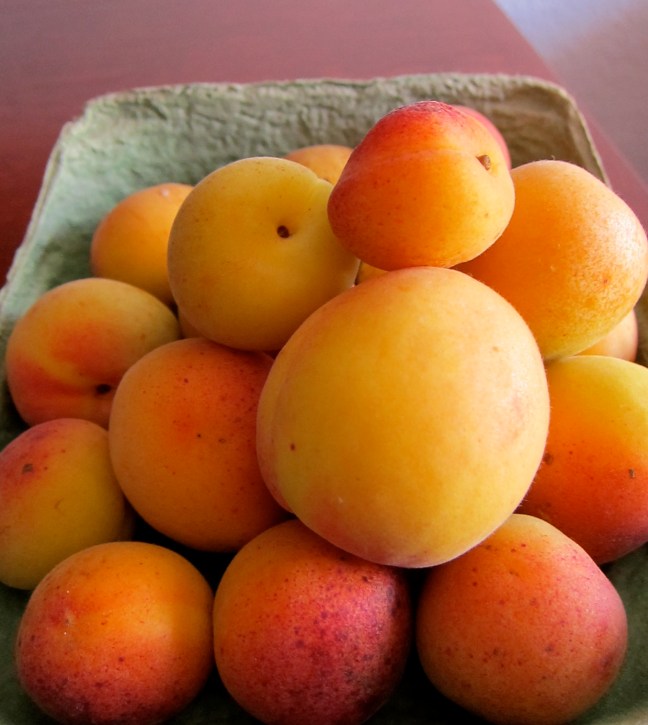
Now to the difference between one apricot and another. One word: water. Dry farmed, however counter-intuitive this may seem, is the reason why the best apricots have that intense concentration of flavour. If apricot trees are too wet, the fruit will be big and puffy, and the texture like eating someone’s earlobes. Arguably the finest apricots, at least in this area, are Blenheims. Their proud owners – or one of the very few – are Eric and Helle Todd from Forcefield Farms in Santa Paula. Their apricot trees grow in a dry riverbed, the fruit is small and has an intense aroma of honeysuckle. This season has been tough on them, and the crop is depleted due to an early frost, but they will be bringing out their little jewels in a week or so. Track them down at your local farmers’ market.

Royals are also very good indeed; some are almost as small as a pea, and rosy-cheeked. These tangy apricots go well with goat’s cheese; Leonora, from Leon in Spain, is gorgeously dense, creamy and cave-like.

It is an early fruit, precocious in name and nature – the word apricot comes from the Latin praecox – and its blossoms often fall prey to the cold. More fragile than peaches, ‘cots have none of their glamour or following, but they are a cook’s dream. I had to do some serious whittling to arrive at these two recipes.

Poached apricots

Adapted from Jane Grigson’s Fruit Book

About 12-15 apricots, whole

2 cups (500ml) water

1 scant cup (200g) cane sugar (or maple sugar)

2-3 cardamom pods

1 cinnamon stick

1 star anise

Zest of an orange

3-4 apricot kernels (optional)

Method

Poach the apricots gently until soft and tender, but still holding their shape (about 15 -20 minutes) with all the other ingredients. Remove the apricots with a slotted spoon, and discard the cardamom pods and star anise. Wash and dry the cinnamon stick to use another time. Reduce the syrup by half by bringing it to a boil. Add the grated zest of an orange, and pour the syrup over the fruit. Cool and chill. Remind people there are stones.

Extracting the apricot kernels: this is not obligatory but if you’re feeling game, you need a hammer and some sort of cushion. I used an oven mitt which I placed over the apricot stone. It muffled the sound, and also stopped the bits flying all over the room. Always try one before adding them to the syrup; some kernels are very bitter.

IMG_8575

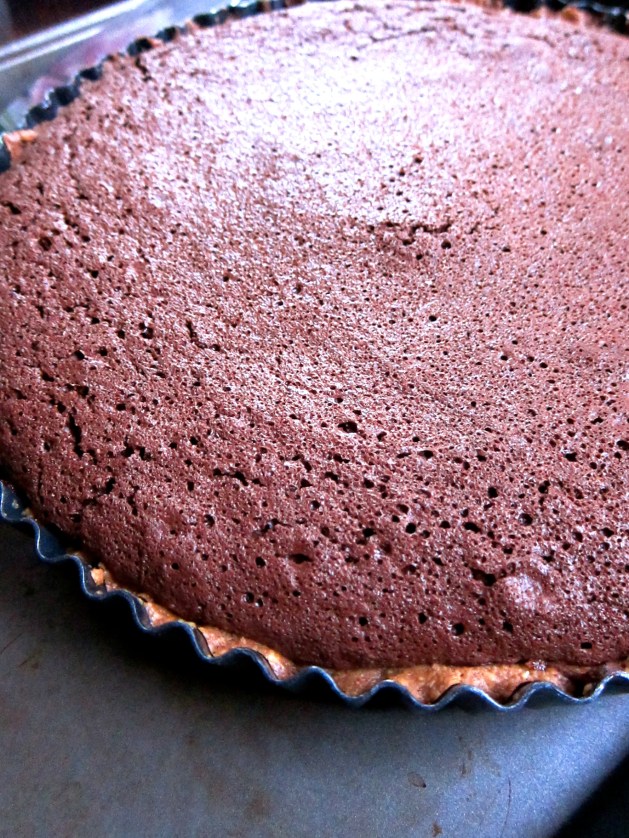
I understand the antipathy many feel towards putting chocolate and fruit together, but I hope you’ll make an exception here. This is the companion to the chocolate and plum tart that fell apart in the last post. I’ve since tarted up the pastry – removing the amaretti entirely – and this one stayed whole. I include the recipe for the amaretti crust if you feel like giving it a go, though it will melt into nothingness on your spoon and will not be coerced onto a cake slice, even for money.

This is an idea from Sam and Sam Clark, of Moro fame, and in their tart they use apricot paste called ‘amradeen’ – a  Syrian and Lebanese speciality. I’m using poached apricots in its stead, but dried ones also work. Serve with a few extra ‘cots on the side and some crème fraîche.

Chocolate and apricot tart

Adapted from Moro, Sam and Sam Clark

For the filling

180g (1 cup) poached apricots or paste/amradeen

2 tbs lemon juice

135g (9tbs) unsalted butter, cubed

110g (4oz) dark chocolate (70% cocoa solids) broken into bits

2 large eggs at room temperature

60g (¼ cup) cane sugar

For the pastry

Adapted from Rick Stein’s Food Heroes

50g (2oz) toasted slivered almonds

175g (6oz) plain flour

A pinch of sea salt

175g (6oz) butter, softened

65g (2½oz) cane sugar

1 medium egg, beaten

½ teaspoon of ground cinnamon

For the pastry

Put the toasted almonds into a coffee grinder or spice mill and blitz until fine but with some texture still. Mix with the flour, salt and cinnamon and set aside. Cream the butter and sugar together until smooth. Beat in half the egg, followed by the flour mixture and enough of the remaining beaten egg to bind the mixture. Knead briefly until smooth. Pat into a round disc, cover in plastic wrap and chill for 20 minutes.

Preheat the oven to 190C/375F. Carefully roll out the pastry between 2 sheets of plastic wrap and use to line a greased 8ins (20cm) loose-bottomed tart tin. Prick the base here and there and chill for about 30 minutes. Line the pastry case with greaseproof or parchment paper and baking beans (or rice) and bake blind for 10-15 minutes (check at ten). Then remove the paper and bake for a further 5 minutes. It should look and feel crisp and golden. Remove and leave to cool.

For the filling

Press the poached apricots through a sieve. Add the resulting puree to a pan with the lemon juice and a few splashes of the syrup. Heat gently until the mixture thickens. Stir to prevent the puree sticking to the bottom of the pan. The mixture should taste slightly tart. Spread the puréed apricot over the base of the cooled tart shell. Leave for a few minutes – the apricot will form a slight skin.

While this is going on, put the butter and chocolate in a bowl over barely simmering water. Whisk the eggs and sugar together until pale and thick and fluffy. When the chocolate has melted, take the bowl off the heat and fold in the egg mixture. Give this a good stir, bringing the chocolate up and over, until it is a uniform deep, dark brown. Pour this into the tart shell and smooth out any peaks and troughs with a spatula. Bake on the middle shelf of a pre-heated oven for about 25 minutes. There should still be a slight wobble – not too firm, glossily dark but with just the beginnings of a crust. Serve with some poached apricots, ice cream or crème fraîche and a slick of the poaching syrup.

If you insistamaretti crust

200g (1 cup) amaretti biscuits

80g (5tbs) butter, melted

Put the amaretti biscuits in a freezer bag and give them a few whacks with a rolling pin. Mix with the melted butter. Tightly press the amaretti into a tart tin and chill until needed. When you’re ready, put this in a pre-heated oven (350F/180C) and bake until the crust is nicely browned. Continue as above.

Plums and Pluots

Tags

, , , , , , , , ,

I’m running out of adjectives. This must happen a lot to people who are trying to describe food on a regular basis. Yes, the plum is juicy, but it’s not juicy like an apricot. It has a wincing tartness and it’s wetter. It’s sweet, but it has a different sweetness to, say, a cherry. It was a surprise to eat a perfectly ripe plum, because on some level I wasn’t expecting it to be so luscious. I have no memory of plums growing up and have always believed them to be rather serious. Perhaps it’s the fact that in England they are an autumn fruit. Evenings are drawing in, there’s a chill in the air. Sundays become Mondays, there are hot water bottles, feet trudge. It’s also the winy red of the skin and a tannic roughness on the tongue. It’s a dark fruit. Maybe it’s as simple as that.

Here in Southern California, plum season starts as early as May and goes through to September. And then there are pluots, a horrible name reminiscent of toilets. It’s a hybrid of plum and apricot, the result of generations of intricate and painstaking crossbreeding. It sounds off-putting, I know, but the fruit is crossbred naturally – not genetically modified – through hand pollination. Think of bees in nature, except here each hybrid takes, not minutes to develop, but years.

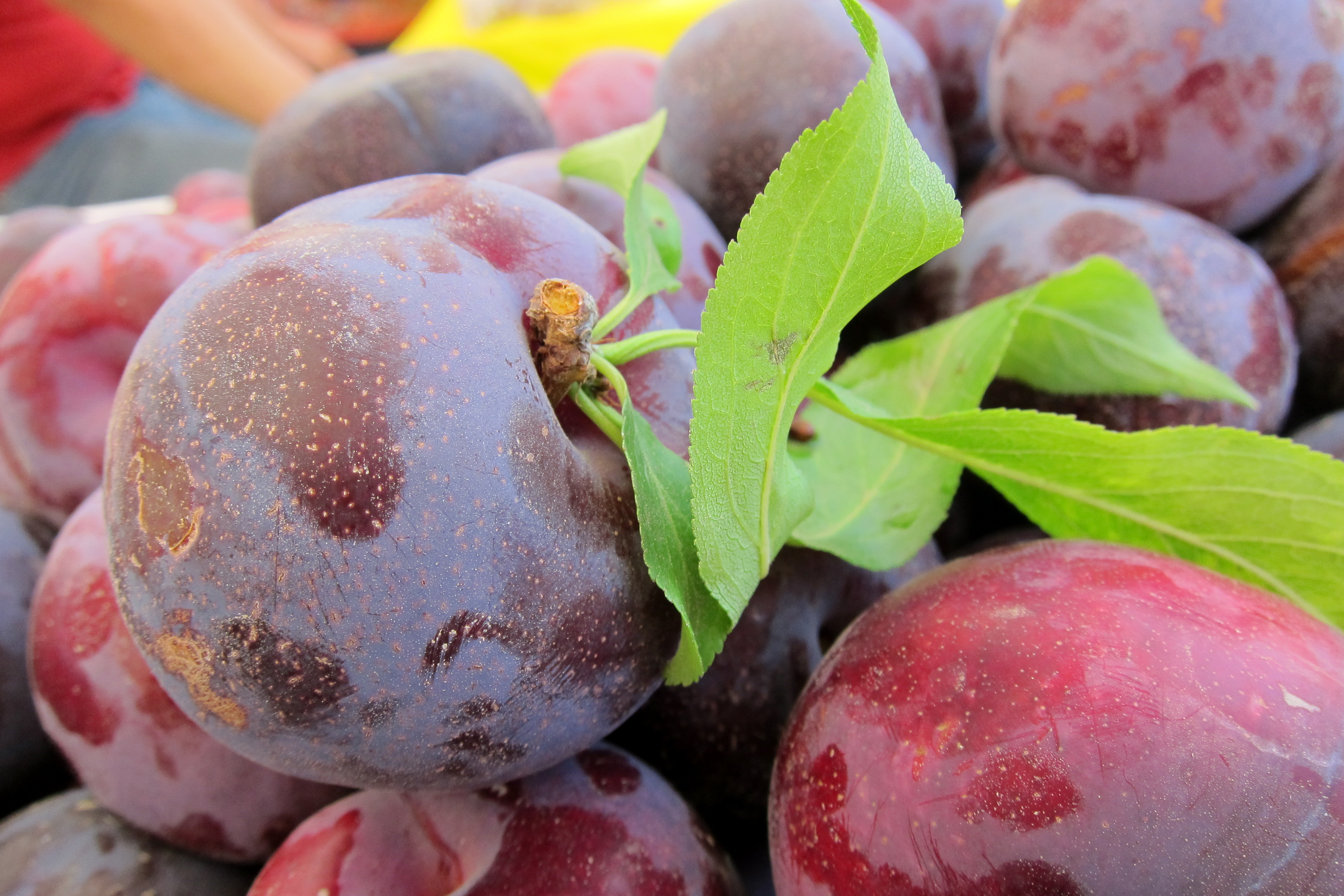
The picture above is of the Flavorosa pluot; the white dust is its natural bloom, its skin is less fibrous than a plum, with a soft, plush almost transparently crimson interior. It is sweet but pleasurably so, with some sharpness bringing up the rear. The juice, when you pierce the skin, spills out. Think of it as a summer plum, born under blue skies.

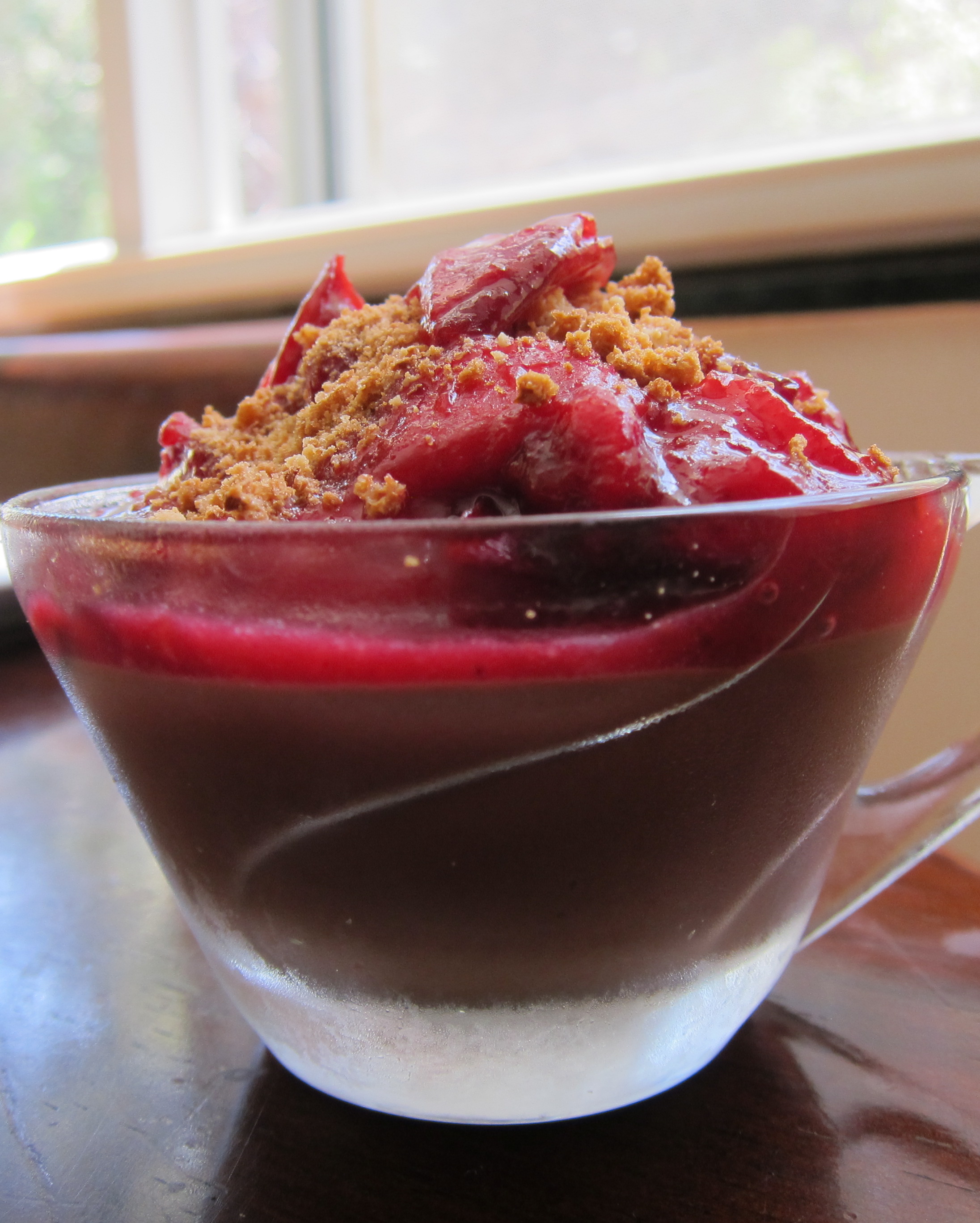
I put it to use sautéed, as a pairing for a cold, dark chocolate pudding, and layered in a chocolate and amaretti tart. I brought them both to the herb garden, where I volunteer, for the other gardeners to test. The chocolate pudding was devoured in silence, standing up by the tool shed. The tart was eaten after lunch. As it almost melts on the spoon you must feed yourself fragments. I didn’t want to applaud my own efforts, but I thought it was pretty phenomenal. Sandy, deeply fruity and blanketed in a heft of complex chocolate, just shy of crust. It’s a mess to look at, so you may want to work on the aesthetics.

“Rich,” said Tony. He wiped the ramekin clean with a paper towel, and placed it back on the table.

“Marzipan?” said Tristan.

“No.” The conversation continued in this way for a while, one word here and there, nothing too formed. It’s helpful to know sometimes that’s what food does. I’ll feature this recipe when I’ve managed to make it look less like a cowpat.

The plum and chocolate pudding is nice cold but not too frosty; you want to be able to taste the marriage of flavours which will start to come through as it warms up. The almond extract  – which I was considering forgoing – is really lovely and works well with the plums. I tried Penzeys cocoa powder, because some cocoa can be underwhelming. The key is the colour: look for a reddish-brown, like an old brick. It should also smell bewitching, simply in its dry state.

Sautéed plums with dark chocolate pudding and crushed amaretti

Adapted from Deborah Madison, Seasonal Fruit Desserts

If you want to make this gluten-free simply omit the amaretti biscuits. Try toasted almonds instead.

For the sautéed plums:

4-6 plums or pluots

2 tbs (28g) unsalted butter

¼ cup (50g) organic sugar or maple sugar

2-3 cardamom pods

1 tsp (splash) orange-blossom water (optional)

For the dark chocolate pudding:

2 cups (500ml) milk

Zest of 2 oranges (less, if you’re less partial)

2oz (60g) dark chocolate (60-70% cocoa)

½ cup (50g) unsweetened cocoa powder

½ cup (100g) organic sugar

Pinch of salt

Scant ¼ cup (25g) cornstarch dissolved in ¼ cup (50ml) of water

¼ tsp (or a small splash) almond extract

1 amaretti biscuit per pudding

For the plums

Rinse the plums, dry, then slice them into wedges. Heat a frying pan/skillet with the butter over a medium heat until it melts. Then add the plums, sugar, and cardamom pods. Raise the heat and cook, jerking the fruit around every now and then so the cut surfaces start to catch and caramelize. After about 10 minutes, the plums will start to give up their juices and cave into one another. Add the splash of orange-blossom water – if you want – and be prepared for a sticky mess.

For the pudding

Warm half the milk with the chocolate and orange zest over a low heat. Meanwhile combine the cocoa, sugar, and salt in a bowl. Stir in enough water to make a smooth paste. Whisk this paste into the warming milk. Mix the remaining cup of cold milk into the cornstarch. I find it works best by slowly introducing the milk to the dry powder, which then becomes slacker the more liquid you add. The other way round results in a lumpy glue. Now add this cornstarch mixture to the pan.

Raise the heat slightly and stir as the mixture thickens. Then lower the heat and keep stirring until it appears custard-like, but still with some movement. You don’t want the spoon to stand up of its own accord. Remove the pan from the stove and add the almond extract and give it a stir. Pour the pudding into little ramekins and place plastic wrap directly on the surface if you don’t want a skin to form. Served chilled with a spoonful of plums and a smashed-up amaretti biscuit on each.IMG_8325

Plums for Breakfast

I like to think of these as ‘sleeping plums.’ They are overnighters, having been tucked into the pan and lapped by their own considerable juices. By morning, they are deflated, dilapidated even, but the juice is spicily intense, having been concentrated by the wait. Nothing quite prepares you for the depth and zing of that first slurp. I quote Nigel Slater, from his book Ripe, in his entirety here. Feel free to add your own spices – such as a cinnamon stick or some cardamom pods. I would also add that it took a fair bit longer for my plums to collapse – you could go to 30 minutes, easily, on a very low heat. That’s when you clap the lid on, turn off the heat and leave them til morning. And remember there are stones to navigate before you dole this out. I used pluots instead of plums.

“A pot with a sturdy bottom, a pound of plums (500g), ½ cup (100g) of sugar, a vanilla pod split down its length, its seeds exposed, and just enough water to leave a wet film on the bottom of the pan. Place over a gentle heat, let the sugar melt and the plums burst, their juices mingling with the sugar. Keep the heat low and your eyes on the job. After ten minutes, maybe fifteen, the plums will have collapsed, their juices taken up some of the warm, vanilla notes and you will have a dish of plums to cool, then thoroughly chill, and eat for breakfast.”

Winging It

Tags

, , , , , , , , ,

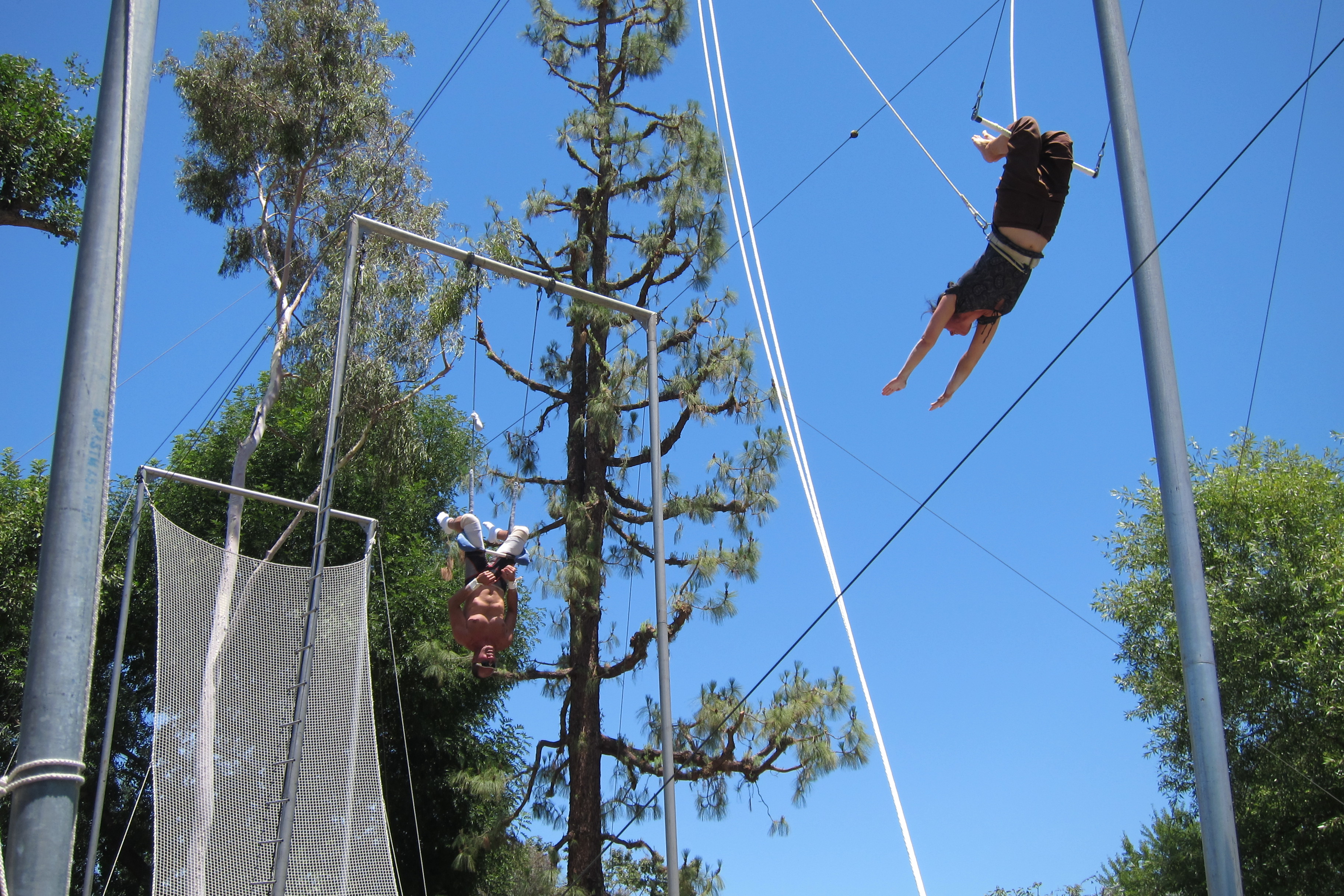
On Wednesday, I flew on the trapeze. When you watch it, it looks so easy. I came down after the first try, my body shaking with adrenalin and fear and, frankly, embarrassment that people had had to watch me.

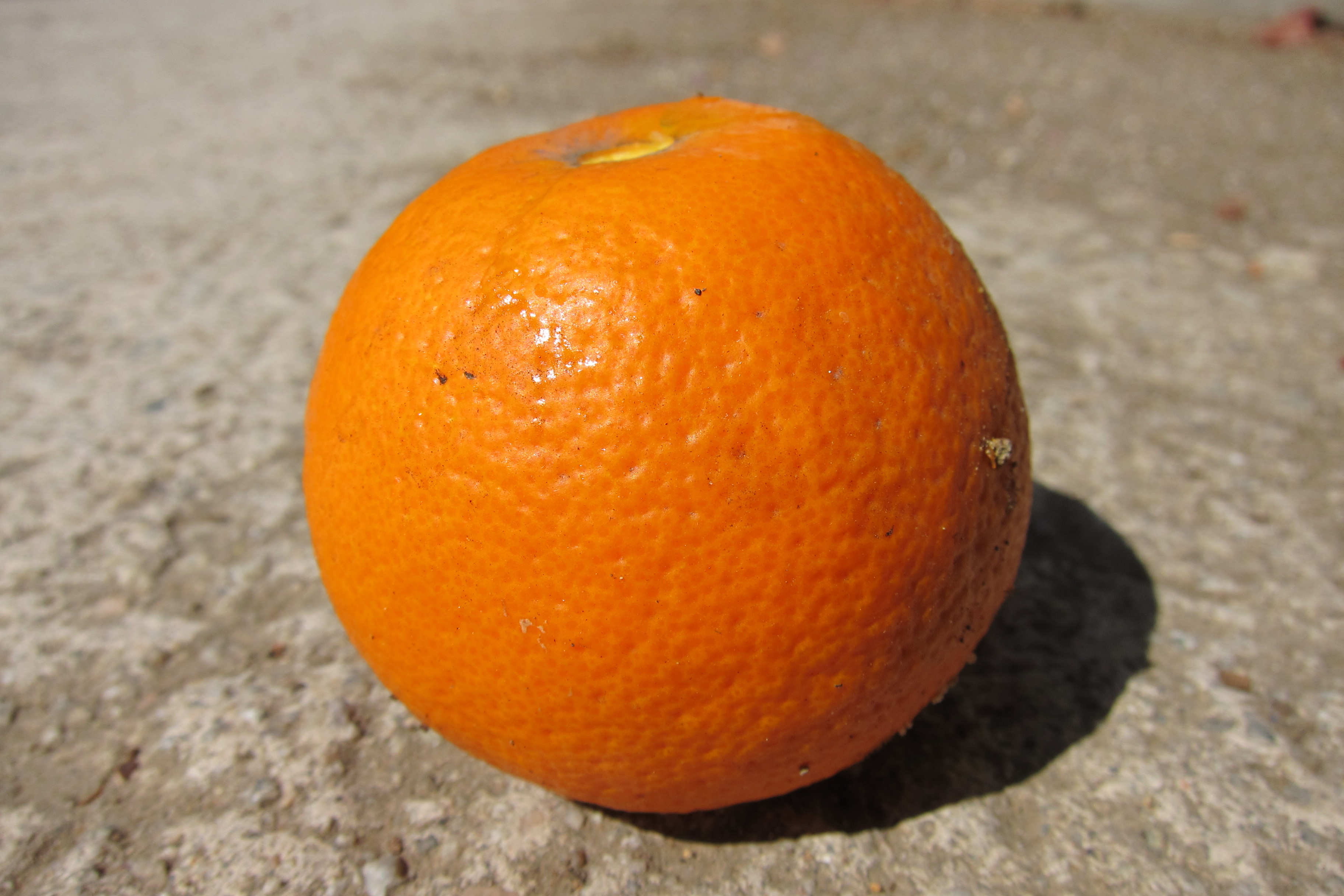
I kept looking at the grapefruit tree that stood in the background and the orange tree next to it, its branches crowded with fruit and tried to think about recipes, and yet who was I kidding. I was thinking of not getting it right, of somehow not hearing the instructor’s orders, his barks up to the platform. The platform wobbles as you stand on it, by the way, and is 40 feet off the ground. It’s also frighteningly slim. This is what they tell you, the trapeze aficionados – that the experience teaches you to become a ‘connoisseur’ of your fear. And then you jump.

I had three goes at the ‘knee hang’ – see the picture. If you think you’re fit, try doing that one day. You have to use all your upper body strength to hoist your legs over the bar. I now realize I have no upper body strength. I had one more go left before the instructor called time. “Think of something that makes you really angry,” he shouted angrily. And then: “You can do this!” “Knees to nipples!” a woman yelled. She was a midwife.

I can’t remember what happened next except a feeling of relief and then the blood rushing to my head. I let go of the bar too late – everything in you resists it – and was out of whack with the catcher. I was all over the shop, but his grip was monumental. I dangled, a dead weight. But it’s that in-between moment that gets you, the moment of weightlessness. You’re flying! Everybody looks the same when it happens – lost in rapture. You hope that no one notices, but they do.

There are other sensory impressions: the grass turning brown underfoot. Scorching flagstones. The smell of horse from the field next door. Not dung exactly, but the smell almost of the horse’s breath; musky and hot, mixed with summer air. Low slung wire fencing turning a rusted orange. The clink as you’re unclasped from the ropes. The enormous web of net. Toes inching over the platform. The two bushy trees – grapefruit and orange against the back wall, the flashes of colour a pleasing backdrop to the soaring, swooping and plummeting bodies, the last one being mine.

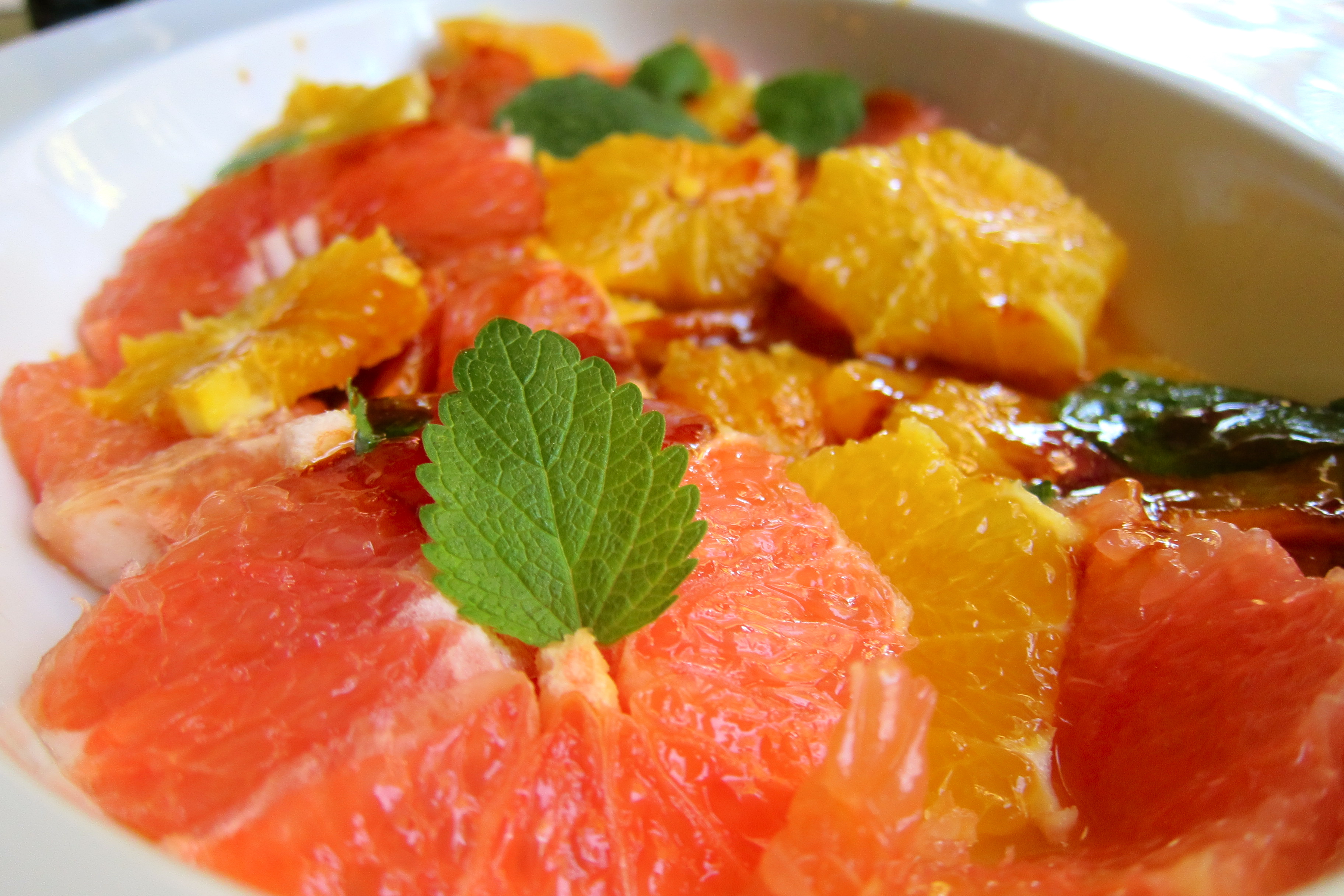
Citrus with Orange Caramel

Adapted from Deborah Madison, Seasonal Fruit Desserts

This is fruit at its most chaste. The caramel is very subtle; warm rather than sweet. I used grapefruit and oranges because they come from the story, and I made it that night, but you can use anything citrussy.

6-8 citrus fruits

⅓ cup (70g) organic sugar

½ cup (120ml) freshly squeezed orange juice

1 cinnamon stick

1 clove

A few splashes of orange-blossom water

Fresh mint sprigs or lemon balm

Method

Finely grate the zest of an orange, and put to one side. Peel the rest of the fruit. Use a sharp knife for cutting citrus, if you want it to look pretty. Take a narrow slice off the stem and blossom ends. Cut down the sides of the fruit from top to bottom, slicing away the skin and the white pith. Now cut into rounds and put into a bowl.

Melt the sugar over a medium heat, until it turns a rich, chocolatey brown. Don’t stir, but keep tipping the pan this way and that, so the sugar doesn’t burn. When it has become liquid, stand back and pour in the juice. It will splutter and the caramel will seize, but after a few minutes back on the heat, it will dissolve again. Add the reserved orange zest, cinnamon stick, and clove. Splash in a few drops of the orange-blossom water, slide in the slices of fruit and swish them around so they’re coated, then pour the fruit and caramel back into the bowl. Serve very cold, speckled with the fresh herbs. This dish is very accepting of ice cream, and Greek yogurt.

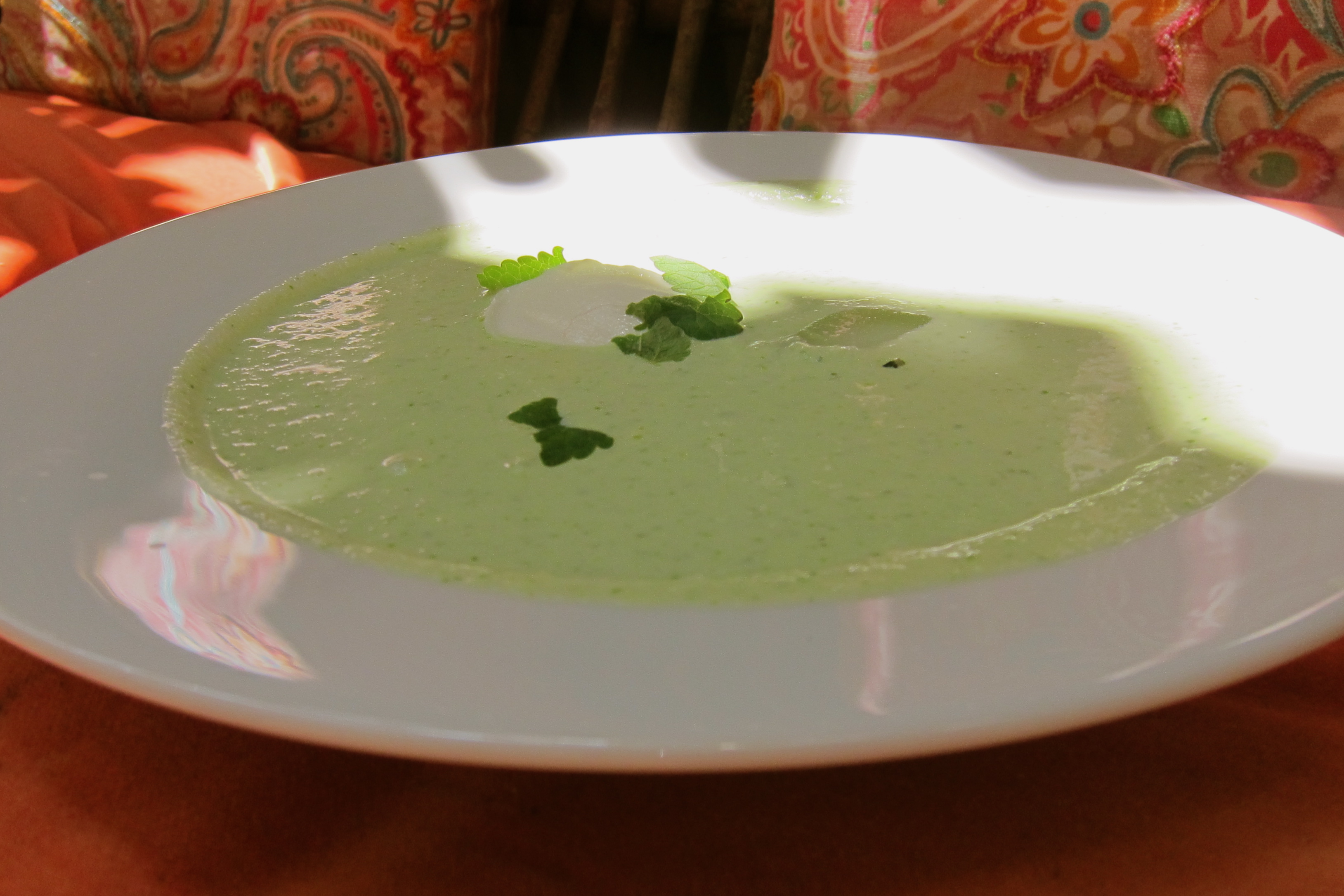
Cucumber Gazpacho

Tags

, , , , , , ,

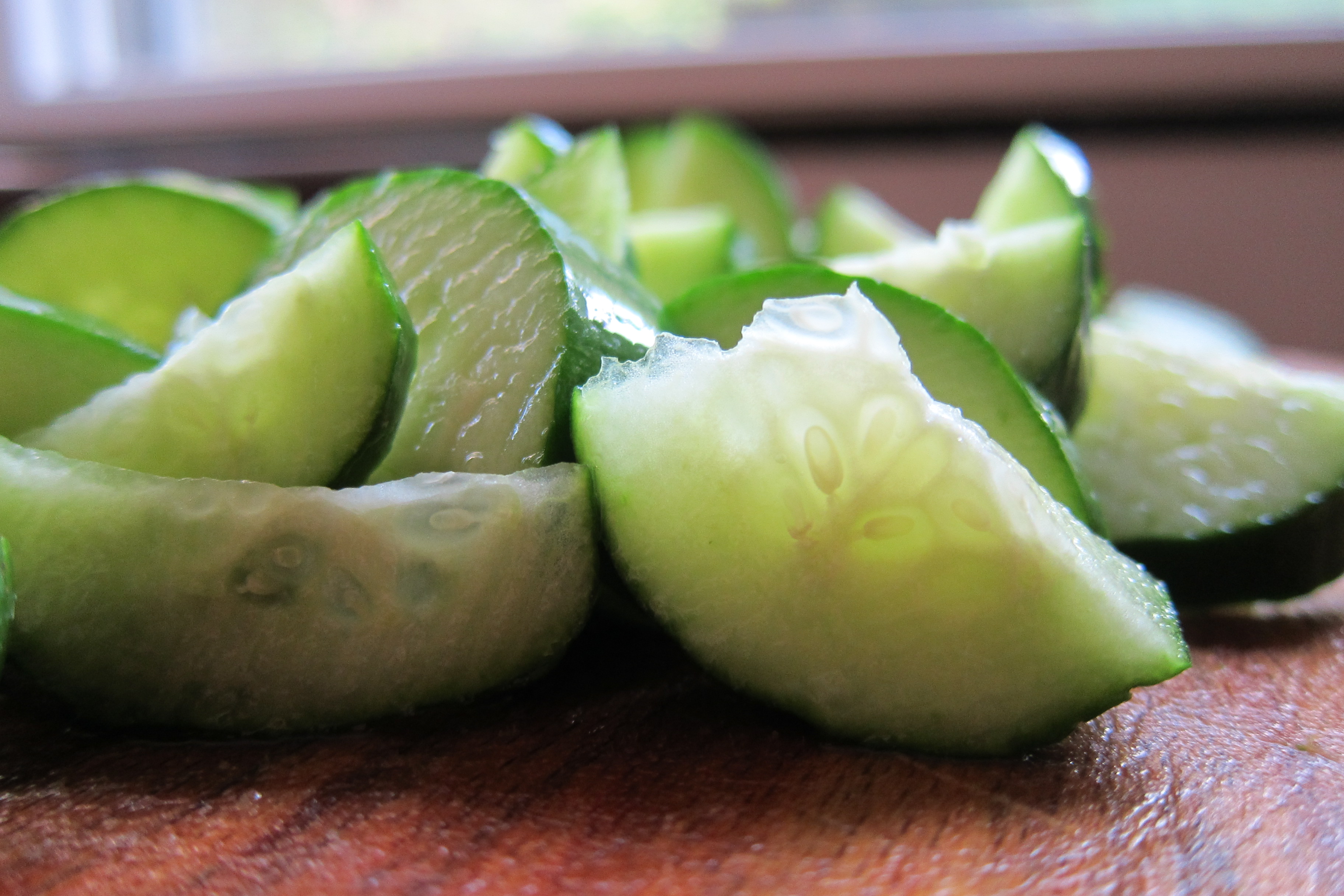
I know cucumbers can be a bit ‘whatever.’ I mean, I could go my whole life never missing them. And yet they are fresh and summery and lend themselves beautifully to cold soups as well as interesting herbal combinations. They like a bit of salt and lemon. I can’t work out why so many recipes ask for cucumbers to be peeled and de-seeded. What’s left? Thankfully, the recipe I’m using here is less prissy and allows you to chuck the whole thing into the blender. Which is good because you really get the essence of cucumber – light but with a herbaceous edge – and the seeds are what creates a lot of the juice.

My first memory of cucumbers was in Crete as a child. We were staying with a Greek family. I developed a crush on the son, who was a teenager called Vazeles. I thought he was very sophisticated because he drank his tea with a spoon. I spoke to him in fake Greek a lot and he smiled politely and continued about his business. The thing I remember most though was that whenever I entered the dining room, which was where the whole family congregated, the grandmother would start peeling a cucumber into the fire. She laughed – actually, she cackled –  and so did everyone else, including my mother. I have to say, as a child, I couldn’t see the funny side. Even now it seems a bit disturbing; the insinuation was that this act was in some way sexual which was why everyone found it funny. Anyway, if anyone reading this knows of a Greek custom where old ladies start to peel cucumbers into the fire whenever a small child enters, I’d love to hear from you.

I can’t remember where those cucumbers ended up – I mean, in what dish – although it’s fair to surmise it was probably for a Tzatziki, a popular Greek dip made with strained yoghurt, cucumbers, lemon, salt and dill or parsley; a choppier and breadless version of cucumber gazpacho.

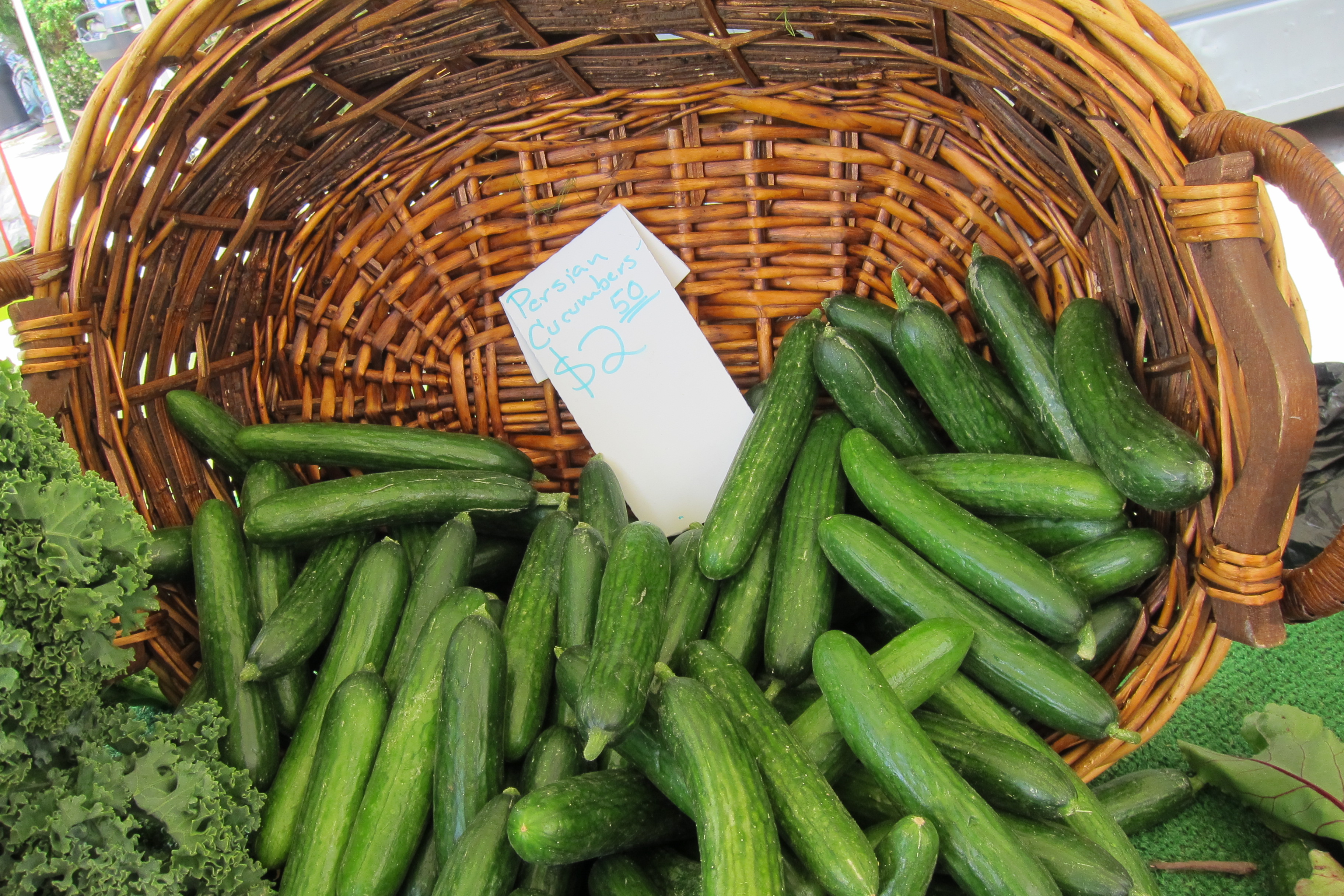
If you’re using thick-skinned cucumbers, by which I mean your standard, long, dark green cukes, you may want to peel them as they will have a tougher hide, and may have been waxed. I used thin-skinned Persian cucumbers here, because that’s what I found at the farmers’ market. They’re smaller, but taste the same – in other words, like a cucumber.

The garlic is non-negotiable in my opinion. I really don’t think gazpacho works without it, but you can play around with the intensity. I think three cloves gives you enough of a heady sensation without feeling you’ve been garlic-snorkelling. It’s the cleanness of the cucumber and the sulphurous hit of the garlic that is the key to this dish, so be brave. Stale white bread is a central component of a traditional Spanish gazpacho, and will give the soup a ‘thick cream’ texture. If you use it, I would strain the soup into a bowl before chilling, to remove any rough bits.

As for which herbs to use, mint is traditional, and lovely. Sorrel is less common, and a good reason to experiment. It is a perfect time of year for it. For a spring leaf, it’s incredibly juicy, lemony and refreshing. Can a leaf be creamy? Strangely yes. I hope I’ve piqued your interest.

Cucumber Gazpacho

Serves 4

3 large cucumbers or 6-7 small ones

A small handful of mint or sorrel leaves, stems removed

3 cloves of garlic, crushed

2 tbs extra virgin olive oil – or a couple of very hearty glugs

Sea salt

A squeeze of lemon

1 cup (½ pint) of plain, Greek yoghurt

Optional: A couple of handfuls of stale, white bread,  torn up, with crusts removed

Method

I have deliberately kept the amounts quite loose, as this is where feel and taste rule. Coarsely chop the cucumbers – peel them first if you think the skin looks a bit tough – and put them in a blender. Add the crushed garlic, a pinch of sea salt, the olive oil, a squeeze of lemon, the yoghurt and the stale bread (if using) and puree to a wet pulp. You may have to do this in batches depending on the size of your blender.

Take the smoothness as far as you like – silk soup is very pleasing, some like a rougher texture, but I would strain the mixture through a sieve if you’re using the bread. Cover the bowl and chill thoroughly. Go almost to icicles. To serve, season the soup again. Remember that chilling dulls the flavour. Add a streak of yoghurt and strew with the herbs. Drop in some herb-flecked ice cubes for some shock and awe.

About Cucumbers

Originating in the Himalayan foothills, the wild cucumber is hideously bitter by nature. It has taken centuries of breeding to make it edible. It is a member of the Cucurbit family, to which the melon and winter and summer squash also belongs. It is a fruit.

How to eat a peach

Tags

, , , , ,

IMG_2608

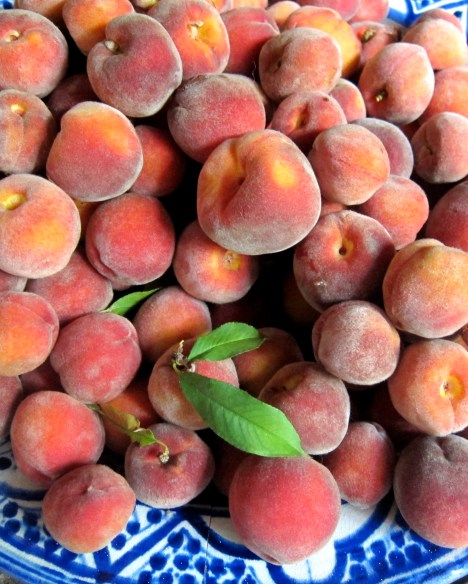
Peaches and brown paper are forever linked in my mind, the rustle and crumple of the bag as I withdrew the fruit, its downy skin against mine, the slight indentation my thumb made and when I dug in feeling the juice drip down my arm.

It was the day I didn’t buy nectarines, the contessa’s favourite. Why she preferred them, I couldn’t fathom. Their baldness never appealed, they were flinty and hard to look at. So I went for peaches instead. That was over twenty years ago in Venice and I can still remember the stallholder’s look as I handed him the note the following day, telling him what I couldn’t. That it must be nectarines you give the girl and not peaches. Pesca noce. He was weary, surrounded by clumps of basil and buckets of artichoke hearts floating in water. A wave of peaches and nectarines rose up behind him.

But it was that first peach I remember most. It was warm and tender, baked by the sun. The nude pinky-orange flesh caved, the tiny fibres clung to the stone, a lake of juice pooled in my mouth. I remember wanting to eat it out of sight. Go somewhere secluded. It would be something to deny on arrival, with suspiciously sticky hands.

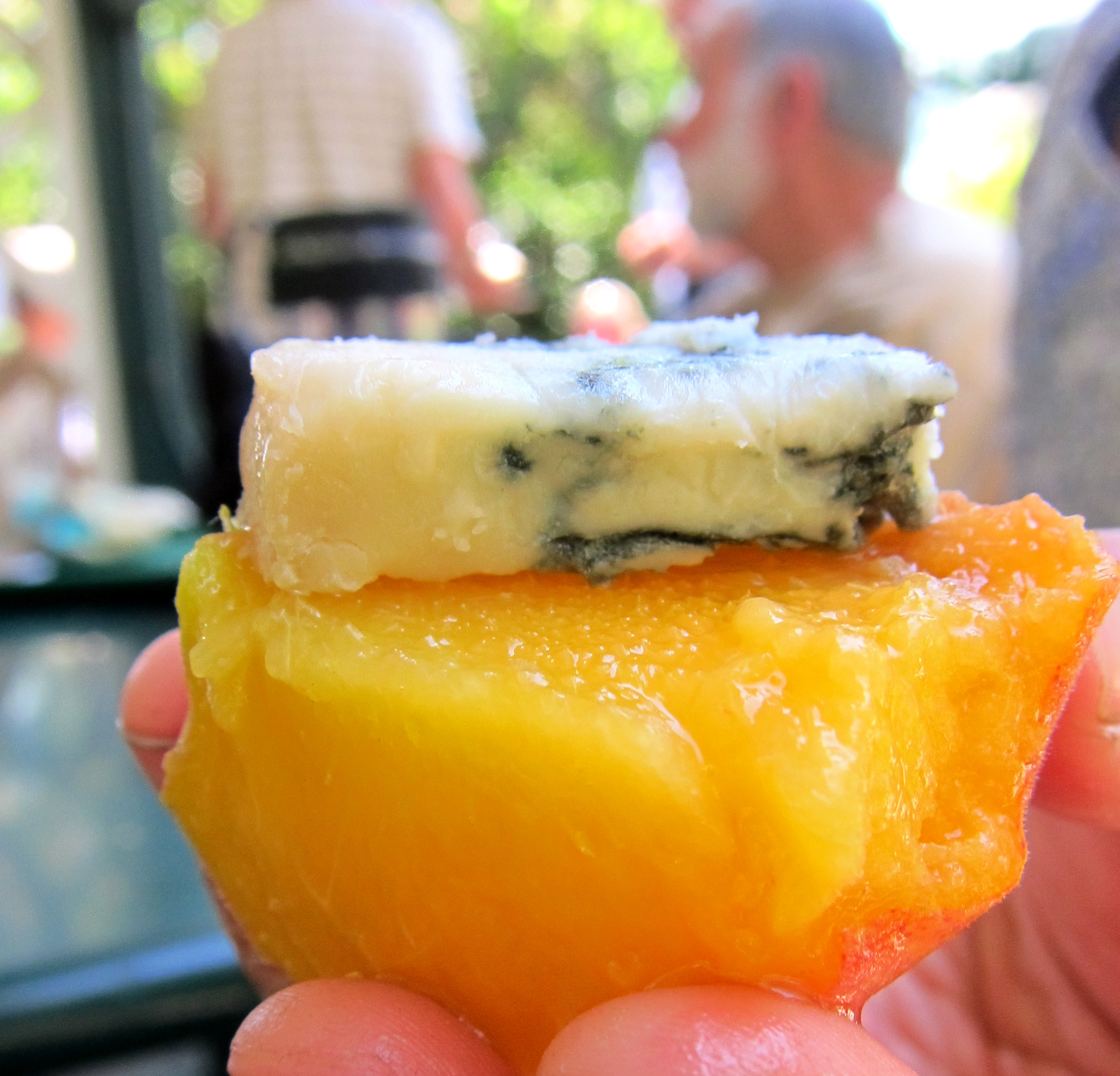
I will always go for warmth and not cold. Peach ice cream I can take or leave. It gets lost – it could be anything pretty and fragrant-smelling. A peach is itself more when baked, poached or simply wondrously ripe and filled with the coldest of blue cheeses. I understand the puree thing, but then I miss the shape; those delicate mounds in a tart, perfect circles like cobblestones running down a street. I know what I’m getting and that’s part of the pleasure. I can imagine it before it arrives. I once saw a lady peel and wash a tomato with its own skin. I like doing this to ripe fruit and it works well with peaches. I like the skin, but I want the flesh, so I keep peeling. A very ripe peach will slip off its skin almost in one. The hussy.

Peaches are not what they were. Gone are the days when a peach would be presented in a black velvet box at the end of a meal in French restaurants. Perhaps we no longer know what a peach could be. They are too over-extended, under-ripe, hard, watery, wooden. Historically, they were grown in vineyards and would come to ripeness at vintage time. The trees would then renew themselves from the fallen stones.

A few of these places still exist. It’s best to be on the side of the grower, and trust the smaller producers. They stress the peaches, breaking them in like dizzy mares. It seems cruel, feudal at first, but the rewards are huge. In California, a few good men are wresting the peach back from the hand of commerce. The trees are small and watered abstemiously in nutrient-poor soil. Peas, barley, wheat and wild oats grow like weeds around them. All this stress concentrates the flavour. I think the peach likes it that way.

To pick a good peach: trust your nose. A ripe peach has a rich, musky sweetness. Although it will continue to ripen after picking, getting softer and juicier, it won’t get any sweeter. A perfect peach – a mature peach – is one that has hung on the branch long enough for the sugar to develop. You will know it when you smell it. It will have made its final swell. When it comes to colour, forget red – this is a genetic variation, though we are all seduced.

Instead, it’s the quality of the background colour that’s important: a yellowy-orange cast signifies maturity, so pick that one. Farmers’ markets are always the best bet. Santa Monica has some orchard kings. This is the very beginning of the peach season in California, so I’m being a bit previous, but there are still some early gems around, particularly the flat peaches, Saturn, Donut and Saucer. The season proper starts mid June and will extend to August and even September. Often one variety will only last a week or so. Best to roll with it.

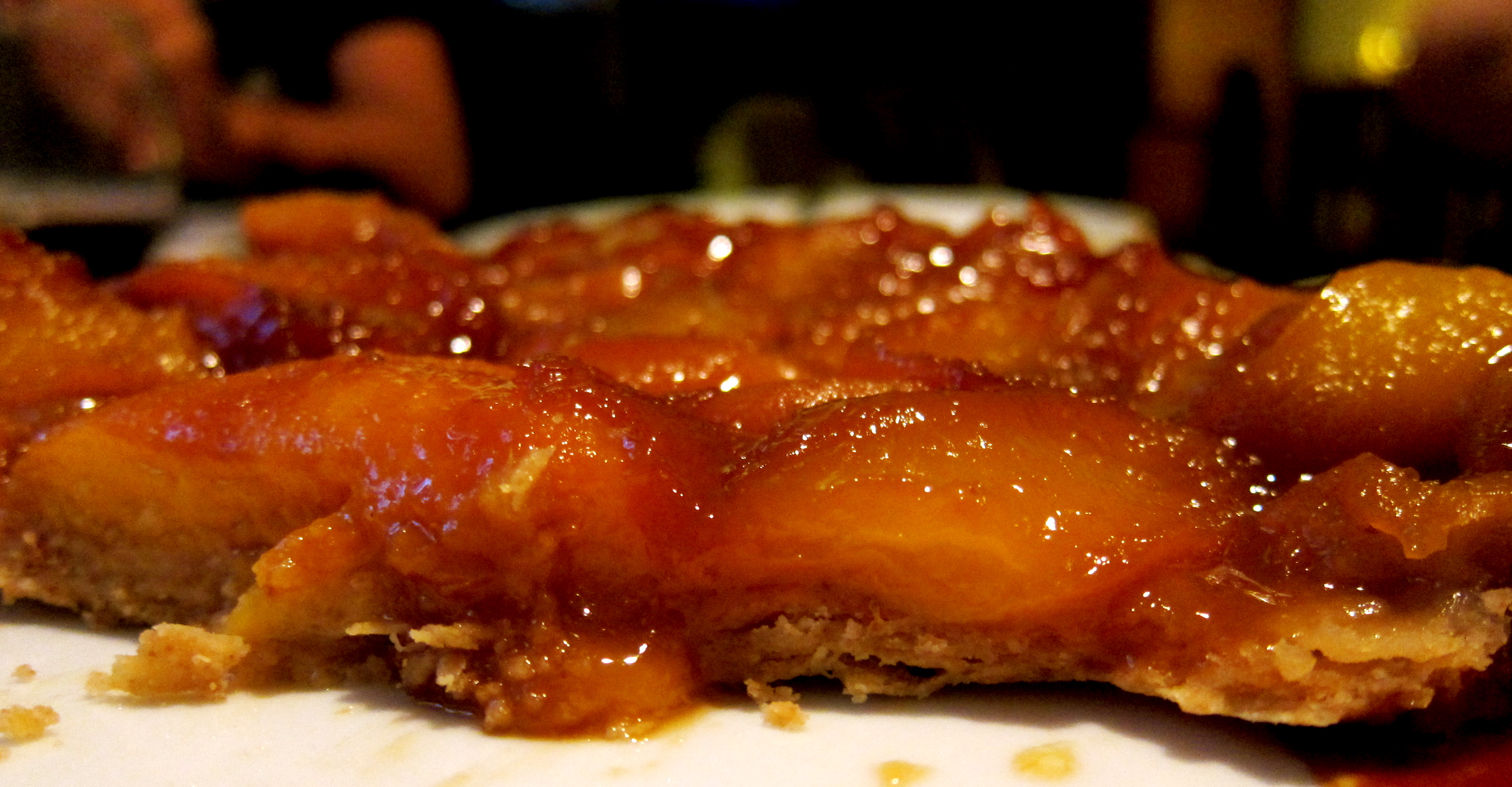
Peach and Amaretti Tarte Tatin

Adapted from Tamasin Day-Lewis, The Art of the Tart

This is a good one if you have slightly below par peaches, or they’re not as ripe as you’d like. I’ve always been a bit afraid of things I have to flip over  at the last minute, but this is fairly straightforward, if you don’t mind tatty pastry, ragged peaches, and half the tart being left behind in the pan. Personally, I like a bit of rustic, which is just as well. Also, it’s lovely cold.

Serves 8

For the dough

8 amaretti biscuits

1½ cups (210g) plain flour

6 tbs (85g) cold butter, cubed

2-3 tbs iced water

For the top

8 peaches

Juice of 1 lemon

6 tbs (85g) sugar

4 tbs (55g) butter

Method

To make the dough, whizz the amaretti biscuits in a coffee grinder to a fine-ish dust. Add to a bowl with the sifted flour and butter and, if using your hands, work quickly to amalgamate. If using a food processor, process briefly until the mixture comes together. In both cases, you need to add 2-3 tbs (maybe a little more) of iced water for the dough to cohere. Chill for at least half an hour.

Preheat the oven to 375F/190C. Roll out the dough on a lightly floured surface ½ inch wider than the circumference of the pan you’ll be using. I use a 10-inch pan whose handle doesn’t melt in the oven. Set the pastry shell to one side.

Scald the peaches in boiling water for 30 seconds and slip off their skins. Sprinkle with lemon juice to prevent discolouration.

Now warm the sugar in the pan until it is a deep, dark brown. This will take a while and I suggest keeping the heat on very low at first so the sugar doesn’t become too bitter or burnt. Don’t stir, but move the pan around to prevent scorching. Wait for the sugar to become totally liquid, then remove from the heat and dot with half the butter. Put half a peach in the middle of the sugar mixture, cut side up. This is where it all starts to go a bit Raggedy Ann – peaches that have been scalded and skinned are slippery buggers. It’s best to accept the tart will not look as clean as you’d like. Quarter the peaches and lay them next to one another in a tightly packed wheel. Arrange the remaining quarters in the inside wheel. Dot with the remaining butter and put the pan back on the heat for a few minutes to gently begin the cooking.

Remove from the heat, cover with the pastry (be prepared for it to break and for a lot of swearing to ensue), tuck it inside the pan edge, and bake for about 35 minutes – it should look lightly browned and the caramel will be bubbling deliciously. Remove from the oven and let it cool for a few minutes before inverting onto a plate. Good luck. Serve with vanilla ice cream or crème fraîche.