Cocoa and Earl Grey Shortbread

Tags

, , , , ,

I know for many of us shortbread isn’t exactly a breakfast item, but one of my over-riding memories of living in Rome was seeing my landlady every morning scoffing biscotti and knocking back an espresso topped up with lukewarm tap water. Quite pragmatic really. I also think we may be in danger of taking the whole healthy eating crusade too far, and we live in LA where this is endemic. As long as you are instrumental in creating the food you will eat, you cook the food you love, you know what’s gone into it and hopefully where it’s come from, the rest is just common sense.

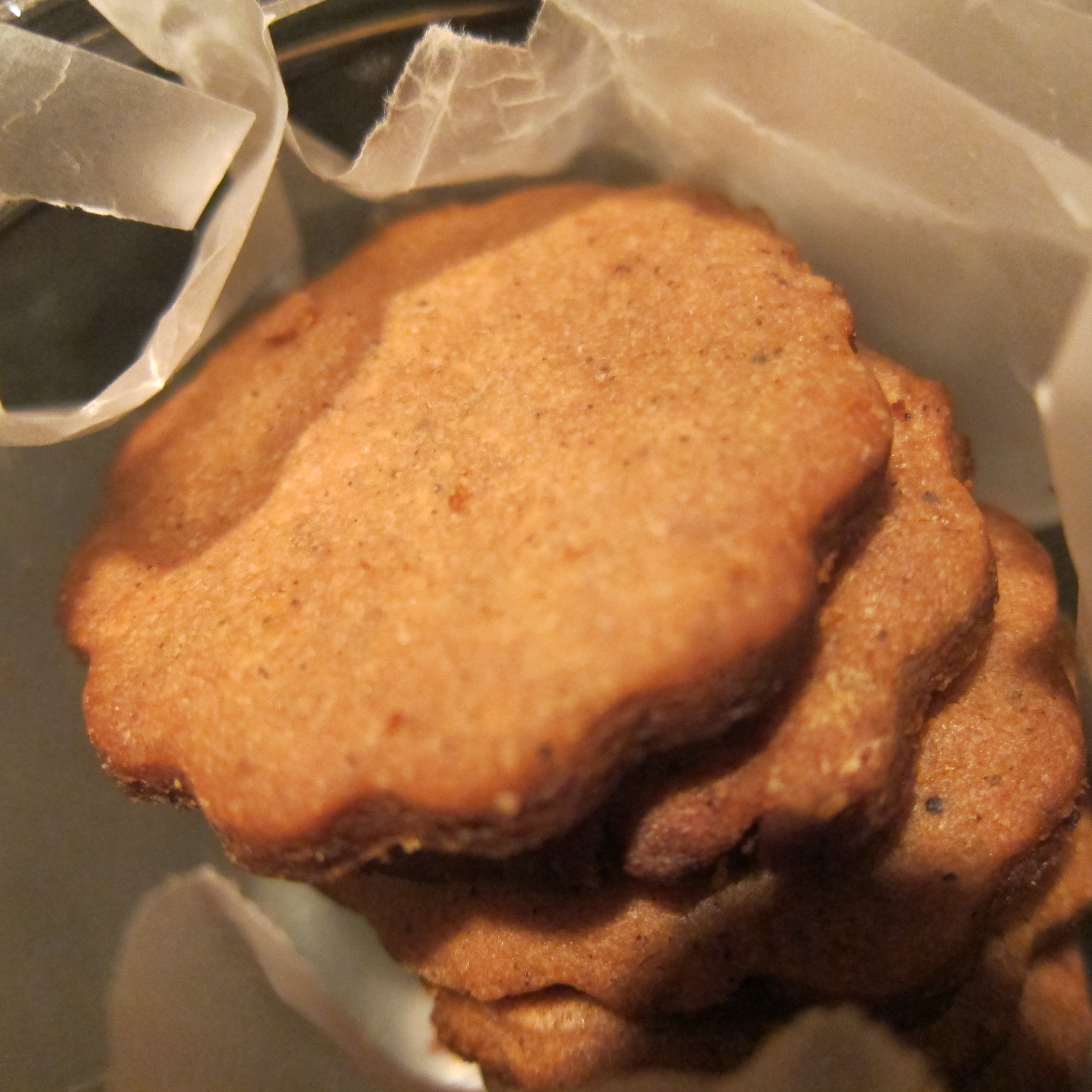
These have a lightness about them; I’d say ethereal but that would be going a bit far. The egg yolks and butter keep things crumbly and short rather than cakey, which I’m not a huge fan of. This is probably because I’ve never mastered the hallowed chocolate chip cookie, which takes that subtle interplay of cookie and cake to its ultimate conclusion.

Cocoa and Earl Grey Shortbread

Adapted from Cindy Mushet, The Art and Soul of Baking

Makes about 24 (if using a 6cm round cookie cutter)

12 tbs (175g) butter, softened

Scant 1/2 cup (90g) organic cane sugar

Generous pinch of sea salt

2 medium egg yolks (organic and free range)

Grated zest of a whole orange or lemon

1 heaped tbs Earl Grey tea leaves

2 heaped tbs organic cocoa powder (Green and Blacks is good)

Scant 1 1/2 cup (200g) of plain flour (plus extra for dusting)

Whizz together the sugar and Earl Grey tea in a coffee grinder or spice mill until the tea leaves are very fine. Now beat this together with the butter until the mixture is light and fluffy. This can take a good 5 minutes but it’s important to get the right consistency. Add the salt, egg yolks and zest. Beat for half a minute. Sift together the flour and cocoa powder and gently fold it into the butter, sugar and egg mixture using a spatula until the mixture coheres. The dough will be very sticky. With floured hands place the dough on to a floured surface and pat into a wide, flat disc. Wrap in plastic wrap and refrigerate for half an hour.  Preheat the oven to 350F. Roll out the dough onto a floured surface to a thickness of about 3mm. You may need to refrigerate again for short while after this bit. Use a 6cm cookie cutter – or whatever shape and size you want – to cut out your shortbreads and use a palette knife to transfer them to a non-stick unlined baking sheet and bake until just firm to the touch. 8-10 minutes. Transfer to a wire rack to cool and store on parchment paper in an airtight container. They keep for about a week.
stp, before 10am

Tags

, , , , , ,

image

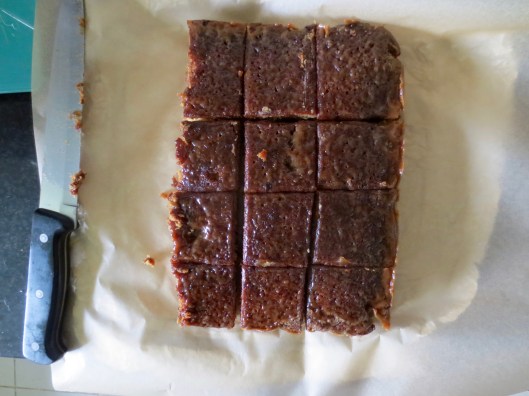
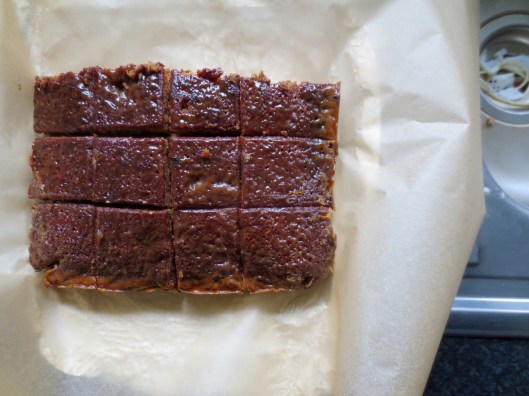
Plump, soft dates lend themselves to warm puddings and, yes, I have served this at breakfast time and got away with it. Given its name, sticky toffee pudding has none of the leaden qualities you would expect, and is actually well suited to the breakfast table; rich but not heavy, and rather muffin-like in texture.

I started off trying to perfect a sticky toffee pudding recipe using Jane Grigson in English Food as my source; Francis Coulson apparently invented it in 1948 at his country house hotel at Sharrow Bay on Ullswater, and it’s been fairly unmessed with ever since. Dates, softened with boiling water and bicarb, are added to a basic cake mixture which is then baked and served slathered in piping hot, toffee sauce.

I couldn’t perfect it; it is already exactly as it should be. All I did was add the juice and zest of an orange because it counteracts the rich effect of the dates and gives it a nice early morning brio. Blood oranges are in season, and their tartness is a good foil for the sweetness, but use whatever is available. Raisins also help keep the cake moist, adding pop and juice.

IMG_0884

I  gave the finished cake a light dousing with the toffee sauce and grilled it as the toasted stickiness reminded me it was intrinsically pudding and messy that way. To be eaten with vanilla ice cream I should think, or yoghurt if before 10am.

Sticky Toffee Pudding

Lightly adapted from Jane Grigson, English Food

I’m not entirely convinced that you need to liquefy the dates with water and bicarb. Or at least I’m not entirely convinced about the bicarb, which if you can taste it even minutely, is revolting and tinny on the tongue. Other recipes advise simply chopping the dates very finely, which I’ve tried and also like. You could perhaps try both. Here I’ve stuck to the original for ease and because it’s still delicious (though have reduced the amount of bicarb).

175g dates, stoned and chopped

1/2 teaspoon bicarbonate of soda

175g caster sugar

60g unsalted butter, softened

2 free range eggs (at room temperature)

175g self-raising flour, sifted

pinch of sea salt

Finely grated zest and juice of 1 blood (or normal) orange

Large handful of raisins (optional)

For the toffee sauce:

140g unsalted butter

200g light muscovado sugar

6 generous tablespoons of double/heavy cream

Pinch of sea salt

Zest of 1 orange

Pre-heat the oven to 180C/350F. Butter a square cake tin approximately 24cm x 24cm.

Make the sauce by putting all the ingredients into a pan. Heat slowly until the butter has melted, then turn up the heat and bring to the boil. Simmer for 3 minutes. Add more salt if you like it salty, as is the current style.

Put the dates and raisins in a saucepan, add 250ml of boiling water and bring to the boil. Remove from the stove, stir in the bicarb and leave to stand.

Beat together the butter and sugar until fluffy, and then gradually beat in the eggs. Fold the flour and salt gently into the batter and add the orange zest. Once the dates and raisins have soaked up all the water, add this to the cake mixture along with about 3 tablespoons of juice from the orange, or a hearty squeeze. Don’t over-mix.

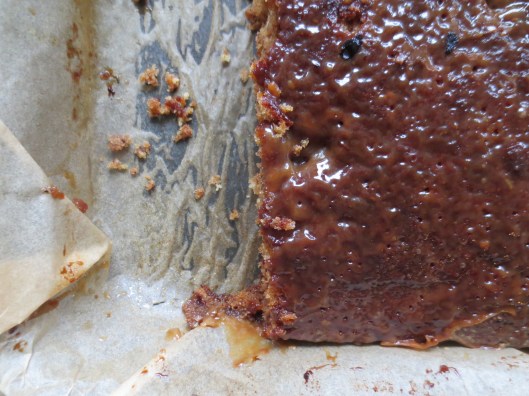
Pour into the cake tin and bake for about 30-35 minutes or until a skewer comes out clean.  Then puncture holes over the top of the cake and pour over half the toffee sauce. Heat the grill to medium, and put the pudding briefly underneath, keeping an eye on it as it can easily burn. Serve with the remaining toffee sauce, along with a dollop of ice cream for dessert (fresh ginger ice cream works beautifully), or as is at any other time.

If you want to store this cake before eating, leave it toffee-free and keep the sauce in the fridge. Then, when it’s close to serving time, poke the cake all over and douse with the sauce, cover the cake in foil, gently re-warm in the oven at 150C/300F for about 20 minutes. Finish off with a blast from the grill.

IMG_0897

A word about bergamots

Tags

, , ,

Ber-ga-mot from the Turkish ”beg-armade” which means “Lord’s Pear”

Image

Citrus Bergamia Risso

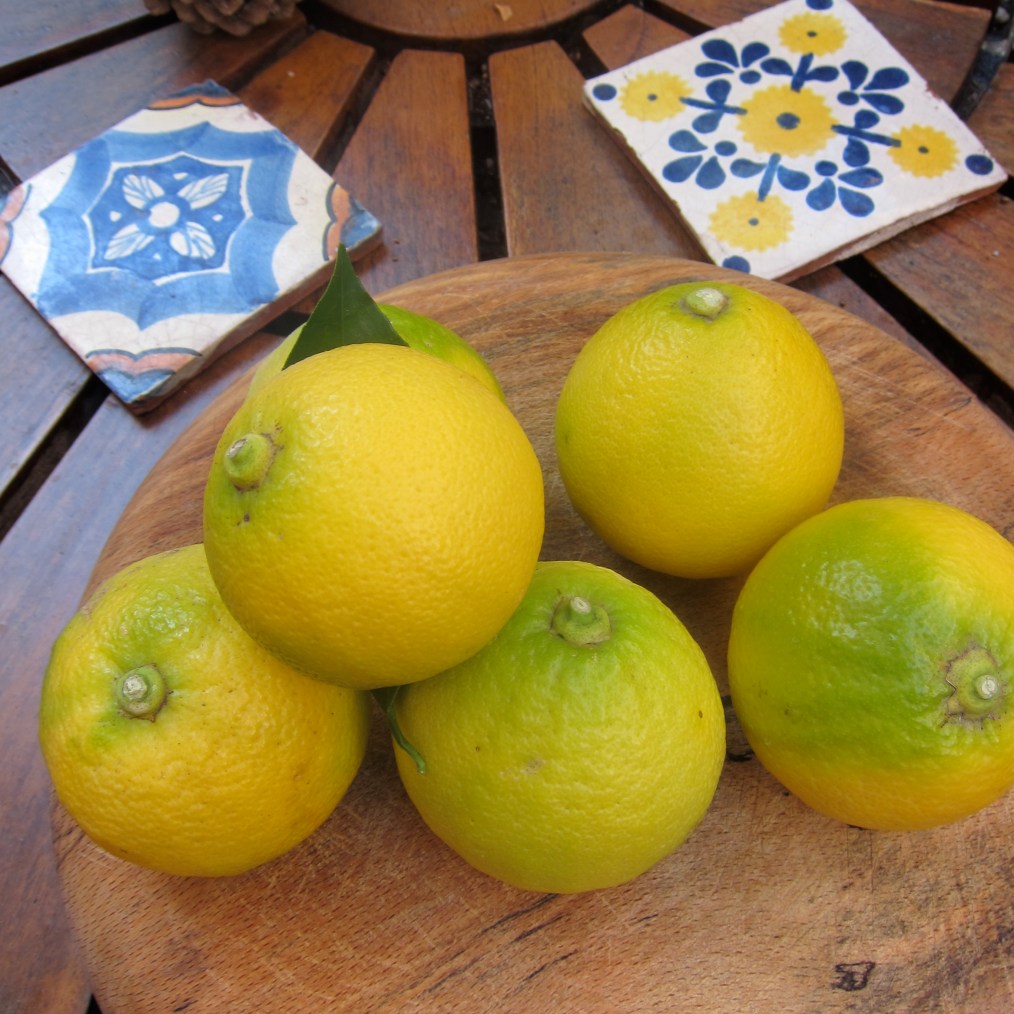
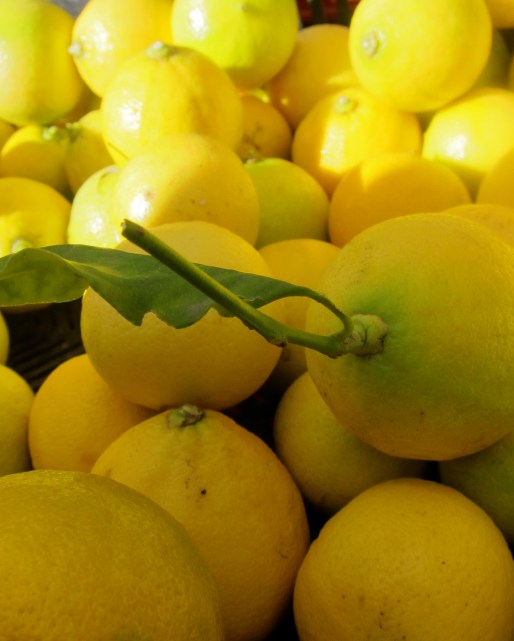
The bergamots I used in the marmalade recipe were the less photogenic, exceptionally bitter Italian kind (citrus bergamia risso) rather than their sweeter, more fragrant French counterparts (citrons doux). ‘Balmy’ has been a word accurately used to describe the sensation of eating marmalade made exclusively with the Italian bergamotto. The sour, cheek-chewing intensity is always welcome in a marmalade but too much floral bouquet and it’s like eating a jar of Yardley.

The bergamot season is late and short – January to February – and as there are only three fruiting bergamot trees in the whole of southern California you should start chatting up the fine people at Mud Creek Ranch, and get in there before the restaurateurs do. Calabria in Southern Italy is where 80 percent of the world’s bergamot is grown with southern France also a producer, so you may still get lucky if you live in Europe.

This is an interesting one: Monarda fistulosa is an aromatic woodland herb, a member of the mint family, and native to North America. It is called ‘bergamot’ because its scent is very close to that of the bitter citrus but has nothing whatsoever to do with it, and is not the source of the bergamot essential oil used in Earl Grey tea and approximately half of all women’s perfume. The herb is also known as Bee Balm for its ability to attract bees and butterflies. Who knew?

Bergamot and Orange Marmalade

Tags

, , , , , , ,


Today I picked up my first stash of bergamots (below) from Mud Creek Ranch at the Hollywood Farmers’ Market. Knowing only of the bergamot oil in Earl Grey tea and various beauty products, it was exciting to have one in the hand. In appearance it resembles a gnarly, yellowy-green orange. The first thing I did was dig my nail into the peel to see if it would offer up that unique perfume and it still lingers as I write this two hours later; a searingly bright and fizzy citrus scent, with earthy, oily undertones. A kind of Earl Grey champagne, if you can imagine such a thing

Neat bergamot marmalade would probably take your eyebrows off – it has an intensity so startling and heady (surpassing even Seville oranges) that it would be wise to temper it with a gentler presence. Here, I’ve used sweet oranges and a couple of Meyer lemons, but you could also try something from the tangerine family.

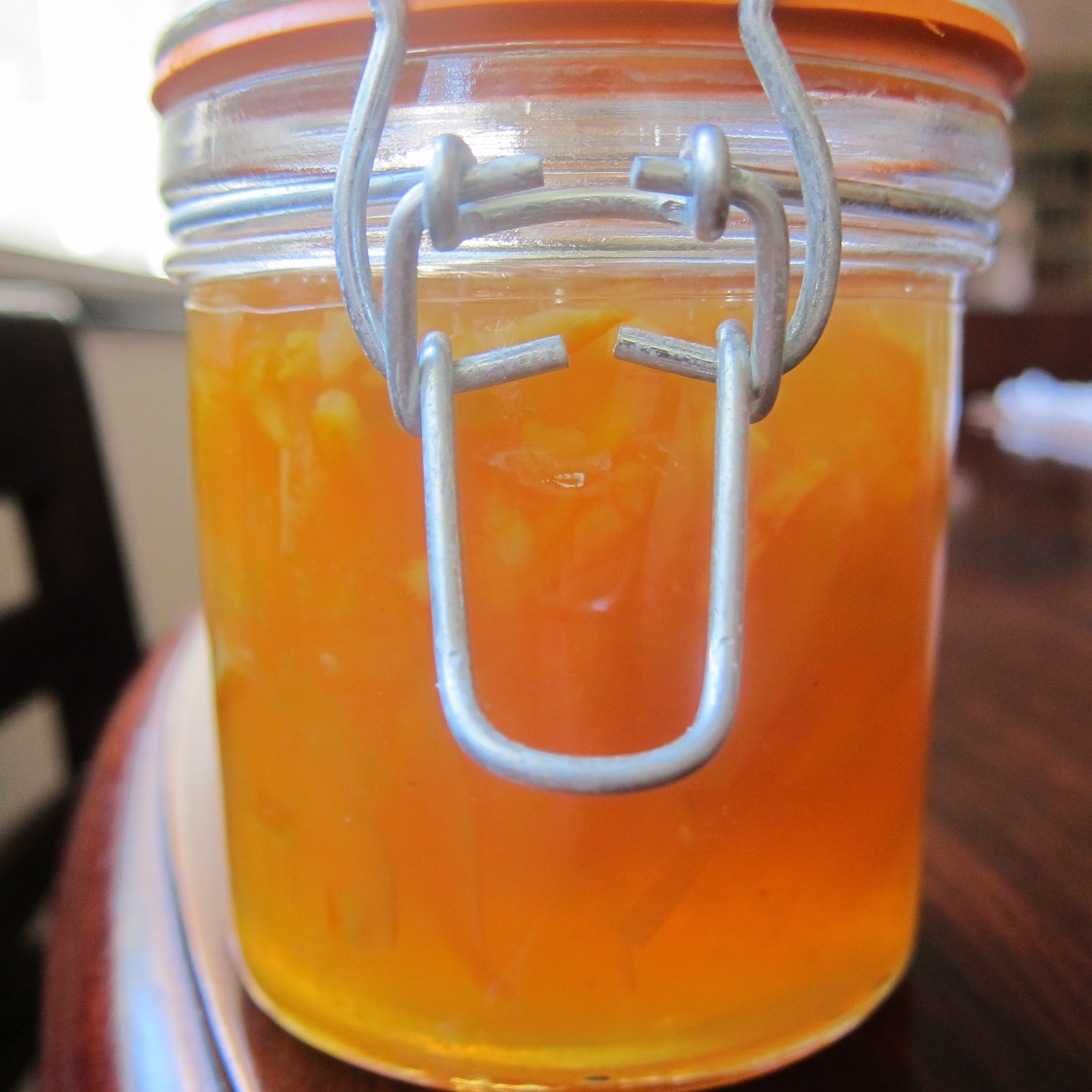
This is a British-style, clear marmalade with a loose set and a generous scattering of peel throughout – though apparently the less peel, the more British. It is on the bitter side, as marmalade should be, and is best eaten slathered on hot, buttered toast at any time of the day or night. Fills about 6 8oz/half pint jam jars.

IMG_1406

Bergamot and Orange Marmalade

Adapted from Delia Smith

6 Bergamots

6 Navel oranges

2 Meyer lemons

1.35 kg (3lbs) organic cane sugar

Begin by squeezing the juice from the bergamots, oranges and lemons into a jug. Remove all the pulp, pith and pips as you go and place them on a square of muslin or cheesecloth laid over a bowl; this contains the pectin which will enable your marmalade to set. Now cut the peel into shreds and add it to the juice. I like mine fine cut, but you may prefer a chunkier, more manly  ‘lade. As you go, add any lingering pith or pips to the muslin. When you’re done, add 3 pints (6 cups) of water to the juice and peel, tie up the muslin to form a small bag – make sure nothing will escape – and add that too. Leave in a cool place overnight.

The next day, tip the juice and peel into a large saucepan, or preserving pan, and tie the muslin bag to the handle so that it bobs like a cork in the liquid  (but doesn’t touch the bottom). I add an extra pint (2 cups) of water here as I find the muslin bag draws up a lot of the juice even after I’ve wrung it out a few times.

Now is the time to put some saucers in the freezer so you can begin testing later. Bring the liquid gently to the boil and then lower the heat and simmer. It is ready when the peel is completely soft – you can test a piece by pressing it between your finger and thumb. This can take anything from 35 minutes to an hour and a half; be aware that once sugar meets rind, it will no longer soften. Pour your sugar into a roasting dish and warm gently in the oven (200F) for about 10 minutes. This helps it to dissolve quickly later.

When the peel is ready, lift out the muslin bag and leave it on a plate until it’s cool enough to handle. Pour the sugar into the pan and stir over a very low heat until it has dissolved. When there are no crystals left, increase the heat and bring the marmalade to a rolling boil. Now squeeze every last bit of the jelly-like pectin that oozes from the muslin bag into the pan (I use a spoon to cream it off). Every little helps here, so be vigilant. Skim off any froth or scum that comes to the surface and leave the marmalade at a fast boil for 15 minutes. Now put a tablespoon of it on one of the cold saucers and let it cool in the fridge. If when you push the marmalade with your finger the mixture crinkles like a furrowed brow, then you have a ‘set’.  Keep testing at 10 minute intervals until it has reached setting consistency. If you find this too much of a faff, a thermometer is a reliable alternative; when it reads 221F (105C), it’s ready.  Leave the marmalade to settle for about 15 minutes otherwise all the peel will float to the top of the jar. Ladle into sterilised jars and seal immediately. Label when completely cold. See the Self-Preservation post on how to keep things clean and safe.

A bit more on bergamots here.

Lemon Posset

Tags

, , , , , , , ,

Image 06-12-2020 at 11.42

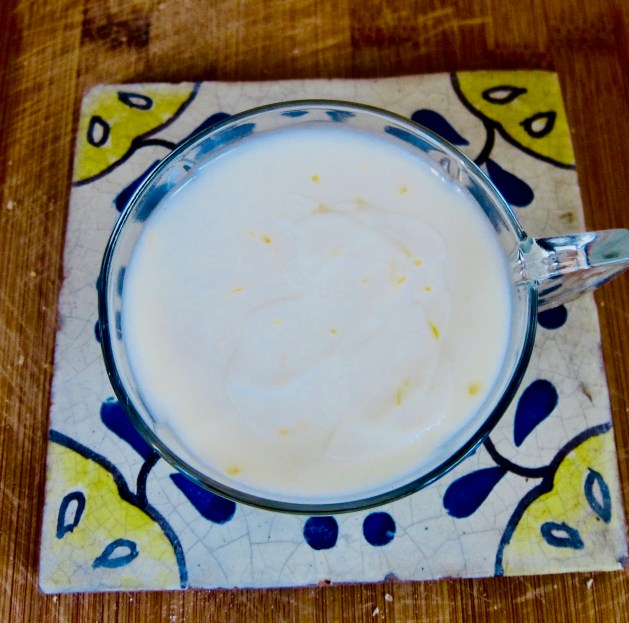
The beauty of the posset lies in its simplicity. There are only three ingredients – cream, sugar and lemons – so provenance is all. Get organic, unwaxed lemons; better yet get Meyer lemons (if you can), which are less tart, less acidic. Possets have been traced back to 15th century England where they were used as a remedy for colds and ‘minor illnesses’. Lady Macbeth used a posset to knock out the guards in the Scottish play, though in fairness it was probably the ramekin that did it.

I have served this to our B&B guests for breakfast, who partake of it as you would a rich yoghurt. Poached, seasonal fruit is also a welcome addition. It takes a certain bravery to serve it as pudding; it is very modest-looking, but lovely as a bright, clean finish to a heavy meal. There’s something in the method of boiling the cream with the sugar and then, with the addition of the lemon juice, feeling your spoon gently drag that is quite different to the heavier set of a mousse, say, and more akin to a delicately wobbling custard or blancmange. I am also remembering the quivering junkets of yesteryear.

Here, I’ve used Meyer lemons, and on a separate outing, bergamots.  Blood orange also works well, with some added lemon juice to give it bite. It’s the middle of the season for these citruses, so seek them out.

Lemon Posset

Adapted from Hugh Fearnley-Whittingstall, Dairy Queen, The Guardian

150g of caster sugar

600 ml of double cream

3 good sized lemons to yield 80ml of juice

Zest of 1 lemon

Finely grate a whole lemon, being careful to avoid the bitter white pith (a Microplane zester is brilliant for this), and set aside the zest. Squeeze enough lemon juice to make 80 ml. Put the cream and sugar in a non-stick pan and warm gently to dissolve the sugar. Bring to the boil, and boil for exactly 3 minutes without stirring. Remove the pan from the heat and stir in the lemon juice. Strain into a jug, add the zest and leave to cool, stirring occasionally to stop a skin forming – I put the jug into a bowl filled with ice cubes. When the mixture is at room temperature, pour into 4 ramekins or small glasses, cover with foil and refrigerate for at least 4 hours, or overnight. Serve with the Cocoa and Earl Grey Shortbread, a smattering of raspberries or simply as it is.