• Recipe List
  • Sophie

Stories from the Stove

Stories from the Stove

Tag Archives: Fruit

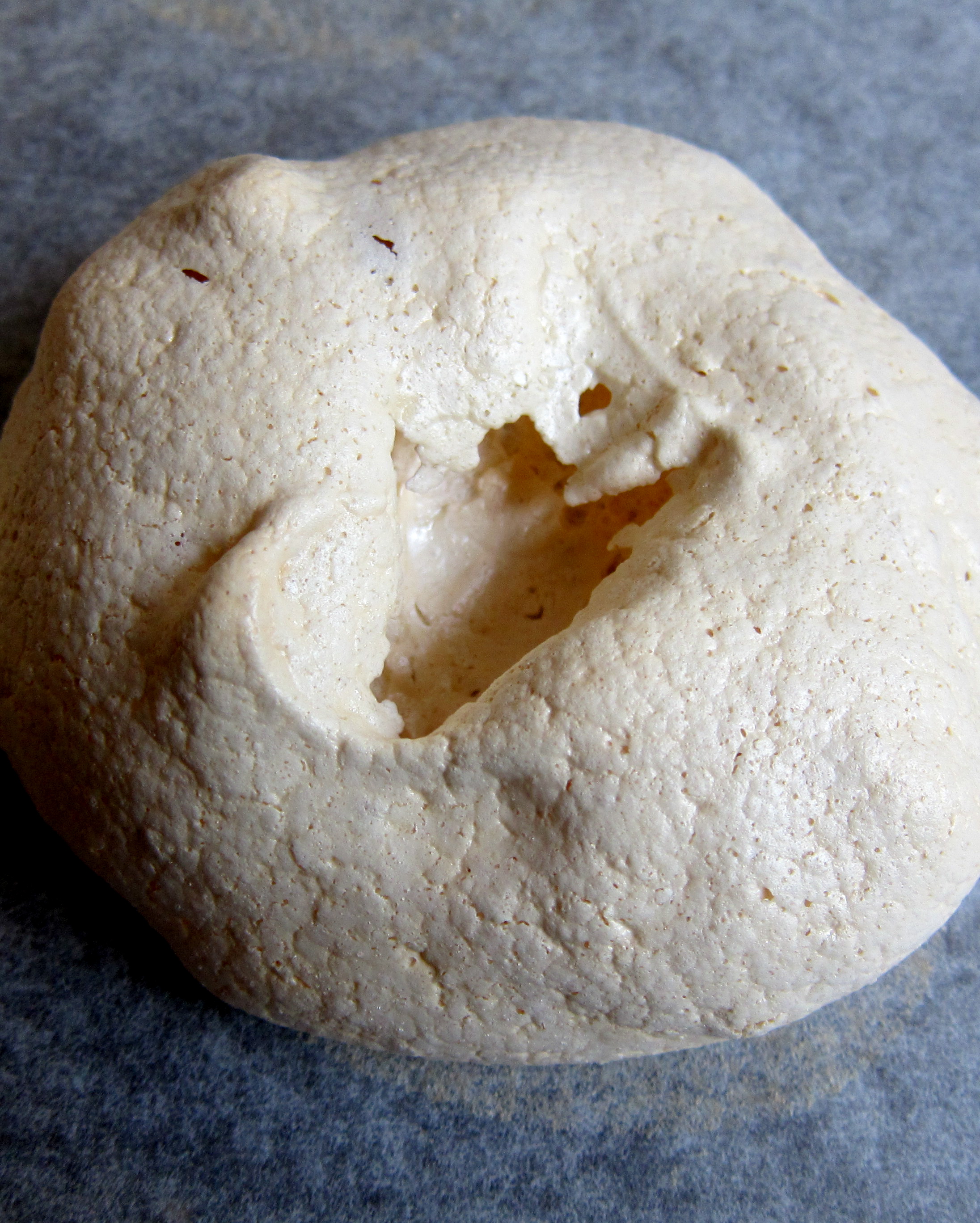
A mess of meringue

08 Friday Mar 2013

Posted by Sophie James in Recipe

≈ 7 Comments

Tags

Australia, Cookbook, Dessert, Fruit, Ingredients, Meringue, Nigel Slater, Pavlova, Pudding, Recipes, Tropical fruit
IMG_1771

The thing about meringue is that it’s two quite different things in one. And it is precisely this interplay – the squidgy, marshmallow centre combined with the shatteringly fragile shell that makes it so addictive. And why shop-bought ones rarely work. And that almost colourless colour; palest fawn, the exact shade of my favourite sofa which is currently doing time in an outbuilding in Suffolk. Apparently, according to almost every meringue writer I’ve encountered, the trick is to never ever open the oven door. Go away for the weekend if you must. The meringue must dry out, preferably overnight with the oven off. It is very hard to wait, because a meringue is so enticing, so visually sumptuous. But try.

This recipe is in essence a pavlova, a pudding made for, and named after, the Russian dancer Anna Pavlova, who visited Australia in the thirties. It is known principally as an Australian pudding, but its roots lie in the European pâtisserie tradition. What makes it particularly Australian here is the way it is served; with cream and passion fruit, mainly. And the shape which is similar to a large, round nest. Being half Australian, I expected to know this pudding. I certainly remember the fruit; dripping mangoes for breakfast, the flesh scored into succulent cubes. Passion fruit in its calloused skin, all green and beady, and lychees, like sinister eyeballs. Everything dripped, I remember. It was hot and endlessly wet, either from the afternoon storms or from our torrential sweat. It was my first experience of scale.
IMG_1791

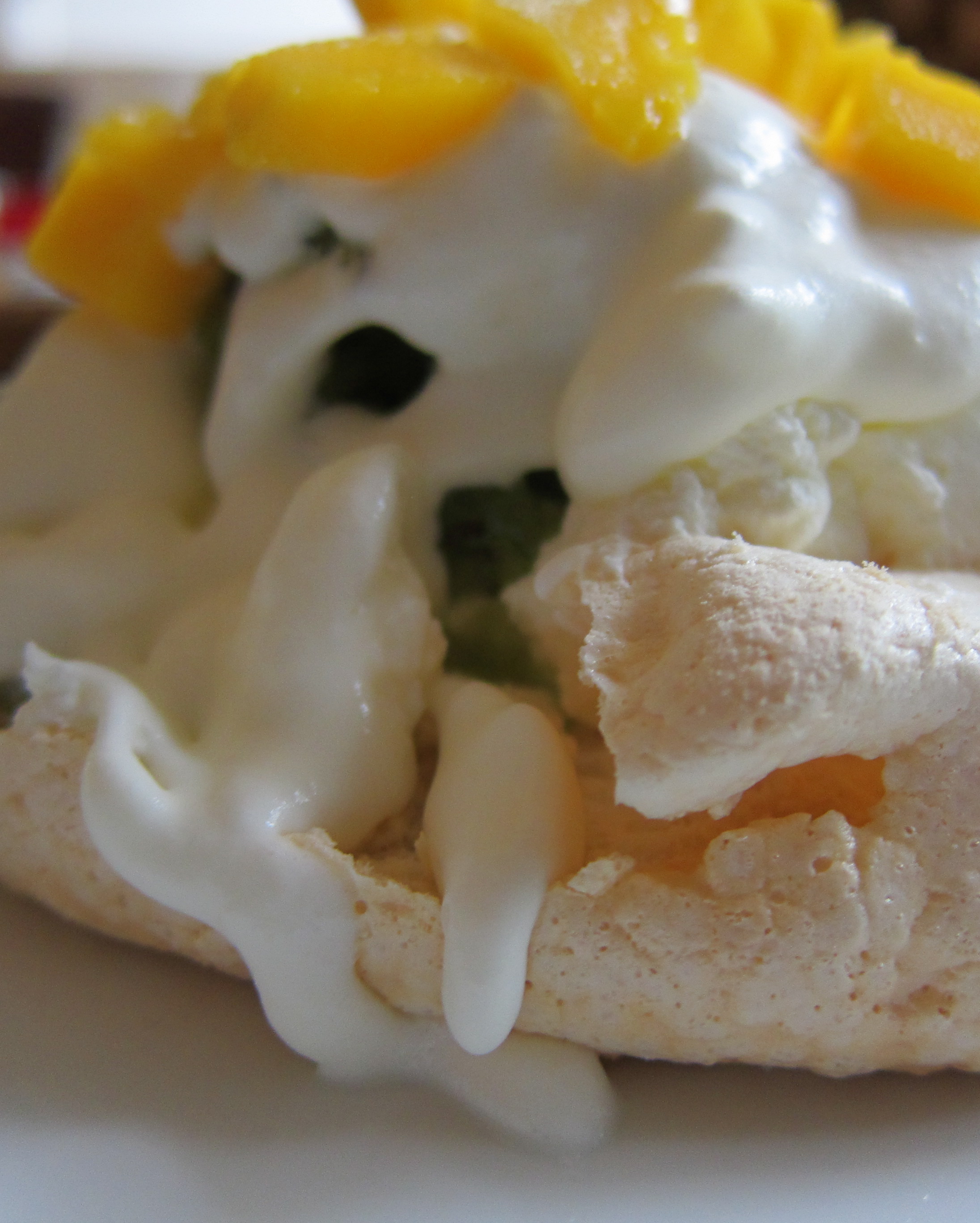
Choose sour, sharp fruit to balance the sweet blandness of the cream and meringue. Passion fruit, unblowsy strawberries, loganberries or raspberries all work. Of course mangoes are beautiful here too; slippery and lavish as a bar of luxury soap. Nigel Slater, whose recipe I am following, would disapprove of such a cornucopia of fruits for a pavlova, but as I couldn’t find any ripe passion fruit, I arrived at the solitary kiwi.

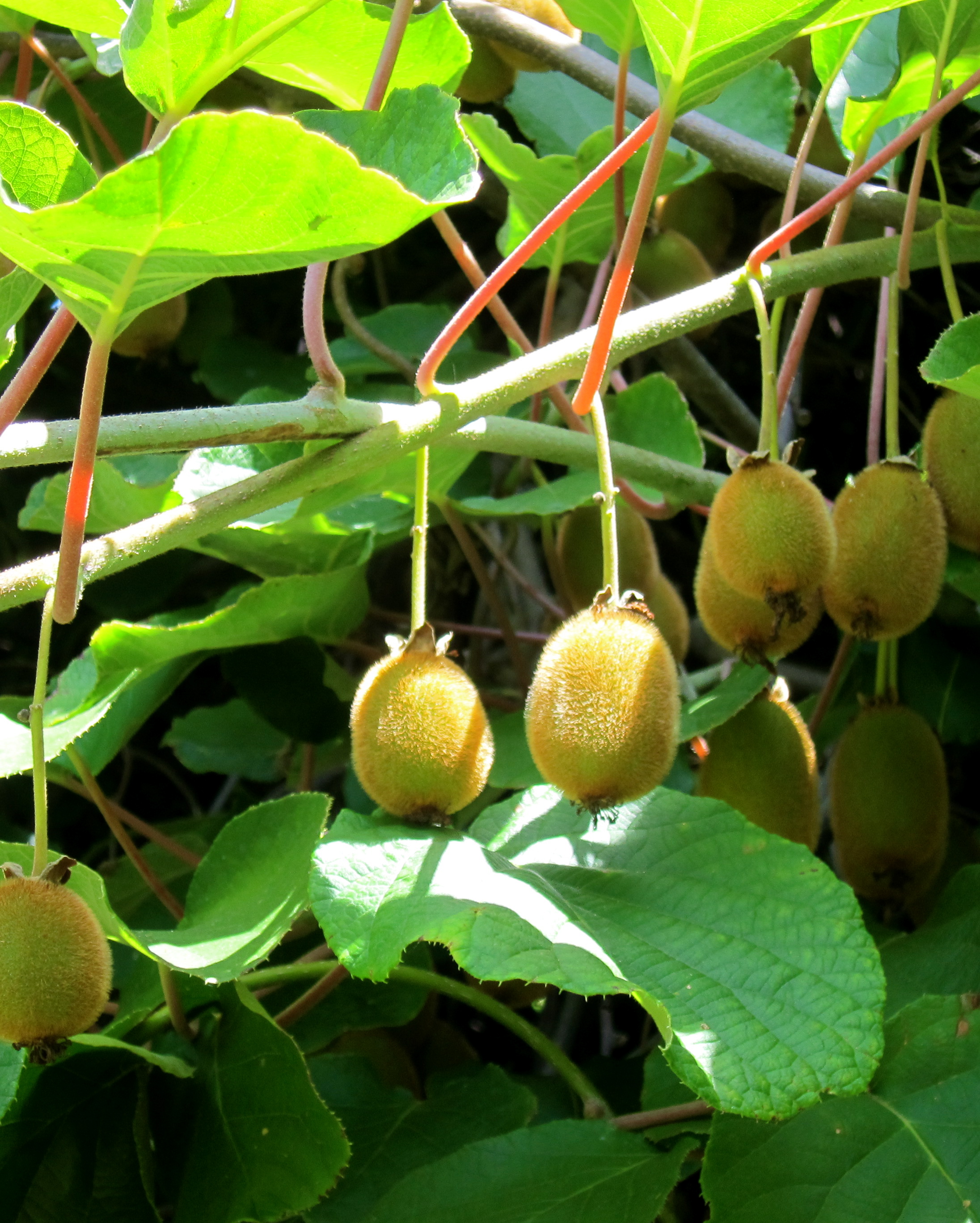
They grow here with gay abandon, though with less commercial success nowadays due to their excessive watering demands. Their general ubiquity (they travel and store well) can make them seem rather ordinary, and they’re often horribly hard. But when they have had the chance to sit and soften, the taste can be mellow and delightful – tart apple, strawberry and a melodious banana combine. I blitzed the kiwis in the blender and crowned them with a few slivers of mango here and they were a hit. And I like the sparkly seeds.
IMG_8860

Local kiwi fruit

I have to confess I love Kerstin Rodgers‘s idea of dribbling salty caramel over the whole thing, although this is verging on the orgiastic. Frankly, you need to get naked. Maybe next time. As to size, I decided on several small nests rather that one big one as it felt less perilous. Alternatively, pile the whole lot in voluptuous folds on to a baking tray and bake for an hour.

Pavlova

Adapted from Nigel Slater, Appetite

Enough for 8-10

6 large free-range egg whites (use the yolks for citrus curd)

Pinch of salt

350g (12 oz) caster/superfine sugar

300ml (10 fl oz) whipping cream

Some ideas for fruit

8 Passion fruit, cut in half – the pulp spooned over the cream

3 kiwi fruit, peeled and blitzed in a blender and poured over

A ripe mango, cut in half, sliced and added

Preheat the oven to 140C/275F. Lightly grease 1 large or 2 smaller baking trays and line with non-stick baking paper. Separate the eggs, dropping the whites into an extremely clean bowl, and the yolks into another (always great for curd or ice cream or indeed mayonnaise). It’s important that there is no yolk caught up with the whites as the fat in the egg yolk will stop the whites thickening. Beat the egg whites with the pinch of salt until shiny and thick. You should be able to turn the bowl upside down and have no fall-out. Now add the sugar – do it in two lots slowly (imagine rain), letting the whisk continue to turn at moderate speed. You will feel the mixture begin to thicken with the weight of the sugar. Keep going until the mixture is thick and glossy, but don’t overwhip – this will loosen it, and you want it to be so thick that it takes a while to fall off the whisk. I know there are many who say you should add cornflour (cornstarch) and white wine vinegar at this point, but I am not convinced there is enough of a difference to warrant it.

Drop 8 large spoonfuls of the mixture (about 10 cm/4 in round) on the baking trays and try to fashion a ‘nest’ with a small dip in the middle. Bake for 45 minutes until pale in colour. Then turn off the oven, but do not open the door; leave the meringue alone until it’s completely cool.

Wait until the last minute to prepare the pavlova – if it sits for too long once assembled, the cream and fruit start to soften the meringue. Whip the cream into soft peaks. Spoon some into the centre of each pavlova and let the cream dribble down the sides. Halve the passion fruit and spoon the pulp over the cream, or blitz the kiwi fruit and use in a similar fashion. Drape some mango over the top and tuck in.
Share this:

  • Share on X (Opens in new window) X
  • Share on Pinterest (Opens in new window) Pinterest
  • Share on Facebook (Opens in new window) Facebook
  • More
  • Share on Reddit (Opens in new window) Reddit
  • Share on LinkedIn (Opens in new window) LinkedIn
  • Share on Tumblr (Opens in new window) Tumblr
  • Print (Opens in new window) Print
  • Email a link to a friend (Opens in new window) Email
Like Loading...

Persimmons

18 Tuesday Dec 2012

Posted by Sophie James in Recipe

≈ 9 Comments

Tags

Almonds, Dessert, Fruit, Gluten-free, Ingredients, Nonfiction, Recipes, Stories

IMG_0857

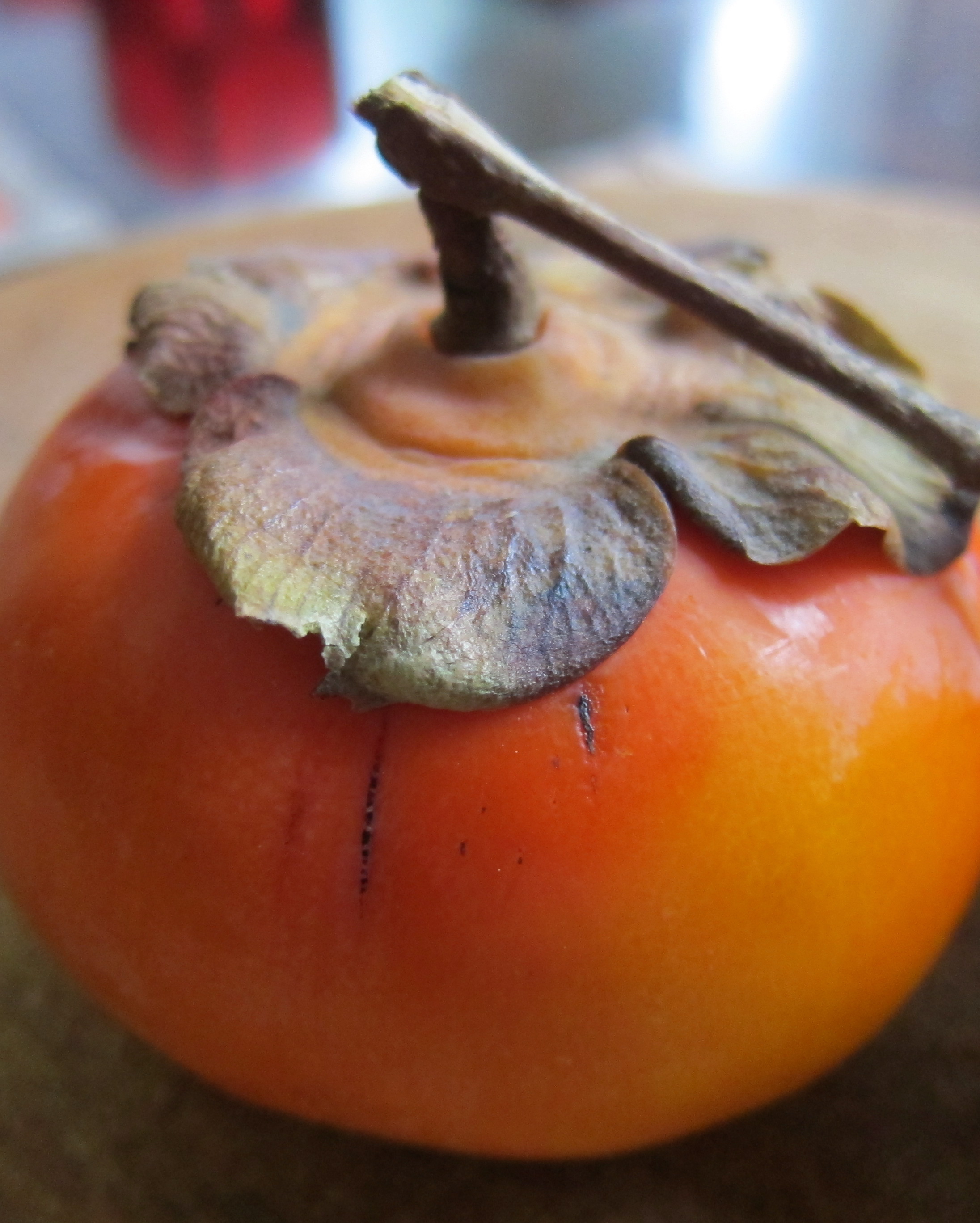
Fuyu or Sharon persimmon

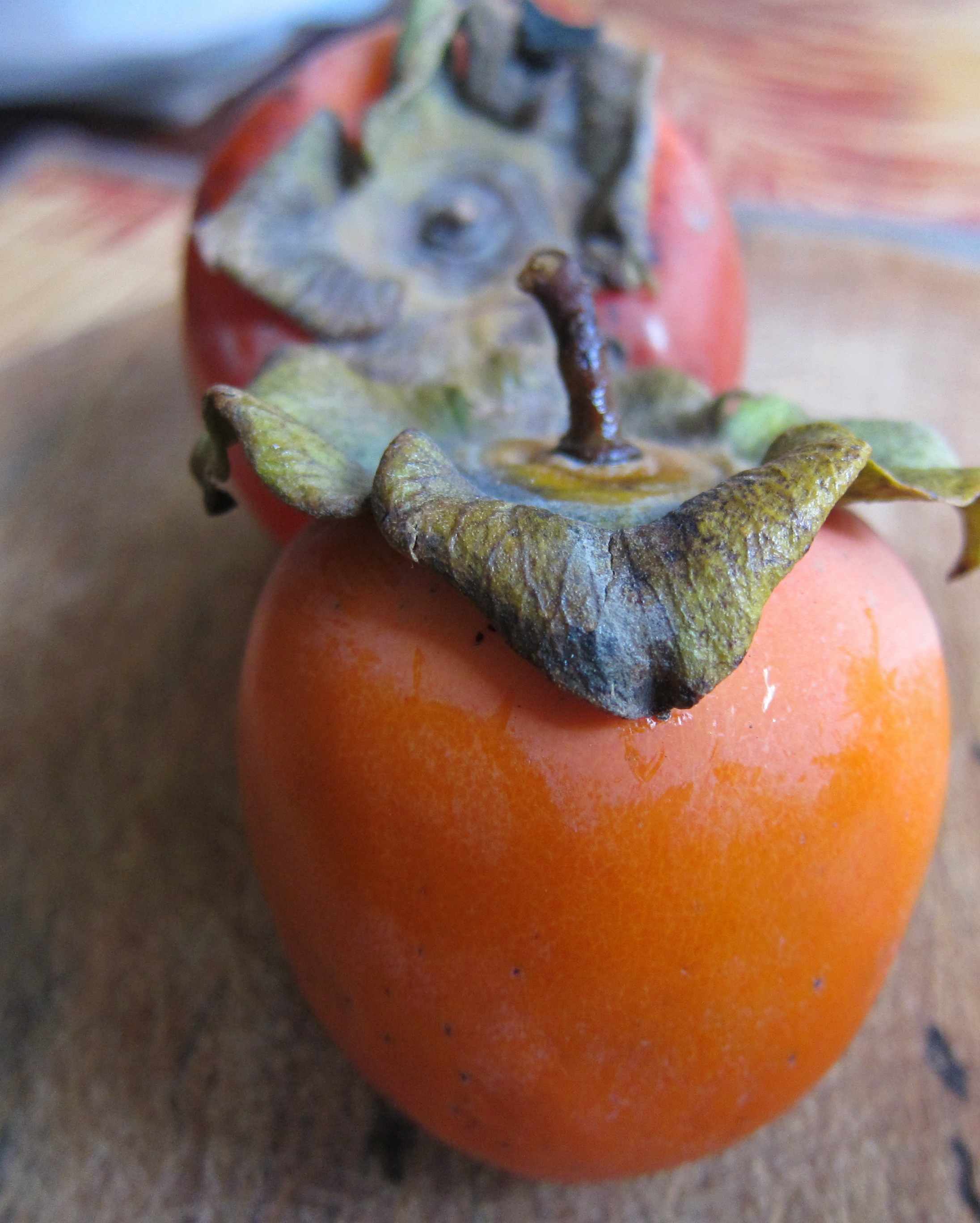
There are two kinds of persimmon. The first, the Fuyu, looks like a tomato and is eaten like an apple or sliced into a salad. Although they are supposed to be crisp when eaten, I find they are more flavourful when properly ripe, which is to say, bulbous and crepey and as if about to burst their banks. They look so beautiful it almost doesn’t matter about the rest.

The Hachiya, like the quince and medlar fruit, can only be eaten when fully ‘bletted’ – almost rotten, with most of their astringency gone. They look pretty miserable; bruised and bloated with a long chin. They taste stunning, if occasionally slightly furry. The inside of a Hachiya is the kind of orange I have only ever seen in a Howard Hodgkin painting. It is floating and jelly-like to eat – if you can imagine a mouthful of the best jelly at the finest children’s birthday party you have ever been to.

IMG_0868

Hachiya persimmon

In California, there is much talk of persimmon pies, purees, tarts, butters and such. This might be because there is often a glut of them in winter. But sometimes between fruit and pudding falls the shadow. So much of their beauty is lost once you interfere. It’s true that wild persimmon, Diospyros virginiana, was cooked by the early American settlers until they were “baked and sodden,” so ubiquitous was the fruit. We are unlikely ever to be in their shoes again.

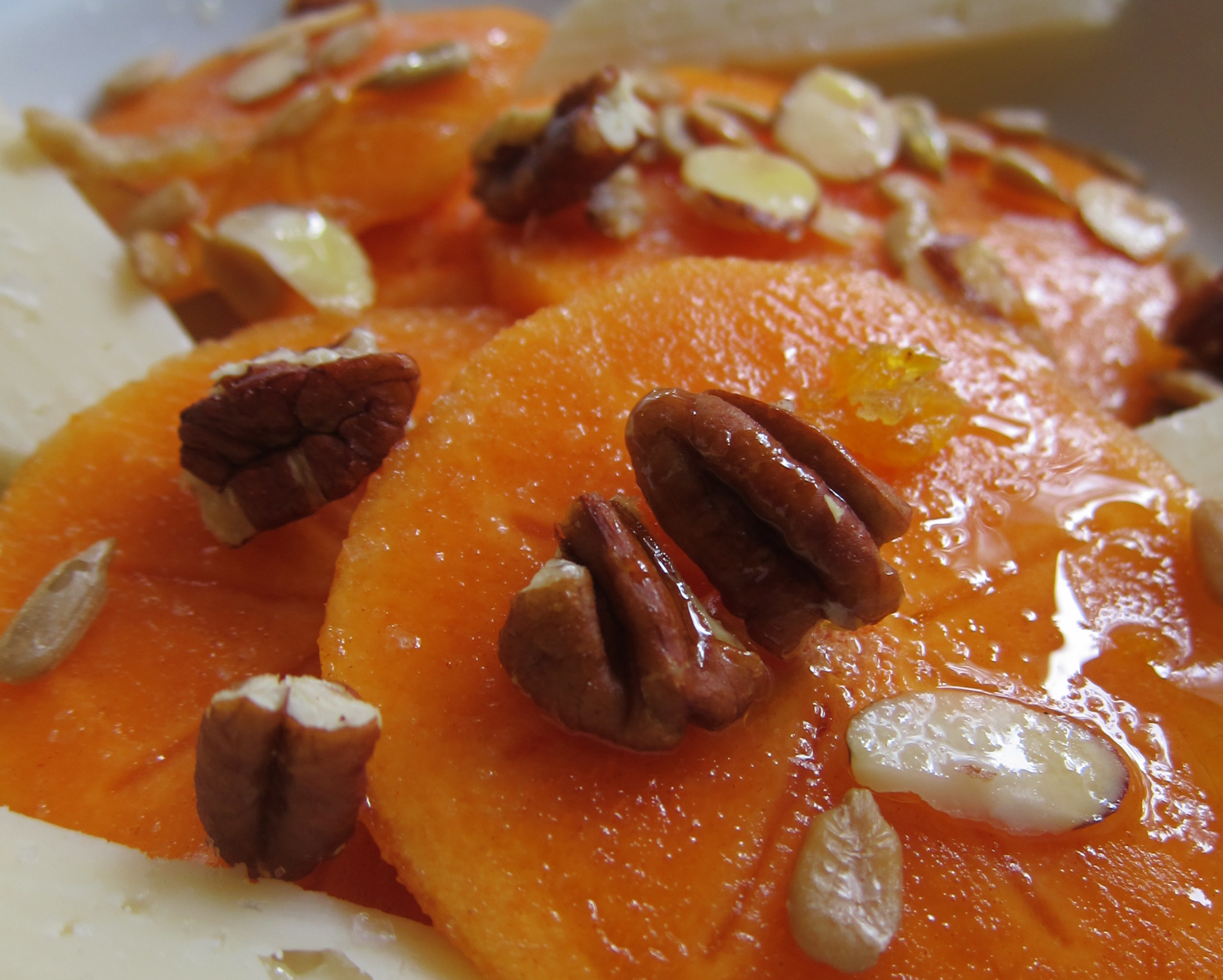
With the Hachiya, simply slice off the ‘lid’ (with its fawn-coloured calyx) and proceed as you would a soft-boiled egg. A spoon and some deep yellow cream is all you need. And even that might be pushing it. With the Fuyu, peel off the skin which can be tough, and then slice it as you would a tomato – horizontally. Serve with some toasted nuts, some sea salt, lemon and nut oil and perhaps some hard cheese. Treat it as you would melon; as a nice clean starter. Alternatively, if you’re in a rush or frankly can’t be arsed, then eat it as is.

IMG_0872

Hoshigaki

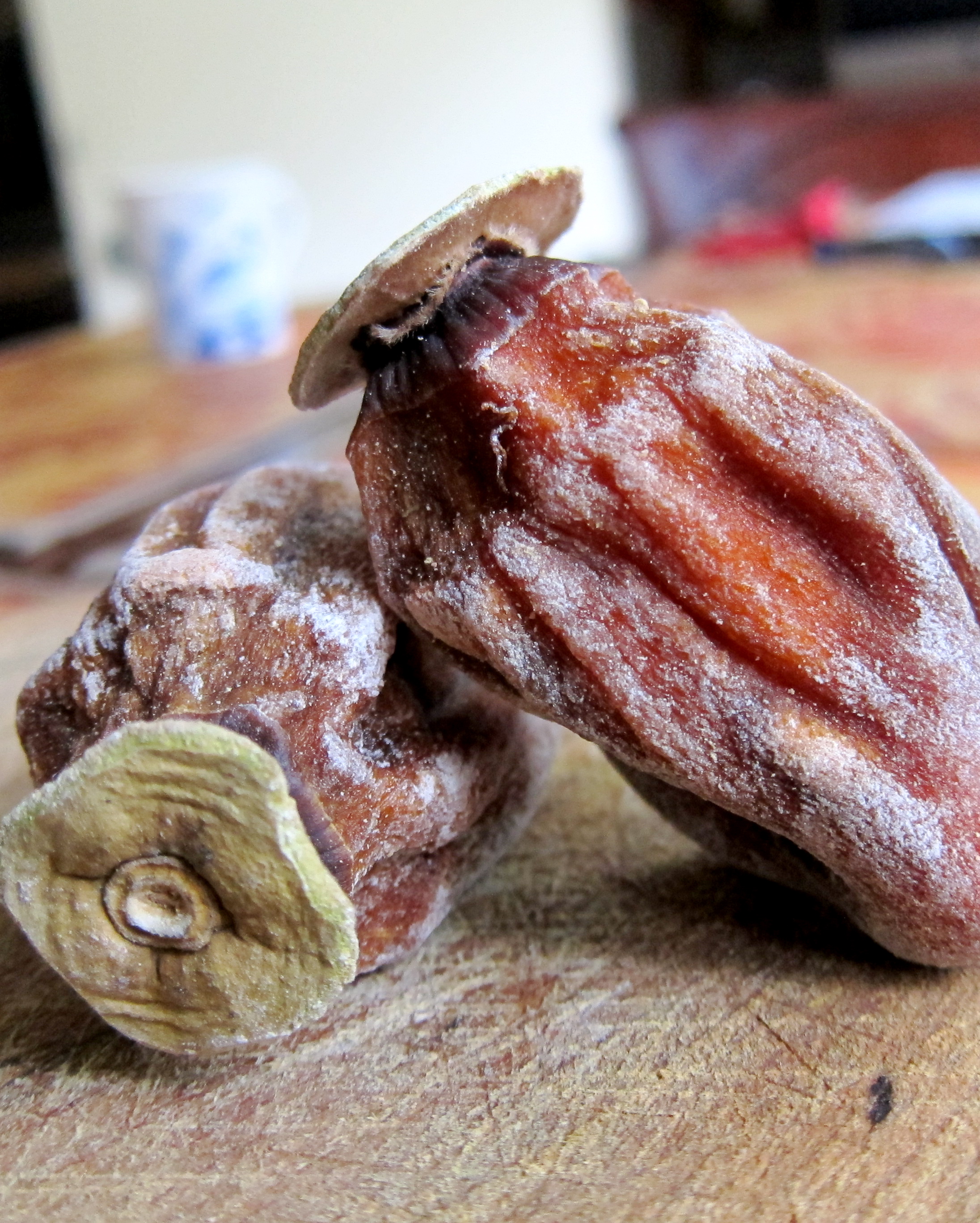
Hoshigaki is the name for Hachiya persimmons that are dried and massaged daily for six weeks until the flesh is leathery but soft and covered in the fruit’s natural sugars. It’s laborious and the results can vary hugely. At the Santa Monica farmers’ market, it was like eating the world’s largest date, a huge fudgy teardrop that caved at the slightest pressure. The ones above were tougher, more like dried banana. The woman whose job it was to massage them professed it made her feel a bit pervy (I’m paraphrasing). It’s a bit like milking a cow, apparently.

Fuyu or Sharon persimmon with sea salt, toasted nuts and hard cheese

Adapted from Deborah Madison, Seasonal Fruit Desserts

Slice the fruit into sections or cut it horizontally into thinnish rounds. Arrange the slices on a plate; add some crunchy sea salt (fleur de sel), some chopped, toasted nuts (hazelnuts are nice here), and a few drops of nut oil. Add some slices of a hard, sharp cheese.

IMG_0897

Write me down

As one who loved poetry,

And persimmons.

Shiki

Fuyu is also known as Sharon fruit – persimmon developed by Israelis in the Sharon valley.

Share this:

  • Share on X (Opens in new window) X
  • Share on Pinterest (Opens in new window) Pinterest
  • Share on Facebook (Opens in new window) Facebook
  • More
  • Share on Reddit (Opens in new window) Reddit
  • Share on LinkedIn (Opens in new window) LinkedIn
  • Share on Tumblr (Opens in new window) Tumblr
  • Print (Opens in new window) Print
  • Email a link to a friend (Opens in new window) Email
Like Loading...

Warm cherry & chocolate cakes

20 Tuesday Nov 2012

Posted by Sophie James in Recipe

≈ 9 Comments

Tags

Baking, Cake, Dessert, Food, Fruit, Homesickness, Ingredients, Recipes, Stories

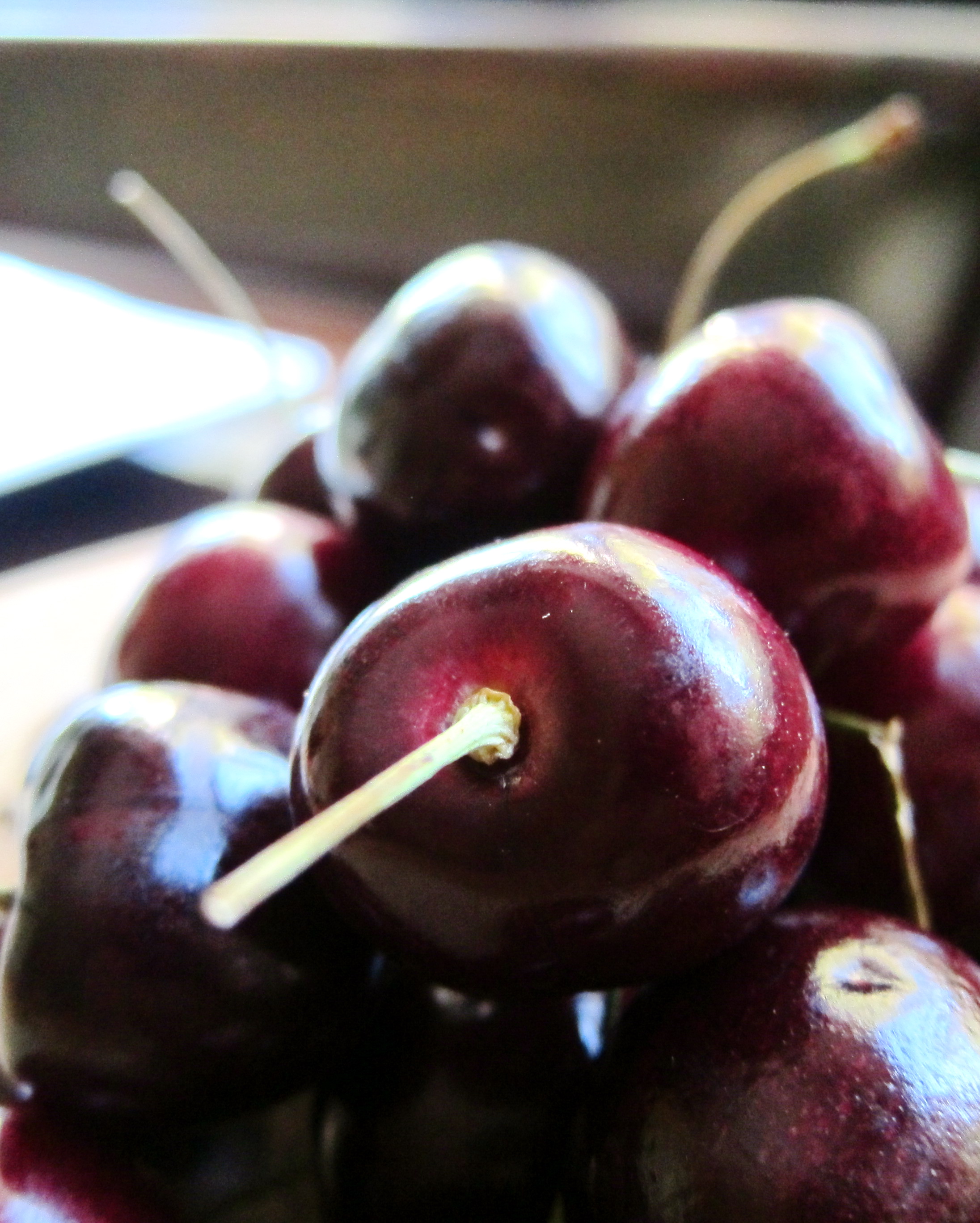
Cherries in November, I hear you ask? No, I have only the dried versions – wizened little blisters plumped up by liquor – but I love the look of these deep, dark orbs. And oddly they seem more suited to winter in my mind. This story is a pulling together of the different threads of my England trip, and the genus comes from a visit to Brighton, the streets slaked that day with dirty rain. It was also cold and people were standing in doorways looking out, not at anyone in particular, but simply looking on with flattened, peeved expressions. My mum and I had the idea to see the Biba exhibition at the Brighton museum, but instead went to Primark. The rain washed away any ingenuity that day, but at least I came away with a good packet of pants.

We ran out of the rain into a cafe. It was warm inside and there were some lovely looking cakes on the counter, although with my mother the assumption is always that we will have soup. Soup and tea. The girl behind the counter was bewitchingly friendly. She was Polish, and it was her mother, Ella, who did all the baking. Her mother was downstairs. There was a Black Forest cake, with all its turrets and glossy layers, a plum crumble tart, and whirling pastries. We ordered soup, which was beef and leek – delicate and creamy. My mum ate the plum crumble tart. A chocolate cake arrived, carried by Ella.

By this point, I knew that my mum would be engaging in conversation with Ella, and that this would happen as soon as the cake was released. It began as it always does – with a few compliments, and a request for ingredients. A slow and delicate deconstruction of the soup followed, and then onto the plum crumble tart. Without this dandling, this gentle back and forth, I know Ella would not have brought out a jar of her homemade black cherry jam for us.

When it came to packing for the return trip to LA, I decided to leave the jar of jam behind. It was too heavy, and it was glass. Besides, my mum would enjoy it. I put it in the cupboard but it found its way back into my bag. I returned it, hid it behind some tea, but there it was again, sitting at a jaunty angle in amongst my clothes. It eventually stayed with her. I assumed you could get black cherry jam in LA. I was being rather cavalier about it; it was fine, it was only jam, she should have it. But on my return here, it gnawed at me. I missed it. I thought often of the contents, and the patterned lid, and the way Ella had presented it, her face flushed with promise and oven heat. It’s funny the things we regret.

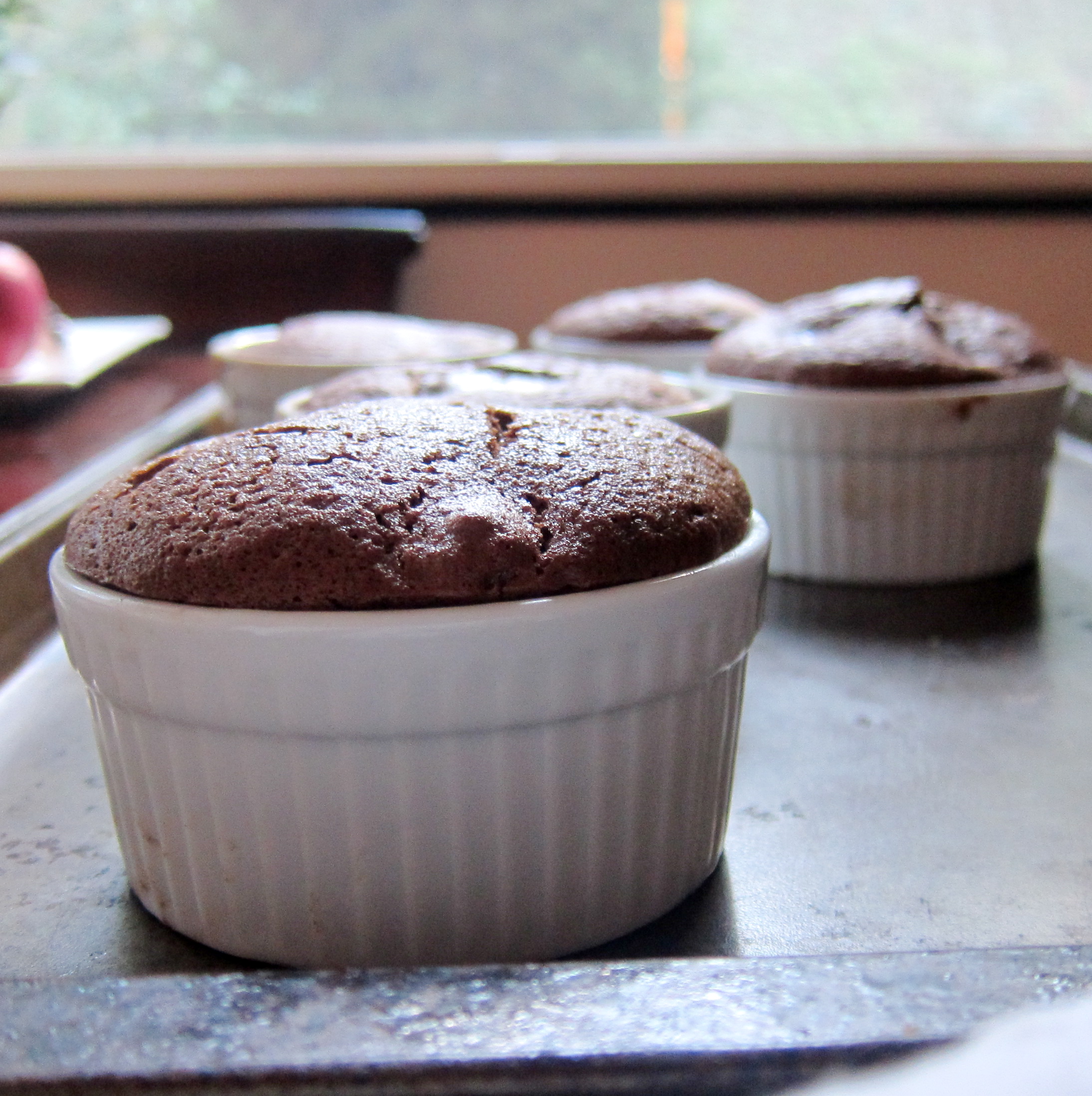
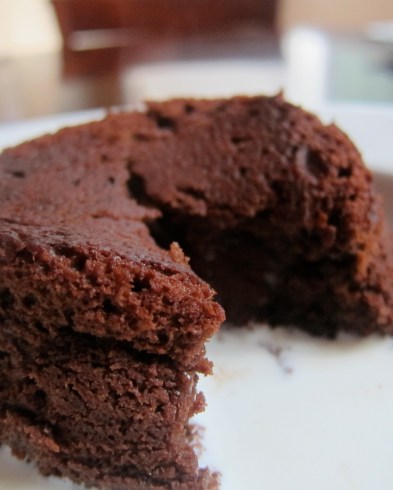
I would like to think these cakes are based on the Ischler torte, the Viennese chocolate cake with cherry and almond filling, and not the smothering Black Forest. But ultimately, there is something very British about these little chocolate fondants. We are so in love with the oozing and glaucous pudding, with dark and brooding chocolate. And cream, of course. If you can’t find dried cherries, you could try prunes soaked in brandy, raisins soaked in whisky or dried cranberries in vodka. And, of course, if you have some homemade cherry jam, use that.

Warm cherry and chocolate cakes

Adapted from Hugh Fearnley-Whittingstall, Three Good Things on a Plate

Makes 6

100g dried cherries

40ml Calvados

A little cocoa powder for dusting

150g dark chocolate, broken into small pieces

150g unsalted butter, diced, plus extra for greasing

3 large eggs

75g caster/superfine sugar

35g plain flour

Soak the cherries in the Calvados in a small bowl for at least 2 hours (or overnight), to absorb most of the liquid.

Preheat the oven to 200C/400F and put a baking tray inside to heat up. Butter 6 dariole moulds or ramekins well and dust with the cocoa. Melt the chocolate and butter in a heatproof bowl over a pan of barely simmering water. Stir gently at the end to blend and leave to cool a little. Beat the eggs and sugar together for a good 5 minutes until the mixture is thick and creamy and ‘holds a trail’ (when a little is dropped from the whisk it sits on the top of the mixture before slowly sinking back in).

Fold the melted chocolate and butter lightly into the egg mousse. Sift the flour over the mixture, then fold it in carefully. It should be throughly incorporated, but don’t overwork the mixture. Fold in the cherries and Calvados.

Divide the mixture between the ramekins. You can prepare these cakes ahead to this point, if you like, and refrigerate them for up to 2 hours. Bake the puds on the hot tray in the oven for 10-12 minutes. Turn out immediately into shallow bowls and serve with thin, chilled cream.

IMG_0630

Share this:

  • Share on X (Opens in new window) X
  • Share on Pinterest (Opens in new window) Pinterest
  • Share on Facebook (Opens in new window) Facebook
  • More
  • Share on Reddit (Opens in new window) Reddit
  • Share on LinkedIn (Opens in new window) LinkedIn
  • Share on Tumblr (Opens in new window) Tumblr
  • Print (Opens in new window) Print
  • Email a link to a friend (Opens in new window) Email
Like Loading...

Apple fritters

11 Sunday Nov 2012

Posted by Sophie James in Recipe

≈ 3 Comments

Tags

Autumn, Childhood, Devon, Food, Fruit, Ingredients, Nonfiction, Recipes, Stories

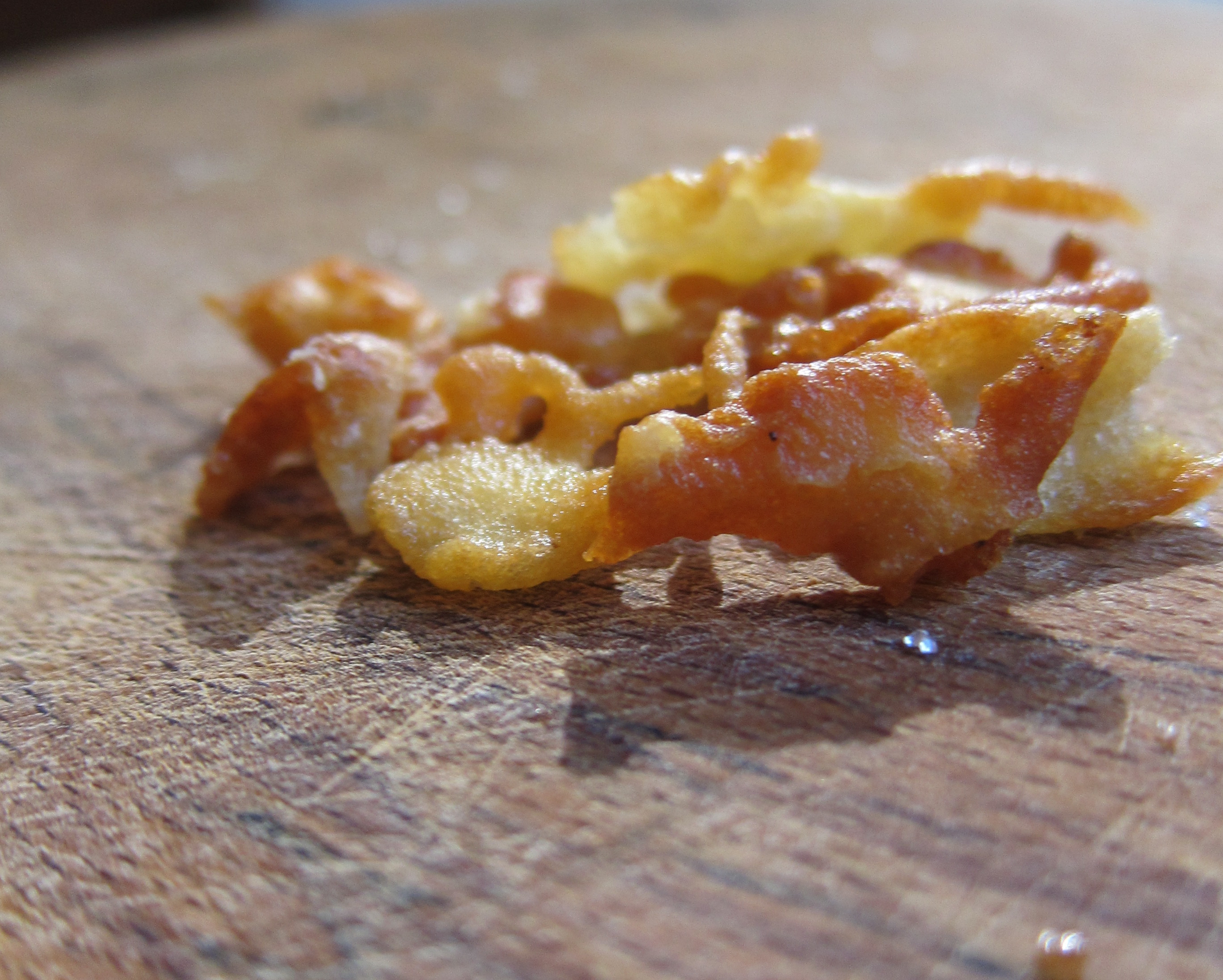
What a thing of beauty is batter. The crisp dense doughnut, its hole of silken jam revealed through the dough like a gun-shot wound. Sausages in batter, a Seventies masterpiece. Churros, those Spanish curly wurlies of ridged, hot, sugary rope. And gribbles. Gribbles were bits of batter, scrag ends you could get at the fish and chip shop for free. They would be scooped up, grudgingly, if you asked for them, and given to you in a cone made out of newspaper.

The fish and chip shop, Capel’s, was opposite the swimming pool on Heavitree road in Exeter, where I had my weekly swimming class with a monster called Miss Diamond. She made me cry underwater. I also had to tie knots in my trousers, blow them into a balloon and wait to be ‘rescued.’ These were public baths and always full to bursting on a Wednesday night, with kids having fun after school. Trying to get from one end of the pool to another was a challenge. Trying to do it fully clothed in order to save someone who was pretending to drown was a joke. Miss Diamond bellowed instructions at us or blew on her whistle to get above the racket. Never has the term ‘treading water’ felt so apposite, as I waited for the tyranny to end.

After swimming I would have hunger pangs but no money. I remember standing in the chippy with wet hair, watching golden hunks of fish being laid to rest in glass cabinets on the counter. But it was the batter I was after. Sometimes there was a landslide of gribbles, and you could even direct the server to which bits you wanted. Other times, strangely there was nothing. If I was ravenous, I would challenge them weakly. Were they sure? Absolutely nothing? And then the hill-climb home seemed particularly hard.

Still life with gribbles

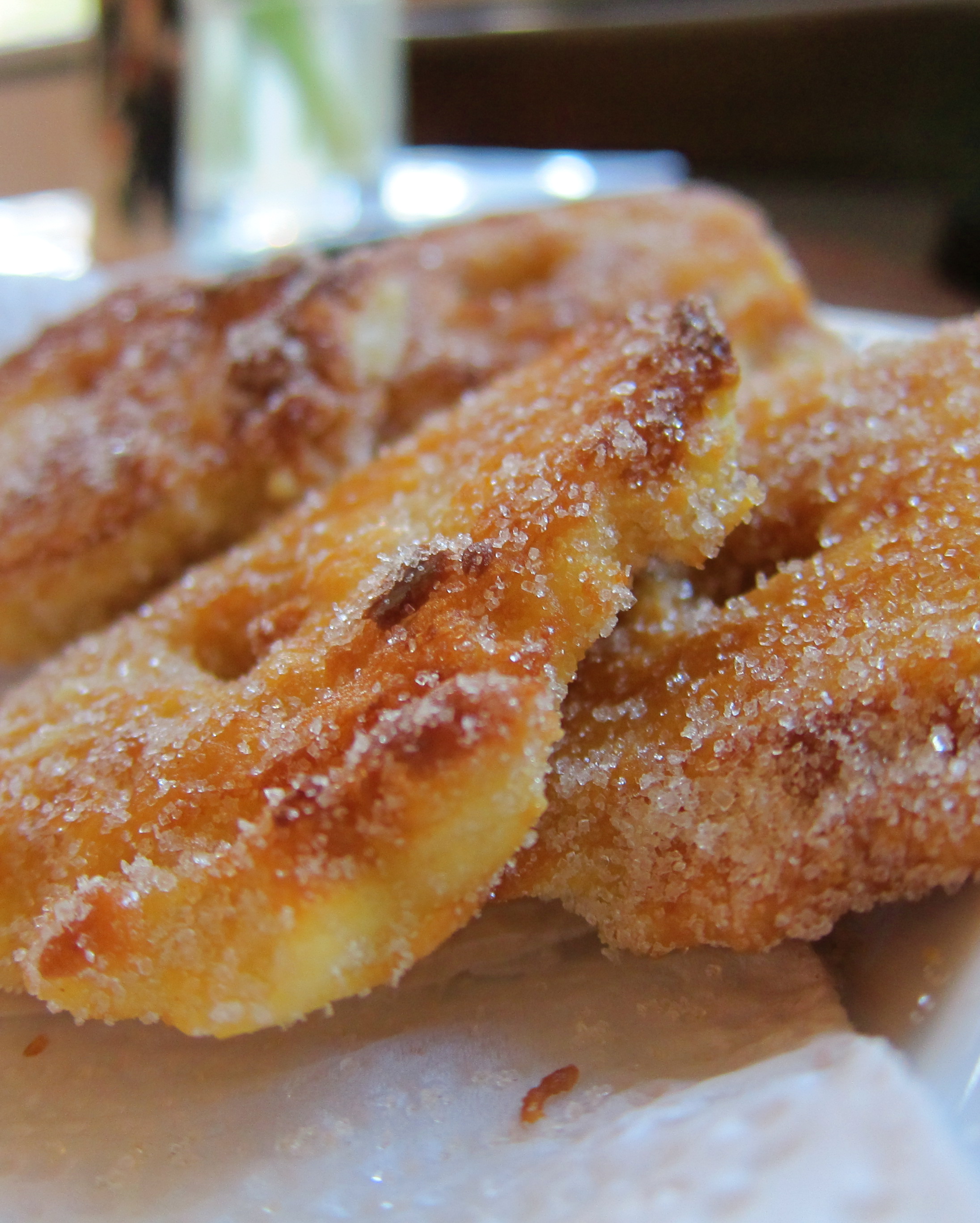
Peppery, puffy batter shrouds these sweet apple slices, which are ever so slightly cooked while remaining al dente. A pinch of saffron, steeped in a couple of tablespoons of boiling water and then strained into the mixture, will turn the batter a lovely crocus-yellow. Alternatively, you can add sparkling water, cider or beer. You must eat these quickly, even standing over the still-smouldering pan of oil. I can imagine they would work well on a lazy Sunday morning – you can prepare the batter the night before and keep it in the fridge (give it a quick whisk). Do not omit the pepper.

Apple Fritters

Inspired by Emma Gardner, Poires au Chocolat

Adapted from a recipe from Jane Grigson, English Food

6 eating apples

125g (4 oz) flour

2 medium eggs

1 tablespoon of butter

Up to 300ml (1/2 pint) milk

Freshly ground black pepper

Pinch of sea salt

Pinch of saffron (optional)

2-3 tablespoons of sparkling water, cider, beer (tap water is fine)

Caster sugar (superfine), to toss

Cinnamon for the sugar (optional)

Oil to fry – sunflower, canola, peanut, coconut

In a small pan, melt the butter. You can take this to the browning stage for a nuttier flavour, if you like. Leave to cool. Beat the eggs in a bowl, then add the flour, and the water/cider/beer/saffron juice (delete as applicable), and sea salt. Gradually beat in half the milk and whisk until smooth. If the batter is too thick for your taste, add more. It should be thick enough to coat the apples well, and more or less stay put in the pan. Add the cooled butter. Grind the pepper two or three times over the basin and stir it in.

Peel the apples, then use a corer to take out the centre. Cut into 1cm thick slices (but again this is up to you). Prepare two plates: one with kitchen roll and another with a generous layer of sugar, mixed with a sprinkling of cinnamon if you like. Pour about 2cm of oil in a heavy-bottomed pan and heat over a medium high heat until just starting to smoke. Let a drip of batter fall into the oil – that will give you an idea of whether it’s ready.

Dip the slices of apple into the batter and fry until golden brown on both sides. Transfer to the kitchen roll plate for a minute to soak up any excess oil, then move to the sugar plate and toss. Enjoy now.

Share this:

  • Share on X (Opens in new window) X
  • Share on Pinterest (Opens in new window) Pinterest
  • Share on Facebook (Opens in new window) Facebook
  • More
  • Share on Reddit (Opens in new window) Reddit
  • Share on LinkedIn (Opens in new window) LinkedIn
  • Share on Tumblr (Opens in new window) Tumblr
  • Print (Opens in new window) Print
  • Email a link to a friend (Opens in new window) Email
Like Loading...

Intense

05 Monday Nov 2012

Posted by Sophie James in Recipe

≈ 5 Comments

Tags

Baking, Chocolate, Citrus, Fruit, Ingredients, Los Angeles, Recipes, Stories

I’d like to clarify one thing: Los Angeles is not laid-back. I can illustrate this with a recent happening in Runyon Canyon which involved the lady in the picture below. It was immediately clear she was mad. To conflate the English and American uses of the word, she was both insane and angry. She strode up the hill, got very close to us, pivoted and marched back down. She did this a few times, and we took some surreptitious photos, which she seemed to know about even though she couldn’t see anything.

“Are you taking pictures of me?” she barked, striding up the hill again, ski hat and sunglasses obscuring most of her face. We assured her we were not, and continued on our way. But however far we got, she would find us, get very close, then pivot and stride in the opposite direction. It was like some sort of drama school exercise to do with spatial awareness. Specifically the work of Rudolf Laban, which she would have excelled at.

Each time she came near, she raised her voice, and started talking very loudly into her cellphone. It wasn’t clear if there was anyone real on the other end, but it was obvious she was talking about movies: meetings, castings, budgets were mentioned. And it occurred to me that this was like a mad and intense version of what happens in LA every day. This is a city of creatives. Imagine living in a city peopled only by librarians or lollipop ladies* (which would be nice, I think; you would have a wide selection of reading material while being able to cross the road safely).

I never thought I’d come to the conclusion that there is such a thing as too much creativity. Being surrounded by people who are expressing themselves all the time is quite frightening, particularly when there are also yawning canyons, deep bowls of dust, fissured, cracked earth. There are mountain lions and rattlesnakes in the vicinity. Hawks hang in the air. LA is quite wild enough.

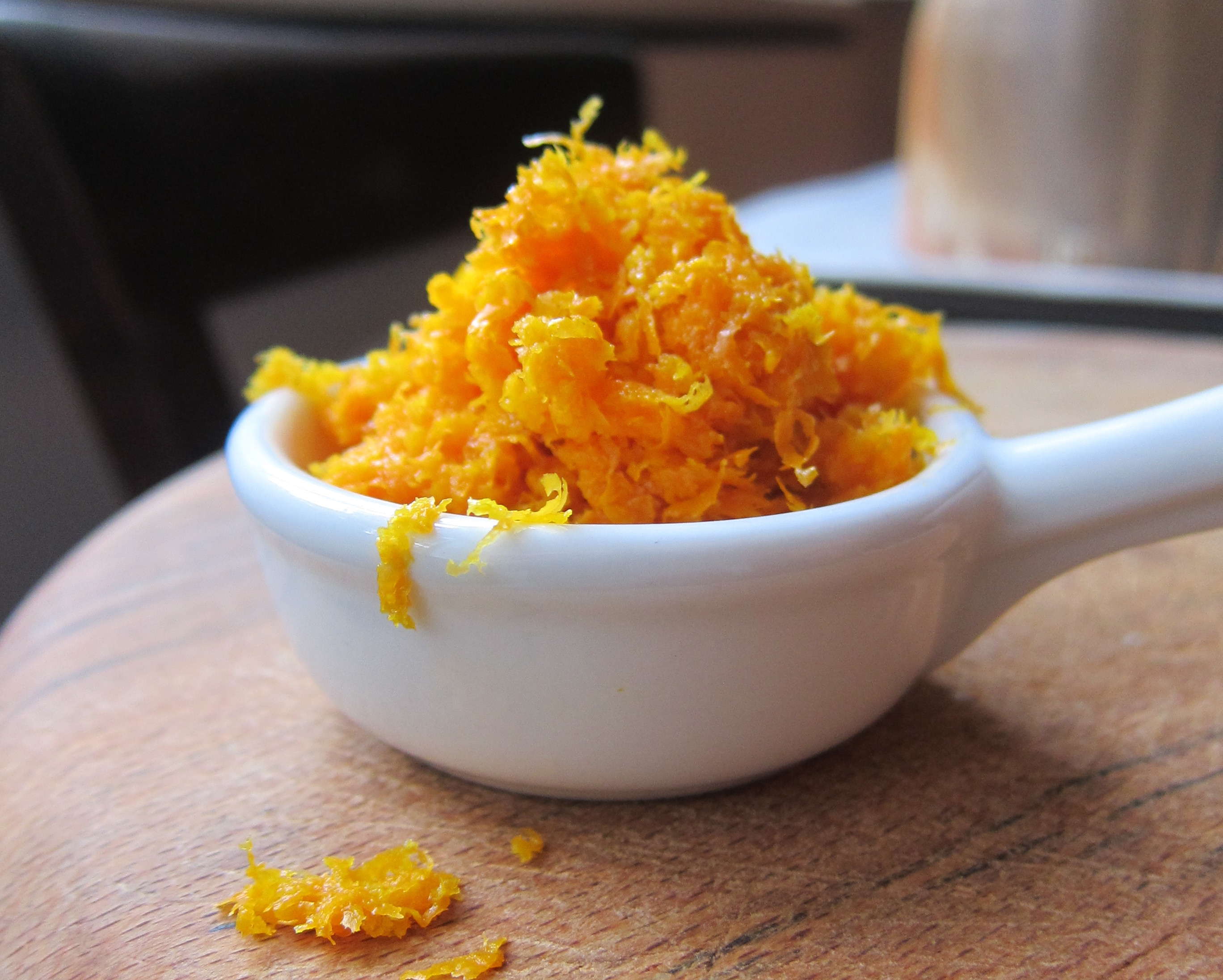
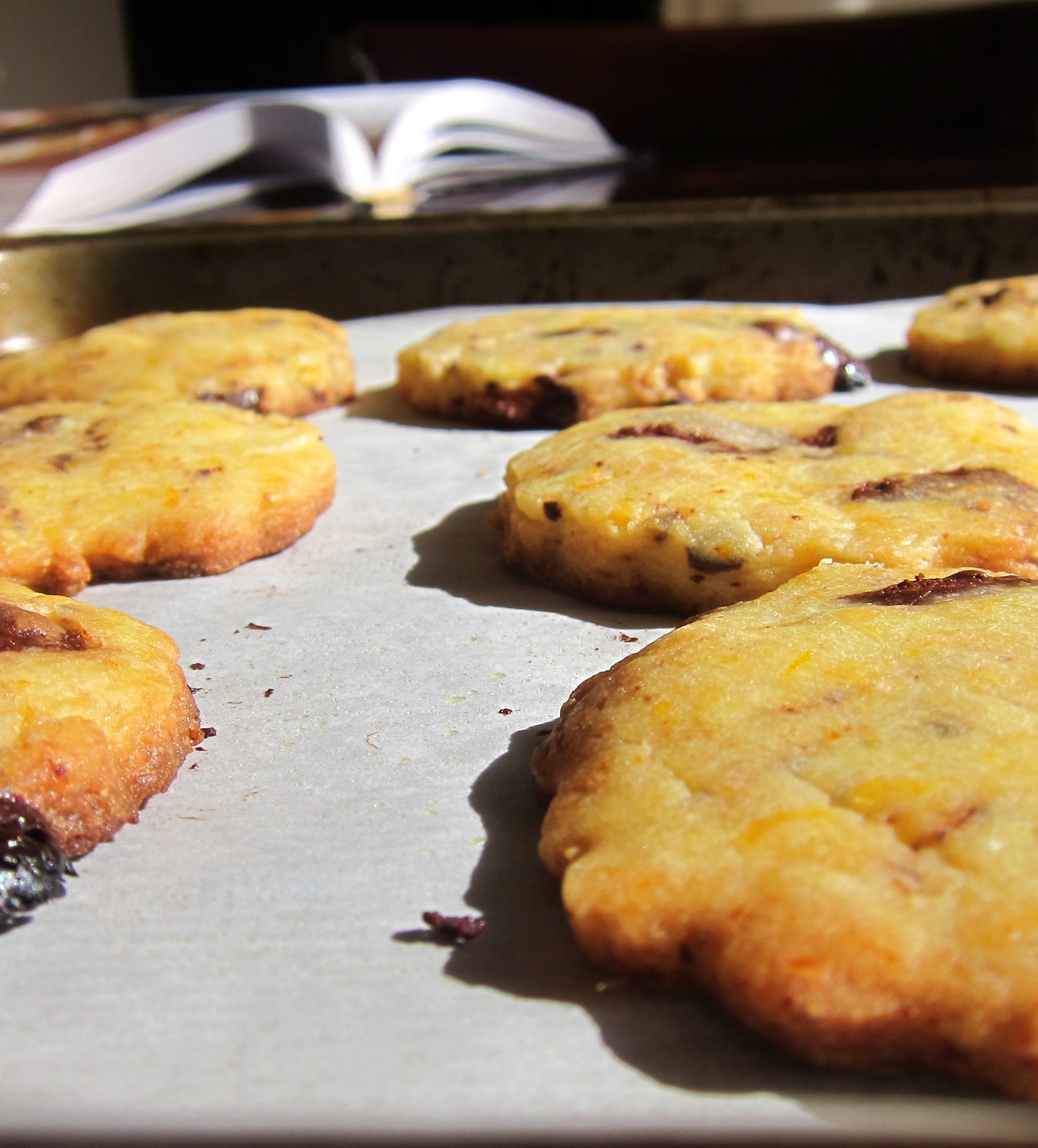
In keeping with today’s theme, these cookies are very intense. They’re little explosions of citrus and chocolate, and leave you feeling quite caffeinated and in need of moisture. They use a lot of butter, so this is an opportunity to use the good stuff, if you can get your hands on it. They aren’t soft, but snap in the mouth, and have a crystalline, sandy quality. The flavour of orange is not subtle (the recipe asks for the zest of 5 oranges, no less) and the dark chocolate is strong and edgy. Children may well turn their noses up at them. All the more for you.

Orange chocolate chip cookies

Adapted from Dan Lepard, The Guardian

350g plain flour

½ tsp salt

150g icing sugar

200g unsalted butter, slightly softened

Finely grated zest of 5 oranges (have yourself an orange juice)

200g chocolate chips (or a block of dark chocolate roughly chopped)

Put the flour, salt, icing sugar, butter and zest in a bowl and rub together into a smooth, soft dough (or you can use a food processor). Add the chocolate and work quickly to combine. Either divide the dough in two, and roll each half into a cylinder, or pat the entire amount of dough into a wide, flat disc. Wrap in plastic wrap/clingfilm and put in the freezer to firm up (you can leave it there for a month).

To bake, heat the oven to 170C/335F. Line a baking tray with parchment/baking paper. Take the dough out of the freezer and let it soften slightly for about ten minutes. It needs to stay firm for slicing. Using a serrated knife, cut out thinnish rounds (0.75-1cm). Alternatively, place the whole disc of dough between two sheets of cling film/plastic wrap and roll out to the same thickness, and then use a pastry cutter. The first kind will look like coins, the second like your more conventional cookie.

Sit the cookies on the lined tray about 2-3cm apart and bake for about 15-20 minutes (I don’t know the fierceness of your oven), until lightly browned and crisp. Remove from the oven, transfer to wire racks and leave to cool.

An additional recipe

Adapted from Hugh Fearnley-Whittingstall, Three Good Things on a Plate

These cookies can form the basis of a lovely chocolate tiffin, or refrigerator cake. Put 200g of broken up bits of dark chocolate, 110g butter and 1 tablespoon of syrup or honey into a heatproof bowl. Stand this over a pan of just-simmering water until the chocolate is melted and smooth. Roughly chop 75g of crystallised ginger (or a handful of raisins and/or dried apricots) and crush the cookies to small chunks. Pour the melted chocolate over the ginger/dried fruit and cookies, and mix. Tip this mixture into a lined loaf tin. Smooth out, leave to cool, then transfer to the fridge for several hours to set.

*Crossing guards

IMG_0545

Share this:

  • Share on X (Opens in new window) X
  • Share on Pinterest (Opens in new window) Pinterest
  • Share on Facebook (Opens in new window) Facebook
  • More
  • Share on Reddit (Opens in new window) Reddit
  • Share on LinkedIn (Opens in new window) LinkedIn
  • Share on Tumblr (Opens in new window) Tumblr
  • Print (Opens in new window) Print
  • Email a link to a friend (Opens in new window) Email
Like Loading...

An Autumn Jelly

21 Sunday Oct 2012

Posted by Sophie James in Recipe

≈ 7 Comments

Tags

Autumn, England, Food, Fruit, Homesickness, Ingredients, Los Angeles, Preserve, Recipes, Stories, Sussex

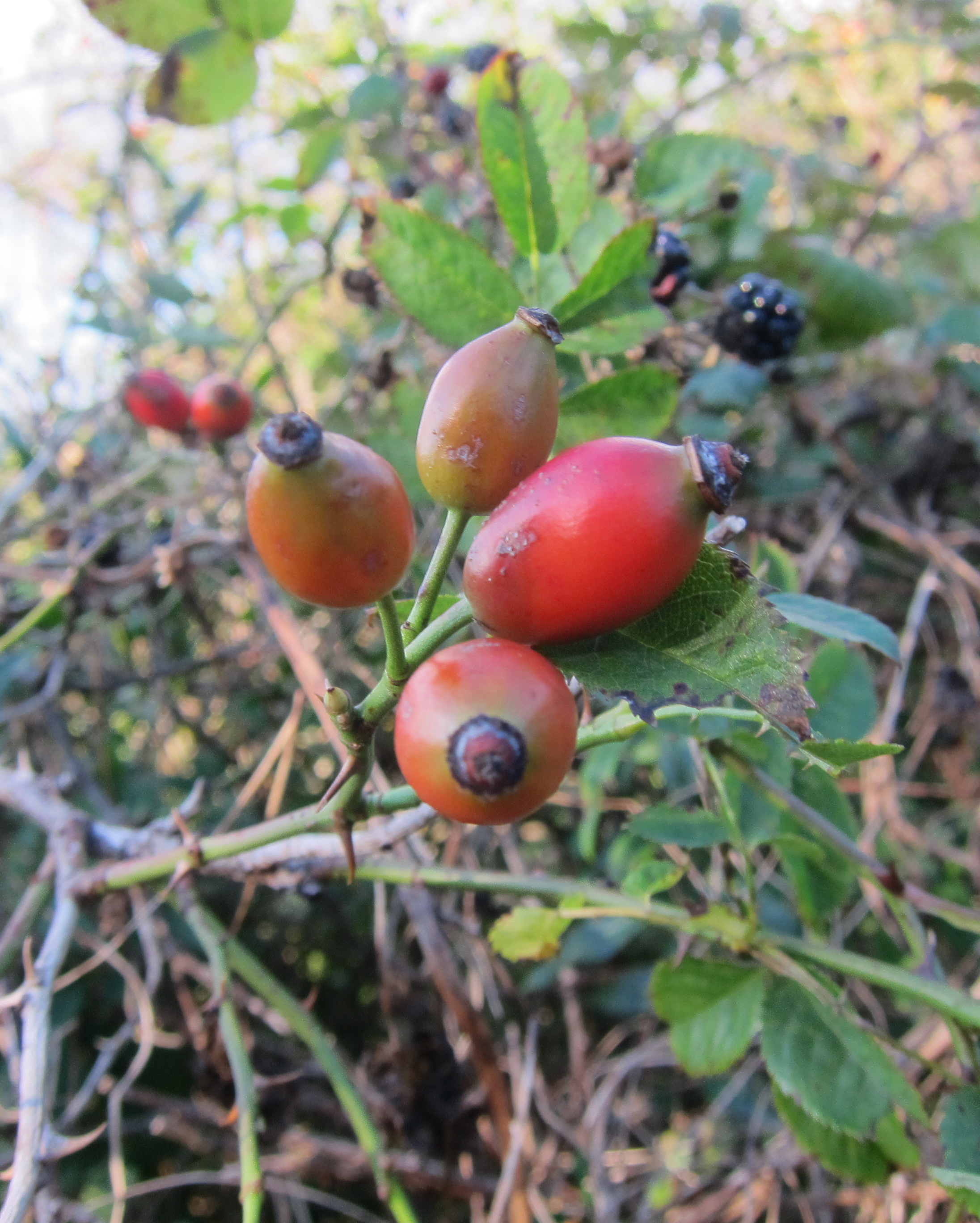
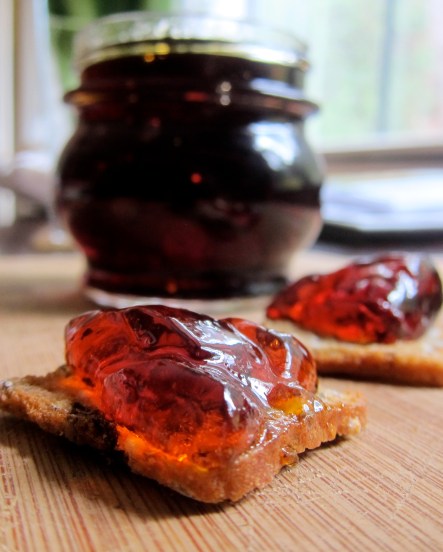
I was torn between jelly and chutney. I was eventually won over by the jelly’s limpid beauty, the slow drip through muslin, the wobble. Chutney tends to be quite polarising, I find. I’m never entirely sure what to do with it, what to eat it with and who to give it to if I make it. And the flavours can be aggressive, sour, bullying. I’m obviously not doing it right. About jelly, there is something of autumn, distilled. A jar of pale amber or wine-red brings to mind rosehips and crab apples, sloes, rowan berries and warming spices. And stained glass windows.

To clarify, I am talking about jelly as a preserve rather than, say, jelly and ice cream. This version is lovely with roast meat or with a sharp, dry cheese. There is also nothing to stop you melting it over a crumpet for breakfast. Think deep, rather than sweet. Because many of the hedgerow fruits are low in pectin, it makes sense to combine them with apples. There are no hard and fast rules about what to use in these so-called ‘bramble’ jellies, except that apples will help them gel. And always go for something bittersweet and a bit tannic. Windfalls with all the bad bits cut out would do just fine.

I am now in LA where there are no hedgerows. We have a nectarine tree ravaged by squirrels and some small but softening lemons on the tree. The sky feels very low and close. There is not much air. I am somewhat jellied myself, having been hauled off for questioning at immigration control on my arrival at LAX airport. I swayed and an angry man jabbed questions at me. They were all simple questions, laced with the playful acid of too many long and boring hours spent in an airless room. What do I do? Why was I in England? Why did I come back? Where do I live? Tell me again – you do what? At the best of times, I find these questions hard to answer, but after an eleven hour flight, they become truly existential. This man was like Kierkegaard with a shaved head. If the circumstances had been different I might have opened up a bit.

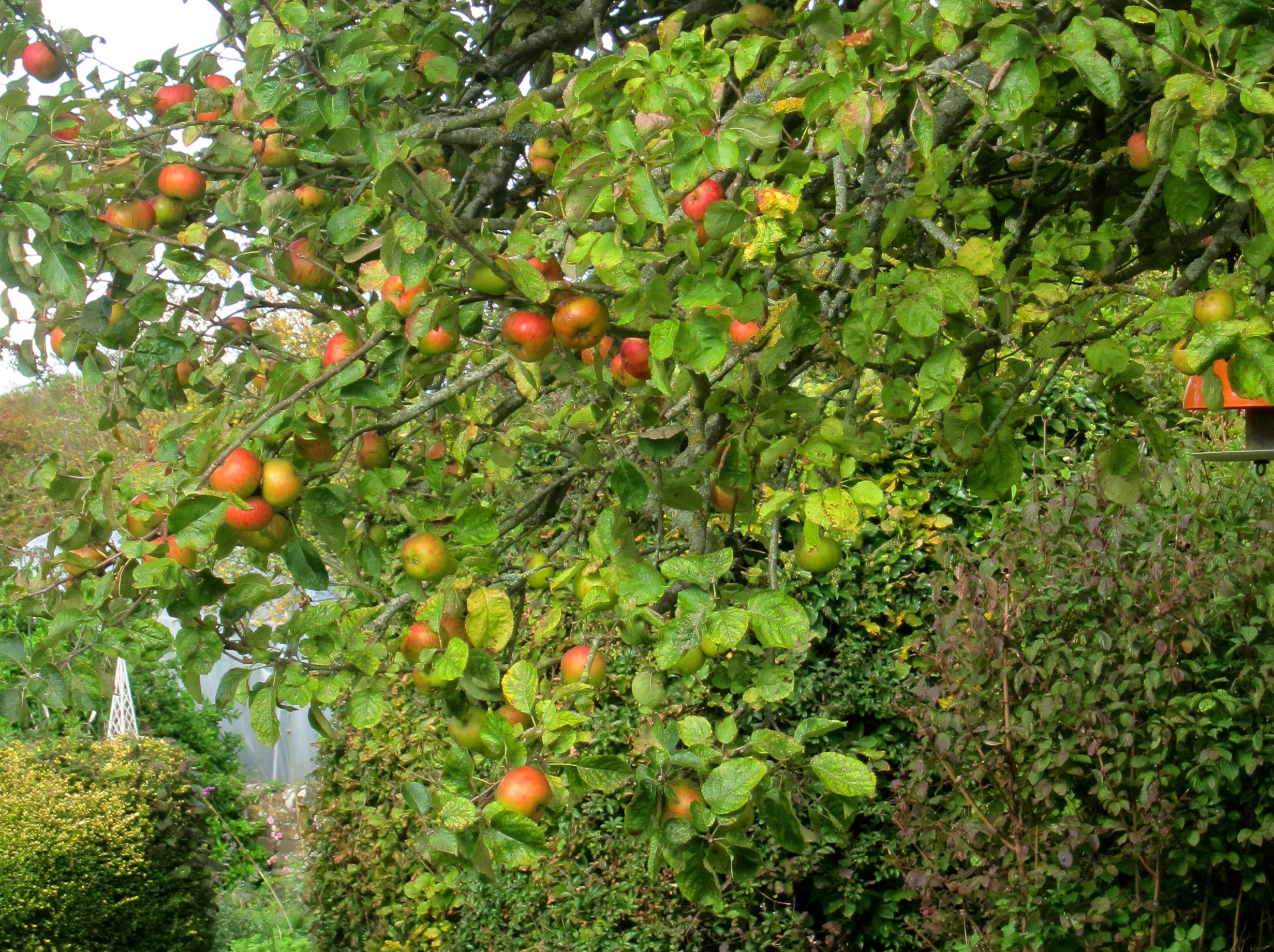
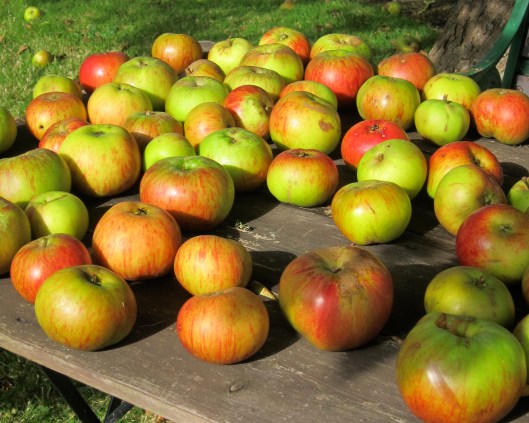
So, I hope you will forgive me for harping on about hedgerows and hawthorns. And apples. I still can’t get over this apple tree I found while out on a walk, en route to Alfriston. These apples had the hulking shoulders of the Bramley, but they were rosy, tawny, not green. I later juiced them and they were sharp but honeyed, creamy like Guinness with a pinky-red colour under the froth.

There may well be lovely apples here and I will enjoy discovering more about them over the coming weeks. But after a month of riding my brake-less bike through wind tunnels, gorging myself on autumn and being inside such a tactile landscape again, I suspect it may take me a while to land.

Autumn jelly

Adapted from Hugh Fearnley-Whittingstall, The Wild Bunch, The Guardian

1kg tart apples, washed and cut into chunks (don’t peel or core them)

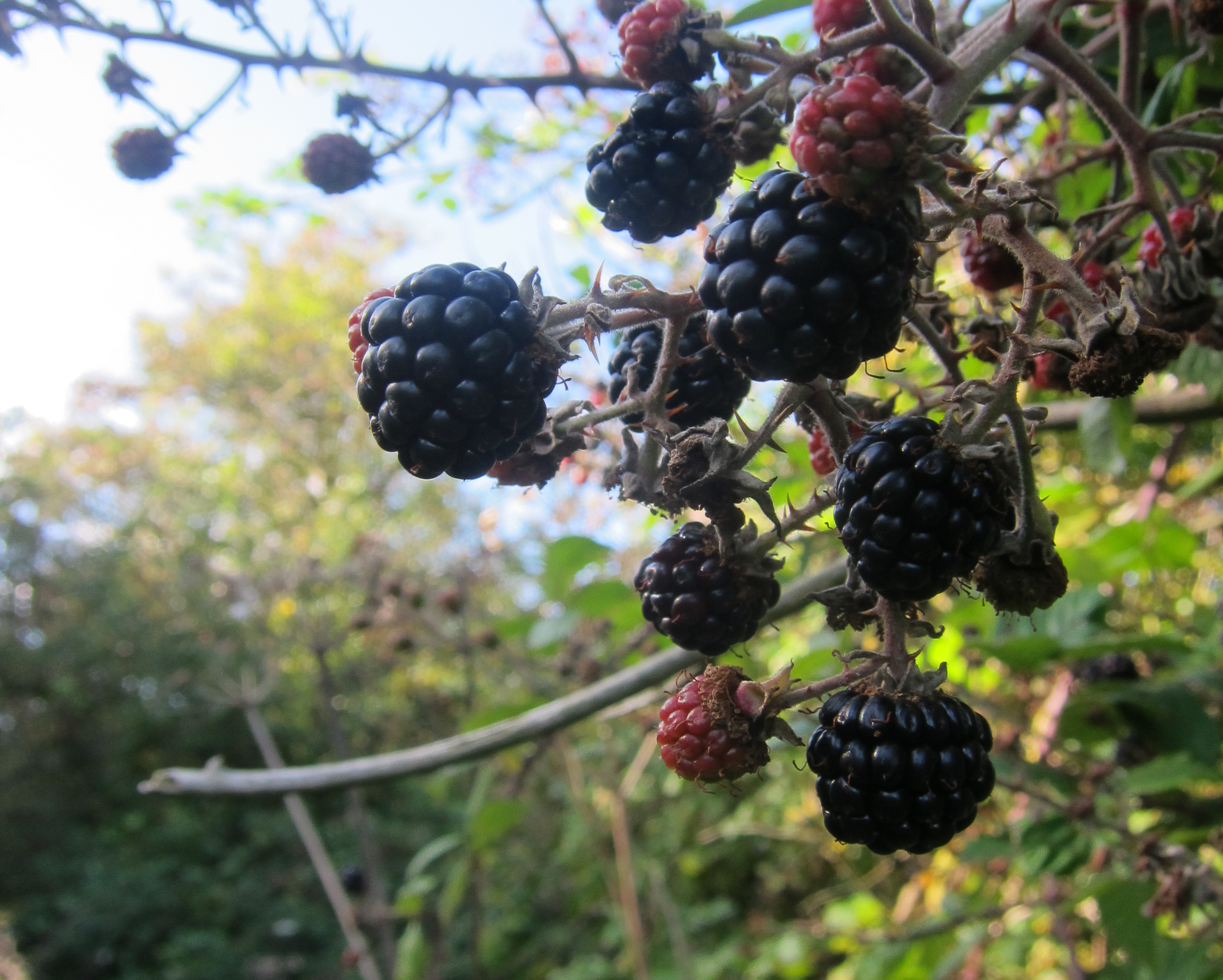
1kg blackberries, rosehips, haws, sloes, elderberries, or rowan berries

(if these are hard to come by, you could try blueberries or cranberries)

Granulated sugar

Herbs (mint, thyme or rosemary work well)

Fills 4-5 small jars

Method

Put the apples and berries in a preserving pan (or heavy-bottomed pan). You will need to roughly chop the rosehips beforehand, if you’re including them. Add enough water almost to cover the fruit. Tuck in the herbs, if using, and bring to a simmer. Leave to cook gently until the fruit is soft and pulpy. Tip into a jelly bag or into a sieve lined with muslin (cheesecloth) and leave overnight to drip. Don’t squeeze it if you want your jelly to be clear.

Prepare your jars by washing them in hot, soapy water, then put them in a low oven to dry out and heat up. Put a saucer in the fridge or freezer. Measure the juice and transfer to the clean pan. For every 600ml of juice, add 450g of sugar. Bring slowly to the boil to ensure the sugar properly dissolves, then boil hard for eight minutes. To test for a set, turn the heat off and drip a little jelly on the now-cold saucer. Push the jelly with your finger. If there is a ‘skin’ that wrinkles, then it’s reached setting point. Don’t be overly concerned with this; you don’t want totally solid jelly. A bit of sway is nice. Pot into hot jars and seal immediately. Leave to cool, label and store in a dark place. Use within a year and put in the fridge once opened.

IMG_0474

Share this:

  • Share on X (Opens in new window) X
  • Share on Pinterest (Opens in new window) Pinterest
  • Share on Facebook (Opens in new window) Facebook
  • More
  • Share on Reddit (Opens in new window) Reddit
  • Share on LinkedIn (Opens in new window) LinkedIn
  • Share on Tumblr (Opens in new window) Tumblr
  • Print (Opens in new window) Print
  • Email a link to a friend (Opens in new window) Email
Like Loading...

Toffee apples

11 Thursday Oct 2012

Posted by Sophie James in Recipe

≈ 3 Comments

Tags

Autumn, Childhood, Dessert, Devon, Food, Fruit, Homesickness, Ingredients, Nonfiction, Recipes, Stories

This is what I will miss: bonfire night and toffee apples. Bonfire night, toffee apples and funfares, to be precise. Specifically, the moment when the glassy seal of toffee is broken, and soft splinters fall onto the tongue, followed by the sharp, merciless crunch of sweet apple – what a heady combination that is. It shouldn’t work, but it does.

We would eat them with the searing heat of the bonfire reddening our hands and face, while leaving the rest of us frozen. There were fireworks too, and sparklers, but I’m probably getting all my Pagan festivals mixed up. We didn’t really have Halloween back then, it being essentially an American import that took off in the 80s. What we had instead was the Tar Barrel tradition. This was peculiar to our town Ottery St. Mary, in Devon, where we lived. Men would run down the main street on November 5th – bonfire night, to celebrate the burning of Guy Faulks – carrying a barrel of tar on their backs that had been set alight. I remember the flames pouring out from behind them as they ran, their hugely mittened hands blackened and charred, and the screams as they collided with onlookers. One man ran into the wall next to us and the barrel exploded with sparks and detritus. There was a maniacal glee about the proceedings, an undercurrent of bravado and violence.

I won’t miss that especially, but there are other things impossible to carry with me on the plane – the chill in the air, and coming in from the cold, the train, being a passenger again, crisp leaves, conkers on the ground, always a glossy chestnut-brown, round and firm like a horse’s rump. Shelves and shelves of chocolate. My first wet walnuts. Salt and vinegar crisps. Views of hugeness from small bays and ports. I will miss my DNA.

And apples. I can’t get enough of them, though so far I have been largely enamoured with the tart and sour varieties – ‘cookers,’ such as the Bramley. The sweeter, gentler, dessert apples work better here, like Early Windsor, Falstaff and Discovery.  So, apples, I will miss you. Wet and windswept, rough-cheeked, and a bit the worse for wear, peppered with holes where small things have burrowed. Hope to see you next year.

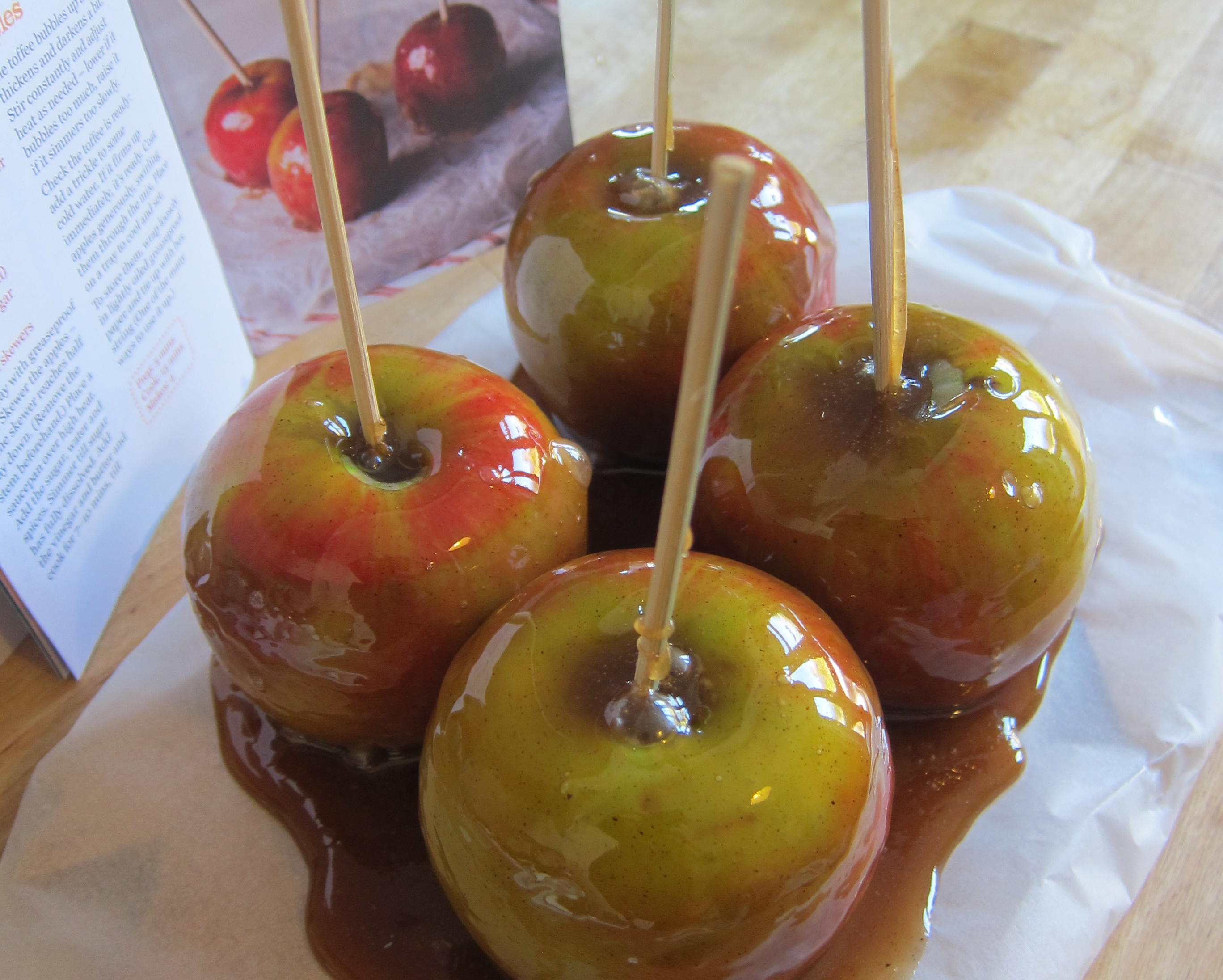
Be prepared for a puddle or two when making the toffee apples (see top picture). The homemade version lacks the thick umber coating and square ‘seat’ at the base that you get with the commercial ones. You will also need to prise the toffee from any surface it has been in contact with – the upside is that it’s a bit like sucking a Werther’s Original from the odds and ends bin. The photo of the shelled wet walnuts, above, is not quite as random as it seems. I think they go well with a smattering of toffee apple.

Toffee apples

Adapted from Abel & Cole, http://www.abelandcole.co.uk

4 dessert apples

225g demerara sugar (or any soft, brown sugar)

110ml water

2cm slice of peeled ginger (optional)

1 cinnamon stick (optional)

3 cloves (optional)

1 tsp cider vinegar

25g butter

4 wooden skewers

Line a tray with greaseproof paper. Skewer the apples until it reaches half way down (remove the stem beforehand). Place a pan over a high heat. Add the sugar, water and spices. Simmer until the sugar has fully dissolved. Add the vinegar and butter and cook for 7-10 minutes. The toffee will start to bubble and thicken and darken a bit, which is what you want. Stir constantly. Check the toffee is ready by adding a trickle of it to water. If it firms up immediately, it’s done. Coat apples generously, swirling them through the mixture. Place them on the lined tray. The toffee will go everywhere. Leave them to set. To store, wrap loosely in lightly oiled greaseproof paper and tie with string.

Share this:

  • Share on X (Opens in new window) X
  • Share on Pinterest (Opens in new window) Pinterest
  • Share on Facebook (Opens in new window) Facebook
  • More
  • Share on Reddit (Opens in new window) Reddit
  • Share on LinkedIn (Opens in new window) LinkedIn
  • Share on Tumblr (Opens in new window) Tumblr
  • Print (Opens in new window) Print
  • Email a link to a friend (Opens in new window) Email
Like Loading...

Hedgerow crumble

03 Wednesday Oct 2012

Posted by Sophie James in Recipe

≈ 6 Comments

Tags

Autumn, Baking, Food, Fruit, Ingredients, Nonfiction, Recipes, Stories, Sussex

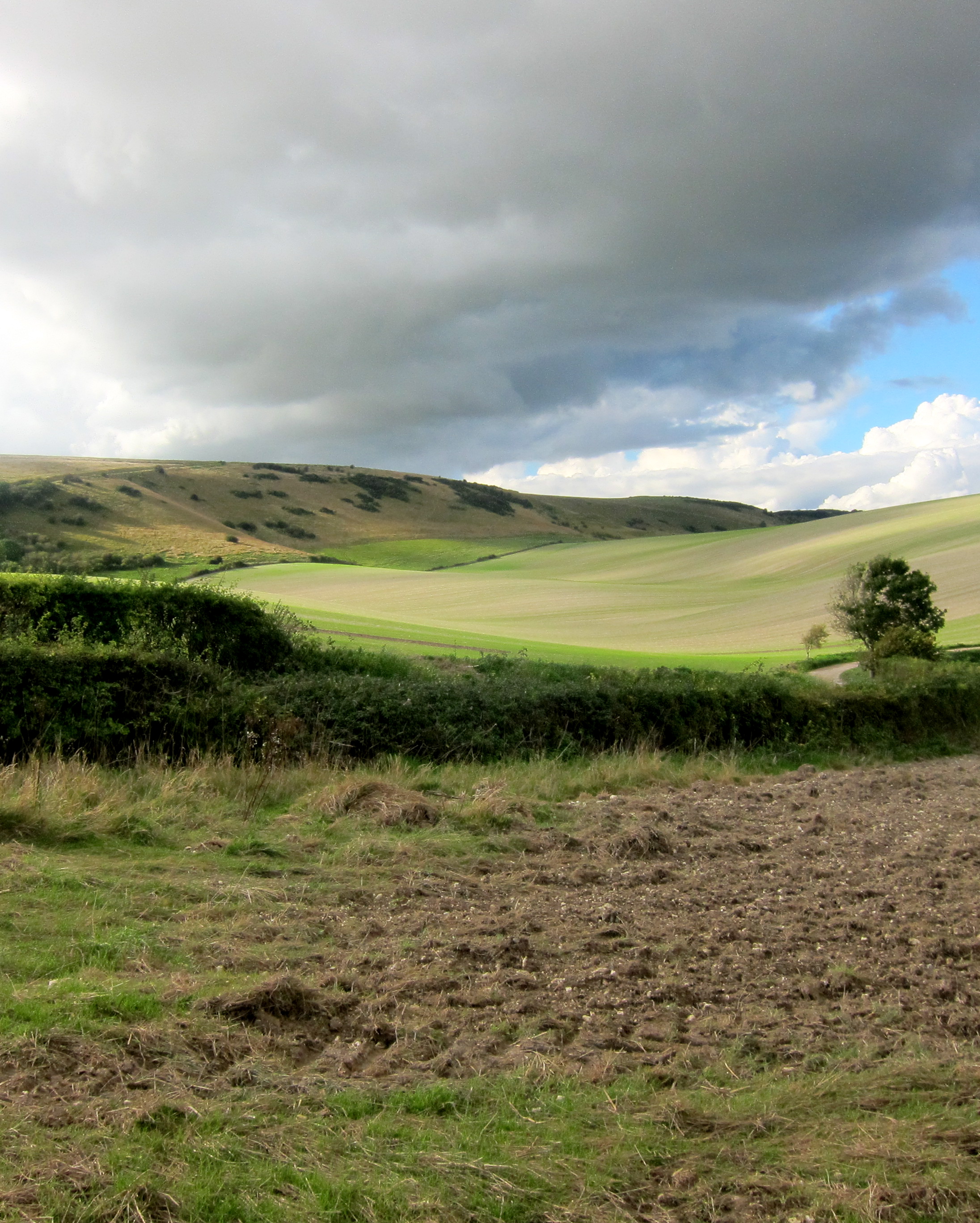
I’m in England and it’s autumn, my favourite time of year. September in particular is lovely in Sussex; soft air and bursts of sunshine (everyone is wearing sunglasses in brief interludes) in between the torrential downpours and foggy breath. Cobwebs stretch for miles it seems – it’s like being surrounded by endless pairs of gossamer tights.

On my walks so far I have seen crab apples, rose hips, elderberries, haws from the hawthorn bush, the first blackberries and what looked like small, blushing quinces. The last time I was here there was a fox lying in the brambles nearby. It was a beautiful orangey-red with streaks of black. Apparently it had signed up with the local vet and was receiving regular meals from neighbours. Every time I passed by that spot, it was there.

This time it was gone. But there are cats everywhere, large and languid, stalking their way through the golf course. The sea is one big, frothy grey drink. People stare at it through their windscreens and eat sandwiches. It reminds me of Victoria Wood’s story about the English couple who visited the Taj Mahal and said, “It’s nice, but I think it would look better with a tax disc and some windscreen wipers.” I am craving a Yorkie bar. I am also thinking about pork pies.

Whenever I come back from LA, I am amazed by how easy it is to walk to the shops and buy things. How small and green it is here, how different. The space we occupy involves other people who you must always take into account. When you walk, you may be barring someone else. This happened as I was looking for the right luggage carousel at Heathrow and I heard my first muttered “tsk”. Not yet through Nothing to Declare and I had already got in the way. I think he also rolled his eyes as he overtook me and then stood waiting for his suitcase, which failed to arrive. I left first.

Next to all these small places and quiet maneuverings, LA feels like a giant’s enclosure. Everyone seems very big over there now – too tall for proper eye contact. Maybe it’s the cars and the wide, scary freeways. I feel like a Lilliputian among my own people again.

IMG_0458

Apples have been a worry in England. Too much rain has soaked the orchards and they have been slow to appear. But our local greengrocer has some fine-looking varieties. The tart and chunky Bramley, the ruddy Cox, and Russets, grey-green and alabaster smooth. For all the concern about the tardiness of this year’s crop, in almost every garden I passed I saw a tree laden with apples. Nice for me at least.

Crumble is such an English staple that I thought it was the obvious choice: it’s warming, beautifully simple and not too sweet. I have used blackberries my mum and I picked while out on a walk and a mixture of apples I ‘scrumped’ (stole). Quinces, if you had them, would need to be pre-cooked. Damsons are the ultimate in hedgerow treasure. They are a relation to the garden plum, wild, dark and dusky and brilliant in crumbles and cobblers. They also make a phenomenal jam. Spit the stones out.

Hedgerow crumble: blackberry and apple

Inspired by Hugh Fearnley-Whittingstall, All Change, The Guardian

Serves 8-10

6-8 tart apples (around 750g)

35g butter

2 tbs soft brown sugar

225g blackberries

For the sweet shortcrust pastry (this is optional, but dresses it up a bit)

200g icing/powdered sugar

Pinch of salt

125g cold, unsalted butter, cubed

1 large egg yolk

50-75ml cold wtaer (or milk)

For the crumble (not optional)

100g plain flour

75g unsalted butter

50g light brown sugar

50g ground hazelnuts or almonds

To make the pastry, put the flour, sugar and salt in a food processor and blitz to combine. Add the butter and blitz again (or rub in with your fingertips) until the mixture resembles breadcrumbs. Add the egg yolk and enough milk or water to bring the mixture into clumps. Knead this into a ball and wrap in clingfilm/plastic wrap and chill for 30 minutes.

Heat the oven to 190C/375F. Roll out the pastry quite thinly, to fit a 24cm tart tin. Prick all over with a fork and chill for 10 minutes, then line the pastry with greaseproof paper or foil and baking beans, or rice, and bake blind for ten minutes. Remove the beans/rice and paper, and cook for about 10 more minutes, until lightly browned. Trim the edges if need be.

Quarter and core the apples, then slice thickly. Heat the butter in a large pan until foaming, then add the apples. Fry gently for five minutes, tossing them about until they start to soften. Sprinkle over the sugar and stir so it dissolves into the apples and the juices. Spread this mixture over the baked pastry case, and scatter over the blackberries.

For the crumble, sift the flour into a bowl and rub in the butter until the mixture resembles breadcrumbs. Add the sugar and ground nuts, squeeze into lumps and then scatter over the tart to give it a rough topping. You can improvise here and add spices such as cinnamon or grated nutmeg and even finely chopped rosemary to the crumble topping. Bake the lot for 30 minutes until golden brown and bubbling. Serve warm with cream or ice cream.

Share this:

  • Share on X (Opens in new window) X
  • Share on Pinterest (Opens in new window) Pinterest
  • Share on Facebook (Opens in new window) Facebook
  • More
  • Share on Reddit (Opens in new window) Reddit
  • Share on LinkedIn (Opens in new window) LinkedIn
  • Share on Tumblr (Opens in new window) Tumblr
  • Print (Opens in new window) Print
  • Email a link to a friend (Opens in new window) Email
Like Loading...

First ever quince

10 Monday Sep 2012

Posted by Sophie James in Recipe

≈ 5 Comments

Tags

Cookbook, Dessert, Food, Fruit, Honey, Ingredients, Nonfiction, Recipes, Spain, Stories, Travel

IMG_0076

My first ever quinces. My first ever quince paste, or membrillo. It didn’t go the deep red I had been reading about, and hoping for, no matter how long I cooked it, but rather a dark, rosy gold. In Mexico it is seen as candy, and it candies as you cook it. It feels and looks like a humongous boiled sweet, the way it wraps itself around your wooden spoon. Gradually, it solidifies, becomes harder to manage and your forearm sweats and reddens. I felt like one of those glass blowers by the end, with roasted arms. And then you must unwrap it, flatten it into a block and cool it on a baking sheet, smoothing it out with wet hands. It’s a tough little thing, and you need to prize it off in cubes. Some suggest burying it in sugar and cinnamon. I was interested in the Spanish version, where you serve it with Manchego, a chalky sheep’s cheese, which you dribble either with honey or olive oil. What I love about Manchego is the crystalline quality when it dissolves on the tongue – there is sharpness, it is intense, but crumbly, frail, reminiscent of ragged, yellowing parchment.

Quinces when they are cooking are startlingly honeyed and musky, almost ‘heavy’ smelling, but it is also an astringent fruit and you are left with traces of acid long after the sugar has gone. The best paste is a reminder of the fruit’s essence. Thin slices of Manchego, a hunk of bread, a few jellied sheets of membrillo – a tapa we would get for free en route to our house in Picena, southern Spain, and a bar stop demanded by the driver, Pepe el taxista. If you bought a drink, you’d get the food for free. Amazing if you think about it, and I doubt it still exists in quite the same way now.

I remember patatas a lo pobre – poor man’s potatoes – served in terracotta dishes, cakes of sweet onion tortilla and chunks of melting lamb. It was just enough to stave off hunger, and the alcohol would make everything nice and blurry. A lot of people died on that mountain road. No barriers, alcohol, a few stray goats. Everything was crumbling and dry. On average, a person a year from the village careered off the mountain side to their death, and travellers were picked off with horrible ease. But I always remember the food first, and only later the slow, lurching ascent into the clouds.

Quinces (cydonia oblongata) were the original ingredient in marmalade; the word marmelo is in fact the Portuguese word for quince. It wasn’t until 1790 that oranges were used, and all marmalade recipes before then were based on quinces, even in England. These days they are considered too tart, dry and tannic to eat raw (blame the advent of sugarcane). Cooked is the only way to eat them, unless already ‘bletted’ – beyond ripe and softened by decay.

They flummox people. What are they, exactly? For many years, they were thought to be a relative of the pear, and though most pears are grown on quince rootstock, they are not pears and will not hybridise with them. They are a separate species, full of mythology, and loved by preserve-makers and food enthusiasts. They are hard, yellowy, blocky, sometimes shaped like commas, thick-set. Imagine a great aunt with a plinth-like bosom called Enid. Anyway, they are very exciting to cook with because they transform, becoming glassy and gorgeous and they work well with fatty meats. The ones above are green and would benefit from a long sit for a few weeks until they become a mellow yellow.

Quince paste with Manchego

Adapted from Sam and Sam Clark, Moro – The Cookbook & Nigel Slater, Tender

2kg (4lb) quinces

Caster sugar

Juice of 2 lemons

Remove the down/fur on the quinces, wash them and cut them up. Don’t bother to remove the core or peel them, you will sustain injuries. Put the fruit into a heavy pan and just cover with cold water. Bring to the boil, and then simmer until tender. Strain off any excess water and push the quinces through a sieve, removing pips and core as you go, letting the purée collect in a bowl beneath. This can take some time. Alternatively, if you have one, use a mouli, but remember to use the disc with the smallest possible holes, or you will be eating fibres and grit.

Weigh the purée and add to it half the weight again of sugar; the Moro cookbook calls for equal weights of fruit and sugar, and I have adhered to their recipe for years, but having tried this Nigel Slater version, from Tender, I find the paste has more flavour, tang and quincy character and still keeps its shape.

Place both the sugar and the fruit purée in the same (but washed) pan. Return to the stove, and heat gently until the sugar has completely dissolved. Now raise the heat and let the mixture bubble, stirring constantly with a wooden spoon (wear an oven glove to protect your hand). Add some lemon juice to taste. It is ready when it starts to come away from the sides of the pan, attaching itself to your spoon like a thick, deep orange wand. By the end, you can hardly move your spoon through the paste.

Now, remove the mixture and spread it out in a centimetre (½ inch) layer on a baking tray lined with greaseproof paper. Push it out to the sides as evenly as possible. When it has cooled slightly, wet your hands and smooth it down. Switch the oven to its lowest heat and dry it out for a couple of hours, or simply air dry it. It should be tacky dry and firm enough to be cut into solid pieces. Pack it in greaseproof paper and store in an airtight container. Refrigeration should not be necessary and it keeps for many months.

Traditionally, the sheep’s cheese Manchego is served in thin triangles with the rind left on. The quince paste is sliced and then placed on top of the cheese, with a thread of extra virgin olive oil alongside. Honey is also lovely here if you fancy it.

IMG_0098

Share this:

  • Share on X (Opens in new window) X
  • Share on Pinterest (Opens in new window) Pinterest
  • Share on Facebook (Opens in new window) Facebook
  • More
  • Share on Reddit (Opens in new window) Reddit
  • Share on LinkedIn (Opens in new window) LinkedIn
  • Share on Tumblr (Opens in new window) Tumblr
  • Print (Opens in new window) Print
  • Email a link to a friend (Opens in new window) Email
Like Loading...

Apple mousse, lpq style

29 Wednesday Aug 2012

Posted by Sophie James in Recipe

≈ 2 Comments

Tags

Cookbook, Dessert, Eating out, Fruit, Ingredients, Nonfiction, Pudding, Recipes, Stories

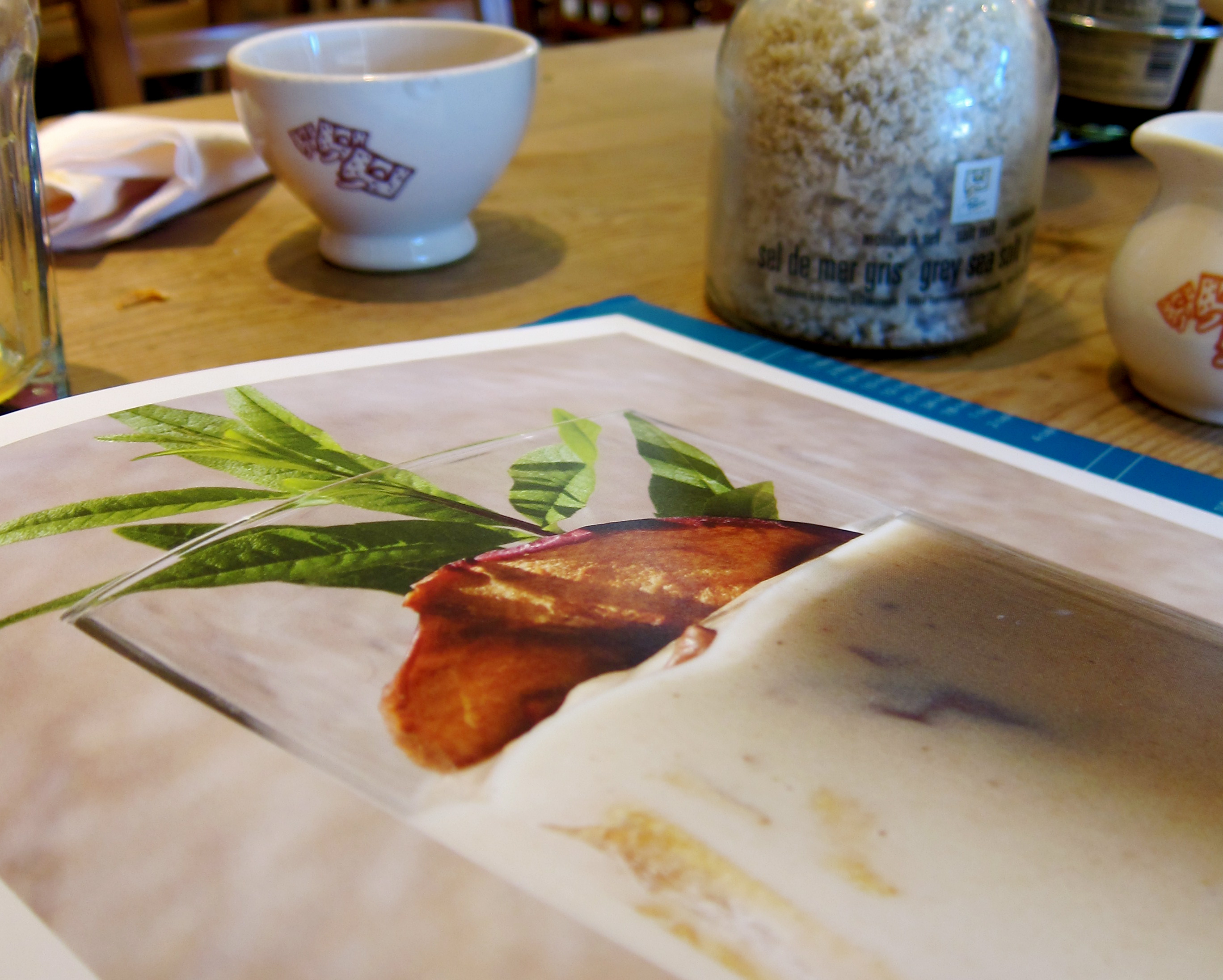
This is a recipe from Alain Coumont’s cookbook. He is the founder of the cafe Le Pain Quotidien, and his book is dotted about the tables in a civilized and welcoming (ok, manipulative) way for you to peruse. I’ve worked out that if I go there once a week for the next 6 months, I’ve got every recipe. It’s Belgian, he’s Belgian, and the whole enterprise is as civilized as you can get – in my opinion – in LA. The chairs and tables are made of wood, the walls of brick. Just like humans are made of flesh and blood, he decided that the basics shouldn’t really be messed with, and I agree. I’m a great fan of being able to hear the person sitting opposite me, and not the screeching sound of metal chairs slicing open my cerebral cortex. I also like books and reading and taking my time, which if you leave books lying around is the implicit message; I’m less likely to leave when I’m halfway through the history of sourdough, so I simply order another cup of Brussels breakfast tea, and stare out of the door for a few seconds, thinking about the pleasures of yeast.

It amazes me that something so simple is so hard to get right. All I want is somewhere to go that is unpretentious, that serves well-made, thoughtfully produced food, without millions of other possibilities, all of them involving soy. I also don’t want the server to get so far into my psyche that we have to arrange a separate meeting just to unpack it all. And all the recipes, by the way, are in grams. No conversion chart, no nothing. This man has balls. Also, given his success at creating a chain, I was expecting a businessman in a pinny, but reading his book, he’s clever and genuine about food, with quite messy hair.

This recipe is so simple and soothing, it’s almost convalescent food. It also reminded me of toffee apples. Cool and fudgy and very ‘appley’ – it’s lovely for breakfast or as a lazy pudding. Apples are in season here, especially the crisp and aromatic California Gravensteins from Sonoma, which are peaking as we speak. Feel free to experiment with spices and sweetness, but my feeling with apples is always the tarter the better. I want even my pulped apple to have some bite. The overall blondeness of cashews is pleasing, but if you don’t mind dark brown pudding, I imagine it would also work with almonds.

Apple mousse with cashew butter*

Adapted from Alain Coumont’s Communal Table

Fills 4 small bowls or glasses

400g apple compote

150g cashew nut butter

4 tbsp acacia honey

Juice of 1/2 a lemon

1 cinnamon stick or a sprinkle of ground cinnamon

For the garnish: 75g dried apples and verbena or basil flowers

For the compote, core and peel 5-6 small apples, and then slice them finely. Add them to a solid pan with 3 tablespoons of water and the cinnamon, and put a tightly fitting lid on. Cook over a gentle heat for about 15 minutes until they have softened and become fluffy. Fork them up a bit, remove the cinnamon stick, and process/blend the apples along with the cashew butter, honey and lemon juice. Much depends on the sweetness of your apples, so taste as you go. Divide out into the bowls or glasses and refrigerate for 6 hours. Serve with a dried apple ring and a verbena flower, if you can remember.

*(1st Sept) I initially thought Coumont had withheld amounts in this recipe; in fact, I got distracted while people watching at LPQ and forgot to write them down. I now include his very sensible measurements. My apologies.

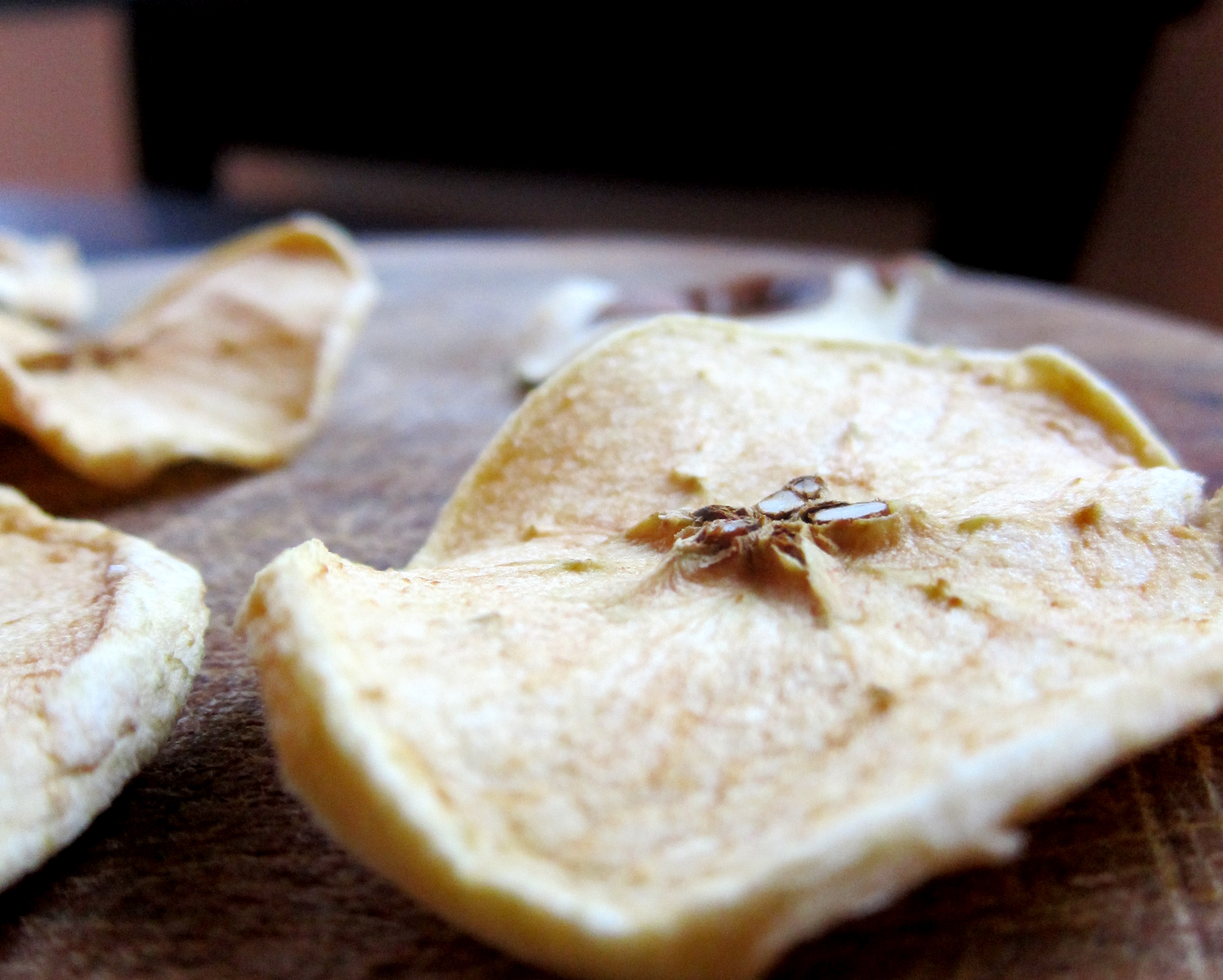
Dried apples for the garnish

Adapted from Jane Grigson’s Fruit Book

If you want to dry the apples yourself, it’s fun to do and not difficult at all, though easy to forget about; you open the oven door a week later to find some wizened ears. Prepare the apples (you choose the number) as you would for the compote, and cut into rings. The point is to slowly remove all moisture from the fruit, without cooking it. A low and steady source of heat is what is needed. The plate-warming part of the oven is good, a warm airing cupboard, or keep the apple rings in the oven on a cake rack at the lowest possible temperature, with the door slightly ajar. The temperature should be between 50 to 60C (120 to 150F). You’ll know they’re done because they’ll be leathery, and will not give up any juice when you cut into them. Cool the fruit before packing away in a paper bag – anything totally airtight will encourage moisture and mould. Store in a cool, dry place. The flavour is quite different to fresh and it’s worth doing if you have a glut.

Share this:

  • Share on X (Opens in new window) X
  • Share on Pinterest (Opens in new window) Pinterest
  • Share on Facebook (Opens in new window) Facebook
  • More
  • Share on Reddit (Opens in new window) Reddit
  • Share on LinkedIn (Opens in new window) LinkedIn
  • Share on Tumblr (Opens in new window) Tumblr
  • Print (Opens in new window) Print
  • Email a link to a friend (Opens in new window) Email
Like Loading...
← Older posts
Newer posts →

Enter your email address to follow this blog and receive notifications of new posts by email.

Join 2,216 other subscribers

Top Posts & Pages

Frilly
Pause
Early Nigel
Plums and Pluots
Recipe List
Power of two

Recent Posts

  • At my allotment
  • A compendium of sorts
  • Mulberries
  • We are nature
  • Leaving home
  • A treacherous herb
  • Just stop it
  • Why I swim

Great books I’ve read

Blogs/Websites I read

  • Letitia Clark
  • Nigel Slater
  • Room to heal
  • Samantha Harvey
  • Stewart Lee
  • The Kureishi Chronicles
  • The Marginalian
  • Tom Cox
Follow Stories from the Stove on WordPress.com

Archives

  • June 2023
  • February 2023
  • September 2022
  • August 2022
  • July 2022
  • May 2022
  • February 2022
  • December 2021
  • August 2021
  • April 2021
  • March 2021
  • January 2021
  • June 2020
  • November 2018
  • August 2017
  • July 2017
  • May 2017
  • April 2017
  • February 2017
  • January 2017
  • November 2016
  • May 2016
  • October 2015
  • July 2015
  • June 2015
  • April 2015
  • March 2015
  • January 2015
  • December 2014
  • November 2014
  • October 2014
  • September 2014
  • August 2014
  • July 2014
  • June 2014
  • May 2014
  • April 2014
  • March 2014
  • February 2014
  • January 2014
  • December 2013
  • November 2013
  • October 2013
  • September 2013
  • August 2013
  • July 2013
  • June 2013
  • May 2013
  • April 2013
  • March 2013
  • February 2013
  • January 2013
  • December 2012
  • November 2012
  • October 2012
  • September 2012
  • August 2012
  • July 2012
  • June 2012
  • May 2012
  • April 2012
  • March 2012
  • February 2012
"A WOW piece!" Claudia Roden on Walnut Bread

Walnut bread

Lucas’s chocolate marmalade slump

Tags

Afternoon tea Allotment Almonds Art Autumn Baking Bread Breakfast Cafes Cake Childhood Chocolate Christmas Citrus Claudia Roden Cookbook Cooking Dessert Devon Dinner Elizabeth David England Exmoor Fish Food France Fruit Gardening Gelato Gluten-free Herbs Home Homesickness Honey Ice cream Ices Ingredients Italy Jam Jane Grigson Lemons London Los Angeles Lucas Hollweg Marmalade Meat Mediterranean Meyer lemons Nature Nigel Slater Nonfiction Nuts Onions Patience Gray Poetry Pudding Reading Recipe Recipes Salad Sea Seasons Soup Spain Spices Spring Stone fruit Stories Summer Sussex Travel Vegetables Winter Writing Yoghurt

A WordPress.com Website.

Privacy & Cookies: This site uses cookies. By continuing to use this website, you agree to their use.
To find out more, including how to control cookies, see here: Cookie Policy
  • Subscribe Subscribed
    • Stories from the Stove
    • Join 2,084 other subscribers
    • Already have a WordPress.com account? Log in now.
    • Stories from the Stove
    • Subscribe Subscribed
    • Sign up
    • Log in
    • Report this content
    • View site in Reader
    • Manage subscriptions
    • Collapse this bar
 

Loading Comments...
 

    %d