• Recipe List
  • Sophie

Stories from the Stove

Stories from the Stove

Tag Archives: Fruit

Banana & raisin bread

15 Wednesday Aug 2012

Posted by Sophie James in Recipe

≈ 8 Comments

Tags

Baking, Cake, Dessert, Food, Fruit, Ingredients, Recipes, Stories

This is a lovely cake to make if you are at a loss. A few blackening bananas are all that is required, along with the standard store cupboard ingredients. I made it constantly when I first arrived in LA. It was both escape and focus. I gave almost all of it away to neighbours, who seemed to take longer and longer to get to the door. Perhaps they read into the gesture some of the desperation I was feeling. I didn’t drive and I couldn’t walk anywhere – the sidewalk around where we live peters out after five minutes. And walking has always been my lifeline. I sort out my thoughts that way, or I discover what my thoughts actually are. So the cake was my version of lowering knotted bed sheets out of the window – one of these neighbours would be my escape route, they would be my friend, hopefully give me a lift somewhere, and I could walk.

It never happened – they had jobs. And besides, I’m not a huge fan of the LA genre of walking, which is to spend most of your time in your car looking for somewhere to park. A corner shop, that’s what I wanted. A street, some grass, a view or two. Eventually I was forced behind the wheel, passing my test with white knuckles, my face a sheet of terror and disbelief. I hoped it was a one-off – the driving thing. I wanted to keep on taking the bus, scrambling over medians and edging my way along roads. But to say you don’t drive in LA is like saying ‘I don’t really breathe’.

It’s nothing like walking, but occasionally when the road is emptying out and I see long, luxurious gaps up ahead, or I turn a corner and see a blank space for me to play with, accelerate into, I get a similar feeling in the car – a presence of mind, strangely empty of thought. Sometimes I like to cruise downhill, my foot hovering over the brake pedal, the breeze under my hair, and it’s like sailing and in those moments, I get it. I get California, and the invention of the car and why I’m here. I get the rush. And on the days that I don’t, I bake banana bread.

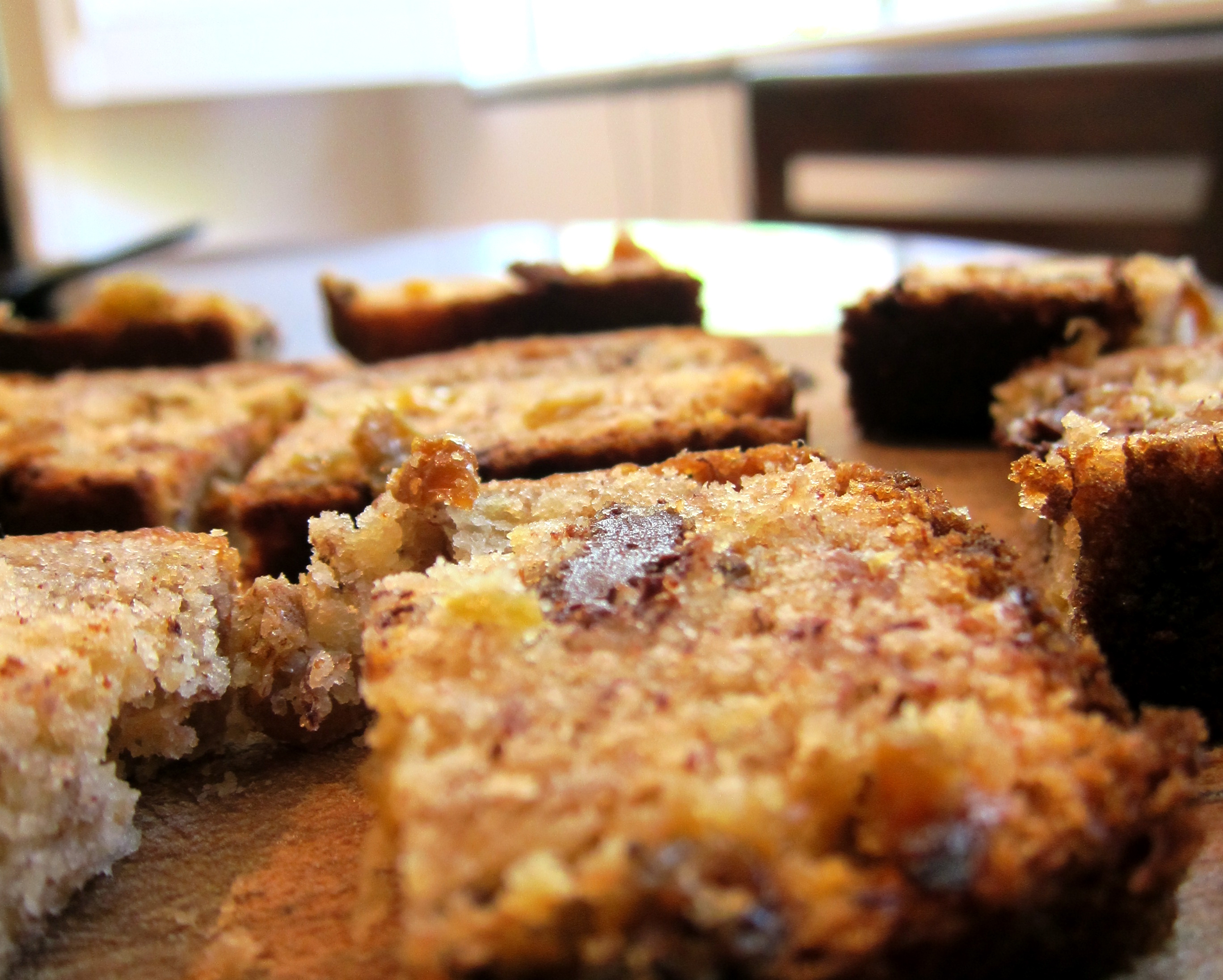
IMG_0866

Banana and Raisin Bread

Adapted from Nigella Lawson, How To Be a Domestic Goddess

100g raisins (or sultanas)

75ml dark rum, bourbon or PX sherry

175g plain flour

2 teaspoons baking powder

½ teaspoon bicarbonate of soda

½ teaspoon salt

125g unsalted butter (melted)

150g caster sugar

2 large eggs

4 small very ripe bananas (mashed)

60g chopped walnuts (or pieces of dark chocolate)

1 teaspoon vanilla extract

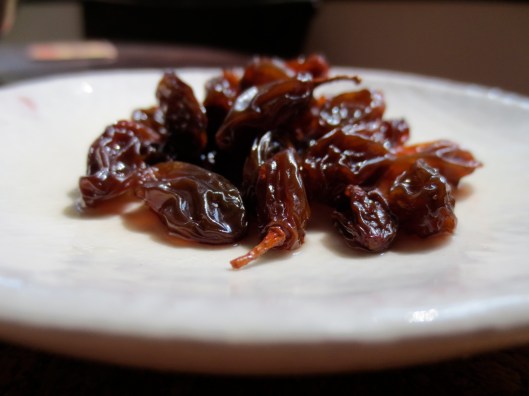
Put the raisins and rum/bourbon (or Pedro Ximenez sherry) in a smallish saucepan and bring to the boil. Remove from the heat, cover and leave for an hour if you can, or until the raisins have absorbed most of the liquid, then drain.

Preheat the oven to 170ºC/gas mark 3/325ºF and get started on the rest. Put the flour, baking powder, bicarb and salt in a medium-sized bowl and, using your hands or a wooden spoon, combine well. If you don’t like the taste of bicarb then leave it out.

In a large bowl, mix the melted butter and sugar and beat until blended. Beat in the eggs one at a time, then the mashed bananas. Then, with your wooden spoon, stir in the walnuts and/or chocolate, drained raisins and vanilla extract. Add the flour mixture, a third at a time, stirring well after each bit.

Scrape into a loaf tin (23 x 13 x 7cm / 9 x 5 x 3 inches) and bake in the middle of the oven for 1-1¼ hours. When it’s ready, an inserted toothpick or fine skewer should come out cleanish. Leave in the tin on a rack to cool, and eat thickly cut with a cup of strongly brewed builders’ tea.

Share this:

  • Share on X (Opens in new window) X
  • Share on Pinterest (Opens in new window) Pinterest
  • Share on Facebook (Opens in new window) Facebook
  • More
  • Share on Reddit (Opens in new window) Reddit
  • Share on LinkedIn (Opens in new window) LinkedIn
  • Share on Tumblr (Opens in new window) Tumblr
  • Print (Opens in new window) Print
  • Email a link to a friend (Opens in new window) Email
Like Loading...

The first figs

25 Wednesday Jul 2012

Posted by Sophie James in Recipe

≈ 4 Comments

Tags

Cooking, Dessert, Food, Fruit, Ingredients, Nonfiction, Recipes, Spain, Stories, Travel

I never know what to make of figs. They look slightly obscene, but then purple always does (think of aubergines). They are so delicate, shaped like an engorged teardrop, with that satiny, touchy skin. Each fruit contains, not seeds, but a mass of curled-up flowers that will never be. Certain things they like, I’ve noticed. Like honey, a scattering of thyme leaves, a slake of lemon juice, walnuts. I feel on safer ground when they are tarred by the heat of the oven, reduced to their buttery essence. They blister and bead – droplets of sap line the fruit’s seams. They eventually cave in, turning to jam with only the slightest provocation.

Of course if you have a fig tree, you need do nothing but tear one open and suckle, especially if it has already been warmed by the sun. Forget fruit salads, and cold of any sort. Figs are usually a late summer crop, but ‘breva’ figs* (meaning ‘first fruit of the fig tree’) are with us now. They grow on last year’s wood, a couple of months before this season’s crop ripens. They are not quite as spectacular as the ‘higo’ (second crop), not quite as burstingly succulent, less beauteous to the eye, but they are worth investigating.

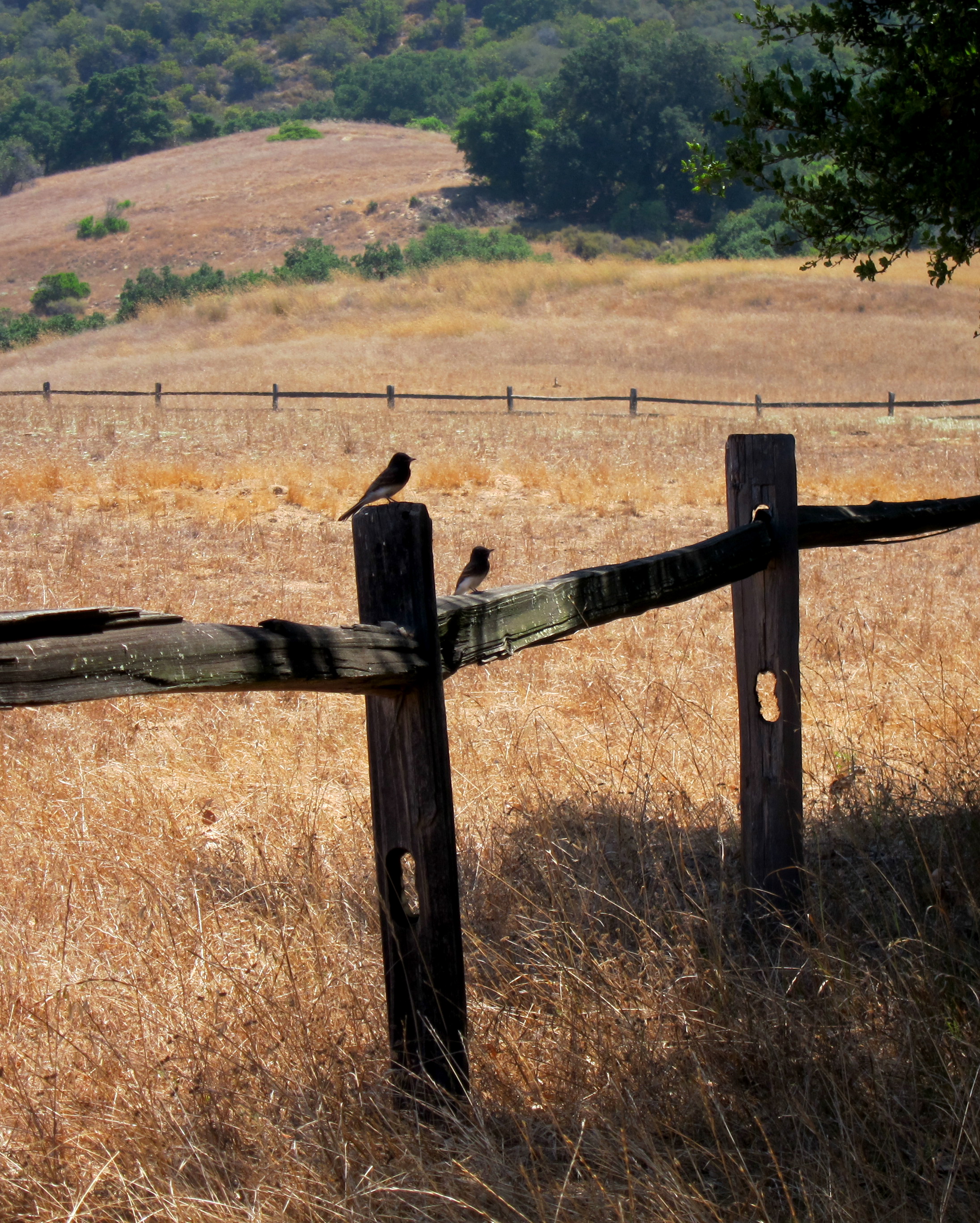
I first tried breva figs when I was lost on a mountainside in southern Spain. I wasn’t particularly hungry or thirsty, but they were hanging about us as we tramped along the road and so it passed the time. I was wearing corduroy shorts – a fashion fad that lasted about a week in 1991 – and in the midday sun it was like wearing a pair of blankets. I remember the fig’s sweetness, and the way we popped each plump little confection whole into our mouths, the flesh turning into a dewy, flowery syrup. So I associate them with heat and dust and a certain wildness of spirit.

Our house, bought for £2,000 in Las Alpujarras in Spain, was white and chalky and if you brushed past a wall, part of it would come off on your clothes. Swallows nested in the beams. The rats never came upstairs. They preferred the bathroom that had been built in the middle of the cellar, with a makeshift wall around it, like a turret. We had no transport so hitched lifts with the postwoman or a friendly tractor driver, or walked. Occasionally, somebody would throw fruit through our window. This was if they were unfriendly and wanted us to go away. Locals who liked us, and owned fincas in the area, came to the door and handed us their harvest directly. Tomatoes, oranges, lemons, peppers, garlic, figs, sometimes nuts, everything was saddled to the mule standing morosely in the background while they did the deed.

Children played outside our window until 2am. The afternoons were always dead while the whole village slept. Pigs were slaughtered, also outside our window, and the children continued to play under a canopy of dead pig, strung up by its hooves. But it was also easy to disappear. The village was surrounded by farmed terraces, and acequias – streams of melted snow from the Sierra Nevadas – and we dunked ourselves in whenever the heat got too much. No one was about, apart from the local shepherd and his goats, the bell around their scruffy necks sounding their arrival. We picked figs and thought nothing of it.

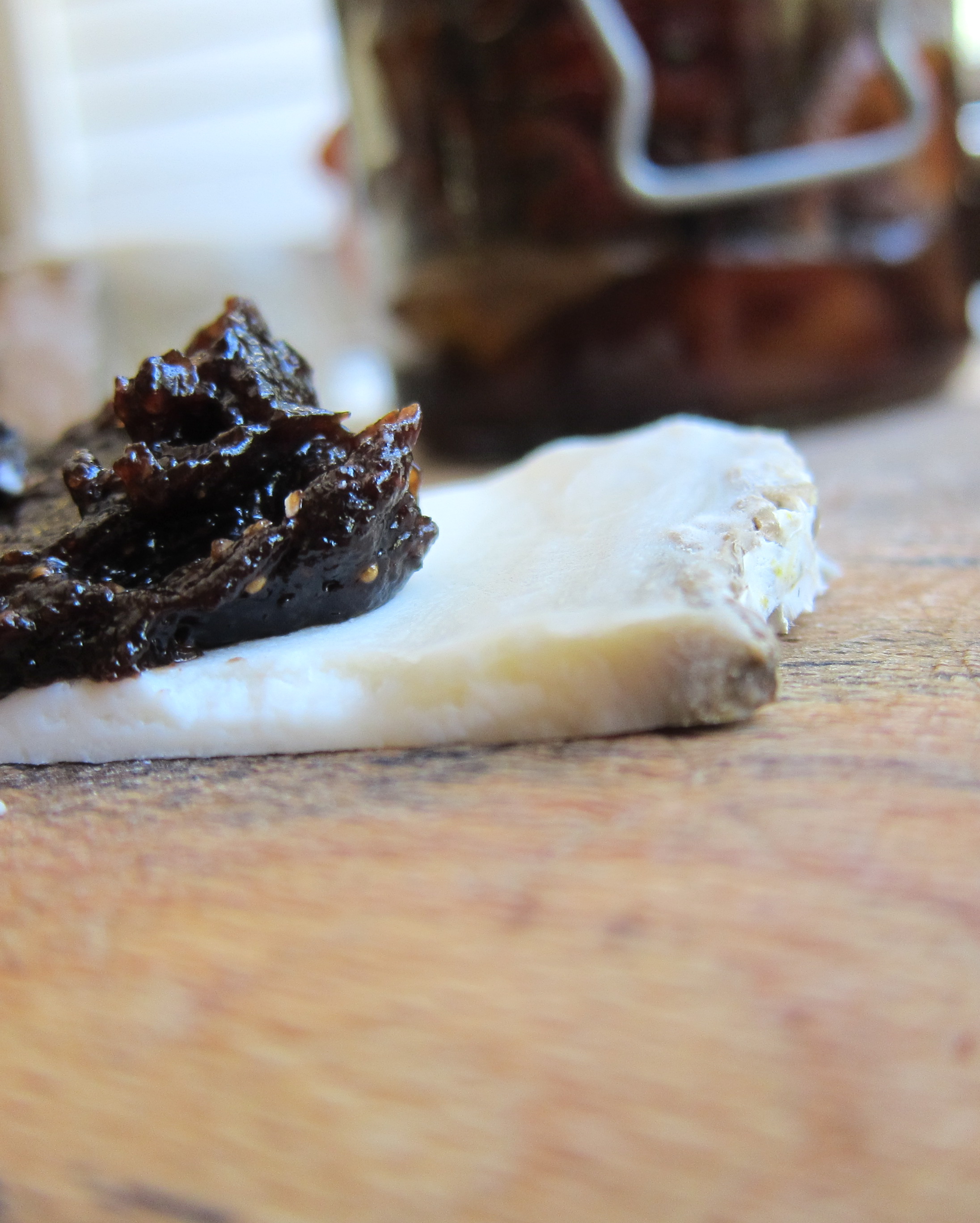
Figs do well in southern California, having come here in the eighteenth century via Spanish missionaries, hence the name, Black Mission. I am being quite brutish, roasting them with gay abandon, but there are many applications for these treacled beauties and they hang around for ages; dolloped on ice cream, smushed through a sieve and turned into fig butter, partnered with tangy goat’s cheese, piled on hot, yeasty bread, or thrown into a bread dough or cake batter. Or simply potted up and eaten one by one like sticky, gummy candies.

Roasted figs with honey and thyme

Serves 4

I committed the cardinal sin of leaving fresh figs in the oven overnight so they looked like tarmac. They tasted divine, though, so I suggest you do the same.

12 figs (or thereabouts)

3 tbs of clear honey

Walnut-sized knob of butter

A posy of thyme (about 15 sprigs)

Juice and zest of a lemon

1 roasting pan

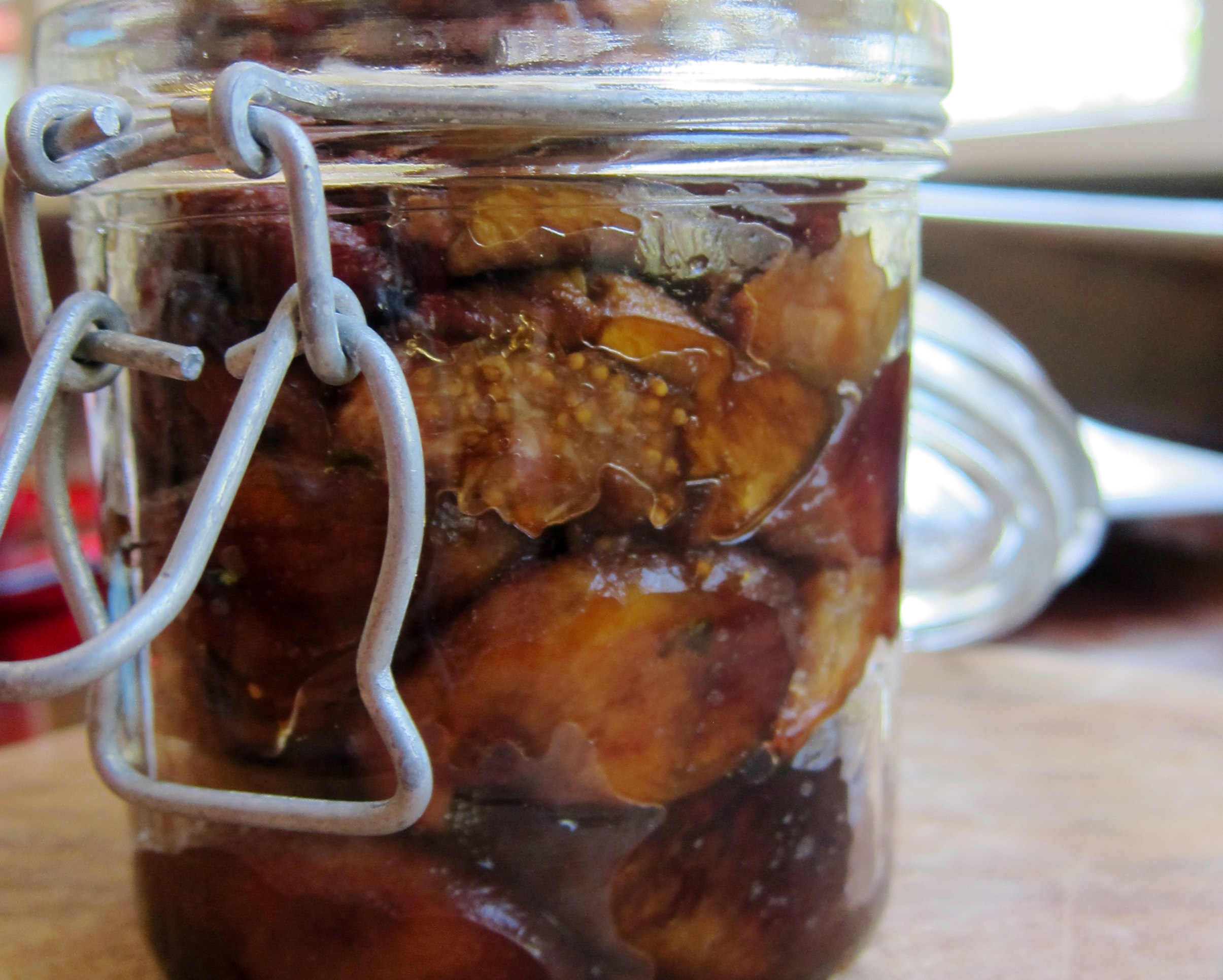
Preheat the oven to 350F/180C. Bruise the lemon zest and thyme leaves together using a wooden spoon or pestle and mortar. Fish out any woody stems, but don’t worry too much if some remain. Put the butter, honey, thyme leaves, lemon juice and zest in a small saucepan. Heat gently, stirring until liquid. Take off the heat and leave to infuse for about 15 minutes. Cut off the stem at the top of each fig. Cut a deep cross down into each one, then squeeze the sides to expose the flesh. Place them upright in a roasting pan. It’s fine if the pan is crowded, but each fig should be resting on the bottom. Pour over the liquid. Roast for at least half an hour, then turn the oven off and let the figs stew in their own juices. Because first-crop figs can be a hit-and-miss affair, you can be quite brazen about the roasting, and general neglect here. These are not jewels, and they taste better for the wait.

“They say that the Fig-tree, as well as the Bay-tree, is never hurt by lightning; and also if you tie a bull, be he ever so mad, to a Fig-tree, he will quickly become tame and gentle. As for such figs that come from beyond the sea, I have little to say, because I write not of exotics; yet some authors say, the eating of them makes people lousy.“

Nich. Culpeper, Gent., The English Physician Enlarged, 1653

* Also known as ‘breba’ figs.

Share this:

  • Share on X (Opens in new window) X
  • Share on Pinterest (Opens in new window) Pinterest
  • Share on Facebook (Opens in new window) Facebook
  • More
  • Share on Reddit (Opens in new window) Reddit
  • Share on LinkedIn (Opens in new window) LinkedIn
  • Share on Tumblr (Opens in new window) Tumblr
  • Print (Opens in new window) Print
  • Email a link to a friend (Opens in new window) Email
Like Loading...

Peach cake

10 Tuesday Jul 2012

Posted by Sophie James in Recipe

≈ 4 Comments

Tags

Almonds, Baking, Cake, Fruit, Ingredients, Nigel Slater, Recipes, Spices, Stories

Continuing the cake inventory I started last week, I think this may be The Best Cake I’ve Ever Made. This expression gets bandied about a lot, I admit, and often I make pronouncements that later have to be revised, such as my adolescent belief that Five Star (a pop combo from Romford who all looked like versions of Michael Jackson) were “brilliant.”

That said, I think this is one of the best cakes I’ve made so far, and I take no credit for it at all. It’s all Nigel Slater, except for the almond extract and a redeployment of the blueberries. I’ve always been a fan of almonds – the only drawback being that an excess of ground almonds in a cake can make all the ingredients collapse into a kind of almond-induced stupor. I love moist, but I don’t really want a cake to drip. The almond’s strength is that it mitigates against the dryness of flour. Whenever I’ve made an all-flour cake, a few hours after it’s cooled it’s like eating hunks of stale bread. And dry cake is always disappointing, no matter how much you try to bury it beneath an avalanche of icing. Too much ground almond though, and it’s wet sand, so balance is all. This recipe captures the perfect ratio of crumbly and cakey with an almond-rich warmth.

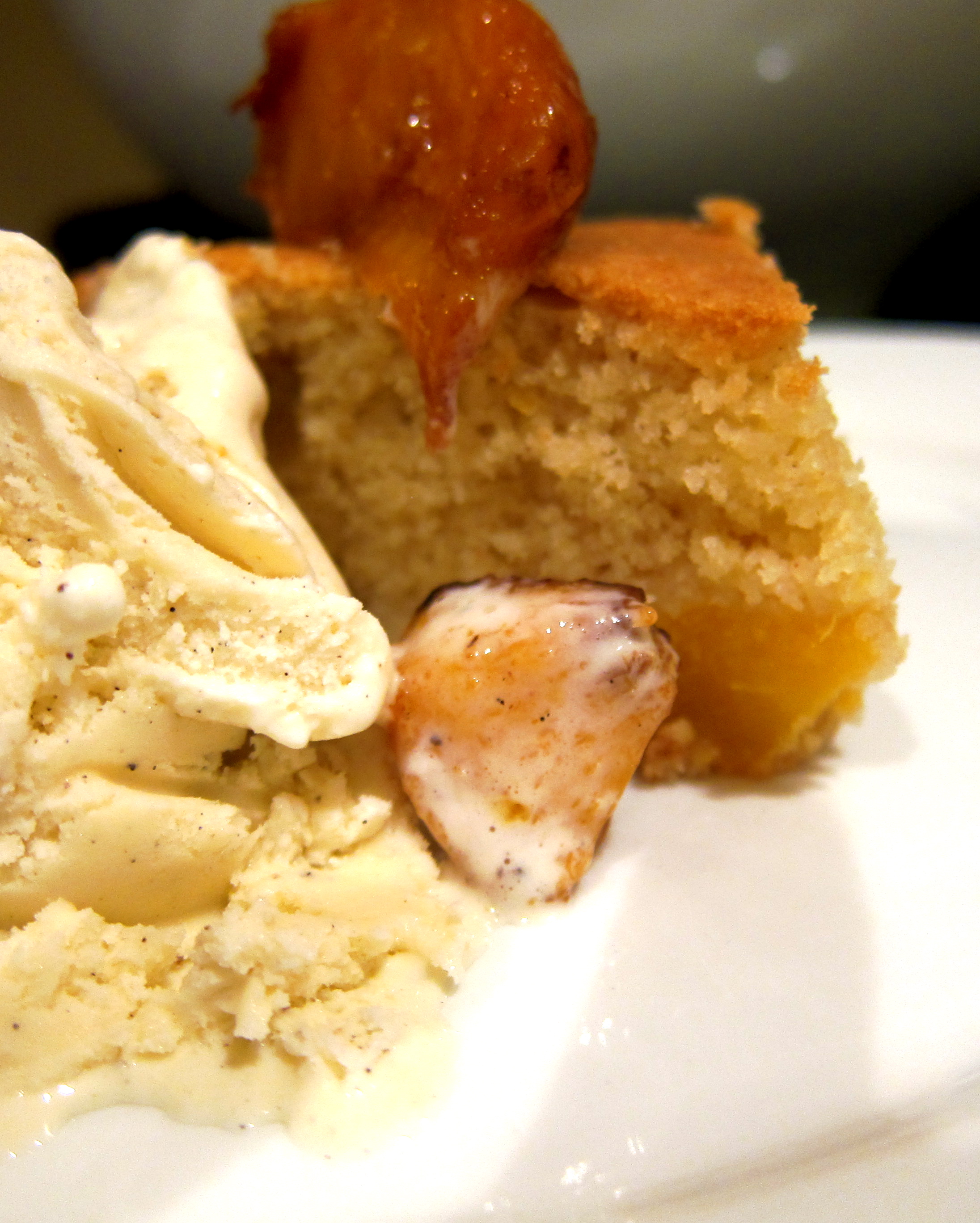
Now to the idea of peaches and sponge – it feels as if the textures would be at war with one another. However, the peaches hang in the cake, discrete, plump and surprising. And because stone fruit and almonds are related (they belong to the Drupe family), the flavours speak sympathetically to each other. Of course, most of the fruit falls to the bottom of the cake – I would love to know how to prevent this: maybe make the pieces smaller – but apart from this one aesthetic gripe, it is a thing of gentle, rustic beauty and our guests ate it in silence. Always a good sign. The smell is wondrous, it is the pale golden-brown of a wheat field and icebergs of peach are still visible through the sponge.

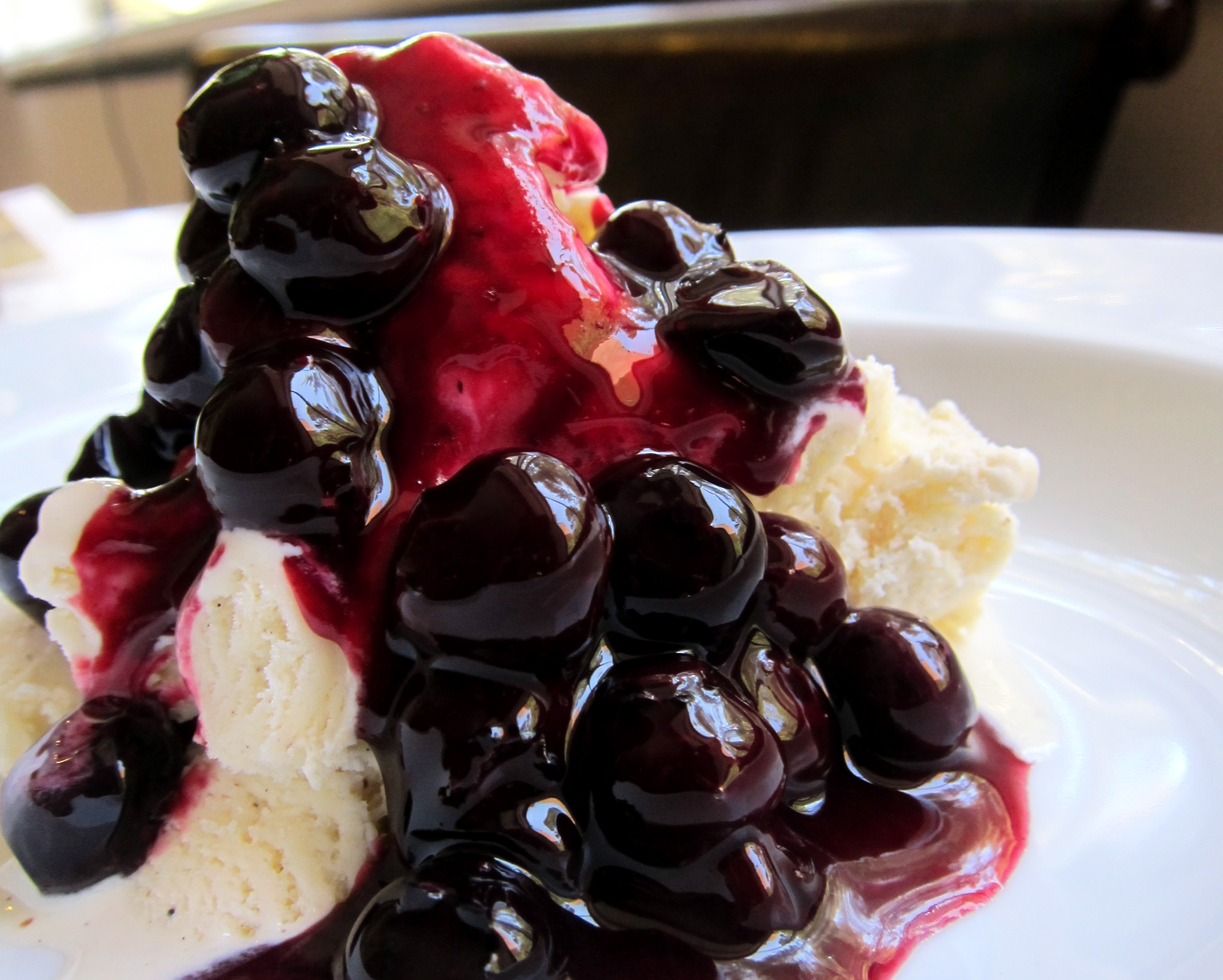
In Nigel Slater’s version, the blueberries and peaches are all jumbled up together, but the blueberry needs its own stage, I feel. It is the colour of midnight, a sombre, ink-blue (Robert Frost said “I taste in them sometimes the flavour of soot”), and I don’t want it to have to share the limelight. Its true home is the American cobbler, and it seems happiest when it can seep and bubble, turning a deep, hot, liquid pink. I’ve used it here as a compote to douse the ice cream. Many feel it lacks the acidic surge, the sheer clout of other berries, and it can underwhelm. I have added lemon juice and bay leaves to the compote to counter this. It is very fine.

Peach Cake

Adapted from Nigel Slater, Summer Cake Recipes, The Observer

Serves 8-10

175g butter, softened

175g golden caster sugar

225g ripe peaches

2 large eggs at room temperature

175g self-raising flour (or 1 tsp baking powder for every 125g of plain flour)

100g ground almonds

1 tsp grated orange zest

a few drops of almond extract

150g blueberries (optional)

Method

Butter and line the base of a 20cm (8 in) loose-bottomed cake tin with baking paper. Set the oven at 170C/350F.

Cream the butter and sugar together until pale and fluffy. Peel, halve, stone and roughly chop the peaches. If the peaches are very ripe, the skin will peel off easily. Otherwise, scald them in boiling water, lift out using a slotted spoon, and peel off the skin when it has cooled slightly. Beat the eggs lightly then add, a little at a time, to the creamed butter and sugar. If there is any sign of curdling, stir in a tablespoon of the flour.

Mix the flour and almonds together and fold into the mixture, in two or three separate lots. Add the orange zest and almond extract, and once they are incorporated add the chopped peaches and blueberries (if using).

Scrape the mixture into the cake tin and bake for about 1 hour. Test with a skewer – if it comes out relatively clean, then the cake is done. Leave the cake to cool for 10 minutes or so in the tin, run a palette knife around the edge, then slide out on to a plate, decorating as the fancy takes you; fresh berries, fruit compote, ice cream, thin single cream, the possibilities are endless. This is also lovely for breakfast.

Blueberry Compote

Adapted from Jane’s Grigson’s Fruit Book

1lb blueberries

Grated zest and juice of a lemon

¼ tsp ground cinnamon or 1 cinnamon stick

¼ tsp freshly grated nutmeg

Pinch of salt

60g/2oz/¼ cup cane sugar or maple sugar

2 bay leaves

1 tsp cornstarch or arrowroot

Method

Put sugar, spices, cornstarch, salt and bay leaves into a heavy saucepan, and mix together with 150ml (5 fl oz/⅔ cup) water. When smooth, put in the blueberries and set over a moderate heat. Stir until the liquid clears and thickens. Add extra water if you want a runnier consistency. Stir in the zest and lemon juice gradually to taste. Let it cool. Keep chilled. The flavours will intensify over time.

Addendum added 20/7/12

This blueberry compote also makes a glorious jam. Place it over a medium high heat and reduce until the liquid is about half. A couple of splashes of balsamic vinegar and a sprig of basil or tarragon also lifts the flavours and makes the blueberry sparkle. Pot it up and keep in the fridge.


Share this:

  • Share on X (Opens in new window) X
  • Share on Pinterest (Opens in new window) Pinterest
  • Share on Facebook (Opens in new window) Facebook
  • More
  • Share on Reddit (Opens in new window) Reddit
  • Share on LinkedIn (Opens in new window) LinkedIn
  • Share on Tumblr (Opens in new window) Tumblr
  • Print (Opens in new window) Print
  • Email a link to a friend (Opens in new window) Email
Like Loading...

Floury fingers – in memory of cake

03 Tuesday Jul 2012

Posted by Sophie James in Recipe

≈ 7 Comments

Tags

Almonds, Baking, Cake, Childhood, Devon, Fruit, Ingredients, Nonfiction, Recipes, Stories

IMG_8809

I recently read about a three year old French child who bakes her own cupcakes. I imagine she needs help putting them in the oven, but apart from that she’s her own pastry chef. Much has been written recently about the difference between French and American children, and the way the French like to ignore their offspring.

I remember teaching English to a Parisian lady (and mother) who told me outright that she found ‘pre-language’ children uninteresting. They were simply beneath her until they could find the right words to keep her in the room. So the idea of a small child not just able to feed herself, but preparing baked goods was interesting to me. The French idea is that children should learn to be self-sufficient from a young age, resourceful and able to deal with periods of boredom and frustration – periods of aloneness, without setting fire to themselves or the house.

I too have memories of long, starchy afternoons, when time would linger and there was nothing much to do and no one around. This was before the days of constant adult supervision –  or in the words of the late, great Nora Ephron, before parenting became “a participle.” My refuge was reading, and making concoctions from scrag ends of food and my mother’s baking chocolate, which was like snacking on tar. It wasn’t just unsweet, but rock hard, greasy and impossible to either bite into or break off. I think she got it from a wholesaler called Norman’s in Budleigh Salterton. I don’t remember it ever being employed in a cake, but perversely for something inedible, she always hid it so it could only ever be accessed by balancing on a stool, hoisting myself up onto the counter and rummaging through packets of dessicated coconut and paprika until my hand landed on a wrapped lump the texture and weight of a horse-shoe. I cut my gums on it.

My nana from Australia sent me my first cook books. Floury Fingers by Celia Hinde did interesting things with fondant, but left me with a lifelong suspicion of cup sizes. The second book, though, became my friend, babysitter and an endless source of material both for my cooking life and beyond.

It was called the Kids’ Own Book of Stories and Things to Do. It was an absolute treasure trove. I think it was seasonal because one section was all about ice lollies and then another one had pictures of snow and mittens. There were stories of betrayal, wallabies, children of different ethnic backgrounds, slides, kites and all sorts. I loved the recipes the best and returned year after year to try them out. I rarely had the right ingredients. Sugar was banned in our house, except for muscovado that turned tea to treacle, though it was nice on porridge. We kept goats, whose warm (and occasionally hairy) milk softened our cornflakes in a way that I can only describe as off-putting. Raspberries were picked fresh from the bush for breakfast. There was ratatoullie and lambs’ brains. I wasn’t particularly appreciative.

What I wanted was cake. Preferably with thick slopes of icing and cut into giant-sized wedges. I do remember being terribly sick but still managing to swallow a few slabs of chocolate cake at another child’s birthday party, the sweat beading across my brow, twin flares of fiery red on each cheek. So slabs it must be here – as an homage to what I would have baked had I had the requisite ingredients. I did my best. I made chocolate logs that my dad said looked like dog turds, and rock cakes that lived up to their name. Had I not had huge swathes of time to explore, I probably would not have made them at all, so I’m grateful I was allowed to get on with the business of childhood without too many interruptions.

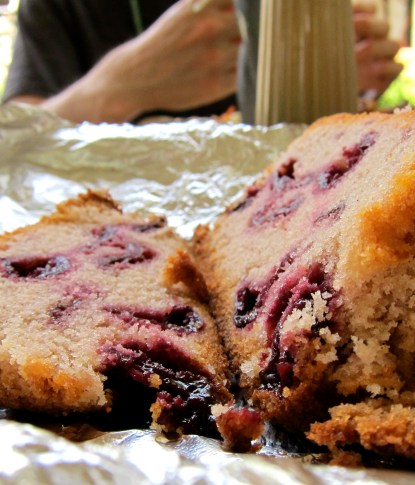
I am still in search of the perfect cake, even now. Something you can eat for breakfast (toasted, with butter), for elevenses, or brunch, for afternoon tea, and of course, for pudding. Beginning with this cherry-almond loaf cake, the cataloguing has officially begun.

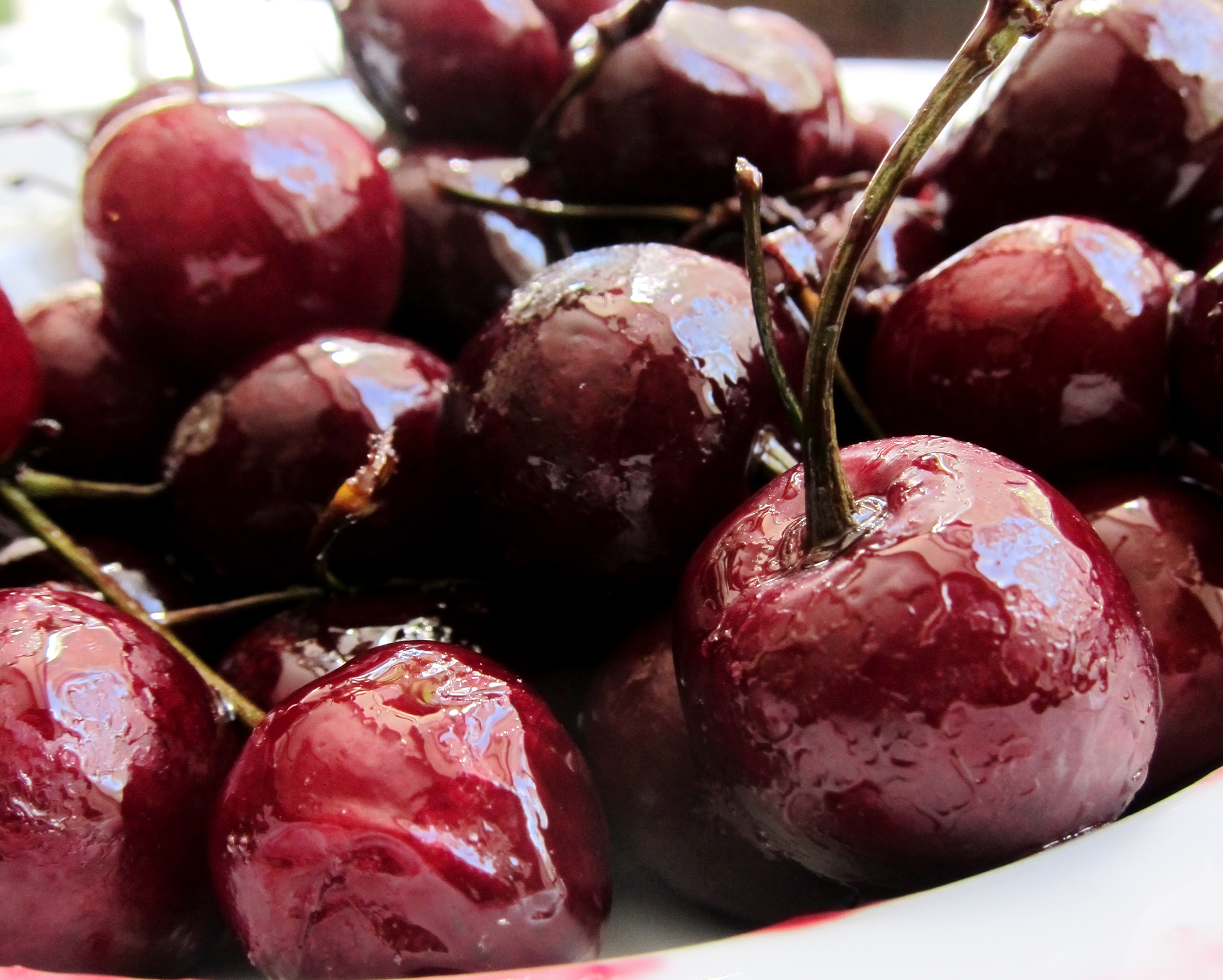
Now’s the time for cherries – the Bing variety has that deep, glossy coat, almost mahogany in hue, but any cherry can be made into a decent compote. The trick is no water, only a little sugar and a splash of balsamic vinegar. The cherries should keep their shape and not be overcooked. If you already have a jar of such things, or you have some (preferably undyed) glacé cherries, you can skip this bit.

Cherry compote

Adapted from Lindsey Shere, Chez Panisse Desserts

1lb ripe cherries

2 tbs sugar

2 tsp balsamic vinegar

Method

Put the cherries, stems and all, in a colander, pick out any bad ones, rinse and pat dry. Put them in one layer in a pan. Sprinkle the fruit with sugar and shake over a medium high heat for about 5-10 minutes. The sugar will melt and the cherries will feel soft to the touch. Don’t go to mush.  Sprinkle with the balsamic vinegar, and shake for a minute or so more. Scrape the cherries, together with their juice, into a container and let them cool before chilling. You can serve them as they are (they love ice cream), or stone and stem them for use in the cake.

Cherry-almond loaf cake

Adapted from Nigella Lawson, How To Be a Domestic Goddess

Here, I’ve reverted to grams; going back to my roots.

200g cherries (stoned, stemmed and halved)

250g self-raising flour

(or add 1tsp of baking powder to every 125g/4oz of plain flour)

225g softened butter

175g cane sugar

3 large eggs, beaten

2-3 drops of almond extract

100g ground almonds

6tbs milk

9x5ins or 23x13x7cm loaf tin, lined and buttered

Method

Preheat the oven to 325F/170C. Cream the butter and sugar until light and fluffy. Gradually add the beaten eggs and almond extract, alternating with the flour and ground almonds until it’s all one. Fold in the cherries, and then the milk and spoon the thick mixture into the loaf tin. Bake for ¾ – 1 hour, or until a skewer comes out clean. Leave in the pan on a wire rack until completely cooled. Makes 8-10 slabs.

p.s I read about the cupcake-baking three year old in The New Yorker. Here’s the whole article if you want to read on.

Share this:

  • Share on X (Opens in new window) X
  • Share on Pinterest (Opens in new window) Pinterest
  • Share on Facebook (Opens in new window) Facebook
  • More
  • Share on Reddit (Opens in new window) Reddit
  • Share on LinkedIn (Opens in new window) LinkedIn
  • Share on Tumblr (Opens in new window) Tumblr
  • Print (Opens in new window) Print
  • Email a link to a friend (Opens in new window) Email
Like Loading...

Apricots

25 Monday Jun 2012

Posted by Sophie James in Recipe

≈ 1 Comment

Tags

Chocolate, Cookbook, Cooking, Dessert, Food, Fruit, Ingredients, Nonfiction, Recipes, Spices, Stories

IMG_8556

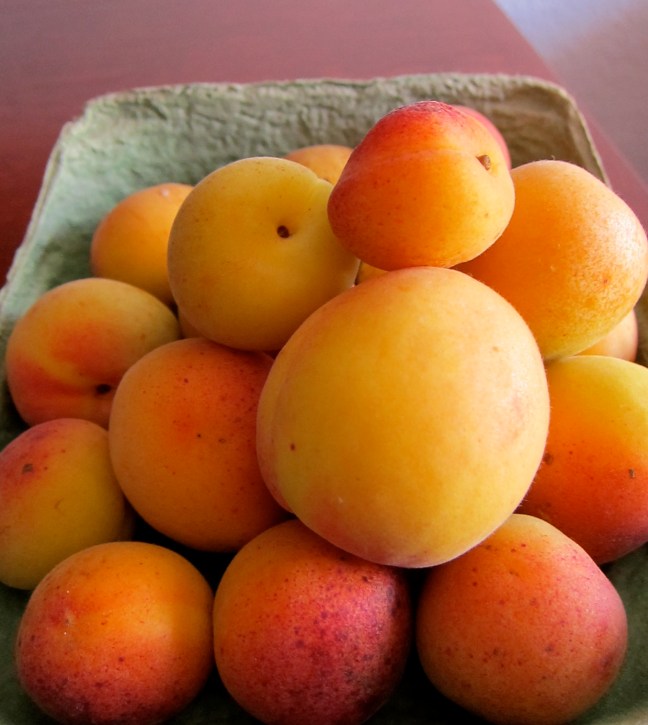
Apricots can go either way. Flabby, woollen and pointless or lush, tender and – in the case of apricot jam – unforgettable. Also, like plums, apricots are blissful with chocolate. I came over all funny when I realized this. I’d love to know who originally dreamt up apricot and chocolate tart, and give him/her a medal. I think the chocolate brings out the spice and sweet acid in the fruit. Whatever. No glossy cooking terms can possibly do justice to how successful it is. It’s the Sophia Loren and Carlo Ponti of food marriages. He’s the chocolate.

Apricot compote is brilliant as an almost-jam. It is also divine on its own, or with a plain summer cake. Ice cream also works – chilly tufts of the stuff melting into syrup – and almost any flavour. I think apricots are one of those stone fruits enhanced by cooking. Particularly poaching, which brings out the fruit’s complexity and freshness. It blooms under heat; its sharpness is mellowed, but still there is edge, and the texture becomes burstingly fragile.

Now to the difference between one apricot and another. One word: water. Dry farmed, however counter-intuitive this may seem, is the reason why the best apricots have that intense concentration of flavour. If apricot trees are too wet, the fruit will be big and puffy, and the texture like eating someone’s earlobes. Arguably the finest apricots, at least in this area, are Blenheims. Their proud owners – or one of the very few – are Eric and Helle Todd from Forcefield Farms in Santa Paula. Their apricot trees grow in a dry riverbed, the fruit is small and has an intense aroma of honeysuckle. This season has been tough on them, and the crop is depleted due to an early frost, but they will be bringing out their little jewels in a week or so. Track them down at your local farmers’ market.

Royals are also very good indeed; some are almost as small as a pea, and rosy-cheeked. These tangy apricots go well with goat’s cheese; Leonora, from Leon in Spain, is gorgeously dense, creamy and cave-like.

It is an early fruit, precocious in name and nature – the word apricot comes from the Latin praecox – and its blossoms often fall prey to the cold. More fragile than peaches, ‘cots have none of their glamour or following, but they are a cook’s dream. I had to do some serious whittling to arrive at these two recipes.

Poached apricots

Adapted from Jane Grigson’s Fruit Book

About 12-15 apricots, whole

2 cups (500ml) water

1 scant cup (200g) cane sugar (or maple sugar)

2-3 cardamom pods

1 cinnamon stick

1 star anise

Zest of an orange

3-4 apricot kernels (optional)

Method

Poach the apricots gently until soft and tender, but still holding their shape (about 15 -20 minutes) with all the other ingredients. Remove the apricots with a slotted spoon, and discard the cardamom pods and star anise. Wash and dry the cinnamon stick to use another time. Reduce the syrup by half by bringing it to a boil. Add the grated zest of an orange, and pour the syrup over the fruit. Cool and chill. Remind people there are stones.

Extracting the apricot kernels: this is not obligatory but if you’re feeling game, you need a hammer and some sort of cushion. I used an oven mitt which I placed over the apricot stone. It muffled the sound, and also stopped the bits flying all over the room. Always try one before adding them to the syrup; some kernels are very bitter.
IMG_8575

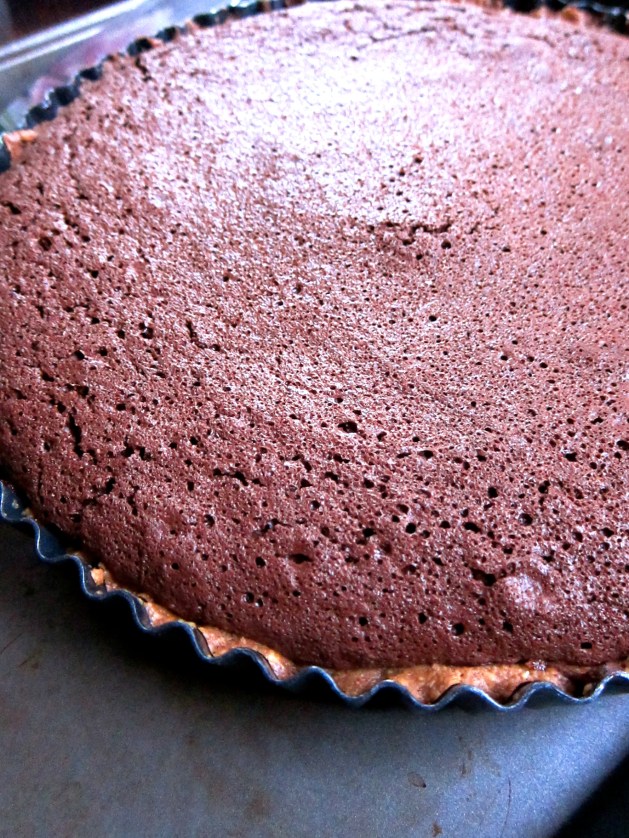
I understand the antipathy many feel towards putting chocolate and fruit together, but I hope you’ll make an exception here. This is the companion to the chocolate and plum tart that fell apart in the last post. I’ve since tarted up the pastry – removing the amaretti entirely – and this one stayed whole. I include the recipe for the amaretti crust if you feel like giving it a go, though it will melt into nothingness on your spoon and will not be coerced onto a cake slice, even for money.

This is an idea from Sam and Sam Clark, of Moro fame, and in their tart they use apricot paste called ‘amradeen’ – a  Syrian and Lebanese speciality. I’m using poached apricots in its stead, but dried ones also work. Serve with a few extra ‘cots on the side and some crème fraîche.

Chocolate and apricot tart

Adapted from Moro, Sam and Sam Clark

For the filling

180g (1 cup) poached apricots or paste/amradeen

2 tbs lemon juice

135g (9tbs) unsalted butter, cubed

110g (4oz) dark chocolate (70% cocoa solids) broken into bits

2 large eggs at room temperature

60g (¼ cup) cane sugar

For the pastry

Adapted from Rick Stein’s Food Heroes

50g (2oz) toasted slivered almonds

175g (6oz) plain flour

A pinch of sea salt

175g (6oz) butter, softened

65g (2½oz) cane sugar

1 medium egg, beaten

½ teaspoon of ground cinnamon

For the pastry

Put the toasted almonds into a coffee grinder or spice mill and blitz until fine but with some texture still. Mix with the flour, salt and cinnamon and set aside. Cream the butter and sugar together until smooth. Beat in half the egg, followed by the flour mixture and enough of the remaining beaten egg to bind the mixture. Knead briefly until smooth. Pat into a round disc, cover in plastic wrap and chill for 20 minutes.

Preheat the oven to 190C/375F. Carefully roll out the pastry between 2 sheets of plastic wrap and use to line a greased 8ins (20cm) loose-bottomed tart tin. Prick the base here and there and chill for about 30 minutes. Line the pastry case with greaseproof or parchment paper and baking beans (or rice) and bake blind for 10-15 minutes (check at ten). Then remove the paper and bake for a further 5 minutes. It should look and feel crisp and golden. Remove and leave to cool.

For the filling

Press the poached apricots through a sieve. Add the resulting puree to a pan with the lemon juice and a few splashes of the syrup. Heat gently until the mixture thickens. Stir to prevent the puree sticking to the bottom of the pan. The mixture should taste slightly tart. Spread the puréed apricot over the base of the cooled tart shell. Leave for a few minutes – the apricot will form a slight skin.

While this is going on, put the butter and chocolate in a bowl over barely simmering water. Whisk the eggs and sugar together until pale and thick and fluffy. When the chocolate has melted, take the bowl off the heat and fold in the egg mixture. Give this a good stir, bringing the chocolate up and over, until it is a uniform deep, dark brown. Pour this into the tart shell and smooth out any peaks and troughs with a spatula. Bake on the middle shelf of a pre-heated oven for about 25 minutes. There should still be a slight wobble – not too firm, glossily dark but with just the beginnings of a crust. Serve with some poached apricots, ice cream or crème fraîche and a slick of the poaching syrup.

If you insist – amaretti crust

200g (1 cup) amaretti biscuits

80g (5tbs) butter, melted

Put the amaretti biscuits in a freezer bag and give them a few whacks with a rolling pin. Mix with the melted butter. Tightly press the amaretti into a tart tin and chill until needed. When you’re ready, put this in a pre-heated oven (350F/180C) and bake until the crust is nicely browned. Continue as above.
Share this:

  • Share on X (Opens in new window) X
  • Share on Pinterest (Opens in new window) Pinterest
  • Share on Facebook (Opens in new window) Facebook
  • More
  • Share on Reddit (Opens in new window) Reddit
  • Share on LinkedIn (Opens in new window) LinkedIn
  • Share on Tumblr (Opens in new window) Tumblr
  • Print (Opens in new window) Print
  • Email a link to a friend (Opens in new window) Email
Like Loading...

Winging It

11 Monday Jun 2012

Posted by Sophie James in Recipe

≈ 4 Comments

Tags

Dessert, Fear, Food, Fruit, Ingredients, Nonfiction, Recipes, Spices, Stories, Trapeze

On Wednesday, I flew on the trapeze. When you watch it, it looks so easy. I came down after the first try, my body shaking with adrenalin and fear and, frankly, embarrassment that people had had to watch me.

I kept looking at the grapefruit tree that stood in the background and the orange tree next to it, its branches crowded with fruit and tried to think about recipes, and yet who was I kidding. I was thinking of not getting it right, of somehow not hearing the instructor’s orders, his barks up to the platform. The platform wobbles as you stand on it, by the way, and is 40 feet off the ground. It’s also frighteningly slim. This is what they tell you, the trapeze aficionados – that the experience teaches you to become a ‘connoisseur’ of your fear. And then you jump.

I had three goes at the ‘knee hang’ – see the picture. If you think you’re fit, try doing that one day. You have to use all your upper body strength to hoist your legs over the bar. I now realize I have no upper body strength. I had one more go left before the instructor called time. “Think of something that makes you really angry,” he shouted angrily. And then: “You can do this!” “Knees to nipples!” a woman yelled. She was a midwife.

I can’t remember what happened next except a feeling of relief and then the blood rushing to my head. I let go of the bar too late – everything in you resists it – and was out of whack with the catcher. I was all over the shop, but his grip was monumental. I dangled, a dead weight. But it’s that in-between moment that gets you, the moment of weightlessness. You’re flying! Everybody looks the same when it happens – lost in rapture. You hope that no one notices, but they do.

There are other sensory impressions: the grass turning brown underfoot. Scorching flagstones. The smell of horse from the field next door. Not dung exactly, but the smell almost of the horse’s breath; musky and hot, mixed with summer air. Low slung wire fencing turning a rusted orange. The clink as you’re unclasped from the ropes. The enormous web of net. Toes inching over the platform. The two bushy trees – grapefruit and orange against the back wall, the flashes of colour a pleasing backdrop to the soaring, swooping and plummeting bodies, the last one being mine.

Citrus with Orange Caramel

Adapted from Deborah Madison, Seasonal Fruit Desserts

This is fruit at its most chaste. The caramel is very subtle; warm rather than sweet. I used grapefruit and oranges because they come from the story, and I made it that night, but you can use anything citrussy.

6-8 citrus fruits

⅓ cup (70g) organic sugar

½ cup (120ml) freshly squeezed orange juice

1 cinnamon stick

1 clove

A few splashes of orange-blossom water

Fresh mint sprigs or lemon balm

Method

Finely grate the zest of an orange, and put to one side. Peel the rest of the fruit. Use a sharp knife for cutting citrus, if you want it to look pretty. Take a narrow slice off the stem and blossom ends. Cut down the sides of the fruit from top to bottom, slicing away the skin and the white pith. Now cut into rounds and put into a bowl.

Melt the sugar over a medium heat, until it turns a rich, chocolatey brown. Don’t stir, but keep tipping the pan this way and that, so the sugar doesn’t burn. When it has become liquid, stand back and pour in the juice. It will splutter and the caramel will seize, but after a few minutes back on the heat, it will dissolve again. Add the reserved orange zest, cinnamon stick, and clove. Splash in a few drops of the orange-blossom water, slide in the slices of fruit and swish them around so they’re coated, then pour the fruit and caramel back into the bowl. Serve very cold, speckled with the fresh herbs. This dish is very accepting of ice cream, and Greek yogurt.


Share this:

  • Share on X (Opens in new window) X
  • Share on Pinterest (Opens in new window) Pinterest
  • Share on Facebook (Opens in new window) Facebook
  • More
  • Share on Reddit (Opens in new window) Reddit
  • Share on LinkedIn (Opens in new window) LinkedIn
  • Share on Tumblr (Opens in new window) Tumblr
  • Print (Opens in new window) Print
  • Email a link to a friend (Opens in new window) Email
Like Loading...

Candied kumquats & rose jam

08 Tuesday May 2012

Posted by Sophie James in Recipe

≈ 5 Comments

Tags

Breakfast, Cooking, Fruit, Ingredients, Los Angeles, Nonfiction, Recipes, Stories

IMG_7517

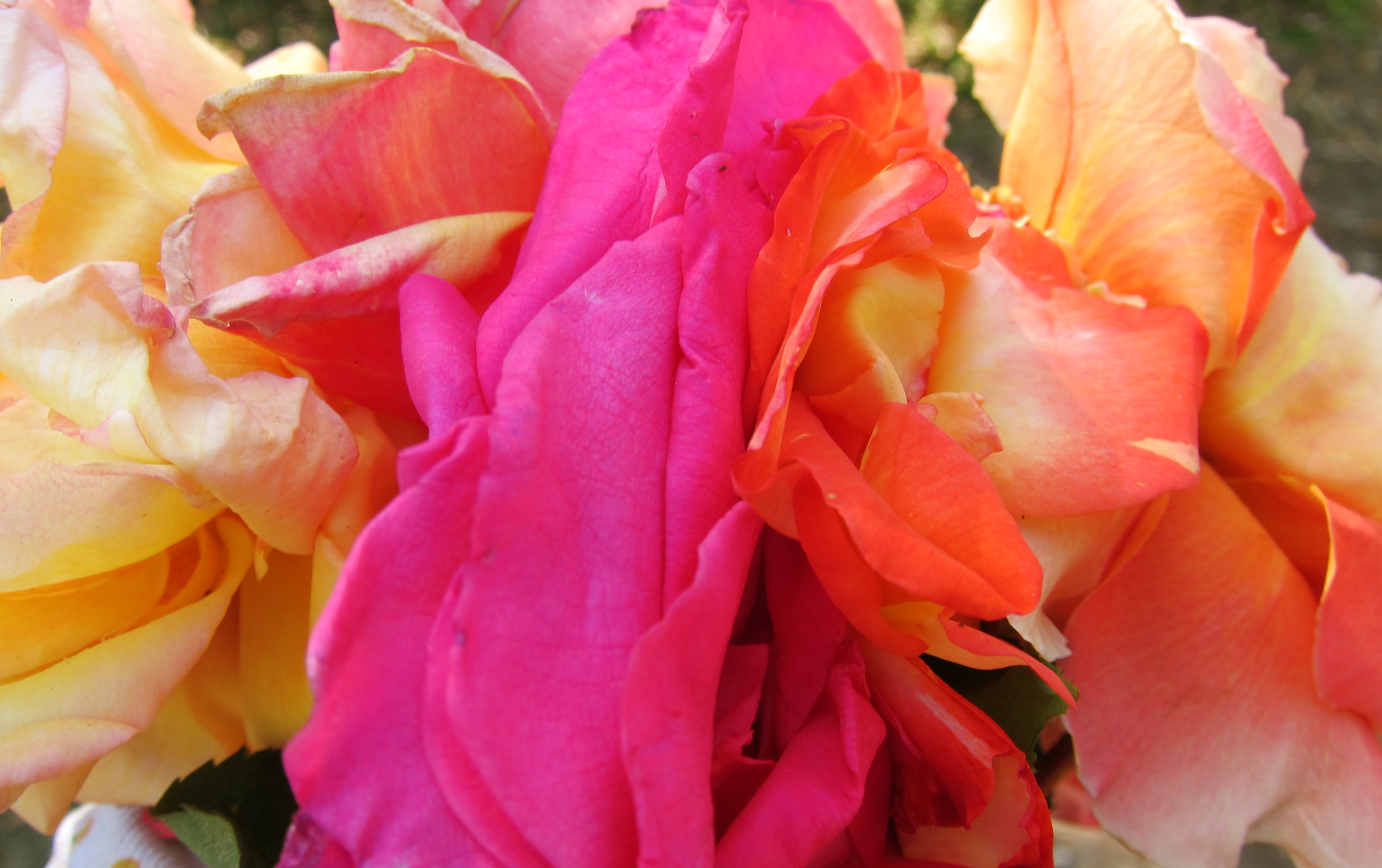
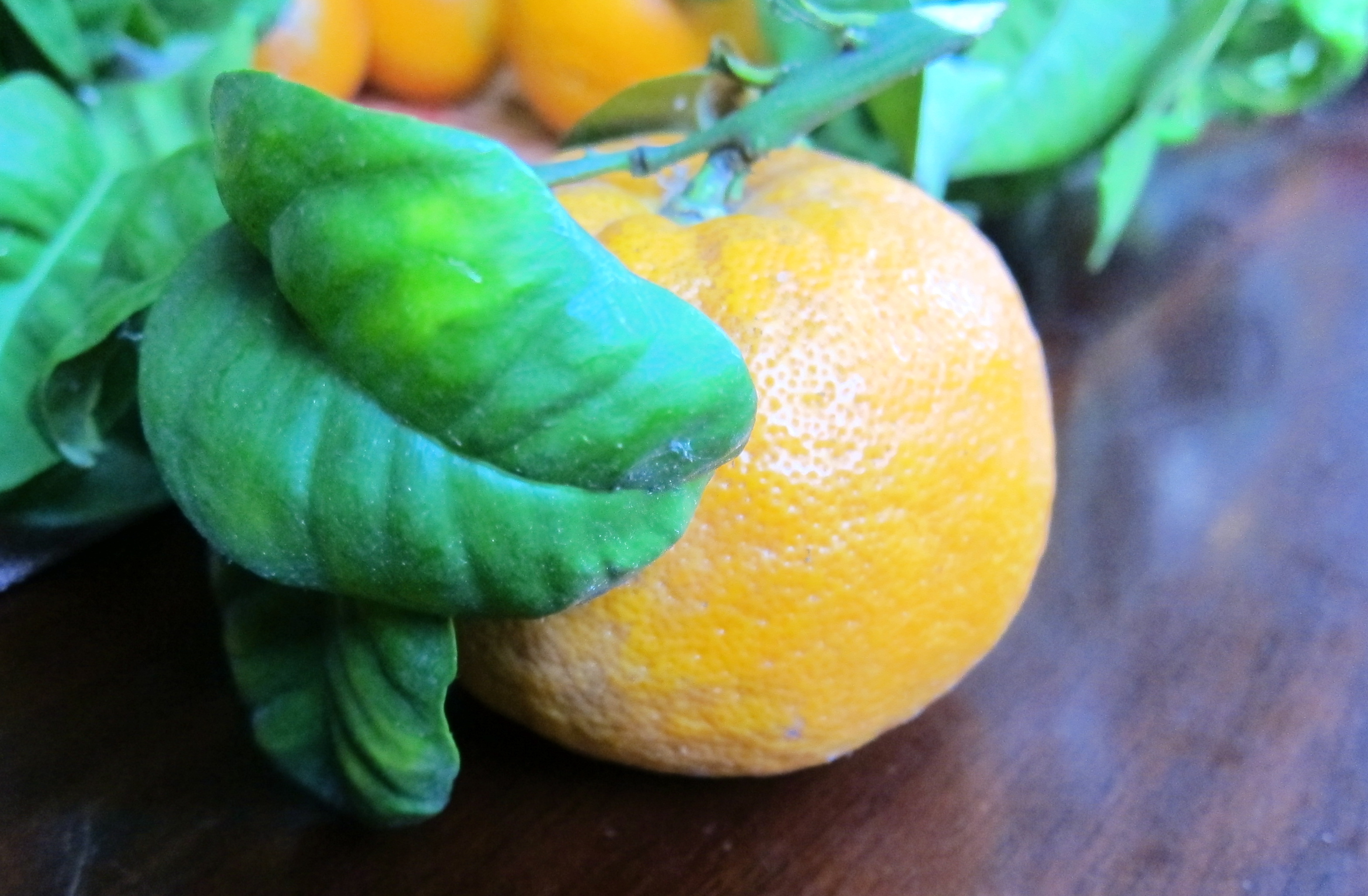
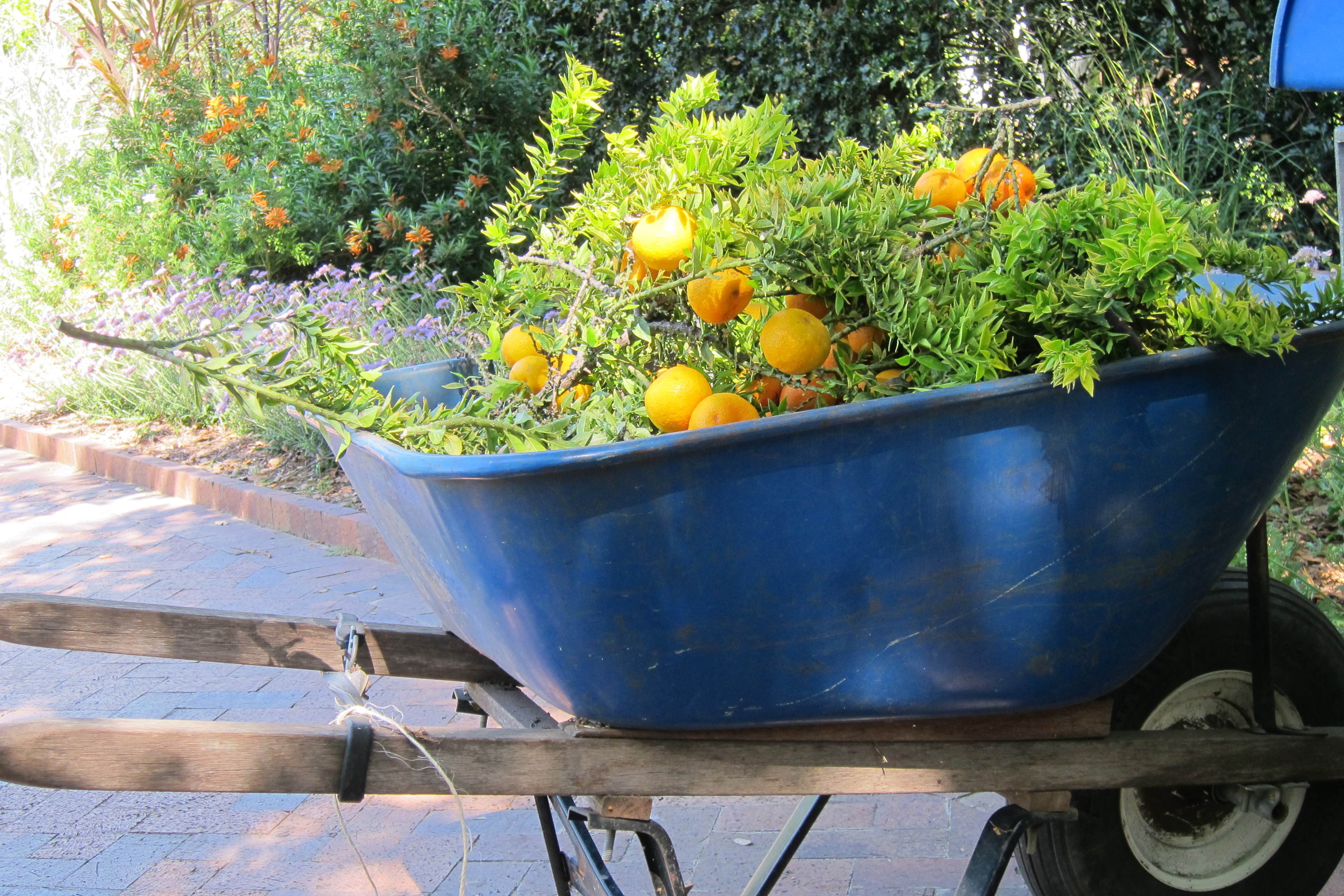
A bit of a whimsical pairing, this. Someone was throwing out a load of roses – they were lying in a sorry heap on the ground, by the bins – so I scooped them up, fished out the earwigs and got to work. In the same week, I found kumquats tumbling all over the road, the tree bowed down by its own luscious bounty, so I shoved as many of them into my bag as I could manage, and walked away whistling (always a sign of guilt).

Anyway, I was brought up to believe a bit of light thieving is not only acceptable, but common sense when we’re talking about food that would rot otherwise. Seeing a laden citrus tree in LA – a common sight, sadly – its golden orbs lolling on the ground mere yards from someone’s front door, makes me feel quite sick. “It’s food!” I want to shout through the letterbox. “You can eat it and everything!” It takes every cell in my body not to jump the fence and fill my pockets, secreting the fruit about my person like a drug mule. To put this in context, I am the daughter of a woman who regularly scaled a neighbour’s wall to forage for dandelion leaves, which she did at nightfall, as if she were about to make off with their stereo. The leaves were for us, by the way, in lieu of salad.

The kumquat is the perfect oval shape, like a little orange egg. The neatness and polish, the deep apricot hue of the skin, lends itself to being shown off on posh after-dinner fruit plates where no one knows what to do with them. They’re so small that it seems a pointless exercise to peel them and you don’t have to, because the rind is in fact the sweetest bit. In an interesting about-turn, the flesh is sour, so the idea is to pop the whole thing in your mouth and crunch. You are expected to eat the seeds. The tree itself has been known to sit at the table – the potted version, I should say – where guests can pluck directly from the branch.

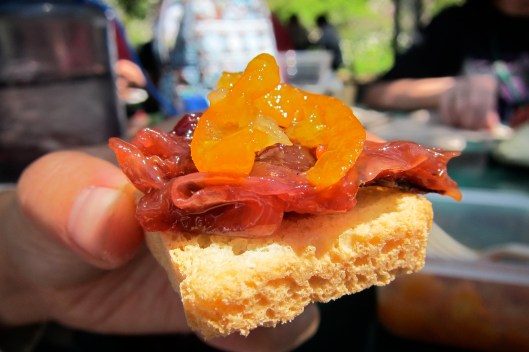
I think these work best candied. It shows off their texture, that nubby rind is almost all there is, and sugar in this setting brings out the sour. It reminds me of a bitter version of quince paste and works well with cheese, particularly Manchego and Cabra al Vino. A chalky, wincing cheddar is also lovely. For breakfast, it takes on a poached complexion, particularly with yogurt. I know I’ve already mentioned apricots; these have more bite but retain the same sweet-sour balance. Limequats, as the name suggests, are a hybrid, and much tarter, more marmalade-like. In fact, both work well as a quick version of the preserve. In ten minutes you have a credible, and beautifully syrupy, burst of sunshine for your morning toast.

IMG_7193

Candied kumquats

Adapted from David Lebovitz

This recipe is adapted from ‘sweet king’ David Lebovitz, who suggests poached prunes as an accompaniment. Interestingly, the rose petal jam is prune-like both in texture and appearance, though lacking the prune’s deliciously plump sloppiness.

1 cup (250ml) water

¼ cup (50g) sugar

15 – 20 kumquats or limequats

2 tbs crystallized ginger, chopped finely

1 cinnamon stick

Method

Slice the kumquats into thinnish rounds and de-seed. Any seeds you don’t get can be easily sieved out later, so don’t worry if some escape you. Bring the water, sugar, cinnamon, ginger (feel free to improvise if you don’t have these) and kumquats to a gradual boil in a small saucepan.

Reduce the heat to a simmer and cook for about 10 minutes, keeping an eye on it near the end. The liquid will now be reduced and syrupy. Remove from the heat, take out the cinnamon stick, and let the kumquats come to room temperature. They can keep in the fridge for a good six weeks, stored in an airtight container.

Interesting fact: The kumquat, though it behaves like a citrus, was discovered in 1915 to have enough cellular differences to be moved to a separate genus known as Fortunella, named after Robert Fortune, an English traveller who introduced the fruit into Europe in 1846. 

My rose booty

I have been longing to make this jam for some time now, ever since I came across it in Alys Fowler’s book, The Thrifty Forager. I’ve never been much of a rose fancier  – who can forget Annette Bening shrieking in her gardening gloves in American Beauty? – but I always hoped to be given some, or at least to be walking past a compost heap at the right moment.

I found my multi-coloured stash took on a deep port-wine appearance, and started to reduce after it was allowed to cook for 20-25 minutes. It managed this cleverly without pectin – I suspect the sugar does most of the work –  and the result is delicately toothsome. A faint ‘tearing’ sensation is important here – some resistance, rather than a general jammyness. For breakfast, serve with the candied kumquats over Greek yogurt. Some chopped pistachios would make an interesting contrast.

Rose petal jam

Adapted from The Thrifty Forager by Alys Fowler

250g (9oz) unsprayed rose petals

1.1 litres (2 pints) water

Juice of 2 lemons

450g (1lb) granulated sugar

Method

Shake the petals free of any bugs, place in a bowl, and add half the sugar. Leave for a few hours or overnight. This infuses the rose flavour into the sugar, and darkens the petals. In a heavy-based pan, add the water, lemon juice and remaining sugar, and heat gently until all the sugar has dissolved. Stir in the rose  petals and simmer for 20 minutes or until the rose petals look as if they are melting and have softened. Try one – there should still be a slight bite to it. Turn the heat up and bring to a boil for another 20 minutes or until setting point is reached. Remove any scum that may have risen to the top and allow to cool slightly, stirring gently so that the petals are evenly distributed. Cover and bottle as usual.

Food Forward

If you live in the LA area and have a groaning fruit tree that you can’t deal with or you know someone who does, Food Forward will come round, pick the excess fruit (and vegetables too, if you have them) and distribute them to those in need. You can also get involved in picking the fruit and canning it, and they run hands-on food preserving workshops, with some of the leading LA ‘foodsteaders’.


Share this:

  • Share on X (Opens in new window) X
  • Share on Pinterest (Opens in new window) Pinterest
  • Share on Facebook (Opens in new window) Facebook
  • More
  • Share on Reddit (Opens in new window) Reddit
  • Share on LinkedIn (Opens in new window) LinkedIn
  • Share on Tumblr (Opens in new window) Tumblr
  • Print (Opens in new window) Print
  • Email a link to a friend (Opens in new window) Email
Like Loading...

A word about bitterness

06 Friday Apr 2012

Posted by Sophie James in Recipe

≈ 12 Comments

Tags

Baking, Dessert, Food, Fruit, Ingredients, Marmalade, Nonfiction, Recipes, Seville oranges, Stories

Up until relatively recently all oranges were bitter. They originated – as did all varieties, right down to the tangerine and the kumquat – from China, and go back 3,000 years. Arab traders brought them to Europe at the end of the Roman Empire, along with spices, silk and sugar, and the main crop was established around the area of Seville, in Andalusia, hence the name we English know them by. The skin of the bitter orange (Citrus aurantium) is distinct from its sweet cousin (C. sinensis) in that it is baggy and heavily dimpled, reminiscent of cellulite. Here in southern California, bitter oranges are often left to rot on the branch, untouched and overlooked, but up until the nineteenth century it was the bitterness that people prized the most. The aromatic peel and sharp juice were symbols of opulence and sensuality, and the flowers were distilled and used to flavour food as well as to perfume baths and make-up.

They make the best marmalade, without a doubt. In fact they made the first marmalade, if you ignore the Portuguese quince version and the pear, plum and gooseberry pastes of Tudor England. And of course it was all fluke: a ship containing a cargo of Seville oranges took shelter from a storm in Dundee. Local greengrocer James Keiller bought the lot, and his wife, Janet, turned them into marmalade. By 1797, they had the first marmalade factory.

IMG_7491

I have to include a recipe for marmalade. I came by some Chinottos here (a variety of bitter orange) and needed to put them to good use, but there are many other things you can do with them. Bitter oranges and their peel freeze well, so if you’re ever in doubt, always say yes. Their juice is a good replacement for lemon or lime, particularly to accompany rich meat, such as duck. The peel can be used for a bouquet garni which deepens and adds character to stews – pare strips of zest using a potato peeler from the fruit and hang up to dry in a warm, sunny place before adding it to a herb bundle.

The marmalade recipe below uses demerara, similar to turbinado, cassonade or Hawaiian washed sugar, which is darker and coarser than cane sugar and adds a treacly dimension. It is in no way intended to be a definitive version. Marmalade, I’ve realized, is a very personal thing and everyone has their peccadilloes – thick cut or thin, syrupy, solid, wobbly, astringent, ladled over ice cream, eaten only at night etc. In other words, marmalade is a minefield. So with that in mind, I tentatively ask you to please consider this version and we’ll hopefully leave it at that.

Bitter orange marmalade

Adapted from Pam Corbin, River Cottage Handbook No.2: Preserves

1kg (2.25lb) bitter oranges

75 ml (5 tbs) lemon juice

2kg (4.5lb) Demerara sugar

2.5 litres (4½ pints) of water

Makes 5-6 450g (1lb) jars

I followed the instructions for the bergamot and orange marmalade recipe here, with one difference: the lemon juice is added to the pan with the sugar, not before. The emphasis on weight rather than individual oranges helps keep the ratios balanced, but always taste as you go. I often add three-quarters of the warmed sugar to the juice and taste, then add some more, taking it bit by bit; only you know your sweetness threshold.

IMG_6983

Marmalade Tart

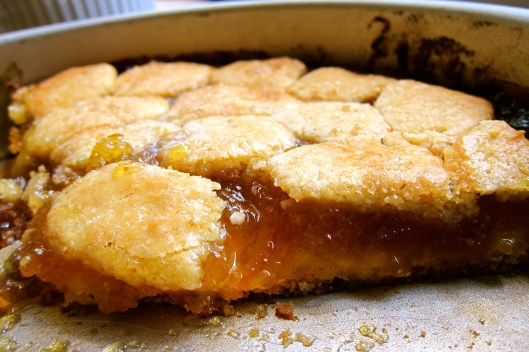
This dough is idiot-proof and takes well to being speckled with rosemary. Think of the tart as a ‘shelf’ for the marmalade and you have yourself a fine breakfast. It also makes a suave dessert, delicately poised over a lake of cream with the breath of the oven still upon it. I have a preference for thin, ‘single’ cream, which laps at the edges of the crust and swirls, ripple-like, through the sticky juice. A crisp cloud of vanilla ice cream is also not to be sniffed at.

Adapted from a David Lebovitz recipe for Easy Jam Tart

Serves 8-12

9 tbs (110g) unsalted butter, at room temperature

½ cup (100g) sugar

1 large egg & 1 large egg yolk

Small splash of almond extract

1½ cup (190g) flour

½ cup (70g) ground almonds

½ tsp sea salt

1 scant tsp baking powder

1¾ cups (450g) marmalade or jam (apricot would be lovely)

Zest of a lemon or orange

1 tsp finely chopped rosemary

Demerara sugar

Beat together the butter and sugar until well incorporated. Then mix in the egg, egg yolk, zest and almond extract. In a separate bowl, whisk together the flour, ground almonds, salt, finely chopped rosemary and baking powder. Gradually add the dry ingredients to the wet until the mixture just comes together. Take about ¾ of the dough and pat it into a disc shape, wrap it in plastic and put it in the fridge. Take the remaining dough and roll it into a log shape about 2ins (5cm) in diameter, wrap it in plastic and chill both pieces for about half an hour.

Remove the disc-shaped dough from the fridge and, using the heel of your hand, press it into the bottom and sides of an unbuttered tart pan (9-10ins/24cm). Pat until it looks evenly distributed. Now spread the marmalade over the top so that it forms a smooth plateau. Remove the log of dough from the fridge and slice into cookie-sized rounds, then lay these over the marmalade, in whatever pattern you want; try to cover as much of the preserve as possible as you go. Top with Demerara sugar (about 2 tbs) and bake for about 30 minutes, or until the pastry is golden brown. Let it cool slightly before serving.

Share this:

  • Share on X (Opens in new window) X
  • Share on Pinterest (Opens in new window) Pinterest
  • Share on Facebook (Opens in new window) Facebook
  • More
  • Share on Reddit (Opens in new window) Reddit
  • Share on LinkedIn (Opens in new window) LinkedIn
  • Share on Tumblr (Opens in new window) Tumblr
  • Print (Opens in new window) Print
  • Email a link to a friend (Opens in new window) Email
Like Loading...

A word about cherimoyas

22 Thursday Mar 2012

Posted by Sophie James in Recipe

≈ 2 Comments

Tags

Custard apple, Dessert, Food, Fruit, Ingredients, Recipes, Stories

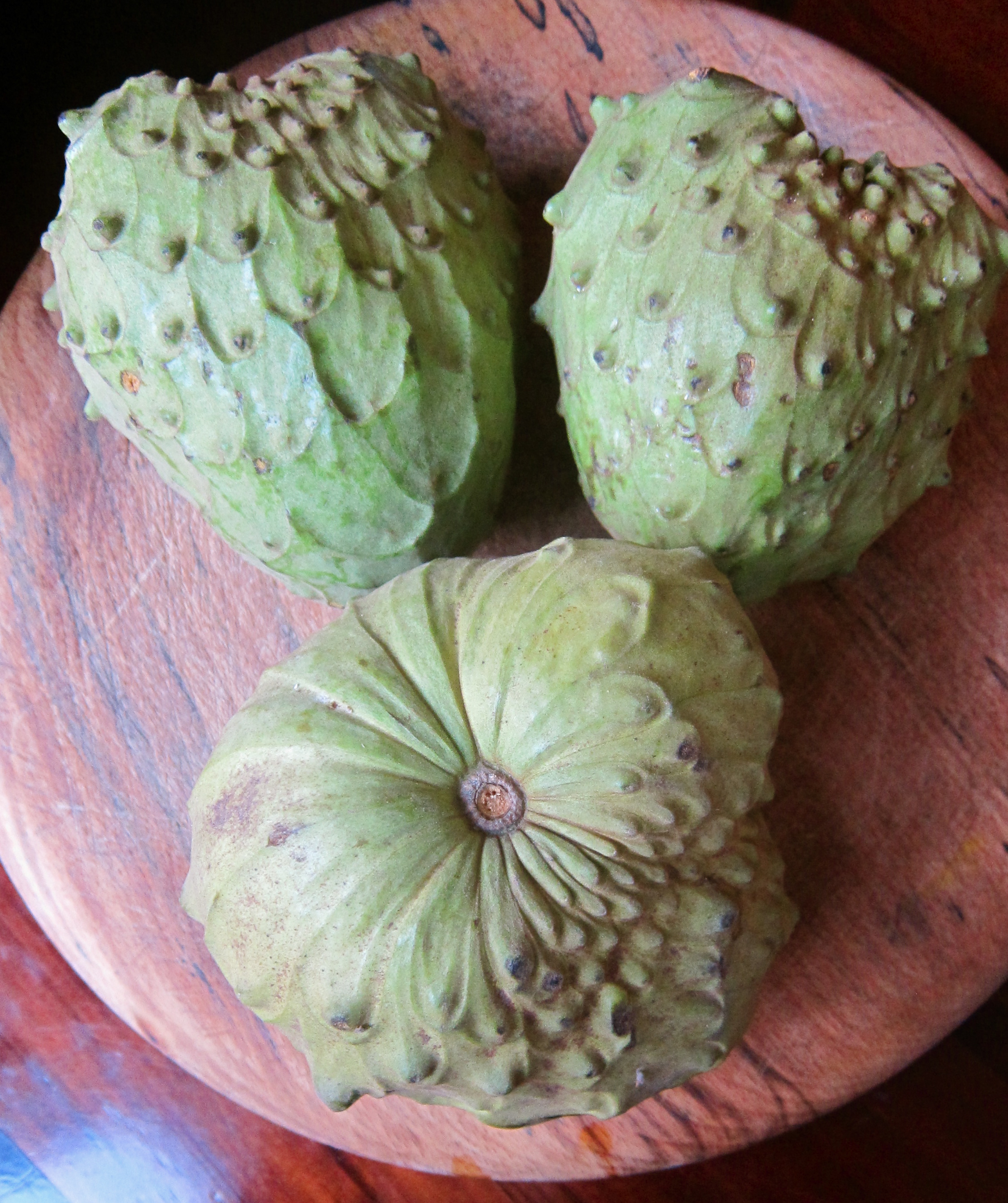
IMG_6430The cherimoya doesn’t so much have a skin as a hide. The green scales covering this frankly prehistoric-looking fruit conceal a milk-white, meltingly sweet interior. Though it’s part of the Annona family, to which the custard apple (Annona reticulata) also belongs, the first mouthful reminded me of drippingly ripe pear, with the scented cream of banana and the gentle acid of pineapple blooming moments later. The texture is both coldly crisp and rich.

As nature has given us a fool* in disguise, it would be crazy to tinker too much with it, I think. You can slice off the top and eat the contents with a spoon, which is fun, but the slippery – and large – black seeds take some navigating. You could pick them out and then eat the fruit out of hand, like I sometimes do with an avocado if I’ve forgotten cutlery.IMG_6725

Alternatively, the gentlest of interventions would be to tease out the seeds, give the fruit a squeeze of lime, add the zest, and then encourage the cherimoya’s sherbet-like qualities with a spoonful of creme fraiche. Any more doctoring and it would become sadly ordinary; no pies or tarts (or vicars) needed here. Another possibility is to cut it into chunks and add it to a fruit salad, but the challenge would be whether its subtlety and gentleness could hold up against other more dashing and showy specimens.

Though it can look quite menacing, it is actually rather a delicate, frail thing. The skin bruises and breaks easily, and, like a pear, the moment of perfection is fleeting, so always buy it firm to the touch and allow it to ripen out of direct sunlight over three to four days.

Custard apples and sour-sops (Annona muricata) – also in the same genus as the cherimoya – were brought to England by West Indians who had enjoyed them in the Caribbean, though the cherimoya tree itself originated in the uplands of Peru and Ecuador; the name is derived from the Inca language, Quechua, and translates as “cold seeds.” In Southern California, the trees have done well in the sub tropical and mild temperate climates of the region since 1871. Their season is short – March to May – and as they don’t travel well, you won’t find them in supermarkets, which makes them something of a curio; both a good and a bad thing. I’m not a fan of the exotic for its own sake, and much is made of its shape and strange armour. Ultimately, I think the cherimoya is a find because it carries within it a palimpsest of flavours and textures we’ve encountered elsewhere. My first mouthful made me think of ambrosial, just-setting custard, which then took me back to Ambrosia Devon Custard in a tin, which as a child – and you’ll have to trust me on this one – tasted amazing.

Cherimoya fool

Traditionally a fool involves cooking the fruit and then either crushing or sieving it before adding whipped cream. If you’re a fan of texture, rather than uniform smoothness, as I am, then simply remove the (inedible) seeds and crush the fruit with a fork, which will start to turn to mush naturally anyway. It’s important to use fruit whose skin is soft to the touch, but not overly bruised or brown; the same principle as an avocado. Cooking here is unnecessary and will strip the cherimoya of its nutrients (it is exceptionally high in vitamin C) as well as the spellbinding freshness. I think lime juice accentuates the cleanness, but a squeeze of orange would work as well.

Serves 2 (fills 2 ramekins)

1 large heavy-sized cherimoya or 2 medium ones

Juice and zest of 1 small lime

1 very heaped tablespoon of creme fraiche (or whipped heavy/double cream)

Cut the cherimoya in half, and then scoop out the flesh, picking out the seeds as you go. Discard the seeds along with the skin. Crush or roughly chop the fruit (you may not have to do either if you have an exceptionally ripe one). Add the lime juice and the zest, along with the creme fraiche, and make sure all the ingredients are evenly distributed throughout. Serve in small glasses or ramekins. Sprinkle with extra zest for prettiness.

* A fool is an old English dessert made of crushed fruit and cream. Gooseberry fool is the quintessential summer pudding and rhubarb fool is lovely in winter. Apparently wild apricot fool is the bees knees.

Where to get them in LA: Rancho Santa Cecilia (based in Carpinteria) sells them at the Hollywood farmer’s market on Saturdays and the ever-helpful Mud Creek Ranch (from Santa Paula) do too, as well as appearing at the Wednesday farmer’s market in Santa Monica.

Share this:

  • Share on X (Opens in new window) X
  • Share on Pinterest (Opens in new window) Pinterest
  • Share on Facebook (Opens in new window) Facebook
  • More
  • Share on Reddit (Opens in new window) Reddit
  • Share on LinkedIn (Opens in new window) LinkedIn
  • Share on Tumblr (Opens in new window) Tumblr
  • Print (Opens in new window) Print
  • Email a link to a friend (Opens in new window) Email
Like Loading...

Lime Marmalade

15 Thursday Mar 2012

Posted by Sophie James in Recipe

≈ 1 Comment

Tags

Breakfast, Fruit, Ingredients, Marmalade, Recipes

Preservers insist that it’s better, when making jams and marmalades, to go by weight rather than amount. Limes come in many different sizes, and with my crop some are no bigger than a pellet, so getting the scale out here makes sense. In scientific terms, sugar concentration of about 60-80% in a fruit product ensures its preservation; having to get out a calculator in order to cook something properly makes my palms sweat, so for now I’m simply following a recipe by National Trust treasure Sara Paston-Williams. Tasting what you’re preserving will also give you an idea of the percentage of sugar you will need, bearing in mind that a certain amount of bitterness is a good thing.

The steps I take are the same as for the bergamot and orange marmalade recipe, except I use 1½ lb of limes to 1.5 kg (3 lb 5oz) organic cane sugar. It doesn’t soak overnight as I don’t want the taste to intensify and I add 3½ pints (6 heaped cupfuls) of water to the juice, though you may feel it needs more diluting.

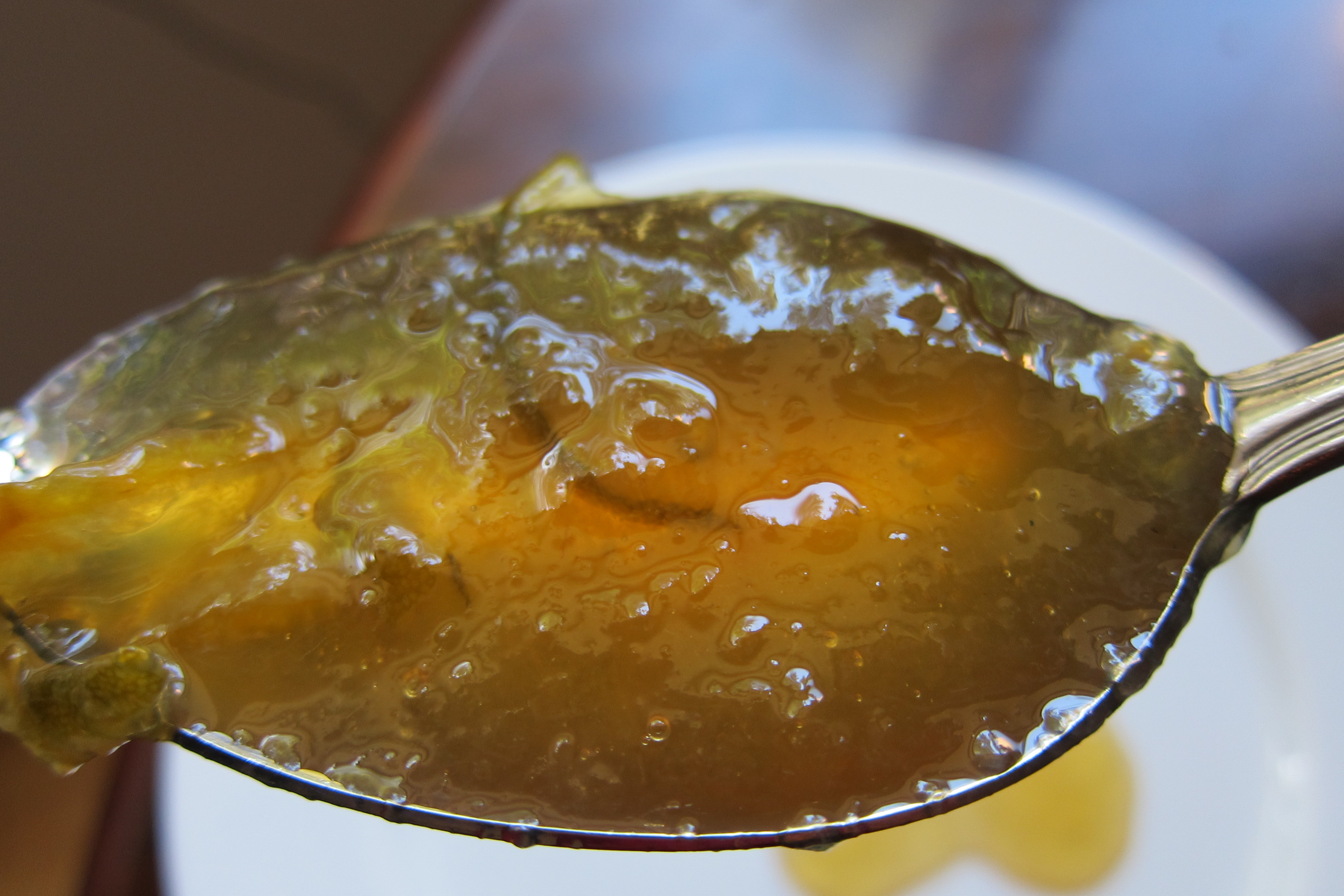
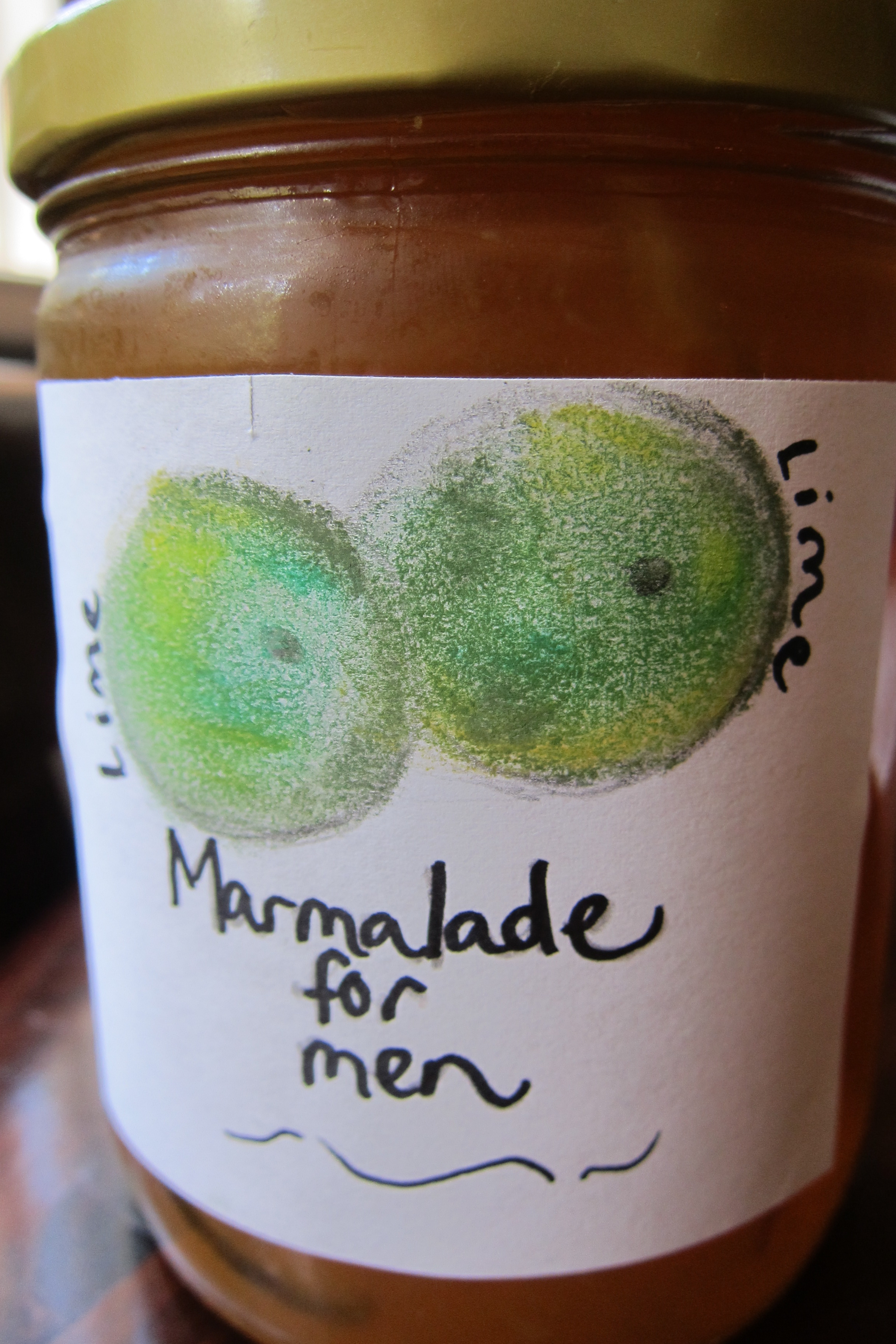
It’s clear from the start that when it comes to limes, I’m dealing with a very different beast. The skin is difficult to shred, being much tougher than lemon rind and the membrane refuses to part from the skin, so that in the end I’m chucking the flesh into the pot as well. The taste, before adding the sugar, is nothing short of harrowing. However, all potted up it looks very respectable, and the dark green shred gives it a touch of the tropics. It tastes and looks absolutely nothing like Rose’s soft and zesty jelly. This is dark, sultry stuff and I’d suggest moderating the lime with ½ lb of lemons to make it less punishing. Thinned to a sharp sauce, it would be perfect dripped over banana dumplings (bananas in any form work well), a steamed ginger pudding, or as a glaze for pork chops, shrimp or salmon. At the risk of sounding very 70s, men love this preserve; if I was into marketing, I’d call it Marmalade for Men.


Share this:

  • Share on X (Opens in new window) X
  • Share on Pinterest (Opens in new window) Pinterest
  • Share on Facebook (Opens in new window) Facebook
  • More
  • Share on Reddit (Opens in new window) Reddit
  • Share on LinkedIn (Opens in new window) LinkedIn
  • Share on Tumblr (Opens in new window) Tumblr
  • Print (Opens in new window) Print
  • Email a link to a friend (Opens in new window) Email
Like Loading...
← Older posts
Newer posts →

Enter your email address to follow this blog and receive notifications of new posts by email.

Join 2,216 other subscribers

Top Posts & Pages

Frilly
Pause
Early Nigel
Plums and Pluots
Recipe List
Power of two

Recent Posts

  • At my allotment
  • A compendium of sorts
  • Mulberries
  • We are nature
  • Leaving home
  • A treacherous herb
  • Just stop it
  • Why I swim

Great books I’ve read

Blogs/Websites I read

  • Letitia Clark
  • Nigel Slater
  • Room to heal
  • Samantha Harvey
  • Stewart Lee
  • The Kureishi Chronicles
  • The Marginalian
  • Tom Cox
Follow Stories from the Stove on WordPress.com

Archives

  • June 2023
  • February 2023
  • September 2022
  • August 2022
  • July 2022
  • May 2022
  • February 2022
  • December 2021
  • August 2021
  • April 2021
  • March 2021
  • January 2021
  • June 2020
  • November 2018
  • August 2017
  • July 2017
  • May 2017
  • April 2017
  • February 2017
  • January 2017
  • November 2016
  • May 2016
  • October 2015
  • July 2015
  • June 2015
  • April 2015
  • March 2015
  • January 2015
  • December 2014
  • November 2014
  • October 2014
  • September 2014
  • August 2014
  • July 2014
  • June 2014
  • May 2014
  • April 2014
  • March 2014
  • February 2014
  • January 2014
  • December 2013
  • November 2013
  • October 2013
  • September 2013
  • August 2013
  • July 2013
  • June 2013
  • May 2013
  • April 2013
  • March 2013
  • February 2013
  • January 2013
  • December 2012
  • November 2012
  • October 2012
  • September 2012
  • August 2012
  • July 2012
  • June 2012
  • May 2012
  • April 2012
  • March 2012
  • February 2012
"A WOW piece!" Claudia Roden on Walnut Bread

Walnut bread

Lucas’s chocolate marmalade slump

Tags

Afternoon tea Allotment Almonds Art Autumn Baking Bread Breakfast Cafes Cake Childhood Chocolate Christmas Citrus Claudia Roden Cookbook Cooking Dessert Devon Dinner Elizabeth David England Exmoor Fish Food France Fruit Gardening Gelato Gluten-free Herbs Home Homesickness Honey Ice cream Ices Ingredients Italy Jam Jane Grigson Lemons London Los Angeles Lucas Hollweg Marmalade Meat Mediterranean Meyer lemons Nature Nigel Slater Nonfiction Nuts Onions Patience Gray Poetry Pudding Reading Recipe Recipes Salad Sea Seasons Soup Spain Spices Spring Stone fruit Stories Summer Sussex Travel Vegetables Winter Writing Yoghurt

A WordPress.com Website.

Privacy & Cookies: This site uses cookies. By continuing to use this website, you agree to their use.
To find out more, including how to control cookies, see here: Cookie Policy
  • Subscribe Subscribed
    • Stories from the Stove
    • Join 2,084 other subscribers
    • Already have a WordPress.com account? Log in now.
    • Stories from the Stove
    • Subscribe Subscribed
    • Sign up
    • Log in
    • Report this content
    • View site in Reader
    • Manage subscriptions
    • Collapse this bar
 

Loading Comments...
 

    %d