One jar only

Tags

, , , , , , , , ,

IMG_2057

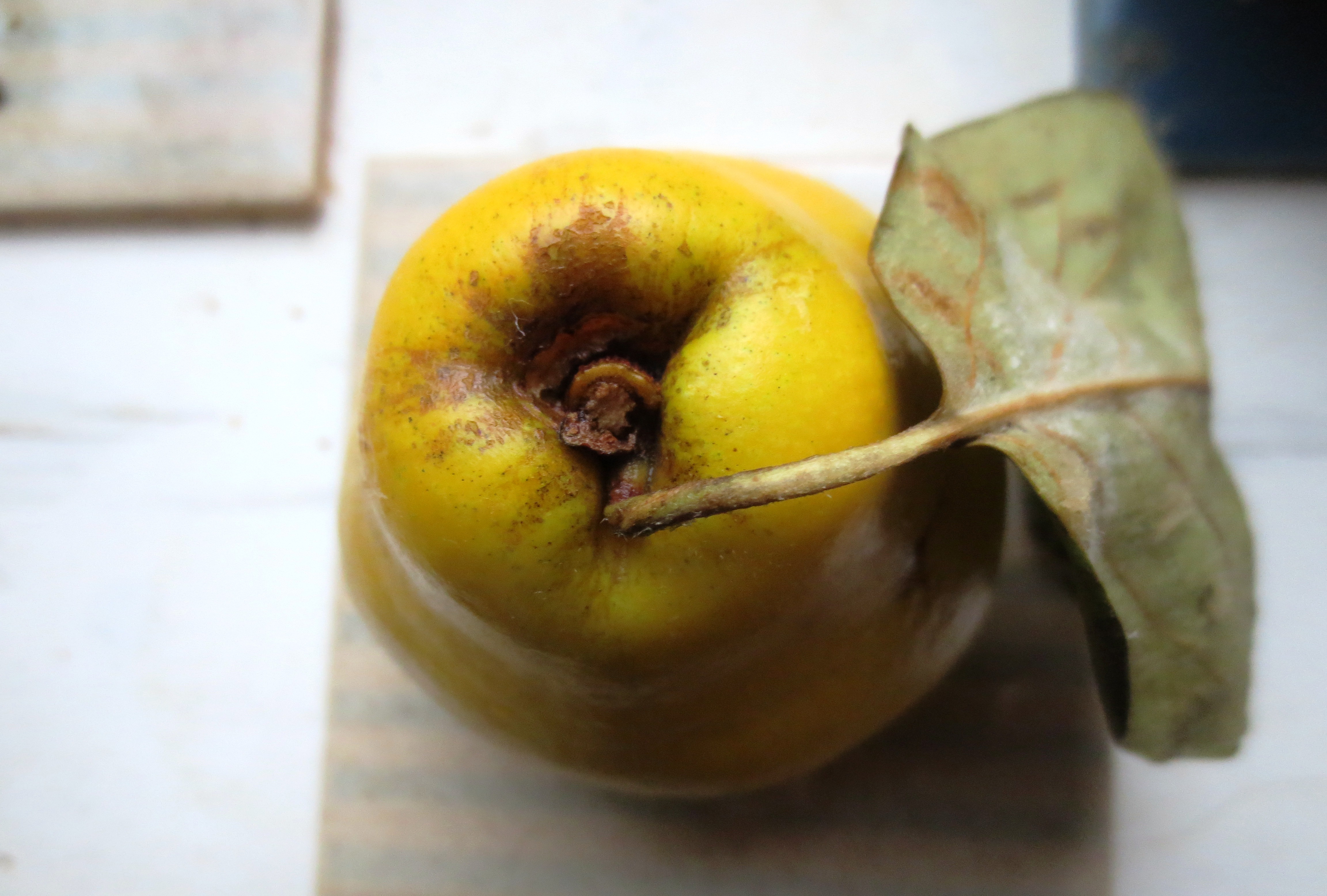
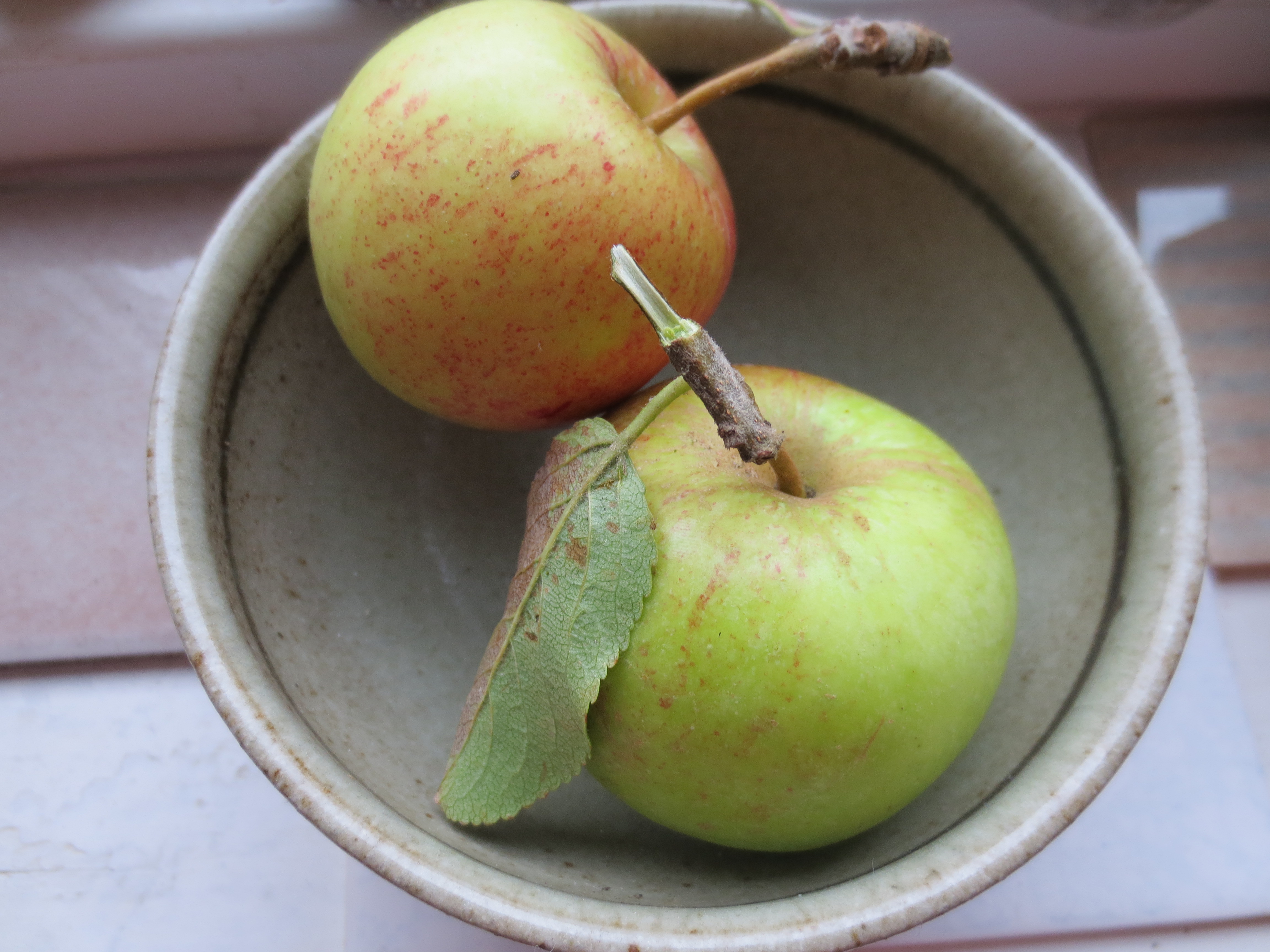
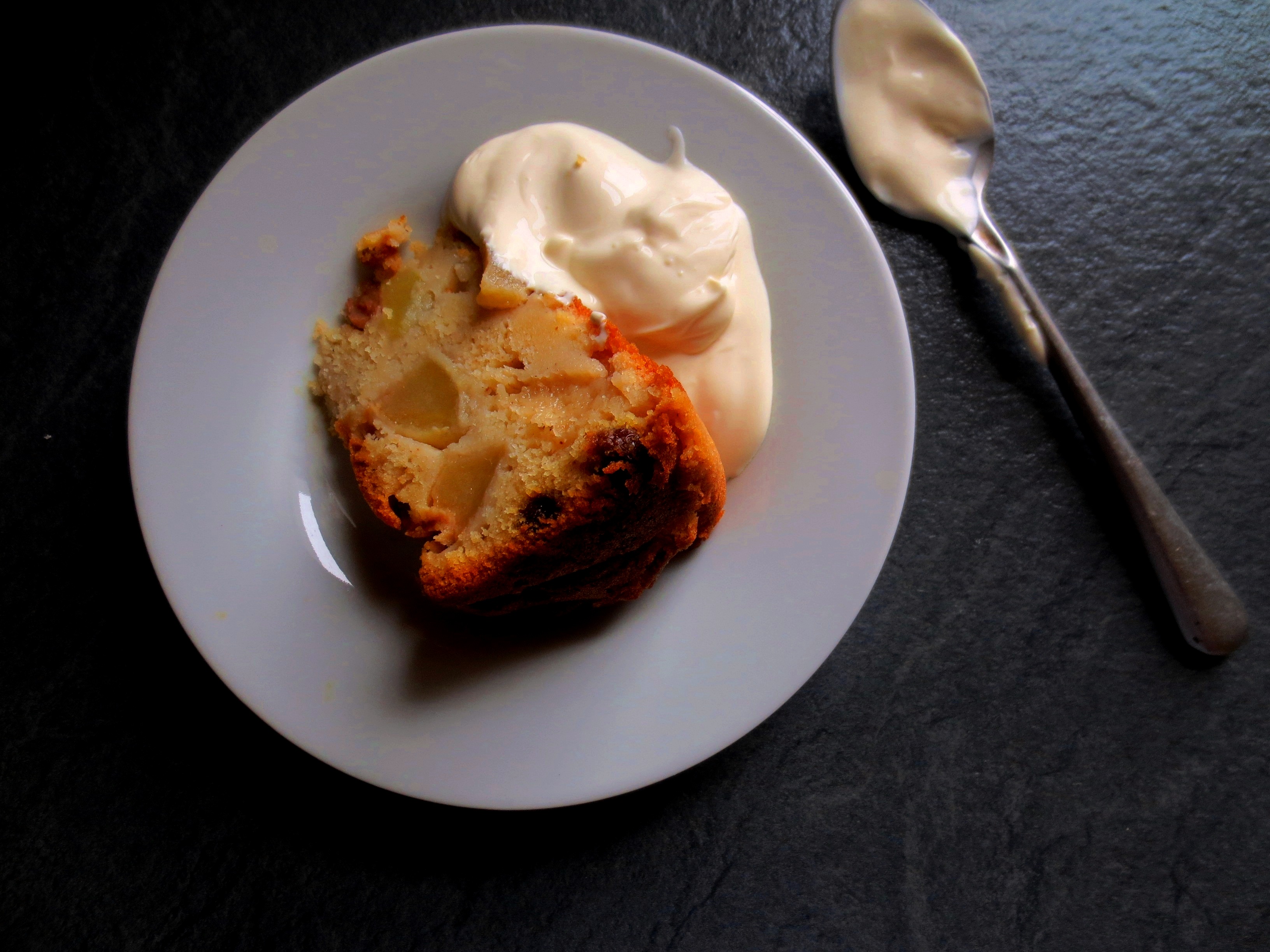
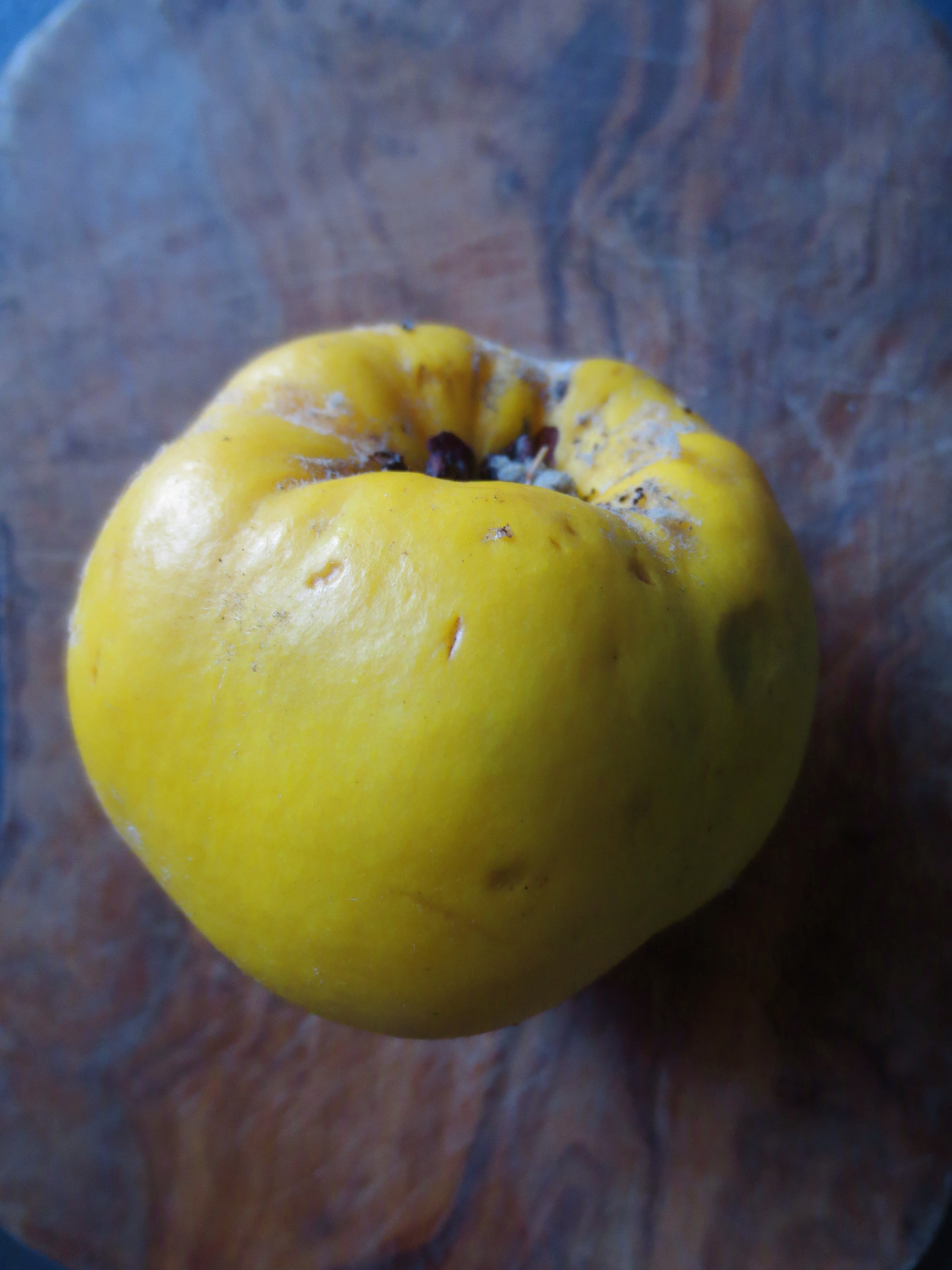
Horseradish and mustard seed. Apples and quinces. A dollop of something that smarts and sears is what is required now. I found the last quinces of the season where I am staying, tiny little gnarled things covered in crystalline cobwebs. Yellow turning to black and as small as tomatoes. And I found some Granny Smith apples that were bunched on a tree in someone’s front lawn. Green, luminous and numerous and unpicked. The rest of the garden was bare and suburban. But the apples were a cartoon green. Perfect and unmarked, with an almost waxy sheen.

“Excuse me, can I help you?” the voice behind us was arch and querulous. I quickly retreated my camera. We turned on our best smiles. “We were just admiring your lovely apples” I said. “Well, come on then, I’ll give you a tour. You can have some if you want.” I promised her a jar of spiced apple jam in return and she perked up. We followed her round her plot and listened to the story of how they bought the house, 40 years ago, and how before that the actress Dame Sybil Thorndike would sit in the conservatory and ‘be round the bend.’

“Won’t you come in? You haven’t eaten? You must be hollow.”

We walked into the house. It too had been untouched. Simple and spartan and her husband Colin was also both these things. Small, white-haired and dainty. He was writing Christmas cards but when we came in he looked up as if he’d been expecting us and started talking as if it was a continuation of an earlier conversation. Our hostess went off to make coffee and came back with a cafetière. She was unsure what was in it; tea or coffee. “Perhaps it’s the most revolting thing you’ve ever drunk?” She enquired smiling and I ate a soft biscuit. The songbook of the musical Cats sat on a side table.

We talked about Cornwall – they had just sold a holiday home in Looe. Very pleasant, pronounced Colin. I had spent some time in Cornwall as a child when my dad moved there. “You probably won’t have heard of the place,” I said, “because it was a tiny hamlet on the edge of Bodmin Moor called Henwood. It had a riding school.” “Oh, we know it well,” cried Colin, in his soft burr. “Do you know Ted and Mary?”

IMG_2511

“Now tell me again – where do you live?”

Joe and I paused. He was sitting in a too-small green chair drinking tea-coffee. What do we say? Los Angeles? But we’re English, it was all too complicated. “Ormond Drive” said Joe, where we’ve been for exactly two days, house-sitting. Free-basing, I suppose you could call it, in Hampton, suburb of London, green and leafy, not really a town. A town lite, heavy with history. Colin got out his Cats songbook, and started to read from Growltiger’s Last Stand.*

His bucko mate, Grumbuskin, long since had disappeared,
For to the Bell at Hampton he had gone to wet his beard;
And his bosun, Tumblebrutus, he too had stol’n away-
In the yard behind the Lion he was prowling for his prey.

“We should really push off now. We haven’t done any shopping”, Joe said. “Oh, yes of course. We’ve ruined your morning”.

“And the apples?” Joe asked, as we stood on the threshold. We put on our winning smiles again. Colin gave us an apple each. I was expecting more of a flurry, and two seemed a paltry sum. It was enough for one jar only, which I had promised them. And they had asked us in, they knew Ted and Mary. It was Christmas. Colin had read us poetry. Time to be kind.

IMG_2542

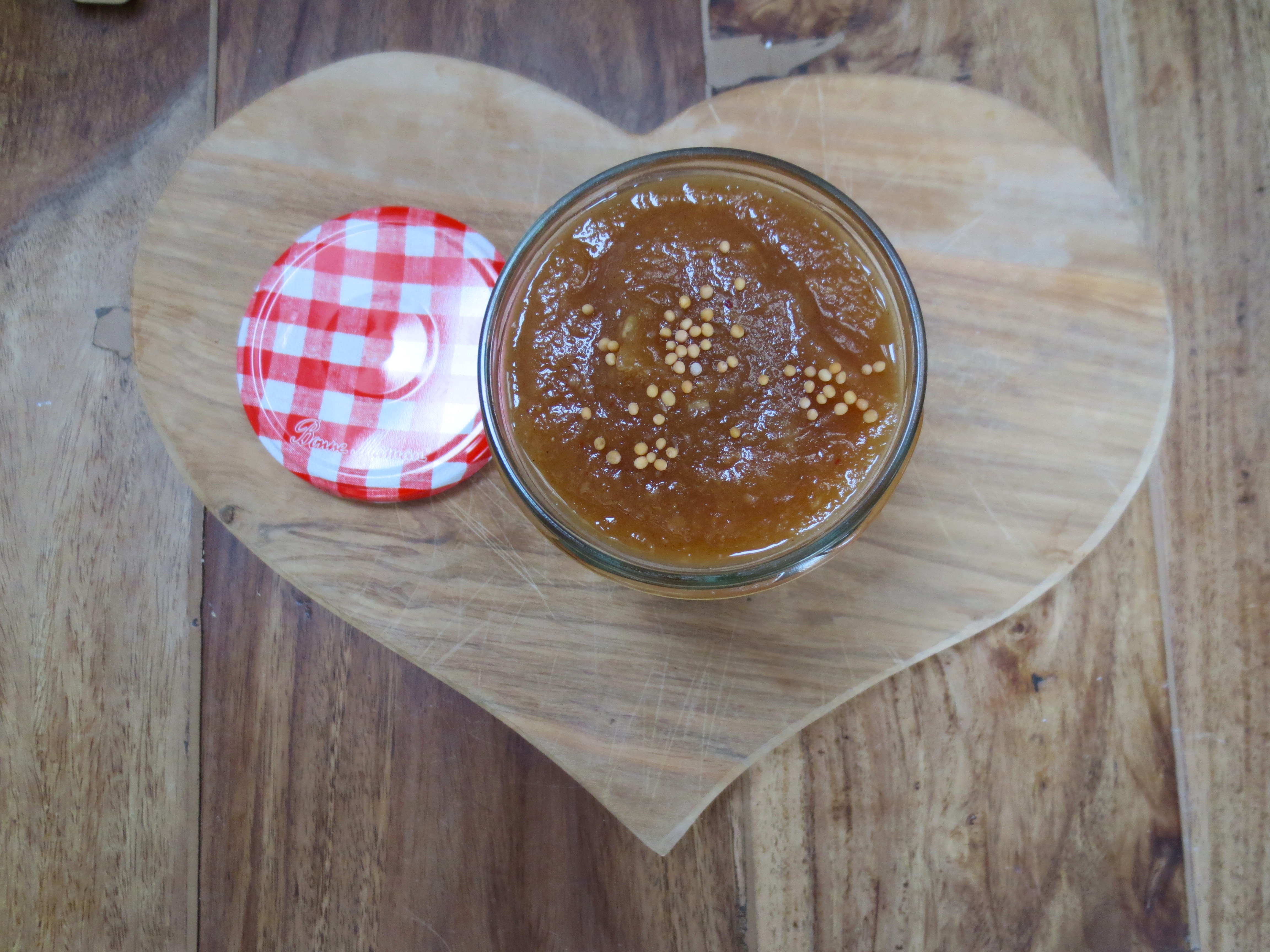
Spiced quince, apple and mustard jam

Adapted from Felicity Cloake, The Guardian

Like its cousin, the apple, quince makes a wonderful pairing with pork (think Christmas ham), but is good with any fatty meat. The sweet spices, and the warm hit, make this jam an especially good partner for cheddar or other hard cheese. English quinces are now all but over, unless you can find a few malingerers as I have here, but Cypriot and Turkish grocers, and Middle Eastern shops will have their luscious and bulbous imports, so there’s no excuse. Ginger can be used here instead of horseradish, or as well as.

500g ripe quinces (or a mixture of quinces and apples)

1 shallot, finely chopped

100ml cider vinegar

175g light muscovado sugar

5cm horseradish, peeled and finely grated (or ginger)

½ tsp cinnamon

1 tsp mustard seeds

2 tsp mustard powder

Peel the quinces, cut them into sixes, remove the cores, then roughly chop the flesh. Put the fruit in a pan and cover with cold water. Bring to a boil, reduce the heat to a simmer, and leave to cook for half an hour until soft. Drain, then mash or blitz to a pulp in a blender.

Put the quince back in the pan with the remaining ingredients, except for the mustard seeds and powder. Cook for about 20 minutes, until thick, then take off the heat and leave to cool. Stir in the seeds and mustard powder. Decant into a sterilised jar (washed with soapy water, rinsed and then put in a hot oven for ten minutes) and refrigerate.

* Originally from Possum’s Book of Practical Cats by T.S Eliot

Always winter

Tags

, , , , , , , , , ,

IMG_2251

Perhaps it’s because I have been spending a lot of time in the mud, but I’m drawn very much to muscovado sugar. Dark as earth, moist, crumbly and rich with minerals, it has sizeable heft. It is always winter with muscovado. And it reminds me of the eternal cold of Devon, before central heating, and the way our small fingers stuck to the inside of the windows and having to get dressed with our foggy breath snorting out of our mouths like buffalo.

As children we only ever had muscovado and we put it in our tea, which was like drinking turf. We sprinkled it over our porridge in the mornings and the strong malt-like aniseed depth of it was not always easy to take, though it helped if there was a moat of cold milk which the muscovado sweetened to butterscotch. If muscovado is turf then molasses is tar. It was sometimes given to us ‘for nerves’ in the same way that cod liver oil was administered ‘for bones’. And I can still remember the thick gluey strings of molasses making my jaw ache, the smell strangely reminiscent of tobacco and the colour which was like Victorian yacht varnish.

I was aware that other households didn’t have such things. My school friends had white sugar that was often mistaken for salt, and a wet dab of the finger was needed to ascertain which was which. I also remember that theirs were houses filled with neatness and pullovers and tank tops knitted in luminous artificial colours.

011

My friends didn’t have to be wrapped in sheets stiff with heat from the storage heater just before bedtime. They didn’t know what they were missing, because being swaddled like this so you could barely move and feeling the starchy steam rise into the room was actually very satisfying. And then we were lowered into our beds like mummies. But apart from this one thing, I really wanted to be banal and suburban and have nothing unique about me at all.

This might be why I called myself Marian, which I did for a while, thinking it was a nice, quiet name. But the black sugar was too much of a give away. It marked us out as odd and therefore vulnerable to attack. And it wasn’t used for things people understood, like chutneys, marinades and fruit cake. It spoke of the chaos underpinning everything, that we used muscovado outside of its real purpose, that we didn’t differentiate. Eventually we left, dad to Exmouth and the rest of us to Exeter and later onwards to London. It has left me with a lifelong nervousness of parochial life, of so-called ‘country living’. Those small places can be tough. But muscovado put iron in the soul and molasses helped to calm our fraying nerves.

IMG_2475

The lowdown on muscovado

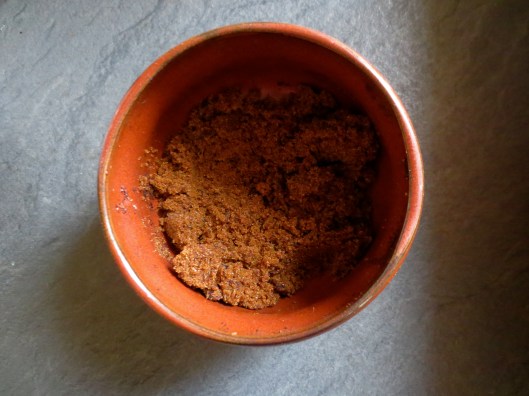
Muscovado (from the Portuguese açúcar mascavado meaning ‘separated sugar’) is also known as Barbados sugar, and is made differently to other brown sugars: instead of being white sugar to which molasses is added, it is boiled down from sugar cane juice, purified with lime juice, but then not refined any further. Muscovado is made in Barbados, in Mauritius, and in the Antique province in the Philippines, where it was one of the most prominent export commodities, from the 19th century until the late 1970s. It is nutritionally richer than other brown sugars, and retains most of the natural minerals – such as calcium, phosphorus, magnesium, potassium and iron – inherent in sugarcane juice.

Muscovado brownies with almonds

Adapted from Claire Thomson, The Guardian, Cook, 13/2/2016

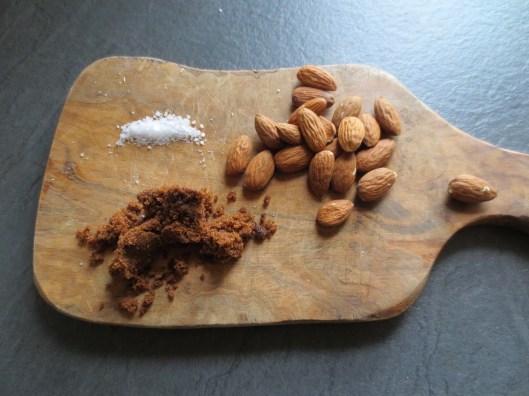
You can use whatever nut takes your fancy, but almonds always work with this recipe and you can keep the skins on. Walnuts are also lovely as are prunes. This is on the ‘weeping’ end of the brownie spectrum – crisp on the outside and damp within. My earlier brownie recipe is even more luxe. I’m terrified now looking back at those ingredients; you will probably need a defibrillator standing by, just in case. This recipe is a bit more demure. Make it gluten-free by using rice flour or a gluten-free mix instead of the standard plain. You can go the whole hog here and only use dark muscovado or light muscovado if you want to forgo the caster sugar. 

125g almonds (or walnuts/softened prunes, drained and roughly chopped)

150g dark cooking chocolate (60-70% cocoa solids)

150g unsalted butter

3 eggs

100g dark muscovado sugar

100g caster sugar

100g plain flour

15g cocoa powder

1/2 tsp salt (plus a pinch to sprinkle over the baked brownie)

Lightly grease a non-stick baking tin 6 x 10 inch (15 x 24 cm) and line with baking parchment. Allow the paper to come 1 inch (2.5 cm) above the tin. Heat the oven to 350F/180C, then chop the almonds roughly, put them on a baking sheet and toast in the oven for about 5-8 minutes, keeping an eye on them as they burn easily. Use skin-on or blanched, both are fine.

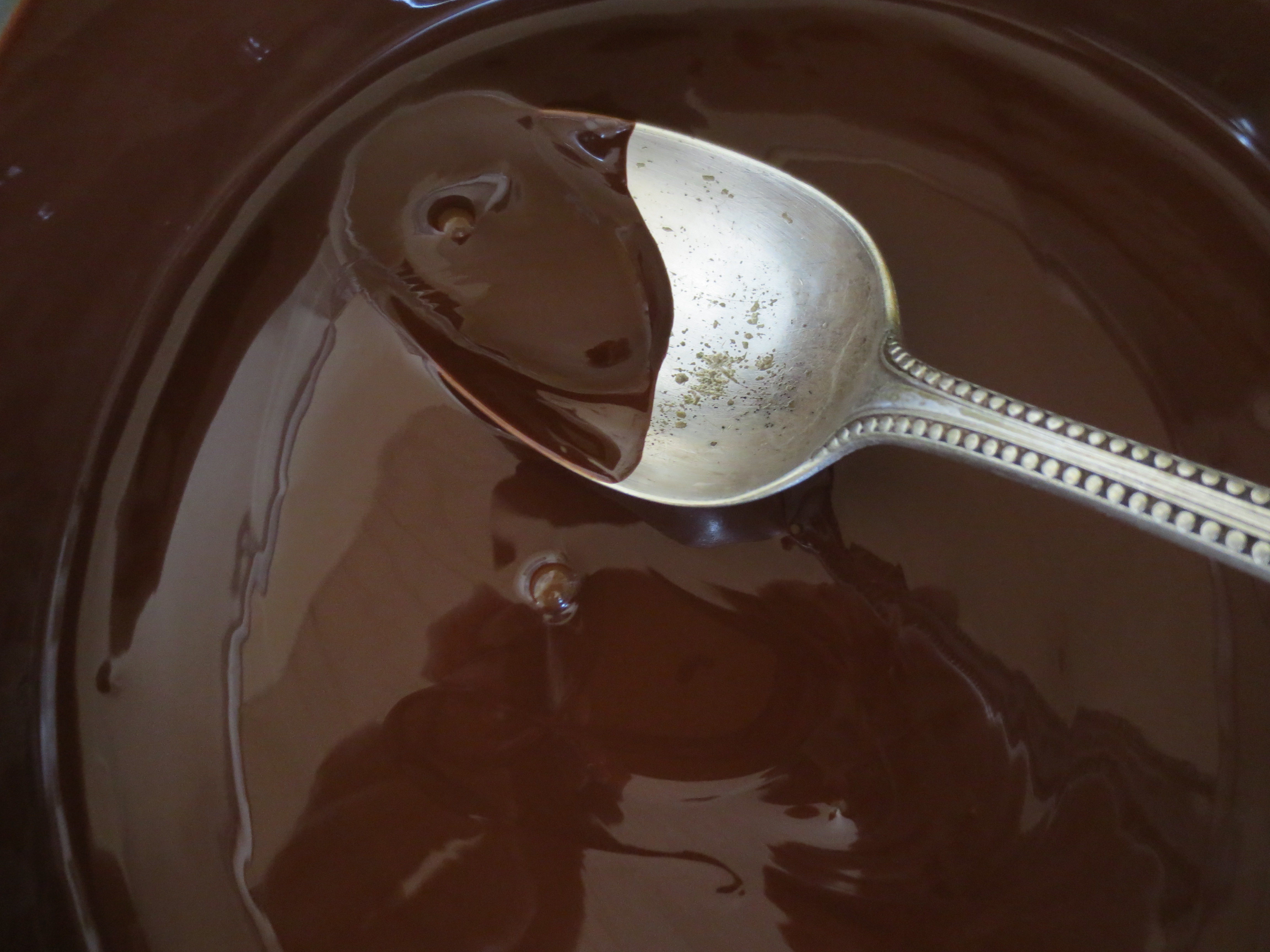
While the almonds are doing their work, put chocolate and butter together in a heatproof bowl fitted over a pan of barely simmering water. Allow the chocolate to melt without stirring it, then remove from the heat and gently stir to smoothness.

In a separate bowl, beat the eggs and sugars together until the mixture is creamy and thick. Mix the melted chocolate and butter into the egg and sugar mixture.

Sift the flour and cocoa powder and salt into the chocolate mixture. Beat together until smooth. Fold in the almonds.

Pour the mixture into the prepared tin and bake on the centre shelf for 20 -25 minutes. Don’t overcook the brownie – you want it to be just firm to the touch (not scorched at all) and still gooey inside. Leave to cool for ten minutes, and then put on a sheet of parchment on a wire rack. Cut squint, so you can eat the stray bits while no one’s looking.

Ripe

Tags

, , , , , , , , , ,

020

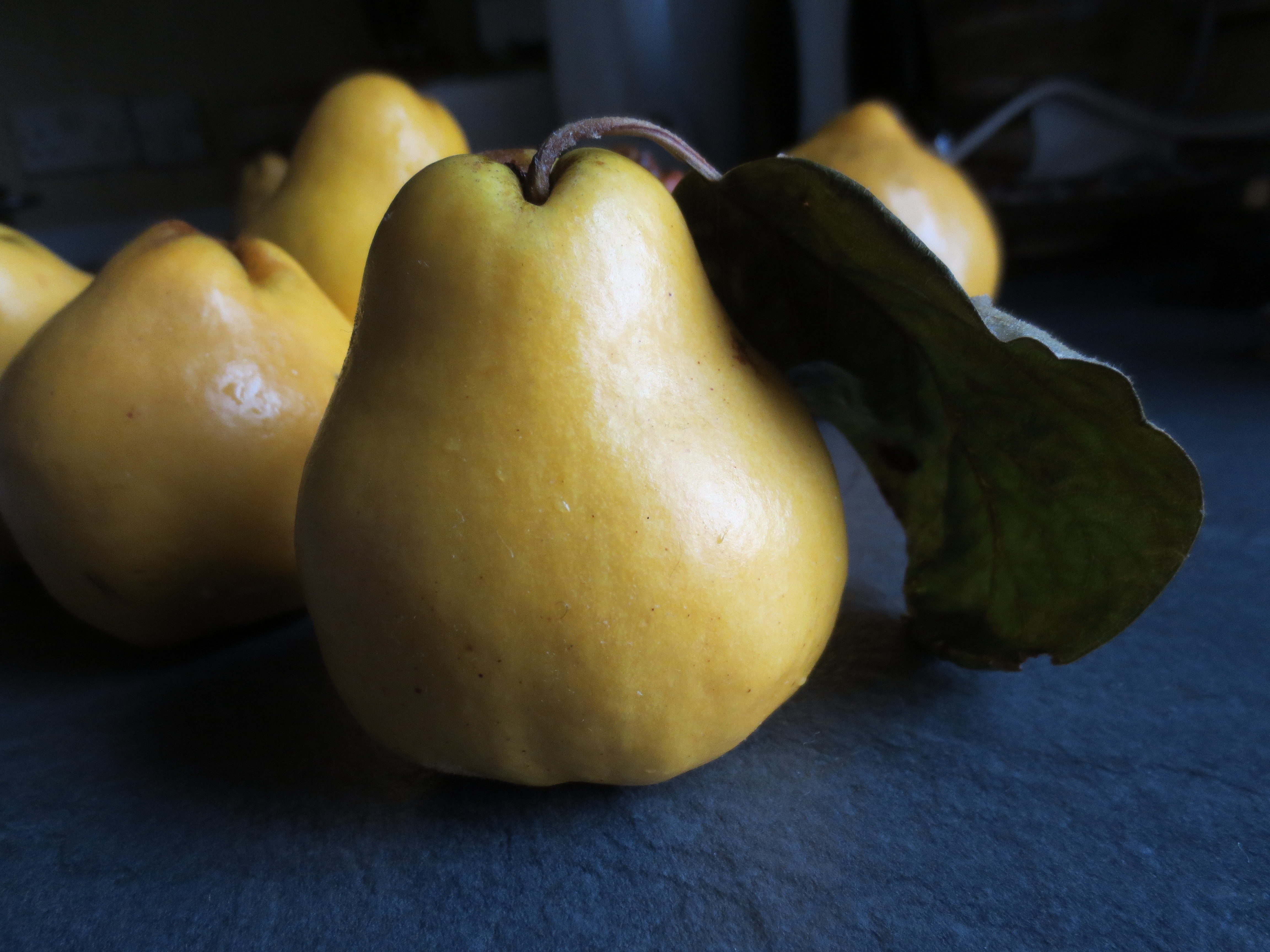
Steaming pineapples and musky roses. Damp, heady and sweet. A bit like a fruit and veg shop. That’s the best I can do when it comes to describing the strange perfume of quinces. Warm and wet? Sultry. They smell like perfume. I’m at a loss.

This is also what happens when I’m asked (and this happens a lot) “how do you find LA?” I haven’t yet found it, I want to say. I’m still at a loss. Sometimes words are tricky and some things are hard to grasp. There’s no ‘it’, there’s no graspable thing. The quince is yellow when ripe and is almost waxy, and it smells definitely of pineapples. It is hard in the hand – there’s no give in it, unlike a pear which it resembles. A pear with a big bum. You can’t eat it raw unless you like having bloody stumps instead of teeth. You have to wait for the fruit to become bletted, which means soft to the point of decay, if you want to eat it like that. The quince needs to be cooked, and then there’s the smell (see above). It’s probably what is known as an acquired taste.

LA is dry and hot and sunny most of the year. Sometimes it rains and then it buckets down and no one knows how to drive when the road is wet so they crash. There is no centre, but lots of grids. So if you get lost, then you just take the next left and go backwards. It is a maze of suns. Everyone wears sunglasses all the time, even at night. It is a city of endless fragments where you are unlikely ever to bump into anyone you know. If you want to get lost, it’s a good place to be.

There is a huge botanical garden, The Huntington, with a library attached that has the first edition of Darwin’s The Origin of the Species. Oskar Schindler lived above a dry cleaners in Beverly Hills for a while. David Hockney learned to drive in LA (and drove all the way to Las Vegas after his test, because he didn’t know how to get off the freeway), as did I. The smell of wild fennel is strong, and I would say it is a place of colour. It is rarely damp.

Quince

I found these quinces in a bag on someone’s front lawn on the outskirts of Seaford. Previously there have only been apples there, so discovering quinces was very exciting. I hope it was okay for me to take them. I took all the other things they left out, and nobody said anything. You are unlikely to find local quinces in the shops. Along with mulberries, you’re better off befriending someone with a tree and a glut and a kind heart. It is worth it.

One of the many spectacular things about quinces is the way they turn a deep rosy gold during cooking, which makes them rather dramatic and a bit serious-seeming. Good for dinner parties, or just on your own, slumped over a book. This compote is lovely served with yoghurt, cream or ice cream. Good as a sorbet too, or puréed for a tart.

bowl of quinces

Compote of quinces and allspice

Inspired by Jane Grigson’s Fruit Book, originally from Audiger’s La Maison Reglée, 1692

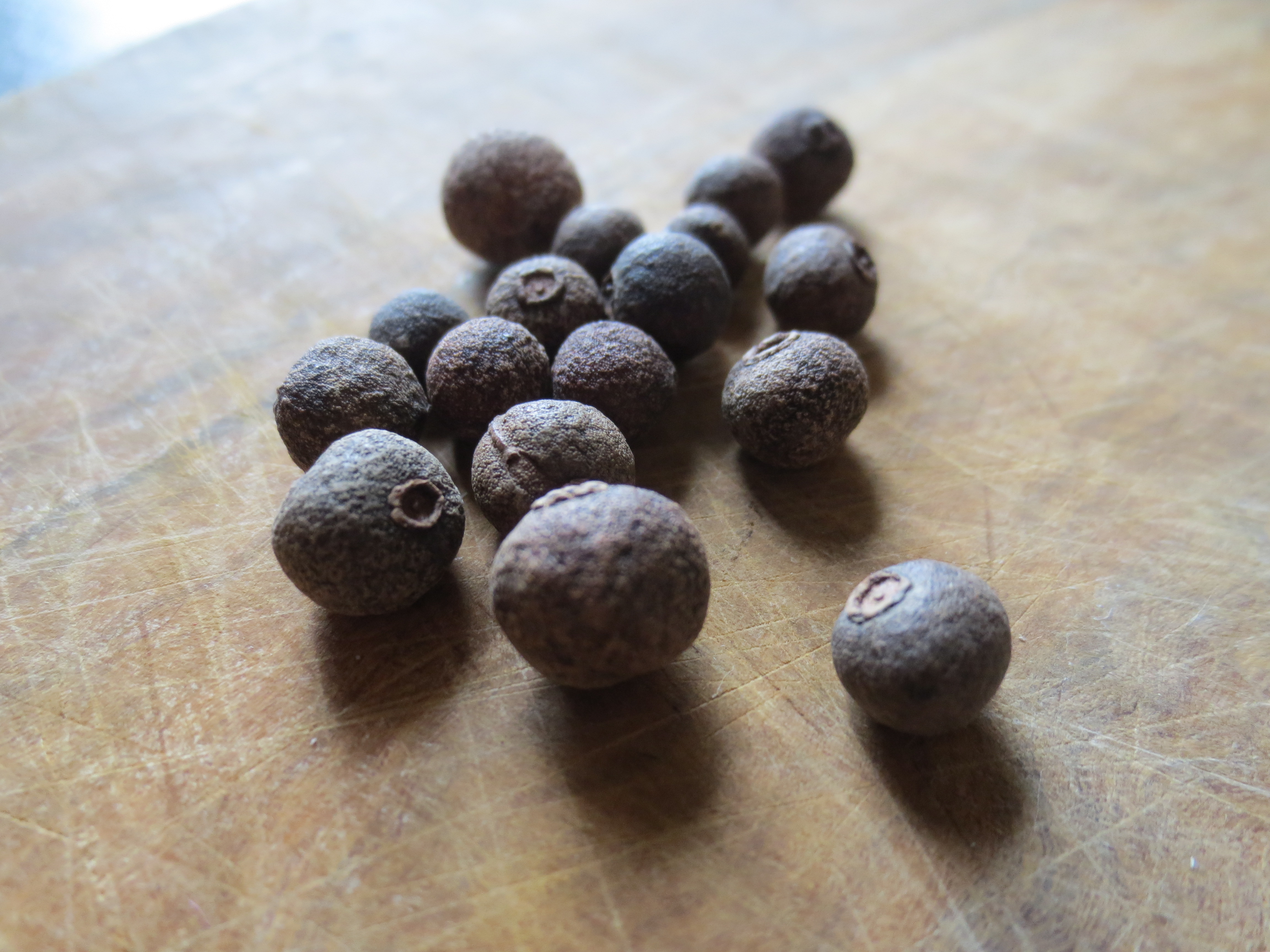
Allspice isn’t, as I once thought, a combination of ‘all the spices’. The name was coined around 1621 by the English, who likened its aroma and taste to a combination of cinnamon, nutmeg and cloves. Allspice (Pimenta officinalis) comes from a tropical tree native to America, also cultivated in the West Indies and Jamaica. The berries – as seen below – are often tied in muslin and used in the making of preserves and pickles. The flavour, like the quince, is elusive, and works well here.

6 quinces (or thereabouts)

Sugar or honey to taste

3-4 Whole allspice berries

Cut up two quinces – use windfalls for this, as it doesn’t matter what they look like – and put them, peel, core and all into a pan. Cover generously with water. Also peel neatly the four remaining quinces. Add these peelings to the pan, and then the cores as you cut them into quarters. The cores are very tough, so pare gradually away otherwise you’re left with shards and splinters of quince.

Prevent the pieces from discolouring by dropping them into a bowl of lightly salted water. Boil up the pan of quince ‘debris’, and stew lightly until it begins to turn a rich amber. Not red as many suggest – you’ll be waiting forever for that. Now strain off the glowing juice, add sugar or honey* to taste, and bring slowly to simmering point, stirring every now and then. In this syrup, cook the quince pieces along with the allspice berries, until the fruit is tender. Serve with something white and cool.

Quinces further away

IMG_2118

Allspice berries

Other recipes with quince:

Quince paste with Manchego

*I have not used honey in the making of this recipe so far, though it was used traditionally, before the advent of sugar. However, you may need to experiment with the strength and sweetness, as honey behaves differently to sugar in the cooking process.

The short life of pears

Tags

, , , , , , , , ,

img_1879-2

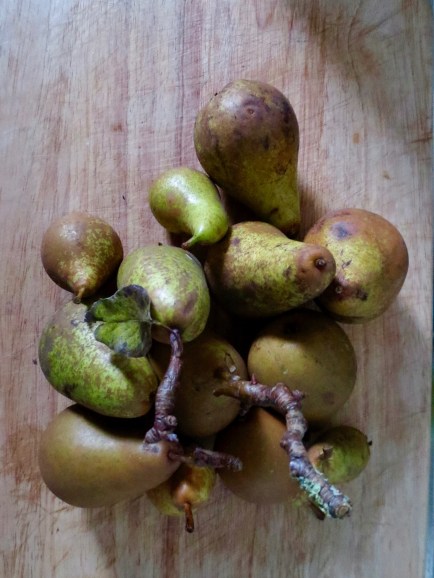
There was a pear tree outside the window in Watchet. Conference pears that suited the palette of the place. Seaford was grey – pewter grey, oyster grey, pinky grey after the sunset. And Watchet was the full spectrum of brown. Deep russet, rust, coral red, the sand on the beach brown like earth, the red earth in the fields slack with rain, giving us all ‘ginger boots’ (dad’s phrase). High iron deposits in the soil, that’s what.

And even though there were tons of apples – in fact so many no one knew what to do with them all – pears were what we ate. And I love pears. I’d rather eat a pear than an apple. No peeling required. The juice is more forthcoming in a pear, the softness a surprise.

IMG_1861

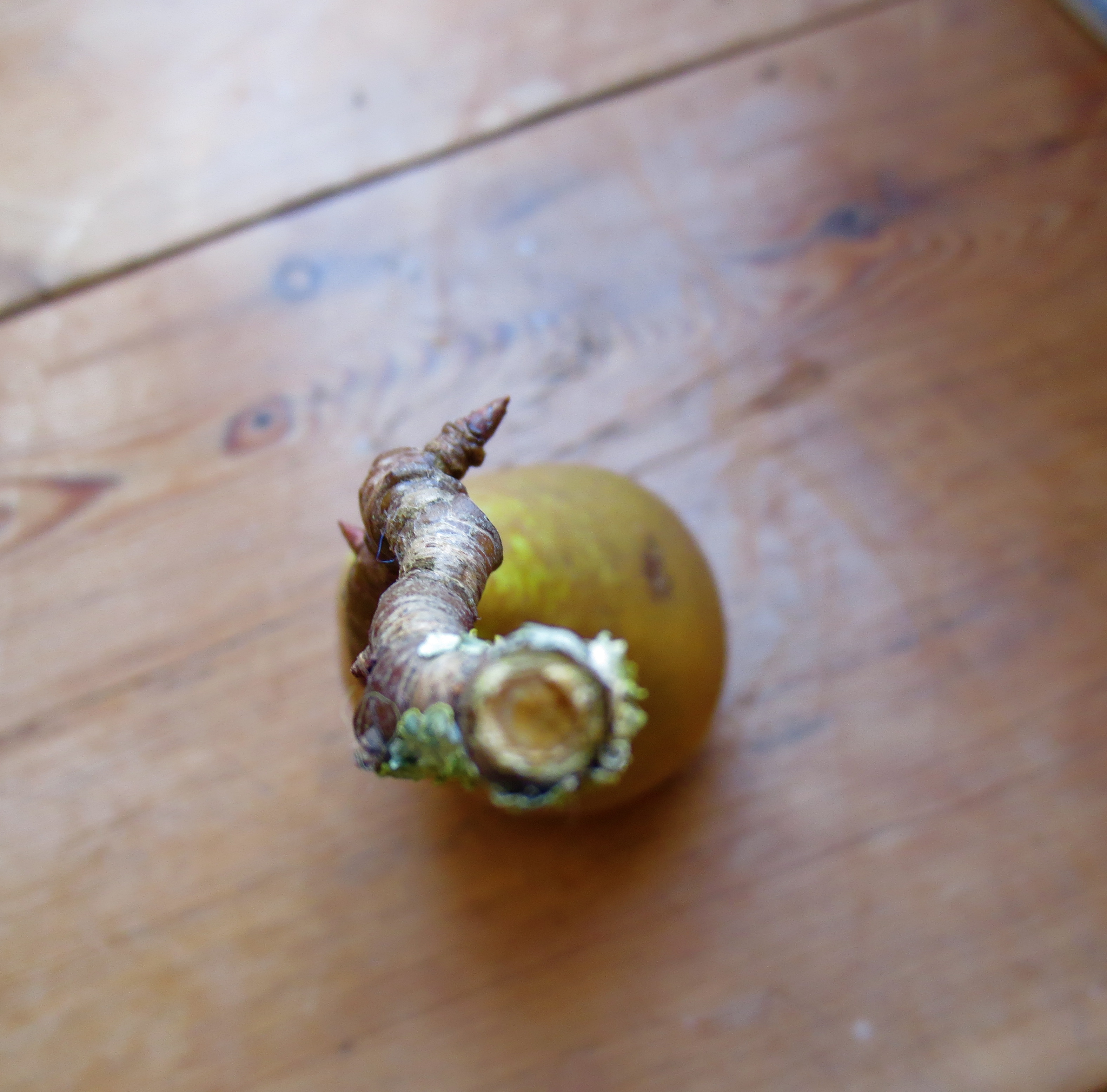
I was allowed to pick the pears, as many as I wanted. A lot had fallen on the ground, and were in the process of rotting back into the earth. It was the perfect time for them, almost to the day – ‘the tradition is to pick them on or soon after 1 November and then watch them as they come to perfection’ according to R.H.L Gunyon – and it was lovely to see how many sizes they came in, unlike the Stepford Wives versions I’m so used to seeing at the supermarket.

They were all hard, but this is normal. They should be picked firm and allowed to ripen at home. A ripe pear yields slightly around the stem, but doesn’t split or feel squashy. I ate pears two ways during my stay in West Somerset. The ones I picked I didn’t eat until five days later. I was unconvinced they would work out, but I kept them in my bag, ready.

The first pears I encountered were cooked; they were buttered, sugared, salted, spiced with ginger and cardamom, and phenomenally rich. It was hard to talk about them during or even after eating. My cousin Becky cooked them, following Lucas, her brother’s recipe. Made in the Aga, with crates of apples out the back. I remembered how Lucas used to read cookery books as a child in this house, and now here we were eating his gingery pears, reading them as we were eating them, his limpid prose coming from the shiny page. There are ten minutes in the life of a perfect pear, he wrote. Best get on then, as they say down this way.

IMG_2017

On my last day, I picked more pears from the tree, and put them in my bag. None of them felt ready to eat. Even the ones from my first day felt disappointingly robust. Dad drove me to the train station. Another cancelled train. What is it with me and trains?  The cancellation this time was due to the existence of ‘disruptive passengers’. We got back in the car. It was two hours until the next one and we were both hungry. It was pouring with rain and now it was cold; proper weather at last.

We ate smoked mackerel and pears while listening to a radio programme about drug overdoses. The pears were perfect. The mackerel was greasy – the savoury to the pear’s sweet. We wiped our hands on an old towel. And because we had two hours, we talked about our memories of things past.

Strange what being in a stationary car will do. I almost missed the next train. The conversation felt too short and suddenly I was out in the driving rain, just in time for the 7.05, the hems of my trousers slopping about in muddy pools. No more pears now, but I’m glad for both lovely meals. Pears cooked, pears raw. Short-lived and perfect.

IMG_2018

Caramel pears with ginger and cardamom

Recipe by Lucas Hollweg, originally in Waitrose Kitchen, October, 2013

Pears in cooking often need a little something – another fruit or spice. Lemon juice is good, because it also helps to arrest the pear’s discolouration after peeling. Pears and apples, pears and quinces, pears and greengages, pears and cheese, pears and bay etc. Here Lucas uses cardamom and ginger to spectacular effect – a pudding that tastes of the coming winter. Don’t be shy of the salt.

Serves 4-6

 50g unsalted butter

75g dark brown sugar

75g granulated sugar

¼ tsp sea salt flakes

1½ tsp ground ginger

12 green cardamom pods

4 medium pears, peeled and halved

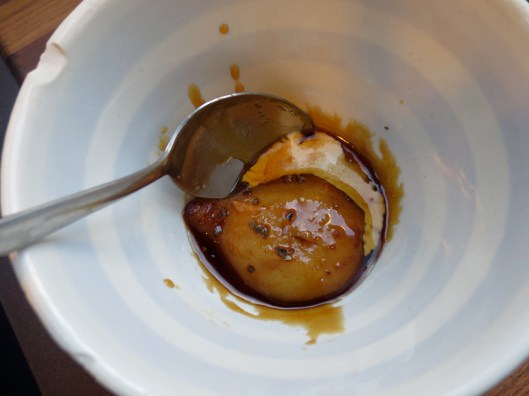
Preheat the oven to 200C/392F. Put the butter in a saucepan with both kinds of sugar, the sea salt and ground ginger. Using a sharp knife, slit open the cardamom pods and shake out the dark seeds from inside. Chop them with a knife (or grind them lightly in a pestle and mortar) and add to the butter and sugar. Warm over a gentle heat until the butter and sugar have melted together.

Pour into the bottom of a roasting tin or ovenproof frying pan that’s just large enough to fit the pear halves in a single layer. Arrange the pears on top of the sauce, cut side down. Place in the oven for 20 minutes, then carefully turn the pears over, basting with some of the hot sauce, and return to the oven for 20 minutes more. Remove from the oven and leave to cool for 5 minutes. Serve with some of the sugary juices spooned over the top and a glug of double cream. 

Cry loud the pears of anguish

Parisian street sellers, 13th century

The branch line

Tags

, , , , , , ,

001

Monday was a day apart. Perhaps that day in 1987 was a similar sort of day, when I wasn’t actually here to see trees felled, and the sea clamber up into houses like a white-fanged monster. Here the doors whistled all night. But it was the sea, endlessly rolling, throwing out the birds, spitting and frothing and covering the beach with spume and creeping ever nearer. At times it was a wall of water, rising up, drawing back. A boy was swept off the beach, just up the road at Newhaven. He’s still missing. There’s something sad and ghoulish about it, with sparse details (his age, 14, not much more), the sea with cruel intentions.

I tried to get a train. Up to London and down to Somerset. Off to see my dad after two years – down to the West Country, the Bristol channel, the other side. No one had slept because of the sea and the wind battering at our windows. 80 mph winds, the papers had predicted, and chaos on the roads and rail, and everyone had smiled because there’s always a joke about weathermen here. It’s either hysterical (the wrong kind of snow!) or underplaying things, like a blushing maiden shy of the clouds. Who can forget Michael Fish and his 1987 blunder about the hurricane that reduced Sevenoaks to one oak – “Don’t worry, it isn’t”, he said, in response to a lady phoning the BBC, worried there might be one on the way.

The taxi didn’t show up, so we hailed a cab in the street. The wind made me feel very light in the loafers. At one point a huge gust ripped open my coat, dragged my scarf on to the street and was unbuttoning my shirt in the manner of a really proactive first date. I had to hang on to a lamp post.

001

The waiting room at the station was full. My mum worked the room as if at a party. She wasn’t coming with me but was there to ‘see me off’ which normally means posting ten pound notes through the window as the train moves off, followed by a jar of peanut butter. But there were no trains. Sheila worked in Brighton and had been up since 5am ‘because of the wind’. Francoise was going to Liverpool where she was expected by a group of friends. Another lady in a strange hat wasn’t travelling at all and seemed to be there purely to socialize. We joked about drinking so much tea to pass the time that we’d end up murdering people ‘because of the caffeine’. There were no trains, it was clear. There had been no train at 9.25, 9.58, 10.25, 10.58, 11.25 and 11.58. Sheila was going to give it til 12.25, and if that one didn’t turn up she was going back to bed.

We went to a cafe round the corner to wait. When I saw what was on the menu, something in me softened. Beetroot and potato rösti with Weald smoked haddock and a poached egg. You can’t rush a poached egg. I watched him gently spooning it through the water. Could I leave it another day? The predictions had been right for once. The storm, known as St. Jude, had been tracked way back when it was just a few wisps over the Atlantic. They knew it was coming. They warned us: unless it’s essential don’t travel on Monday. It had exacted the kind of damage that brings public transport to its knees, with branches strewn on tracks (we were on a ‘branch line’ fittingly), a bus rearing up like a distressed pony. Gas explosions, wild seas, a lost boy.

I ate the rösti on the platform, the lumbering behind of the 12.25 still visible as it made its way to Lewes. Too full, too few carriages, too early. I got there as the doors were closing. I didn’t bother to protest. No one looked particularly jubilant inside. And it was suddenly a beautiful day. I sat and ate the best breakfast ever from a cardboard box made for the purpose. Ruby patties, fresh and clean, with a hint of horseradish. I think they must have cooked the potato and possibly grated the beetroot raw. The poached egg was rangy as a jelly fish, the yolk meltingly tender. Clumps of haddock fell away. I ate it all with my fingers. It didn’t occur to me, for once, to photograph it. The photo of the sea above was of a quiet day, the moon a quiet night. It was good to give up. I’m here for a while.

Beetroot and potato rösti

Inspired by Sea Salt in Seaford, East Sussex.

Heavily adapted from Hugh Fearnley-Whittingstall, The Guardian Weekend, 5th October.

Rösti are Swiss, from Bern, and began life as a substantial dish for farmers, but this one below is not a ‘trad’ recipe. I’m not convinced about the egg. You could experiment. If you’re not a fan of beetroot, you could grate apple instead. And I suspect this recipe could be happily adapted for parsnips. Parsnips and apple are good bedfellows.

300g firm potatoes

2 medium beetroot

1 egg, lightly beaten (optional)

Sea salt and freshly ground pepper

Olive oil and butter for frying

Put the potatoes (unpeeled) into a saucepan and add cold water just to cover. Salt lightly, bring to a boil, then cook for seven minutes and then drain. They should still offer some resistance to a knife. Once the potatoes are cool enough to handle, coarsely grate them into a large bowl. Peel the beetroot and grate it, raw, into the same bowl. Add the egg (or as much of it as you see fit) plenty of seasoning, and mix. Cook the rösti in batches. Heat a nonstick frying pan over a medium heat and add oil and a knob of butter to come up about 2mm up the sides. When the oil is hot, take a heaped dessertspoonful of the potato mixture and drop it into the pan and use a spatula to form it into a rough patty shape. Add several more spoonfuls without overcrowding the pan. Cook for eight to ten minutes, turning carefully once or twice, until golden brown and crisp all over. Serve nicely warm with horseradish, smoked haddock and a poached egg.

Damp & Soulful

Tags

, , , , , , , , , ,

099

This is an autumn cake – damp and soulful and lovely with a few late mulberries or some cooked and treacly damsons, as small as olives now. This might also be the time to get out some prunes and soak them in Armagnac (you could lob some into the cake itself). Nuts instead of flour here, which makes it gluten-free. I made the mistake the first time round of putting two tablespoons of spelt in, which was unnecessary and also catastrophic. The 2 tbs were my undoing. I made it for a party and no one would touch it. It was as if I’d announced that there was cat food in it. Instead of flour I now add cocoa powder, and everyone can breathe a sigh of relief. Except of course there’s sugar and butter and nuts and chocolate.
098

“Do you do anything gluten-free?” the lady asked. She was the carer for a much older lady who she’d just seated with difficulty at a nearby table. Rain drummed on the windows. I was sitting right by the till. It was a lovely cafe, full of rare teas and little glass milk bottles and ironic tea cosies. My head was next to the tips jar. My head was ‘tips jar adjacent’ as they say, and I could have lain it down directly on the counter and had a nap were it not for the pneumatic espresso machine and screaming milk being banged out on to waiting coffees nearby. When did milk become so loud?

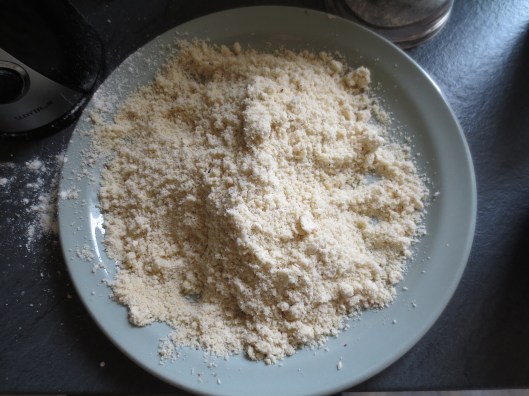
The waitress had to shout above the roar of the foam, “Plum and polenta!” She pointed to some sandy mounds under a glass dome. The lady looked at them blankly and then back at the waitress. “You don’t do anything like a baked potato?” There was a moment between them where they both seemed at a loss. “Coq au Vin?” the waitress said eventually. “Is that gluten-free?” “Yes.”
013

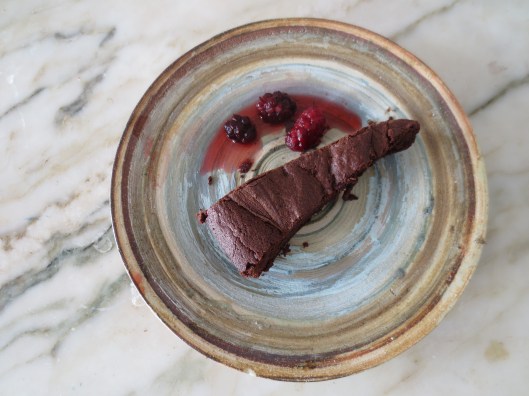
It struck me that the term ‘gluten-free’ had got in the way of this exchange. As if this was what you had to say these days, in these sorts of places. I don’t know why this made me feel sad. I felt sorry for the baked potato. And I’m not sure I want to live in a gluten-free world. I love flourless cakes – cakes made with nuts, for example – because their flourlessness is often germane to the cake’s identity: they were born flourless. But a baked potato isn’t any more gluten-free than my trousers. It was a baked potato first. This is a cake first (or torte…). Enjoy it. I hope there will always be a place for it in our post gluten world.

Chocolate and hazelnut torte

Adapted from and inspired by Emma Gardner’s beautiful blog, Poires au Chocolat

This cake is rather drum-like in appearance, and has less of the fallen soufflé effect common in the flourless. However, its surface does eventually crack reassuringly. I have no idea how the cold-eggs-straight-from-the-fridge idea works, but the proof is in the eating. Keep the cake wrapped in greaseproof paper for up to three days, if you can, to let the flavours develop and deepen. It gets better.

75g whole hazelnuts

2 tbs cocoa powder

170g good dark chocolate (60 – 70% cocoa solids) broken into chunks

140g unsalted butter, slightly softened

150g light brown sugar

Big pinch of fine sea salt

4 large cold eggs (from the fridge)

1 teaspoon pure vanilla extract

Preheat the oven to 180C/350F. Lightly butter an 8″ springform or loose-based tin and line with baking parchment.

Preheat the oven to 180C/350F. Lightly butter an 8″ springform or loose-based tin. Place the hazelnuts on a small tray in the oven and toast for a few minutes until they start to smell and darken slightly. If they have skins, rub as much as you can off with a tea towel. Put into a food processor with the flour and blast until they are finely ground. – See more at: http://www.poiresauchocolat.net/2012/11/chocolate-hazelnut-torte-with-smoked.html#sthash.3zwFHVRy.dpuf Place the hazelnuts on a baking sheet and bake for about 15 minutes or until nuts are brown and fragrant and the skins are starting to peel away from the nuts. Remove from oven and place the nuts in a clean dish towel. Roll up the towel and let the nuts ‘steam’ for about five minutes and then rub the nuts to remove the skins. Let cool.

Put the hazelnuts on a baking sheet and bake for about 10-15 minutes or until the nuts are brown and fragrant and the skins are starting to peel away. Keep an eye on them – they burn easily. Remove from the oven and put the nuts in a clean tea towel. Roll up the towel and let the nuts ‘steam’ for about five minutes and then rub the nuts to remove the skins. Think of someone you hate. Let them cool.

To make the ground hazelnuts: once the hazelnuts have completely cooled, throw them in a food processor, along with the cocoa, and process until they are finely ground. Alternatively, put them in a coffee grinder and do them in batches.

Put a heatproof bowl over a pan of barely simmering water. Add the chocolate pieces and let them melt without stirring. When they look as though they’re almost there, take the bowl off the heat, stir, and add the hopefully rather soft butter, the sugar and salt. Whisk until it’s all of uniform smoothness. It will have lightened a little.

Add the first egg, beat until incorporated, then add the next, and keep going until all four eggs are in and then add the vanilla extract. Whip the mixture on high for 1-2 minutes until it’s stiff and becoming paler. Add the ground hazelnuts and cocoa powder and fold in. Scoop into the pan and level out. Bake for 28-35 minutes, or until a toothpick inserted into the centre of the cake brings out a few sticky crumbs.

Cool completely in the pan on a wire rack. It will rise and then fall gradually, leaving a higher rim of cake around the sides and there will also be some cracking. Wrap in foil or greaseproof paper for up to three days before eating. The flavours become more wickedly intense with time.

70g whole hazelnuts
30g plain flour
170g dark chocolate (I used 85%)
140g unsalted butter, slightly softened
150g light brown sugar
big pinch of fine sea salt
4 large cold eggs (from the fridge)
1 tsp vanilla extract
pinch of smoked sea salt flakesPreheat the oven to 180C/350F. Lightly butter an 8″ springform or loose-based tin. Place the hazelnuts on a small tray in the oven and toast for a few minutes until they start to smell and darken slightly. If they have skins, rub as much as you can off with a tea towel. Put into a food processor with the flour and blast until they are finely ground.Place a mixer bowl (or another bowl if using a hand mixer) over a pan of barely simmering water. Chop the chocolate up and tip into the bowl. Stir occasionally as it melts. Meanwhile weigh out the brown sugar and salt and cut the butter into cubes – it should be starting to soften, not squishy. When the chocolate has nearly melted, take it off the heat and stir until it’s smooth. Place on the mixer (with the whisk attached) and add the sugar, salt and butter. Whisk on medium until the ingredients have fully combined and the mixture has lightened a little. Scrape the sides down then add the first egg. Whip until combined, then add the next egg. Repeat until they’re all combined then add the vanilla and whip for 1-2 minutes on high until stiff and pale.Add the ground hazelnuts and fold in. Scoop into the pan and level out. Sprinkle the smoked sea salt over the top. Bake for 28-35 minutes – a tester should still bring up a few sticky crumbs. Place on a wire rack and leave to cool fully in the tin. Wrap in kitchen foil and leave for at least one day and up to three before serving. Lovely with a big spoonful of whipped cream or crème fraîche.
– See more at: http://www.poiresauchocolat.net/2012/11/chocolate-hazelnut-torte-with-smoked.html#sthash.nKxGe4qV.dpuf
70g whole hazelnuts
30g plain flour
170g dark chocolate (I used 85%)
140g unsalted butter, slightly softened
150g light brown sugar
big pinch of fine sea salt
4 large cold eggs (from the fridge)
1 tsp vanilla extract – See more at: http://www.poiresauchocolat.net/2012/11/chocolate-hazelnut-torte-with-smoked.html#sthash.nKxGe4qV.dpuf
70g whole hazelnuts
30g plain flour
170g dark chocolate (I used 85%)
140g unsalted butter, slightly softened
150g light brown sugar
big pinch of fine sea salt
4 large cold eggs (from the fridge)
1 tsp vanilla extract – See more at: http://www.poiresauchocolat.net/2012/11/chocolate-hazelnut-torte-with-smoked.html#sthash.nKxGe4qV.dpuf
Chocolate Hazelnut Torte with Smoked Salt
(adapted from Alice Medrich’s Sinfully Easy Delicious Desserts)70g whole hazelnuts
30g plain flour
170g dark chocolate (I used 85%)
140g unsalted butter, slightly softened
150g light brown sugar
big pinch of fine sea salt
4 large cold eggs (from the fridge)
1 tsp vanilla extract
pinch of smoked sea salt flakesPreheat the oven to 180C/350F. Lightly butter an 8″ springform or loose-based tin. Place the hazelnuts on a small tray in the oven and toast for a few minutes until they start to smell and darken slightly. If they have skins, rub as much as you can off with a tea towel. Put into a food processor with the flour and blast until they are finely ground.Place a mixer bowl (or another bowl if using a hand mixer) over a pan of barely simmering water. Chop the chocolate up and tip into the bowl. Stir occasionally as it melts. Meanwhile weigh out the brown sugar and salt and cut the butter into cubes – it should be starting to soften, not squishy. When the chocolate has nearly melted, take it off the heat and stir until it’s smooth. Place on the mixer (with the whisk attached) and add the sugar, salt and butter. Whisk on medium until the ingredients have fully combined and the mixture has lightened a little. Scrape the sides down then add the first egg. Whip until combined, then add the next egg. Repeat until they’re all combined then add the vanilla and whip for 1-2 minutes on high until stiff and pale.Add the ground hazelnuts and fold in. Scoop into the pan and level out. Sprinkle the smoked sea salt over the top. Bake for 28-35 minutes – a tester should still bring up a few sticky crumbs. Place on a wire rack and leave to cool fully in the tin. Wrap in kitchen foil and leave for at least one day and up to three before serving. Lovely with a big spoonful of whipped cream or crème fraîche.(Serves 10-12) – See more at: http://www.poiresauchocolat.net/2012/11/chocolate-hazelnut-torte-with-smoked.html#sthash.nKxGe4qV.dpuf
Chocolate Hazelnut Torte with Smoked Salt
(adapted from Alice Medrich’s Sinfully Easy Delicious Desserts)70g whole hazelnuts
30g plain flour
170g dark chocolate (I used 85%)
140g unsalted butter, slightly softened
150g light brown sugar
big pinch of fine sea salt
4 large cold eggs (from the fridge)
1 tsp vanilla extract
pinch of smoked sea salt flakesPreheat the oven to 180C/350F. Lightly butter an 8″ springform or loose-based tin. Place the hazelnuts on a small tray in the oven and toast for a few minutes until they start to smell and darken slightly. If they have skins, rub as much as you can off with a tea towel. Put into a food processor with the flour and blast until they are finely ground.Place a mixer bowl (or another bowl if using a hand mixer) over a pan of barely simmering water. Chop the chocolate up and tip into the bowl. Stir occasionally as it melts. Meanwhile weigh out the brown sugar and salt and cut the butter into cubes – it should be starting to soften, not squishy. When the chocolate has nearly melted, take it off the heat and stir until it’s smooth. Place on the mixer (with the whisk attached) and add the sugar, salt and butter. Whisk on medium until the ingredients have fully combined and the mixture has lightened a little. Scrape the sides down then add the first egg. Whip until combined, then add the next egg. Repeat until they’re all combined then add the vanilla and whip for 1-2 minutes on high until stiff and pale.Add the ground hazelnuts and fold in. Scoop into the pan and level out. Sprinkle the smoked sea salt over the top. Bake for 28-35 minutes – a tester should still bring up a few sticky crumbs. Place on a wire rack and leave to cool fully in the tin. Wrap in kitchen foil and leave for at least one day and up to three before serving. Lovely with a big spoonful of whipped cream or crème fraîche.(Serves 10-12) – See more at: http://www.poiresauchocolat.net/2012/11/chocolate-hazelnut-torte-with-smoked.html#sthash.nKxGe4qV.dpuf

Some other flourless cakes in my repertoire

Lemon and almond cake

Bitter chocolate olive oil cake

Chocolate marmalade slump cake

Chocolate Hazelnut Torte with Smoked Salt
(adapted from Alice Medrich’s Sinfully Easy Delicious Desserts)70g whole hazelnuts
30g plain flour
170g dark chocolate (I used 85%)
140g unsalted butter, slightly softened
150g light brown sugar
big pinch of fine sea salt
4 large cold eggs (from the fridge)
1 tsp vanilla extract
pinch of smoked sea salt flakesPreheat the oven to 180C/350F. Lightly butter an 8″ springform or loose-based tin. Place the hazelnuts on a small tray in the oven and toast for a few minutes until they start to smell and darken slightly. If they have skins, rub as much as you can off with a tea towel. Put into a food processor with the flour and blast until they are finely ground.Place a mixer bowl (or another bowl if using a hand mixer) over a pan of barely simmering water. Chop the chocolate up and tip into the bowl. Stir occasionally as it melts. Meanwhile weigh out the brown sugar and salt and cut the butter into cubes – it should be starting to soften, not squishy. When the chocolate has nearly melted, take it off the heat and stir until it’s smooth. Place on the mixer (with the whisk attached) and add the sugar, salt and butter. Whisk on medium until the ingredients have fully combined and the mixture has lightened a little. Scrape the sides down then add the first egg. Whip until combined, then add the next egg. Repeat until they’re all combined then add the vanilla and whip for 1-2 minutes on high until stiff and pale.Add the ground hazelnuts and fold in. Scoop into the pan and level out. Sprinkle the smoked sea salt over the top. Bake for 28-35 minutes – a tester should still bring up a few sticky crumbs. Place on a wire rack and leave to cool fully in the tin. Wrap in kitchen foil and leave for at least one day and up to three before serving. Lovely with a big spoonful of whipped cream or crème fraîche.(Serves 10-12) – See more at: http://www.poiresauchocolat.net/2012/11/chocolate-hazelnut-torte-with-smoked.html#sthash.CDp8X22X.dpuf
Chocolate Hazelnut Torte with Smoked Salt
(adapted from Alice Medrich’s Sinfully Easy Delicious Desserts)70g whole hazelnuts
30g plain flour
170g dark chocolate (I used 85%)
140g unsalted butter, slightly softened
150g light brown sugar
big pinch of fine sea salt
4 large cold eggs (from the fridge)
1 tsp vanilla extract
pinch of smoked sea salt flakesPreheat the oven to 180C/350F. Lightly butter an 8″ springform or loose-based tin. Place the hazelnuts on a small tray in the oven and toast for a few minutes until they start to smell and darken slightly. If they have skins, rub as much as you can off with a tea towel. Put into a food processor with the flour and blast until they are finely ground.Place a mixer bowl (or another bowl if using a hand mixer) over a pan of barely simmering water. Chop the chocolate up and tip into the bowl. Stir occasionally as it melts. Meanwhile weigh out the brown sugar and salt and cut the butter into cubes – it should be starting to soften, not squishy. When the chocolate has nearly melted, take it off the heat and stir until it’s smooth. Place on the mixer (with the whisk attached) and add the sugar, salt and butter. Whisk on medium until the ingredients have fully combined and the mixture has lightened a little. Scrape the sides down then add the first egg. Whip until combined, then add the next egg. Repeat until they’re all combined then add the vanilla and whip for 1-2 minutes on high until stiff and pale.Add the ground hazelnuts and fold in. Scoop into the pan and level out. Sprinkle the smoked sea salt over the top. Bake for 28-35 minutes – a tester should still bring up a few sticky crumbs. Place on a wire rack and leave to cool fully in the tin. Wrap in kitchen foil and leave for at least one day and up to three before serving. Lovely with a big spoonful of whipped cream or crème fraîche.(Serves 10-12)
– See more at: http://www.poiresauchocolat.net/2012/11/chocolate-hazelnut-torte-with-smoked.html#sthash.CDp8X22X.dpuf
Chocolate Hazelnut Torte with Smoked Salt
(adapted from Alice Medrich’s Sinfully Easy Delicious Desserts)70g whole hazelnuts
30g plain flour
170g dark chocolate (I used 85%)
140g unsalted butter, slightly softened
150g light brown sugar
big pinch of fine sea salt
4 large cold eggs (from the fridge)
1 tsp vanilla extract
pinch of smoked sea salt flakesPreheat the oven to 180C/350F. Lightly butter an 8″ springform or loose-based tin. Place the hazelnuts on a small tray in the oven and toast for a few minutes until they start to smell and darken slightly. If they have skins, rub as much as you can off with a tea towel. Put into a food processor with the flour and blast until they are finely ground.Place a mixer bowl (or another bowl if using a hand mixer) over a pan of barely simmering water. Chop the chocolate up and tip into the bowl. Stir occasionally as it melts. Meanwhile weigh out the brown sugar and salt and cut the butter into cubes – it should be starting to soften, not squishy. When the chocolate has nearly melted, take it off the heat and stir until it’s smooth. Place on the mixer (with the whisk attached) and add the sugar, salt and butter. Whisk on medium until the ingredients have fully combined and the mixture has lightened a little. Scrape the sides down then add the first egg. Whip until combined, then add the next egg. Repeat until they’re all combined then add the vanilla and whip for 1-2 minutes on high until stiff and pale.Add the ground hazelnuts and fold in. Scoop into the pan and level out. Sprinkle the smoked sea salt over the top. Bake for 28-35 minutes – a tester should still bring up a few sticky crumbs. Place on a wire rack and leave to cool fully in the tin. Wrap in kitchen foil and leave for at least one day and up to three before serving. Lovely with a big spoonful of whipped cream or crème fraîche.(Serves 10-12)
– See more at: http://www.poiresauchocolat.net/2012/11/chocolate-hazelnut-torte-with-smoked.html#sthash.CDp8X22X.dpuf
Chocolate Hazelnut Torte with Smoked Salt
(adapted from Alice Medrich’s Sinfully Easy Delicious Desserts)70g whole hazelnuts
30g plain flour
170g dark chocolate (I used 85%)
140g unsalted butter, slightly softened
150g light brown sugar
big pinch of fine sea salt
4 large cold eggs (from the fridge)
1 tsp vanilla extract
pinch of smoked sea salt flakesPreheat the oven to 180C/350F. Lightly butter an 8″ springform or loose-based tin. Place the hazelnuts on a small tray in the oven and toast for a few minutes until they start to smell and darken slightly. If they have skins, rub as much as you can off with a tea towel. Put into a food processor with the flour and blast until they are finely ground.Place a mixer bowl (or another bowl if using a hand mixer) over a pan of barely simmering water. Chop the chocolate up and tip into the bowl. Stir occasionally as it melts. Meanwhile weigh out the brown sugar and salt and cut the butter into cubes – it should be starting to soften, not squishy. When the chocolate has nearly melted, take it off the heat and stir until it’s smooth. Place on the mixer (with the whisk attached) and add the sugar, salt and butter. Whisk on medium until the ingredients have fully combined and the mixture has lightened a little. Scrape the sides down then add the first egg. Whip until combined, then add the next egg. Repeat until they’re all combined then add the vanilla and whip for 1-2 minutes on high until stiff and pale.Add the ground hazelnuts and fold in. Scoop into the pan and level out. Sprinkle the smoked sea salt over the top. Bake for 28-35 minutes – a tester should still bring up a few sticky crumbs. Place on a wire rack and leave to cool fully in the tin. Wrap in kitchen foil and leave for at least one day and up to three before serving. Lovely with a big spoonful of whipped cream or crème fraîche.(Serves 10-12)
– See more at: http://www.poiresauchocolat.net/2012/11/chocolate-hazelnut-torte-with-smoked.html#sthash.CDp8X22X.dpuf
Chocolate Hazelnut Torte with Smoked Salt
(adapted from Alice Medrich’s Sinfully Easy Delicious Desserts)70g whole hazelnuts
30g plain flour
170g dark chocolate (I used 85%)
140g unsalted butter, slightly softened
150g light brown sugar
big pinch of fine sea salt
4 large cold eggs (from the fridge)
1 tsp vanilla extract
pinch of smoked sea salt flakesPreheat the oven to 180C/350F. Lightly butter an 8″ springform or loose-based tin. Place the hazelnuts on a small tray in the oven and toast for a few minutes until they start to smell and darken slightly. If they have skins, rub as much as you can off with a tea towel. Put into a food processor with the flour and blast until they are finely ground.Place a mixer bowl (or another bowl if using a hand mixer) over a pan of barely simmering water. Chop the chocolate up and tip into the bowl. Stir occasionally as it melts. Meanwhile weigh out the brown sugar and salt and cut the butter into cubes – it should be starting to soften, not squishy. When the chocolate has nearly melted, take it off the heat and stir until it’s smooth. Place on the mixer (with the whisk attached) and add the sugar, salt and butter. Whisk on medium until the ingredients have fully combined and the mixture has lightened a little. Scrape the sides down then add the first egg. Whip until combined, then add the next egg. Repeat until they’re all combined then add the vanilla and whip for 1-2 minutes on high until stiff and pale.Add the ground hazelnuts and fold in. Scoop into the pan and level out. Sprinkle the smoked sea salt over the top. Bake for 28-35 minutes – a tester should still bring up a few sticky crumbs. Place on a wire rack and leave to cool fully in the tin. Wrap in kitchen foil and leave for at least one day and up to three before serving. Lovely with a big spoonful of whipped cream or crème fraîche.(Serves 10-12)
– See more at: http://www.poiresauchocolat.net/2012/11/chocolate-hazelnut-torte-with-smoked.html#sthash.CDp8X22X.dpuf
Chocolate Hazelnut Torte with Smoked Salt
(adapted from Alice Medrich’s Sinfully Easy Delicious Desserts)70g whole hazelnuts
30g plain flour
170g dark chocolate (I used 85%)
140g unsalted butter, slightly softened
150g light brown sugar
big pinch of fine sea salt
4 large cold eggs (from the fridge)
1 tsp vanilla extract
pinch of smoked sea salt flakesPreheat the oven to 180C/350F. Lightly butter an 8″ springform or loose-based tin. Place the hazelnuts on a small tray in the oven and toast for a few minutes until they start to smell and darken slightly. If they have skins, rub as much as you can off with a tea towel. Put into a food processor with the flour and blast until they are finely ground.Place a mixer bowl (or another bowl if using a hand mixer) over a pan of barely simmering water. Chop the chocolate up and tip into the bowl. Stir occasionally as it melts. Meanwhile weigh out the brown sugar and salt and cut the butter into cubes – it should be starting to soften, not squishy. When the chocolate has nearly melted, take it off the heat and stir until it’s smooth. Place on the mixer (with the whisk attached) and add the sugar, salt and butter. Whisk on medium until the ingredients have fully combined and the mixture has lightened a little. Scrape the sides down then add the first egg. Whip until combined, then add the next egg. Repeat until they’re all combined then add the vanilla and whip for 1-2 minutes on high until stiff and pale.Add the ground hazelnuts and fold in. Scoop into the pan and level out. Sprinkle the smoked sea salt over the top. Bake for 28-35 minutes – a tester should still bring up a few sticky crumbs. Place on a wire rack and leave to cool fully in the tin. Wrap in kitchen foil and leave for at least one day and up to three before serving. Lovely with a big spoonful of whipped cream or crème fraîche.(Serves 10-12)
– See more at: http://www.poiresauchocolat.net/2012/11/chocolate-hazelnut-torte-with-smoked.html#sthash.CDp8X22X.dpuf

Cousin of the herring

Tags

, , , , , , , ,

030

I’m amazed by how much people know. Forget books and recipes. People just know things here in this corner of East Sussex. Like a silkworm’s food of choice is the white mulberry tree, and birds like eating elderberries; they take them back to their nests and drop the seeds, which is why you get elderberry bushes growing out of the guttering. I know now about sea frets and the right time for mackerel (July, August) and that sprats, the little pewter fish we eat most nights, are also known as the cousin of the herring. That there is sea beet and sea buckthorn and sea kale there for the picking, all along this coastline. And spinach frothing over the headland.

The people I was speaking to make no claims for themselves as cooks. They might have a garden, and they go for long walks. They live by the sea. It’s a casual knowledge, worn lightly. And there I am, drowning in books, wading through endless crumble toppings, and swotting up on the history of the damson.

IMG_0165

The sea is mesmerizing here. The East Sussex coast is one long, flat sweep of iron-grey sea with the odd boat, often trailed by gulls. There is a yellow and white ferry that crosses the channel daily to Dieppe and back again, moving soundlessly through our view, from window to window. At night there is the solitary light from the fishermen, either on the beach with their rods or in the middle of the now-black water. In the morning we go swimming before breakfast, before full consciousness, and the water is cold and flat. I’ve never seen such flat water. After LA, it’s bizarre that I can just walk in. I don’t actually bother to put a swimming costume on, but wade into it in my night gear. And the sea at that time is grey-green, with fish that swim away from your feet like tiny strokes of ink.

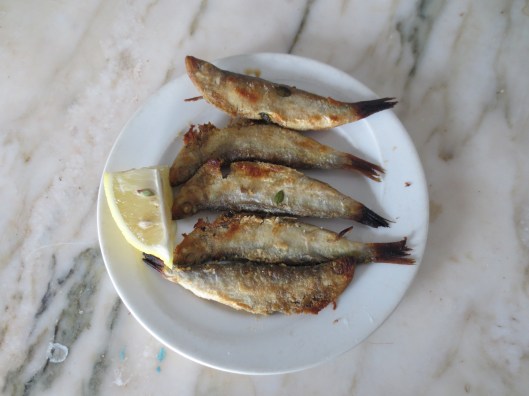
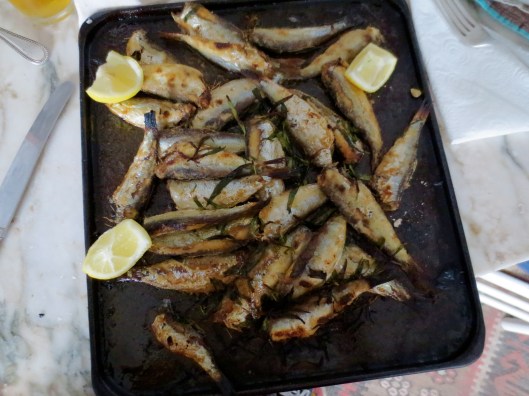
This is the time for sprats, just small enough to grill a shoal of them and they take the simplest treatment: rock salt and lemon. In mackerel season, the sprats and the whitebait throw themselves out of the water to escape being eaten, and the gulls, while the fish are briefly airborne, take little nips out of their flesh. Either way they’re doomed. It seems an exercise in pure pathos; escaping one tyranny, to be ensnared by another. Often you see the little fish flying above the sea’s surface, skittering over it like birds.

I played around with beheading my sprats as you can see from the different presentations here; however, I do think it’s a shame to waste any part of such a small fish. Delia Smith gives a handy tip down below for gutting if that’s the way you want to go, but again I’m not sure this is necessary. There is something delectable about guzzling a sprat whole and crisp and silvery, down in one.

“First make a small incision behind a gill of each fish and gently squeeze the belly up towards the head to eject the gut, but try to keep the head intact. Rinse the fish well and dry off any excess moisture with kitchen paper before tossing in the seasoned flour.”

IMG_1157

Grilled sprats

Heavily adapted from Delia Smith’s Complete Cookery Course

Sprats are very cheap to buy, so they are an economical fish, as well as often being very fresh, and sublime grilled or deep-fried. I think they need to be as crisp as possible – you want them to rustle on the plate – so tossing them in flour is recommended. Whitebait (baby sprats) tend to come frozen, but are equally good, and like the same treatment.

Serves 2 people

1lb sprats (450g)

seasoned flour

Olive oil or groundnut oil

A few sprigs of thyme

salt

lemon

Scatter the thyme on a baking tray. Lay the fish (already floured and lightly salted – see above) on top, burying the thyme as much as possible so it doesn’t scorch. Fleck with some oil and grill for about five minutes, flipping them over halfway through to crisp them up on both sides. They will be brown and quite hard to the touch by the end. You want them to rustle. Serve with a quarter of lemon. Also nice with a mustard and vinegar dressing. Good also for breakfast. Add a bit of salt at the end.

Sussex apple cake

Tags

, , , , , , , , ,

065

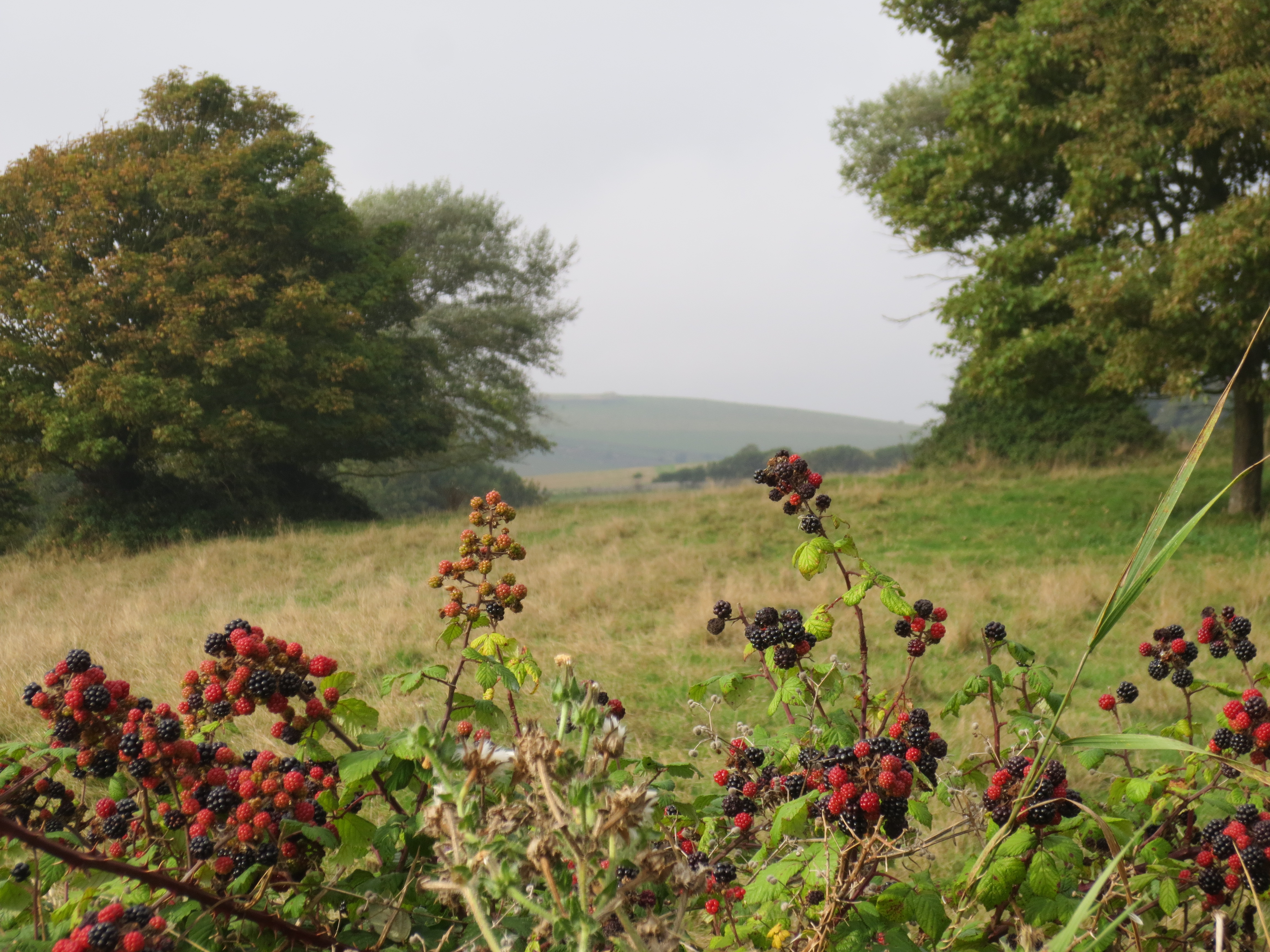
The sign read: “recent windfalls –  ‘cookers’  – please help yourselves”. There was another sign next to it that said ‘eaters’. Cookers and eaters – two types of apple, one sour, bulky and big-shouldered, good really for cooking, where it goes to mush, the other sweeter, smaller – one to have in the hand. Although the sweet apple wasn’t particularly sweet; sharp, dry as bark on its dappled outside, but a brisk, juicy interior. When juiced later, the froth was brown, leading to a startling pink beneath.

There was not much wind to speak of that day. The air seemed suspended, with swifts carousing through little channels above us, their wings like black darts. Actually their wings were like wings, the kind you draw as a child – two V shapes. We listed with our enormous load, my plastic pockets crammed. Blackberries now liquidized were dripping like blood down my arm. And all this before lunch, which happened at three. Rather like Christmas day, without the presents.

015

We went into a cafe which specializes in china teacups and ladies. It is very English; everyone feels undeserving. The lady next door to us was alone. She ordered tea and apple cake. It is the kind of place where you are so close to your neighbours that you need to make a decision early on about whether to include them in your life for that brief window of time. But this was unnecessary because there was a flurry of misunderstandings, panic ensued, as the apple cake was off – and then suddenly back on – the menu. Almost no apple cake – not really a story. No tragedy there. Except it gave the lovely young waitresses (gap year) a chance to flounce around a bit, and have a laugh with each other. For the lady to show off her cool and calm persona. After the apple cake arrived, and her fork had made its incision, she produced a mobile phone and began a quiet, very civilized conversation with someone unknown (probably male) on the other end. She was very organized, I could see.

This is what I don’t have in LA: the chance to watch people at such close quarters. To notice things, like a certain kind of hair-clip, a cardigan, skin tone, imagining the man on the other end of the line. Watching a thought alight on a face. And aren’t English people interesting? We are so swathed in layers, submerged in stories that become more and more intricate with the telling. I am always surprised by English people, I think that’s it.

We waited at the bus stop, next to a couple eating ice cream. They shuffled up to let us in on the bench. I watched a man opposite with his dog, a scruffy thing, his tail wagging, his tongue out, looking around and occasionally up at his master. Two horses clip-clopped by. We got on the bus, a small Noddy bus, green and miniature, our coats bulging obscenely with our apple stash. We were deposited back to Seaford. I made the cake.

107

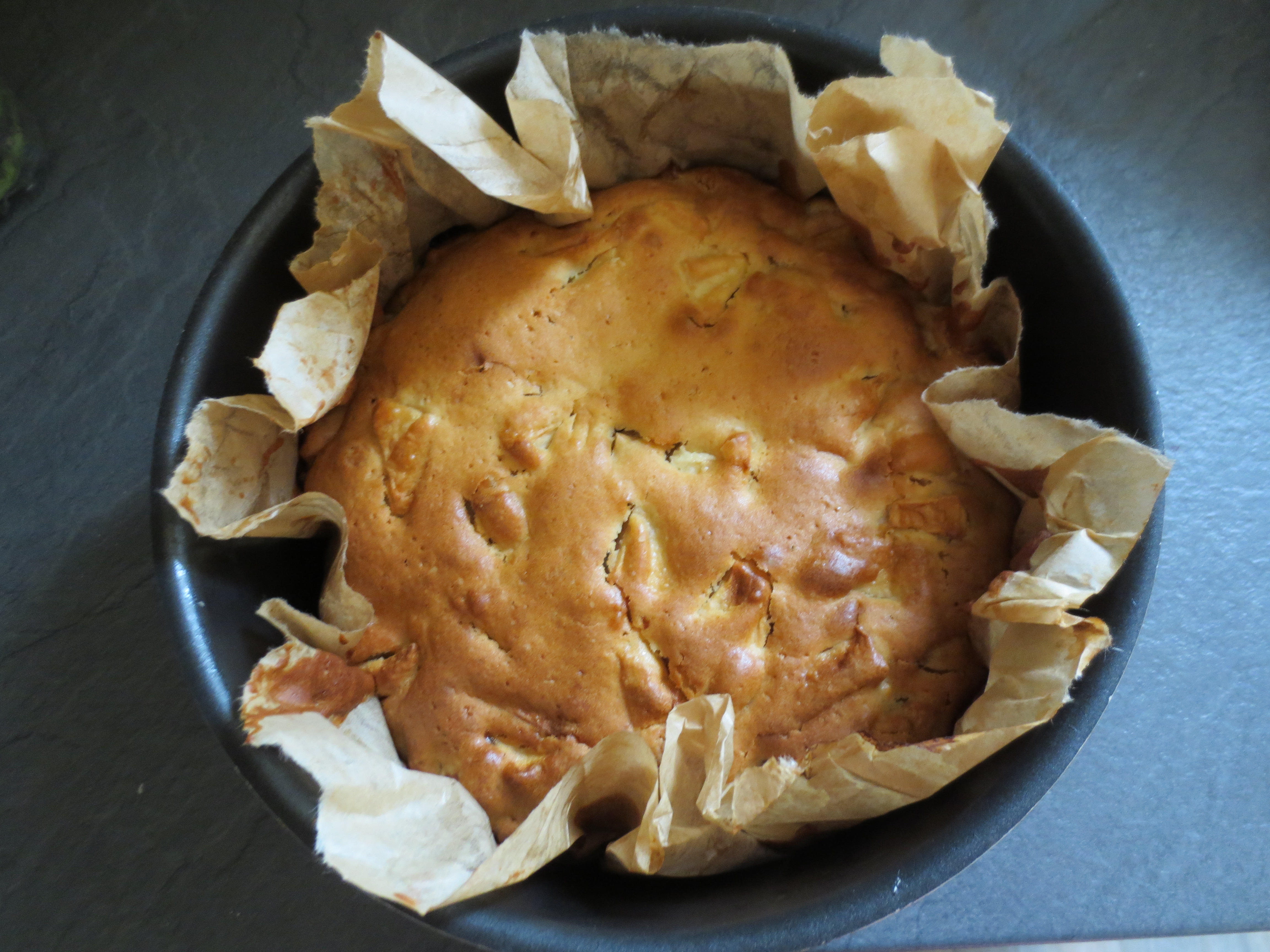
This is Mark Hix’s lovely regional apple cake made with cider and honey. In his case, the region is Somerset – mine is a Sussex story. You can use whatever local apples come your way – choose cookers, such as the Bramley, or sharp eaters at a pinch. A sweet dessert apple would be missing the point here.

Sussex apple cake

From Mark Hix, on Baking

I once ‘hilariously’ used cider vinegar instead of cider, by mistake. I thought it would destroy the cake but actually the flavours were enhanced by it, though it did make me think of fish and chips. If you’re unsure, stick to the original recipe. Also, don’t be put off by the sheer amount of apples required here. It really does make a difference. Dry apple cake isn’t fun.

Makes 1 x 24cm cake

170g unsalted butter, softened

170g soft brown sugar

3 medium eggs, room temperature, lightly beaten

1 heaped tbs of honey

240g self-raising flour, sifted

1 tsp mixed spice

600-700g cooking apples, peeled, cored and cut into smallish chunks

80ml cider

Prepare a loose-bottomed 24cm x 6-8cm deep cake tin by greasing it if it’s non-stick, or lining the base with buttered greaseproof paper if not. Pre-heat the oven to 160C/320F. Cream the butter and sugar together in a bowl until light and fluffy. Gradually beat in the eggs with the honey. Gently fold in the flour and mixed spice then stir in the cider and apples. Transfer to the cake tin and bake for 1 and a 1/4 hours, or until a skewer inserted into the centre comes our clean. Cool in the tin; serve warm on its own or with thick cream. Clotted cream would be stupendous here.

037

Other apple recipes to try:

Apple and rosemary cake

Lucas’s apple and sultana cake

Apple fritters

Hedgerow crumble

Rum & Raisin

Tags

, , , , , , , , ,

IMG_0352

The last of the bewildering hot weather. Nights where one cotton sheet feels like being shrouded in carpet. Talking alone brings on the vapours, sweat beading on our foreheads as we nod sagely at someone we’re not listening to. Everyone drives like Vin Diesel, ramping up the volume on their car stereos, burning rubber as they overtake me on blind corners, tyres squealing like guinea pigs. And all I can think is how rude they’re being. That’s my version of a riot. Because I can’t complain. Because I’m English, and that’s all we do, while saying that we can’t do it. “I can’t complain” is our watchword. And I have been drawn to this detail of Englishness recently, perhaps because it’s so absent in LA.

Our English guests never complain either. We dance around each other in pained politeness. It must be akin to observing some ancient ritual – like conversational Morris dancing  – with no one able to say exactly what the problem is, or even if there is a problem. “Do you have a parrot?” our English guest asked me today. “Er, no. Why?” “No, no, it’s fine. I just thought I heard a parrot at around five o’clock this morning.” I knew what it was because it had woken us too. “It was a coyote.” “Really?” “Yes, they live in the hills here and when they’ve killed a deer, they make a kind of ‘yipping’ sound. They do it with car alarms and fire engines as well.” “Oh right.” We all imagined a decapitated deer. “Great, well, see you around then! Thanks for breakfast.” “Don’t worry, it’s really safe here. They very rarely come down into the complex.” As I said this I remembered the coyote in the hallway and the mountain lion up by the tennis courts. They tranquillized it and carried it off somewhere. I wish I’d just said: “Yes, we have a parrot. We’ll kill it for you.”

I can’t imagine this conversation between Americans. I still don’t know what it was really about, but I felt in strange harmony with it. I’m leaving soon for England and it helped me get into the rhythm of things again. It was nice to talk to someone from Eastbourne, knowing that in a few days I will be walking the Downs, talking about the weather, bemoaning the end of summer, arms folded against the wind.

IMG_0357

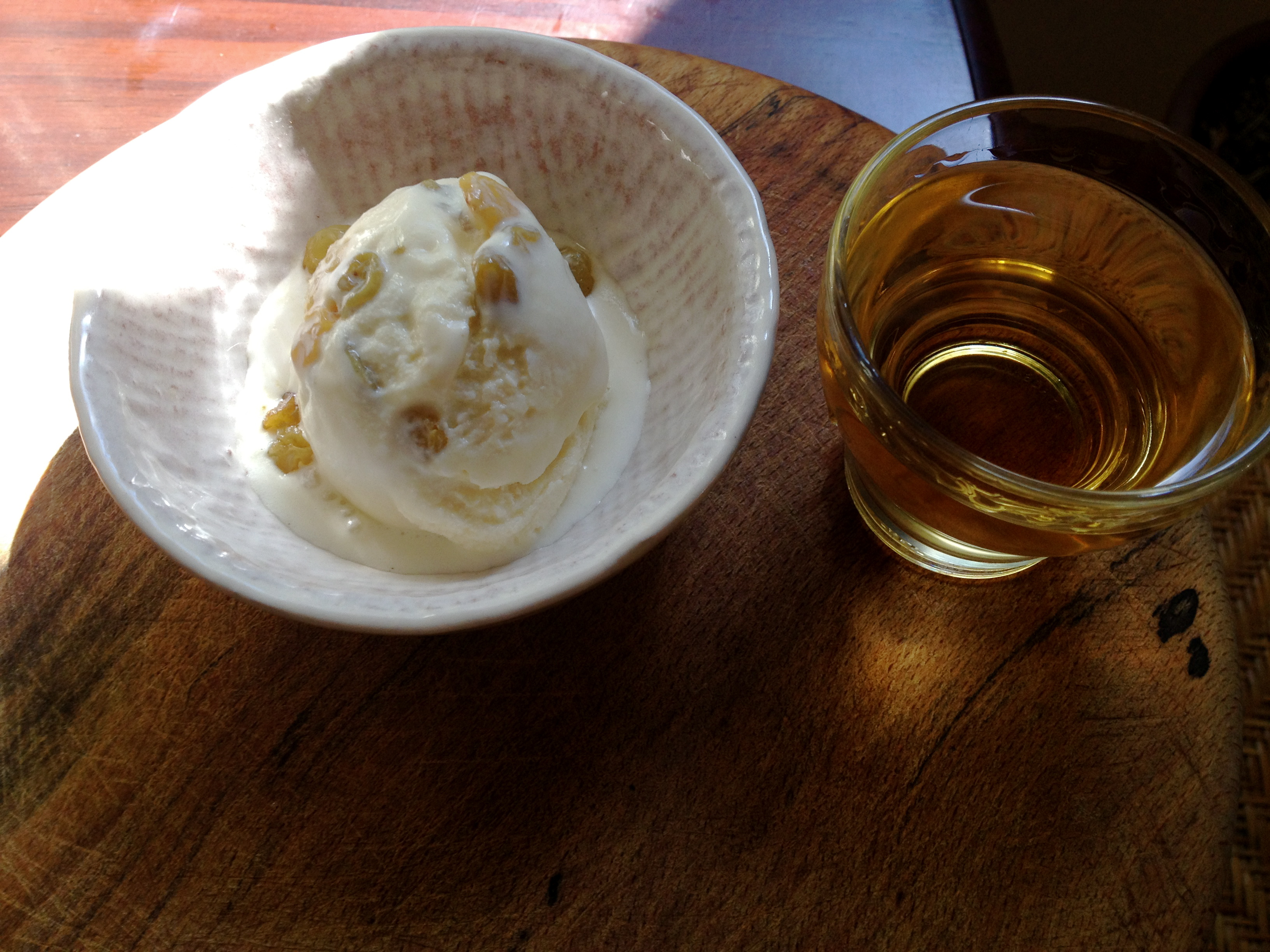
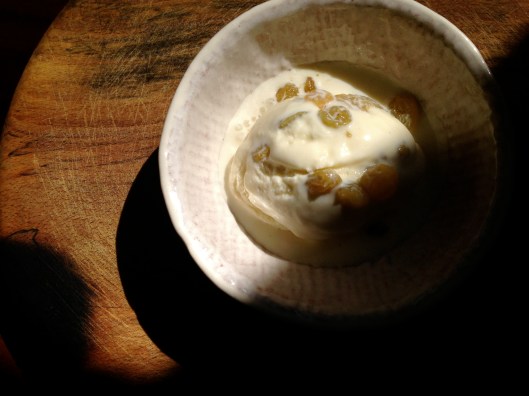
I would be happy if there were only five flavours of ice cream in the world: vanilla, chocolate, hazelnut, pistachio and rum & raisin. And raspberry ripple as a bonus flavour (for nostalgia purposes). But no cookie dough, rocky road or banoffee pie. And ‘sugar free’ vanilla – what’s that? Rum and raisin is a classic, and much underrated in my opinion. I know there are people who don’t like alcohol in sweets, but we will forge ahead regardless.

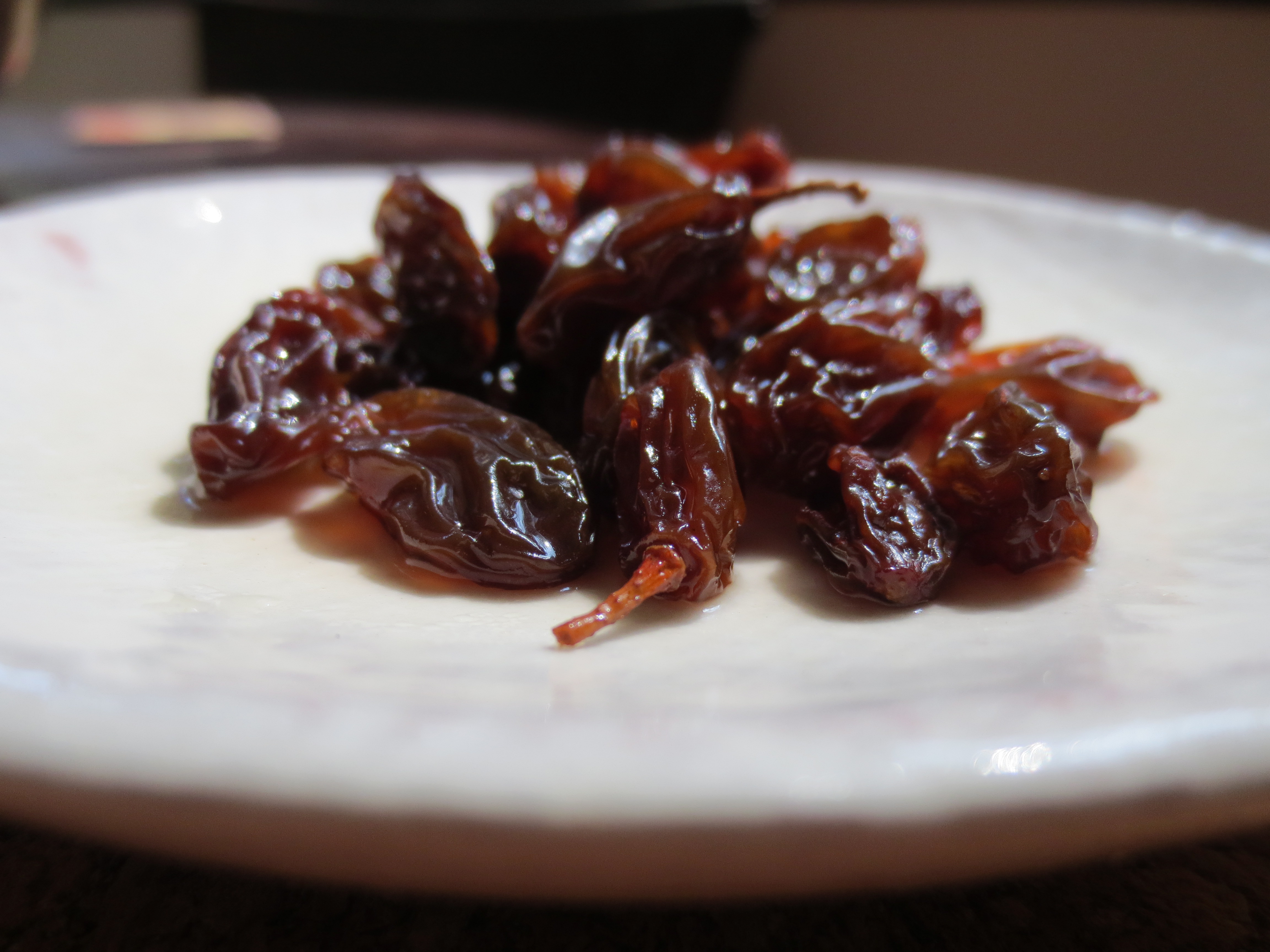
And this ice cream also lends itself to subtle doctoring: round and treacly Flame raisins, seeded Muscat raisins (sticky and crunchy and used traditionally in old bread recipes), meaty, soft, pale gold raisins (above) and Thompson seedless down below, still with their tails on, drowned in a saucer of rum – they are all so Californian, dried from the grape by our endless sun, and yet weirdly invisible, except for a few market stalls with their lumpen quarry. But I never gravitate there. Does one ever crave a raisin? But plumped up juicily in some searing alcohol and it’s quite a different matter. You could substitute the rum for sherry, if you like, and go for Pedro Ximénez if it’s available. This is a very ‘raisiny’ sherry, treacly and intense and good for a grown up ice cream such as this.

IMG_0866

Rum & Raisin Ice Cream

Adapted from Ice Cream! by Pippa Cuthbert & Lindsay Cameron Wilson

The soft brown sugar creates a darker, more complex flavour, but you can use caster sugar instead if you like. Sherry works well in place of rum.

100g (¾ cup) raisins

100ml (½ cup) dark rum or sherry

300ml (1¼ cups) whole milk

4 large egg yolks

100g (¾ cup) soft brown sugar

200ml (scant 1 cup) heavy/double cream

Put the raisins and 75ml (¼ cup) of the rum or sherry in a bowl and set aside to soak overnight or until the raisins have absorbed almost all the liquid.

Heat the milk and cream in a heavy-bottomed saucepan to near-boiling point, then remove from the heat. Beat the egg yolks and sugar together, using an electric whisk, until thick and pale. Loosen the egg with some of the milk/cream mixture, then pour the eggs and sugar back into the saucepan. Stir well to mix everything properly and then return to a low heat. Stir until the mixture is thick enough to coat the back of a wooden spoon. Remove from the heat, pour into a bowl and place over iced water to cool. You will need to stir it from time to time to avoid the custard developing a skin.

When the mixture is completely cold, churn in an ice cream maker, adding the remaining rum/sherry and all the raisins towards the end of churning. The raisins have a tendency to sink to the bottom before the ice cream can harden and suspend them, so you may want to give it a stir after half an hour or so in the freezer to distribute the raisins more evenly. Serve with a glass of either rum or sherry, or just pour it straight over the ice cream.

Other recipes with raisins:

Banana and raisin bread

Sticky toffee pudding

Topsy turvy

Tags

, , , , , , , ,

IMG_0218

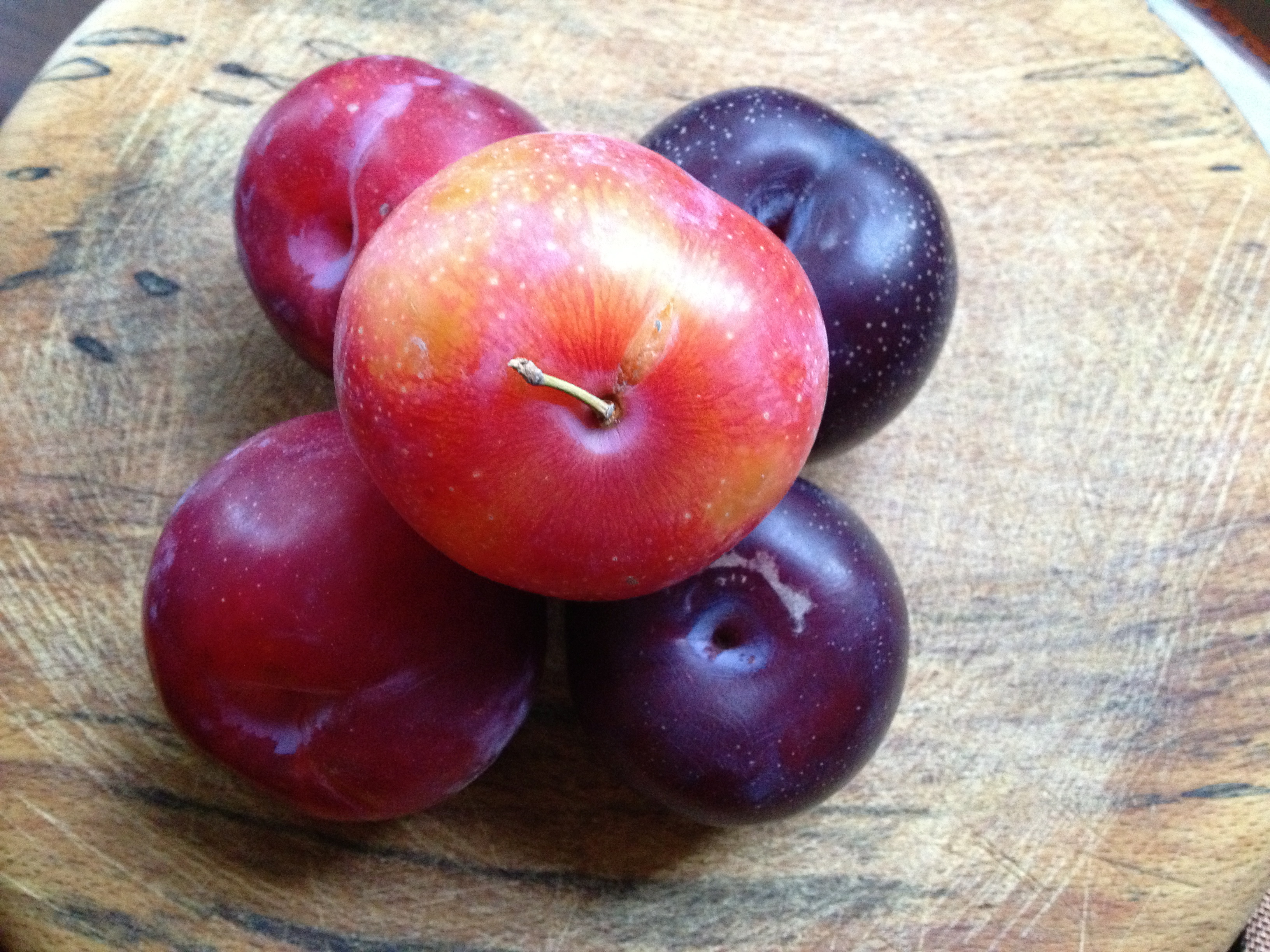
Plums are everywhere and it seems futile to resist. Although I managed it. Something about the skins that pulls one off balance. You should eat them bare, gnaw around the stone and savour the juice as it cascades down your arm. In the end, I cooked with apriums. Yes, I know it sounds more like an edible food-like substance (paraphrazing Michael Pollen) but it is the real thing. They have the rich wateriness of plums, the sour, clingy skin, but then there is apricot. They taste like the sibling of nectarines without the solidness of the flesh. Are we all clear then?

I was hellbent on making an upside down cake, so here I am. And it’s been an upside down few weeks. If I was part of the Mister Men series I would probably be upside down (they would put me in trousers, obviously) as I went about my business. I lost my camera. This was a camera I had found about two years ago. I put up posters in the area advertizing its whereabouts and when no one claimed it, I adopted it. It was a happy union. I took all the pictures for the blog with it. It accompanied me everywhere. And then suddenly it was gone – it was absolutely nowhere. I returned to gaps and crevices hoping to feel its bulky angles. It’s true what the comedian Lee Evans said: when you lose something you keep going back to the same place to look for it, the mind refusing to acknowledge you’ve just been there. Hands run over surfaces, feeling blindly behind books, fingers slide into nooks, and slide out again. I retraced my steps like an amateur sleuth.

IMG_0335

I went to the doctor’s and sidled up to the receptionist with my query – I had all the details ready: I may have left my camera in the bathroom on my last visit. But someone was having a panic attack. This news was relayed to the assembled company with the words “You f******g assholes, she’s passed out!” According to the receptionist, now on the phone to emergency services, this man’s girlfriend had been having a panic attack, had left and was now sitting in the car outside, unconscious. Doctors and nurses spilled through the doors with wheelchairs and stethoscopes; they ran as if out of a burning building. It was mayhem. Had any of them seen my camera? It seemed not a good time to ask.

The girl who refrigerates the stool samples ran past me. Nobody was left. A few days later I encountered a man who was dispensing free hugs outside the farmers’ market. That is not me with the cute butt and sawn-off trousers, by the way. It was me later. He grasped me like a lumberjack. He didn’t speak but I felt as if he knew everything. What a difference it would make, I thought, if they had people like that around, parked on street corners, standing by subway tunnels, in the waiting room at the doctor’s. Around for when everything turns upside down.

IMG_0259

Upside Down Cake with Stone Fruit

Adapted (everso slightly) from Pastry Studio

There is such a dizzying array of plums about in LA at the moment that it makes sense to use them here, or you could go for the hybridized pluots or apriums (as I did). However, this recipe was originally intended for apricots, and I suspect it would work equally well with other stone fruit too; anything that gives up its juice in a charitable manner. Nectarines, peaches and the like. The use of honey in the caramel makes quite a difference to the overall taste, and brings out the piquancy of the fruit. 

Serves 8

For the fruit caramel

3 tablespoons honey

1 tablespoon butter

½ teaspoon cinnamon

4 – 6 plums (depending on size)

2 – 3 tablespoons toasted flaked almonds

For the cake

140g (1 cup) flour ( this could be rice flour etc)

40g (½ cup) toasted flaked almonds

1½ teaspoons baking powder

¼ teaspoon salt

115g (8 tbs) butter at room temperature

150g (¾ cup) caster sugar

2 large eggs at room temperature

1 teaspoon vanilla extract

¼ teaspoon almond extract (optional)

120 ml (1/2 cup) milk at room temperature

2 tablespoons honey, to glaze

Preheat oven to 350F/190C.  Lightly grease a 10 inch (25cm) cake tin.

For the fruit caramel layer, put the honey, butter and cinnamon in a saucepan and heat until melted. Pour into the bottom of the cake pan, then lift the pan and swirl to distribute evenly.

Slice the plums in half, remove the stones, and then cut the fruit into slices (or quarters), and fan them out on top of the honey butter mixture. Make sure that whatever fruit you use covers the bottom in a substantial layer, since it will cook down while baking. Fill in the gaps with a sprinkle of toasted almonds.

For the cake batter, place the flour, almonds, baking powder and salt in the bowl of a food processor or blender. Whizz until the almonds are ground but with some texture still. Pour into a bowl and set aside.

Cream the butter and sugar until light and fluffy, about 4 minutes, scraping down the sides of the bowl as needed. Add vanilla and almond extracts if using and blend. Beat in the eggs one at a time, scraping down the bowl and mixing thoroughly after each addition.

Add a third of the flour mixture alternately with half the milk, beginning and ending with the flour. Don’t overmix. Spread the batter evenly over the fruit.

Bake until a toothpick tests clean, about 42 – 45 minutes. The sides of the cake will have started to shrink away from the sides of the pan and it will feel soft and springy to the touch. Place on a wire rack to cool for 15 minutes. Run a knife around the edge of the pan to loosen the cake. Invert the cake carefully using a plate – beware of any cascading hot juices.

Warm 2 tablespoons of the honey and brush on to the surface of the cake to glaze. Cool completely or serve at room temperature, as you would a pudding, with some cream of course.

Three other recipes that involve stone fruit:

Chocolate and apricot tart

Peach and amaretti tarte tatin

Sauteed plums and chocolate pudding

Another use for honey:

Quince paste and Manchego