• Recipe List
  • Sophie

Stories from the Stove

Stories from the Stove

Tag Archives: Fruit

Cutting for stone

24 Saturday May 2014

Posted by Sophie James in Recipe

≈ 25 Comments

Tags

Conversations, Food, Fruit, Los Angeles, Recipes, Stories, Summer
IMG_4413

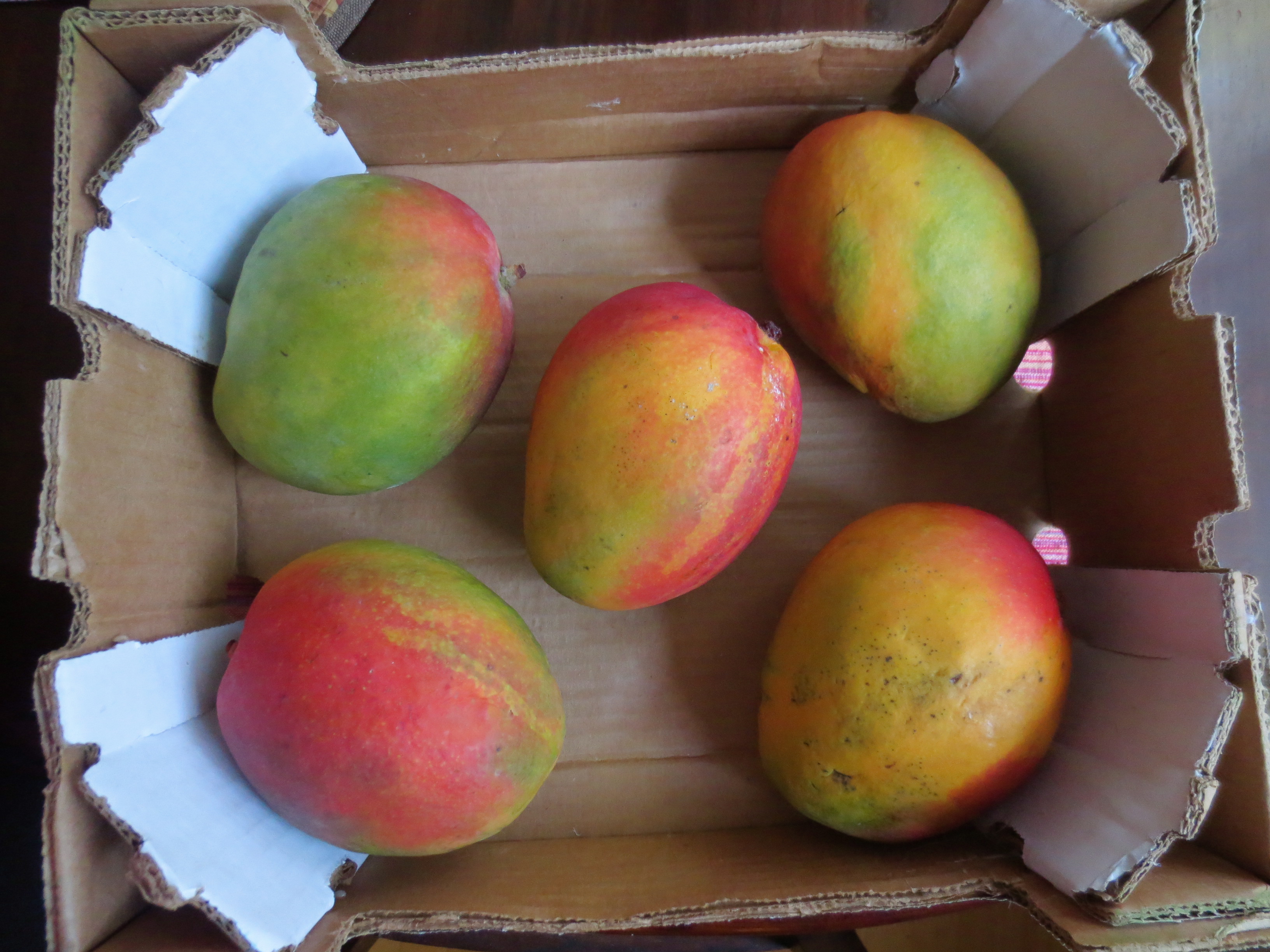
One of the main differences between England and Los Angeles that I have found is that where I’m from there isn’t a van on the side of the road selling mangoes. And coconuts with a straw. On the way back from the beach, tailing our way back from Malibu, wending our way up through Topanga Canyon, past the waves of blossoming, listing fennel and tall grey-green hills, there is always at least one open-backed van with a Mexican lady selling her boxes for $10 a piece. It could be avocados or strawberries, you’re never entirely sure, but you’ll be alerted by the signs. And then inside there’ll always be more. We bought a box of nine mangoes, but by the time we got home there were only seven. Mangoes are very hard to resist particularly when they have that give to them; these were on their way to softness, heavy as artillery in the hand, but oddly human to the touch, like a thigh or a calf.

There is none of the banter here that you would get in England. A box of mangoes would yield at least a bit of to and fro about the weight – are you alright there, love? Oh, these ones are gorgeous, just cut it in two and have it with a bit of cream, lovely – a bit of rough and tumble, someone sighing that you were taking too long. There’d be something. Here the exchange is reduced to the price. There was no acknowledgement I was there from the man standing next to me, even though it was just him and me on the side of a dusty road. Him, me and the lady with the fruit. She had her hair in pigtails, which on her looked expedient rather than odd. The three of us did the deed knowing we would not be seeing one another again. It was on the tip of my tongue to say something, because as an English person it is hard to let a moment go by without some kind of dithering nicety.

Hot isn’t it? The sea is cold. This road is long, isn’t it? It’s very green here etc. There’s none of that in LA. Here strangers tend to the loud and polite school of conversation – as if you have fallen down a well or a manhole but have sustained no serious injuries and would be up for a chat. “HI, HOW ARE YOU?” “Good, how are you?” “GREAT. ENJOY YOUR WEEKEND”. Or they’re silent, as if you’re not there at all. I have swum close enough in the pool to be able to read the typeface on a novel (by John Green), without so much as a flicker from the reader, perched on the steps with her legs under water, her torso dry as a bone, her nails a perfect peach. I would love to have said “Who’s John Green?” but that would have been to break the seal of silence, opening up a conversation possibly without end, and anyway I could always look it up on the internet. I don’t really want to know who John Green is, I just want you to know I’m here.
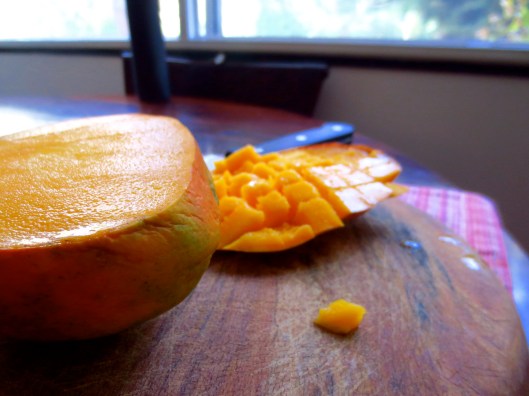
IMG_4520

I gave two more mangoes away so we were left with five. It was after a conversation with one of our B&B guests. She’d stayed for only two days and was on her way out, up the coast to Big Sur. But we got chatting and then an hour went by, and she left with a mango in each hand and the rest of the chocolate-cardamom cookies, because they spoke to her ‘Indian soul’. Originally from New Delhi,  she is a writer, a reader and a lover of food. We exchanged favourite books; I will now be reading Climbing the Mango Trees by Madhur Jaffrey and How to Get Filthy Rich in Rising Asia by Mohsin Hamid. I hope my book recommendations made the grade, but it really doesn’t matter, because I had a conversation. A proper one. I made a friend. I bought some mangoes and gave them away. ENJOY YOUR WEEKEND!

IMG_4499

The trick to cutting into a mango, I have learnt, is to cut as close to the stone as possible. Cut on either side, vertically, so that you have two even slabs of orange flesh, and then a central panel with the stone embedded, which you can gnaw around. There is no point trying to be demure; you will be dripping in mango juice and picking the fibres out of your teeth, so you might as well enjoy yourself. Score the two halves of flesh (which will have the skin still attached) into cubes, which you can eat as you would an orange quarter or slice them off into a bowl to which you add lemon or lime juice.

A meal would be a mango and avocado salsa, to which you have added some chile, cilantro, sea salt and lime. But to my mind, one of the finest uses for mangoes is in kulfi, the Indian ice cream. It is made traditionally with malai (milk boiled down to cream) but it can be reasonably faked with evaporated or condensed milk.

Cutting for Stone is the name of a novel I have had languishing on my shelves for a while, unread, and now unreadable due to its being dropped in the bath (although the first chapter is fine and also very compelling so I will press on). I thought the title apt.
Share this:

  • Share on X (Opens in new window) X
  • Share on Pinterest (Opens in new window) Pinterest
  • Share on Facebook (Opens in new window) Facebook
  • More
  • Share on Reddit (Opens in new window) Reddit
  • Share on LinkedIn (Opens in new window) LinkedIn
  • Share on Tumblr (Opens in new window) Tumblr
  • Print (Opens in new window) Print
  • Email a link to a friend (Opens in new window) Email
Like Loading...

In the street

24 Tuesday Dec 2013

Posted by Sophie James in Recipe

≈ 16 Comments

Tags

Christmas, Citrus, Dessert, Friendship, Fruit, Ingredients, Italy, Nonfiction, Recipes, Stories, Travel

img_0535

That’s how I met her. Running from a broken down train and away from a car crash, in Newhaven of all places. The last time I made a friend this way was twenty years ago in a bakery in Venice, and my accent gave me away. It was heady, to think that’s how it can still be done, meeting in the street and suddenly you’re friends. I ran after her. I wasn’t chasing her or anything, but she just said quickly “follow me” and so I did. It was like being in Borgen.

Her stepfather was waiting for us in a car, and she had to explain quickly who I was and what was going on. I didn’t wait outside because of the freezing wind. I threw myself into the back like a labrador, and we were away. All round the houses, because of the crash. There weren’t even any buses, so if it hadn’t been for her I would have been walking along the English channel for two hours trying to avoid the dog turds. I still feel bad we completely ignored her stepfather. I slipped in a thanks everso much at the end. But it was too exciting, meeting like this. And having so much in common, we even knew people from way back. A cinematographer meeting an actress. Zero degrees of separation.

The last time it felt like no big deal. I met Charlotte in a bakery in Venice, and the next thing I know (and because of her) I’m sitting in Trieste having an interview for a place at Warwick University with the head of the Italian department and his daughter over a bowl of penne alla vodka. I remember the pinky-red sauce and the fumes of subtle alcohol, and the sheer exuberance of the conversation. Actually, he was a monologuer, one of those people who talks in order to stay alive. But in those days, it felt normal, this happenstance. Maybe all young people feel like that – somehow touched by a higher hand. I just wandered into things and it all came out alright. 


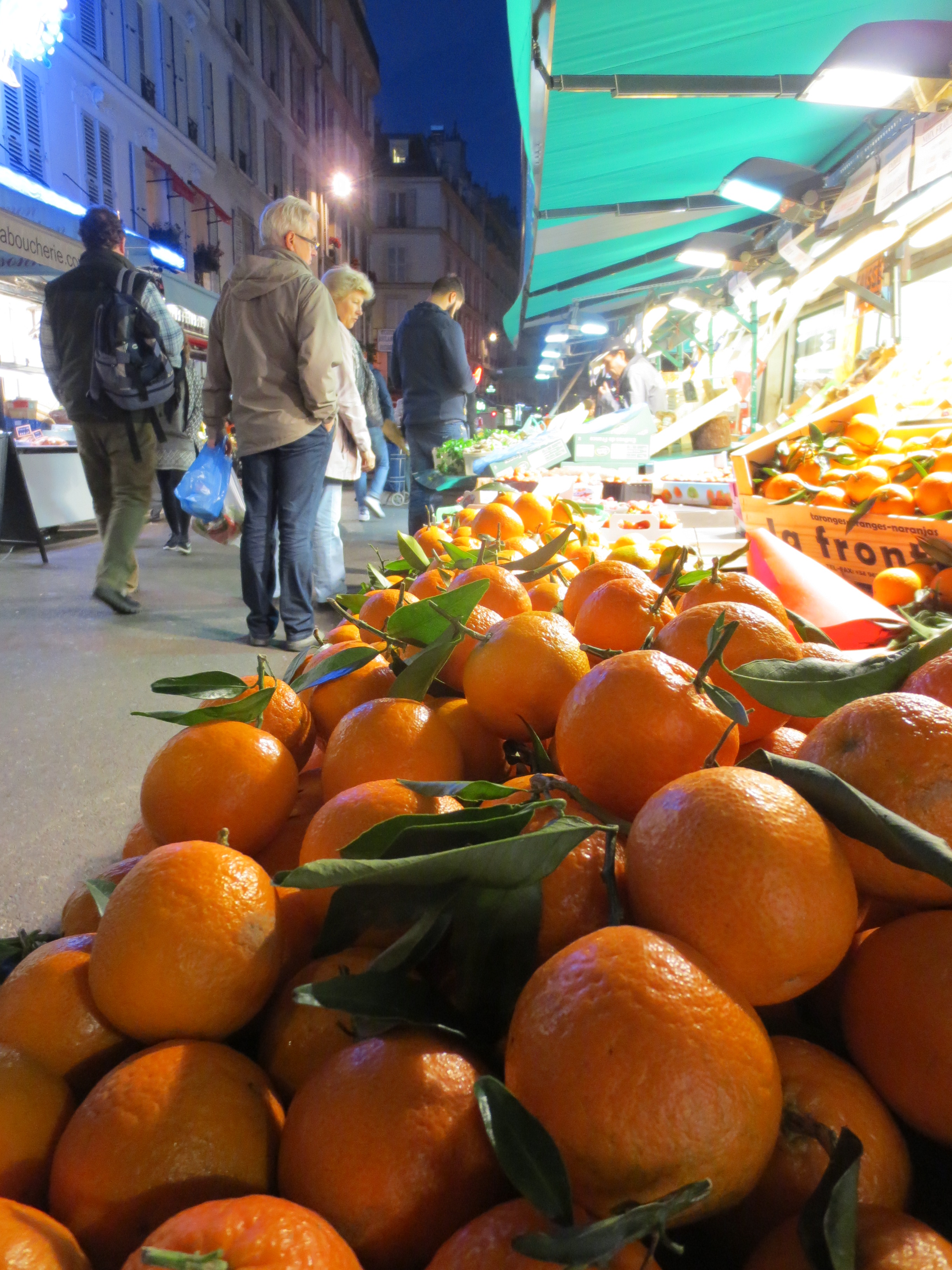
This is a bit of a cheat. But it gives everyone a breather from all the stolid mince pies and Christmas pudding, and the sheer load of food consumed on the day. It twinkles and it’s orange. And it’s a chance to show off your extravagance in buying in some marrons glacés (candied chestnuts) which are bloody expensive so just one each (and completely unphotographable, sorry, they look like bunions). I like to think it’s a nod in the direction of Italy and heat and sun. I have doffed my cap in the direction of the Venetian stalwart aranci caramellizzati, which began life at the Taverna Fenice. Happy Christmas.

Salty caramel oranges with marrons glacés 

Adapted from Hugh Fearnley-Whittingstall, The Guardian

Serves 4

4 oranges

4 marrons glacés

Peel the oranges. Use a sharp knife for cutting citrus, if you want it to look pretty. Take a narrow slice off the stem and blossom ends. Cut down the sides of the orange from top to bottom, slicing away the skin and the white pith. Now cut into rounds and put into a bowl. Or, if you wish, serve each person individually.

Crumble the marrons glacés on top, then trickle the molten caramel sauce (by which I mean warm) over the cool fruit, where it will form nice ribbons. Squeeze the juice that has spilled all over the place over the top and it’s ready to go. Delicious with a glass of chilled champagne.

Salty caramel adapted from Nigella Lawson, How To Eat

Serves 4

5 tbs light muscovado

50g unsalted butter

100g golden syrup

125ml single cream

1 big pinch of sea salt flakes

Melt the sugar, butter and golden syrup in a thick-bottomed pan with the salt. When smooth and melted, let it bubble away, gently, for about 5 minutes. Then take off the heat and add the cream. Add more salt at this point if you like it lip-smacking. You can pour the sauce into a jug and serve hot, or do it in advance, refrigerate and reheat. It is truly stupendous.


Share this:

  • Share on X (Opens in new window) X
  • Share on Pinterest (Opens in new window) Pinterest
  • Share on Facebook (Opens in new window) Facebook
  • More
  • Share on Reddit (Opens in new window) Reddit
  • Share on LinkedIn (Opens in new window) LinkedIn
  • Share on Tumblr (Opens in new window) Tumblr
  • Print (Opens in new window) Print
  • Email a link to a friend (Opens in new window) Email
Like Loading...

One jar only

15 Sunday Dec 2013

Posted by Sophie James in Recipe

≈ 11 Comments

Tags

Christmas, England, Food, Fruit, Ingredients, Jam, London, Poetry, Recipes, Stories

IMG_2057

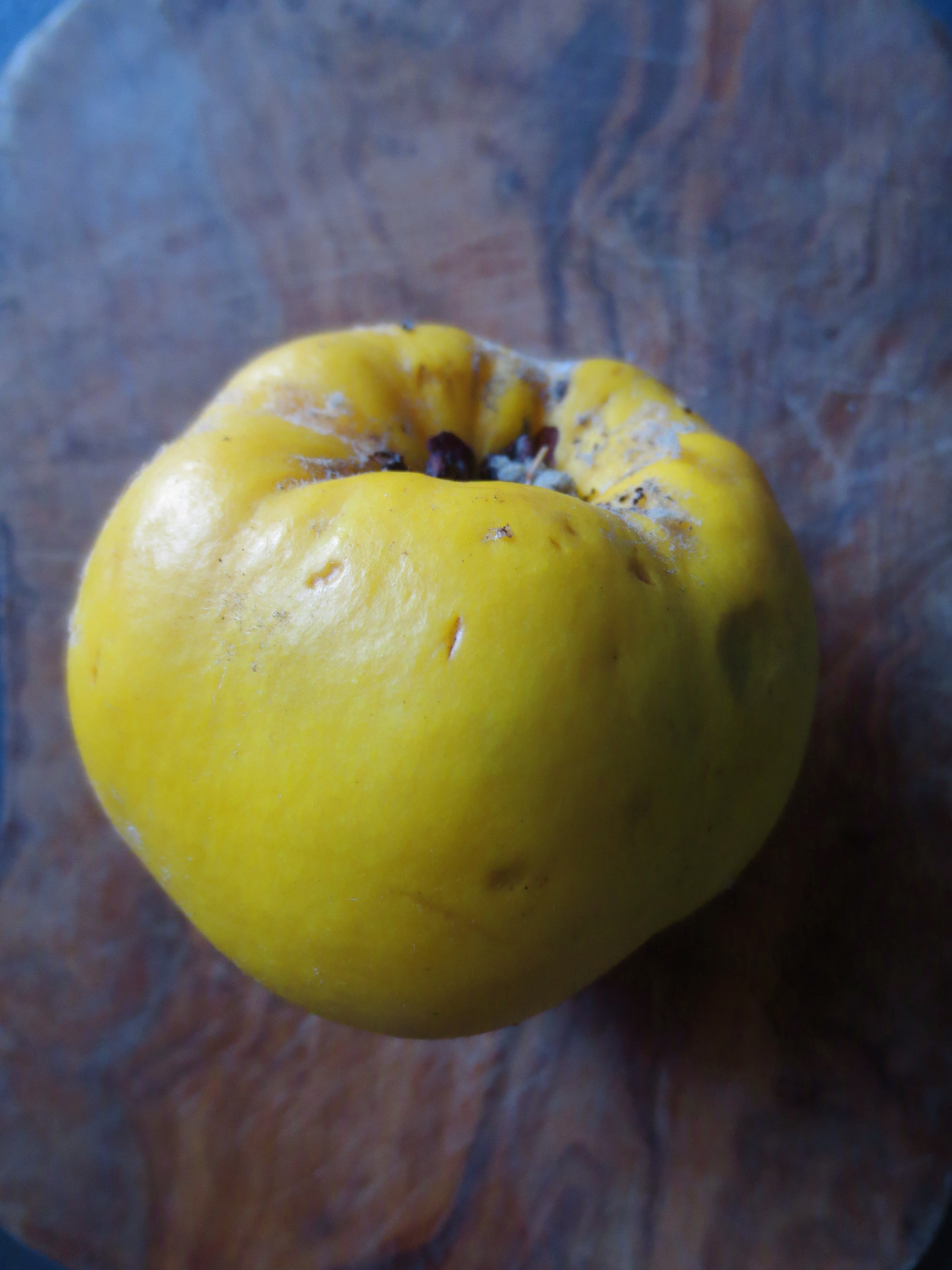
Horseradish and mustard seed. Apples and quinces. A dollop of something that smarts and sears is what is required now. I found the last quinces of the season where I am staying, tiny little gnarled things covered in crystalline cobwebs. Yellow turning to black and as small as tomatoes. And I found some Granny Smith apples that were bunched on a tree in someone’s front lawn. Green, luminous and numerous and unpicked. The rest of the garden was bare and suburban. But the apples were a cartoon green. Perfect and unmarked, with an almost waxy sheen.

“Excuse me, can I help you?” the voice behind us was arch and querulous. I quickly retreated my camera. We turned on our best smiles. “We were just admiring your lovely apples” I said. “Well, come on then, I’ll give you a tour. You can have some if you want.” I promised her a jar of spiced apple jam in return and she perked up. We followed her round her plot and listened to the story of how they bought the house, 40 years ago, and how before that the actress Dame Sybil Thorndike would sit in the conservatory and ‘be round the bend.’

“Won’t you come in? You haven’t eaten? You must be hollow.”

We walked into the house. It too had been untouched. Simple and spartan and her husband Colin was also both these things. Small, white-haired and dainty. He was writing Christmas cards but when we came in he looked up as if he’d been expecting us and started talking as if it was a continuation of an earlier conversation. Our hostess went off to make coffee and came back with a cafetière. She was unsure what was in it; tea or coffee. “Perhaps it’s the most revolting thing you’ve ever drunk?” She enquired smiling and I ate a soft biscuit. The songbook of the musical Cats sat on a side table.

We talked about Cornwall – they had just sold a holiday home in Looe. Very pleasant, pronounced Colin. I had spent some time in Cornwall as a child when my dad moved there. “You probably won’t have heard of the place,” I said, “because it was a tiny hamlet on the edge of Bodmin Moor called Henwood. It had a riding school.” “Oh, we know it well,” cried Colin, in his soft burr. “Do you know Ted and Mary?”

IMG_2511

“Now tell me again – where do you live?”

Joe and I paused. He was sitting in a too-small green chair drinking tea-coffee. What do we say? Los Angeles? But we’re English, it was all too complicated. “Ormond Drive” said Joe, where we’ve been for exactly two days, house-sitting. Free-basing, I suppose you could call it, in Hampton, suburb of London, green and leafy, not really a town. A town lite, heavy with history. Colin got out his Cats songbook, and started to read from Growltiger’s Last Stand.*

His bucko mate, Grumbuskin, long since had disappeared,
For to the Bell at Hampton he had gone to wet his beard;
And his bosun, Tumblebrutus, he too had stol’n away-
In the yard behind the Lion he was prowling for his prey.

“We should really push off now. We haven’t done any shopping”, Joe said. “Oh, yes of course. We’ve ruined your morning”.

“And the apples?” Joe asked, as we stood on the threshold. We put on our winning smiles again. Colin gave us an apple each. I was expecting more of a flurry, and two seemed a paltry sum. It was enough for one jar only, which I had promised them. And they had asked us in, they knew Ted and Mary. It was Christmas. Colin had read us poetry. Time to be kind.

IMG_2542

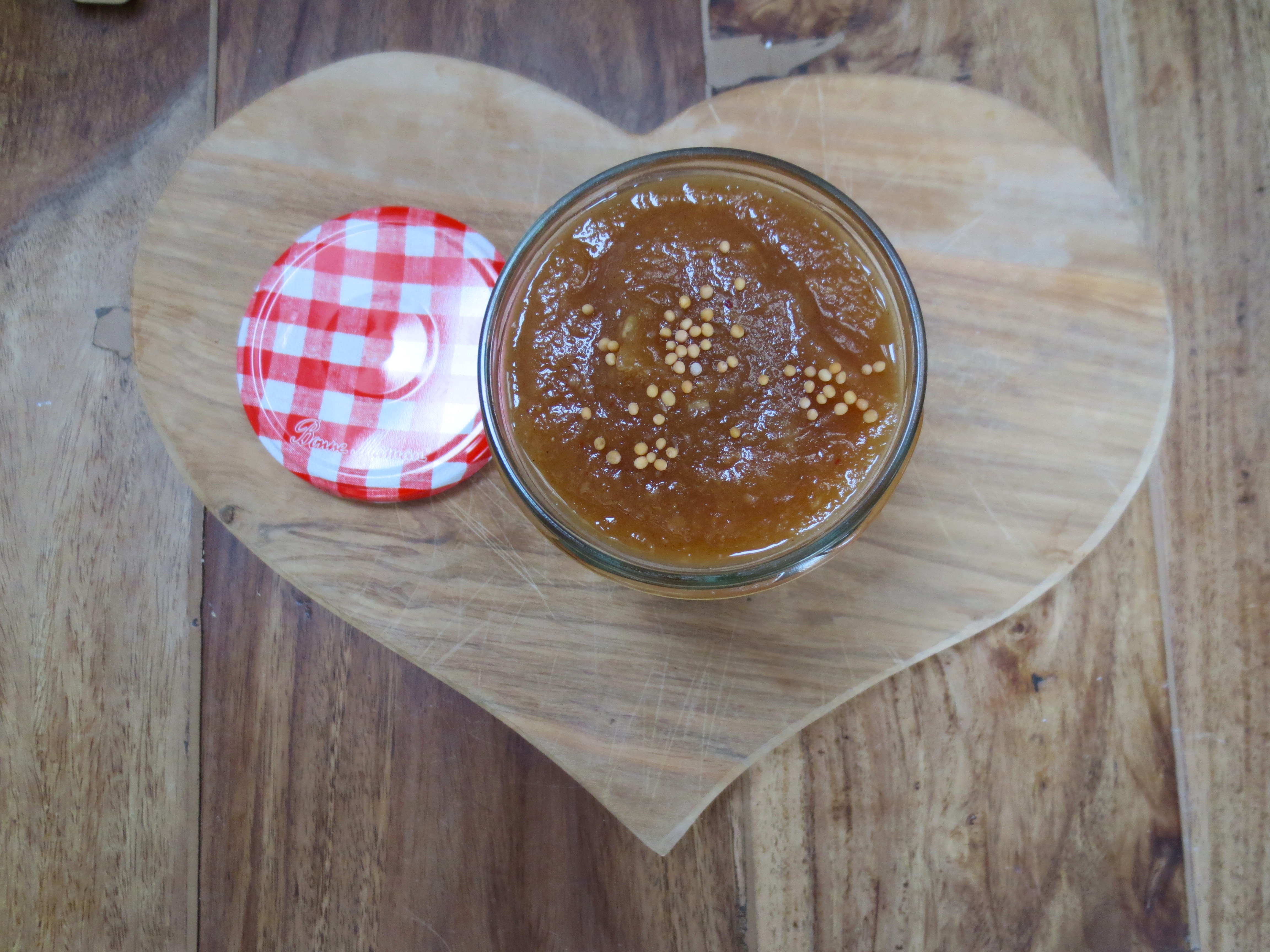
Spiced quince, apple and mustard jam

Adapted from Felicity Cloake, The Guardian

Like its cousin, the apple, quince makes a wonderful pairing with pork (think Christmas ham), but is good with any fatty meat. The sweet spices, and the warm hit, make this jam an especially good partner for cheddar or other hard cheese. English quinces are now all but over, unless you can find a few malingerers as I have here, but Cypriot and Turkish grocers, and Middle Eastern shops will have their luscious and bulbous imports, so there’s no excuse. Ginger can be used here instead of horseradish, or as well as.

500g ripe quinces (or a mixture of quinces and apples)

1 shallot, finely chopped

100ml cider vinegar

175g light muscovado sugar

5cm horseradish, peeled and finely grated (or ginger)

½ tsp cinnamon

1 tsp mustard seeds

2 tsp mustard powder

Peel the quinces, cut them into sixes, remove the cores, then roughly chop the flesh. Put the fruit in a pan and cover with cold water. Bring to a boil, reduce the heat to a simmer, and leave to cook for half an hour until soft. Drain, then mash or blitz to a pulp in a blender.

Put the quince back in the pan with the remaining ingredients, except for the mustard seeds and powder. Cook for about 20 minutes, until thick, then take off the heat and leave to cool. Stir in the seeds and mustard powder. Decant into a sterilised jar (washed with soapy water, rinsed and then put in a hot oven for ten minutes) and refrigerate.

* Originally from Possum’s Book of Practical Cats by T.S Eliot

Share this:

  • Share on X (Opens in new window) X
  • Share on Pinterest (Opens in new window) Pinterest
  • Share on Facebook (Opens in new window) Facebook
  • More
  • Share on Reddit (Opens in new window) Reddit
  • Share on LinkedIn (Opens in new window) LinkedIn
  • Share on Tumblr (Opens in new window) Tumblr
  • Print (Opens in new window) Print
  • Email a link to a friend (Opens in new window) Email
Like Loading...

Ripe

23 Saturday Nov 2013

Posted by Sophie James in Recipe

≈ 24 Comments

Tags

Autumn, Cooking, Dessert, Fruit, Ingredients, Los Angeles, Recipes, Spices, Stories, Sussex, Unbuyables

020

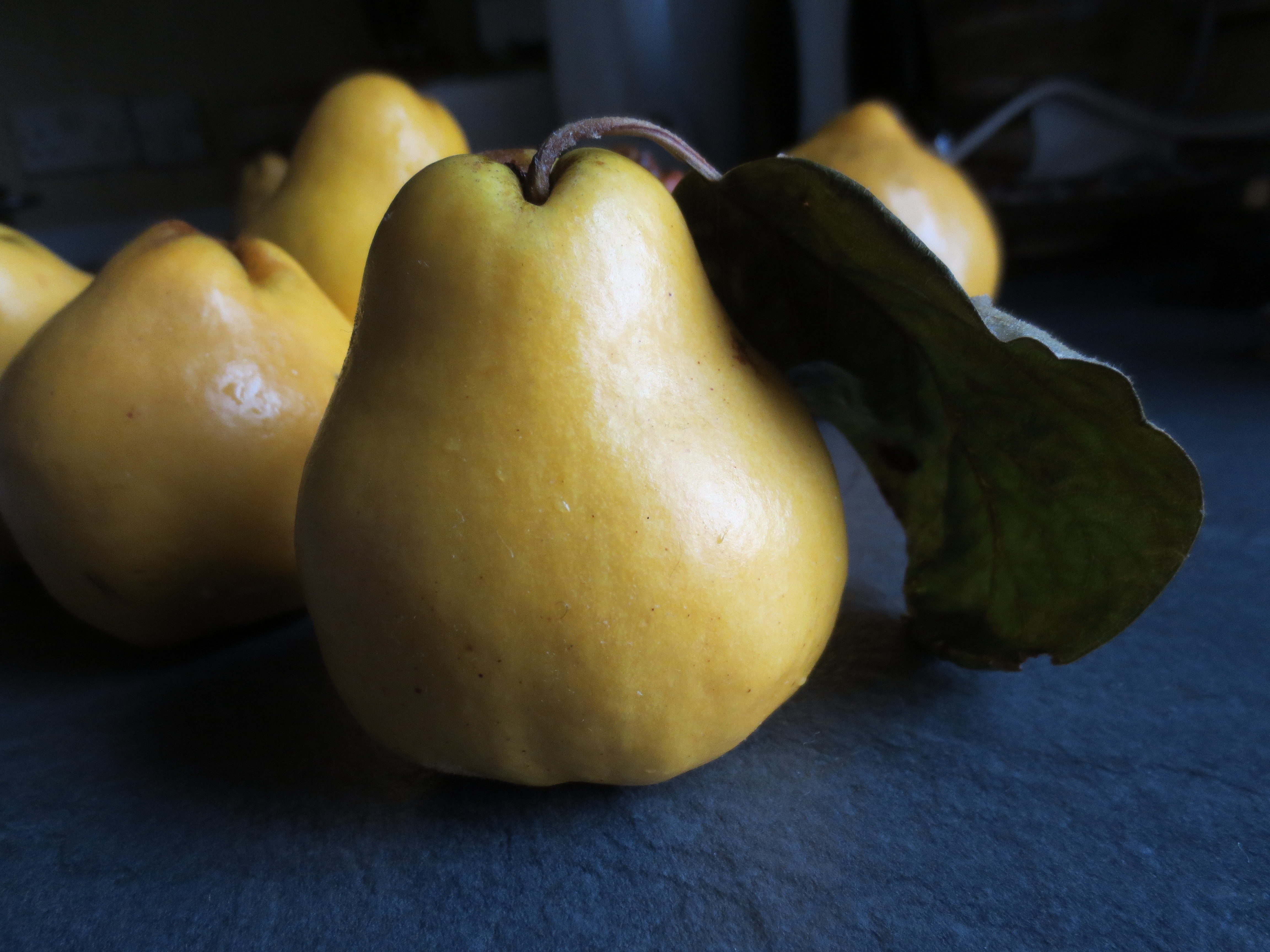
Steaming pineapples and musky roses. Damp, heady and sweet. A bit like a fruit and veg shop. That’s the best I can do when it comes to describing the strange perfume of quinces. Warm and wet? Sultry. They smell like perfume. I’m at a loss.

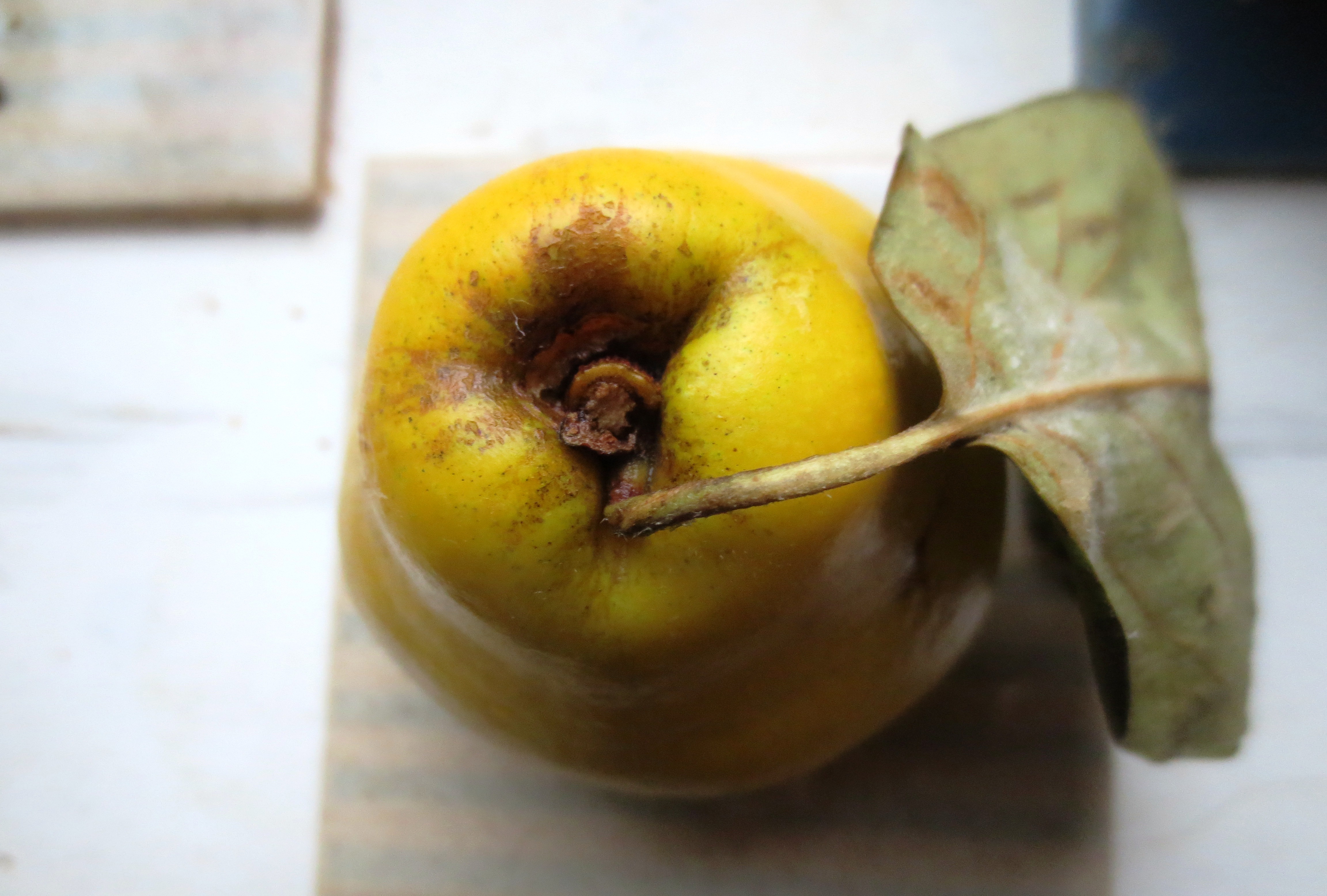
This is also what happens when I’m asked (and this happens a lot) “how do you find LA?” I haven’t yet found it, I want to say. I’m still at a loss. Sometimes words are tricky and some things are hard to grasp. There’s no ‘it’, there’s no graspable thing. The quince is yellow when ripe and is almost waxy, and it smells definitely of pineapples. It is hard in the hand – there’s no give in it, unlike a pear which it resembles. A pear with a big bum. You can’t eat it raw unless you like having bloody stumps instead of teeth. You have to wait for the fruit to become bletted, which means soft to the point of decay, if you want to eat it like that. The quince needs to be cooked, and then there’s the smell (see above). It’s probably what is known as an acquired taste.

LA is dry and hot and sunny most of the year. Sometimes it rains and then it buckets down and no one knows how to drive when the road is wet so they crash. There is no centre, but lots of grids. So if you get lost, then you just take the next left and go backwards. It is a maze of suns. Everyone wears sunglasses all the time, even at night. It is a city of endless fragments where you are unlikely ever to bump into anyone you know. If you want to get lost, it’s a good place to be.

There is a huge botanical garden, The Huntington, with a library attached that has the first edition of Darwin’s The Origin of the Species. Oskar Schindler lived above a dry cleaners in Beverly Hills for a while. David Hockney learned to drive in LA (and drove all the way to Las Vegas after his test, because he didn’t know how to get off the freeway), as did I. The smell of wild fennel is strong, and I would say it is a place of colour. It is rarely damp.

Quince

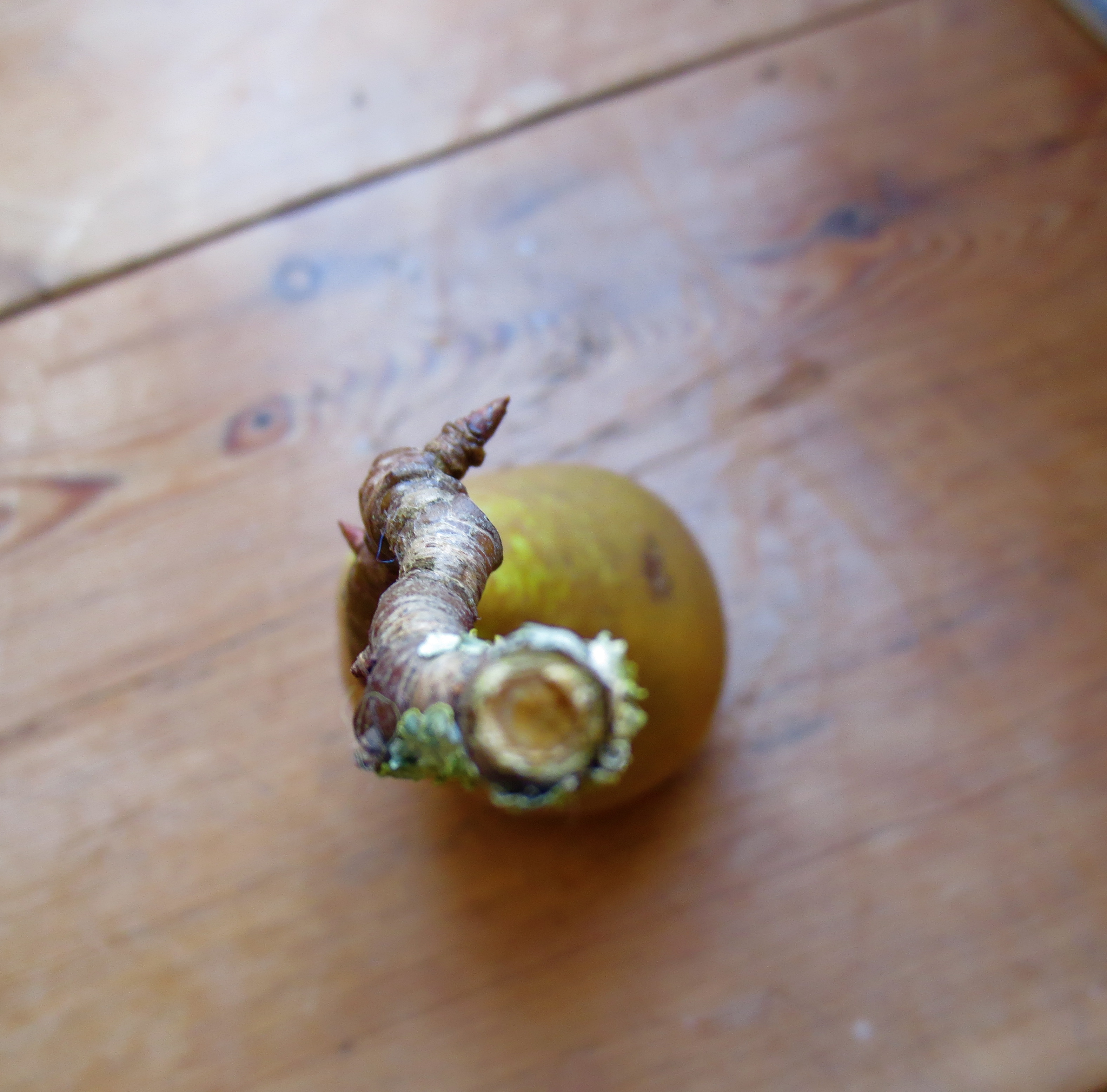
I found these quinces in a bag on someone’s front lawn on the outskirts of Seaford. Previously there have only been apples there, so discovering quinces was very exciting. I hope it was okay for me to take them. I took all the other things they left out, and nobody said anything. You are unlikely to find local quinces in the shops. Along with mulberries, you’re better off befriending someone with a tree and a glut and a kind heart. It is worth it.

One of the many spectacular things about quinces is the way they turn a deep rosy gold during cooking, which makes them rather dramatic and a bit serious-seeming. Good for dinner parties, or just on your own, slumped over a book. This compote is lovely served with yoghurt, cream or ice cream. Good as a sorbet too, or puréed for a tart.

bowl of quinces

Compote of quinces and allspice

Inspired by Jane Grigson’s Fruit Book, originally from Audiger’s La Maison Reglée, 1692

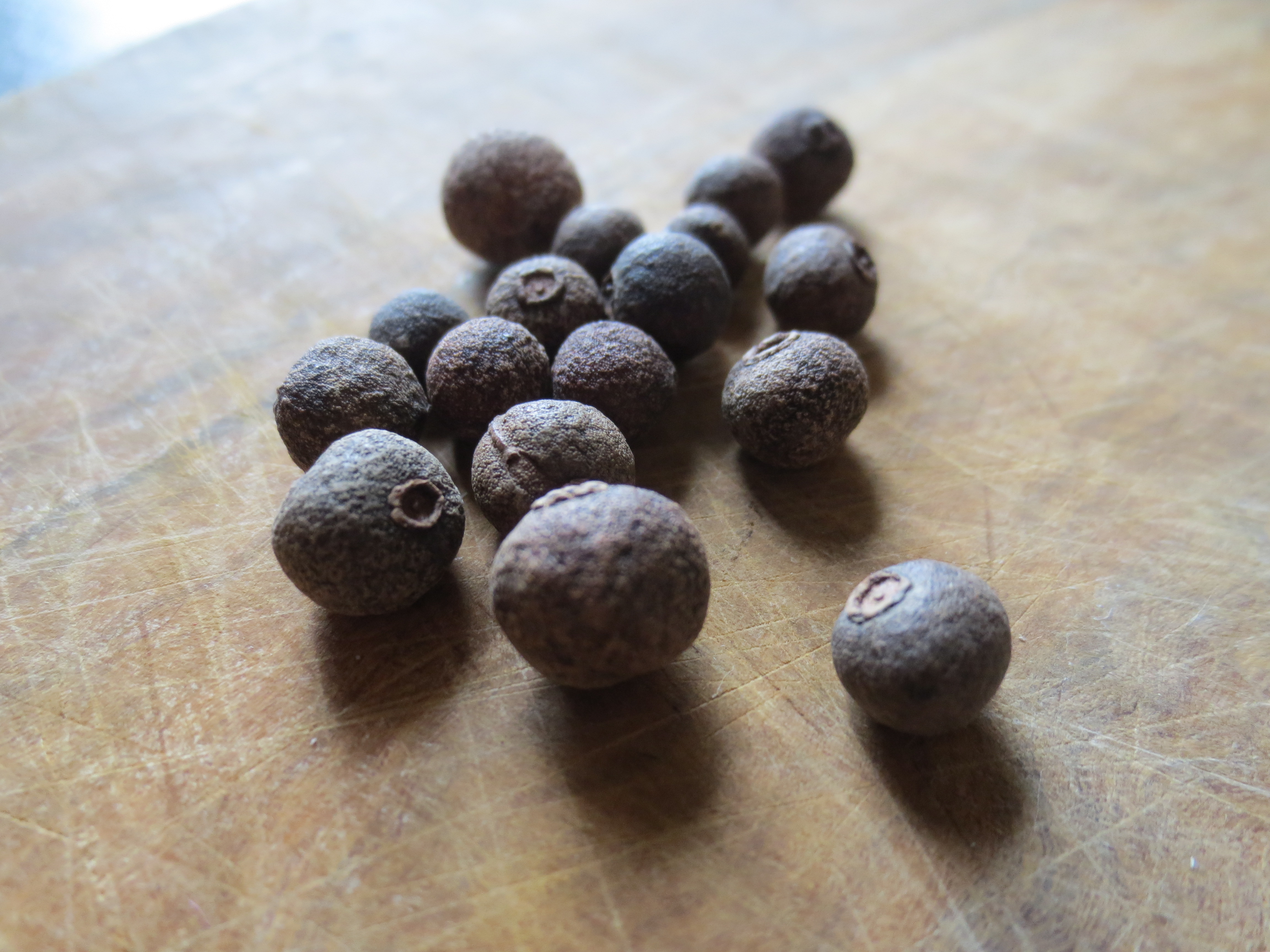
Allspice isn’t, as I once thought, a combination of ‘all the spices’. The name was coined around 1621 by the English, who likened its aroma and taste to a combination of cinnamon, nutmeg and cloves. Allspice (Pimenta officinalis) comes from a tropical tree native to America, also cultivated in the West Indies and Jamaica. The berries – as seen below – are often tied in muslin and used in the making of preserves and pickles. The flavour, like the quince, is elusive, and works well here.

6 quinces (or thereabouts)

Sugar or honey to taste

3-4 Whole allspice berries

Cut up two quinces – use windfalls for this, as it doesn’t matter what they look like – and put them, peel, core and all into a pan. Cover generously with water. Also peel neatly the four remaining quinces. Add these peelings to the pan, and then the cores as you cut them into quarters. The cores are very tough, so pare gradually away otherwise you’re left with shards and splinters of quince.

Prevent the pieces from discolouring by dropping them into a bowl of lightly salted water. Boil up the pan of quince ‘debris’, and stew lightly until it begins to turn a rich amber. Not red as many suggest – you’ll be waiting forever for that. Now strain off the glowing juice, add sugar or honey* to taste, and bring slowly to simmering point, stirring every now and then. In this syrup, cook the quince pieces along with the allspice berries, until the fruit is tender. Serve with something white and cool.

Quinces further away

IMG_2118

Allspice berries

Other recipes with quince:

Quince paste with Manchego

*I have not used honey in the making of this recipe so far, though it was used traditionally, before the advent of sugar. However, you may need to experiment with the strength and sweetness, as honey behaves differently to sugar in the cooking process.

Share this:

  • Share on X (Opens in new window) X
  • Share on Pinterest (Opens in new window) Pinterest
  • Share on Facebook (Opens in new window) Facebook
  • More
  • Share on Reddit (Opens in new window) Reddit
  • Share on LinkedIn (Opens in new window) LinkedIn
  • Share on Tumblr (Opens in new window) Tumblr
  • Print (Opens in new window) Print
  • Email a link to a friend (Opens in new window) Email
Like Loading...

The short life of pears

12 Tuesday Nov 2013

Posted by Sophie James in Recipe

≈ 16 Comments

Tags

Autumn, Cooking, Dessert, Fruit, Ingredients, Lucas Hollweg, Recipes, Somerset, Spices, Stories

img_1879-2

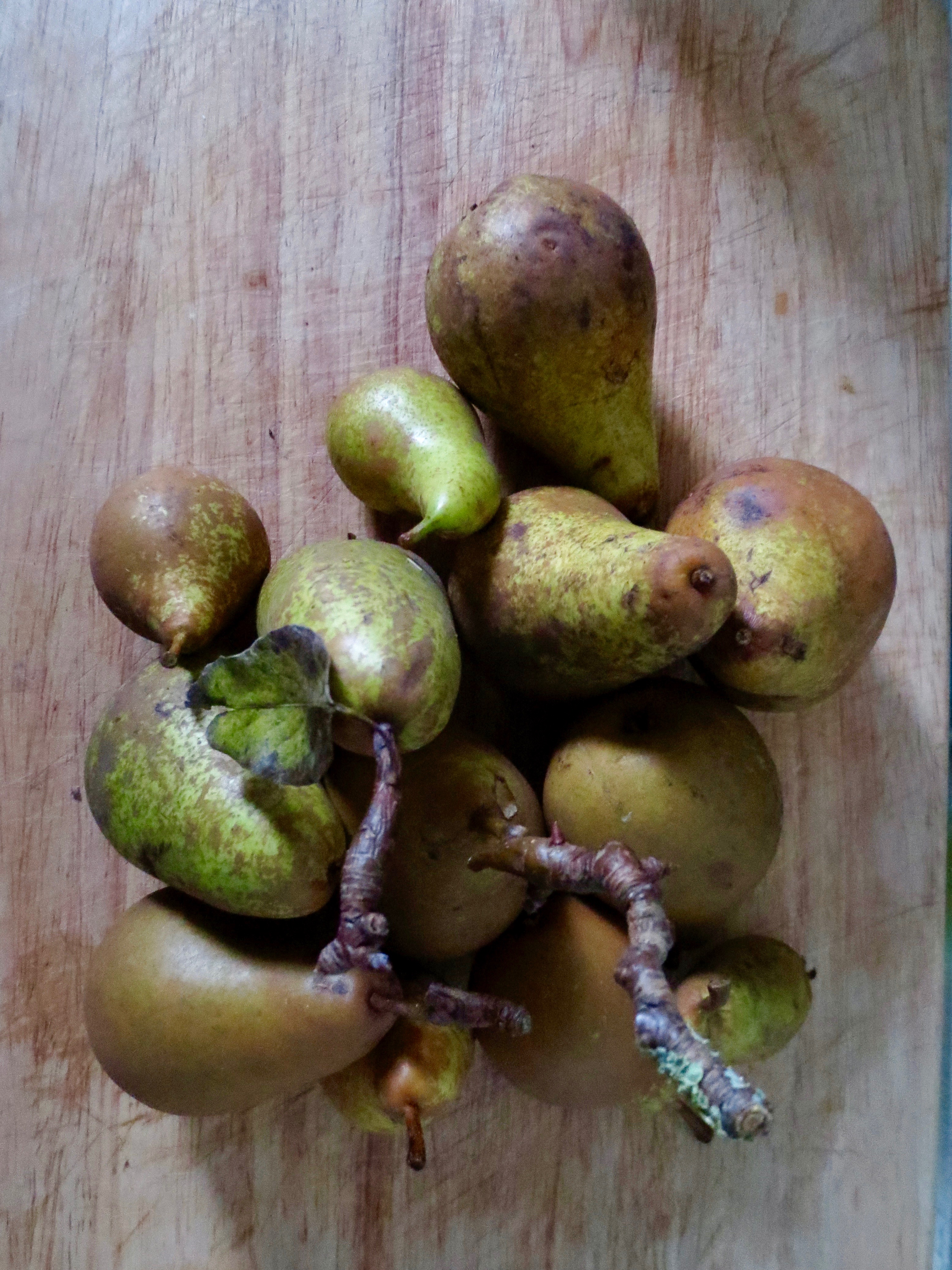
There was a pear tree outside the window in Watchet. Conference pears that suited the palette of the place. Seaford was grey – pewter grey, oyster grey, pinky grey after the sunset. And Watchet was the full spectrum of brown. Deep russet, rust, coral red, the sand on the beach brown like earth, the red earth in the fields slack with rain, giving us all ‘ginger boots’ (dad’s phrase). High iron deposits in the soil, that’s what.

And even though there were tons of apples – in fact so many no one knew what to do with them all – pears were what we ate. And I love pears. I’d rather eat a pear than an apple. No peeling required. The juice is more forthcoming in a pear, the softness a surprise.

IMG_1861

I was allowed to pick the pears, as many as I wanted. A lot had fallen on the ground, and were in the process of rotting back into the earth. It was the perfect time for them, almost to the day – ‘the tradition is to pick them on or soon after 1 November and then watch them as they come to perfection’ according to R.H.L Gunyon – and it was lovely to see how many sizes they came in, unlike the Stepford Wives versions I’m so used to seeing at the supermarket.

They were all hard, but this is normal. They should be picked firm and allowed to ripen at home. A ripe pear yields slightly around the stem, but doesn’t split or feel squashy. I ate pears two ways during my stay in West Somerset. The ones I picked I didn’t eat until five days later. I was unconvinced they would work out, but I kept them in my bag, ready.

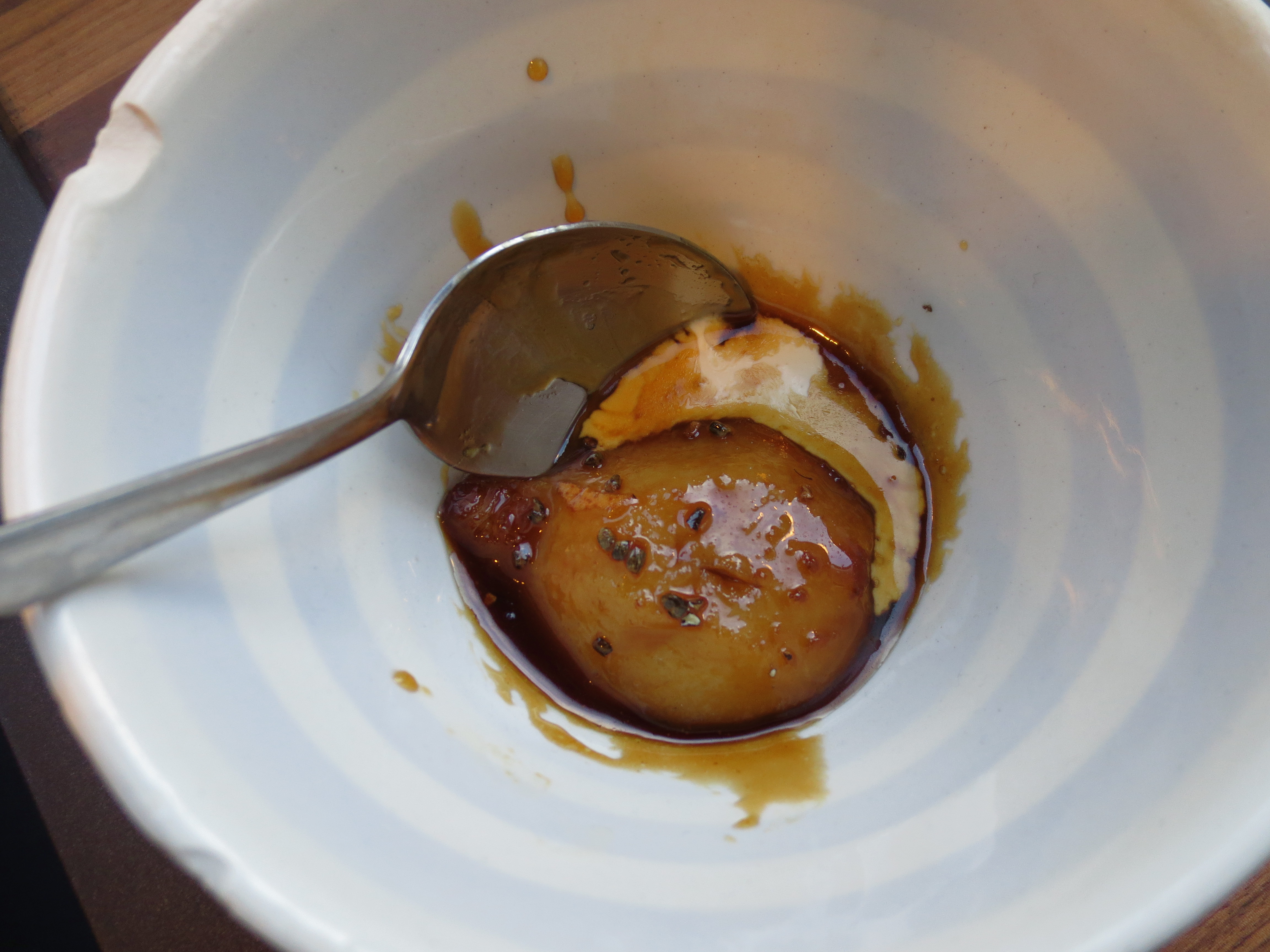
The first pears I encountered were cooked; they were buttered, sugared, salted, spiced with ginger and cardamom, and phenomenally rich. It was hard to talk about them during or even after eating. My cousin Becky cooked them, following Lucas, her brother’s recipe. Made in the Aga, with crates of apples out the back. I remembered how Lucas used to read cookery books as a child in this house, and now here we were eating his gingery pears, reading them as we were eating them, his limpid prose coming from the shiny page. There are ten minutes in the life of a perfect pear, he wrote. Best get on then, as they say down this way.

IMG_2017

On my last day, I picked more pears from the tree, and put them in my bag. None of them felt ready to eat. Even the ones from my first day felt disappointingly robust. Dad drove me to the train station. Another cancelled train. What is it with me and trains?  The cancellation this time was due to the existence of ‘disruptive passengers’. We got back in the car. It was two hours until the next one and we were both hungry. It was pouring with rain and now it was cold; proper weather at last.

We ate smoked mackerel and pears while listening to a radio programme about drug overdoses. The pears were perfect. The mackerel was greasy – the savoury to the pear’s sweet. We wiped our hands on an old towel. And because we had two hours, we talked about our memories of things past.

Strange what being in a stationary car will do. I almost missed the next train. The conversation felt too short and suddenly I was out in the driving rain, just in time for the 7.05, the hems of my trousers slopping about in muddy pools. No more pears now, but I’m glad for both lovely meals. Pears cooked, pears raw. Short-lived and perfect.

IMG_2018

Caramel pears with ginger and cardamom

Recipe by Lucas Hollweg, originally in Waitrose Kitchen, October, 2013

Pears in cooking often need a little something – another fruit or spice. Lemon juice is good, because it also helps to arrest the pear’s discolouration after peeling. Pears and apples, pears and quinces, pears and greengages, pears and cheese, pears and bay etc. Here Lucas uses cardamom and ginger to spectacular effect – a pudding that tastes of the coming winter. Don’t be shy of the salt.

Serves 4-6

 50g unsalted butter

75g dark brown sugar

75g granulated sugar

¼ tsp sea salt flakes

1½ tsp ground ginger

12 green cardamom pods

4 medium pears, peeled and halved

Preheat the oven to 200C/392F. Put the butter in a saucepan with both kinds of sugar, the sea salt and ground ginger. Using a sharp knife, slit open the cardamom pods and shake out the dark seeds from inside. Chop them with a knife (or grind them lightly in a pestle and mortar) and add to the butter and sugar. Warm over a gentle heat until the butter and sugar have melted together.

Pour into the bottom of a roasting tin or ovenproof frying pan that’s just large enough to fit the pear halves in a single layer. Arrange the pears on top of the sauce, cut side down. Place in the oven for 20 minutes, then carefully turn the pears over, basting with some of the hot sauce, and return to the oven for 20 minutes more. Remove from the oven and leave to cool for 5 minutes. Serve with some of the sugary juices spooned over the top and a glug of double cream. 

Cry loud the pears of anguish

Parisian street sellers, 13th century

Share this:

  • Share on X (Opens in new window) X
  • Share on Pinterest (Opens in new window) Pinterest
  • Share on Facebook (Opens in new window) Facebook
  • More
  • Share on Reddit (Opens in new window) Reddit
  • Share on LinkedIn (Opens in new window) LinkedIn
  • Share on Tumblr (Opens in new window) Tumblr
  • Print (Opens in new window) Print
  • Email a link to a friend (Opens in new window) Email
Like Loading...

Sussex apple cake

02 Wednesday Oct 2013

Posted by Sophie James in Recipe

≈ 27 Comments

Tags

Autumn, Cake, Dessert, Food, Fruit, Ingredients, Nonfiction, Recipes, Stories, Sussex

065

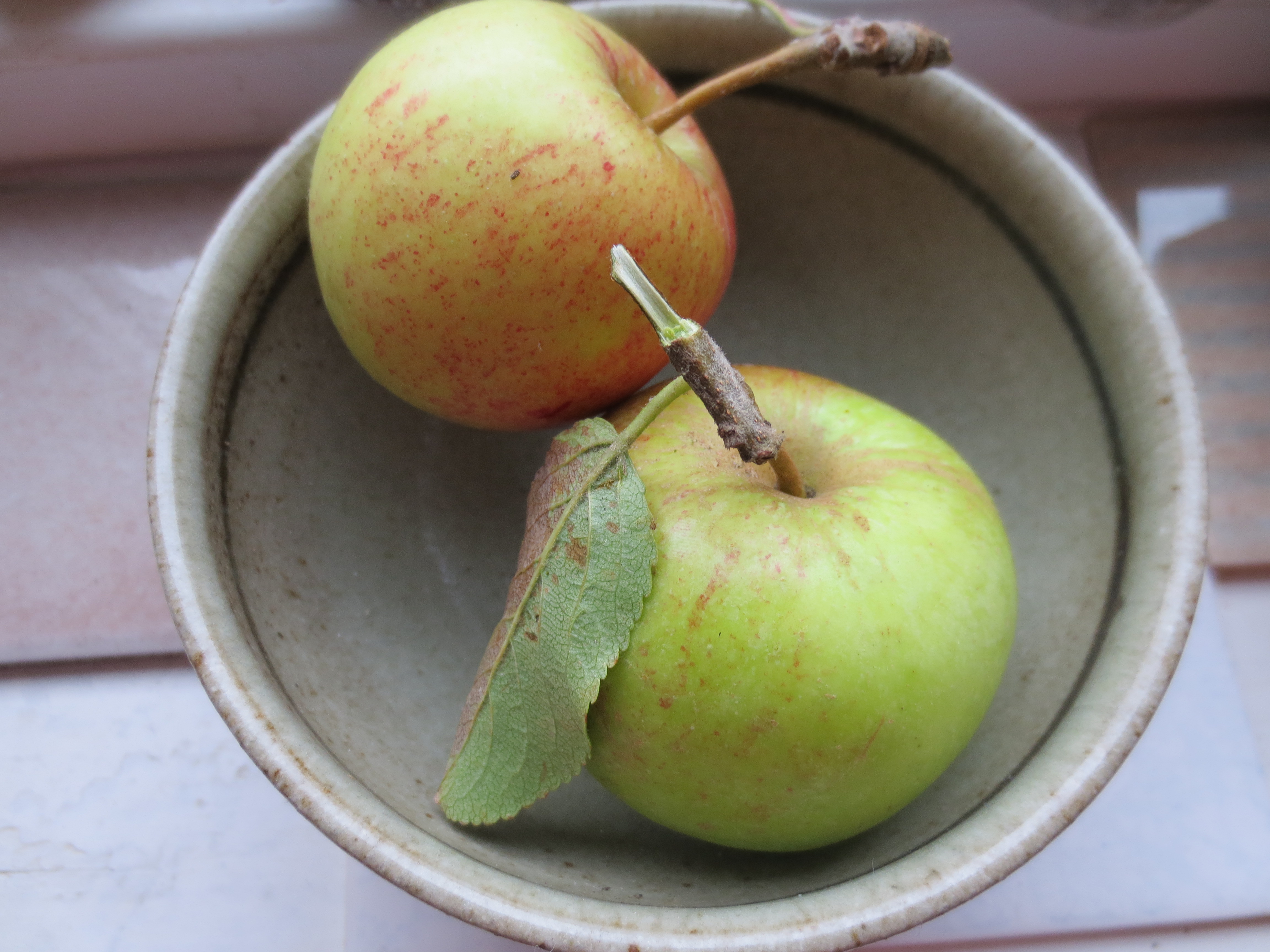
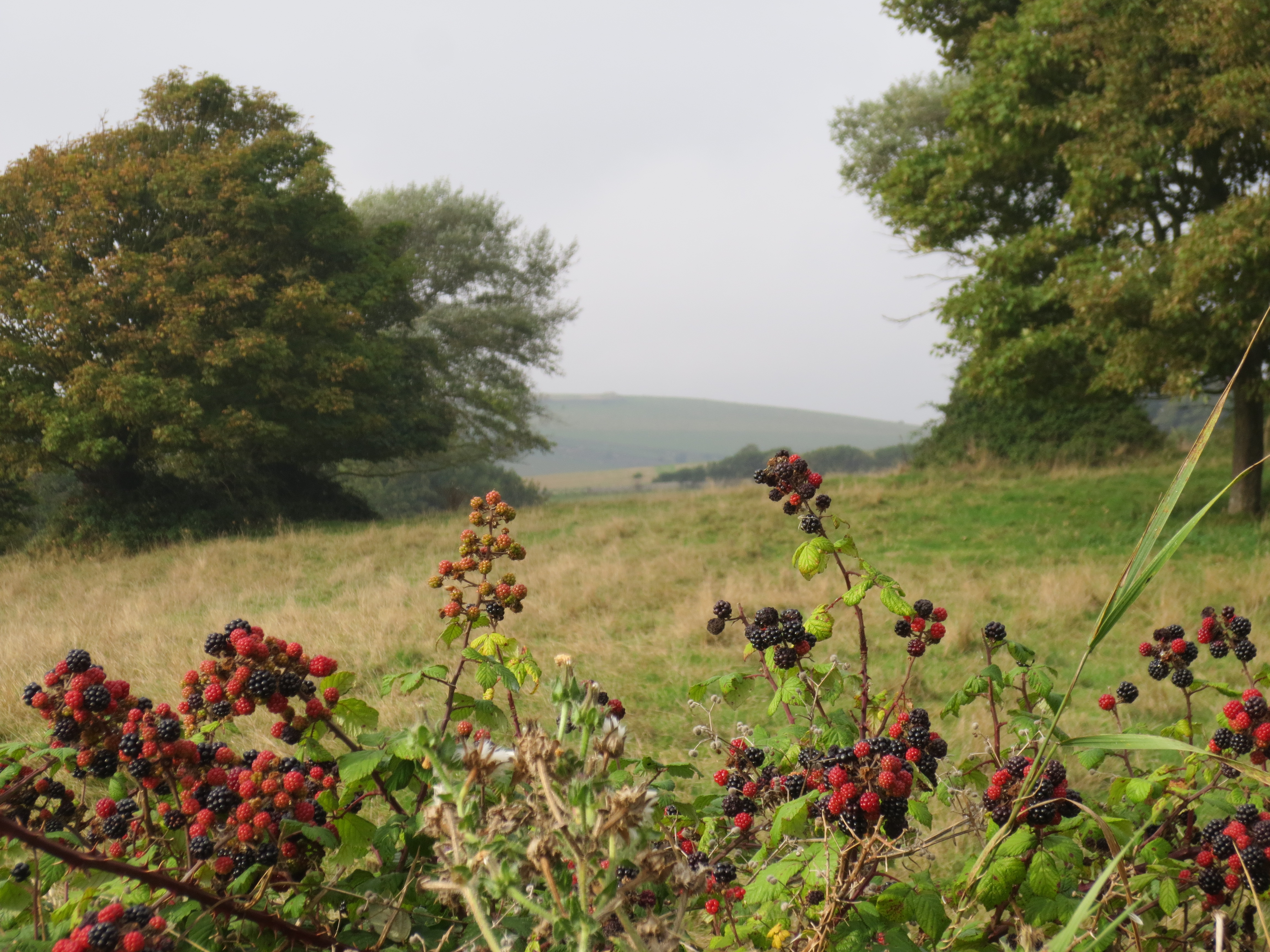
The sign read: “recent windfalls –  ‘cookers’  – please help yourselves”. There was another sign next to it that said ‘eaters’. Cookers and eaters – two types of apple, one sour, bulky and big-shouldered, good really for cooking, where it goes to mush, the other sweeter, smaller – one to have in the hand. Although the sweet apple wasn’t particularly sweet; sharp, dry as bark on its dappled outside, but a brisk, juicy interior. When juiced later, the froth was brown, leading to a startling pink beneath.

There was not much wind to speak of that day. The air seemed suspended, with swifts carousing through little channels above us, their wings like black darts. Actually their wings were like wings, the kind you draw as a child – two V shapes. We listed with our enormous load, my plastic pockets crammed. Blackberries now liquidized were dripping like blood down my arm. And all this before lunch, which happened at three. Rather like Christmas day, without the presents.

015

We went into a cafe which specializes in china teacups and ladies. It is very English; everyone feels undeserving. The lady next door to us was alone. She ordered tea and apple cake. It is the kind of place where you are so close to your neighbours that you need to make a decision early on about whether to include them in your life for that brief window of time. But this was unnecessary because there was a flurry of misunderstandings, panic ensued, as the apple cake was off – and then suddenly back on – the menu. Almost no apple cake – not really a story. No tragedy there. Except it gave the lovely young waitresses (gap year) a chance to flounce around a bit, and have a laugh with each other. For the lady to show off her cool and calm persona. After the apple cake arrived, and her fork had made its incision, she produced a mobile phone and began a quiet, very civilized conversation with someone unknown (probably male) on the other end. She was very organized, I could see.

This is what I don’t have in LA: the chance to watch people at such close quarters. To notice things, like a certain kind of hair-clip, a cardigan, skin tone, imagining the man on the other end of the line. Watching a thought alight on a face. And aren’t English people interesting? We are so swathed in layers, submerged in stories that become more and more intricate with the telling. I am always surprised by English people, I think that’s it.

We waited at the bus stop, next to a couple eating ice cream. They shuffled up to let us in on the bench. I watched a man opposite with his dog, a scruffy thing, his tail wagging, his tongue out, looking around and occasionally up at his master. Two horses clip-clopped by. We got on the bus, a small Noddy bus, green and miniature, our coats bulging obscenely with our apple stash. We were deposited back to Seaford. I made the cake.

107

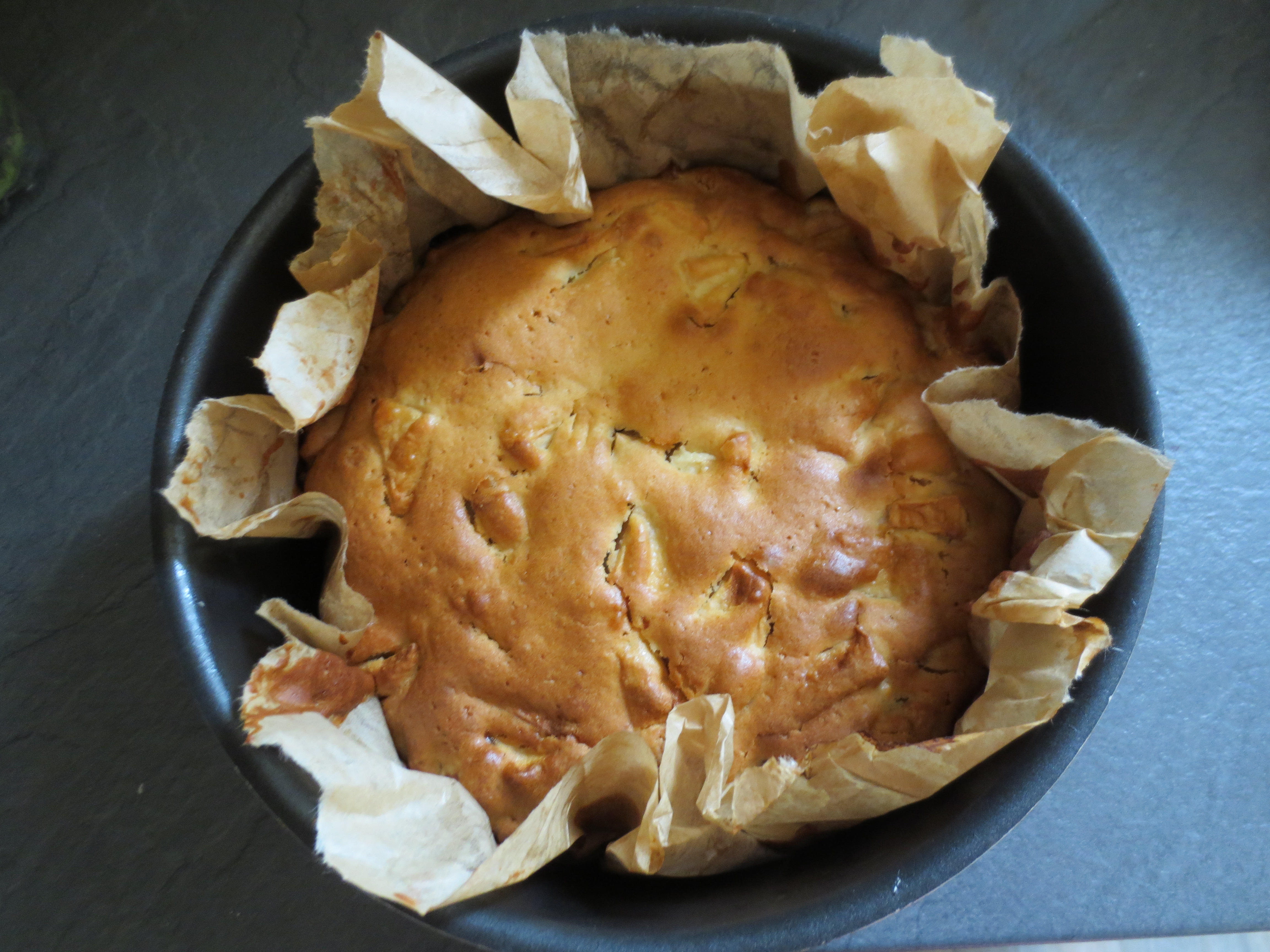
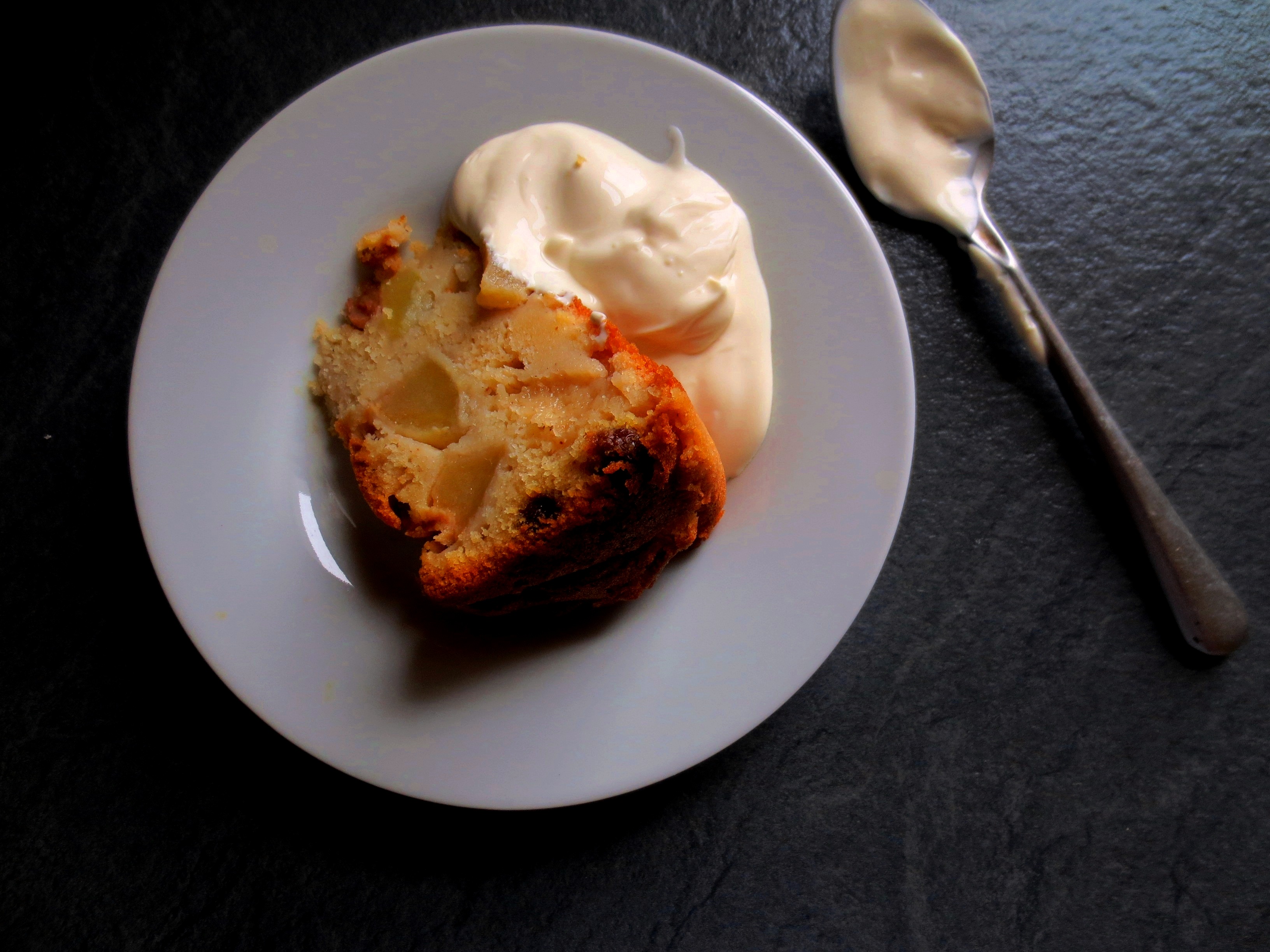
This is Mark Hix’s lovely regional apple cake made with cider and honey. In his case, the region is Somerset – mine is a Sussex story. You can use whatever local apples come your way – choose cookers, such as the Bramley, or sharp eaters at a pinch. A sweet dessert apple would be missing the point here.

Sussex apple cake

From Mark Hix, on Baking

I once ‘hilariously’ used cider vinegar instead of cider, by mistake. I thought it would destroy the cake but actually the flavours were enhanced by it, though it did make me think of fish and chips. If you’re unsure, stick to the original recipe. Also, don’t be put off by the sheer amount of apples required here. It really does make a difference. Dry apple cake isn’t fun.

Makes 1 x 24cm cake

170g unsalted butter, softened

170g soft brown sugar

3 medium eggs, room temperature, lightly beaten

1 heaped tbs of honey

240g self-raising flour, sifted

1 tsp mixed spice

600-700g cooking apples, peeled, cored and cut into smallish chunks

80ml cider

Prepare a loose-bottomed 24cm x 6-8cm deep cake tin by greasing it if it’s non-stick, or lining the base with buttered greaseproof paper if not. Pre-heat the oven to 160C/320F. Cream the butter and sugar together in a bowl until light and fluffy. Gradually beat in the eggs with the honey. Gently fold in the flour and mixed spice then stir in the cider and apples. Transfer to the cake tin and bake for 1 and a 1/4 hours, or until a skewer inserted into the centre comes our clean. Cool in the tin; serve warm on its own or with thick cream. Clotted cream would be stupendous here.

037

Other apple recipes to try:

Apple and rosemary cake

Lucas’s apple and sultana cake

Apple fritters

Hedgerow crumble

Share this:

  • Share on X (Opens in new window) X
  • Share on Pinterest (Opens in new window) Pinterest
  • Share on Facebook (Opens in new window) Facebook
  • More
  • Share on Reddit (Opens in new window) Reddit
  • Share on LinkedIn (Opens in new window) LinkedIn
  • Share on Tumblr (Opens in new window) Tumblr
  • Print (Opens in new window) Print
  • Email a link to a friend (Opens in new window) Email
Like Loading...

Rum & Raisin

23 Monday Sep 2013

Posted by Sophie James in Recipe

≈ 15 Comments

Tags

Alcohol, Autumn, Dessert, Food, Fruit, Ice cream, Ingredients, Recipes, Stories, Travel

IMG_0352

The last of the bewildering hot weather. Nights where one cotton sheet feels like being shrouded in carpet. Talking alone brings on the vapours, sweat beading on our foreheads as we nod sagely at someone we’re not listening to. Everyone drives like Vin Diesel, ramping up the volume on their car stereos, burning rubber as they overtake me on blind corners, tyres squealing like guinea pigs. And all I can think is how rude they’re being. That’s my version of a riot. Because I can’t complain. Because I’m English, and that’s all we do, while saying that we can’t do it. “I can’t complain” is our watchword. And I have been drawn to this detail of Englishness recently, perhaps because it’s so absent in LA.

Our English guests never complain either. We dance around each other in pained politeness. It must be akin to observing some ancient ritual – like conversational Morris dancing  – with no one able to say exactly what the problem is, or even if there is a problem. “Do you have a parrot?” our English guest asked me today. “Er, no. Why?” “No, no, it’s fine. I just thought I heard a parrot at around five o’clock this morning.” I knew what it was because it had woken us too. “It was a coyote.” “Really?” “Yes, they live in the hills here and when they’ve killed a deer, they make a kind of ‘yipping’ sound. They do it with car alarms and fire engines as well.” “Oh right.” We all imagined a decapitated deer. “Great, well, see you around then! Thanks for breakfast.” “Don’t worry, it’s really safe here. They very rarely come down into the complex.” As I said this I remembered the coyote in the hallway and the mountain lion up by the tennis courts. They tranquillized it and carried it off somewhere. I wish I’d just said: “Yes, we have a parrot. We’ll kill it for you.”

I can’t imagine this conversation between Americans. I still don’t know what it was really about, but I felt in strange harmony with it. I’m leaving soon for England and it helped me get into the rhythm of things again. It was nice to talk to someone from Eastbourne, knowing that in a few days I will be walking the Downs, talking about the weather, bemoaning the end of summer, arms folded against the wind.

IMG_0357

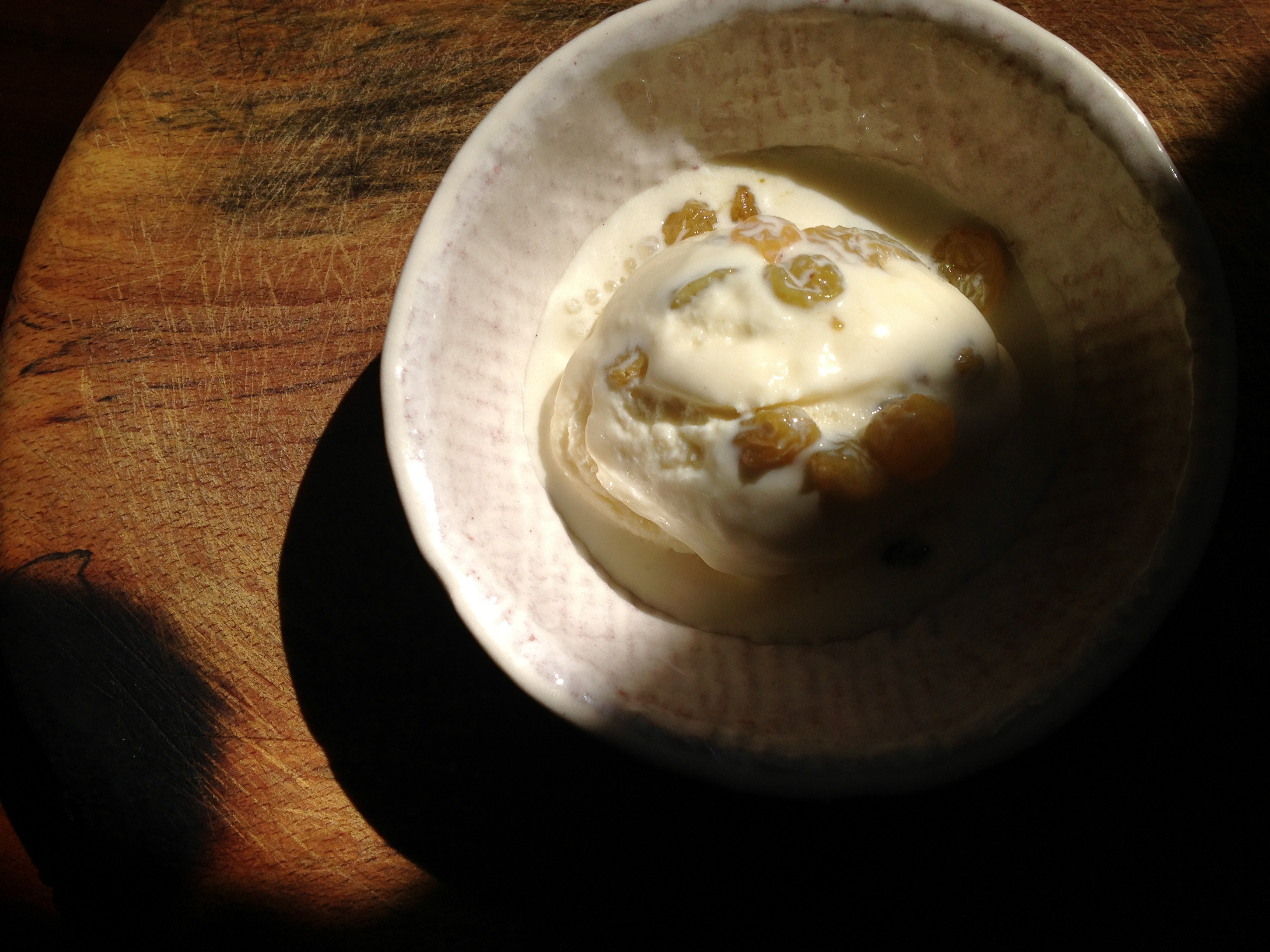
I would be happy if there were only five flavours of ice cream in the world: vanilla, chocolate, hazelnut, pistachio and rum & raisin. And raspberry ripple as a bonus flavour (for nostalgia purposes). But no cookie dough, rocky road or banoffee pie. And ‘sugar free’ vanilla – what’s that? Rum and raisin is a classic, and much underrated in my opinion. I know there are people who don’t like alcohol in sweets, but we will forge ahead regardless.

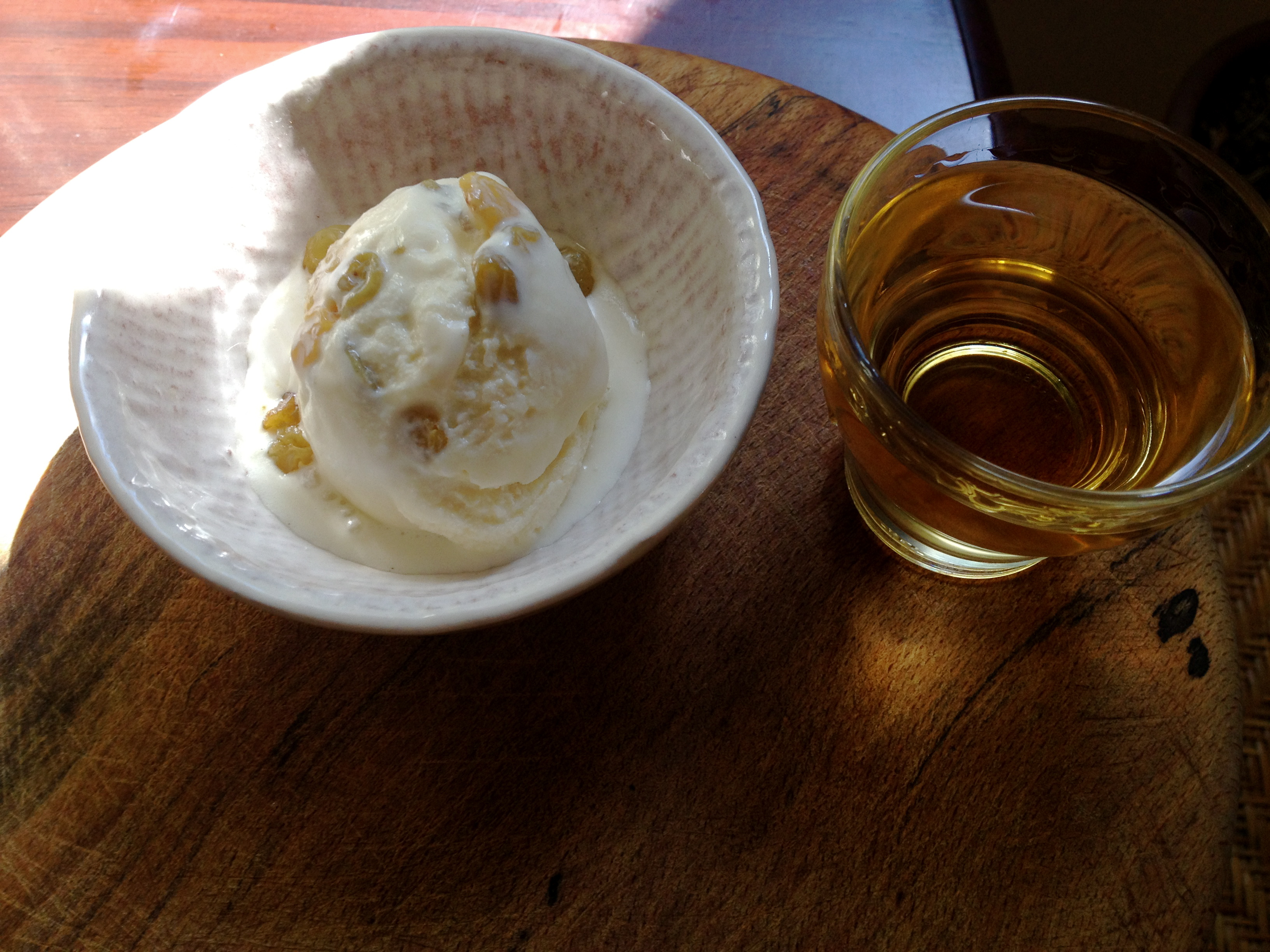
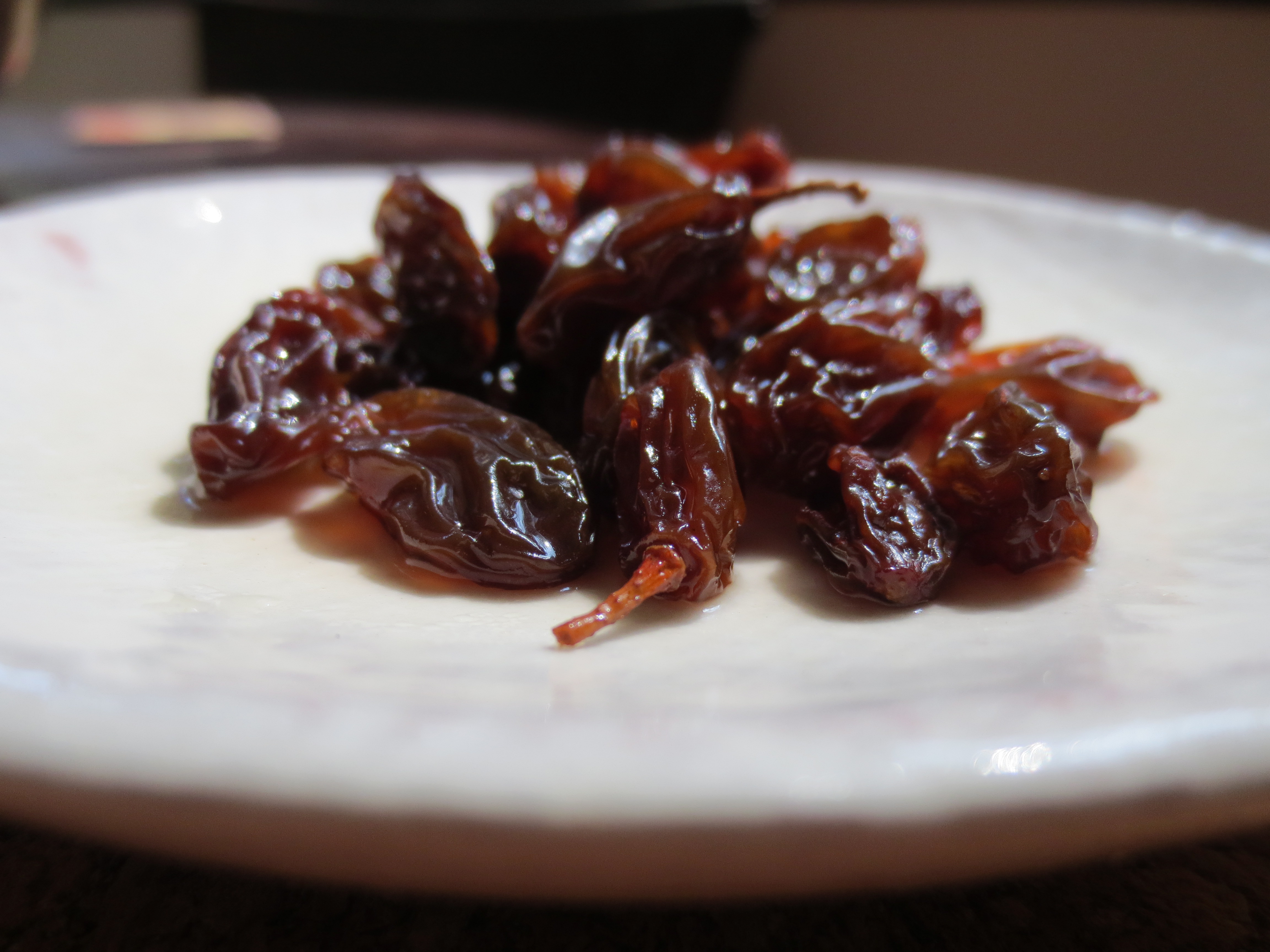
And this ice cream also lends itself to subtle doctoring: round and treacly Flame raisins, seeded Muscat raisins (sticky and crunchy and used traditionally in old bread recipes), meaty, soft, pale gold raisins (above) and Thompson seedless down below, still with their tails on, drowned in a saucer of rum – they are all so Californian, dried from the grape by our endless sun, and yet weirdly invisible, except for a few market stalls with their lumpen quarry. But I never gravitate there. Does one ever crave a raisin? But plumped up juicily in some searing alcohol and it’s quite a different matter. You could substitute the rum for sherry, if you like, and go for Pedro Ximénez if it’s available. This is a very ‘raisiny’ sherry, treacly and intense and good for a grown up ice cream such as this.

IMG_0866

Rum & Raisin Ice Cream

Adapted from Ice Cream! by Pippa Cuthbert & Lindsay Cameron Wilson

The soft brown sugar creates a darker, more complex flavour, but you can use caster sugar instead if you like. Sherry works well in place of rum.

100g (¾ cup) raisins

100ml (½ cup) dark rum or sherry

300ml (1¼ cups) whole milk

4 large egg yolks

100g (¾ cup) soft brown sugar

200ml (scant 1 cup) heavy/double cream

Put the raisins and 75ml (¼ cup) of the rum or sherry in a bowl and set aside to soak overnight or until the raisins have absorbed almost all the liquid.

Heat the milk and cream in a heavy-bottomed saucepan to near-boiling point, then remove from the heat. Beat the egg yolks and sugar together, using an electric whisk, until thick and pale. Loosen the egg with some of the milk/cream mixture, then pour the eggs and sugar back into the saucepan. Stir well to mix everything properly and then return to a low heat. Stir until the mixture is thick enough to coat the back of a wooden spoon. Remove from the heat, pour into a bowl and place over iced water to cool. You will need to stir it from time to time to avoid the custard developing a skin.

When the mixture is completely cold, churn in an ice cream maker, adding the remaining rum/sherry and all the raisins towards the end of churning. The raisins have a tendency to sink to the bottom before the ice cream can harden and suspend them, so you may want to give it a stir after half an hour or so in the freezer to distribute the raisins more evenly. Serve with a glass of either rum or sherry, or just pour it straight over the ice cream.

Other recipes with raisins:

Banana and raisin bread

Sticky toffee pudding

Share this:

  • Share on X (Opens in new window) X
  • Share on Pinterest (Opens in new window) Pinterest
  • Share on Facebook (Opens in new window) Facebook
  • More
  • Share on Reddit (Opens in new window) Reddit
  • Share on LinkedIn (Opens in new window) LinkedIn
  • Share on Tumblr (Opens in new window) Tumblr
  • Print (Opens in new window) Print
  • Email a link to a friend (Opens in new window) Email
Like Loading...

Topsy turvy

09 Monday Sep 2013

Posted by Sophie James in Recipe

≈ 20 Comments

Tags

Almonds, Baking, Cake, Fruit, Ingredients, Los Angeles, Recipes, Stone fruit, Stories

IMG_0218

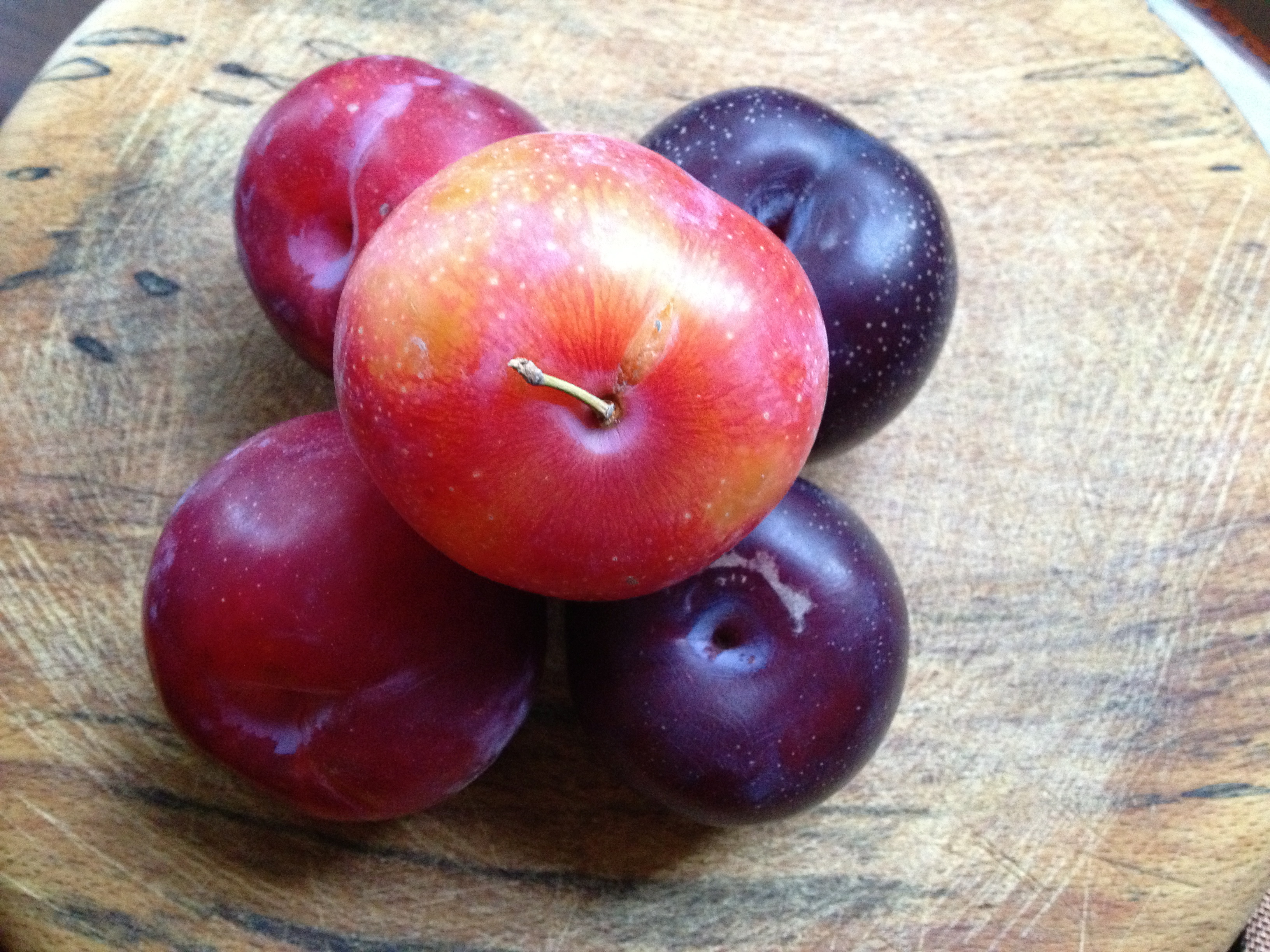
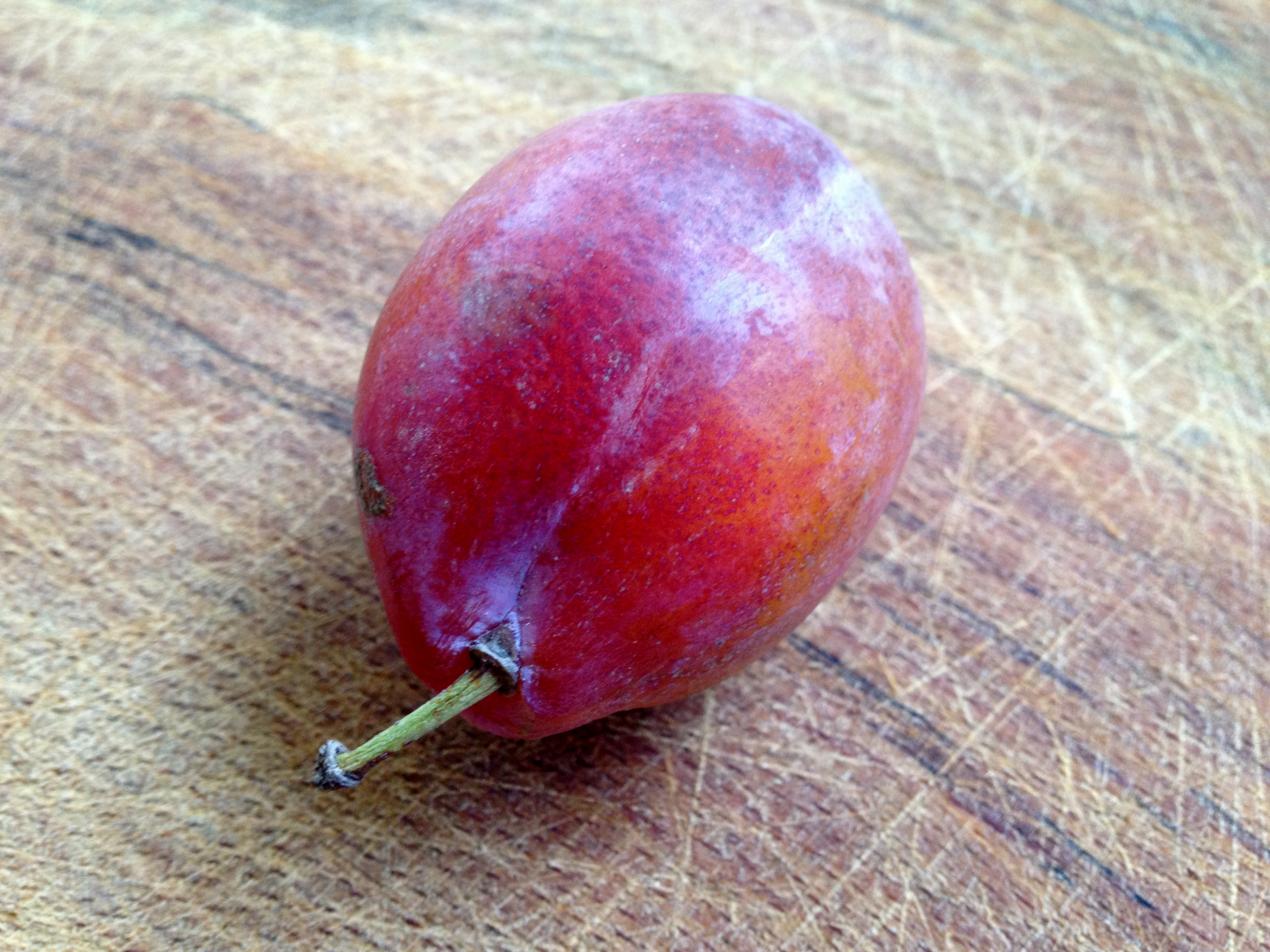
Plums are everywhere and it seems futile to resist. Although I managed it. Something about the skins that pulls one off balance. You should eat them bare, gnaw around the stone and savour the juice as it cascades down your arm. In the end, I cooked with apriums. Yes, I know it sounds more like an edible food-like substance (paraphrazing Michael Pollen) but it is the real thing. They have the rich wateriness of plums, the sour, clingy skin, but then there is apricot. They taste like the sibling of nectarines without the solidness of the flesh. Are we all clear then?

I was hellbent on making an upside down cake, so here I am. And it’s been an upside down few weeks. If I was part of the Mister Men series I would probably be upside down (they would put me in trousers, obviously) as I went about my business. I lost my camera. This was a camera I had found about two years ago. I put up posters in the area advertizing its whereabouts and when no one claimed it, I adopted it. It was a happy union. I took all the pictures for the blog with it. It accompanied me everywhere. And then suddenly it was gone – it was absolutely nowhere. I returned to gaps and crevices hoping to feel its bulky angles. It’s true what the comedian Lee Evans said: when you lose something you keep going back to the same place to look for it, the mind refusing to acknowledge you’ve just been there. Hands run over surfaces, feeling blindly behind books, fingers slide into nooks, and slide out again. I retraced my steps like an amateur sleuth.

IMG_0335

I went to the doctor’s and sidled up to the receptionist with my query – I had all the details ready: I may have left my camera in the bathroom on my last visit. But someone was having a panic attack. This news was relayed to the assembled company with the words “You f******g assholes, she’s passed out!” According to the receptionist, now on the phone to emergency services, this man’s girlfriend had been having a panic attack, had left and was now sitting in the car outside, unconscious. Doctors and nurses spilled through the doors with wheelchairs and stethoscopes; they ran as if out of a burning building. It was mayhem. Had any of them seen my camera? It seemed not a good time to ask.

The girl who refrigerates the stool samples ran past me. Nobody was left. A few days later I encountered a man who was dispensing free hugs outside the farmers’ market. That is not me with the cute butt and sawn-off trousers, by the way. It was me later. He grasped me like a lumberjack. He didn’t speak but I felt as if he knew everything. What a difference it would make, I thought, if they had people like that around, parked on street corners, standing by subway tunnels, in the waiting room at the doctor’s. Around for when everything turns upside down.

IMG_0259

Upside Down Cake with Stone Fruit

Adapted (everso slightly) from Pastry Studio

There is such a dizzying array of plums about in LA at the moment that it makes sense to use them here, or you could go for the hybridized pluots or apriums (as I did). However, this recipe was originally intended for apricots, and I suspect it would work equally well with other stone fruit too; anything that gives up its juice in a charitable manner. Nectarines, peaches and the like. The use of honey in the caramel makes quite a difference to the overall taste, and brings out the piquancy of the fruit. 

Serves 8

For the fruit caramel

3 tablespoons honey

1 tablespoon butter

½ teaspoon cinnamon

4 – 6 plums (depending on size)

2 – 3 tablespoons toasted flaked almonds

For the cake

140g (1 cup) flour ( this could be rice flour etc)

40g (½ cup) toasted flaked almonds

1½ teaspoons baking powder

¼ teaspoon salt

115g (8 tbs) butter at room temperature

150g (¾ cup) caster sugar

2 large eggs at room temperature

1 teaspoon vanilla extract

¼ teaspoon almond extract (optional)

120 ml (1/2 cup) milk at room temperature

2 tablespoons honey, to glaze

Preheat oven to 350F/190C.  Lightly grease a 10 inch (25cm) cake tin.

For the fruit caramel layer, put the honey, butter and cinnamon in a saucepan and heat until melted. Pour into the bottom of the cake pan, then lift the pan and swirl to distribute evenly.

Slice the plums in half, remove the stones, and then cut the fruit into slices (or quarters), and fan them out on top of the honey butter mixture. Make sure that whatever fruit you use covers the bottom in a substantial layer, since it will cook down while baking. Fill in the gaps with a sprinkle of toasted almonds.

For the cake batter, place the flour, almonds, baking powder and salt in the bowl of a food processor or blender. Whizz until the almonds are ground but with some texture still. Pour into a bowl and set aside.

Cream the butter and sugar until light and fluffy, about 4 minutes, scraping down the sides of the bowl as needed. Add vanilla and almond extracts if using and blend. Beat in the eggs one at a time, scraping down the bowl and mixing thoroughly after each addition.

Add a third of the flour mixture alternately with half the milk, beginning and ending with the flour. Don’t overmix. Spread the batter evenly over the fruit.

Bake until a toothpick tests clean, about 42 – 45 minutes. The sides of the cake will have started to shrink away from the sides of the pan and it will feel soft and springy to the touch. Place on a wire rack to cool for 15 minutes. Run a knife around the edge of the pan to loosen the cake. Invert the cake carefully using a plate – beware of any cascading hot juices.

Warm 2 tablespoons of the honey and brush on to the surface of the cake to glaze. Cool completely or serve at room temperature, as you would a pudding, with some cream of course.

Three other recipes that involve stone fruit:

Chocolate and apricot tart

Peach and amaretti tarte tatin

Sauteed plums and chocolate pudding

Another use for honey:

Quince paste and Manchego

Share this:

  • Share on X (Opens in new window) X
  • Share on Pinterest (Opens in new window) Pinterest
  • Share on Facebook (Opens in new window) Facebook
  • More
  • Share on Reddit (Opens in new window) Reddit
  • Share on LinkedIn (Opens in new window) LinkedIn
  • Share on Tumblr (Opens in new window) Tumblr
  • Print (Opens in new window) Print
  • Email a link to a friend (Opens in new window) Email
Like Loading...

Crema Catalana plus fennel

12 Friday Jul 2013

Posted by Sophie James in Recipe

≈ 9 Comments

Tags

Fruit, Herbs, Ingredients, Nature, Patience Gray, Recipes, Spain, Stories

IMG_3065

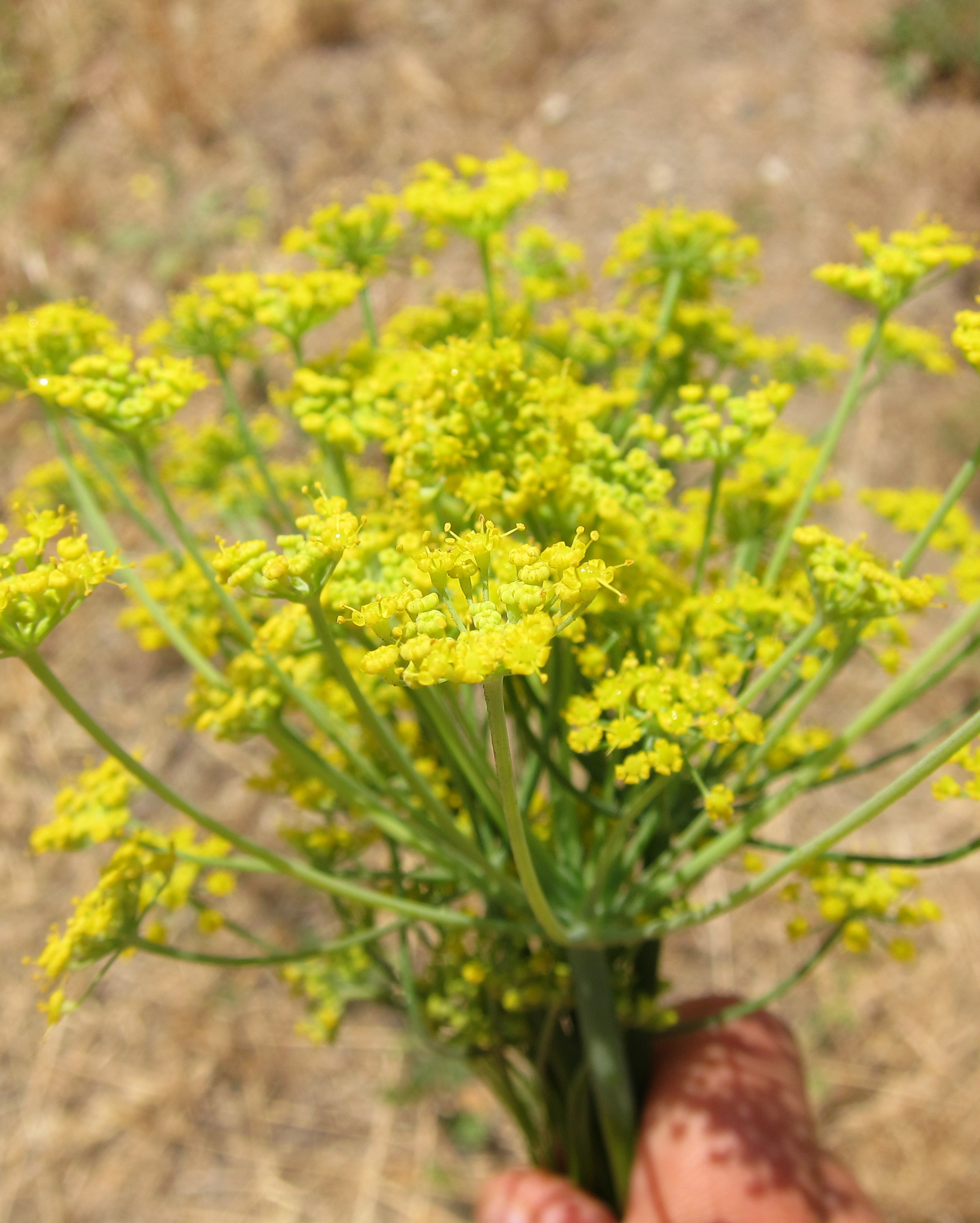
These are wild fennel flowers. They are even sweeter and more fragrant than the fronds, but their pollen flies everywhere, so if you’re thinking of picking some for their prettiness alone you might want to be aware of ‘pollen dandruff’. We picked off the little flower heads and munched away in the car. It was amazing how sweet they were.

Traditionally, the flowers are immersed in white wine vinegar, which is then used to enhance the flavour of capers. I didn’t think capers needed enhancing, but apparently they do. I did in fact thread a flower head through the neck of a bottle of fairly standard white wine vinegar. Apart from the excitement of doing this successfully which made me think of ships in bottles, the vinegar was gorgeous: thinly acid but full of glorious sweet fennel, and as the days passed it took on a deeper, throatier quality. I wanted to pass this on, because it really makes a difference to a salad dressing if you use it.

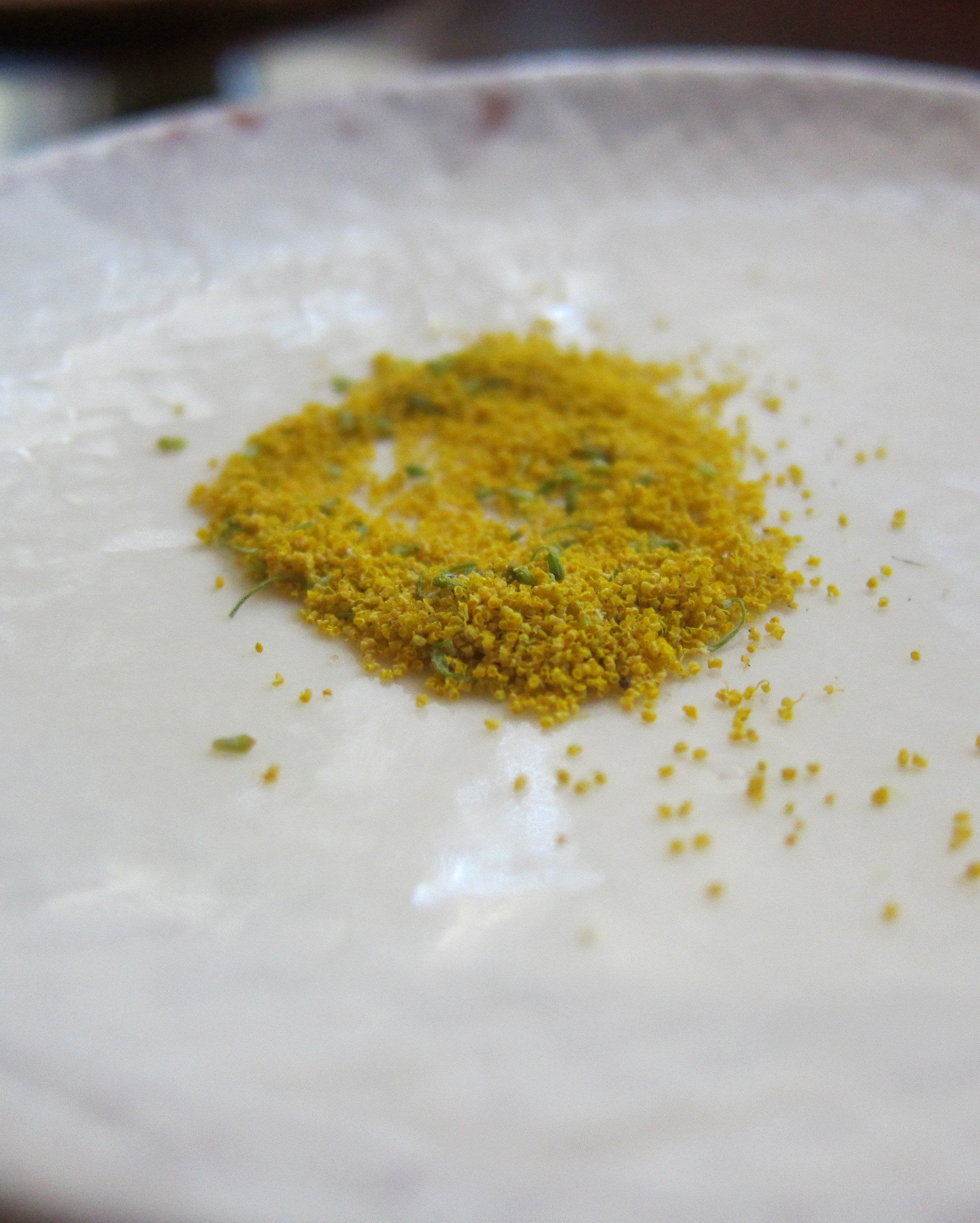
Fennel pollen

Fennel pollen

This recipe is from Catalonia where they call it Crema Cremada, which means ‘burnt cream’. Everywhere else, it is called Crema Catalana, which tells you everything you need to know about the Catalan personality. It is a simple custard infused with lemon zest and, in this version, fennel. If you don’t have access to wild fennel, use fennel seeds  – all the recipes I have read do. Not everyone will like this custard, because it has such a polarizing taste. Normally I wouldn’t suggest a recipe that has this effect, because I think food should be democratic and unstuffy. But here I think that you should carry on regardless. Because it really is quite special, and once tried it is difficult not to fall in love.

I tried to describe the unique flavour of wild fennel in my post on the fronds. The most dominant element is licorice, and the flowers bring this to the fore. But while the commercial seeds have something of the night about them (the Michael Howard of the seed world) with a tarry, smoky, malt-like quality, the flowers (and the wild seeds too) are fresh, sweet almost to the point of sharpness and totally alive in the mouth. They taste wild, in fact. I think that is why milk is such a good vehicle here. Creaminess brings out the softness and sweetness and chilling dulls any lingering edge. You can go one step further and make ice cream, which is also lovely.

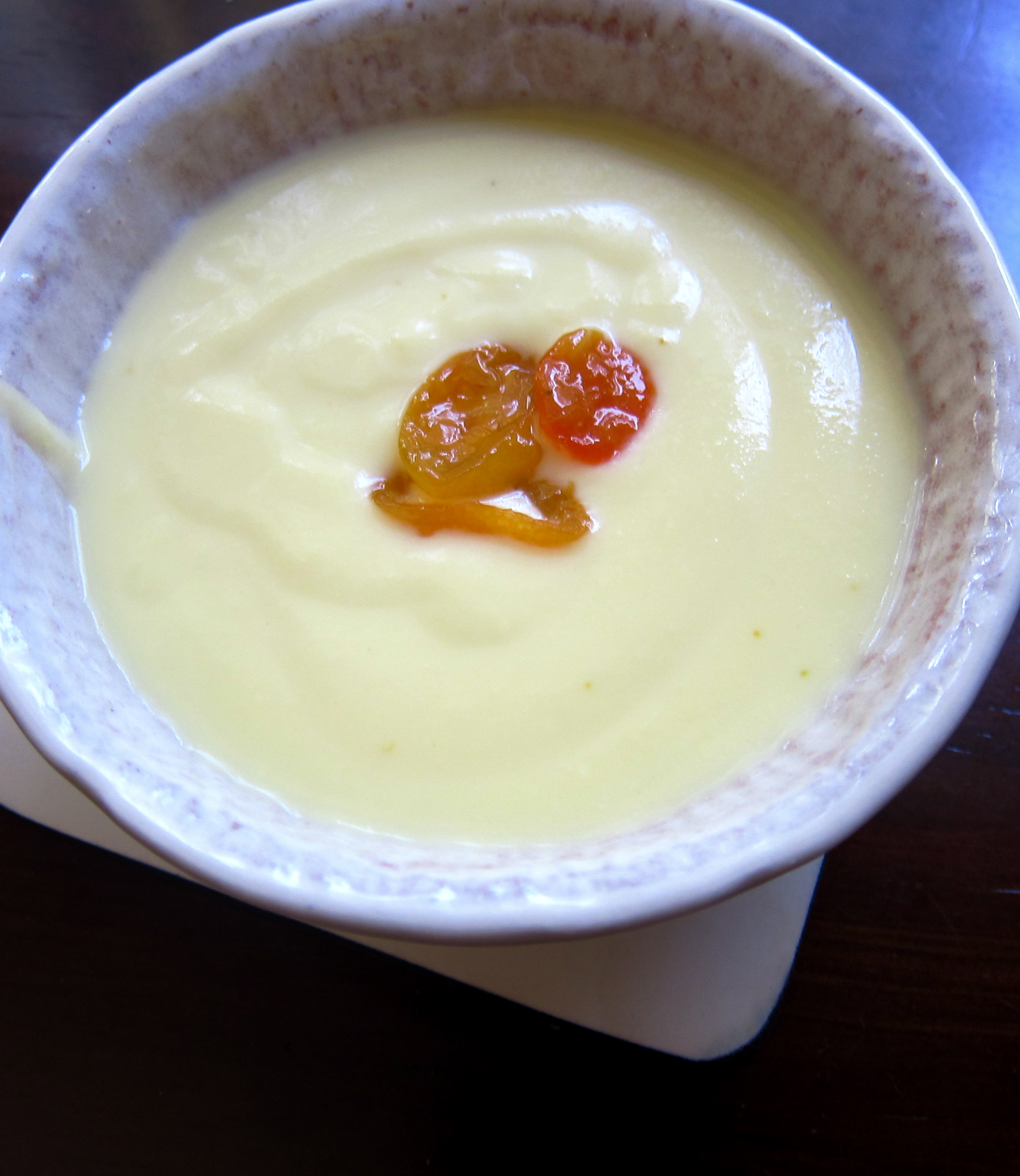
Crema Catalana with kumquats

Crema Catalana with candied kumquats

In a month or so, the mellow yellow starbursts at the top of the fennel plant will be full of the seeds, housed in pods, to be taken home, dried and stripped. I suppose, given that I live in a city and that many of us now do, it is an experience in wonder to be reconnected to old practices and traditions like this. I am aware, though, that this recipe comes perilously close to what my old acting teacher used to call the ‘crumbling pigs’ arseholes’ school of cooking, by which she meant a certain kind of fey, precious approach to food, using inaccessible or pretentious ingredients. I was thinking of calling this post Crumbling Pigs’ Arseholes in her honour, but thought better of it.

Crema Catalana

Adapted from Patience Gray, Honey From A Weed

If you really hate the idea of fennel, infuse the milk with a cinnamon stick instead – this is also traditional.

1 litre of whole, full cream milk

2 tbs cornflour

1 lemon, the peel cut into 1 or 2 long strips

4 egg yolks

4 tbs sugar

1 tbs crushed fennel seeds, 5g fennel flowers or 1/2 tsp of fennel pollen

In a cup dissolve the cornflour in 4 tbs of cold milk (the cornflour will prevent the eggs from curdling). Heat the rest of the milk in a large pan with the lemon peel and the fennel until it just begins to boil. Remove from the heat and leave to infuse for at least 30 minutes. In a bowl, beat the egg yolks with the sugar to a thick, pale cream. Then beat in the cornflour mixture. Gently reheat the milk and beat in a ladleful. Now slowly strain the rest of the infused milk into the egg/cornflour mixture. Pour this back into the pan and heat slowly, stirring continuously with a wooden spoon until the custard thickens to coat the back of it. Let it cool, stirring occasionally to prevent a skin from forming. Then pour into 6 clay ramekins or one large clay pot and chill for at least 4 hours, preferably overnight. I served mine with some candied kumquats, a nice combination.

IMG_3060

The Burnt Version

You sprinkle sugar over the chilled custard and heat it to a bubbling crisp. Traditionally, a salamander is used here – this is an iron disc that is heated until white-hot and then held over the sugar. The sugar caramelizes evenly without warming the custard. This is what I have always loved: the starkness of contrast in heat and cold. A grill/broiler will work too but you need to make sure the dishes you are using can withstand the heat, and there won’t be the same hot/cold differential. Or use a blowtorch.

Follow my blog with Bloglovin

Share this:

  • Share on X (Opens in new window) X
  • Share on Pinterest (Opens in new window) Pinterest
  • Share on Facebook (Opens in new window) Facebook
  • More
  • Share on Reddit (Opens in new window) Reddit
  • Share on LinkedIn (Opens in new window) LinkedIn
  • Share on Tumblr (Opens in new window) Tumblr
  • Print (Opens in new window) Print
  • Email a link to a friend (Opens in new window) Email
Like Loading...

Deep Purple

04 Thursday Jul 2013

Posted by Sophie James in Recipe

≈ 13 Comments

Tags

Aromatherapy, Fruit, Herbs, Ingredients, Nature, Recipes, Stories, Travel

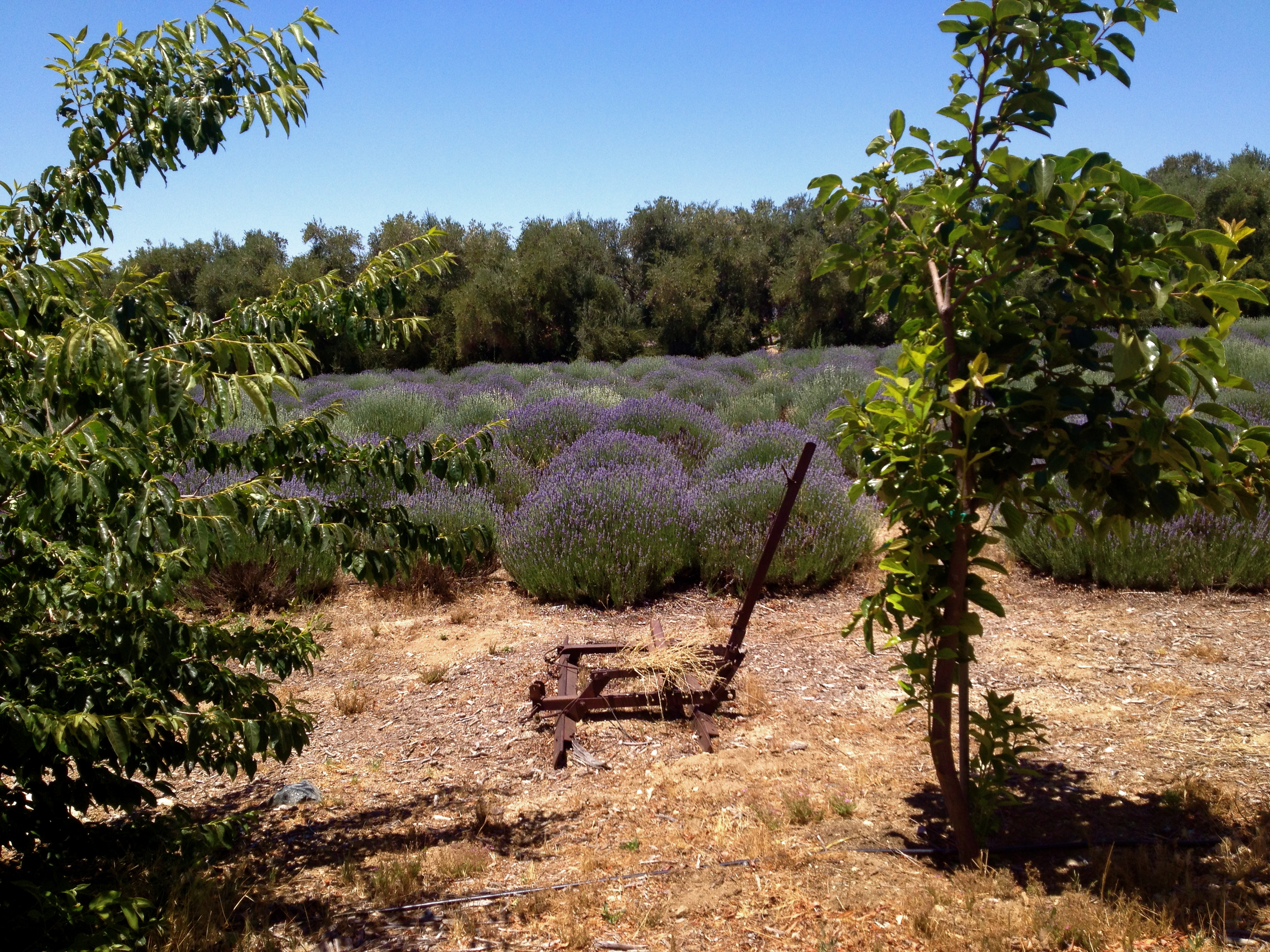
IMG_3022We recently went to a lavender festival in an area called, confusingly, Cherry Valley. No cherries as such, but a billowing sea of lavender instead, made all the more surreal by its position in a vast, merciless desert, with windswept plains filled with tumbleweed and signs advertising pleasant and welcoming mortuaries. The air was different too. Gone was the hot, dry wind that smelt vaguely burnt in nearby Palm Springs. There was coolness and an endless waft of fresh lavender here, so different to dried, which makes me think of scones and English B&Bs and ‘granny’s pants’. By this I mean stored, clean pants from another era, washed with old soap and perhaps not dried fully, so, though clean, there is a suggestion of staleness.

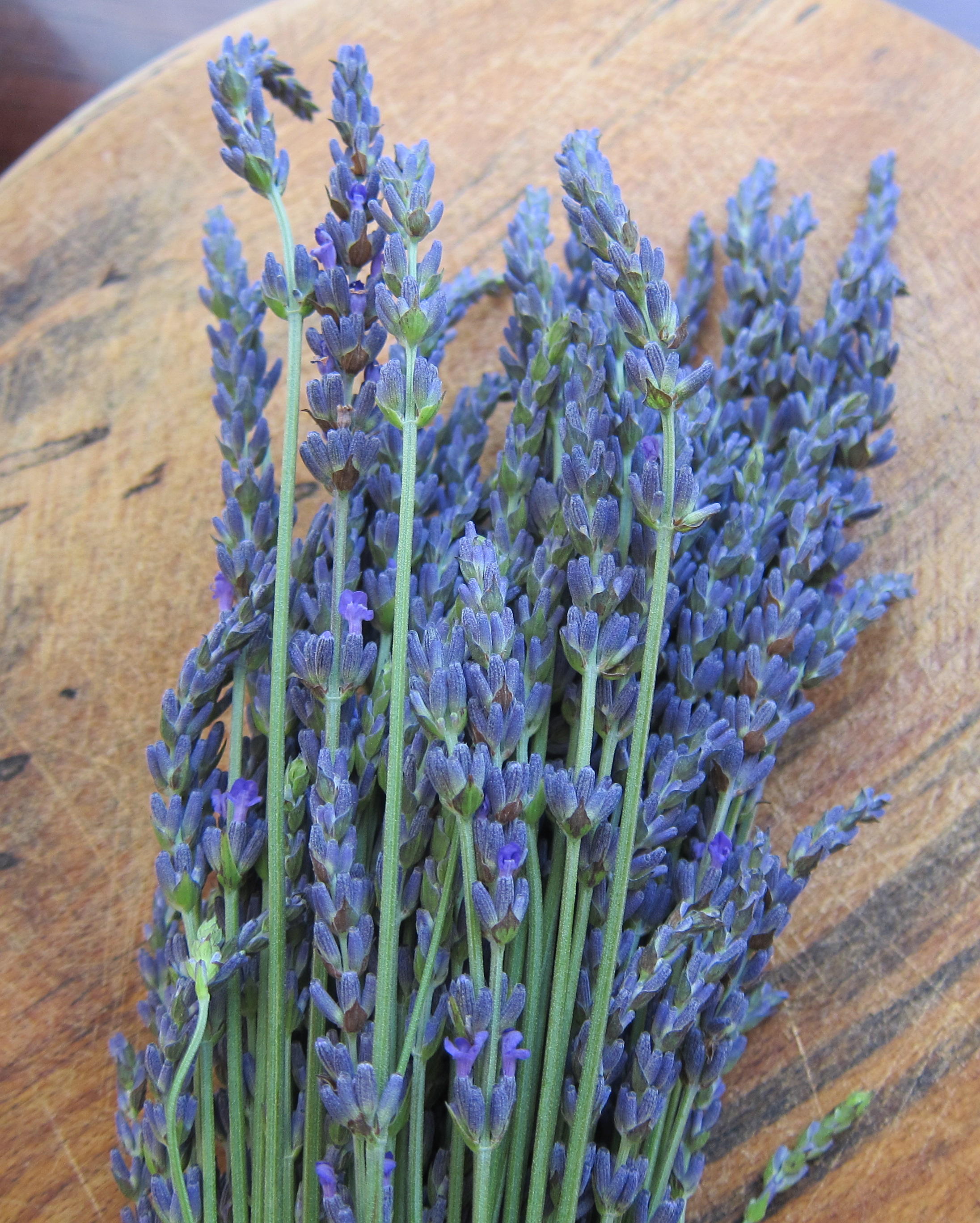
A fresh sprig of lavender – or should I say ear because to me it has the same corn-like structure – is quite different. Camphorous, sultry and direct. It smells more like it looks: purple and lusty. It is known as a sedative, mainly, something you apply to yourself or a pillow to aid sleep, but according to the talk we attended, it is more of a balancing herb, bringing you back from the brink, settling you back into the centre of things. There were many other things growing, thriving in this oasis – thickets of tea tree, and a long avenue of broad-necked olive trees amongst them. But you couldn’t escape the lavender. We waded through it, running our fingers through the brittle stalks, letting them whip back against our thighs, crumbling the flowers between finger and thumb, enjoying their spiky scent and tight whorls of colour. We found a stall selling lamb kebabs and sat rather drunkenly in the sweet fug of lavender and smoky meat.
IMG_0131The night before we’d decided to visit a casino nearby. We walked in and I had to walk back out again. Noise, made up of music and machines merging like screaming sirens in vague counterpoint, cigarette smoke, cold, piped air, and the look of glassy appetite on the faces of the gamblers all combined to remind me why zombies are still such a resonant force in our culture. Nothing about it made sense to me. And there are no windows, and no clocks inside the place, so you lose any sense of where you are. Who you are, even. More tawdry still is the fact that the casino is built on an Indian reservation, a result of the deal made between Indian tribes and the federal government that allows the Native Americans ‘tribal sovereignty’. It feels, to me at least, like a bit of a crap deal.

So we needed the lavender the next day. I was wondering, looking around, if the same people at the casino the night before were here in this place. It was possible: there were lots of benign-looking elderly ladies at the casino, perched on stools, resting their sticks against the machines, handbags at the ready. And here they were too, with their cameras and grandchildren. I’m not sure how you could do that – how you could square that world with this one. Or how we can ignore the world beneath both, when the land belonged to the Native Americans, before cultivation and agriculture, and every tree, plant and herb was theirs.

Tea tree

Tea tree

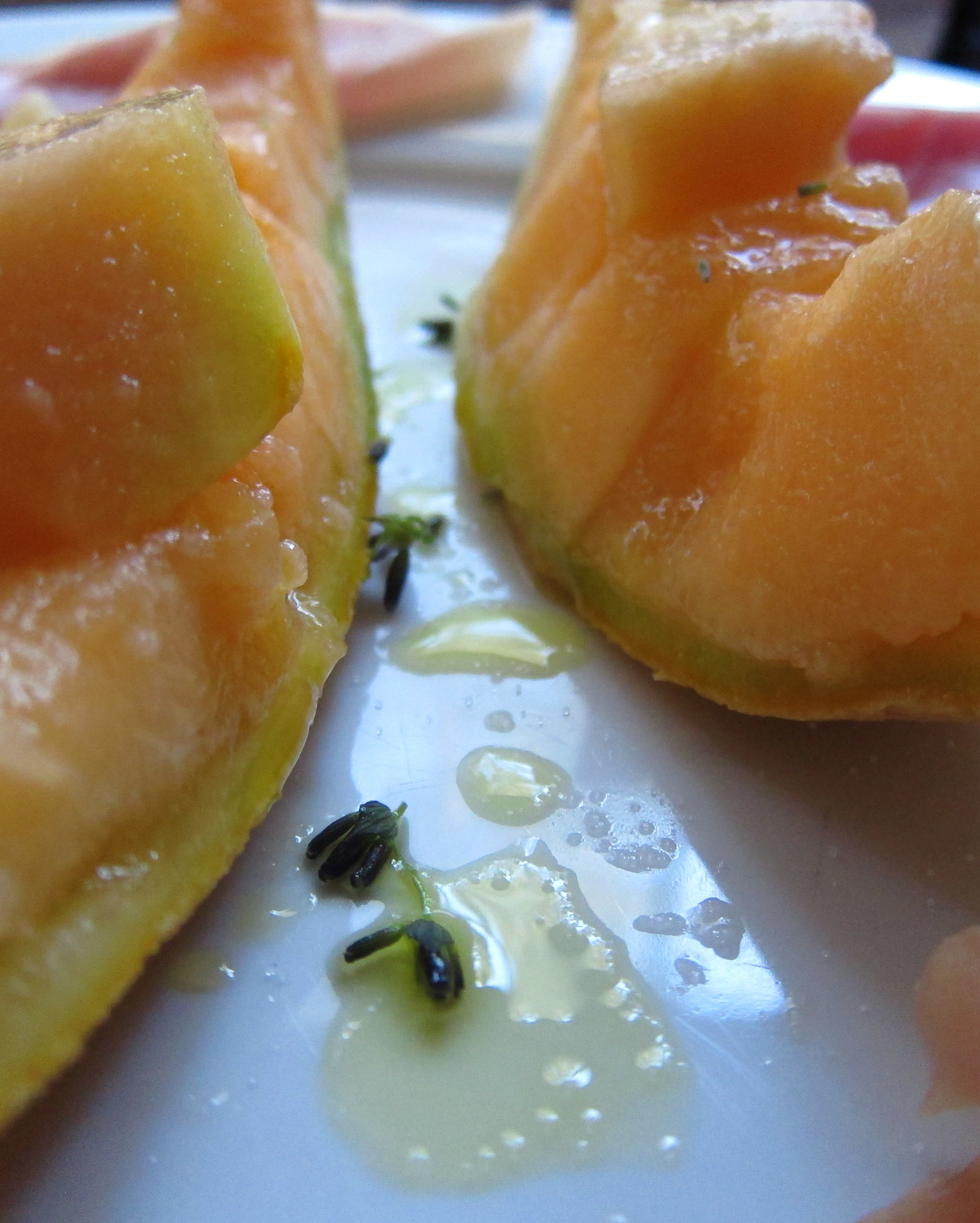
Lavender is an odd one to cook with – bitter or rather ‘faded’ has been my experience so far. Lavender honey works beautifully, of course, and there are Provencal dishes that use it imaginatively and to good effect: traditionally, it’s cooked with rabbit. I understand the theory that it works best if treated like rosemary and thyme. But I’d still rather cook with the last two, and keep the lavender as an essential oil, where it feels fresh and alive – the closest to rolling a torn sprig in my hand and letting the smell climb into my limbic system. Ken from The Garum Factory suggested I go the lavender-infused olive oil route and add a few drops over a dish (in this instance melon and Serrano ham) and he was right. The lavender is gentle and warm, and definitely in the background, with just a hint of floral. No granny’s pants here.
From the aromatherapist at the festival, I learnt the simplest technique for using the essential oil: add a few drops to a base of water and use it as a room and body spray. It is beautifully simple and effective. I’ve been dousing my sheets with it and myself (it is, along with tea tree, a clear oil and doesn’t stain fabric. You can also apply it neat to the skin). Also great for getting rid of any ‘untoward’ smells in the house. Recipes below.
IMG_0159
Lavender Spray
 Fill a clean spray bottle with 4 ounces of pure distilled water (or tap water)
Pour 6 drops of lavender essential oil directly into the spray bottle
Tightly close the bottle and shake vigorously to combine
Be sure to shake it before each use, as the water and essential oils tend to separate

IMG_3040

Lavender-infused olive oil, melon and Serrano ham
Adapted from Skye Gyngell, My Favourite Ingredients
English lavender (Lavandula angustifolia and Munstead) is commonly used for cooking
250ml (1 cup) of extra virgin olive oil
1 lemon
2 sprigs of fresh lavender
Pare the lemon zest in long strips using a vegetable peeler, and place it in a small pan along with the sprigs of lavender. Pour over the olive oil and warm gently to body temperature (around 99F) for ten minutes so the lemon and lavender can release their aromas. If you want a more pronounced lemon flavour, add the zest of 2-3 lemons. Remove from the heat and let stand for 30 minutes. Use on the day of making or within 24 hours. If using with the melon and ham, dribble over the cold fruit (which should be lightly salted) and serve with a scattering of lavender buds or flowers if you like.
“Mercury owns the herb; and it carries his effects very potently. Lavender is of special good use for all the griefs and pains of the head and brain that proceed of a cold cause, as the apoplexy, falling-sickness, the dropsy, or sluggish malady, cramps, convulsions, palsies, and often faintings. Two spoonfuls of the distilled water of the flowers taken, helps them that have lost their voice, as also the tremblings and passions of the heart, and faintings and swooning, not only being drank, but applied to the temples, or nostrils to be smelled unto; but it is not safe to use it where the body is replete with blood and humours, because of the hot and subtile spirits wherewith it is possessed.” 
Nicholas Culpeper, Complete Herbal (1653)

Share this:

  • Share on X (Opens in new window) X
  • Share on Pinterest (Opens in new window) Pinterest
  • Share on Facebook (Opens in new window) Facebook
  • More
  • Share on Reddit (Opens in new window) Reddit
  • Share on LinkedIn (Opens in new window) LinkedIn
  • Share on Tumblr (Opens in new window) Tumblr
  • Print (Opens in new window) Print
  • Email a link to a friend (Opens in new window) Email
Like Loading...
← Older posts
Newer posts →

Enter your email address to follow this blog and receive notifications of new posts by email.

Join 2,216 other subscribers

Top Posts & Pages

Early Nigel
Plums and Pluots
Recipe List
Power of two
Frilly
Pause

Recent Posts

  • At my allotment
  • A compendium of sorts
  • Mulberries
  • We are nature
  • Leaving home
  • A treacherous herb
  • Just stop it
  • Why I swim

Great books I’ve read

Blogs/Websites I read

  • Letitia Clark
  • Nigel Slater
  • Room to heal
  • Samantha Harvey
  • Stewart Lee
  • The Kureishi Chronicles
  • The Marginalian
  • Tom Cox
Follow Stories from the Stove on WordPress.com

Archives

  • June 2023
  • February 2023
  • September 2022
  • August 2022
  • July 2022
  • May 2022
  • February 2022
  • December 2021
  • August 2021
  • April 2021
  • March 2021
  • January 2021
  • June 2020
  • November 2018
  • August 2017
  • July 2017
  • May 2017
  • April 2017
  • February 2017
  • January 2017
  • November 2016
  • May 2016
  • October 2015
  • July 2015
  • June 2015
  • April 2015
  • March 2015
  • January 2015
  • December 2014
  • November 2014
  • October 2014
  • September 2014
  • August 2014
  • July 2014
  • June 2014
  • May 2014
  • April 2014
  • March 2014
  • February 2014
  • January 2014
  • December 2013
  • November 2013
  • October 2013
  • September 2013
  • August 2013
  • July 2013
  • June 2013
  • May 2013
  • April 2013
  • March 2013
  • February 2013
  • January 2013
  • December 2012
  • November 2012
  • October 2012
  • September 2012
  • August 2012
  • July 2012
  • June 2012
  • May 2012
  • April 2012
  • March 2012
  • February 2012
"A WOW piece!" Claudia Roden on Walnut Bread

Walnut bread

Lucas’s chocolate marmalade slump

Tags

Afternoon tea Allotment Almonds Art Autumn Baking Bread Breakfast Cafes Cake Childhood Chocolate Christmas Citrus Claudia Roden Cookbook Cooking Dessert Devon Dinner Elizabeth David England Exmoor Fish Food France Fruit Gardening Gelato Gluten-free Herbs Home Homesickness Honey Ice cream Ices Ingredients Italy Jam Jane Grigson Lemons London Los Angeles Lucas Hollweg Marmalade Meat Mediterranean Meyer lemons Nature Nigel Slater Nonfiction Nuts Onions Patience Gray Poetry Pudding Reading Recipe Recipes Salad Sea Seasons Soup Spain Spices Spring Stone fruit Stories Summer Sussex Travel Vegetables Winter Writing Yoghurt

A WordPress.com Website.

Privacy & Cookies: This site uses cookies. By continuing to use this website, you agree to their use.
To find out more, including how to control cookies, see here: Cookie Policy
  • Subscribe Subscribed
    • Stories from the Stove
    • Join 2,084 other subscribers
    • Already have a WordPress.com account? Log in now.
    • Stories from the Stove
    • Subscribe Subscribed
    • Sign up
    • Log in
    • Report this content
    • View site in Reader
    • Manage subscriptions
    • Collapse this bar
 

Loading Comments...
 

    %d