• Recipe List
  • Sophie

Stories from the Stove

Stories from the Stove

Tag Archives: Ingredients

Apricots

25 Monday Jun 2012

Posted by Sophie James in Recipe

≈ 1 Comment

Tags

Chocolate, Cookbook, Cooking, Dessert, Food, Fruit, Ingredients, Nonfiction, Recipes, Spices, Stories
IMG_8556

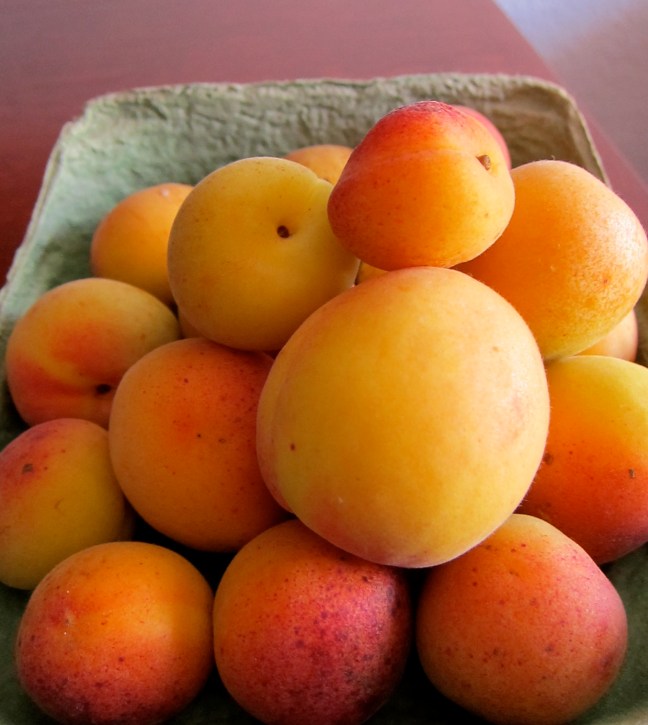
Apricots can go either way. Flabby, woollen and pointless or lush, tender and – in the case of apricot jam – unforgettable. Also, like plums, apricots are blissful with chocolate. I came over all funny when I realized this. I’d love to know who originally dreamt up apricot and chocolate tart, and give him/her a medal. I think the chocolate brings out the spice and sweet acid in the fruit. Whatever. No glossy cooking terms can possibly do justice to how successful it is. It’s the Sophia Loren and Carlo Ponti of food marriages. He’s the chocolate.

Apricot compote is brilliant as an almost-jam. It is also divine on its own, or with a plain summer cake. Ice cream also works – chilly tufts of the stuff melting into syrup – and almost any flavour. I think apricots are one of those stone fruits enhanced by cooking. Particularly poaching, which brings out the fruit’s complexity and freshness. It blooms under heat; its sharpness is mellowed, but still there is edge, and the texture becomes burstingly fragile.

Now to the difference between one apricot and another. One word: water. Dry farmed, however counter-intuitive this may seem, is the reason why the best apricots have that intense concentration of flavour. If apricot trees are too wet, the fruit will be big and puffy, and the texture like eating someone’s earlobes. Arguably the finest apricots, at least in this area, are Blenheims. Their proud owners – or one of the very few – are Eric and Helle Todd from Forcefield Farms in Santa Paula. Their apricot trees grow in a dry riverbed, the fruit is small and has an intense aroma of honeysuckle. This season has been tough on them, and the crop is depleted due to an early frost, but they will be bringing out their little jewels in a week or so. Track them down at your local farmers’ market.

Royals are also very good indeed; some are almost as small as a pea, and rosy-cheeked. These tangy apricots go well with goat’s cheese; Leonora, from Leon in Spain, is gorgeously dense, creamy and cave-like.

It is an early fruit, precocious in name and nature – the word apricot comes from the Latin praecox – and its blossoms often fall prey to the cold. More fragile than peaches, ‘cots have none of their glamour or following, but they are a cook’s dream. I had to do some serious whittling to arrive at these two recipes.

Poached apricots

Adapted from Jane Grigson’s Fruit Book

About 12-15 apricots, whole

2 cups (500ml) water

1 scant cup (200g) cane sugar (or maple sugar)

2-3 cardamom pods

1 cinnamon stick

1 star anise

Zest of an orange

3-4 apricot kernels (optional)

Method

Poach the apricots gently until soft and tender, but still holding their shape (about 15 -20 minutes) with all the other ingredients. Remove the apricots with a slotted spoon, and discard the cardamom pods and star anise. Wash and dry the cinnamon stick to use another time. Reduce the syrup by half by bringing it to a boil. Add the grated zest of an orange, and pour the syrup over the fruit. Cool and chill. Remind people there are stones.

Extracting the apricot kernels: this is not obligatory but if you’re feeling game, you need a hammer and some sort of cushion. I used an oven mitt which I placed over the apricot stone. It muffled the sound, and also stopped the bits flying all over the room. Always try one before adding them to the syrup; some kernels are very bitter.
IMG_8575

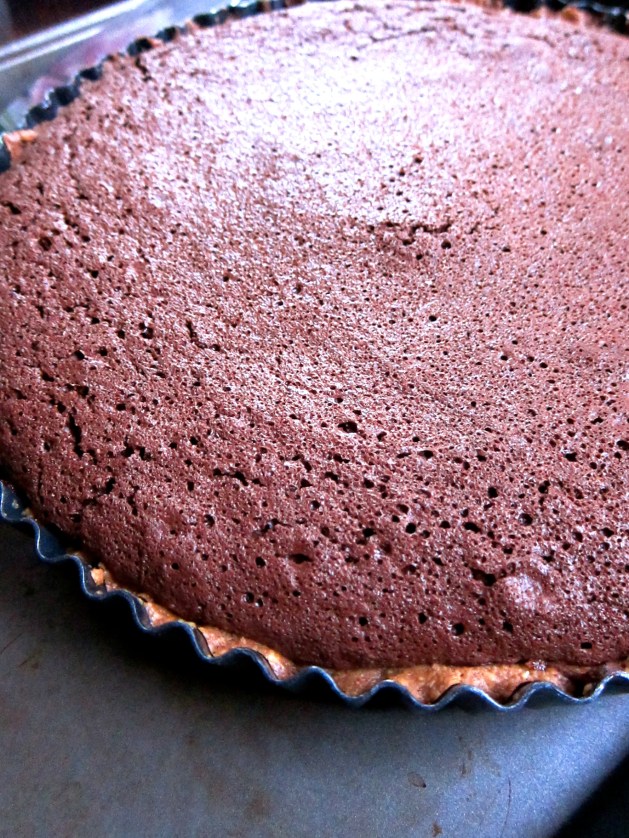
I understand the antipathy many feel towards putting chocolate and fruit together, but I hope you’ll make an exception here. This is the companion to the chocolate and plum tart that fell apart in the last post. I’ve since tarted up the pastry – removing the amaretti entirely – and this one stayed whole. I include the recipe for the amaretti crust if you feel like giving it a go, though it will melt into nothingness on your spoon and will not be coerced onto a cake slice, even for money.

This is an idea from Sam and Sam Clark, of Moro fame, and in their tart they use apricot paste called ‘amradeen’ – a  Syrian and Lebanese speciality. I’m using poached apricots in its stead, but dried ones also work. Serve with a few extra ‘cots on the side and some crème fraîche.

Chocolate and apricot tart

Adapted from Moro, Sam and Sam Clark

For the filling

180g (1 cup) poached apricots or paste/amradeen

2 tbs lemon juice

135g (9tbs) unsalted butter, cubed

110g (4oz) dark chocolate (70% cocoa solids) broken into bits

2 large eggs at room temperature

60g (¼ cup) cane sugar

For the pastry

Adapted from Rick Stein’s Food Heroes

50g (2oz) toasted slivered almonds

175g (6oz) plain flour

A pinch of sea salt

175g (6oz) butter, softened

65g (2½oz) cane sugar

1 medium egg, beaten

½ teaspoon of ground cinnamon

For the pastry

Put the toasted almonds into a coffee grinder or spice mill and blitz until fine but with some texture still. Mix with the flour, salt and cinnamon and set aside. Cream the butter and sugar together until smooth. Beat in half the egg, followed by the flour mixture and enough of the remaining beaten egg to bind the mixture. Knead briefly until smooth. Pat into a round disc, cover in plastic wrap and chill for 20 minutes.

Preheat the oven to 190C/375F. Carefully roll out the pastry between 2 sheets of plastic wrap and use to line a greased 8ins (20cm) loose-bottomed tart tin. Prick the base here and there and chill for about 30 minutes. Line the pastry case with greaseproof or parchment paper and baking beans (or rice) and bake blind for 10-15 minutes (check at ten). Then remove the paper and bake for a further 5 minutes. It should look and feel crisp and golden. Remove and leave to cool.

For the filling

Press the poached apricots through a sieve. Add the resulting puree to a pan with the lemon juice and a few splashes of the syrup. Heat gently until the mixture thickens. Stir to prevent the puree sticking to the bottom of the pan. The mixture should taste slightly tart. Spread the puréed apricot over the base of the cooled tart shell. Leave for a few minutes – the apricot will form a slight skin.

While this is going on, put the butter and chocolate in a bowl over barely simmering water. Whisk the eggs and sugar together until pale and thick and fluffy. When the chocolate has melted, take the bowl off the heat and fold in the egg mixture. Give this a good stir, bringing the chocolate up and over, until it is a uniform deep, dark brown. Pour this into the tart shell and smooth out any peaks and troughs with a spatula. Bake on the middle shelf of a pre-heated oven for about 25 minutes. There should still be a slight wobble – not too firm, glossily dark but with just the beginnings of a crust. Serve with some poached apricots, ice cream or crème fraîche and a slick of the poaching syrup.

If you insist – amaretti crust

200g (1 cup) amaretti biscuits

80g (5tbs) butter, melted

Put the amaretti biscuits in a freezer bag and give them a few whacks with a rolling pin. Mix with the melted butter. Tightly press the amaretti into a tart tin and chill until needed. When you’re ready, put this in a pre-heated oven (350F/180C) and bake until the crust is nicely browned. Continue as above.
Share this:

  • Share on X (Opens in new window) X
  • Share on Pinterest (Opens in new window) Pinterest
  • Share on Facebook (Opens in new window) Facebook
  • More
  • Share on Reddit (Opens in new window) Reddit
  • Share on LinkedIn (Opens in new window) LinkedIn
  • Share on Tumblr (Opens in new window) Tumblr
  • Print (Opens in new window) Print
  • Email a link to a friend (Opens in new window) Email
Like Loading...

Plums and Pluots

19 Tuesday Jun 2012

Posted by Sophie James in Recipe

≈ 2 Comments

Tags

Dessert, Food, Gluten-free, Ingredients, Nonfiction, Pudding, Recipes, Spices, Stone fruit, Stories

I’m running out of adjectives. This must happen a lot to people who are trying to describe food on a regular basis. Yes, the plum is juicy, but it’s not juicy like an apricot. It has a wincing tartness and it’s wetter. It’s sweet, but it has a different sweetness to, say, a cherry. It was a surprise to eat a perfectly ripe plum, because on some level I wasn’t expecting it to be so luscious. I have no memory of plums growing up and have always believed them to be rather serious. Perhaps it’s the fact that in England they are an autumn fruit. Evenings are drawing in, there’s a chill in the air. Sundays become Mondays, there are hot water bottles, feet trudge. It’s also the winy red of the skin and a tannic roughness on the tongue. It’s a dark fruit. Maybe it’s as simple as that.

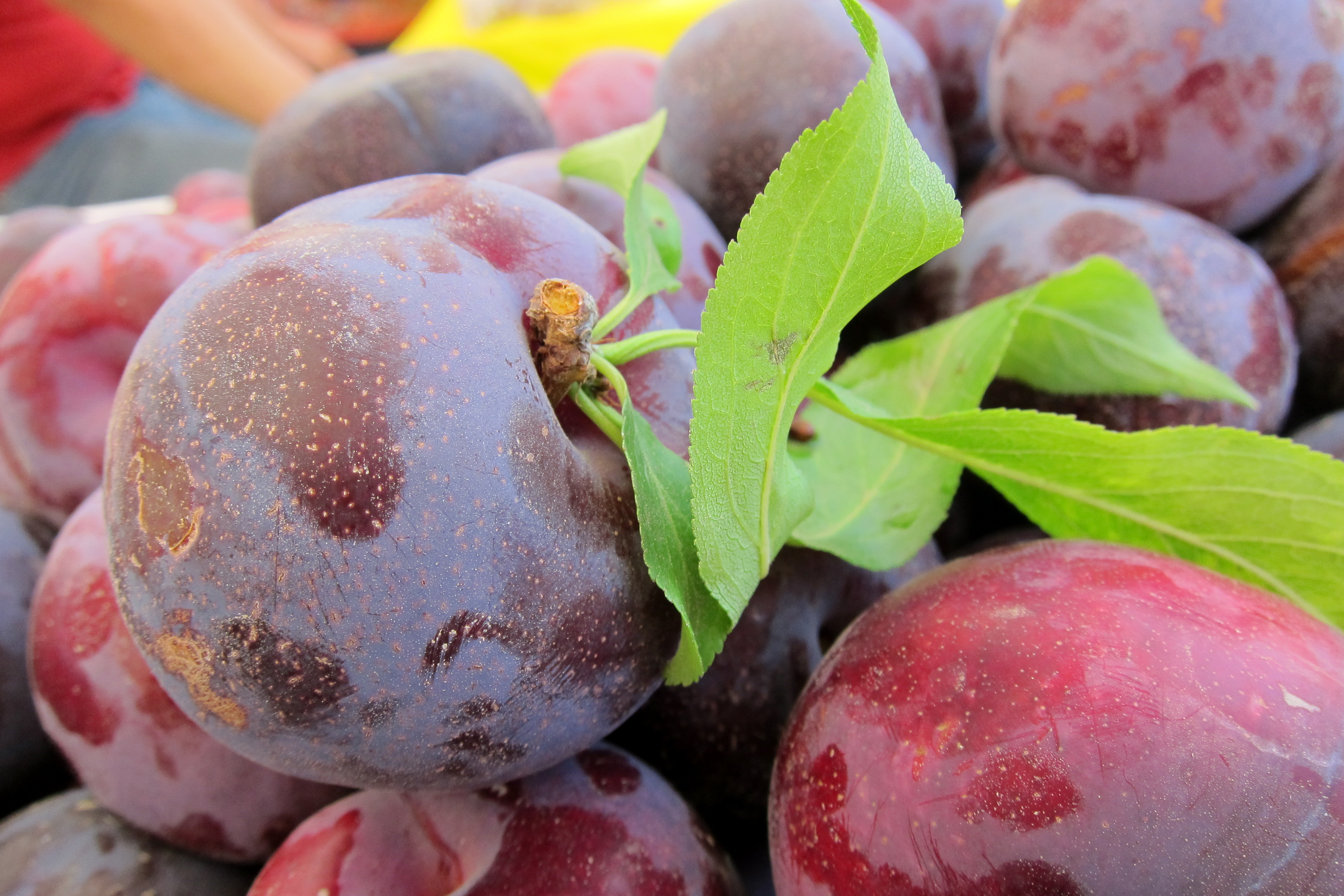
Here in Southern California, plum season starts as early as May and goes through to September. And then there are pluots, a horrible name reminiscent of toilets. It’s a hybrid of plum and apricot, the result of generations of intricate and painstaking crossbreeding. It sounds off-putting, I know, but the fruit is crossbred naturally – not genetically modified – through hand pollination. Think of bees in nature, except here each hybrid takes, not minutes to develop, but years.

The picture above is of the Flavorosa pluot; the white dust is its natural bloom, its skin is less fibrous than a plum, with a soft, plush almost transparently crimson interior. It is sweet but pleasurably so, with some sharpness bringing up the rear. The juice, when you pierce the skin, spills out. Think of it as a summer plum, born under blue skies.

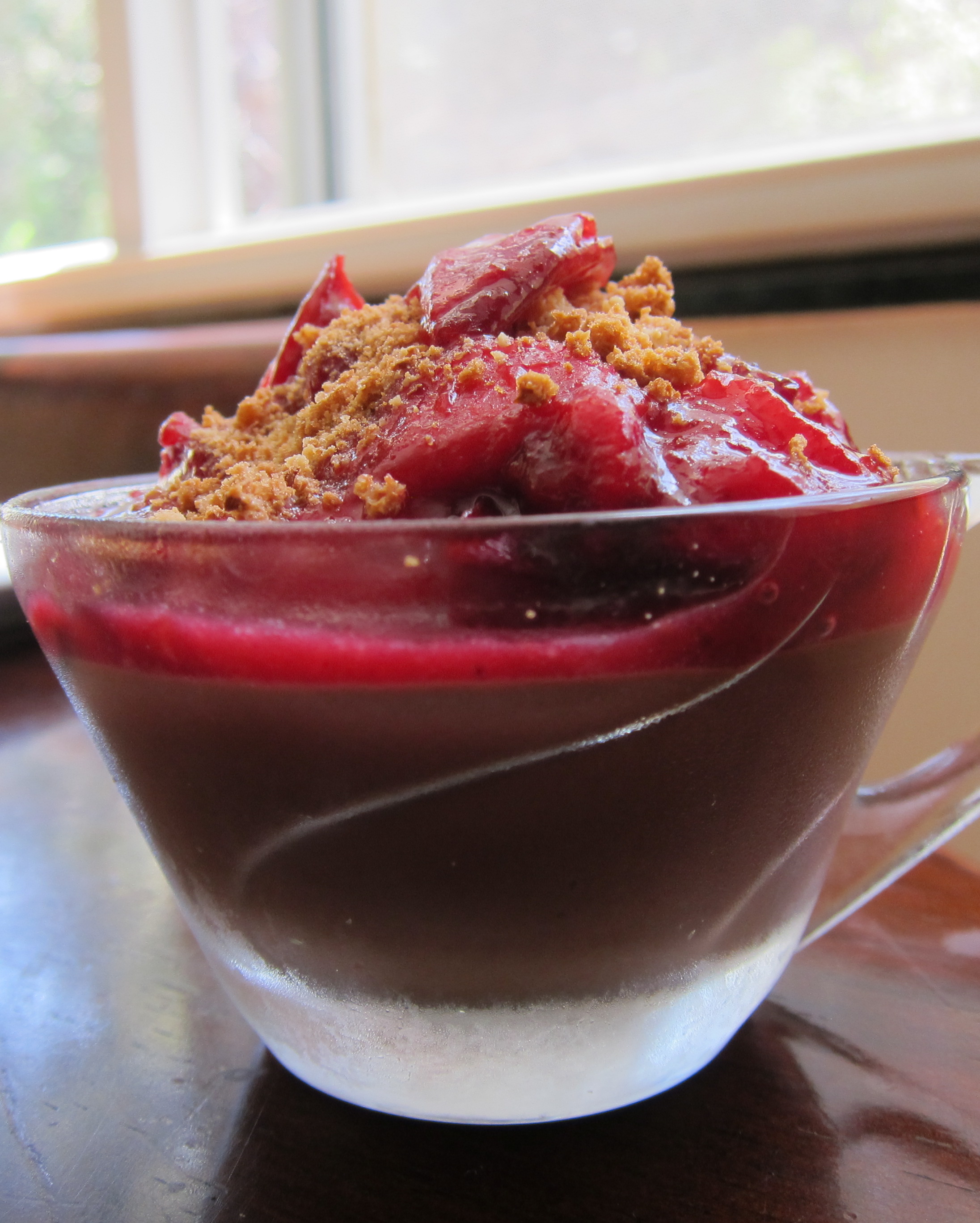
I put it to use sautéed, as a pairing for a cold, dark chocolate pudding, and layered in a chocolate and amaretti tart. I brought them both to the herb garden, where I volunteer, for the other gardeners to test. The chocolate pudding was devoured in silence, standing up by the tool shed. The tart was eaten after lunch. As it almost melts on the spoon you must feed yourself fragments. I didn’t want to applaud my own efforts, but I thought it was pretty phenomenal. Sandy, deeply fruity and blanketed in a heft of complex chocolate, just shy of crust. It’s a mess to look at, so you may want to work on the aesthetics.

“Rich,” said Tony. He wiped the ramekin clean with a paper towel, and placed it back on the table.

“Marzipan?” said Tristan.

“No.” The conversation continued in this way for a while, one word here and there, nothing too formed. It’s helpful to know sometimes that’s what food does. I’ll feature this recipe when I’ve managed to make it look less like a cowpat.

The plum and chocolate pudding is nice cold but not too frosty; you want to be able to taste the marriage of flavours which will start to come through as it warms up. The almond extract  – which I was considering forgoing – is really lovely and works well with the plums. I tried Penzeys cocoa powder, because some cocoa can be underwhelming. The key is the colour: look for a reddish-brown, like an old brick. It should also smell bewitching, simply in its dry state.

Sautéed plums with dark chocolate pudding and crushed amaretti

Adapted from Deborah Madison, Seasonal Fruit Desserts

If you want to make this gluten-free simply omit the amaretti biscuits. Try toasted almonds instead.

For the sautéed plums:

4-6 plums or pluots

2 tbs (28g) unsalted butter

¼ cup (50g) organic sugar or maple sugar

2-3 cardamom pods

1 tsp (splash) orange-blossom water (optional)

For the dark chocolate pudding:

2 cups (500ml) milk

Zest of 2 oranges (less, if you’re less partial)

2oz (60g) dark chocolate (60-70% cocoa)

½ cup (50g) unsweetened cocoa powder

½ cup (100g) organic sugar

Pinch of salt

Scant ¼ cup (25g) cornstarch dissolved in ¼ cup (50ml) of water

¼ tsp (or a small splash) almond extract

1 amaretti biscuit per pudding

For the plums

Rinse the plums, dry, then slice them into wedges. Heat a frying pan/skillet with the butter over a medium heat until it melts. Then add the plums, sugar, and cardamom pods. Raise the heat and cook, jerking the fruit around every now and then so the cut surfaces start to catch and caramelize. After about 10 minutes, the plums will start to give up their juices and cave into one another. Add the splash of orange-blossom water – if you want – and be prepared for a sticky mess.

For the pudding

Warm half the milk with the chocolate and orange zest over a low heat. Meanwhile combine the cocoa, sugar, and salt in a bowl. Stir in enough water to make a smooth paste. Whisk this paste into the warming milk. Mix the remaining cup of cold milk into the cornstarch. I find it works best by slowly introducing the milk to the dry powder, which then becomes slacker the more liquid you add. The other way round results in a lumpy glue. Now add this cornstarch mixture to the pan.

Raise the heat slightly and stir as the mixture thickens. Then lower the heat and keep stirring until it appears custard-like, but still with some movement. You don’t want the spoon to stand up of its own accord. Remove the pan from the stove and add the almond extract and give it a stir. Pour the pudding into little ramekins and place plastic wrap directly on the surface if you don’t want a skin to form. Served chilled with a spoonful of plums and a smashed-up amaretti biscuit on each.IMG_8325

Plums for Breakfast

I like to think of these as ‘sleeping plums.’ They are overnighters, having been tucked into the pan and lapped by their own considerable juices. By morning, they are deflated, dilapidated even, but the juice is spicily intense, having been concentrated by the wait. Nothing quite prepares you for the depth and zing of that first slurp. I quote Nigel Slater, from his book Ripe, in his entirety here. Feel free to add your own spices – such as a cinnamon stick or some cardamom pods. I would also add that it took a fair bit longer for my plums to collapse – you could go to 30 minutes, easily, on a very low heat. That’s when you clap the lid on, turn off the heat and leave them til morning. And remember there are stones to navigate before you dole this out. I used pluots instead of plums.

“A pot with a sturdy bottom, a pound of plums (500g), ½ cup (100g) of sugar, a vanilla pod split down its length, its seeds exposed, and just enough water to leave a wet film on the bottom of the pan. Place over a gentle heat, let the sugar melt and the plums burst, their juices mingling with the sugar. Keep the heat low and your eyes on the job. After ten minutes, maybe fifteen, the plums will have collapsed, their juices taken up some of the warm, vanilla notes and you will have a dish of plums to cool, then thoroughly chill, and eat for breakfast.”

Share this:

  • Share on X (Opens in new window) X
  • Share on Pinterest (Opens in new window) Pinterest
  • Share on Facebook (Opens in new window) Facebook
  • More
  • Share on Reddit (Opens in new window) Reddit
  • Share on LinkedIn (Opens in new window) LinkedIn
  • Share on Tumblr (Opens in new window) Tumblr
  • Print (Opens in new window) Print
  • Email a link to a friend (Opens in new window) Email
Like Loading...

Winging It

11 Monday Jun 2012

Posted by Sophie James in Recipe

≈ 4 Comments

Tags

Dessert, Fear, Food, Fruit, Ingredients, Nonfiction, Recipes, Spices, Stories, Trapeze

On Wednesday, I flew on the trapeze. When you watch it, it looks so easy. I came down after the first try, my body shaking with adrenalin and fear and, frankly, embarrassment that people had had to watch me.

I kept looking at the grapefruit tree that stood in the background and the orange tree next to it, its branches crowded with fruit and tried to think about recipes, and yet who was I kidding. I was thinking of not getting it right, of somehow not hearing the instructor’s orders, his barks up to the platform. The platform wobbles as you stand on it, by the way, and is 40 feet off the ground. It’s also frighteningly slim. This is what they tell you, the trapeze aficionados – that the experience teaches you to become a ‘connoisseur’ of your fear. And then you jump.

I had three goes at the ‘knee hang’ – see the picture. If you think you’re fit, try doing that one day. You have to use all your upper body strength to hoist your legs over the bar. I now realize I have no upper body strength. I had one more go left before the instructor called time. “Think of something that makes you really angry,” he shouted angrily. And then: “You can do this!” “Knees to nipples!” a woman yelled. She was a midwife.

I can’t remember what happened next except a feeling of relief and then the blood rushing to my head. I let go of the bar too late – everything in you resists it – and was out of whack with the catcher. I was all over the shop, but his grip was monumental. I dangled, a dead weight. But it’s that in-between moment that gets you, the moment of weightlessness. You’re flying! Everybody looks the same when it happens – lost in rapture. You hope that no one notices, but they do.

There are other sensory impressions: the grass turning brown underfoot. Scorching flagstones. The smell of horse from the field next door. Not dung exactly, but the smell almost of the horse’s breath; musky and hot, mixed with summer air. Low slung wire fencing turning a rusted orange. The clink as you’re unclasped from the ropes. The enormous web of net. Toes inching over the platform. The two bushy trees – grapefruit and orange against the back wall, the flashes of colour a pleasing backdrop to the soaring, swooping and plummeting bodies, the last one being mine.

Citrus with Orange Caramel

Adapted from Deborah Madison, Seasonal Fruit Desserts

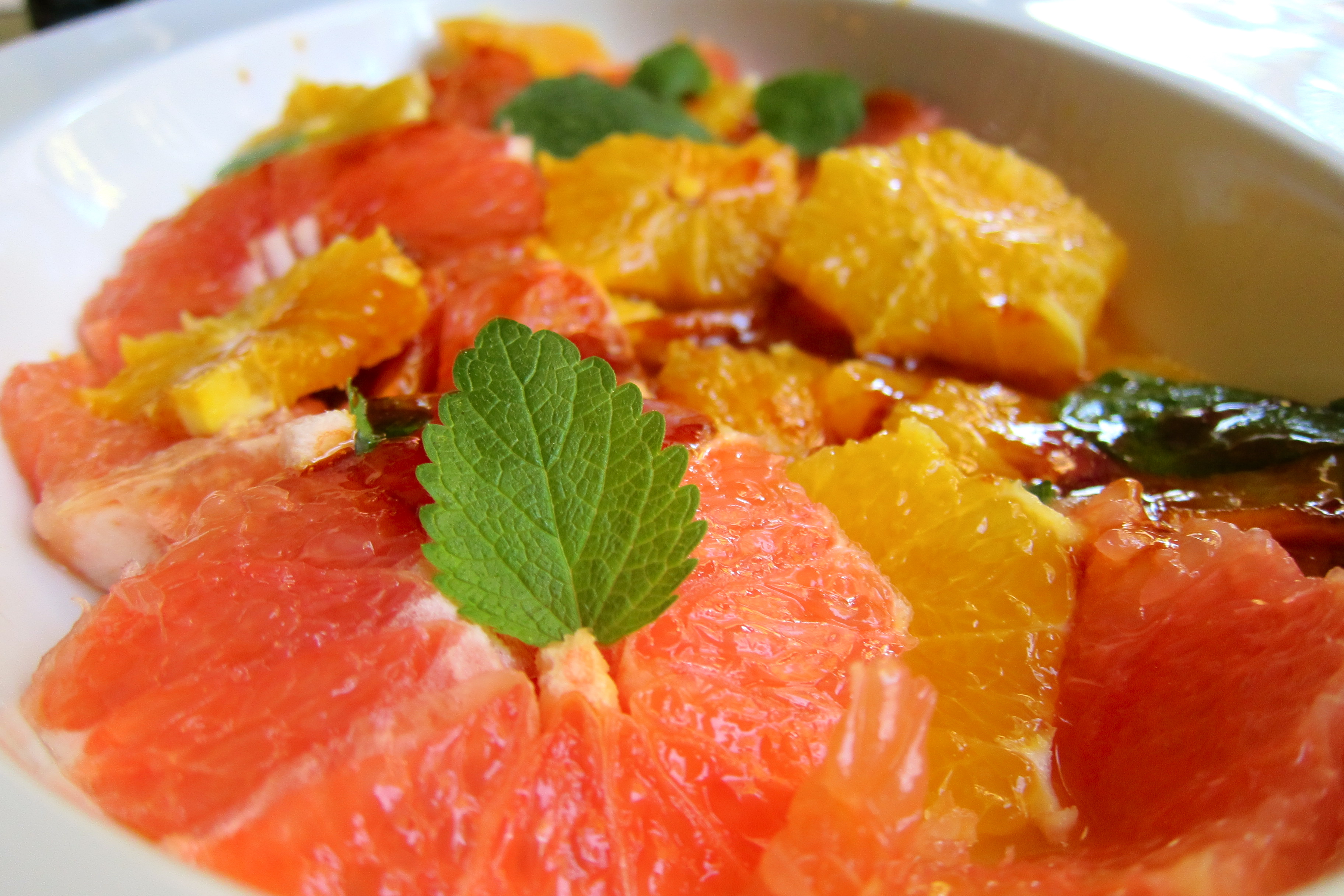
This is fruit at its most chaste. The caramel is very subtle; warm rather than sweet. I used grapefruit and oranges because they come from the story, and I made it that night, but you can use anything citrussy.

6-8 citrus fruits

⅓ cup (70g) organic sugar

½ cup (120ml) freshly squeezed orange juice

1 cinnamon stick

1 clove

A few splashes of orange-blossom water

Fresh mint sprigs or lemon balm

Method

Finely grate the zest of an orange, and put to one side. Peel the rest of the fruit. Use a sharp knife for cutting citrus, if you want it to look pretty. Take a narrow slice off the stem and blossom ends. Cut down the sides of the fruit from top to bottom, slicing away the skin and the white pith. Now cut into rounds and put into a bowl.

Melt the sugar over a medium heat, until it turns a rich, chocolatey brown. Don’t stir, but keep tipping the pan this way and that, so the sugar doesn’t burn. When it has become liquid, stand back and pour in the juice. It will splutter and the caramel will seize, but after a few minutes back on the heat, it will dissolve again. Add the reserved orange zest, cinnamon stick, and clove. Splash in a few drops of the orange-blossom water, slide in the slices of fruit and swish them around so they’re coated, then pour the fruit and caramel back into the bowl. Serve very cold, speckled with the fresh herbs. This dish is very accepting of ice cream, and Greek yogurt.


Share this:

  • Share on X (Opens in new window) X
  • Share on Pinterest (Opens in new window) Pinterest
  • Share on Facebook (Opens in new window) Facebook
  • More
  • Share on Reddit (Opens in new window) Reddit
  • Share on LinkedIn (Opens in new window) LinkedIn
  • Share on Tumblr (Opens in new window) Tumblr
  • Print (Opens in new window) Print
  • Email a link to a friend (Opens in new window) Email
Like Loading...

Cucumber Gazpacho

04 Monday Jun 2012

Posted by Sophie James in Recipe

≈ 2 Comments

Tags

Food, Greece, Ingredients, Nonfiction, Recipes, Stories, Travel, Yoghurt

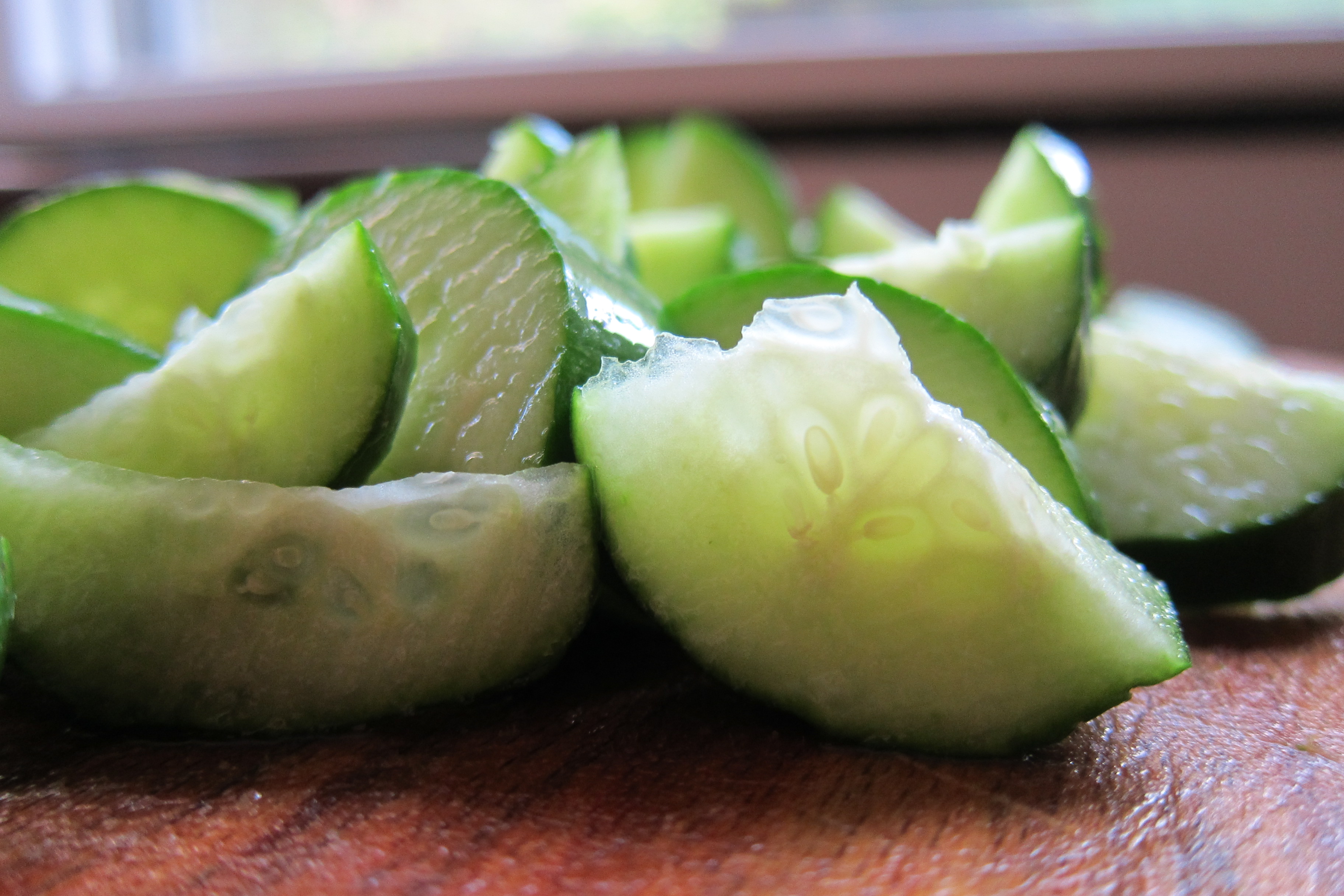
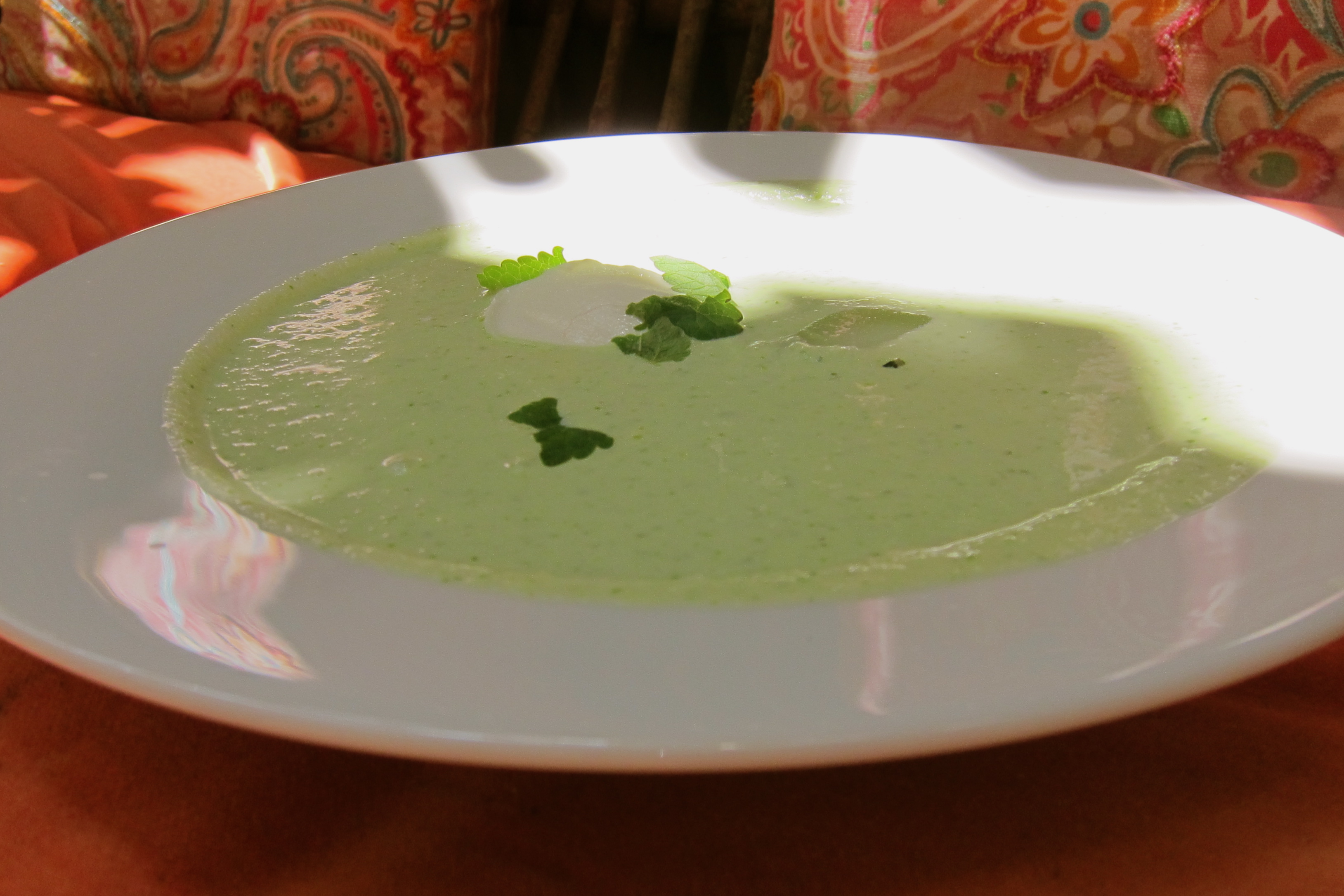
I know cucumbers can be a bit ‘whatever.’ I mean, I could go my whole life never missing them. And yet they are fresh and summery and lend themselves beautifully to cold soups as well as interesting herbal combinations. They like a bit of salt and lemon. I can’t work out why so many recipes ask for cucumbers to be peeled and de-seeded. What’s left? Thankfully, the recipe I’m using here is less prissy and allows you to chuck the whole thing into the blender. Which is good because you really get the essence of cucumber – light but with a herbaceous edge – and the seeds are what creates a lot of the juice.

My first memory of cucumbers was in Crete as a child. We were staying with a Greek family. I developed a crush on the son, who was a teenager called Vazeles. I thought he was very sophisticated because he drank his tea with a spoon. I spoke to him in fake Greek a lot and he smiled politely and continued about his business. The thing I remember most though was that whenever I entered the dining room, which was where the whole family congregated, the grandmother would start peeling a cucumber into the fire. She laughed – actually, she cackled –  and so did everyone else, including my mother. I have to say, as a child, I couldn’t see the funny side. Even now it seems a bit disturbing; the insinuation was that this act was in some way sexual which was why everyone found it funny. Anyway, if anyone reading this knows of a Greek custom where old ladies start to peel cucumbers into the fire whenever a small child enters, I’d love to hear from you.

I can’t remember where those cucumbers ended up – I mean, in what dish – although it’s fair to surmise it was probably for a Tzatziki, a popular Greek dip made with strained yoghurt, cucumbers, lemon, salt and dill or parsley; a choppier and breadless version of cucumber gazpacho.

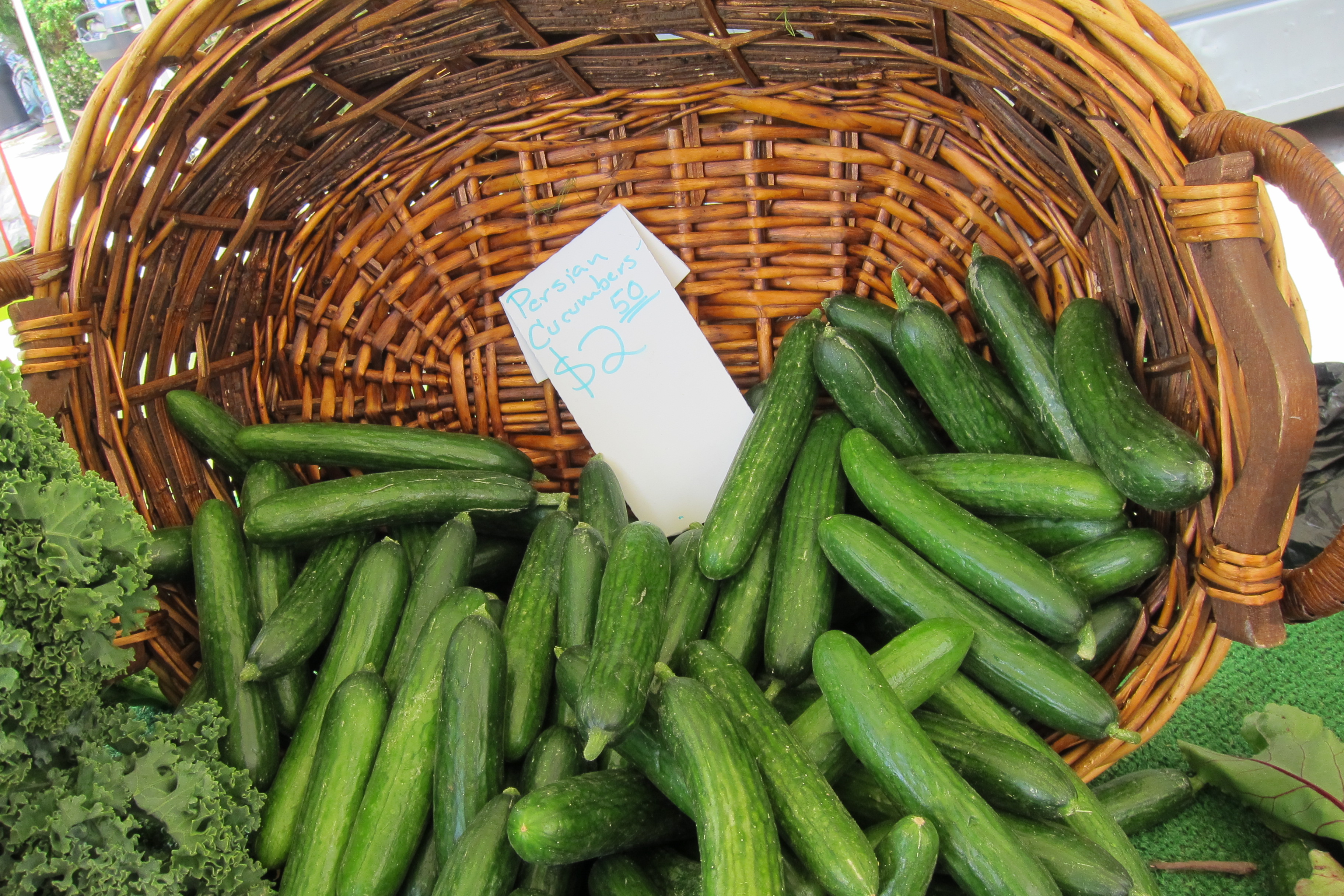
If you’re using thick-skinned cucumbers, by which I mean your standard, long, dark green cukes, you may want to peel them as they will have a tougher hide, and may have been waxed. I used thin-skinned Persian cucumbers here, because that’s what I found at the farmers’ market. They’re smaller, but taste the same – in other words, like a cucumber.

The garlic is non-negotiable in my opinion. I really don’t think gazpacho works without it, but you can play around with the intensity. I think three cloves gives you enough of a heady sensation without feeling you’ve been garlic-snorkelling. It’s the cleanness of the cucumber and the sulphurous hit of the garlic that is the key to this dish, so be brave. Stale white bread is a central component of a traditional Spanish gazpacho, and will give the soup a ‘thick cream’ texture. If you use it, I would strain the soup into a bowl before chilling, to remove any rough bits.

As for which herbs to use, mint is traditional, and lovely. Sorrel is less common, and a good reason to experiment. It is a perfect time of year for it. For a spring leaf, it’s incredibly juicy, lemony and refreshing. Can a leaf be creamy? Strangely yes. I hope I’ve piqued your interest.

Cucumber Gazpacho

Serves 4

3 large cucumbers or 6-7 small ones

A small handful of mint or sorrel leaves, stems removed

3 cloves of garlic, crushed

2 tbs extra virgin olive oil – or a couple of very hearty glugs

Sea salt

A squeeze of lemon

1 cup (½ pint) of plain, Greek yoghurt

Optional: A couple of handfuls of stale, white bread,  torn up, with crusts removed

Method

I have deliberately kept the amounts quite loose, as this is where feel and taste rule. Coarsely chop the cucumbers – peel them first if you think the skin looks a bit tough – and put them in a blender. Add the crushed garlic, a pinch of sea salt, the olive oil, a squeeze of lemon, the yoghurt and the stale bread (if using) and puree to a wet pulp. You may have to do this in batches depending on the size of your blender.

Take the smoothness as far as you like – silk soup is very pleasing, some like a rougher texture, but I would strain the mixture through a sieve if you’re using the bread. Cover the bowl and chill thoroughly. Go almost to icicles. To serve, season the soup again. Remember that chilling dulls the flavour. Add a streak of yoghurt and strew with the herbs. Drop in some herb-flecked ice cubes for some shock and awe.

About Cucumbers

Originating in the Himalayan foothills, the wild cucumber is hideously bitter by nature. It has taken centuries of breeding to make it edible. It is a member of the Cucurbit family, to which the melon and winter and summer squash also belongs. It is a fruit.

Share this:

  • Share on X (Opens in new window) X
  • Share on Pinterest (Opens in new window) Pinterest
  • Share on Facebook (Opens in new window) Facebook
  • More
  • Share on Reddit (Opens in new window) Reddit
  • Share on LinkedIn (Opens in new window) LinkedIn
  • Share on Tumblr (Opens in new window) Tumblr
  • Print (Opens in new window) Print
  • Email a link to a friend (Opens in new window) Email
Like Loading...

How to eat a peach

30 Wednesday May 2012

Posted by Sophie James in Recipe

≈ 1 Comment

Tags

Dessert, Food, Ingredients, Italy, Recipes, Stories

IMG_2608

Peaches and brown paper are forever linked in my mind, the rustle and crumple of the bag as I withdrew the fruit, its downy skin against mine, the slight indentation my thumb made and when I dug in feeling the juice drip down my arm.

It was the day I didn’t buy nectarines, the contessa’s favourite. Why she preferred them, I couldn’t fathom. Their baldness never appealed, they were flinty and hard to look at. So I went for peaches instead. That was over twenty years ago in Venice and I can still remember the stallholder’s look as I handed him the note the following day, telling him what I couldn’t. That it must be nectarines you give the girl and not peaches. Pesca noce. He was weary, surrounded by clumps of basil and buckets of artichoke hearts floating in water. A wave of peaches and nectarines rose up behind him.

But it was that first peach I remember most. It was warm and tender, baked by the sun. The nude pinky-orange flesh caved, the tiny fibres clung to the stone, a lake of juice pooled in my mouth. I remember wanting to eat it out of sight. Go somewhere secluded. It would be something to deny on arrival, with suspiciously sticky hands.

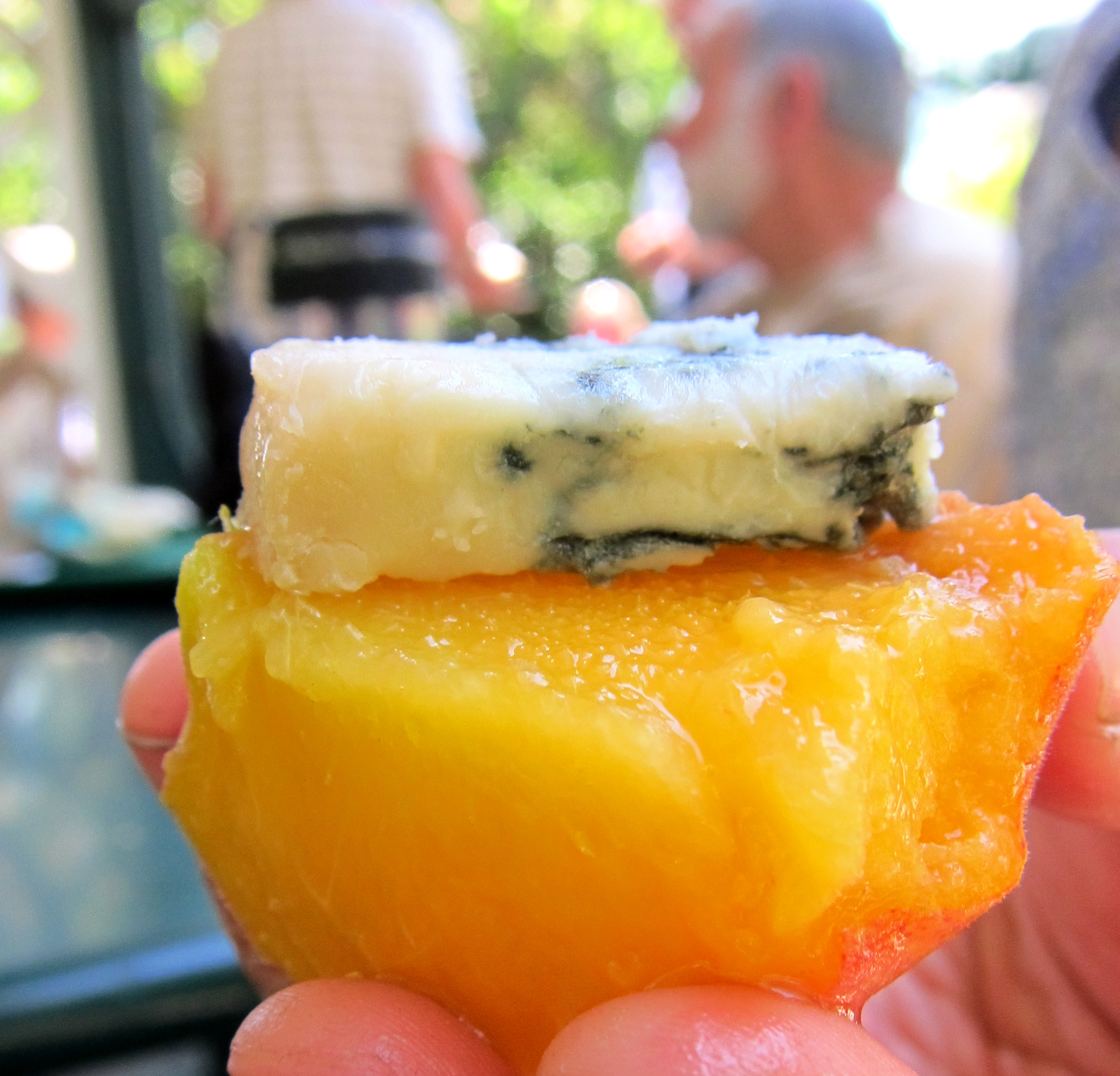
I will always go for warmth and not cold. Peach ice cream I can take or leave. It gets lost – it could be anything pretty and fragrant-smelling. A peach is itself more when baked, poached or simply wondrously ripe and filled with the coldest of blue cheeses. I understand the puree thing, but then I miss the shape; those delicate mounds in a tart, perfect circles like cobblestones running down a street. I know what I’m getting and that’s part of the pleasure. I can imagine it before it arrives. I once saw a lady peel and wash a tomato with its own skin. I like doing this to ripe fruit and it works well with peaches. I like the skin, but I want the flesh, so I keep peeling. A very ripe peach will slip off its skin almost in one. The hussy.

Peaches are not what they were. Gone are the days when a peach would be presented in a black velvet box at the end of a meal in French restaurants. Perhaps we no longer know what a peach could be. They are too over-extended, under-ripe, hard, watery, wooden. Historically, they were grown in vineyards and would come to ripeness at vintage time. The trees would then renew themselves from the fallen stones.

A few of these places still exist. It’s best to be on the side of the grower, and trust the smaller producers. They stress the peaches, breaking them in like dizzy mares. It seems cruel, feudal at first, but the rewards are huge. In California, a few good men are wresting the peach back from the hand of commerce. The trees are small and watered abstemiously in nutrient-poor soil. Peas, barley, wheat and wild oats grow like weeds around them. All this stress concentrates the flavour. I think the peach likes it that way.

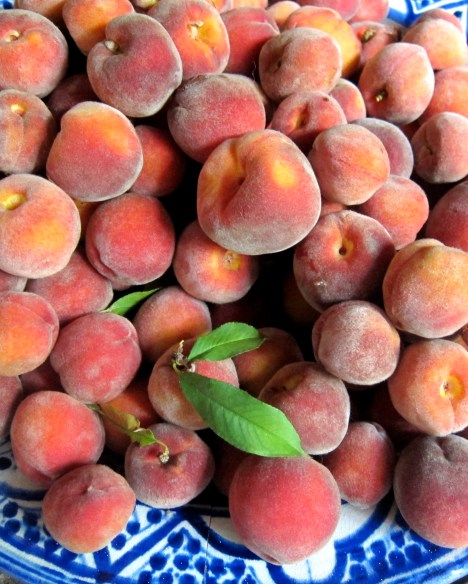
To pick a good peach: trust your nose. A ripe peach has a rich, musky sweetness. Although it will continue to ripen after picking, getting softer and juicier, it won’t get any sweeter. A perfect peach – a mature peach – is one that has hung on the branch long enough for the sugar to develop. You will know it when you smell it. It will have made its final swell. When it comes to colour, forget red – this is a genetic variation, though we are all seduced.

Instead, it’s the quality of the background colour that’s important: a yellowy-orange cast signifies maturity, so pick that one. Farmers’ markets are always the best bet. Santa Monica has some orchard kings. This is the very beginning of the peach season in California, so I’m being a bit previous, but there are still some early gems around, particularly the flat peaches, Saturn, Donut and Saucer. The season proper starts mid June and will extend to August and even September. Often one variety will only last a week or so. Best to roll with it.

Peach and Amaretti Tarte Tatin

Adapted from Tamasin Day-Lewis, The Art of the Tart

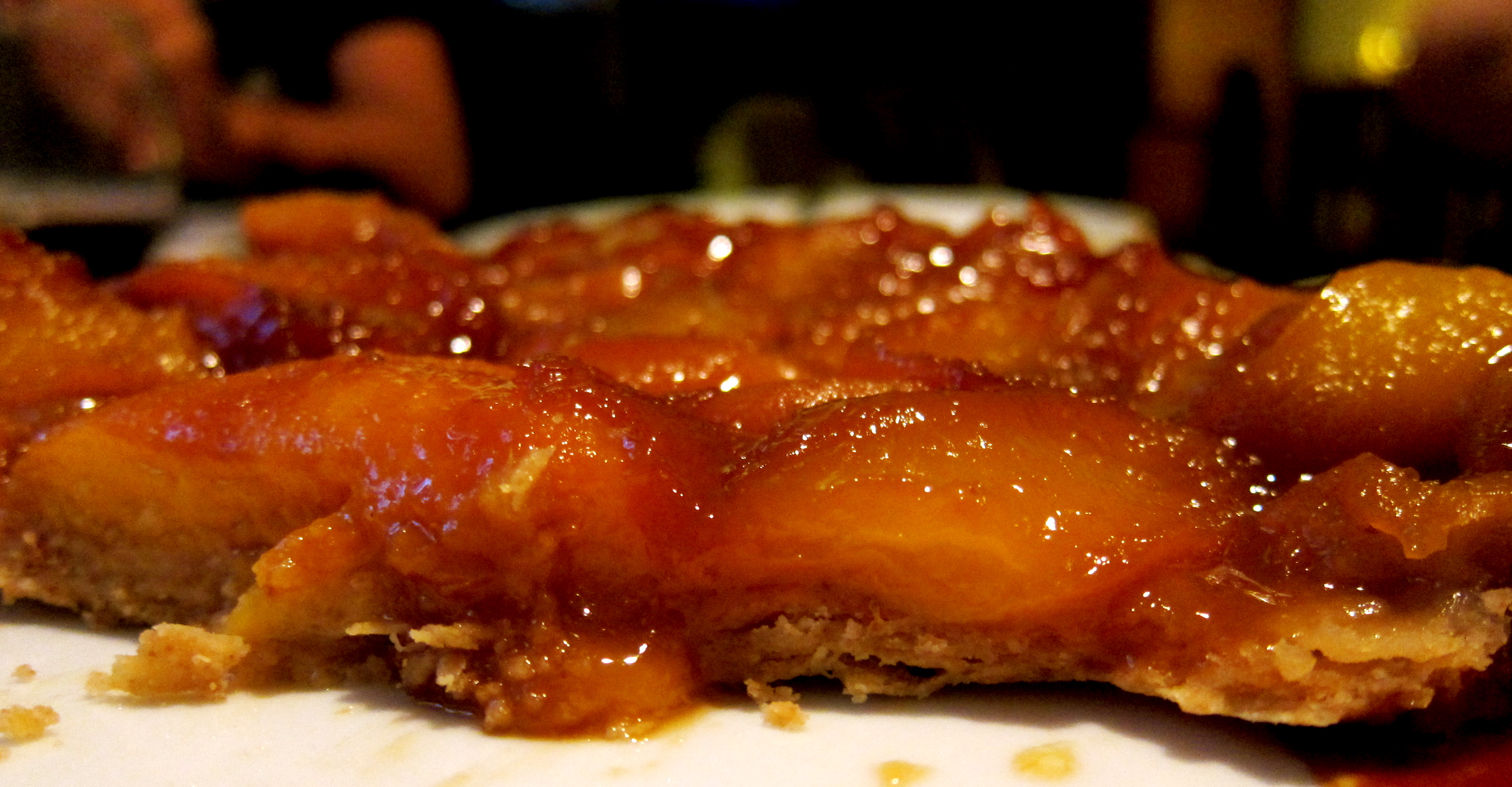
This is a good one if you have slightly below par peaches, or they’re not as ripe as you’d like. I’ve always been a bit afraid of things I have to flip over  at the last minute, but this is fairly straightforward, if you don’t mind tatty pastry, ragged peaches, and half the tart being left behind in the pan. Personally, I like a bit of rustic, which is just as well. Also, it’s lovely cold.

Serves 8

For the dough

8 amaretti biscuits

1½ cups (210g) plain flour

6 tbs (85g) cold butter, cubed

2-3 tbs iced water

For the top

8 peaches

Juice of 1 lemon

6 tbs (85g) sugar

4 tbs (55g) butter

Method

To make the dough, whizz the amaretti biscuits in a coffee grinder to a fine-ish dust. Add to a bowl with the sifted flour and butter and, if using your hands, work quickly to amalgamate. If using a food processor, process briefly until the mixture comes together. In both cases, you need to add 2-3 tbs (maybe a little more) of iced water for the dough to cohere. Chill for at least half an hour.

Preheat the oven to 375F/190C. Roll out the dough on a lightly floured surface ½ inch wider than the circumference of the pan you’ll be using. I use a 10-inch pan whose handle doesn’t melt in the oven. Set the pastry shell to one side.

Scald the peaches in boiling water for 30 seconds and slip off their skins. Sprinkle with lemon juice to prevent discolouration.

Now warm the sugar in the pan until it is a deep, dark brown. This will take a while and I suggest keeping the heat on very low at first so the sugar doesn’t become too bitter or burnt. Don’t stir, but move the pan around to prevent scorching. Wait for the sugar to become totally liquid, then remove from the heat and dot with half the butter. Put half a peach in the middle of the sugar mixture, cut side up. This is where it all starts to go a bit Raggedy Ann – peaches that have been scalded and skinned are slippery buggers. It’s best to accept the tart will not look as clean as you’d like. Quarter the peaches and lay them next to one another in a tightly packed wheel. Arrange the remaining quarters in the inside wheel. Dot with the remaining butter and put the pan back on the heat for a few minutes to gently begin the cooking.

Remove from the heat, cover with the pastry (be prepared for it to break and for a lot of swearing to ensue), tuck it inside the pan edge, and bake for about 35 minutes – it should look lightly browned and the caramel will be bubbling deliciously. Remove from the oven and let it cool for a few minutes before inverting onto a plate. Good luck. Serve with vanilla ice cream or crème fraîche.


Share this:

  • Share on X (Opens in new window) X
  • Share on Pinterest (Opens in new window) Pinterest
  • Share on Facebook (Opens in new window) Facebook
  • More
  • Share on Reddit (Opens in new window) Reddit
  • Share on LinkedIn (Opens in new window) LinkedIn
  • Share on Tumblr (Opens in new window) Tumblr
  • Print (Opens in new window) Print
  • Email a link to a friend (Opens in new window) Email
Like Loading...

Purple-heart

22 Tuesday May 2012

Posted by Sophie James in Recipe

≈ 6 Comments

Tags

Baking, Cake, Cooking, Food, Ingredients, Nigel Slater, Recipes, root vegetables

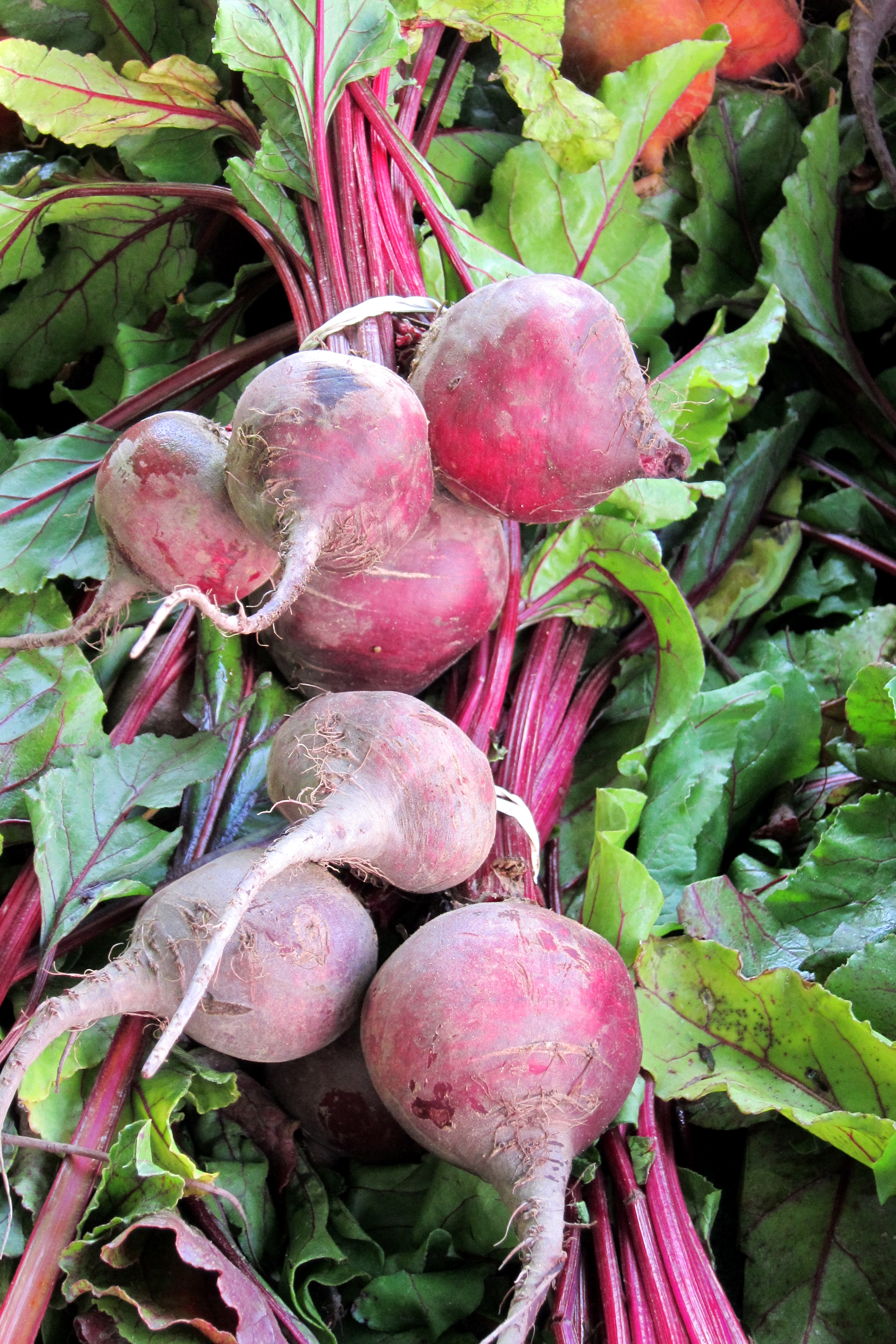
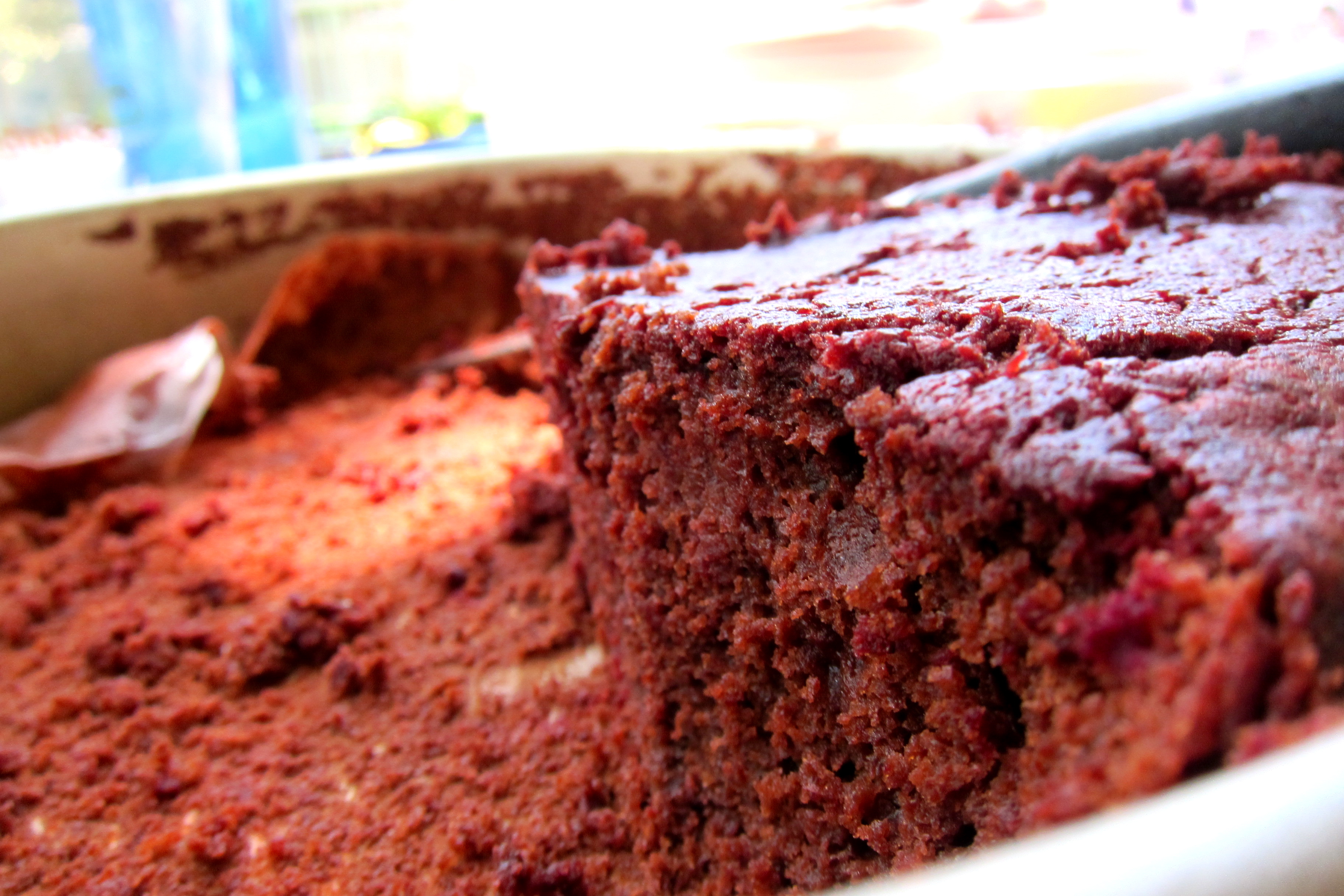
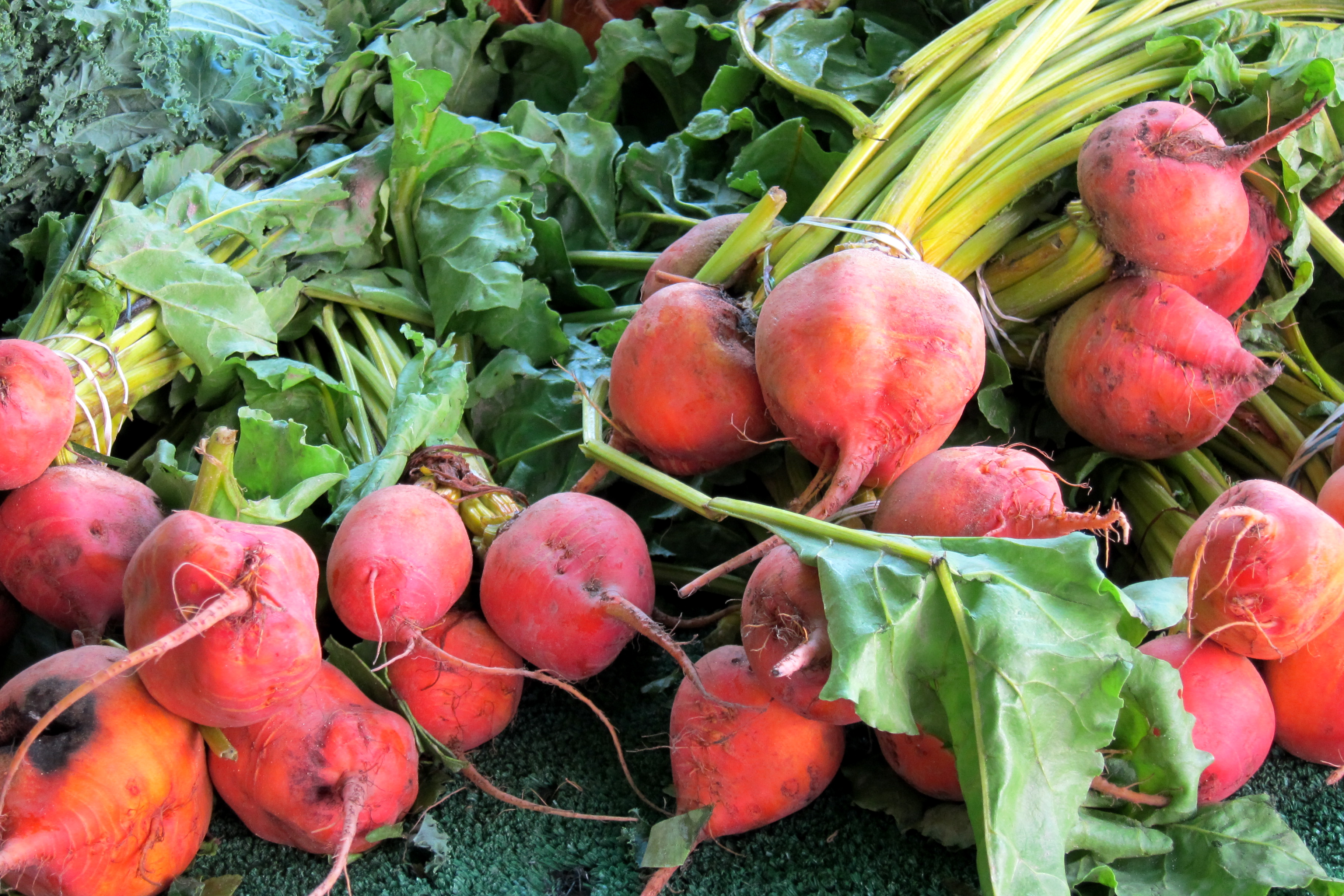
It’s the colour. Magenta, leaning to purple, almost black at its heart. When you cut it, it bleeds, staining like a mulberry. Lusty, earthy, sublime, it’s the most medieval of vegetables. Juiced raw, it’s fresh and lemony. Roasted, it becomes silkily black. Left in the oven overnight and eaten in the morning, tenderly wizened, it’s perfect with broken bacon and some goat’s cheese. Of course it’s brilliant in chocolate cake. Damp and glottal.

It’s a bit of a brute, though, at first glance. The shaggy skin slips off like a coat once boiled or baked, and then it’s much prettier in the altogether –  glossy and vibrant. It shares its pigment, betalain, with bougainvillea, those papery flowers that froth over walls everywhere in LA. And the sweetness, noticeable in all root vegetables and unmistakable here, comes from its cousin, the sugar beet.

It’s interesting to me that even when I’m writing about vegetables, I’m still writing about sugar. Apparently, we have evolved to like sweet things, to seek them out, and our quest has aided our evolution and survival. I wonder how Jaffa Cakes fit into this paradigm. I remember my brother hiding them under the bed and behind the sofa, the tell-tale crackle of cellophane, that slippery sleeve of cakes, all the more delectable for being contraband. I too was a hoarder, a squirreler of chocolate and sweets. Cadbury’s Creme Eggs at dawn, that kind of thing. Now, when it comes to sugar, I’m like a bloodhound – a sugarhound, if you will. I’m forever attuned.

The sweetness and texture of beets – a sort of ‘wet bite’ – comes from the combination of starch and sugar. Moist heat – boiling or steaming – quickly softens the starches and keeps the colour pure, and the taste direct and clean. Dry heat – roasting – creates a darker, fuller, more complex flavour. This is where the beet’s sugars start to caramelize and you get that burnished, bronzed sweetness. This is the Maillard reaction, and apparently accounts for why we are all addicted to French fries.

Incidentally, it may feel a bit late to be talking about beets (beetroot to you in Blighty), and they’ve certainly peaked, but they’re still everywhere in farmers’ markets in LA. Check for freshness by buying them with their tops attached, and leave about an inch of the top and stem on for cooking so the colour doesn’t leach out. Look at the greens as well, and avoid anything limp or drab.

Chocolate Beet Cake

Inspired by Nigel Slater, Tender

The beets translate here into glorious dankness. Moist but not cloying. Good quality chocolate is important, as is the cocoa powder. The accompanying crème fraîche is a nod to the sour cream used alongside Eastern European beetroot dishes, and is definitely not an afterthought.

8oz (250g) beets, unpeeled

7oz (200g) dark chocolate (60-70 percent cocoa solids)

4tbs/60ml hot espresso (or water)

7oz (200g) room temperature butter, cubed

1 cup (135g) plain flour

3tbs very good quality cocoa powder

1 heaped tsp baking powder

5 eggs, at room temperature

1 cup (200g) golden caster sugar/superfine sugar

(or give ‘normal’ sugar a quick whizz in the coffee grinder)

Pinch of sea salt

Method

Lightly butter an 8in (20cm) cake tin and line the base with baking parchment. Put the beets in cold water in a deep pan and bring to the boil. They will be ‘knifepoint’ tender in about 45 minutes, depending on the size. The smaller the better – look for ones the shape of lightbulbs. Drain and let them cool under running water. Peel them using a kitchen towel, or your fingers if they’re made of asbestos. Blitz in a blender to a rough puree.

Preheat the oven to 350F (180C). Break the chocolate into bits the size of gravel. Melt the chocolate pieces in a small bowl resting over a pan of barely simmering water. Don’t stir. When it looks almost melted, turn off the heat, but leave the bowl over the hot water and pour over the espresso. Stir it once. Add the cubed butter to the melted chocolate, and leave to soften, pushing it down under the chocolate if need be.

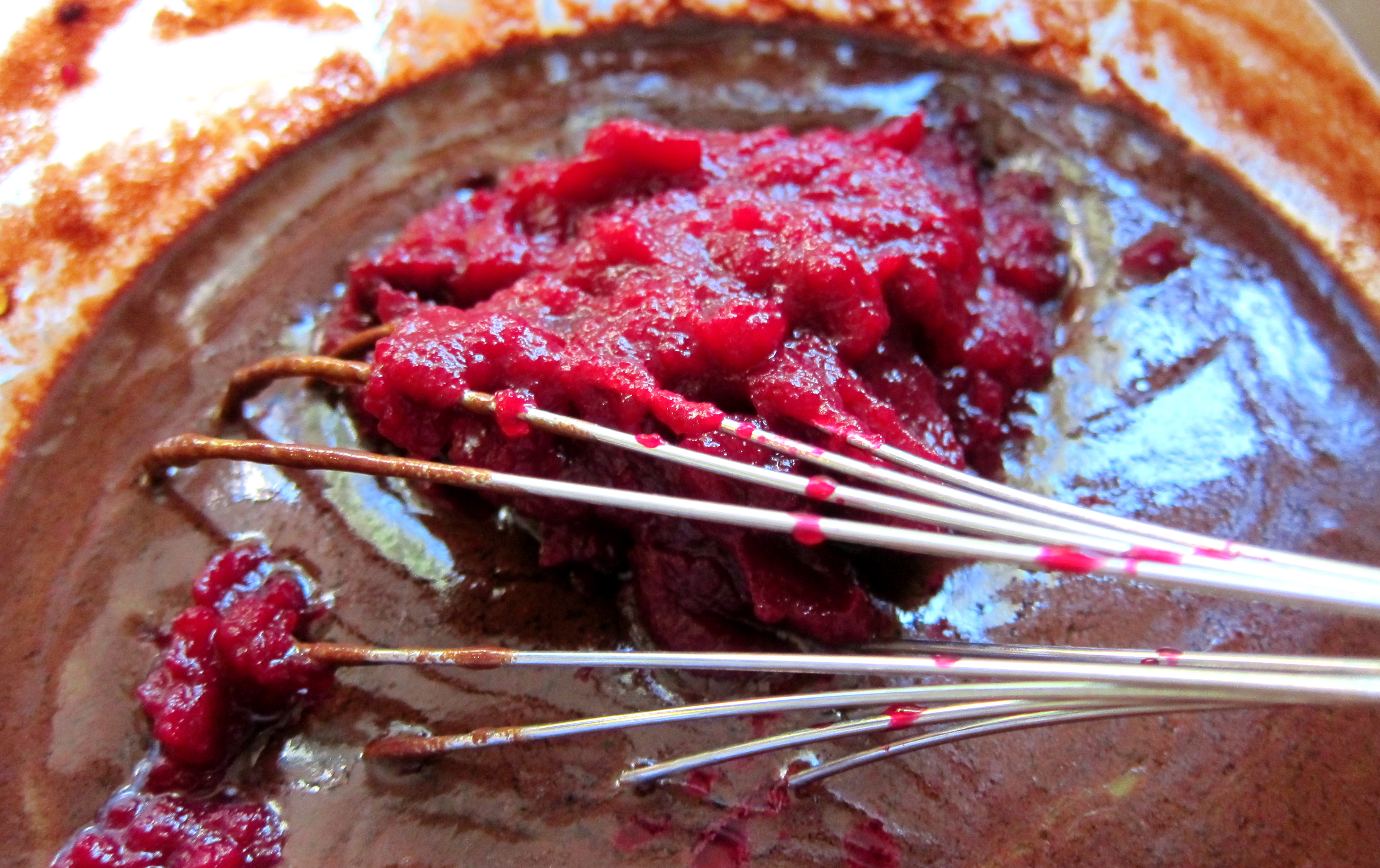
Sift together the flour, cocoa powder, salt and baking powder in a separate bowl. Remove the bowl of chocolate now from the heat and let it cool for a few minutes. Whisk the egg yolks together briskly and then add to the melted chocolate. Mix in the beet puree. Whip the egg whites until stiff, then gradually rain in the sugar. Fold the egg white mixture into the melted chocolate. Do not overmix, but go deep into the goo with a large metal spoon, using a figure-of-eight movement. Fold in the dry ingredients. Scrape the batter into the prepared cake tin, smoothing the top, and reduce the heat of the oven to 325C (160C) and bake for about 40 minutes, or until the sides are firm and set, but the centre still has a little wobble to it. Let the cake cool completely, then remove it from the tin. Serve with crème fraîche.

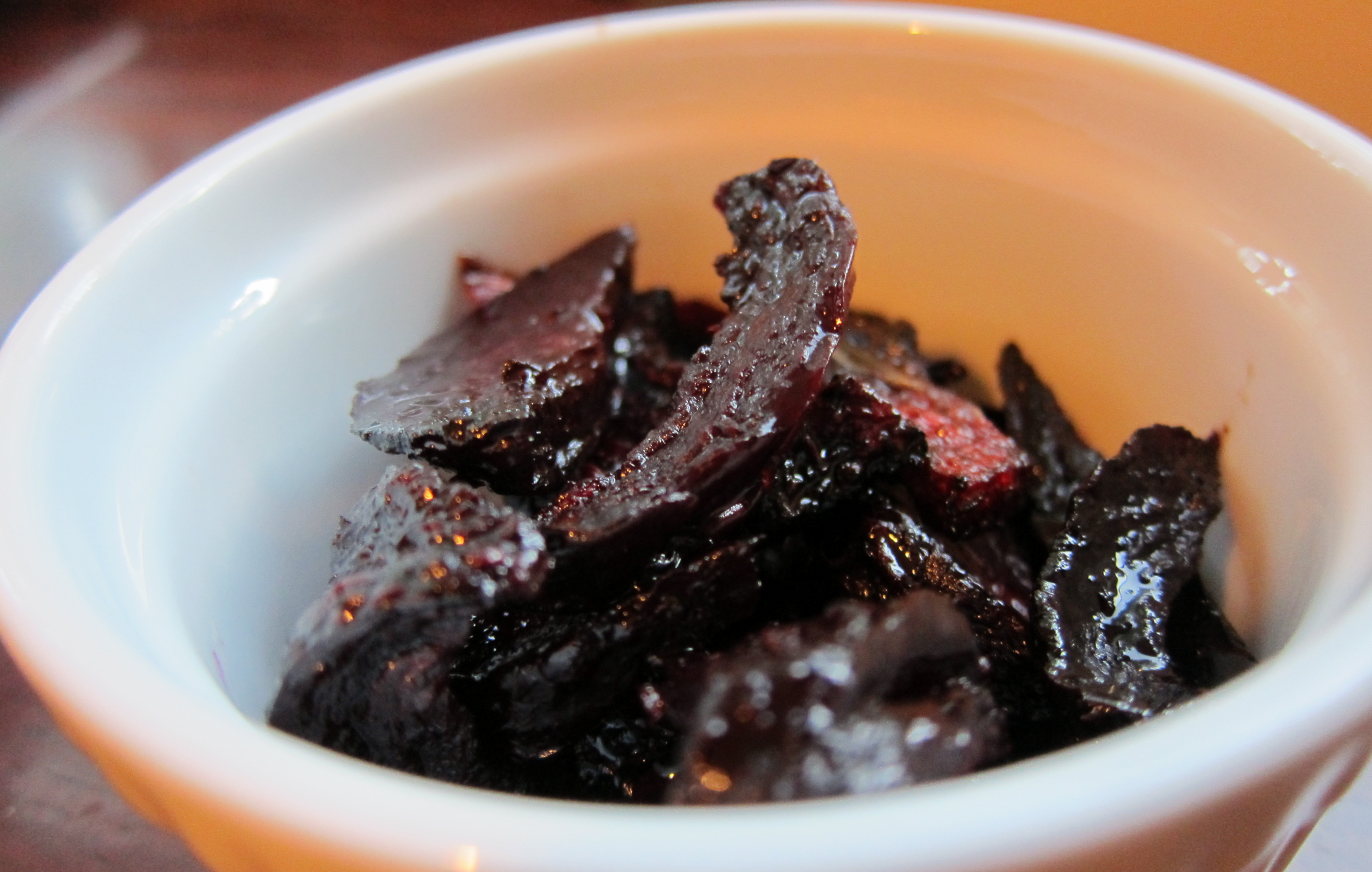
Roasted beets with balsamic vinegar  

From Nigel Slater, Real Food

Good to kill two birds with one stone and boil a load of beets for the cake and this dish too. Once you start this, it will quickly become a necessary part of your cooking life during beet season. Initially it will feel like too much work. This gripe quickly fades on eating.

Serves 2

6 small beetroot, with stems and tops on, if possible

A dash of olive oil

2 medium-sized onions, peeled

A sprinkling of balsamic vinegar

Method

Follow the instructions for boiling the beets above. Peel away the skins – using a kitchen towel if you have some – and cut each beet into wedges and toss them in a roasting tin with a little olive oil. Cut the onions into segments from root to tip. Add them to the beets and cover the roasting tin with foil. Roast in a hot oven (200C/400F) for thirty minutes. Remove the foil, add a dash of balsamic vinegar – not too much, just enough to add some depth and character – and a little salt. Return to the oven for a further thirty minutes, this time without the foil, until the beets are starting to brown and curl up. Serve with roast meat. Also, goat’s cheese is very nice. I have a feeling Roquefort would be pretty good too.
 

Share this:

  • Share on X (Opens in new window) X
  • Share on Pinterest (Opens in new window) Pinterest
  • Share on Facebook (Opens in new window) Facebook
  • More
  • Share on Reddit (Opens in new window) Reddit
  • Share on LinkedIn (Opens in new window) LinkedIn
  • Share on Tumblr (Opens in new window) Tumblr
  • Print (Opens in new window) Print
  • Email a link to a friend (Opens in new window) Email
Like Loading...

Bacon

15 Tuesday May 2012

Posted by Sophie James in Recipe

≈ 4 Comments

Tags

Bacon, Breakfast, Cooking, Food, Ingredients, Nonfiction, Recipes, Stories

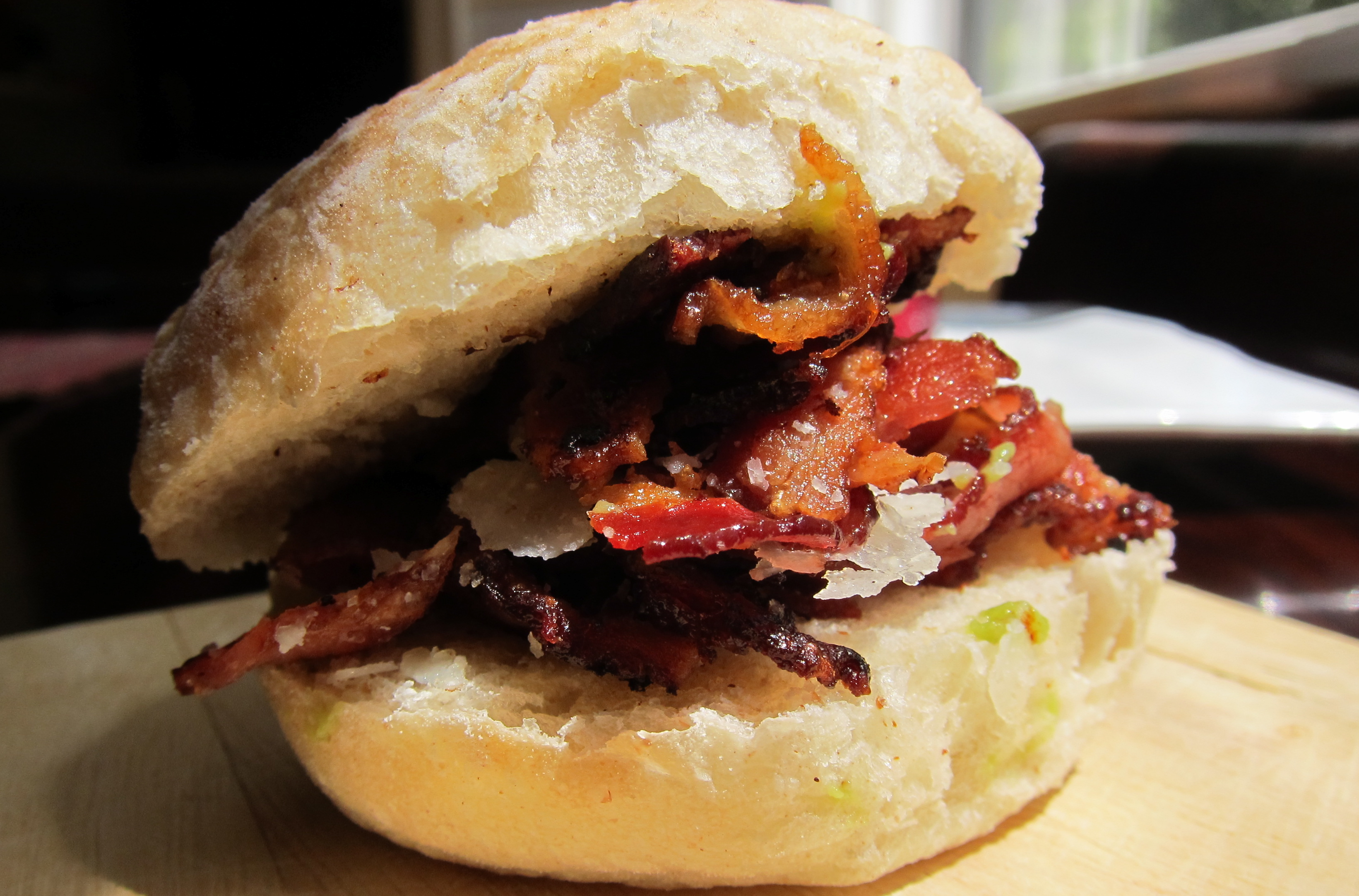
Life would not be complete without bacon. I even love Frazzles – pretend rashers eaten as potato chips – which is about as far as you can get from the real thing, and yet, there’s still something, a shadow, a tantalizing reminder. Bacon is dressed up now in all sorts of eclectic fare. You’ve got your candied bacon ice cream, your bacon muffins, your chocolate-covered bacon. But nothing beats a bacon butty. Even the name spells hope in the morning. One bite and you know that everything is right with the world. Muffled bread and sweet splinters of saltiness.

When I was on Coronation Street, each morning before shooting would begin with a trip to the breakfast bus. Bacon butty, strong milky coffee. Bliss. Years before, my long trudge to drama school every day was spent scanning the pavement for a glinting pound coin possibly overlooked, so I could get the tube in. My reward, when I finally made it, with aching feet and translucent blisters: a bacon butty. No ketchup (oh, go on then), ungreased bread, crisp fat, eaten immediately – bacon cools within seconds off the heat. No actual tomato (heaven forfend). Nothing green.

Incidentally, a butty is another word for sandwich – often used specifically to mean a bread roll or ‘bap’. Along with fried bread, a bacon butty is firmly in the Full English Breakfast pantheon, which is in itself a hangover from a less fussy culinary age – when everyone thought English cuisine was appalling and we were all terrible cooks and coated everything in lard and died at 45. Despite its damning history, bacon is properly egalitarian, and lends itself to endless permutations – it loves cabbage, carrots and peas, being crumbled over avocado, and brings depth and edge to stews and soups. Then there’s the sweetness factor. Here in California, it’s paired with maple syrup and pancakes as big as duvets, or French toast thick with apricot jam. But sandwiched between a soft cloud of dusty white bread, the fug of bacon smoke still hanging in the air; there is no bettering it.

God knows you don’t need to be told how to make a bacon butty, but here are a few tips about cooking bacon in order to achieve nirvana, and avoid greasy disappointment.

Bacon Butty 

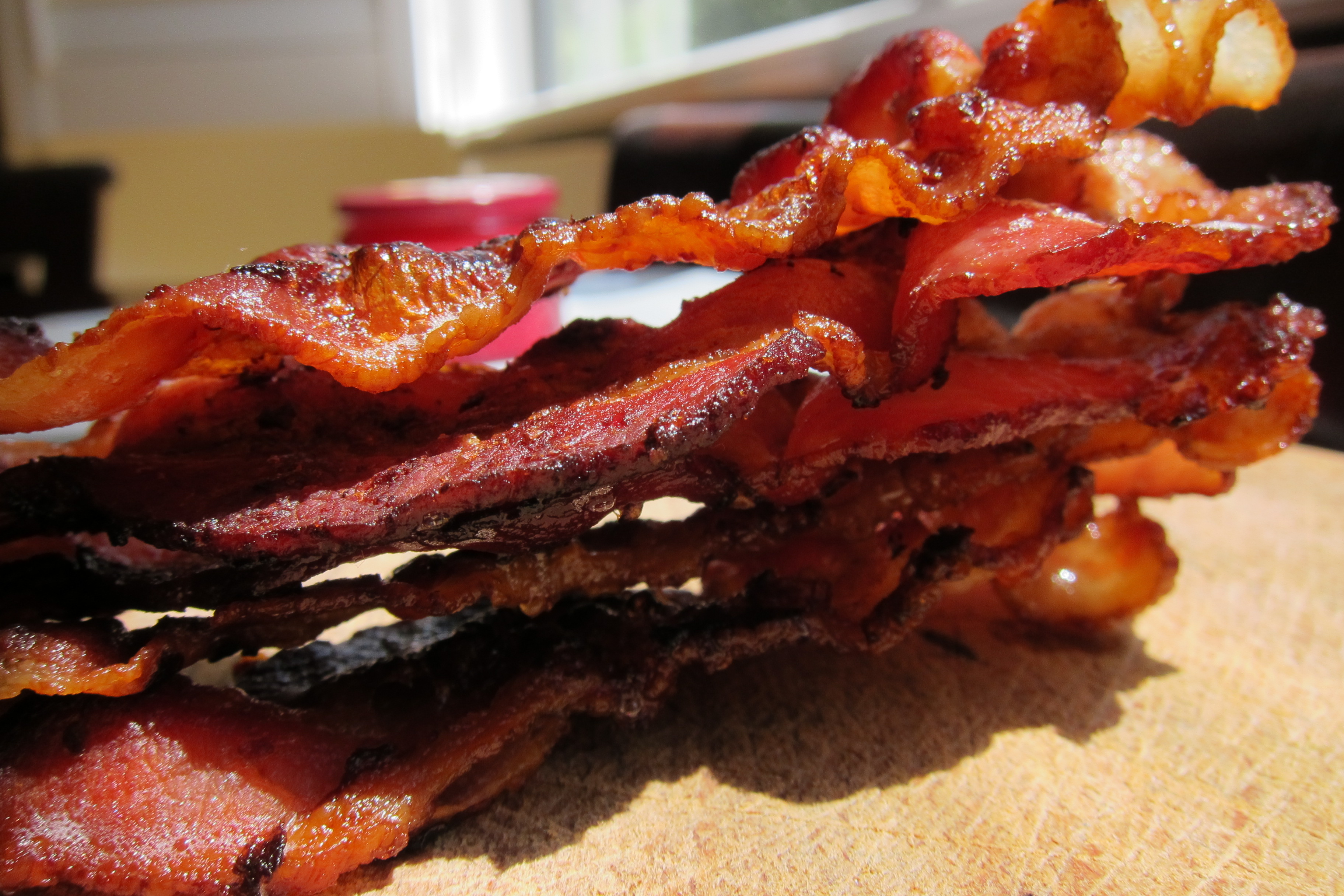
Let your bacon come to room temperature. This allows the fat to release, and ‘loosen’ slightly. Lay the bacon in a large, unheated pan. Make sure the rashers don’t overlap. Place the pan over a medium heat. Cook the bacon in its own fat – do not add any. This ensures you have a few arteries to spare at the end. Let the bacon sizzle away until crisp. Flip only once (pretend it’s steak). Drape on paper towels so some of the grease can be absorbed. Embed in the fluffiest bread imaginable. Doctor with whatever else you feel it needs. Die happy.

For a bacon sandwich, my preference would be for the streaky kind – cut from the belly – rather than the leaner back bacon. Streaky has more fat which crisps up beautifully, and this is an occasion when more is definitely more. Nigel Slater loves his bacon; he suggests buying it loose wherever possible from a butcher or cheesemonger, or even a provincial post office. And go for bacon that is slightly dry to the touch, with a sweet, smoky smell. If it’s packaged, look for the colour, which should be a pinky-maroon, and avoid wet and flabby.

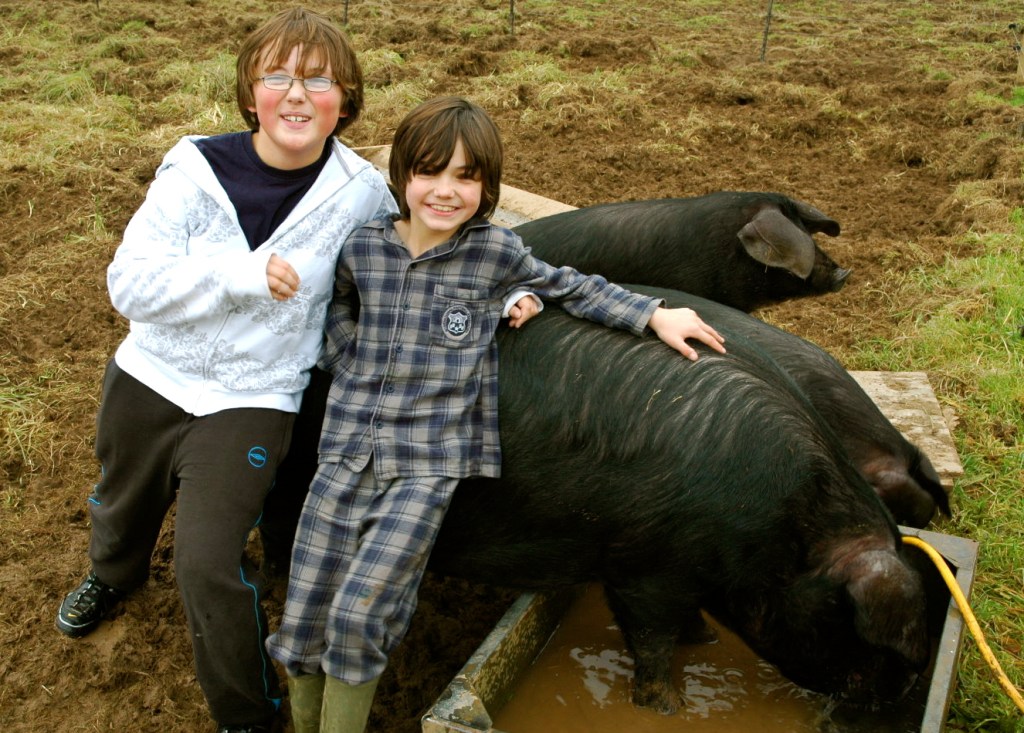
My nephews with their black pigs in Cornwall

And now to the thorny subject of pig farming. As many – including my brother – will know who have kept pigs, it is ‘meat for the cruel months’ – quintessential autumn and winter fare. The best pork is rich and fatty, supple and succulent, and this is because a happy pig will have spent his days rootling and tootling around, snuffling for acorns and eating kitchen scraps with his mates. They are surprisingly affectionate, curious and clever. Intensively farmed pigs are to be avoided at all costs; if you were ever wondering how to shame a pig, this method would be it. Most live in concrete hell, pumped full of protein to accelerate growth and so suffocated by the lack of space, that they become atypically aggressive. No wonder their bacon turns to pink, watery slime in the pan. Beware the labels “outdoor bred,” “traditional” and “country” too – vague, pointless and dishonest. Free range and organic are the only labels to trust and always go small-scale if you can.

IMG_7368

Bacon in LA

I have found it harder to find good bacon here, because trying to trace it to a specific farm and breed is a lot of work. And the state of California is huge – bigger than the whole of the UK – so ‘local’ can be defined as anywhere within a 150 mile radius. Taylors is homespun and family-run. I’ve heard only good things about them – friendly, helpful and they deal exclusively with local farms. It’s also in Sierra Madre, home to the world’s largest wisteria (which has already gate-crashed five backyards). Going further afield, the bacon from The Black Pig Meat Company is beautiful looking stuff: a rude pink, wonderfully stippled, juicy and clearly made with love and mindfulness. You can order online. If you are able to get to the Hollywood Farmers’ Market or the one in Santa Monica, seek out the Rocky Canyon Farms stall. It’s run by Greg Nauta, a small-scale rancher and farmer from Atascadero, California, who grows organic vegetables and raises free range cows and pigs on an open pasture. His applewood bacon is lovely, and it feels good to support him.

Foodster Jonathan Gold in the LA Weekly magazine also gives the lowdown on his favourite cuts of bacon and where to find them in LA. If anyone has any bacon-related thoughts to share, particularly if there is a gem of a butcher you would like to champion, please write in. I would love to hear your stories.

The End

Share this:

  • Share on X (Opens in new window) X
  • Share on Pinterest (Opens in new window) Pinterest
  • Share on Facebook (Opens in new window) Facebook
  • More
  • Share on Reddit (Opens in new window) Reddit
  • Share on LinkedIn (Opens in new window) LinkedIn
  • Share on Tumblr (Opens in new window) Tumblr
  • Print (Opens in new window) Print
  • Email a link to a friend (Opens in new window) Email
Like Loading...

Candied kumquats & rose jam

08 Tuesday May 2012

Posted by Sophie James in Recipe

≈ 5 Comments

Tags

Breakfast, Cooking, Fruit, Ingredients, Los Angeles, Nonfiction, Recipes, Stories

IMG_7517

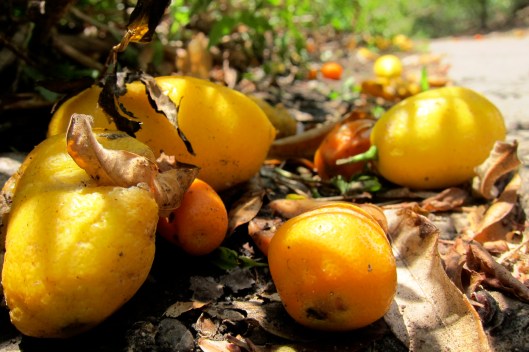
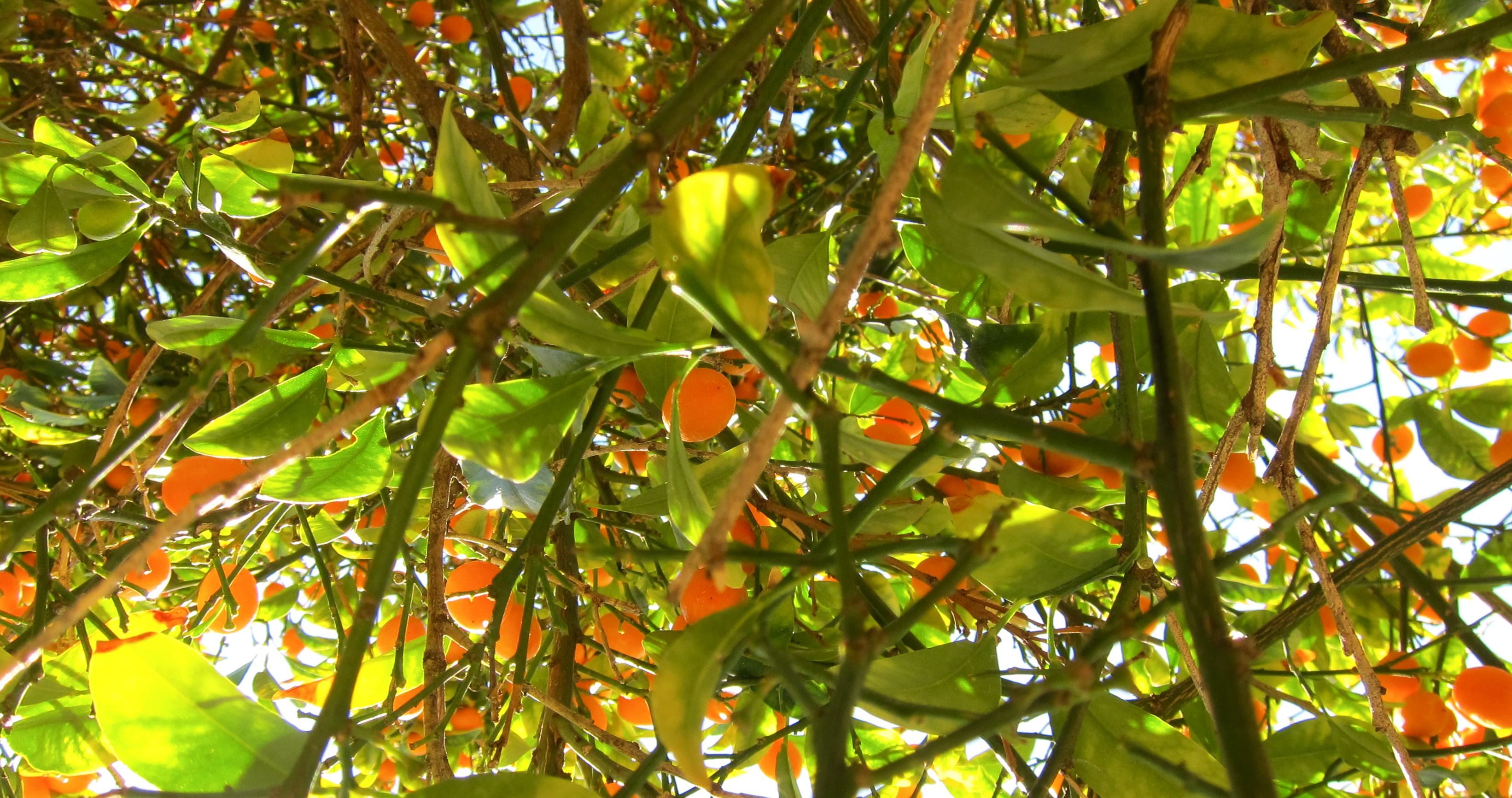
A bit of a whimsical pairing, this. Someone was throwing out a load of roses – they were lying in a sorry heap on the ground, by the bins – so I scooped them up, fished out the earwigs and got to work. In the same week, I found kumquats tumbling all over the road, the tree bowed down by its own luscious bounty, so I shoved as many of them into my bag as I could manage, and walked away whistling (always a sign of guilt).

Anyway, I was brought up to believe a bit of light thieving is not only acceptable, but common sense when we’re talking about food that would rot otherwise. Seeing a laden citrus tree in LA – a common sight, sadly – its golden orbs lolling on the ground mere yards from someone’s front door, makes me feel quite sick. “It’s food!” I want to shout through the letterbox. “You can eat it and everything!” It takes every cell in my body not to jump the fence and fill my pockets, secreting the fruit about my person like a drug mule. To put this in context, I am the daughter of a woman who regularly scaled a neighbour’s wall to forage for dandelion leaves, which she did at nightfall, as if she were about to make off with their stereo. The leaves were for us, by the way, in lieu of salad.

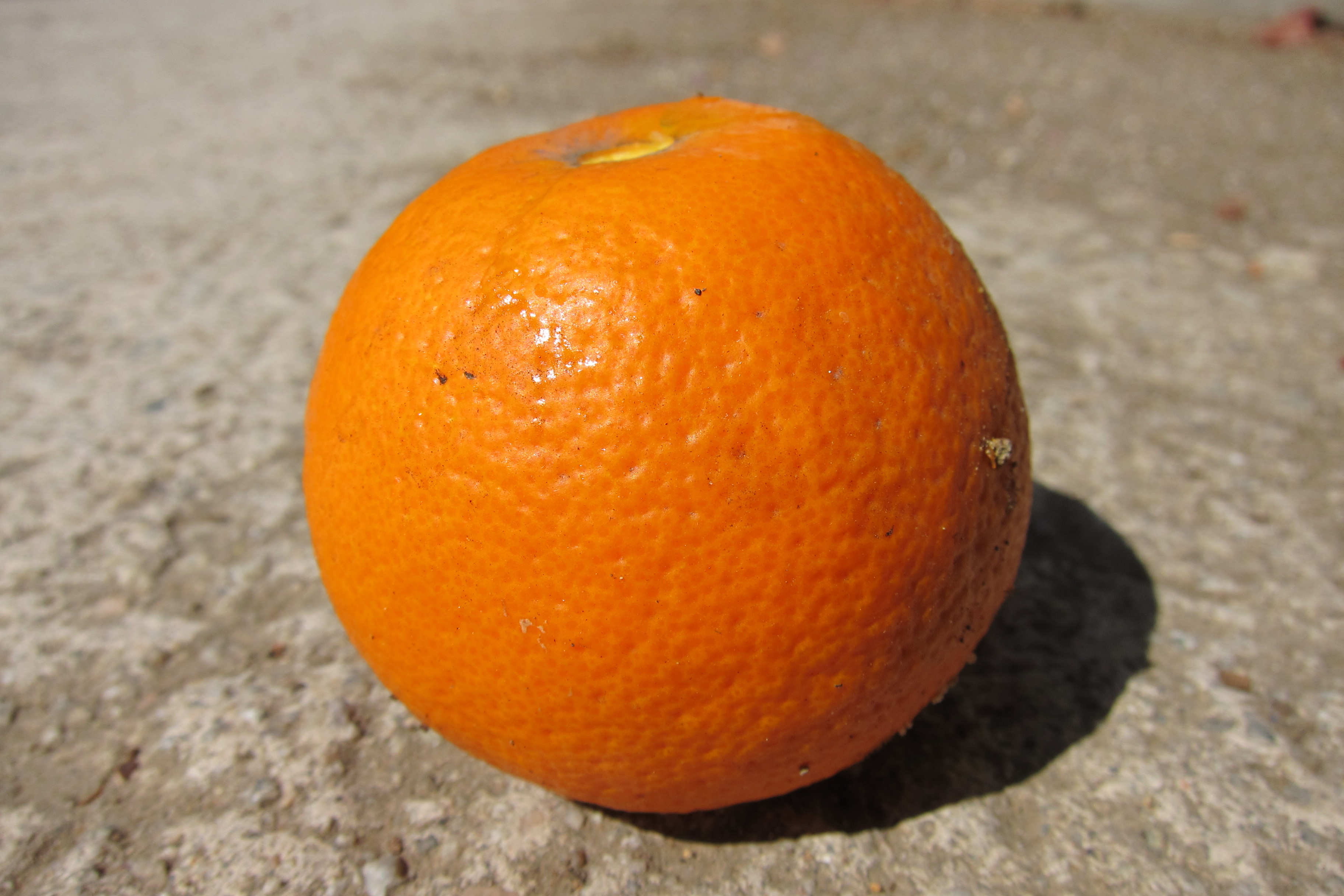
The kumquat is the perfect oval shape, like a little orange egg. The neatness and polish, the deep apricot hue of the skin, lends itself to being shown off on posh after-dinner fruit plates where no one knows what to do with them. They’re so small that it seems a pointless exercise to peel them and you don’t have to, because the rind is in fact the sweetest bit. In an interesting about-turn, the flesh is sour, so the idea is to pop the whole thing in your mouth and crunch. You are expected to eat the seeds. The tree itself has been known to sit at the table – the potted version, I should say – where guests can pluck directly from the branch.

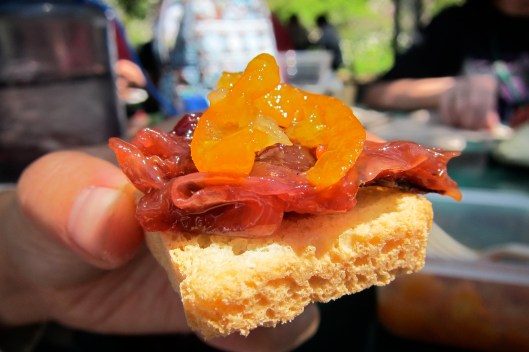
I think these work best candied. It shows off their texture, that nubby rind is almost all there is, and sugar in this setting brings out the sour. It reminds me of a bitter version of quince paste and works well with cheese, particularly Manchego and Cabra al Vino. A chalky, wincing cheddar is also lovely. For breakfast, it takes on a poached complexion, particularly with yogurt. I know I’ve already mentioned apricots; these have more bite but retain the same sweet-sour balance. Limequats, as the name suggests, are a hybrid, and much tarter, more marmalade-like. In fact, both work well as a quick version of the preserve. In ten minutes you have a credible, and beautifully syrupy, burst of sunshine for your morning toast.

IMG_7193

Candied kumquats

Adapted from David Lebovitz

This recipe is adapted from ‘sweet king’ David Lebovitz, who suggests poached prunes as an accompaniment. Interestingly, the rose petal jam is prune-like both in texture and appearance, though lacking the prune’s deliciously plump sloppiness.

1 cup (250ml) water

¼ cup (50g) sugar

15 – 20 kumquats or limequats

2 tbs crystallized ginger, chopped finely

1 cinnamon stick

Method

Slice the kumquats into thinnish rounds and de-seed. Any seeds you don’t get can be easily sieved out later, so don’t worry if some escape you. Bring the water, sugar, cinnamon, ginger (feel free to improvise if you don’t have these) and kumquats to a gradual boil in a small saucepan.

Reduce the heat to a simmer and cook for about 10 minutes, keeping an eye on it near the end. The liquid will now be reduced and syrupy. Remove from the heat, take out the cinnamon stick, and let the kumquats come to room temperature. They can keep in the fridge for a good six weeks, stored in an airtight container.

Interesting fact: The kumquat, though it behaves like a citrus, was discovered in 1915 to have enough cellular differences to be moved to a separate genus known as Fortunella, named after Robert Fortune, an English traveller who introduced the fruit into Europe in 1846. 

My rose booty

I have been longing to make this jam for some time now, ever since I came across it in Alys Fowler’s book, The Thrifty Forager. I’ve never been much of a rose fancier  – who can forget Annette Bening shrieking in her gardening gloves in American Beauty? – but I always hoped to be given some, or at least to be walking past a compost heap at the right moment.

I found my multi-coloured stash took on a deep port-wine appearance, and started to reduce after it was allowed to cook for 20-25 minutes. It managed this cleverly without pectin – I suspect the sugar does most of the work –  and the result is delicately toothsome. A faint ‘tearing’ sensation is important here – some resistance, rather than a general jammyness. For breakfast, serve with the candied kumquats over Greek yogurt. Some chopped pistachios would make an interesting contrast.

Rose petal jam

Adapted from The Thrifty Forager by Alys Fowler

250g (9oz) unsprayed rose petals

1.1 litres (2 pints) water

Juice of 2 lemons

450g (1lb) granulated sugar

Method

Shake the petals free of any bugs, place in a bowl, and add half the sugar. Leave for a few hours or overnight. This infuses the rose flavour into the sugar, and darkens the petals. In a heavy-based pan, add the water, lemon juice and remaining sugar, and heat gently until all the sugar has dissolved. Stir in the rose  petals and simmer for 20 minutes or until the rose petals look as if they are melting and have softened. Try one – there should still be a slight bite to it. Turn the heat up and bring to a boil for another 20 minutes or until setting point is reached. Remove any scum that may have risen to the top and allow to cool slightly, stirring gently so that the petals are evenly distributed. Cover and bottle as usual.

Food Forward

If you live in the LA area and have a groaning fruit tree that you can’t deal with or you know someone who does, Food Forward will come round, pick the excess fruit (and vegetables too, if you have them) and distribute them to those in need. You can also get involved in picking the fruit and canning it, and they run hands-on food preserving workshops, with some of the leading LA ‘foodsteaders’.


Share this:

  • Share on X (Opens in new window) X
  • Share on Pinterest (Opens in new window) Pinterest
  • Share on Facebook (Opens in new window) Facebook
  • More
  • Share on Reddit (Opens in new window) Reddit
  • Share on LinkedIn (Opens in new window) LinkedIn
  • Share on Tumblr (Opens in new window) Tumblr
  • Print (Opens in new window) Print
  • Email a link to a friend (Opens in new window) Email
Like Loading...

Brownies

03 Thursday May 2012

Posted by Sophie James in Recipe

≈ 1 Comment

Tags

Baking, Cake, Chocolate, Claudia Roden, Dessert, Food, Ingredients, Recipes, Stories

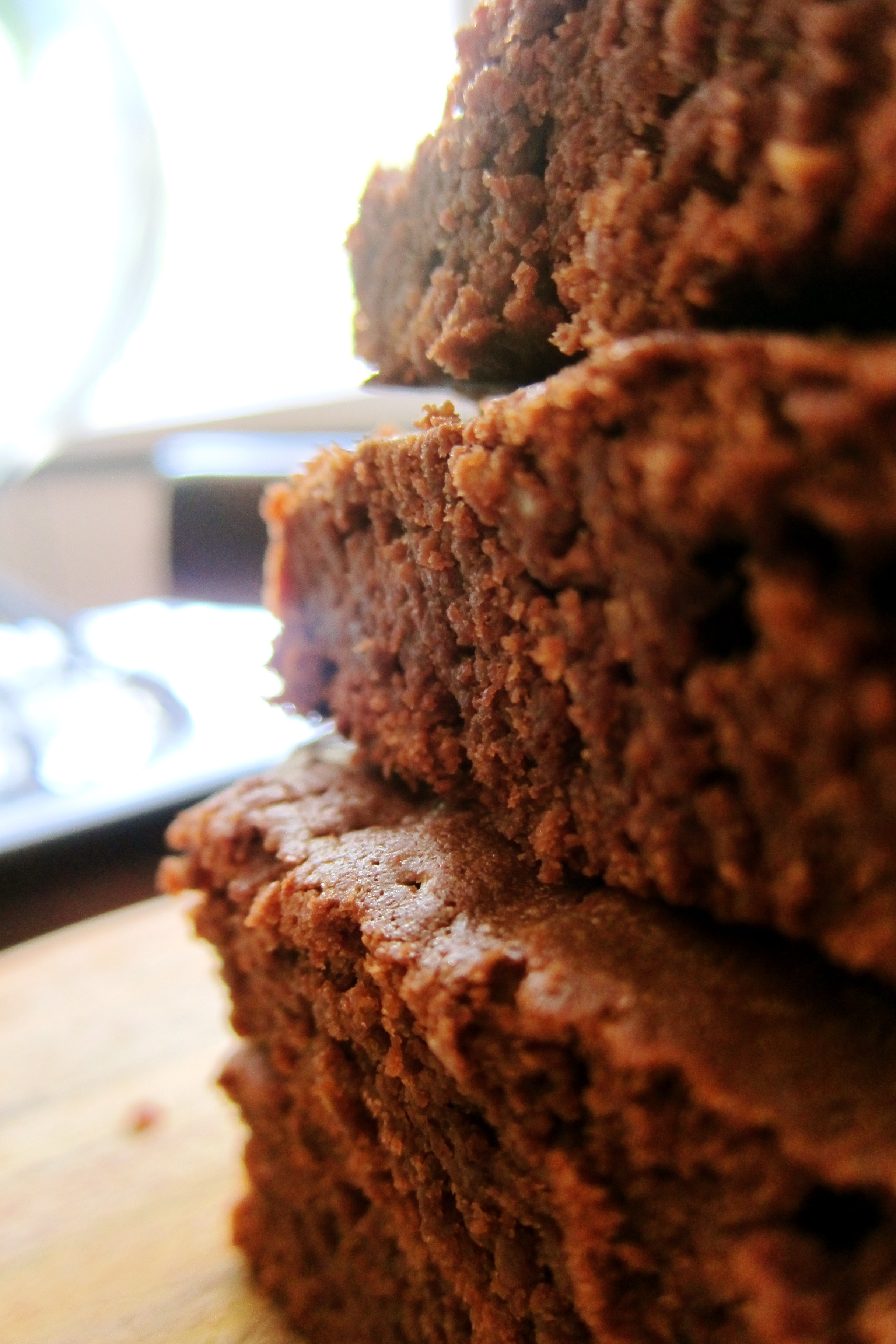
I’m sure there’s a Brownie Consortium somewhere that meets regularly to debate such topics as Cakey vs Fudgy, The Role of Cocoa, and Walnuts: A Fresh Perspective. I also recently learned the brownie isn’t technically a cake at all, but a cookie. Fanny Farmer listed it as such in the 1906 edition of her Boston Cooking-School Cook Book and in some ways that’s what a brownie really strives to be. Think of the best chocolate chip cookie you’ve ever tasted – the memory of the oven still lingering over it, a shatteringly tender shell, a warm, melting middle, rich but light and gone in seconds. I have used a brownie recipe from a children’s cookery book for the last few years and it’s served me well. It’s child’s play (as all baking should be, in my opinion) and not remotely fiddly and the results delight all humans. My allegiance is definitely to the fudgy camp. Why have cake when you can have a dark, dense bar, baked to a sugary crackle on the outside, with gently weeping chocolate within?

The brownie (named after its original ingredient, molasses) took off in the early 1900s in Chicago when it was made as a dessert item for ladies attending the fair. It needed to be flat and square, hence the absence of raising agents, so they could eat it easily from a ‘boxed lunch’. Touchingly, our most recent guests carried them around in a foil parcel in much the same manner.

I know it’s almost heresy to say this, but I don’t like walnuts in brownies. I prefer to keep to similar textures, something that releases its flavour in a liquid burst, rather than a hard, grainy morsel. Sour cherries, prunes, chocolate chips, cooked beetroot would all work. I don’t mind the bitterness of a cocoa nib, or the sunken, darker hit of alcohol. I just don’t want to be picking things out of my teeth.

Chocolate Orange Brownies

This recipe uses whole oranges boiled and pureed – skin and all. As it takes a couple of hours for them to be cooked through, add the zest of a large orange, and maybe try an orange-infused chocolate, such as Green and Black’s Maya Gold if you are pushed for time. However, there are dividends in using the whole orange approach – if you chuck another two on to boil, you can try Claudia Roden’s lovely almond and orange cake from her Book of Middle Eastern Food. The puree can also be added to muffins and quick bread, used as a base for custard or ice cream, as well as spread over baking salmon or mashed into a herby butter.

The orange is fresh and sharp here – ‘on the lip’ you could say – which is what a brownie needs. The chocolate is deep and steady, and the cocoa keeps things earthbound. Incidentally, the fudgy, chewy texture of these brownies comes from melting the butter with the chocolate, which prevents any air from being trapped. If you want something cakier and crumblier, go for the creaming method. And, of course, you can have a straightforward, orange-less brownie, by simply leaving out the orange component entirely.

Chocolate Orange Brownies

Inspired by Sweet Treats, Williams-Sonoma

175g (6oz) *good quality chocolate (60-70% cocoa solids)

25g (¼ cup) cocoa powder (such as Green and Blacks)

250g (2 sticks/1 cup) unsalted butter, cut into chunks

300g (1½ cups) organic cane sugar

3 eggs at room temperature

70g (½ cup) plain flour

1 tsp vanilla extract

Pinch of salt

2 organic, unsprayed oranges

Method

Put the whole oranges into a pan and cover with water. Bring to the boil, cover and simmer for two hours or until soft. Drain and leave to cool, then cut them in half and remove the pips and any stalks. Put the oranges, including the skin, into a blender and puree until smooth. Set aside. This can be made in advance and kept in the fridge for two days.

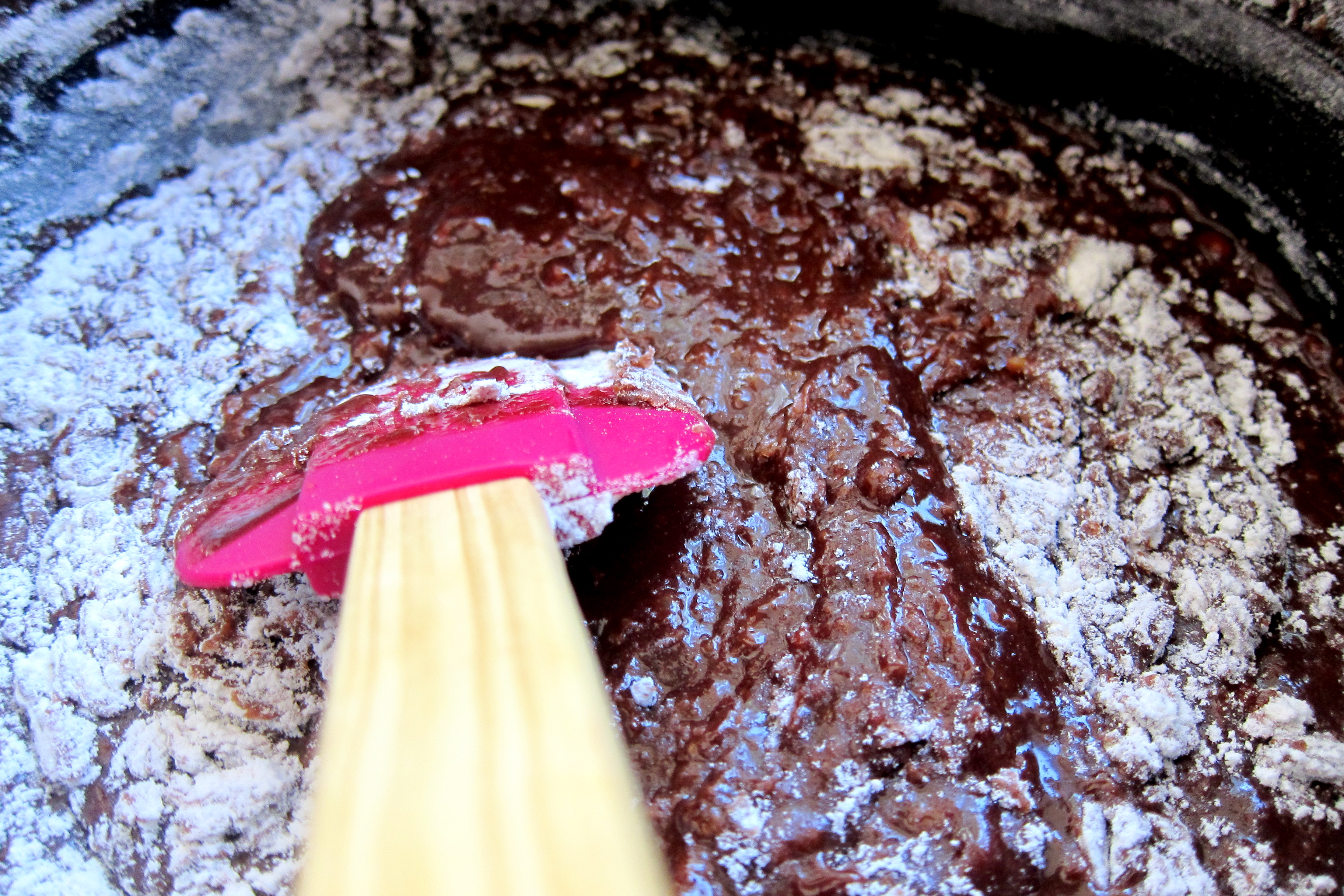
Preheat the oven to 350F/180C. Butter and line a 9 inch/23cm x 23cm baking pan with parchment paper. Break the chocolate into smallish pieces and put in a pan with the butter. Melt both over a very low heat, stirring occasionally with a spatula. Pour the melted chocolate and butter into a bowl and whisk in the cocoa powder until smooth. Stir in the sugar and the vanilla extract. Whisk in the eggs, one by one, beating well after each addition. Now add the orange pulp. Whisking the mixture vigorously at this point will create a crisp outer layer to the brownie.

Gently fold in the flour and salt. Stir well to make sure there are no streaks. Scrape the batter into the baking pan and smooth the top. Bake for 35 – 40 minutes or until a skewer comes out with a few crumbs attached but no raw stuff. Let the brownies cool a little before cutting them into squares. Serve warm with some ice cream or a dollop of crème fraîche. If you don’t want instant gratification, these actually improve with time; store in an airtight container and enjoy picking.

*The orange-infused chocolate will have less cocoa content, so you will need to slightly increase the cocoa powder.

Share this:

  • Share on X (Opens in new window) X
  • Share on Pinterest (Opens in new window) Pinterest
  • Share on Facebook (Opens in new window) Facebook
  • More
  • Share on Reddit (Opens in new window) Reddit
  • Share on LinkedIn (Opens in new window) LinkedIn
  • Share on Tumblr (Opens in new window) Tumblr
  • Print (Opens in new window) Print
  • Email a link to a friend (Opens in new window) Email
Like Loading...

Muffins

26 Thursday Apr 2012

Posted by Sophie James in Recipe

≈ 5 Comments

Tags

Almonds, Baking, Food, Ingredients, Recipes, Spices, Stories

IMG_7234

I came late to the American muffin. It was too close to the cupcake for comfort, architecturally at least. And the last shop-bought muffin I tried was like eating my own washcloth. There was also a disconcerting bounce to it, no doubt the result of all the preservatives required to keep it ‘fresh’.

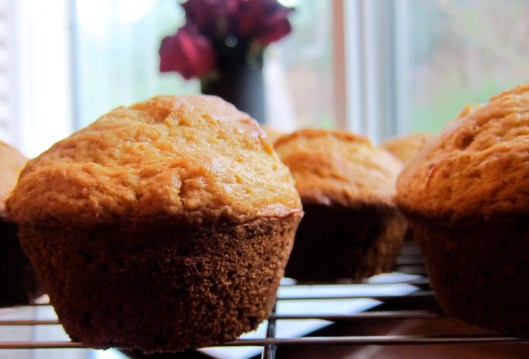
The craggily homemade version is much nicer; unprecious, easy, malleable. It’s a great one for using up left-overs, marmalade bits, old cranberries, stewed this and that, collapsed bananas and it’s good for experimenting. I like the deliberate under-mixing, and then watching it rise into smooth little balls through the smoky glass. It also absorbs and holds onto the essential flavour of things in interesting ways, like ginger nubbins, dates, vanilla and cinnamon. The botanically named ‘flavedo’ of citrus zest comes through startling well. It’s honest fare; simple, good, true, the workhorse of the kitchen. Wet into dry is the only rule, and then it likes to be left alone. But breaking it open, and getting a headful of that steamy, sweet interior, the texture reminiscent of soft, hot bread is lovely. And it has that essential lick-the-bowl-clean component, central to all great baking expeditions.

Muffins are what is known in the trade as ‘quick bread.’ Bread that uses yeast – ‘slow bread,’ you could say – has a long fermentation period, whereas quick breads use chemical leaveners such as bicarbonate of soda and baking powder and need to go straight in the oven. Muffins favour the casual, almost sloppy cook. A few desultory swipes with a spatula is all you need for the mixture to be ready – any more and the gluten will start to work, and the result will be tough and dense. Keeping a light hand also creates all the nooks and crannies for the butter and jam to fall into later, and hopefully – if the muffin is still warm – liquefy and dance around your mouth in a delightful way.

IMG_7252

This recipe can be made as a loaf or as individual muffins, and you can substitute the raisins for a cup of something else (prunes would be nice). Fennel is an acquired taste, I admit, being the Marmite of flavourings, but the liquorice warmth balances the sweetness here. Play around with spices though, and see what takes your fancy. I have added ground almonds to the mix because I believe that the muffin’s downfall is its tendency to dryness which almonds will mitigate. If you are less catholic in your muffin persuasion, and want to keep things simple, stick to two cups (250g) of flour.

Fennel, orange and raisin quick bread

Adapted from Nick Malgieri’s The Modern Baker

1 cup (160g) raisins

1¼ cups (150g) plain flour

¾ cup (90g) ground almonds

⅔ cup (130g) sugar

2 tsp baking powder

½ tsp baking soda

1 tbs fennel seeds

Pinch of salt

¾ stick (6 tbs/3 oz) butter

Finely grated zest of 2 oranges

⅔ cup (160 ml) buttermilk

(or make up 1 cup/250 ml of milk and add 1 tbs of lemon juice.  Let this stand for 5 minutes and use the required amount)

2 large eggs, at room temperature

Method

Put the raisins and about 75 ml (5 tbs) of water in a small saucepan and bring to the boil. Remove from the heat, cover, and leave until the raisins have absorbed most of the liquid. You don’t have to do this but it makes the raisins very plump and juicy. Drain and leave to one side. Heat a dry frying pan/skillet over a medium heat and add the fennel seeds, shaking the pan so they toast evenly. They are ready when they start to release their fragrance and are beginning to brown; then whizz them in a spice or coffee grinder for a few seconds.

Preheat the oven to 400F. Lightly coat the muffin pan or loaf tin with butter. Put the flour, ground almonds, sugar, baking powder, baking soda, blitzed fennel seeds and salt in a medium-sized bowl and combine well. In a saucepan, melt the butter gently with the orange zest. Turn off the heat and add the buttermilk to the melted butter and let it sit for a few minutes, until it’s tepid. Pour the melted butter mixture into a bowl and add the eggs and whisk until well blended.

Add the wet ingredients to the dry and stir gently with a wooden spoon or spatula. Mix until just blended. Gently fold in the raisins. Use an ice cream scoop or a spoon to pile the batter into the muffin cups (fill to the top if you want a billowing ‘crown’), or simply pour into the loaf tin. Bake the individual muffins for 18 – 20 minutes and the loaf for about 35 – 40 minutes. The top should feel firm and a skewer will come out cleanish when it’s ready. Leave the tin to cool for five minutes and then prise the loaf/muffins out using a thin knife and leave on the rack until okay to handle, but still tender and steaming. Eat very soon.

Some things to remember: All the liquid ingredients must be brought to room temperature before beginning. If, when you whisk the milk, eggs and butter together, the milk or the eggs are chilled, the butter will congeal and won’t blend well. Always add any zest to the melted butter rather than to the dry ingredients, as this releases the essential oils. Stop mixing the batter as soon as you can see no streaks of flour or liquid; don’t worry about lumps, they’ll even out during baking. Just get the darn thing in the oven.

These muffins, unlike their commercial counterparts, have a shorter shelf-life. After a day, they need a zap in the oven to bring them back to life, but by day three it’s all over. Freeze them once they’ve cooled on the rack, if you want to keep them for a while; they freeze for up to a month, wrapped and sealed in a freezer bag. When you’re ready to eat them, thaw for 30 minutes and then reheat. Alternatively, prepare the dry and wet ingredients, cover and store them separately until the morning (keep the wet in the fridge), and then whip them together and bung in the oven.

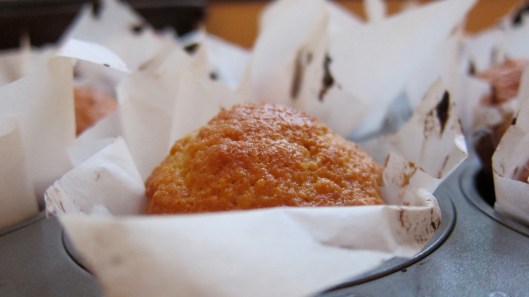
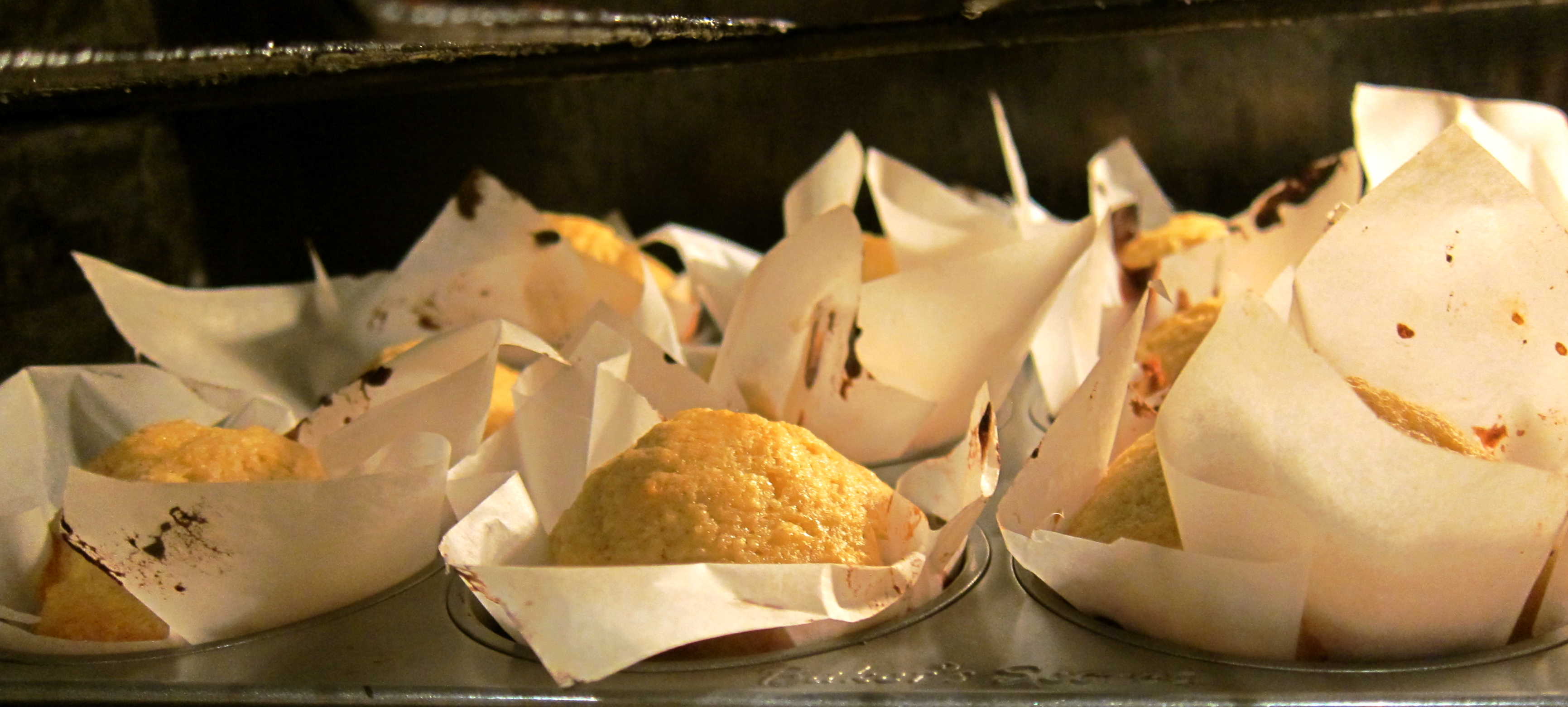
You can put the batter into squares of parchment paper, which then sit in the muffin tray, as pictured below. Though it looks quite pretty, the downside is the paper’s tendency to cling to the muffin, thus tearing it asunder. This makes it easier to eat though – doing the job of fingers. 

Share this:

  • Share on X (Opens in new window) X
  • Share on Pinterest (Opens in new window) Pinterest
  • Share on Facebook (Opens in new window) Facebook
  • More
  • Share on Reddit (Opens in new window) Reddit
  • Share on LinkedIn (Opens in new window) LinkedIn
  • Share on Tumblr (Opens in new window) Tumblr
  • Print (Opens in new window) Print
  • Email a link to a friend (Opens in new window) Email
Like Loading...
← Older posts
Newer posts →

Enter your email address to follow this blog and receive notifications of new posts by email.

Join 2,214 other subscribers

Top Posts & Pages

Weathered
A field of fennel
Crema Catalana plus fennel
One jar only
Is it me, Lord?
Chocolate marmalade slump
Swimmingly
Small Crumbs of Comfort
Unfurl
Apple and sultana cake

Recent Posts

  • At my allotment
  • A compendium of sorts
  • Mulberries
  • We are nature
  • Leaving home
  • A treacherous herb
  • Just stop it
  • Why I swim

Great books I’ve read

Blogs/Websites I read

  • Letitia Clark
  • Nigel Slater
  • Room to heal
  • Samantha Harvey
  • Stewart Lee
  • The Kureishi Chronicles
  • The Marginalian
  • Tom Cox
Follow Stories from the Stove on WordPress.com

Archives

  • June 2023
  • February 2023
  • September 2022
  • August 2022
  • July 2022
  • May 2022
  • February 2022
  • December 2021
  • August 2021
  • April 2021
  • March 2021
  • January 2021
  • June 2020
  • November 2018
  • August 2017
  • July 2017
  • May 2017
  • April 2017
  • February 2017
  • January 2017
  • November 2016
  • May 2016
  • October 2015
  • July 2015
  • June 2015
  • April 2015
  • March 2015
  • January 2015
  • December 2014
  • November 2014
  • October 2014
  • September 2014
  • August 2014
  • July 2014
  • June 2014
  • May 2014
  • April 2014
  • March 2014
  • February 2014
  • January 2014
  • December 2013
  • November 2013
  • October 2013
  • September 2013
  • August 2013
  • July 2013
  • June 2013
  • May 2013
  • April 2013
  • March 2013
  • February 2013
  • January 2013
  • December 2012
  • November 2012
  • October 2012
  • September 2012
  • August 2012
  • July 2012
  • June 2012
  • May 2012
  • April 2012
  • March 2012
  • February 2012
"A WOW piece!" Claudia Roden on Walnut Bread

Walnut bread

Lucas’s chocolate marmalade slump

Tags

Afternoon tea Allotment Almonds Art Autumn Baking Bread Breakfast Cafes Cake Childhood Chocolate Christmas Citrus Claudia Roden Cookbook Cooking Dessert Devon Dinner Elizabeth David England Exmoor Fish Food France Fruit Gardening Gelato Gluten-free Herbs Home Homesickness Honey Ice cream Ices Ingredients Italy Jam Jane Grigson Lemons London Los Angeles Lucas Hollweg Marmalade Meat Mediterranean Meyer lemons Nature Nigel Slater Nonfiction Nuts Onions Patience Gray Poetry Pudding Reading Recipe Recipes Salad Sea Seasons Soup Spain Spices Spring Stone fruit Stories Summer Sussex Travel Vegetables Winter Writing Yoghurt

A WordPress.com Website.

Privacy & Cookies: This site uses cookies. By continuing to use this website, you agree to their use.
To find out more, including how to control cookies, see here: Cookie Policy
  • Subscribe Subscribed
    • Stories from the Stove
    • Join 2,082 other subscribers
    • Already have a WordPress.com account? Log in now.
    • Stories from the Stove
    • Subscribe Subscribed
    • Sign up
    • Log in
    • Report this content
    • View site in Reader
    • Manage subscriptions
    • Collapse this bar
 

Loading Comments...
 

    %d