• Recipe List
  • Sophie

Stories from the Stove

Stories from the Stove

Tag Archives: Stories

Bitter chocolate olive oil cake

03 Sunday Feb 2013

Posted by Sophie James in Recipe

≈ 28 Comments

Tags

Almonds, Cake, Chocolate, Cookbook, Cooking, Dessert, Food, Ingredients, Nonfiction, Olive oil, Recipes, Stories
IMG_1320

This is not a rant against butter. Far from it. But I am rather in love with olive oil and its peculiar affinity with desserts. And while butter highlights sweetness, is dense and comforting, olive oil is less weighty, making the crumb lighter, almost bubbly. Initially, I was scared of going for an extra virginal oil, but the fruity-pepper quality is reminiscent of spice. And good olive oil will have traces of bitterness and pungency, with echoes still of the actual olive. I know I’m probably a bit behind, but the notion of tasting fresh olive oil, sipping it like wine, was new to me, until I tried it. Weirdly, it’s not oily or greasy, but fresh and clean, spring-like.

And here in LA, it is spring; particularly early in the morning with the desert air still biting but with a still and steady sun above. After months of wet (it’s true what they say – LA in the rain is basically Slough with palm trees), it is good to remember the heat, the sharpness and dryness of the air. Things are budding again. Magnolia with its slip of pink just pushing through. Lemon trees a forest of blossom, with the first yellow fruit like tear drops. And everything is green, courtesy of the rain. Troughs of dried mud have appeared next to banks of luminous grass.

Olive oil is big business and full of controversy. It’s a minefield, frankly. Here in California, olive trees were brought to the state by Spanish missionaries in the 18th century. Everywhere the silver-grey leaves, stark as bullets in the sun, remind you of the fact that despite its New World appearance, the terroir of this part of California is fundamentally Mediterranean.

I cannot begin to unravel the complexity of what makes a good olive oil, but apparently it has little to do with colour and everything to do with freshness; olives are a stone fruit and the oil is essentially the juice of the olive, and like all juice, it is perishable. Look for bottles with a ‘best by’ date, or better still a date of harvest. Early harvest oil will be generally much more pungent and more flavourful than late harvest. And the oil should be extracted by cold-pressing, using neither heat nor chemicals. This is obviously in an ideal world.
IMG_1349

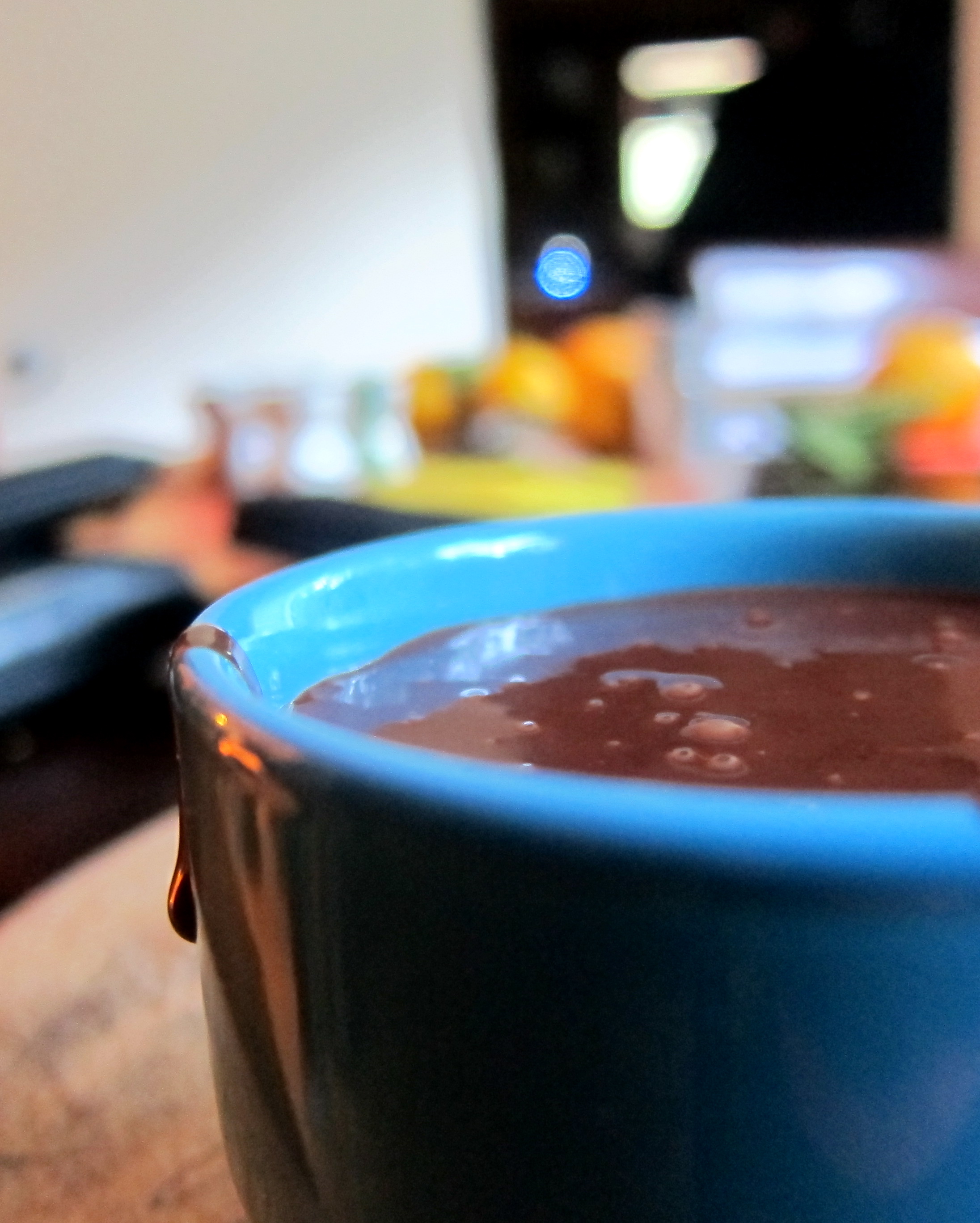
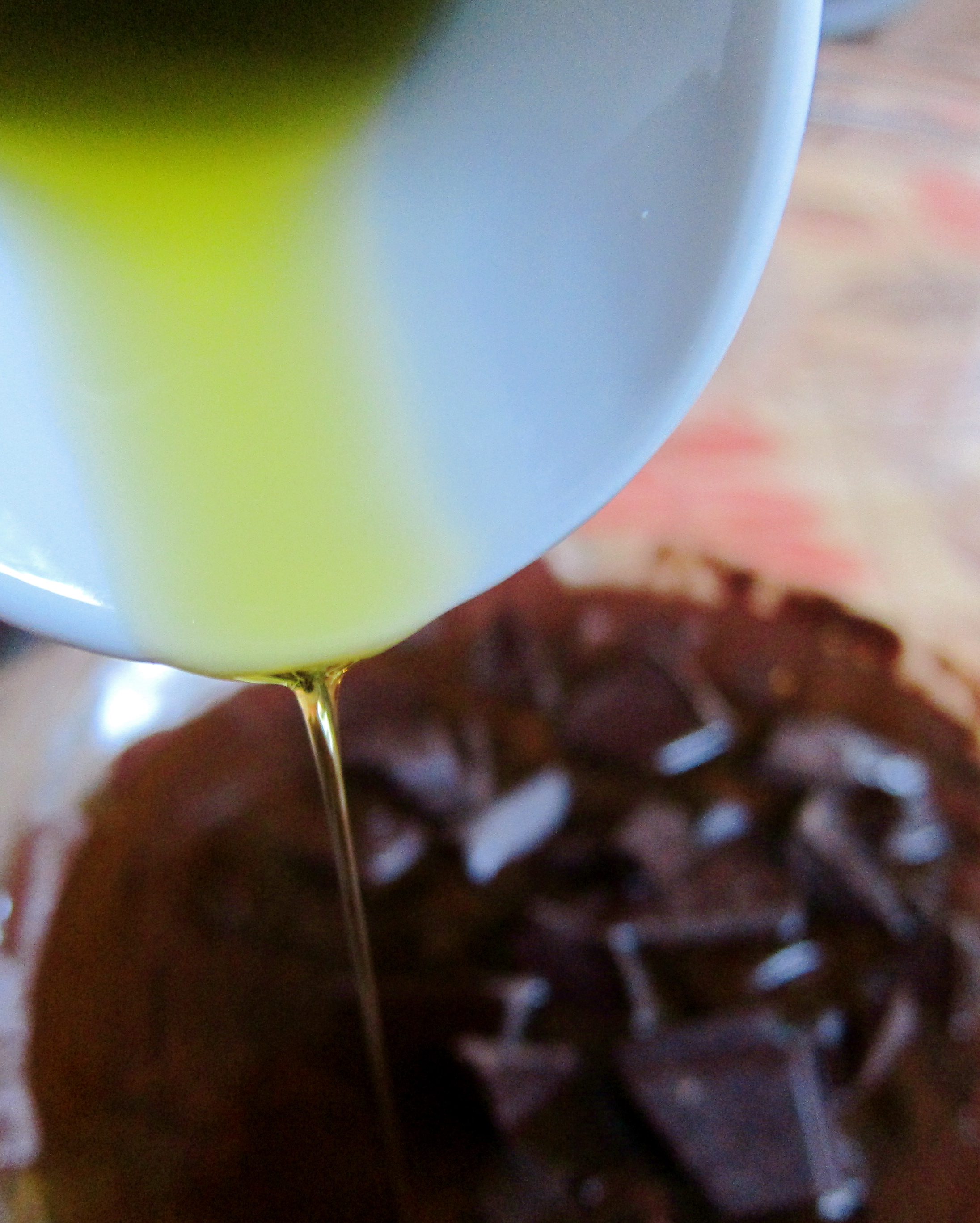
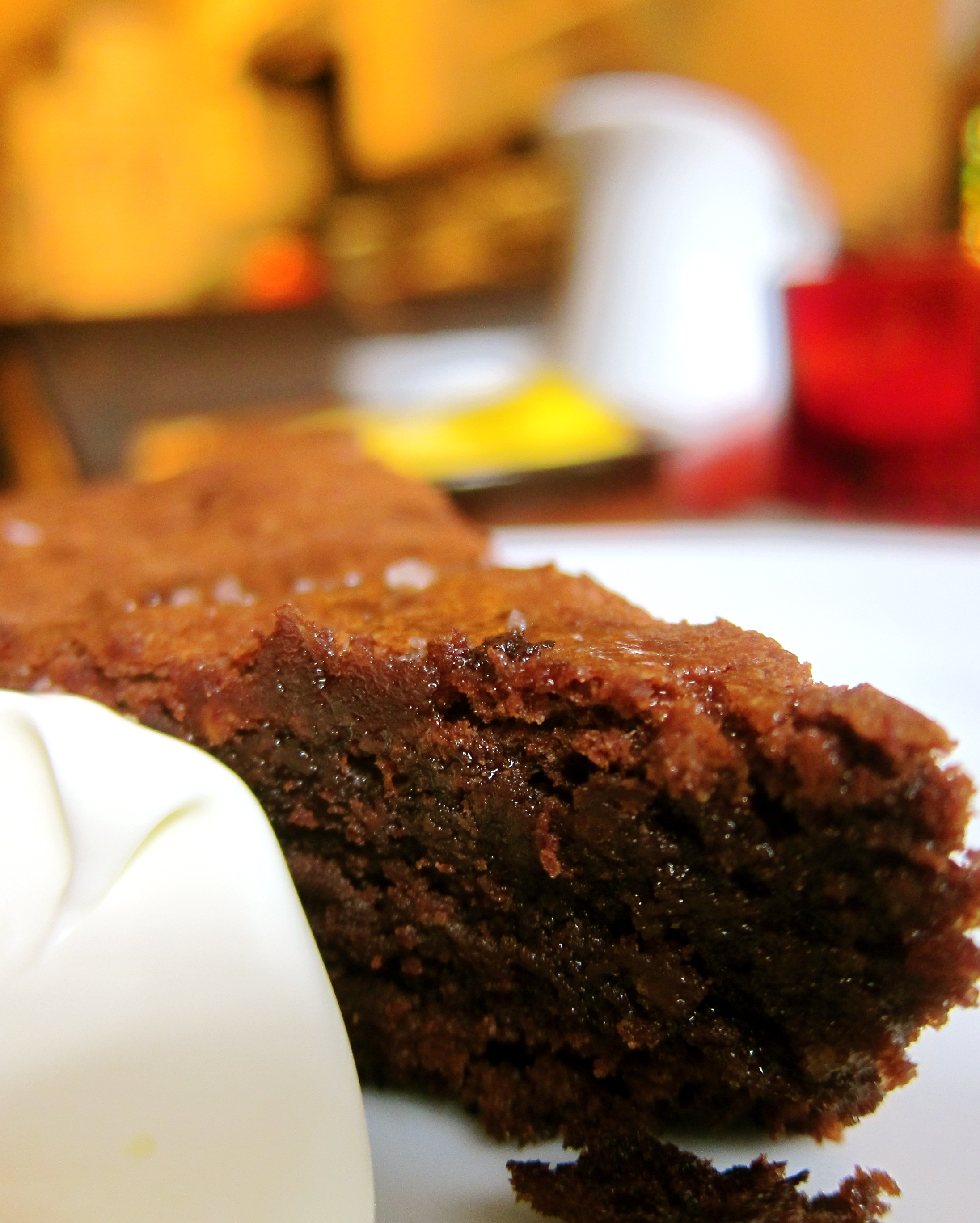
Anyway, back to cake. Try not to be cowed by the robustness of the oil you are using here; the bitterness in both the chocolate and the oil is tempered by the delightful texture of the almonds and the fissured exterior of the cake once baked – the way it cracks like a dinosaur’s egg and sinks gratefully into a thick mound of cream. It is not as truffle-like as it looks – it’s glistening because I decided, erroneously, to fleck it with olive oil for presentation purposes. I also sprinkled it with flaky salt, but have a glass of water on hand if you decide to go this route.

Bitter chocolate olive oil cake

Adapted from The Bojon Gourmet/Alice Medrich

50g (1/2 cup) blanched whole almonds

1 tbs cocoa powder

150g dark chocolate (70-72% cocoa solids) broken into pieces

120ml (½ cup) extra virgin olive oil

Pinch of flaky sea salt, plus some for serving

4 large eggs, separated at room temperature

170g (¾ cup) caster sugar, divided use

¼ tsp cream of tartar

Position a rack in the centre of the oven and pre-heat to 325F/170C. Grease an 8 or 9″ (20cm) round cake tin with a bit of olive oil. If using whole almonds (which I would recommend) toast them for a minute or so over a medium heat until they start to smell nice and turn a little golden. Then grind them with the cocoa powder in a blender or coffee grinder until powdery but with a few stray bits of nut left, for texture. Place the chocolate in a heat-proof bowl over a pan of barely simmering water. Once it looks well on its way to melting, add the oil and the pinch of sea salt and stir.

Remove the bowl from the pan and whisk in 110g (½ cup) of the sugar and the almond mixture until combined. Whisk in the egg yolks. If the mixture starts to get cold, it may ‘seize’ or look grainy. If this happens, place the bowl back over the simmering pan and stir until it loosens again. Place the egg whites in a very clean bowl and whisk until just frothy. Then add the cream of tartar and continue until foamy. Rain in the remaining sugar, continuing to whisk until the whites hold soft peaks.

Without delay, use a rubber spatula to stir a small portion of the whipped whites into the chocolate mixture to loosen, then gently fold in the remaining whites until the batter is just combined and no streaks remain. Immediately pour mixture into the prepared pan, smooth out the top and bake until a toothpick inserted comes out with moist crumbs attached – 35 to 45 minutes. Let the cake cool completely, then remove from the pan and sprinkle with sea salt – this may not be to your liking, so omit if not. The cake improves with time, courtesy of the almonds. Keep covered at room temperature for 3-4 days for the full effect.

Read on Read Tom Mueller’s book Extra Virginity if you’re interested in olive oil intrigue. Also check out his website and blog truthinoliveoil.com for lots of fascinating facts.
Share this:

  • Share on X (Opens in new window) X
  • Share on Pinterest (Opens in new window) Pinterest
  • Share on Facebook (Opens in new window) Facebook
  • More
  • Share on Reddit (Opens in new window) Reddit
  • Share on LinkedIn (Opens in new window) LinkedIn
  • Share on Tumblr (Opens in new window) Tumblr
  • Print (Opens in new window) Print
  • Email a link to a friend (Opens in new window) Email
Like Loading...

Green Soup & Onion Jam

25 Friday Jan 2013

Posted by Sophie James in Recipe

≈ 13 Comments

Tags

Cayenne, Cookbook, Cooking, Dinner, Food, Ingredients, Lunch, Nonfiction, Onions, Recipes, Soup, Spices, Stories

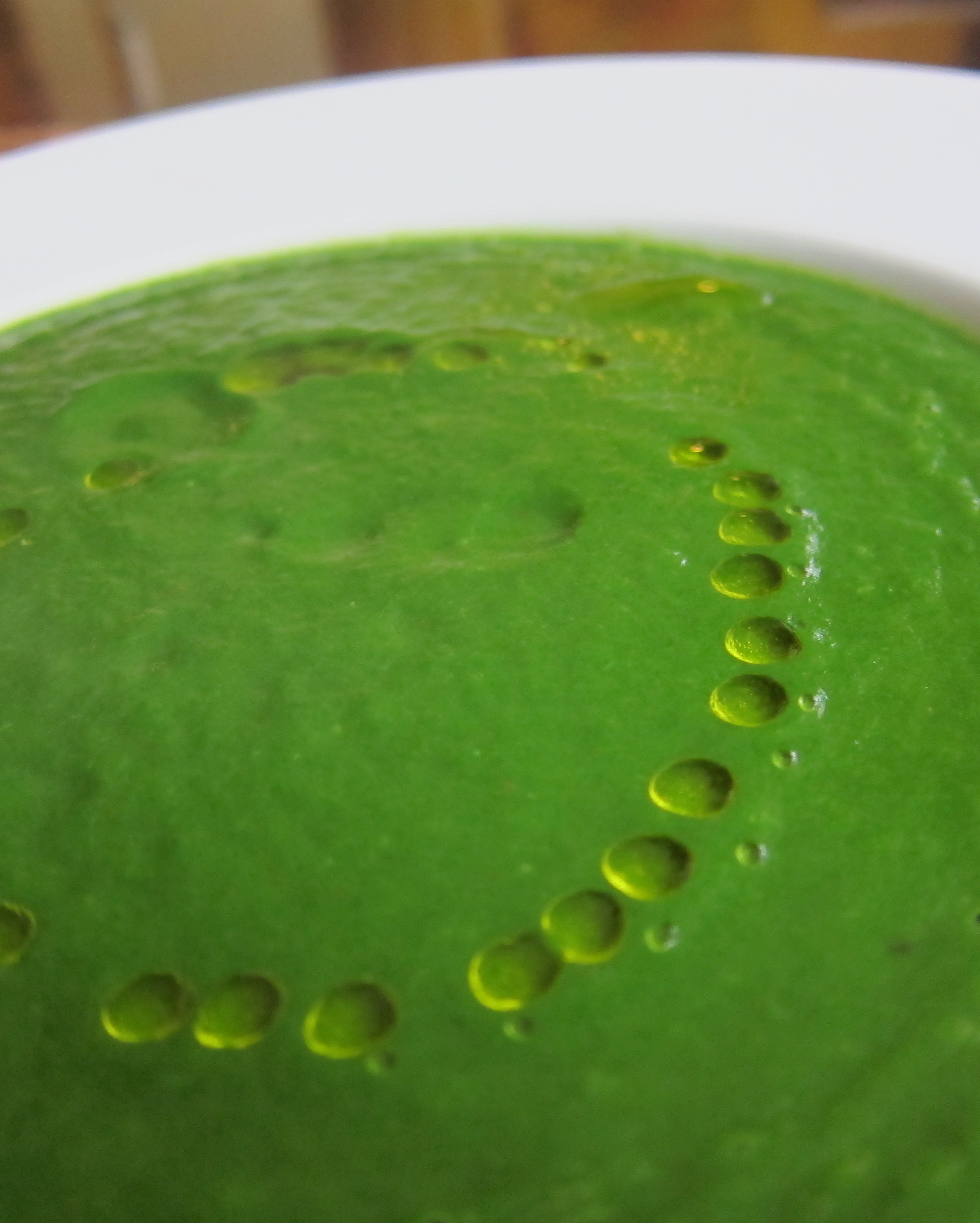
IMG_1253I feel the need for some green in me, if you’ll pardon the expression. It’s all very well chowing down on sugar and coconuts and chocolate – and God help me, it’s good – but it’s not exactly lunch. So here’s to soup. And the sweet fug of caramelizing onions, the searing of greens, a few cooling drops of extra virgin olive oil.

I grew up with a book called The Vegetarian Epicure, though no one as far as I could tell was a vegetarian. It was plain and unpretentious with sweet illustrations reminiscent of a children’s book from the Seventies, with easy to follow recipes. In fact it was from these pages that I made my very first dessert; a summer fruit tart – pastry smothered in lemony, zesty cream cheese, with fruit piled on top. I made this endlessly, whatever the season. But occasionally, if it all got too much, I’d turn to the soup section.

Soup was a big thing with us. Onions were cheap, as were potatoes (and of course there was potato water). Greens you could pull up in the neighbour’s garden. The big pan of spitting, lurching soup, the calm silence of the soup bowl, a handful of toughened bread and melting clumps of butter. The book was thumbed to oblivion, daubed with grease and finally hung by a thread. What I particularly liked about it were the intros, the preamble to the thing itself; it had a way of leading you to the subject like a firm but friendly teacher. At the back of the book, most intriguingly to me, was the author’s bio. Apparently, she was doing this book to fund her studies in film at UCLA (wherever that was). Anna Thomas was someone in print only. She had no bearing on my actual life.

So imagine the oddity of switching on the radio and hearing Anna Thomas speak. It was hard not to feel a sense of possession; she was ‘mine.’ And she was talking about soup. I was right back in our kitchen in Devon with the long windows and the trestle table and other people’s small gardens down below. Except I was here, in LA, with Anna Thomas. I had got here where she was. I was impossible that day, apparently. In the end, I had to do the only thing that made sense, the only thing that would shut me up: I opened the book and made soup.

This recipe calls for chard and spinach, but I have also used mustard, collard and turnip greens to good effect. Also, not everyone likes chard’s rather bullying strength. If you don’t want to use rice, the creaminess can come from other sources, such as cooked squash, potato, parsnip or Jerusalem artichoke. The onion jam is simply onions taken to the very edge of burnt. You want some crispness without too much charring. The trick is to leave them for a very long time over a low heat until they become sticky and sweet.

Green soup

Adapted (and some liberties taken) from Anna Thomas, Eating Well

2 glugs of olive oil, plus more for drizzling

3 onions, sliced into half moons

Sea salt

2 tbs plus 3 cups (750ml) of water

¼ cup (50g) of arborio rice

1 bunch of green chard (about 1lb)

About 14 cups/12 oz/340g (your average bag) of gently packed spinach/greens

4 cups (1litre) of vegetable broth or potato water

Big pinch of cayenne pepper

1 tbs of lemon juice, or more to taste

Heat 2 glugs of oil in a large skillet/frying pan over a moderate heat. Add onions and a pinch of sea salt; cook until the onions go translucent. Reduce the heat to very low, add 2 tablespoons of water and cover. Cook, stirring frequently until the pan cools down, and then only occasionally, always covering the pan again, until the onions are greatly reduced and have a deep caramel color, at least 25 to 30 minutes. Take a handful and put to one side for use as your garnish.

Rice: Meanwhile, combine the remaining 3 cups (750ml) water with a pinch of sea salt in a soup pot; add the rice. Bring to a boil. Reduce heat to maintain a simmer, cover and cook for 20 minutes.

Trim the white ribs out of the chard (save for another use, such as to add to a stir-fry or other soup). Coarsely chop the chard and spinach or other greens. When the onions are caramelized and ready, stir a little of the simmering liquid from the rice (or whatever you have to hand) into them; add the greens to the onions, give it all a stir, and then add the broth and cayenne. Add the rice here if you are using, or if not then the starch of your choice, or nothing. Return to a simmer, cover and cook, stirring once, until the spinach is tender but still bright green, about 5-10 minutes more.

Return the handful of onions to a pan to crisp up. Puree the soup in the pot with a hand-held blender until perfectly smooth or in a regular blender in batches (return it to the pot). Stir in a tablespoon of lemon juice. Taste and add more lemon juice, if you like. Garnish each bowl of soup with a drizzle of olive oil and a few strands of the onion jam. Hot bread is good here, of course.

Share this:

  • Share on X (Opens in new window) X
  • Share on Pinterest (Opens in new window) Pinterest
  • Share on Facebook (Opens in new window) Facebook
  • More
  • Share on Reddit (Opens in new window) Reddit
  • Share on LinkedIn (Opens in new window) LinkedIn
  • Share on Tumblr (Opens in new window) Tumblr
  • Print (Opens in new window) Print
  • Email a link to a friend (Opens in new window) Email
Like Loading...

Chocolate pots with cardamom

16 Wednesday Jan 2013

Posted by Sophie James in Recipe

≈ 26 Comments

Tags

Almonds, Chocolate, Cookbook, Cooking, Dessert, Dinner, Food, Ingredients, Nonfiction, Recipes, Spices, Stories

IMG_1163

I know there are many cultures where you buy in dessert and LA is one of them. I wouldn’t gripe, but the bought stuff here is dazzling in its aesthetic perfection but tastes of nothing. And it’s incredibly sweet. So here’s what I’m thinking: I write a book (which will be read by about seven people, but to those people I say thank you) about what you can make or bring that is neither horrifically sweet nor terribly complicated. But it will taste good. And ‘afters’ need not be pudding or cake at all, but a rough cheek of apple and a chunk of crumbling Cheddar. Some toasted, spiced nuts. A bowl of sloping apricots with cardamom. Or a chocolate pot.

IMG_1127

Cardamom was imported from its native India in the Middle Ages by Arabic traders to the Muslim Mediterranean (Turkey, Lebanon, Syria, Egypt for example), where it now belongs to the sphere of cooking known as the saffron-cinnamon link*. Beloved of Scandinavians too, it does well in sweet things (including sweet vegetables like carrots and parsnips). It is strong, searing almost – as if you have found yourself in a clearing after a recent bonfire involving eucalyptus: charcoal, menthol, ash, smoke and the shock of clean air combine, particularly if you whizz up the seeds in a blender and stick your head in. It belongs with almonds, pistachios, rose water, oranges and lemons. Good in bread and cake, bewitching in a poaching syrup for fruit. Chocolate it loves, including the white stuff where it cuts through the sweet gloop with masterful directness.

Oh yes, and Happy New Year! Due to technical ineptitude, I was unable to get my head round the so-called interactive report I posted at the beginning of January and those wishing to use it would have been blocked. I would like to say thank you to everyone who has read and enjoyed me, followed me and either commented publicly or privately and generally cheered me on. It is also very exciting to be featured on Freshly Pressed. It’s a solitary business, writing, so any encouragement is my meat and potatoes.

IMG_1162

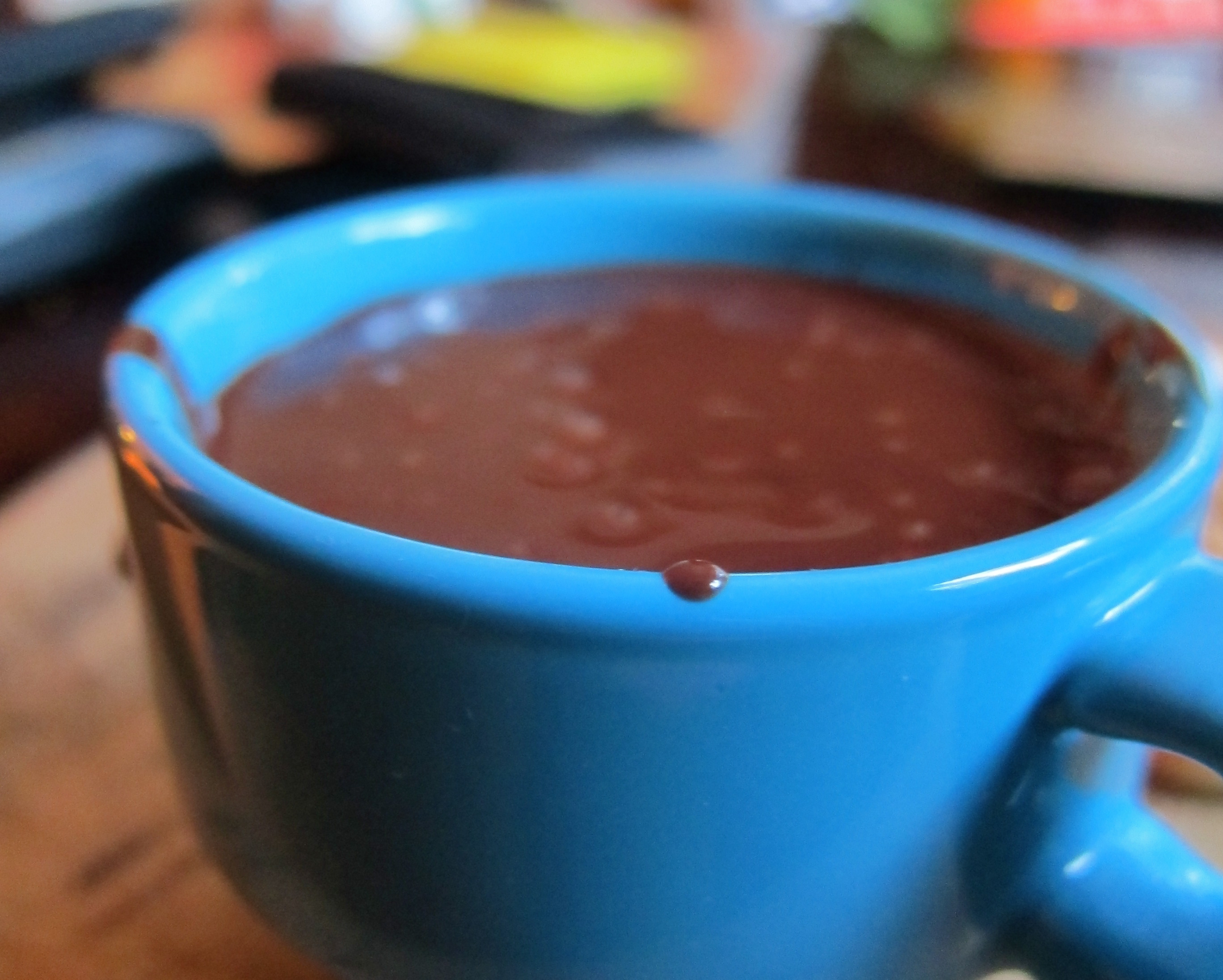
These chocolate pots have the minimum of sugar and no flour. There is cream though so forget it being good for you, except in the psychological, spiritual and sensual sense. As for chocolate, you can take the bitterness right to the edge, but try to keep it this side of fruity. I would stop at 70% cocoa solids myself. Though the recipe asks for an egg, I made it without and it was still lovely; a handy detail for the egg-intolerant.

This recipe comes from Lucas Hollweg’s so-much-more-than-just-good book Good Things To Eat. My take comes with a toasted almond or two, which gives the pudding a sort of carb-like purchase and is in keeping with its Moorish provenance. But go bare if you dare.

Chocolate pots with cardamom

Adapted from Lucas Hollweg, Good Things to Eat

Serves 6

15 cardamom pods

200ml (7fl oz) whole milk

200g (7oz) dark chocolate (60-70% cocoa solids), broken into small pieces

150ml (5fl oz) heavy/double cream, plus extra to serve

50g (1¾ oz) caster/superfine sugar

1 medium egg

“Crush the cardamom pods in a pestle and mortar, or roughly chop, squashing the black seeds inside as you go. Put in a small saucepan with the milk and bring to a simmer, then turn off the heat, cover and leave to stand for 1 hour.

Put the chocolate in a mixing bowl. Add the cream and sugar to the milk and bring to a simmer. Turn off the heat and leave to stand for a minute, then strain through a sieve onto the chocolate. Allow everything to melt for a minute or two, then beat together until smooth and silky. Beat in the egg until everything is well combined.

Divide the mixture between 6 espresso-sized cups or small glasses and put in the fridge to set for a couple of hours. Add a splash of cream to the top of each one if you feel like it.”

*Read Sam and Sam Clark’s beautiful cookbook Moro for more on this.IMG_1174

Sweet and salty almonds

David Lebovitz, The Sweet Life in Paris

Deborah Madison, Seasonal Fruit Desserts

Serves 2

1 cup (170g) blanched almonds

1 tbs (15g) butter

1 tbs dark brown sugar

A good pinch of flaky sea salt (fleur de sel) or smoked sea salt

A good pinch of freshly ground black pepper

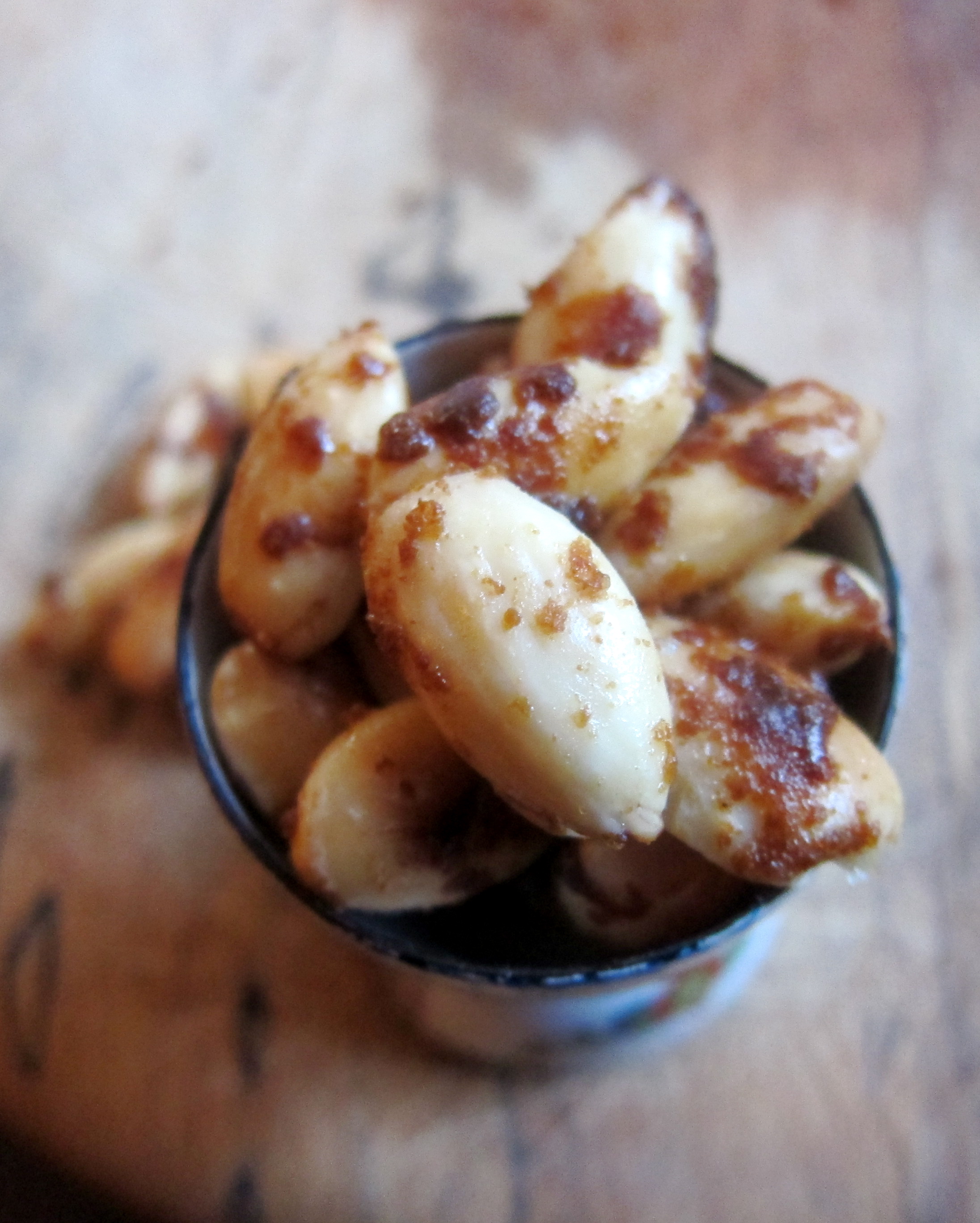
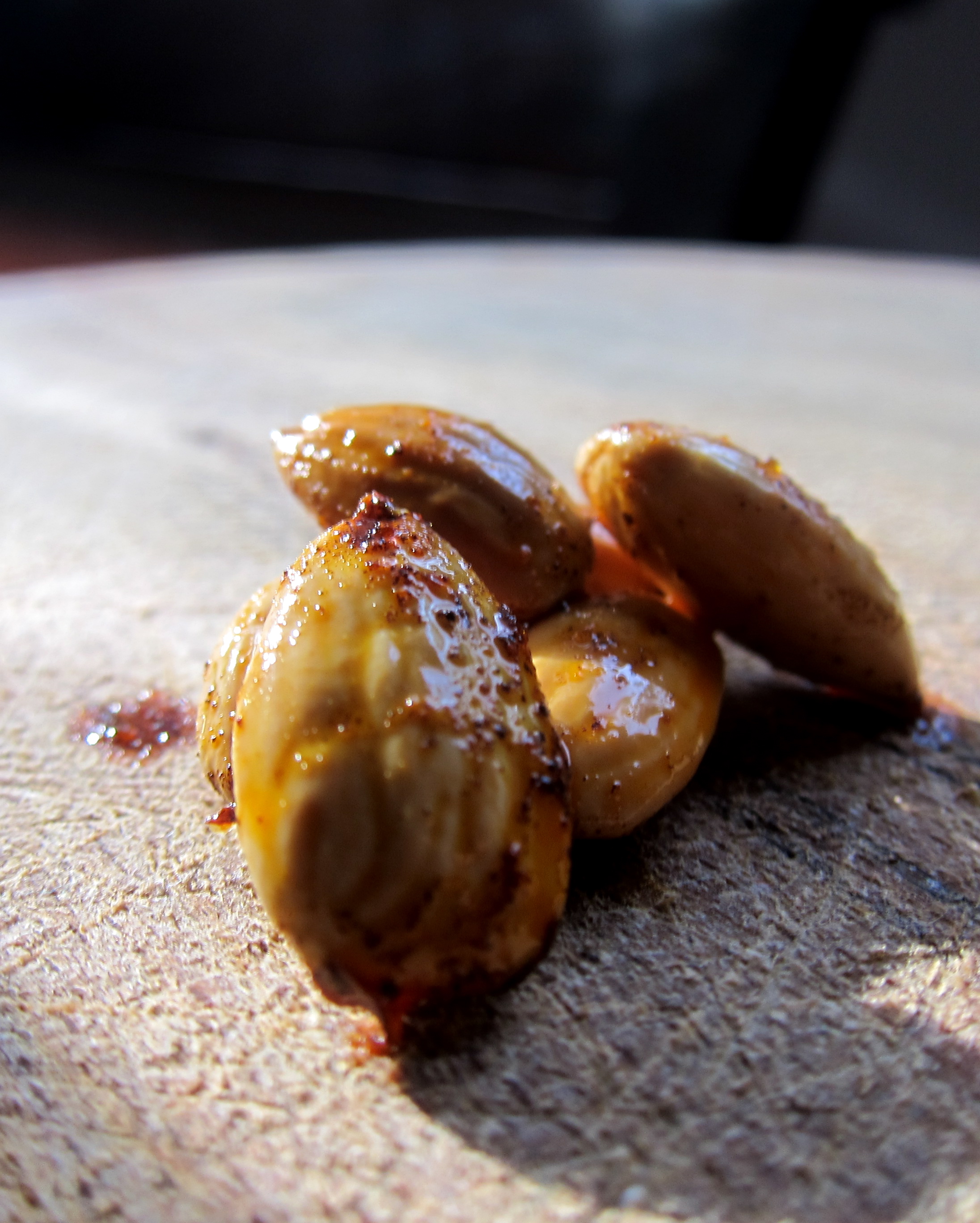
Spread the nuts on a baking sheet and roast in a 300F (180C) oven for about 5 minutes to ‘tickle out’ their flavour. Try to avoid colouring them too much. Melt the butter in a pan over a medium heat and then add the warmed almonds. Sprinkle the brown sugar over them, and stir until the sugar has melted. Remove from the heat, then sprinkle with the salt and a fresh grind of pepper. Let cool to harden. Tap the almonds gently with a rolling pin to break them up or leave them whole.

Share this:

  • Share on X (Opens in new window) X
  • Share on Pinterest (Opens in new window) Pinterest
  • Share on Facebook (Opens in new window) Facebook
  • More
  • Share on Reddit (Opens in new window) Reddit
  • Share on LinkedIn (Opens in new window) LinkedIn
  • Share on Tumblr (Opens in new window) Tumblr
  • Print (Opens in new window) Print
  • Email a link to a friend (Opens in new window) Email
Like Loading...

Savage stuff

09 Wednesday Jan 2013

Posted by Sophie James in Recipe

≈ 71 Comments

Tags

Almonds, Art, Cooking, Dinner, Food, Ingredients, Nonfiction, Recipes, Spices, Stories

IMG_1085Paprika is a savage red, and though it might sound strange, I like a bit of savagery. I went to the Museum of Contemporary Art in downtown LA yesterday where there was a lot of visual angst on display. Cavernous warehouses full of ripped metal and brown swaddling, swirling red daubs and matted roadkill. The colours were rust and grey and dried blood. Nothing had a frame, the frame was no longer needed. The only room I liked was the one housing the permanent collection, the ones always there: Rothko, Willem de Kooning, Jasper Johns.

But it was a small, angry picture, the first one I saw as I entered, that held my attention. It was by Dubuffet, and it was called Le Havre. It was a map of sorts and the colours were wild and fierce. There was little attempt at verisimilitude. The painter’s quote next to it caught my eye. It said “Personally, I believe very much in values of savagery; I mean: instinct, passion, mood, violence, madness.”

IMG_1107

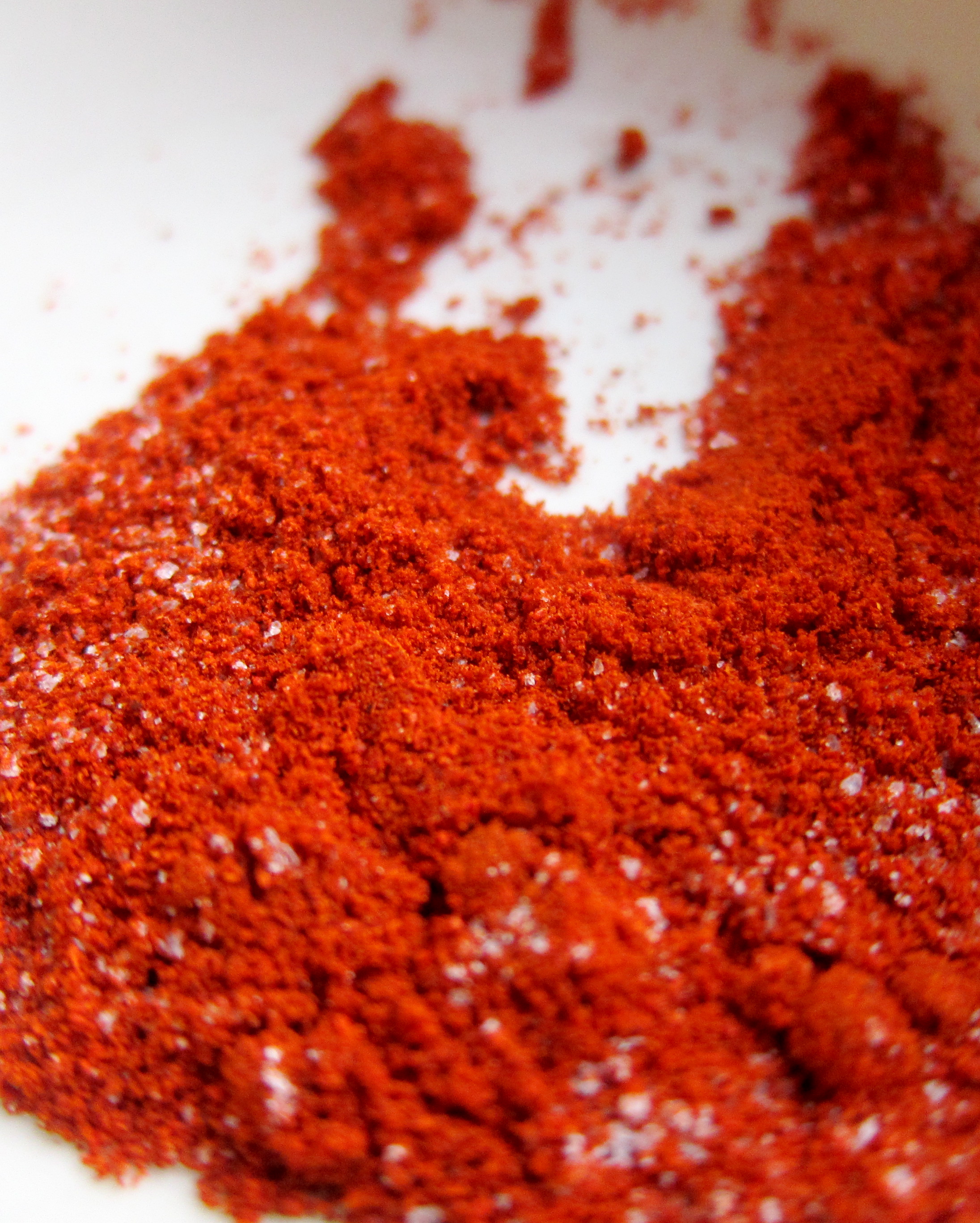
The paprika in the photo was in a bowl, powdery like pigment, along with other spices and teas in a stall at the farmers’ market. You were allowed to lift up a spoon of it and smell, and this helped because the one above was smoky and the other paprika was not. But the colour was the reason I bought. It made me want to stick a finger in the middle. It was an angry red, savage, mad and violent.

Just so you know, paprika is the dried and ground flesh of peppers (cayenne pepper comes from dried and ground chillis – it’s easy to get confused). The peppers are dried from the oven, sun or smoke (the best over oak fires) and used mainly in Spanish and Hungarian dishes. Paprika can be sweet, smoky or hot with a huge variation both in flavour and colour. Try not to put the powder over direct heat or it will scorch and taste bitter. It has an affinity with coriander and cumin and potatoes, as well as chickpeas and dusted over halloumi. I tried it with Jerusalem artichokes to very good effect. The roasted almonds with paprika recipe is a Spanish one and smoked paprika is recommended.

Roast almonds with paprika and rosemary

Adapted from Sam and Sam Clark, Moro

250g whole blanched almonds

2 tsps of olive oil

1 tsp of smoked sweet paprika

1½ tsps of flaky sea salt, like Maldon

2 sprigs of rosemary, chopped finely without any wood

Preheat the oven to 150C/300F. Place the almonds on a baking tray and dry-roast in the top of the oven for about 10 minutes or until starting to turn golden. Remove and stir in the olive oil, paprika, salt and rosemary. Return to the oven for around 10-15 minutes. Everything should be sizzling and fragrant. If you would like to crisp everything up a little more, give the nuts a shake in a dry frying pan/skillet at the end. Remove and cool before eating.

Jerusalem artichokes with garlic and paprika

Adapted from Nigel Slater, Real Cooking

Serves 2

500g Jerusalem artichokes (3 or 4 big handfuls)

Butter, about 75g

6-8 cloves of garlic

A couple of bay leaves

1 heaped tsp of paprika

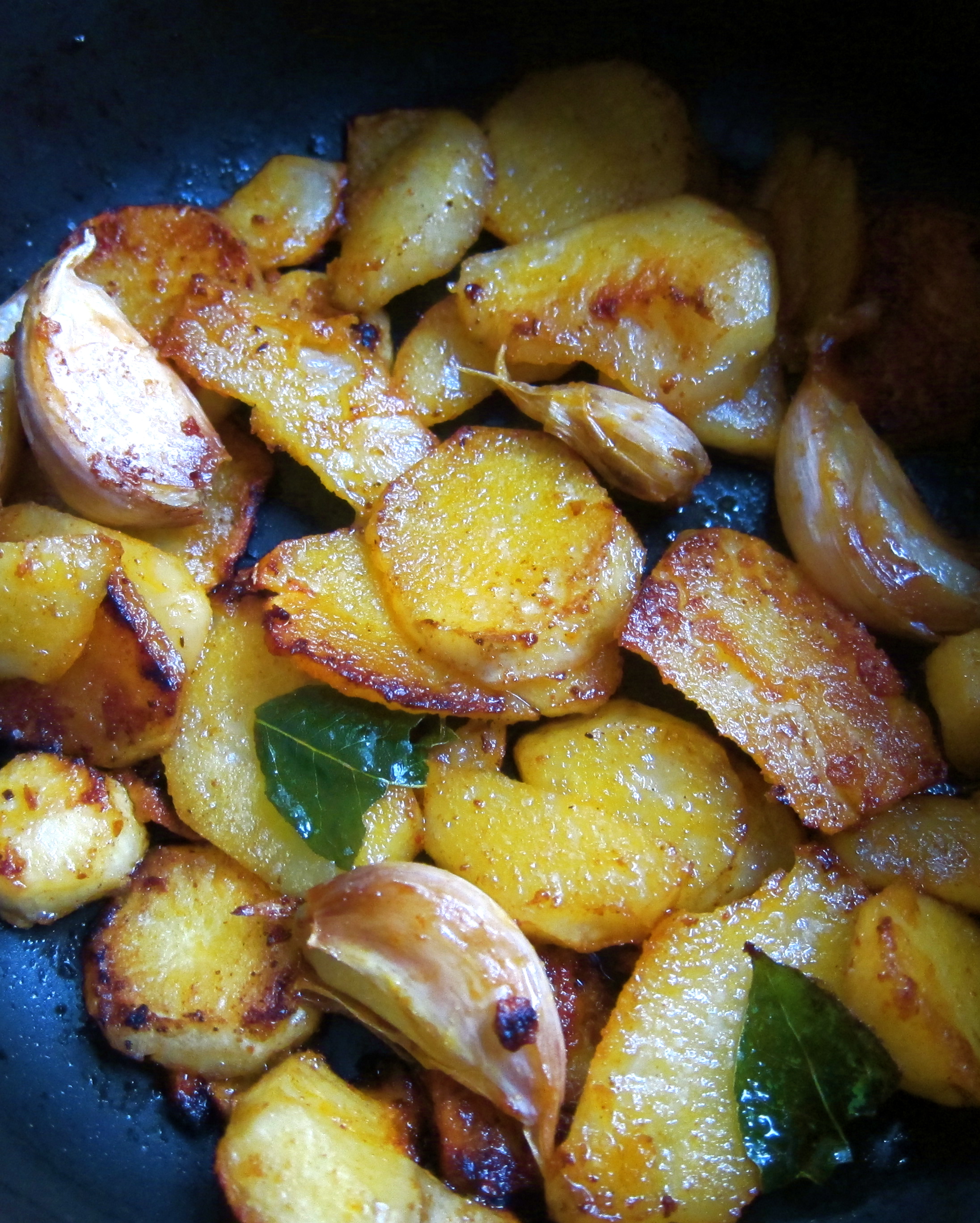
Peel the artichokes and slice them into rounds. Melt the butter in a shallow pan, one which has a lid. Drop the garlic cloves, whole and unpeeled, the bay leaves and the paprika into the butter and whirl it around with a wooden spoon. Add the artichokes and cook over a moderate heat until the chokes and garlic are slightly golden. Take care not to let the butter burn. Pour in a small glug of olive oil if it looks that way. Turn the heat down so the butter is lightly bubbling, cover with a lid and cook for about ten minutes. Shake the pan as they cook. Remove the lid, turn up the heat and continue cooking until the artichokes are tender, golden and crusty. Eat with the smashed open garlic pearls.IMG_1022

Share this:

  • Share on X (Opens in new window) X
  • Share on Pinterest (Opens in new window) Pinterest
  • Share on Facebook (Opens in new window) Facebook
  • More
  • Share on Reddit (Opens in new window) Reddit
  • Share on LinkedIn (Opens in new window) LinkedIn
  • Share on Tumblr (Opens in new window) Tumblr
  • Print (Opens in new window) Print
  • Email a link to a friend (Opens in new window) Email
Like Loading...

Coconut, macadamias & a hammer

01 Tuesday Jan 2013

Posted by Sophie James in Recipe

≈ 9 Comments

Tags

Baking, Food, Ingredients, Nuts, Recipes, Stories, Travel

IMG_0972

I found the macadamia nuts in their shells at the Santa Monica farmers’ market. I was surprised to see them at all. In fact, I was looking for hazelnuts, of which there has not been a snifter. I’m not a fan of exotica in food generally, nor do I warm to the tropical, except for Bounty bars. I once went to the Philippines, which was full of places that looked like the ideal location for a Bounty advert: milk-soft ocean, leggy coconut palms, acres of white sand. At one point a very Americanized Filipino leaned over to me and said “Isn’t this the best decision you, like, ever made?” How to say no, without seeming ungrateful? I probably just nodded and hoped my eyebrows were holding back some of the sweat that I could feel pouring out of my hair.

The one thing I will remember fondly was the man who sang Tears in Heaven every evening yards from my beach hut. He had a rather limited repertoire, but a really nice voice. All the restaurants had their own singer, and the songs were mellow and often accompanied by a single guitar. I remember feeling completely miserable, alone and in paradise. Actually, I wasn’t alone because fishermen used to sleep in my hammock. 

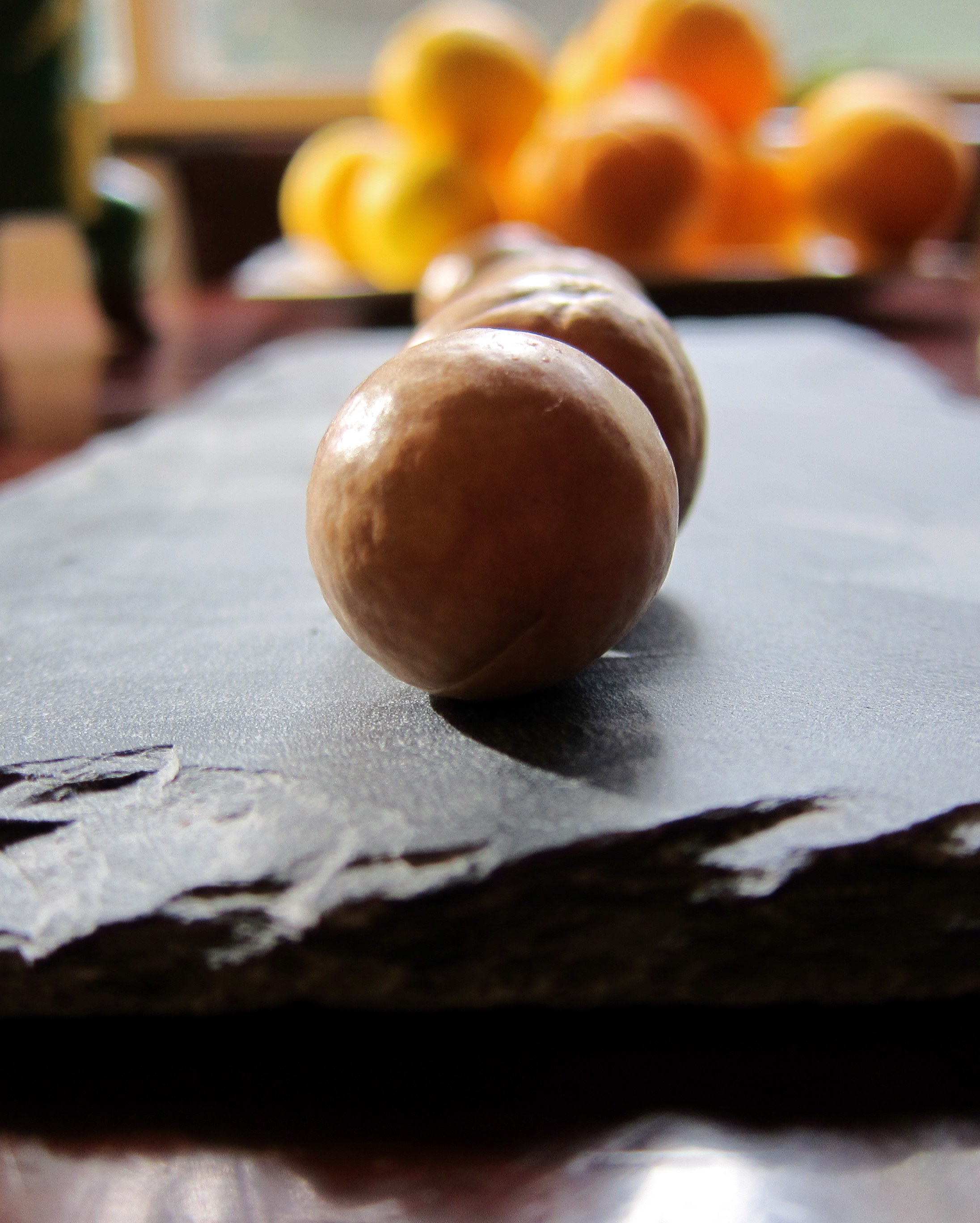
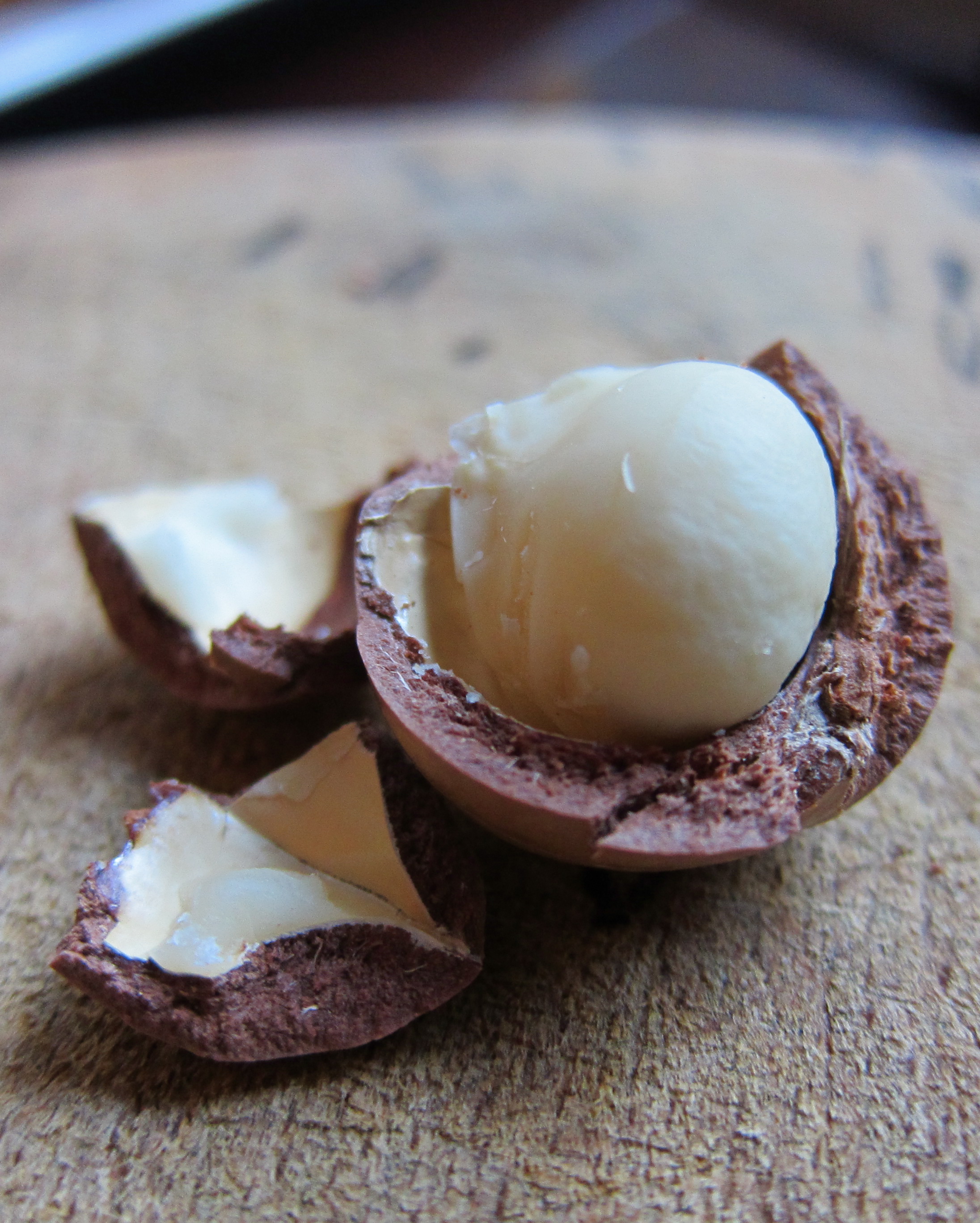
Macadamias were introduced to southern California in the late 19th century from Australia, their native soil. They have similar demands to avocados, and are scattered throughout avocado groves and sometimes citrus here for that reason. I was shocked at how they looked once shelled (they are almost impossible to crack – hence the hammer). They are so perfect and pristine it’s unnerving – exact yet miniature, like Japanese netsuke. They are buttery, in the way of a Brazil nut, but sweeter and creamier; they need the dry heat of the oven to do them justice. Alternatively – and I can’t blame you – buy a bag of them shelled and save yourself the agro. I apologize in advance for the expense. They are known as the brat of the nut world, probably for this reason.IMG_0978

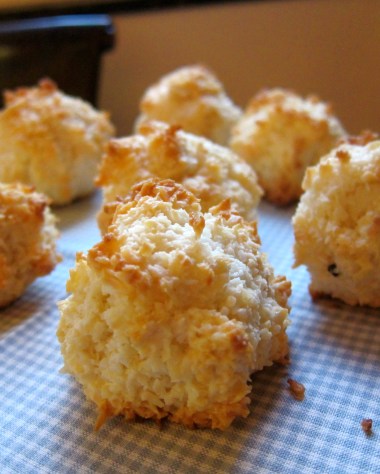
I have long held a love for the coconut. The damp matted stuff, fragrant, sweet and nutty has an affinity with macadamia nuts. Coconuts are available year-round but peak in the autumn and winter. I am happy to bring you macaroons, because I think they are lovely in size, easy to make and timeless. They should be eaten on the day they are made though as they stale up easily. The macaroon recipe calls for shredded coconut, which is a common ingredient in the US. The UK version, called desiccated coconut, is very similar. Alternatively, buy a fresh coconut – pierce it, drain off the juice (and drink it, it’s very good for you), crack open the shell with a hammer (yes, again) around the ‘fault’ line, and separate the flesh. Peel off the brown skin with a knife and grate the flesh in a processor. If you think this is too much faff and expense for one recipe, I suggest making the coconut-macadamia shortbread too (see recipe below).

Coconut-macadamia macaroons

Adapted from Lindsay Shere, Chez Panisse Desserts

& Nigella Lawson, How to be a Domestic Goddess

IMG_1006

2 large egg whites

¼ tsp of cream of tartar

⅓ cup (25g) of sugar

Pinch of sea salt

1½ cups (150g) of shredded coconut

½ cup (75g) unsalted macadamia nuts

Line a baking sheet with parchment paper. Preheat the oven to 160C/325F. Toast the macadamias until just beginning to colour – about ten minutes max. Then cool and chop fine by hand. Beat the egg whites until frothy – no more – then add the cream of tartar and salt and carry on beating until soft peaks are formed. Beat in the sugar until the whites hold stiff, shiny peaks. Fold in the nuts and coconut. The mixture is sticky but should hold its shape, just. Form into small domes – say 2 to 3 inches in diameter. Cook for 15-20 minutes or until they are turning a golden brown. Makes 8 large-ish macaroons.IMG_0990

Coconut-macadamia shortbread

Adapted from Nick Malgieri, The Modern Baker

For the shortbread

½ cup (100g) sugar (Use coconut palm sugar if you can get it)

1½ ounces (50g) unsalted macadamias, crushed with the bottom of a pan

2 cups (250g) all purpose flour*

¼ cup (25g) shredded coconut

½ tsp baking powder

12 tbs (1½ sticks/175g) cold, unsalted butter cut into small pieces

Pinch of sea salt

For the top

¾ cup (about 3oz/75g) unsalted macadamias, crushed and finely chopped, not ground

⅓ cup (75g) coconut palm sugar (or any soft, brown sugar)

Generous sprinkling of flaky salt (such as Maldon)

Line a baking sheet with buttered parchment paper. Preheat the oven to 160C/325F. Combine the sugar and macadamias in the bowl of a food processor or blender and grind finely. Add the flour and baking powder and pulse several times to mix. Add the butter and pulse until it is finely mixed in. The mixture should be powdery. You could do this with your hands if you work fast.

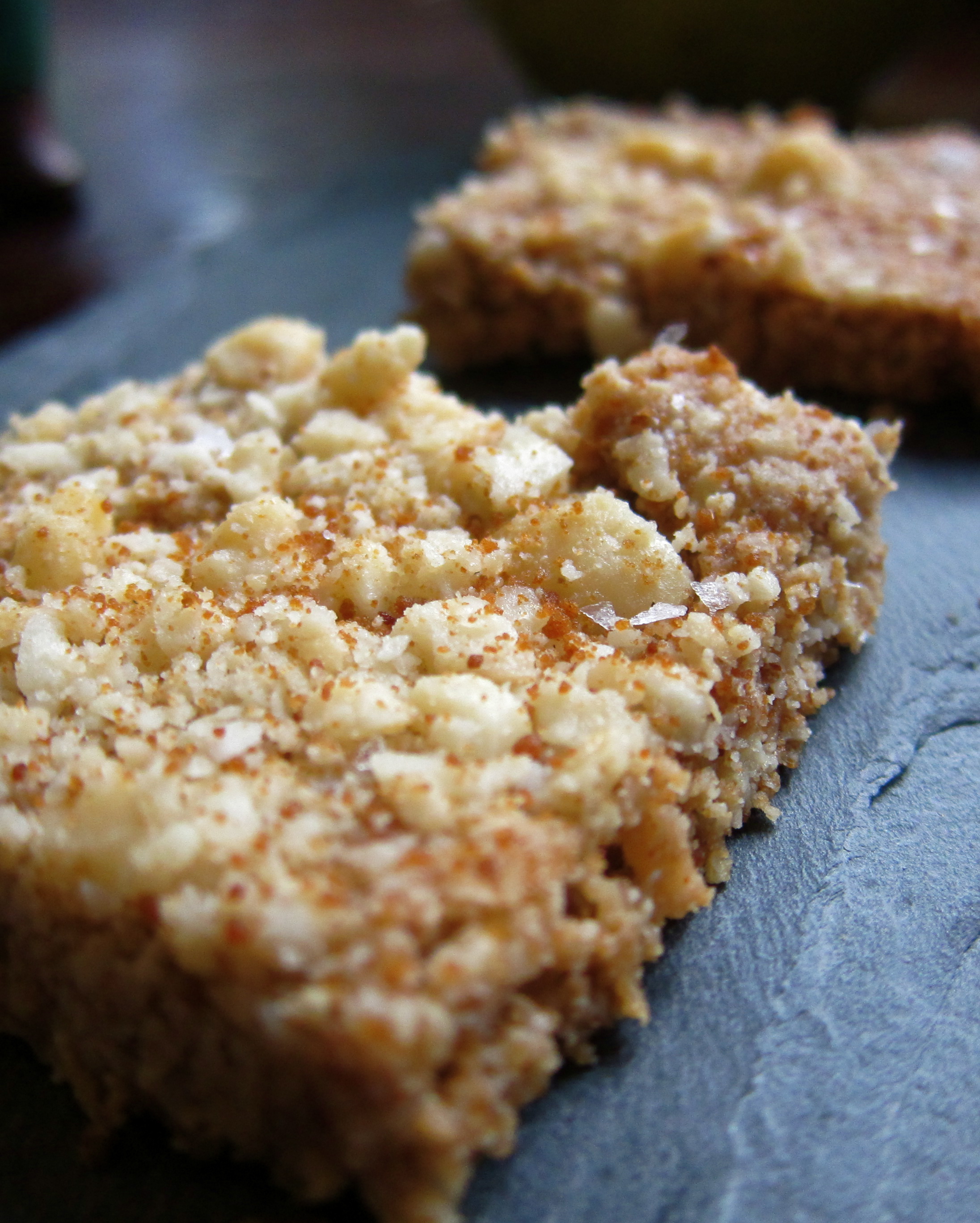
Distribute the mixture evenly all over the lined and buttered pan. Use the palm of one hand to press it in. Sprinkle the dough with water and scatter the chopped nuts and sugar evenly on the dough and use the palm of your hand again to press them in. Sprinkle with the flaky salt. Bake the shortbread until it is golden and firm – about 25 minutes. As soon as you remove the pan from the oven, grip the opposite ends of the paper and lift the slab of baked dough onto a cutting board. While the dough is still hot, cut into 2 inch (5cm) squares. Let the shortbread cool and crisp up. If you want it crisper, you can return it to the oven at 300F/150C for a further 10 minutes, then cool the pan on a rack. The sugar and salt are a really lovely combination and enhance the rich nuttiness of the shortbread. Makes about 24 2-inch (5cm) squares.

*Use ground almonds if you want to go flourless – it will be much softer and sandier but still very good. Reduce the butter to 6 tbs and melt it beforehand.

Share this:

  • Share on X (Opens in new window) X
  • Share on Pinterest (Opens in new window) Pinterest
  • Share on Facebook (Opens in new window) Facebook
  • More
  • Share on Reddit (Opens in new window) Reddit
  • Share on LinkedIn (Opens in new window) LinkedIn
  • Share on Tumblr (Opens in new window) Tumblr
  • Print (Opens in new window) Print
  • Email a link to a friend (Opens in new window) Email
Like Loading...

Persimmons

18 Tuesday Dec 2012

Posted by Sophie James in Recipe

≈ 9 Comments

Tags

Almonds, Dessert, Fruit, Gluten-free, Ingredients, Nonfiction, Recipes, Stories

IMG_0857

Fuyu or Sharon persimmon

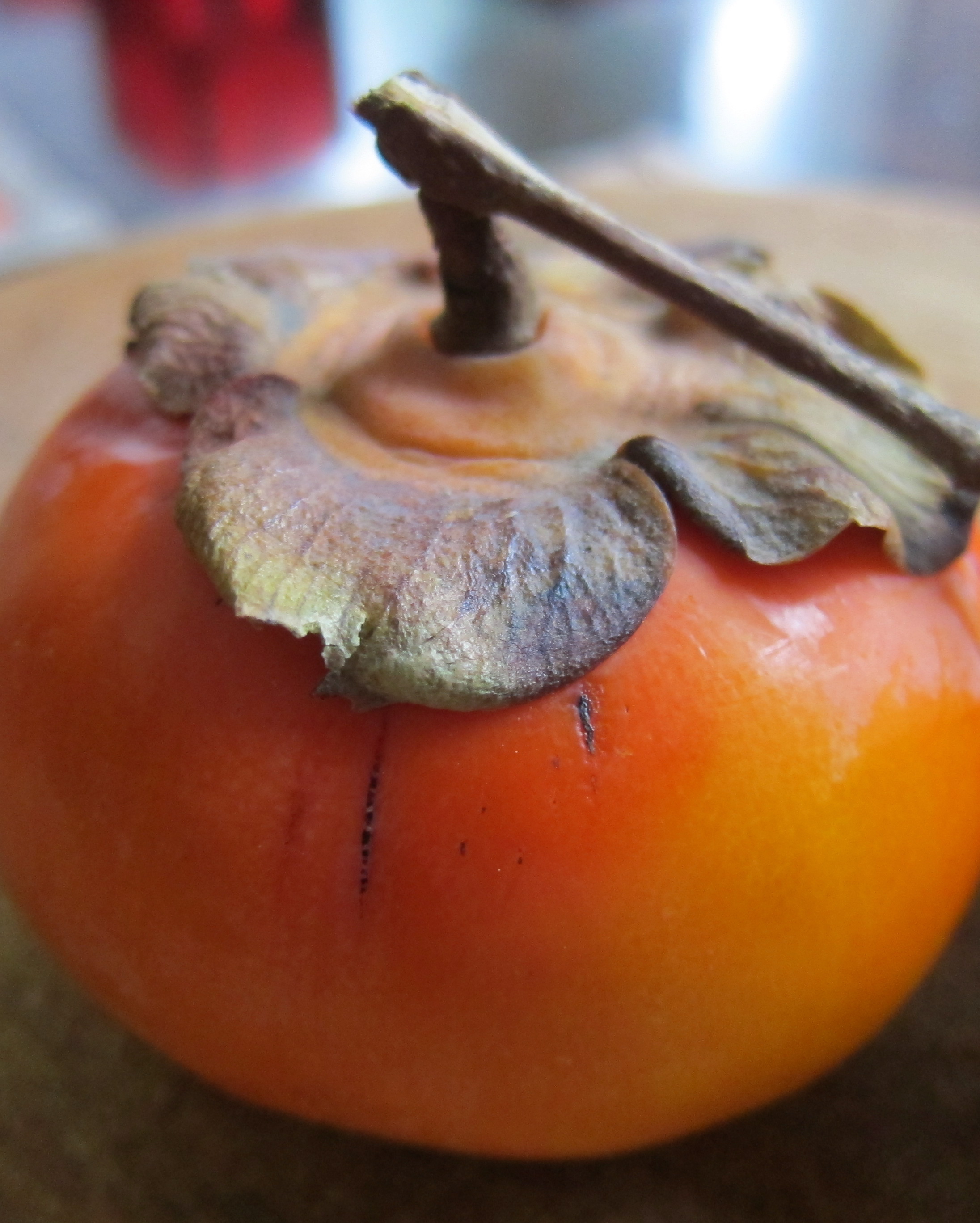
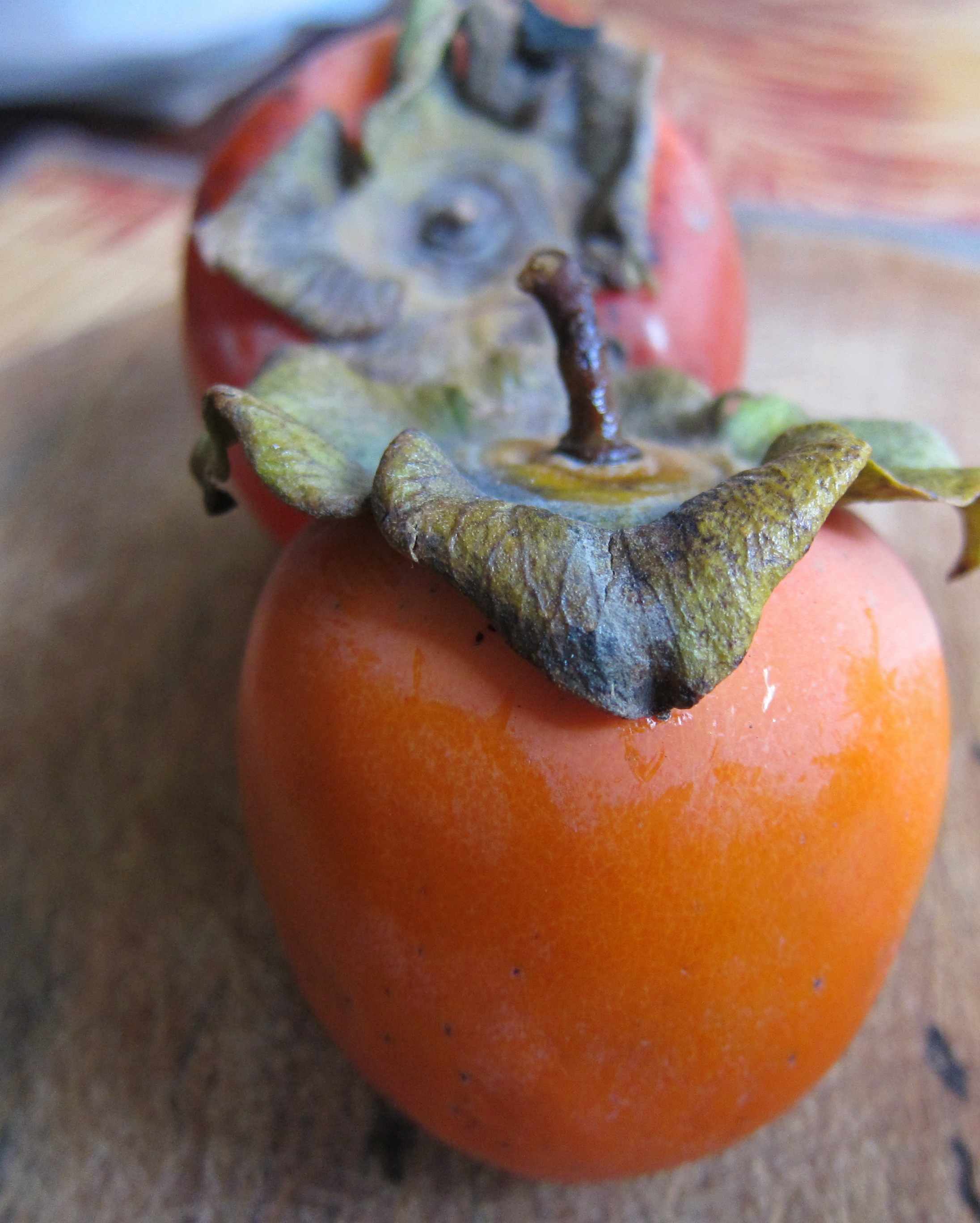
There are two kinds of persimmon. The first, the Fuyu, looks like a tomato and is eaten like an apple or sliced into a salad. Although they are supposed to be crisp when eaten, I find they are more flavourful when properly ripe, which is to say, bulbous and crepey and as if about to burst their banks. They look so beautiful it almost doesn’t matter about the rest.

The Hachiya, like the quince and medlar fruit, can only be eaten when fully ‘bletted’ – almost rotten, with most of their astringency gone. They look pretty miserable; bruised and bloated with a long chin. They taste stunning, if occasionally slightly furry. The inside of a Hachiya is the kind of orange I have only ever seen in a Howard Hodgkin painting. It is floating and jelly-like to eat – if you can imagine a mouthful of the best jelly at the finest children’s birthday party you have ever been to.

IMG_0868

Hachiya persimmon

In California, there is much talk of persimmon pies, purees, tarts, butters and such. This might be because there is often a glut of them in winter. But sometimes between fruit and pudding falls the shadow. So much of their beauty is lost once you interfere. It’s true that wild persimmon, Diospyros virginiana, was cooked by the early American settlers until they were “baked and sodden,” so ubiquitous was the fruit. We are unlikely ever to be in their shoes again.

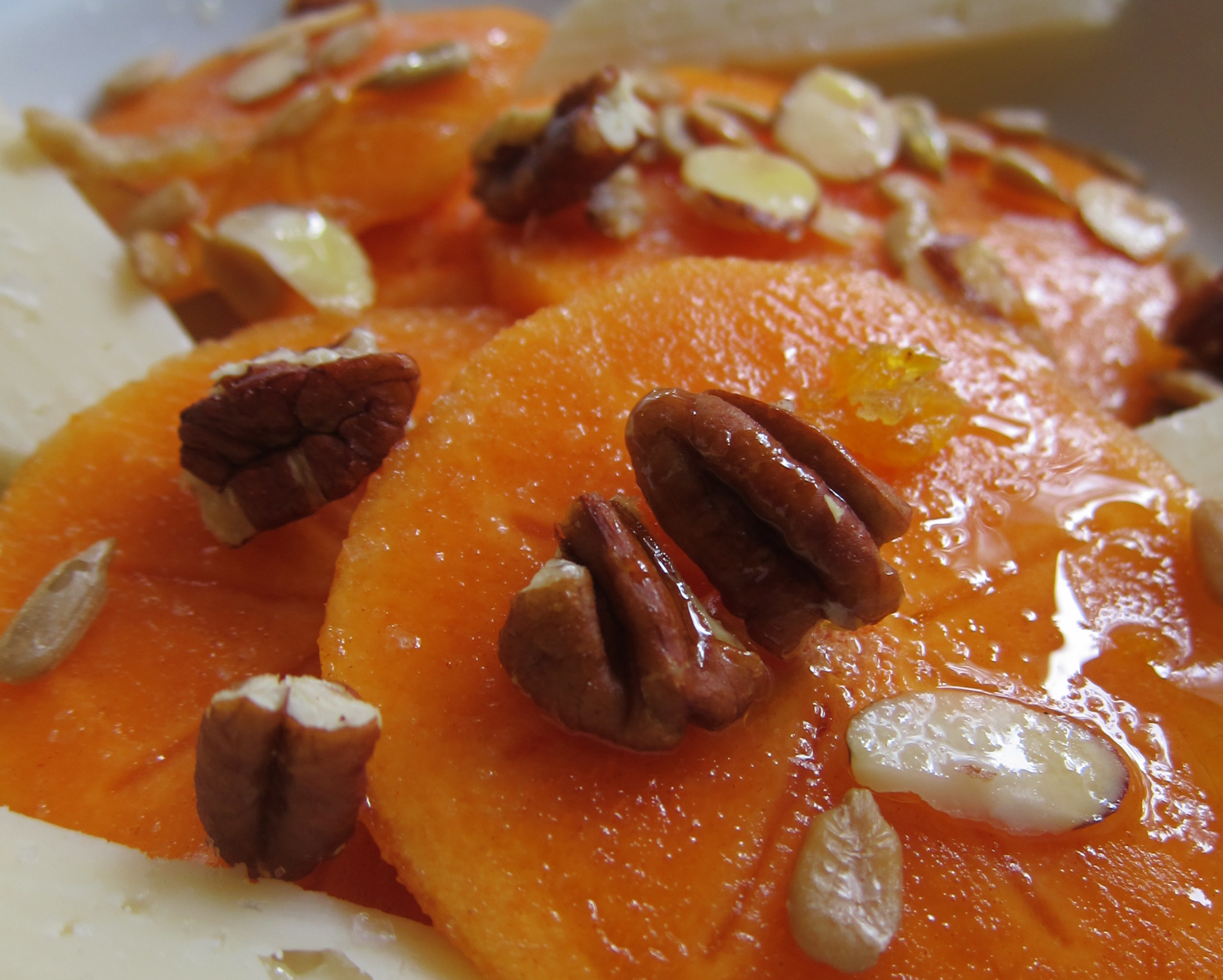
With the Hachiya, simply slice off the ‘lid’ (with its fawn-coloured calyx) and proceed as you would a soft-boiled egg. A spoon and some deep yellow cream is all you need. And even that might be pushing it. With the Fuyu, peel off the skin which can be tough, and then slice it as you would a tomato – horizontally. Serve with some toasted nuts, some sea salt, lemon and nut oil and perhaps some hard cheese. Treat it as you would melon; as a nice clean starter. Alternatively, if you’re in a rush or frankly can’t be arsed, then eat it as is.

IMG_0872

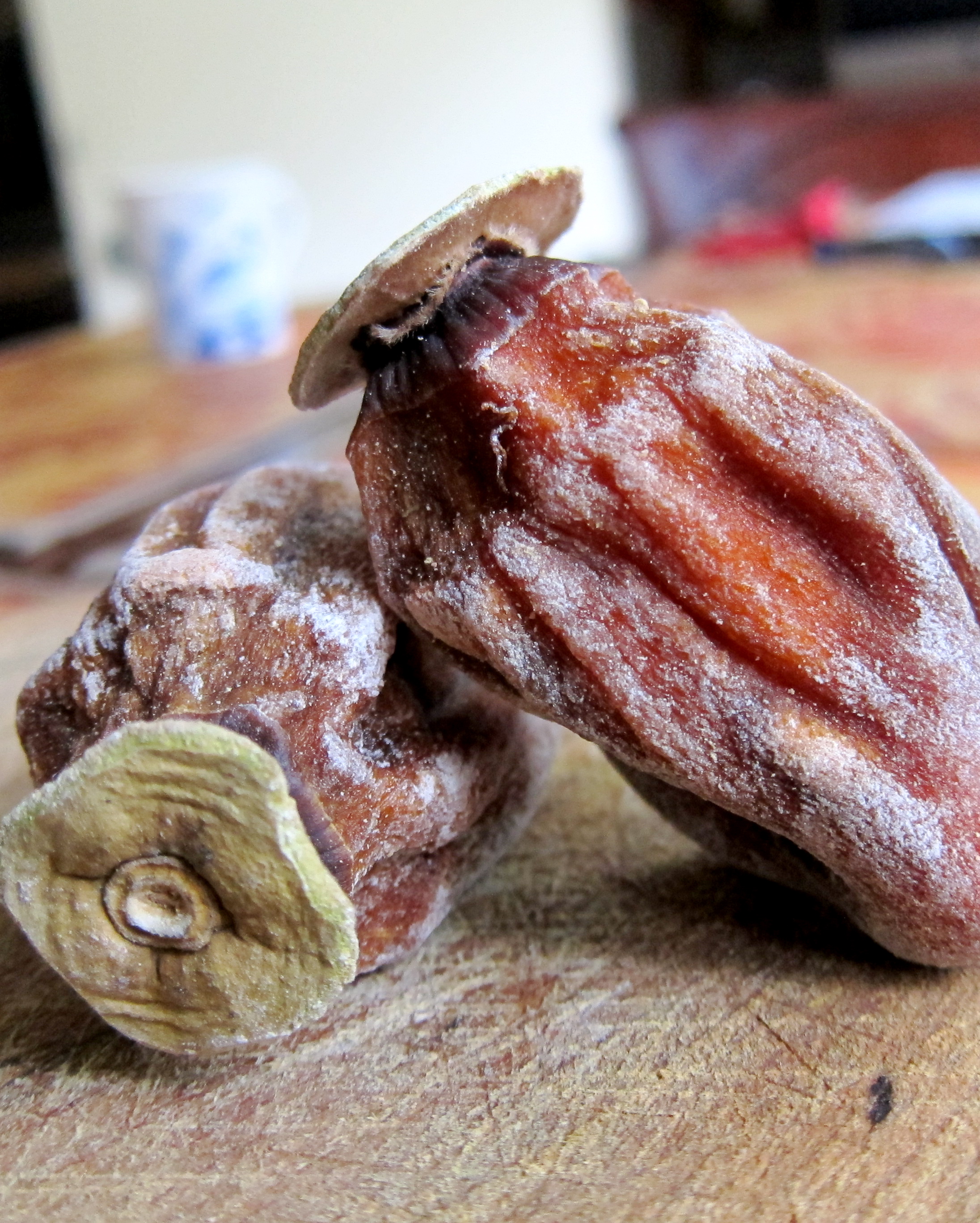
Hoshigaki

Hoshigaki is the name for Hachiya persimmons that are dried and massaged daily for six weeks until the flesh is leathery but soft and covered in the fruit’s natural sugars. It’s laborious and the results can vary hugely. At the Santa Monica farmers’ market, it was like eating the world’s largest date, a huge fudgy teardrop that caved at the slightest pressure. The ones above were tougher, more like dried banana. The woman whose job it was to massage them professed it made her feel a bit pervy (I’m paraphrasing). It’s a bit like milking a cow, apparently.

Fuyu or Sharon persimmon with sea salt, toasted nuts and hard cheese

Adapted from Deborah Madison, Seasonal Fruit Desserts

Slice the fruit into sections or cut it horizontally into thinnish rounds. Arrange the slices on a plate; add some crunchy sea salt (fleur de sel), some chopped, toasted nuts (hazelnuts are nice here), and a few drops of nut oil. Add some slices of a hard, sharp cheese.

IMG_0897

Write me down

As one who loved poetry,

And persimmons.

Shiki

Fuyu is also known as Sharon fruit – persimmon developed by Israelis in the Sharon valley.

Share this:

  • Share on X (Opens in new window) X
  • Share on Pinterest (Opens in new window) Pinterest
  • Share on Facebook (Opens in new window) Facebook
  • More
  • Share on Reddit (Opens in new window) Reddit
  • Share on LinkedIn (Opens in new window) LinkedIn
  • Share on Tumblr (Opens in new window) Tumblr
  • Print (Opens in new window) Print
  • Email a link to a friend (Opens in new window) Email
Like Loading...

Toasted Ginger Cake

11 Tuesday Dec 2012

Posted by Sophie James in Recipe

≈ 5 Comments

Tags

Baking, Cake, Cookbook, Dessert, Food, Ingredients, Nonfiction, Recipes, Spices, Stories

IMG_0772

Something dark is needed, and I feel it can’t be chocolate. Something dense, oblong and with ginger nubbins. Some sort of nub is required. I have spent the whole week researching chocolate pecan torte. I still know nothing about tortes. And I realize this is not the time for light and airy cakes with a dusting of something smokily ethereal. If ever there was a time for density it is now. And the heart wants what it wants, as Emily Dickinson once wrote.

I don’t know why this has to be toasted, but it does. I first tried it about two years ago in a cafe in Sussex. I asked if I could get the recipe and the cook refused. He didn’t refuse to my face, which was in some ways more embarrassing because he was about a yard away from me in his open kitchen, and the rejection was delivered via a waitress. I don’t know whether I was being a bit pushy, presumptuous in asking. I thought it was the best ginger cake ever, and was sending my compliments along with the question. I didn’t want a print-out or anything. Just the basics. Anyway, two years on and many ginger cake recipes later, and by George I think I’ve got it.

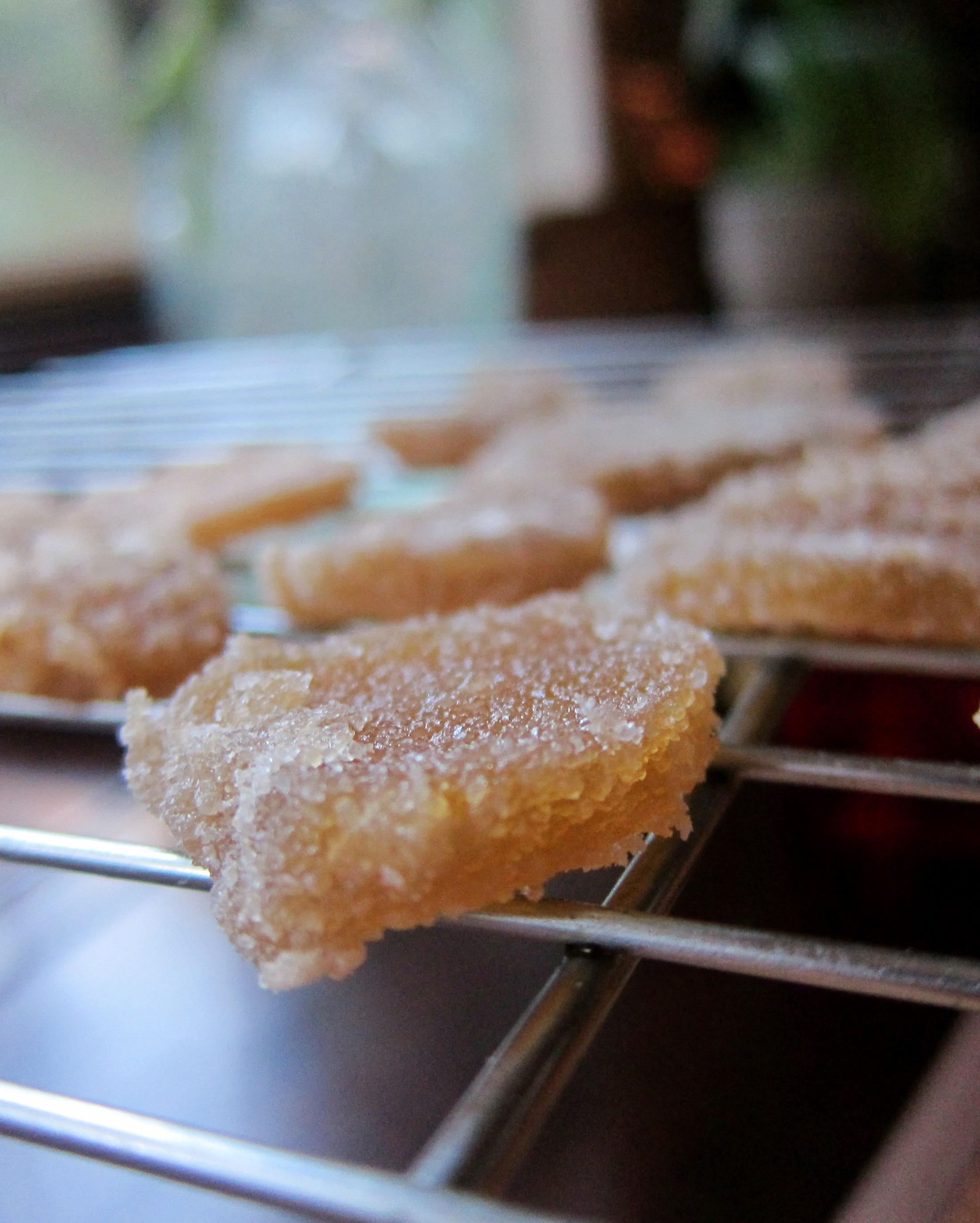
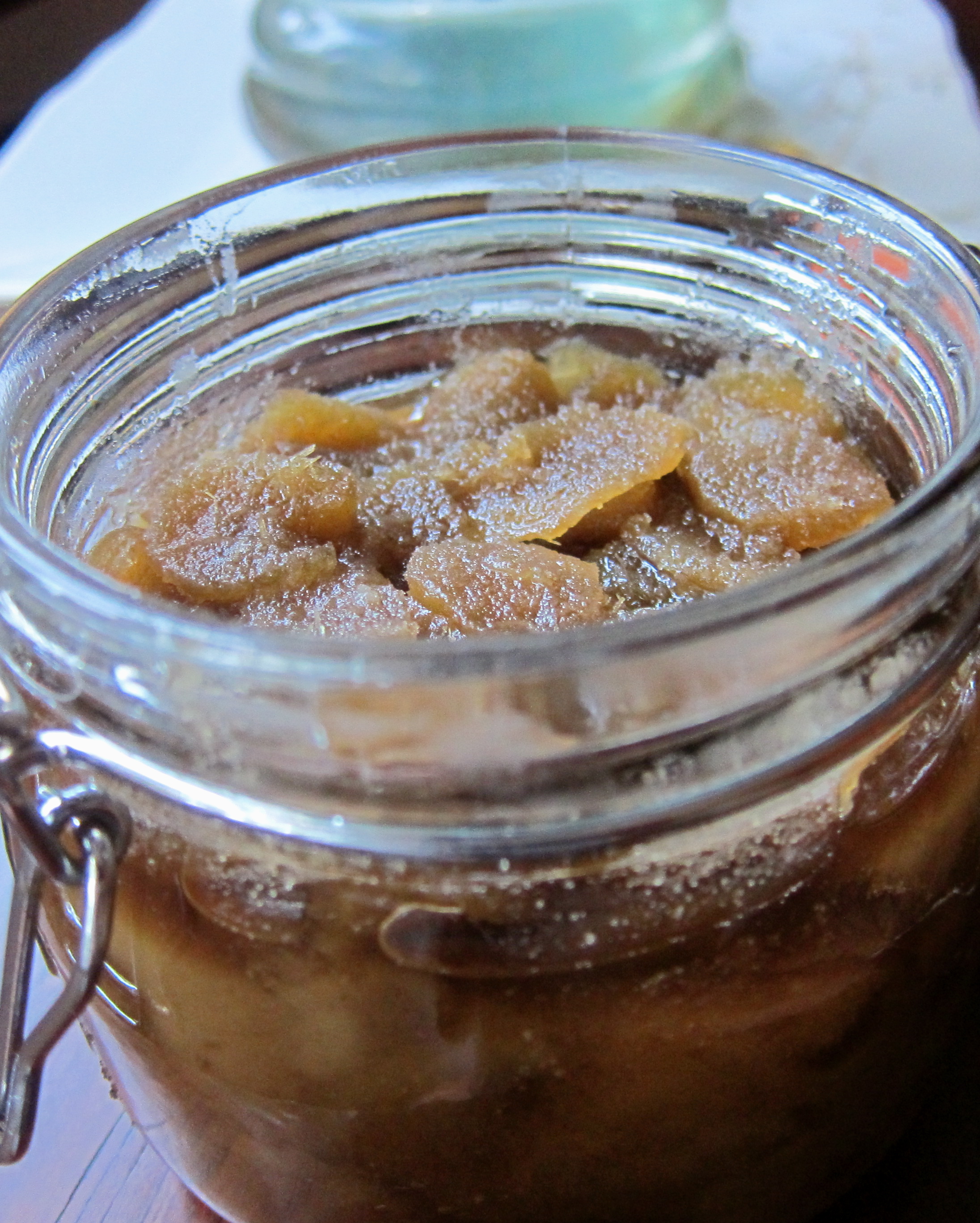
I always think of this time of year as a period in which chocolate is passed over in favour of nuts and spices. We are entering the season of thin, biscuity pastry, lemony innards, honeyed syrup, stewed fruit, toasted nuts. The Elizabethan sweetmeat reigns. I am gearing up for mince pies. I feel I’ve thrown everything into this cake. Because it’s such a straightforward recipe, I felt it could be fattened up a bit. I wanted peel so I threw in some of my thick-cut marmalade. I had maple syrup so in it went. I also tried maple sugar, because I like its darker ‘dried toffee’ taste. But most importantly, I candied some ginger. This took a while, but the results were far more interesting than the stuff you buy. The syrup alone is worth the effort; peppery and pungent and a deep thick amber. It keeps for months.

IMG_0802

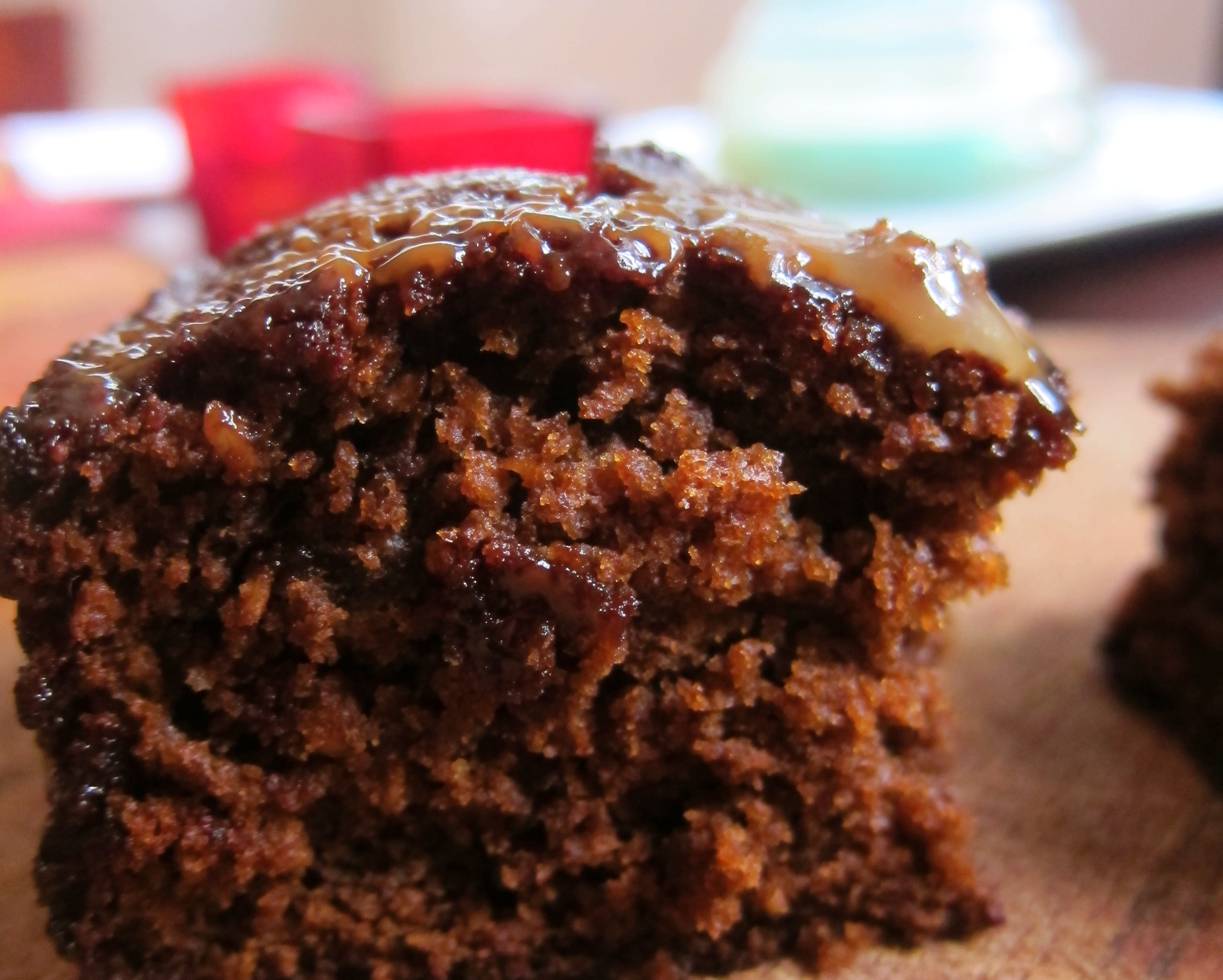
To return to the source of the wound for a moment, the cake whose recipe I coveted was a ginger parkin, a staple from the northeast of England. ‘Fresh’ parkin is frowned upon; a slightly aged parkin is the acceptable form, so try to withstand the temptation to eat it straight away. It improves if you leave it at least a couple of days. On its own, unadorned, the cake is lovely with a cup of tea. The toffee sauce takes it to an almost obscene level of indulgence; we are now in pudding territory. Eat it on Boxing day watching a crap film.

Toasted Ginger Cake 

Adapted from Andrew Pern, Black Pudding and Foie Gras

100g self-raising flour (or use plain flour and add 1 tsp of baking powder)

75g oatmeal (or porridge oats whizzed in a blender)

A pinch of sea salt

½ tsp bicarbonate of soda

1 heaped tsp ground ginger

1 tsp cinnamon

½ tsp freshly ground nutmeg

2 tbs shred from marmalade (optional)

2 heaped tbs preserved/candied ginger, finely diced

175g golden syrup* (utilize some of the ginger syrup if you have it)

50g black treacle*

100g butter

100g soft brown sugar

1 egg, beaten

2 heaped tbs milk

For the toffee sauce

115g unsalted butter

115g light brown sugar

140ml double/heavy cream

Sea salt

Preheat the oven to 140C/285F/gas mark 1. Sieve the flour, bicarb, salt, ginger, nutmeg and cinnamon into a bowl, then stir in the oatmeal and the candied ginger and peel (if using). Gently melt down the syrup, treacle, butter and sugar, keeping it just below a simmer – do not let it boil. Stir in the dry mix until amalgamated, then add the egg and milk, so it’s a soft, semi-pouring consistency. Pour into a greased, 20cm square cake tin and bake for an hour and a half, or until firm in the centre. Leave to stand for half an hour, then turn out. The parkin’s now ready to be served. Like good wine, it improves with age; store in an airtight container. For the best flavour, keep for three weeks.

Make the sauce by putting all the ingredients into a pan. Heat slowly until the butter has melted, then turn up the heat and bring to the boil. Boil for about 3 minutes, or until the sauce has thickened enough to coat the back of a spoon. If you want a more gutsy flavour (and you don’t want insipid toffee sauce) go until the colour has deepened slightly to a warm nut-brown. Poke some holes in the cake and slather the sauce over the top, letting it drip down the sides. Toast under the grill before serving. This recipe is based on the same principle as the Sticky Toffee Pudding.

* In the US, use corn syrup in place of golden syrup if you can’t find it, and molasses in place of black treacle. I went to India Sweets and Spices here in LA where they have a British section.

Crystallised/candied ginger

Adapted from David Lebovitz, Ready for Dessert

1 pound (500g) fresh ginger, peeled

4 cups (800g) sugar, plus additional sugar for coating the ginger slices, if desired

4 cups (1l) water

Pinch of salt

Slice the ginger as thinly as possible. It can’t be too thin, so use a sharp knife. Get the youngest ginger you can find, as it’ll be less fibrous. Put the ginger slices in a non-reactive saucepan, add enough water to cover the ginger, and bring to a boil. Reduce the heat and let the ginger simmer for ten minutes. Drain, and repeat, simmering the ginger slices one more time. Mix the sugar and 4 cups (1l) water in the pan, along with a generous pinch of sea salt and the ginger slices, and cook until the temperature reaches 225F (106C.) If you don’t have a candy thermometer, the consistency will be similar to runny honey. It will have reduced quite considerably, and will leave a generous coating on the back of a wooden spoon.

Remove from heat and let stand for at least an hour – overnight is ideal. Or if you want to coat the slices with sugar, drain very well while the ginger is hot and toss the slices in granulated sugar. Shake off the excess and spread the ginger slices on a cooling rack overnight, until they are tacky-dry. Alternatively, the ginger, packed in its syrup, can be stored in the refrigerator for up to one year. If tossed in sugar, the pieces can be stored at room temperature for a few months.

IMG_0817

Share this:

  • Share on X (Opens in new window) X
  • Share on Pinterest (Opens in new window) Pinterest
  • Share on Facebook (Opens in new window) Facebook
  • More
  • Share on Reddit (Opens in new window) Reddit
  • Share on LinkedIn (Opens in new window) LinkedIn
  • Share on Tumblr (Opens in new window) Tumblr
  • Print (Opens in new window) Print
  • Email a link to a friend (Opens in new window) Email
Like Loading...

Noticing Pecans

03 Monday Dec 2012

Posted by Sophie James in Recipe

≈ 6 Comments

Tags

Homesickness, Ingredients, Los Angeles, Nuts, Recipes, Stories, Winter

IMG_0692

There is an expression: You are here. This is now. Useful when you’re telling stories to contemplate this from time to time. It is easy to look back, to dip into a time removed. But right at this moment I’m sitting in LA. It is early morning. Outside it is dark and rain has fallen and continues to fall, soaking our cushions on the garden sofa we found in the road by Lake Hollywood.

There is a ring of mushrooms that has sprung up outside our window. It is a dark morning without the fog and cold breath of an English winter, but still, it’s recognisably the cold months here. The darkness feels slippery. There are long, wet days that close around 4pm. It is dank and faintly claustrophobic to be inside so much. The windows don’t blow and rattle like they do when there are gales in England. The windows here are doors and they stand firm. Still, listening to the rain at night is comforting, slightly numbing.

IMG_0695

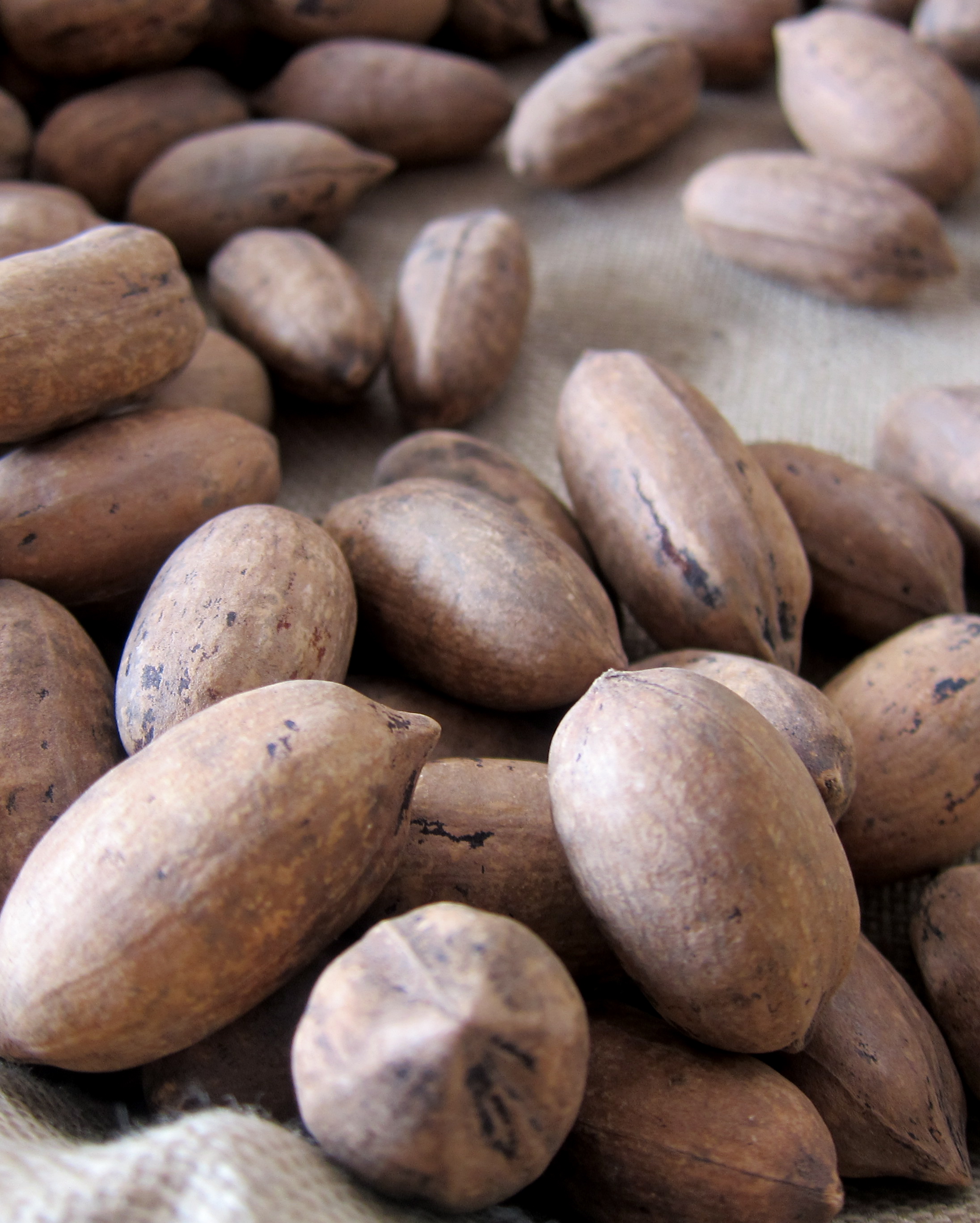
And then I went out. To the farmers’ market, where I found pecans. I took some photos – actually I pointed my camera, snapped and moved on. I kept coming back though. Once to ask how to crack the shell (put two in your hand and squeeze), the second time to ask where the nuts came from (Fresno), and then he saw me coming again and he wasn’t sure how to react. Yes, they’re peaking now – the next few weeks are their time.

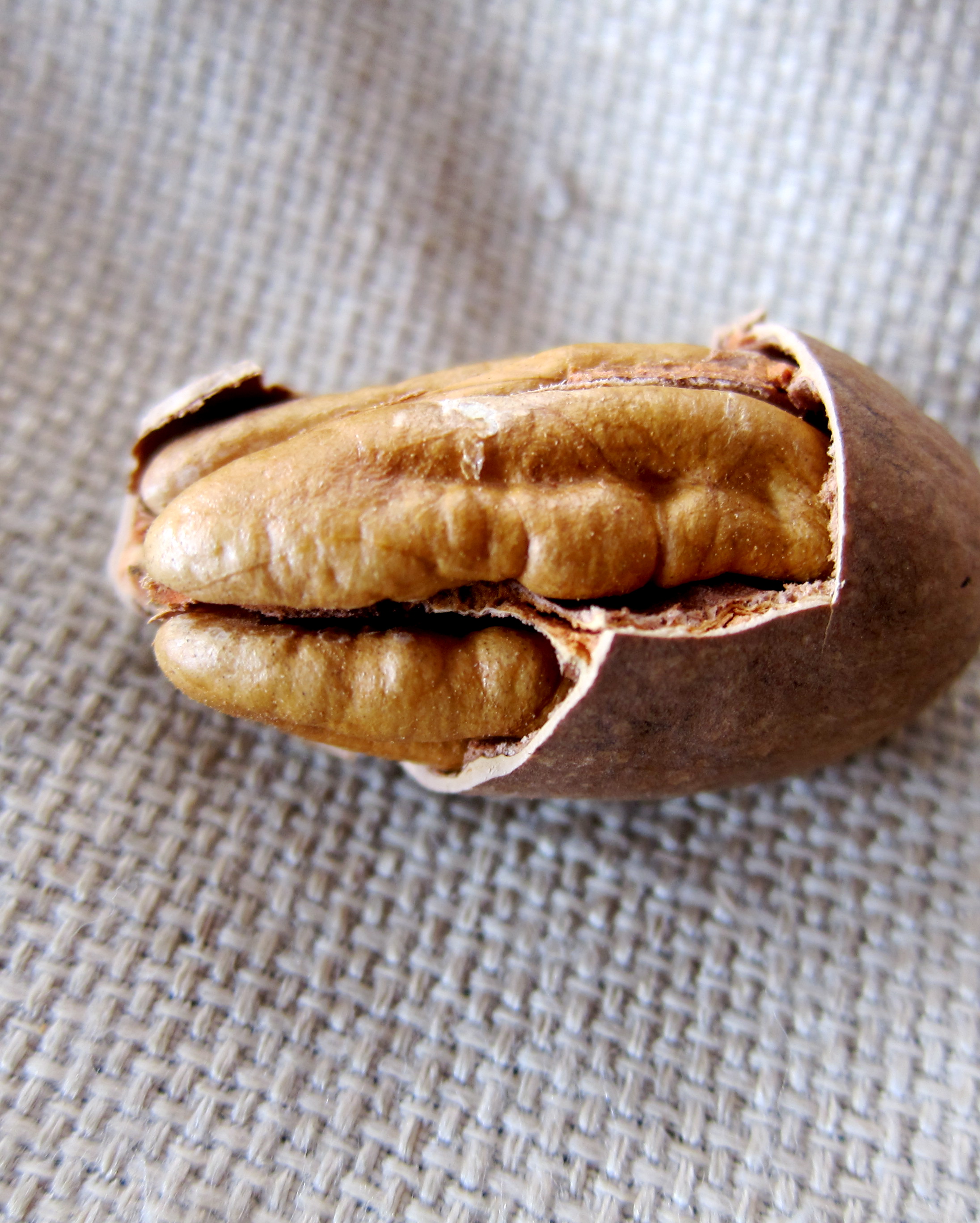
When I got home I couldn’t believe how truly beautiful they were. I loved the way they rattled in their netting and the surprisingly friable nature of the shell. Simple pressure splits the skin. These are fresh, ‘wet’ pecans and they have a sweetness to them missing in walnuts. My first crunch – creamy and dry, faintly tannic – and I thought of maple syrup.

Los Angeles

Fall in Los Angeles

Edmund de Waal talks in his book The Hare with Amber Eyes about the ‘default vagueness’ of melancholy and the ‘smothering lack of focus’ it can engender. We have our stories. Sometimes we forget to go out and make new ones. I have been missing England and the toing and froing of recent months has only added to this sense of dislocation and nostalgia. I have been keening. Now it’s time to be here. Because when I am no longer in this place, I will miss it.

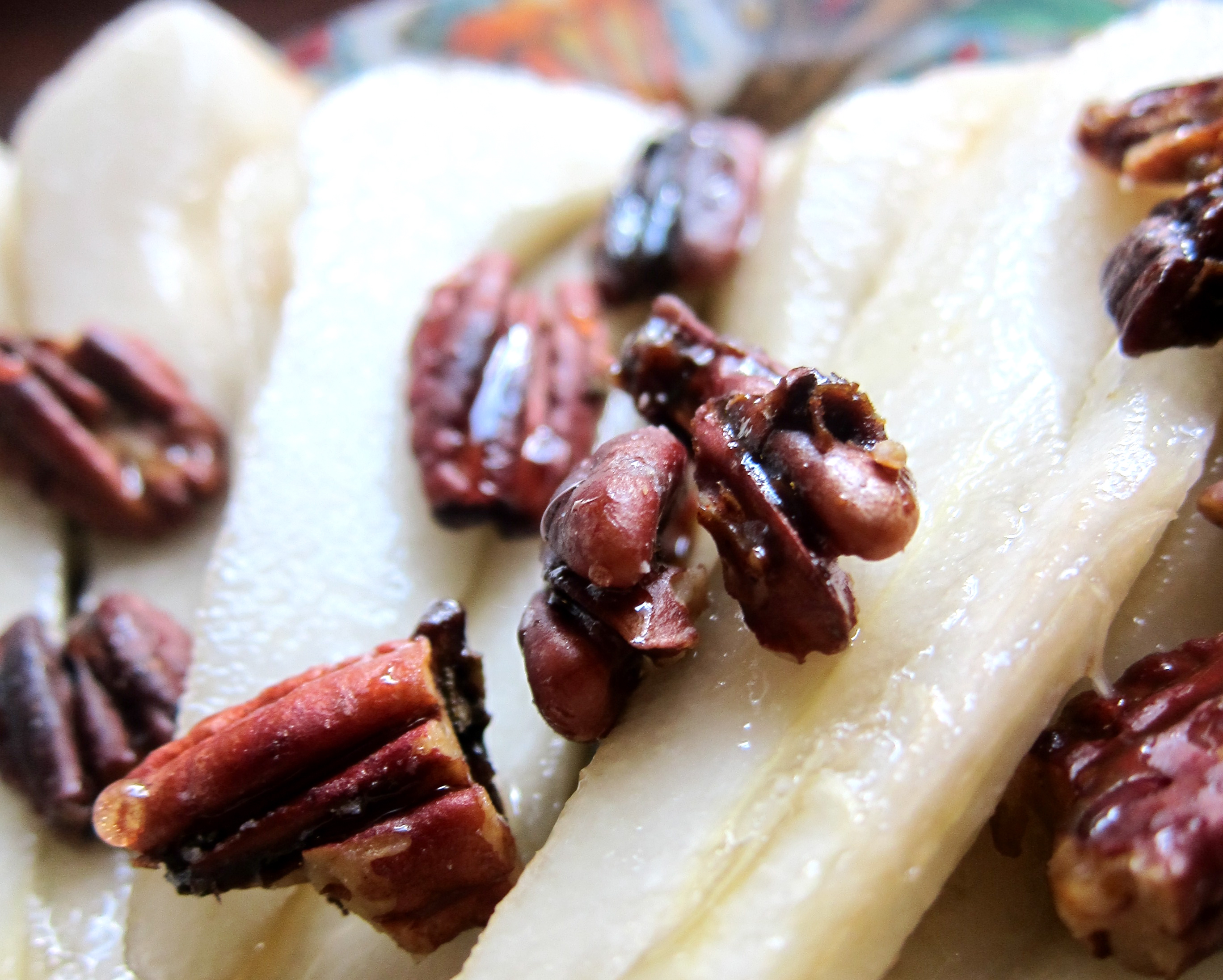
So to pecans. I don’t want to mask their flavour and unique texture. I want to keep them simple and fairly whole. These toasted pecans go well with all manner of things. Here a pear, and though Ruth Watson decries the Conference as having ‘as much taste as a policeman in a string vest,’ I rather like the blandness and graininess. A nice ripe juicy pear anyway is a good thing. Take what you can get. Of course, sometimes it must be ice cream and nothing else. A ball of vanilla, a warm clutch of toasted pecans, a thin moat of maple syrup and I’m anyone’s.

Sweet and salty pecans and a ripe pear

David Lebovitz, The Sweet Life in Paris

Deborah Madison, Seasonal Fruit Desserts

Serves 2

1 cup (170g) shelled pecans

1 tbs (15g) butter

1 tbs dark brown sugar

A good pinch of flaky sea salt (fleur de sel) or smoked sea salt

A good pinch of freshly ground black pepper

A finely chopped sprig of rosemary (optional)

Maple syrup (optional)

2 ripe pears

Spread the nuts on a baking sheet and roast in a 300F (180C) oven for about 5 minutes to ‘tickle out’ their flavour. Try to avoid colouring them too much. Melt the butter in a pan over a medium heat, add the rosemary (if using) and then the warmed pecans. Sprinkle the brown sugar over them, and stir until the sugar has melted. Remove from the heat, then sprinkle with the salt and a fresh grind of pepper. Let cool to harden. Tap the pecans gently with a rolling pin to break them up or leave them whole.

Peel, quarter and core the pears. Slice them and serve with the pecans and a drizzle of maple syrup if you have some. And if you have some ice cream, go for it.

Things that go well with pecans: vanilla ice cream, maple syrup, bananas, cream, caramel, avocados, blue cheese, apples, pears, dates and beets.

IMG_0729

Share this:

  • Share on X (Opens in new window) X
  • Share on Pinterest (Opens in new window) Pinterest
  • Share on Facebook (Opens in new window) Facebook
  • More
  • Share on Reddit (Opens in new window) Reddit
  • Share on LinkedIn (Opens in new window) LinkedIn
  • Share on Tumblr (Opens in new window) Tumblr
  • Print (Opens in new window) Print
  • Email a link to a friend (Opens in new window) Email
Like Loading...

Salad of pears

29 Thursday Nov 2012

Posted by Sophie James in Recipe

≈ 6 Comments

Tags

Autumn, Cookbook, Food, Ingredients, London, Nonfiction, Recipes, Salad, Stories

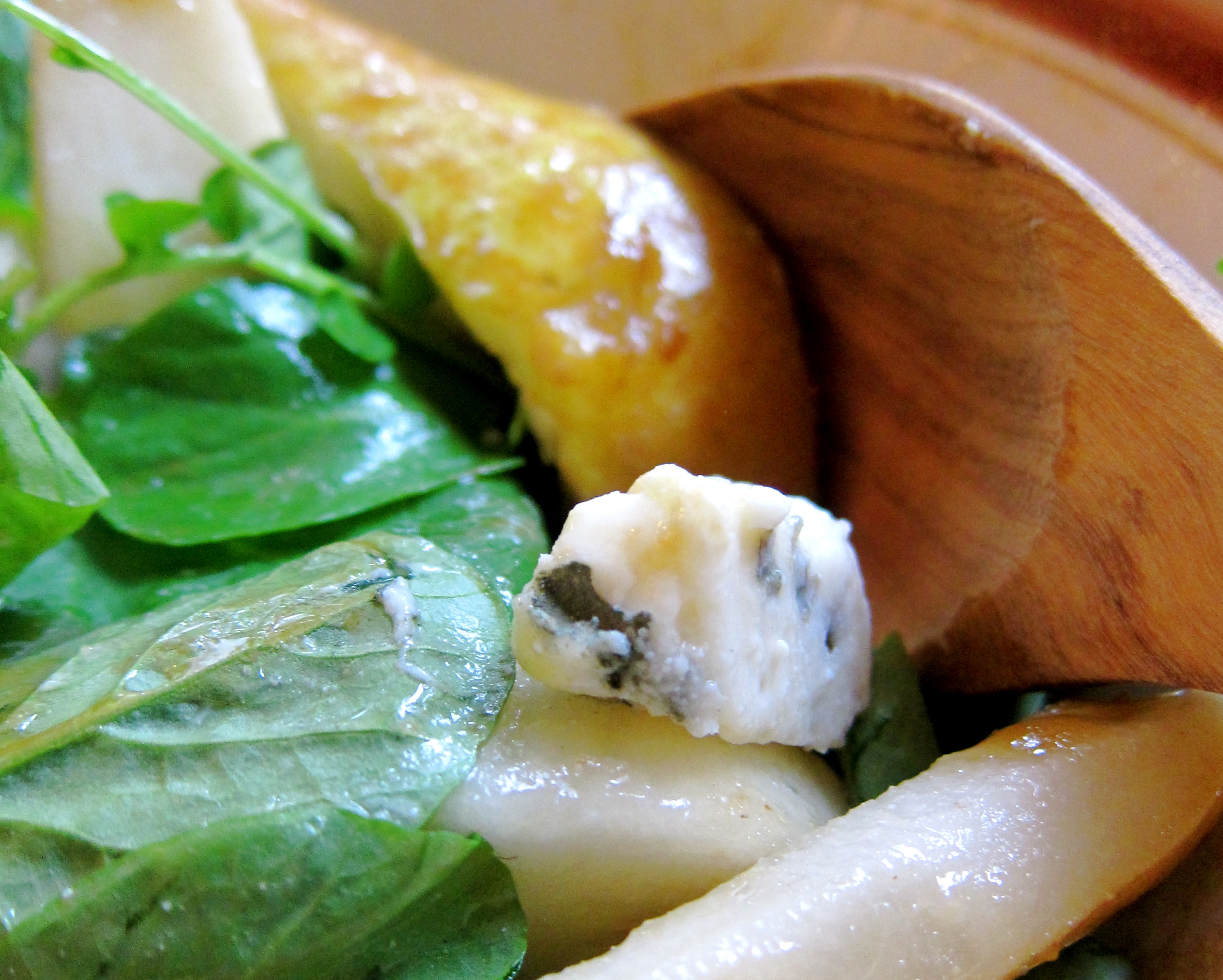
My first salad. Not the first salad I’ve ever eaten – that would be a bit perverse – but the first one I’ve written about here. The blue cheese is not essential; it is the pear and watercress that makes the dish, but a nice Stilton or Roquefort lends a lactic headiness to proceedings. This crosses the border between indulgence and virtue. Yes, it has a lot of fresh, raw greenery, but that mustn’t deter us. And it is a meal in itself. Have some hot crusty bread, a jug of dressing to mop up, and nothing else is required.

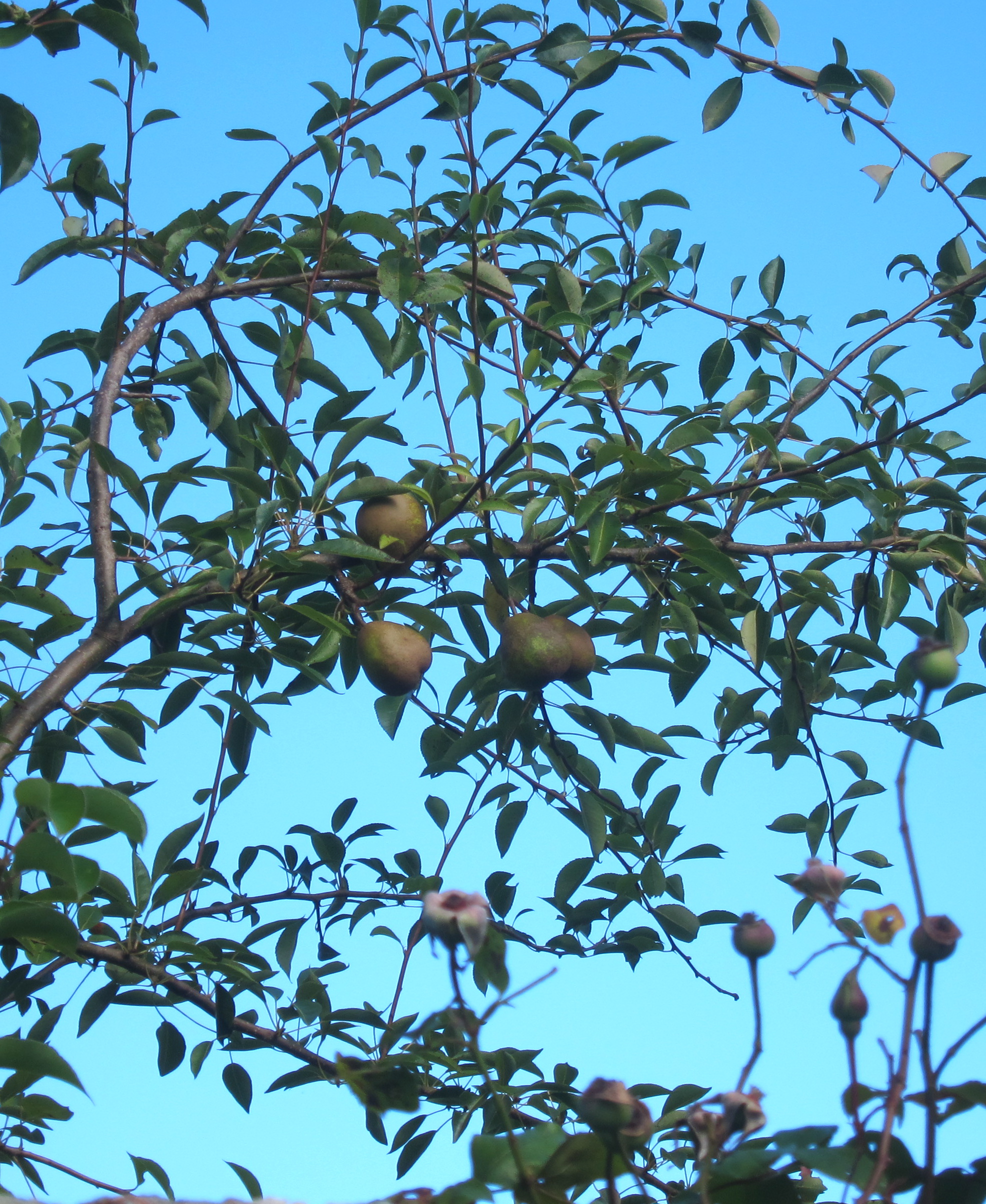
Pears are one of my favourite things. They are tricky, temperamental. The moment between just ripe – your thumb making the slightest depression in the skin, the juice ready to spill – and pear-rot is a hair’s breadth. They are peaceful to look at, a still-life, long and sloping, the Modigliani of fruit. I love Conference* pears the best – their mottled, taupe skin, slightly rough to the touch. They ooze and fall into your mouth, but never collapse. It’s good to eat them from the point down. In fact they fit in the palm perfectly.

This recipe – minus the blue cheese – came by way of my Australian aunt Cynthia and when we took it on, perhaps unconsciously, we would always serve it in an Aboriginal bowl made of wood. It was a strange shape, like an opened clam, and on the outside there were black inked carvings. You weren’t supposed to wash it, but we did, and it withstood this neglect and abuse for years. It still exists now as a receptacle for other things, looking terminally dusty. But we used it in London mainly, in Redcliffe Square, and I sometimes sat and ate this salad and watched Hugh Grant and Liz Hurley leave their flat from the house opposite. Sometimes, I would see them through the glass getting ready for things. I once inadvertently walked past his door when he was coming down the steps to be ‘caught’ by a paparazzo. Afterwards, he and the photographer stood around and chatted.IMG_0663

This was around the time when strange pairings were encouraged generally. It was as if we had woken from our Eighties torpor, ready to push the boat out. There was lamb and pears, for example. The macrobiotic diet was doing the rounds and there was talk of yin and yang. Things that were acidic needed to be mixed with things that were alkaline. Even the area was mixed: rent-controlled apartments such as ours existed alongside celebrities and landed gentry. Earls Court, although at that time largely Arabic, still had the residue of transplanted Aussies, like my mum, who had arrived in the late Fifties and stuck around.

Strangely, this recipe hasn’t dated, nor is it ubiquitous. It has survived the fashions and vagaries of the time. It reminds me of interesting couplings. Of rubbing along. I think it might be worth a revisit.

Pears, watercress and blue cheese

Adapted from Ruth Watson, The Really Helpful Cookbook

Serves 4

2 large handfuls of watercress

2 or 3 ripe-but-firm pears

100g Roquefort (or other blue cheese) – you can improvise with the amount

For the dressing

1-2 tbsp balsamic vinegar

4-5 tbsp extra-virgin olive oil

1 tbs honey

1 tbs Dijon mustard

Pinch of sea salt

Freshly ground black pepper

Make the dressing: dissolve the sea salt with the balsamic vinegar by giving it a good swirl, then add the mustard and stir throughly to combine. Slowly drizzle in the olive oil until it’s all mixed. Add the honey and stir. Put to one side.

Break up the watercress and remove the stems. Artfully arrange onto plates. Peel, core and cut the pears into sixths (or quarters if they’re quite small). Do this at the last moment to prevent the pears from browning, or slather in lemon juice and put to one side. Leave on some of the skin if you like a bit of texture. Tuck the pears into the watercress and season with some black pepper. Crumble some blue cheese over each plate. Drizzle with the dressing and some extra honey if you like. Serve immediately. Likes hot bread.

*Bosc pears are a good substitute in the US. In fact, they are plumper and juicier.

Upland cress

Share this:

  • Share on X (Opens in new window) X
  • Share on Pinterest (Opens in new window) Pinterest
  • Share on Facebook (Opens in new window) Facebook
  • More
  • Share on Reddit (Opens in new window) Reddit
  • Share on LinkedIn (Opens in new window) LinkedIn
  • Share on Tumblr (Opens in new window) Tumblr
  • Print (Opens in new window) Print
  • Email a link to a friend (Opens in new window) Email
Like Loading...

Warm cherry & chocolate cakes

20 Tuesday Nov 2012

Posted by Sophie James in Recipe

≈ 9 Comments

Tags

Baking, Cake, Dessert, Food, Fruit, Homesickness, Ingredients, Recipes, Stories

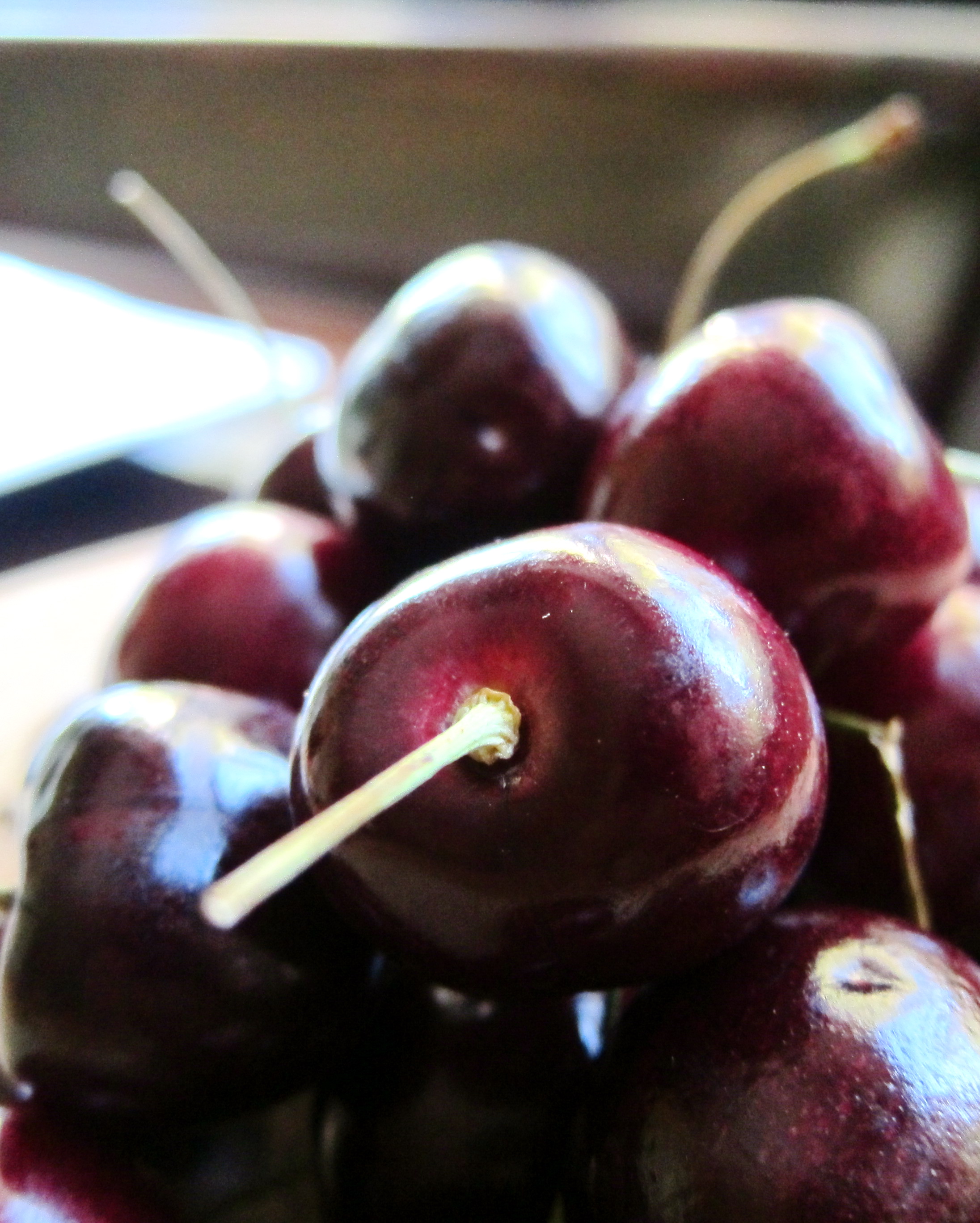
Cherries in November, I hear you ask? No, I have only the dried versions – wizened little blisters plumped up by liquor – but I love the look of these deep, dark orbs. And oddly they seem more suited to winter in my mind. This story is a pulling together of the different threads of my England trip, and the genus comes from a visit to Brighton, the streets slaked that day with dirty rain. It was also cold and people were standing in doorways looking out, not at anyone in particular, but simply looking on with flattened, peeved expressions. My mum and I had the idea to see the Biba exhibition at the Brighton museum, but instead went to Primark. The rain washed away any ingenuity that day, but at least I came away with a good packet of pants.

We ran out of the rain into a cafe. It was warm inside and there were some lovely looking cakes on the counter, although with my mother the assumption is always that we will have soup. Soup and tea. The girl behind the counter was bewitchingly friendly. She was Polish, and it was her mother, Ella, who did all the baking. Her mother was downstairs. There was a Black Forest cake, with all its turrets and glossy layers, a plum crumble tart, and whirling pastries. We ordered soup, which was beef and leek – delicate and creamy. My mum ate the plum crumble tart. A chocolate cake arrived, carried by Ella.

By this point, I knew that my mum would be engaging in conversation with Ella, and that this would happen as soon as the cake was released. It began as it always does – with a few compliments, and a request for ingredients. A slow and delicate deconstruction of the soup followed, and then onto the plum crumble tart. Without this dandling, this gentle back and forth, I know Ella would not have brought out a jar of her homemade black cherry jam for us.

When it came to packing for the return trip to LA, I decided to leave the jar of jam behind. It was too heavy, and it was glass. Besides, my mum would enjoy it. I put it in the cupboard but it found its way back into my bag. I returned it, hid it behind some tea, but there it was again, sitting at a jaunty angle in amongst my clothes. It eventually stayed with her. I assumed you could get black cherry jam in LA. I was being rather cavalier about it; it was fine, it was only jam, she should have it. But on my return here, it gnawed at me. I missed it. I thought often of the contents, and the patterned lid, and the way Ella had presented it, her face flushed with promise and oven heat. It’s funny the things we regret.

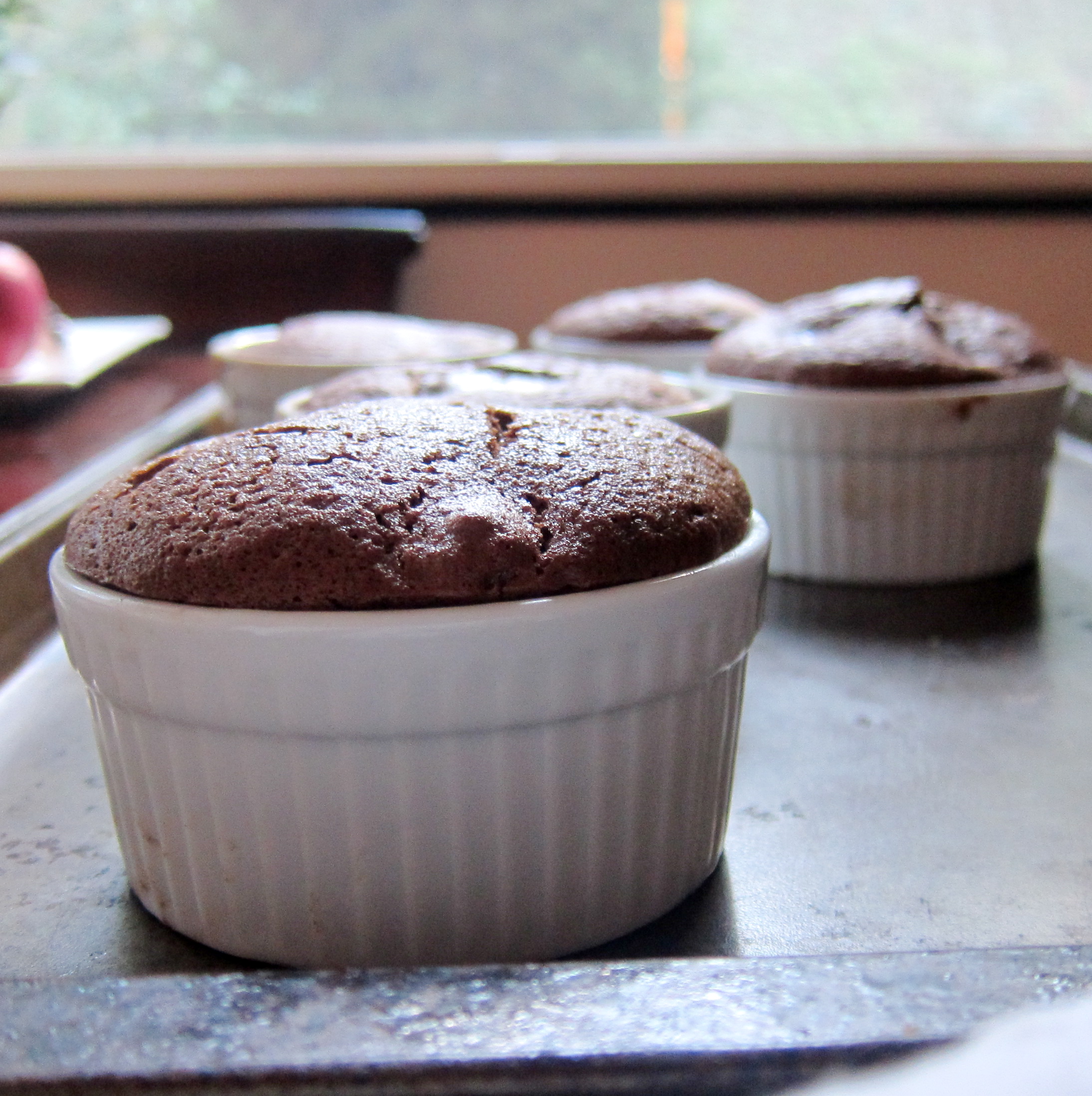
I would like to think these cakes are based on the Ischler torte, the Viennese chocolate cake with cherry and almond filling, and not the smothering Black Forest. But ultimately, there is something very British about these little chocolate fondants. We are so in love with the oozing and glaucous pudding, with dark and brooding chocolate. And cream, of course. If you can’t find dried cherries, you could try prunes soaked in brandy, raisins soaked in whisky or dried cranberries in vodka. And, of course, if you have some homemade cherry jam, use that.

Warm cherry and chocolate cakes

Adapted from Hugh Fearnley-Whittingstall, Three Good Things on a Plate

Makes 6

100g dried cherries

40ml Calvados

A little cocoa powder for dusting

150g dark chocolate, broken into small pieces

150g unsalted butter, diced, plus extra for greasing

3 large eggs

75g caster/superfine sugar

35g plain flour

Soak the cherries in the Calvados in a small bowl for at least 2 hours (or overnight), to absorb most of the liquid.

Preheat the oven to 200C/400F and put a baking tray inside to heat up. Butter 6 dariole moulds or ramekins well and dust with the cocoa. Melt the chocolate and butter in a heatproof bowl over a pan of barely simmering water. Stir gently at the end to blend and leave to cool a little. Beat the eggs and sugar together for a good 5 minutes until the mixture is thick and creamy and ‘holds a trail’ (when a little is dropped from the whisk it sits on the top of the mixture before slowly sinking back in).

Fold the melted chocolate and butter lightly into the egg mousse. Sift the flour over the mixture, then fold it in carefully. It should be throughly incorporated, but don’t overwork the mixture. Fold in the cherries and Calvados.

Divide the mixture between the ramekins. You can prepare these cakes ahead to this point, if you like, and refrigerate them for up to 2 hours. Bake the puds on the hot tray in the oven for 10-12 minutes. Turn out immediately into shallow bowls and serve with thin, chilled cream.

IMG_0630

Share this:

  • Share on X (Opens in new window) X
  • Share on Pinterest (Opens in new window) Pinterest
  • Share on Facebook (Opens in new window) Facebook
  • More
  • Share on Reddit (Opens in new window) Reddit
  • Share on LinkedIn (Opens in new window) LinkedIn
  • Share on Tumblr (Opens in new window) Tumblr
  • Print (Opens in new window) Print
  • Email a link to a friend (Opens in new window) Email
Like Loading...
← Older posts
Newer posts →

Enter your email address to follow this blog and receive notifications of new posts by email.

Join 2,214 other subscribers

Top Posts & Pages

A field of fennel
Weathered
Chocolate marmalade slump
Swimmingly
Small Crumbs of Comfort
Unfurl
Apple and sultana cake
The colour mauve
Crema Catalana plus fennel
One jar only

Recent Posts

  • At my allotment
  • A compendium of sorts
  • Mulberries
  • We are nature
  • Leaving home
  • A treacherous herb
  • Just stop it
  • Why I swim

Great books I’ve read

Blogs/Websites I read

  • Letitia Clark
  • Nigel Slater
  • Room to heal
  • Samantha Harvey
  • Stewart Lee
  • The Kureishi Chronicles
  • The Marginalian
  • Tom Cox
Follow Stories from the Stove on WordPress.com

Archives

  • June 2023
  • February 2023
  • September 2022
  • August 2022
  • July 2022
  • May 2022
  • February 2022
  • December 2021
  • August 2021
  • April 2021
  • March 2021
  • January 2021
  • June 2020
  • November 2018
  • August 2017
  • July 2017
  • May 2017
  • April 2017
  • February 2017
  • January 2017
  • November 2016
  • May 2016
  • October 2015
  • July 2015
  • June 2015
  • April 2015
  • March 2015
  • January 2015
  • December 2014
  • November 2014
  • October 2014
  • September 2014
  • August 2014
  • July 2014
  • June 2014
  • May 2014
  • April 2014
  • March 2014
  • February 2014
  • January 2014
  • December 2013
  • November 2013
  • October 2013
  • September 2013
  • August 2013
  • July 2013
  • June 2013
  • May 2013
  • April 2013
  • March 2013
  • February 2013
  • January 2013
  • December 2012
  • November 2012
  • October 2012
  • September 2012
  • August 2012
  • July 2012
  • June 2012
  • May 2012
  • April 2012
  • March 2012
  • February 2012
"A WOW piece!" Claudia Roden on Walnut Bread

Walnut bread

Lucas’s chocolate marmalade slump

Tags

Afternoon tea Allotment Almonds Art Autumn Baking Bread Breakfast Cafes Cake Childhood Chocolate Christmas Citrus Claudia Roden Cookbook Cooking Dessert Devon Dinner Elizabeth David England Exmoor Fish Food France Fruit Gardening Gelato Gluten-free Herbs Home Homesickness Honey Ice cream Ices Ingredients Italy Jam Jane Grigson Lemons London Los Angeles Lucas Hollweg Marmalade Meat Mediterranean Meyer lemons Nature Nigel Slater Nonfiction Nuts Onions Patience Gray Poetry Pudding Reading Recipe Recipes Salad Sea Seasons Soup Spain Spices Spring Stone fruit Stories Summer Sussex Travel Vegetables Winter Writing Yoghurt

A WordPress.com Website.

Privacy & Cookies: This site uses cookies. By continuing to use this website, you agree to their use.
To find out more, including how to control cookies, see here: Cookie Policy
  • Subscribe Subscribed
    • Stories from the Stove
    • Join 2,082 other subscribers
    • Already have a WordPress.com account? Log in now.
    • Stories from the Stove
    • Subscribe Subscribed
    • Sign up
    • Log in
    • Report this content
    • View site in Reader
    • Manage subscriptions
    • Collapse this bar
 

Loading Comments...
 

    %d