• Recipe List
  • Sophie

Stories from the Stove

Stories from the Stove

Tag Archives: Baking

Brownies

03 Thursday May 2012

Posted by Sophie James in Recipe

≈ 1 Comment

Tags

Baking, Cake, Chocolate, Claudia Roden, Dessert, Food, Ingredients, Recipes, Stories
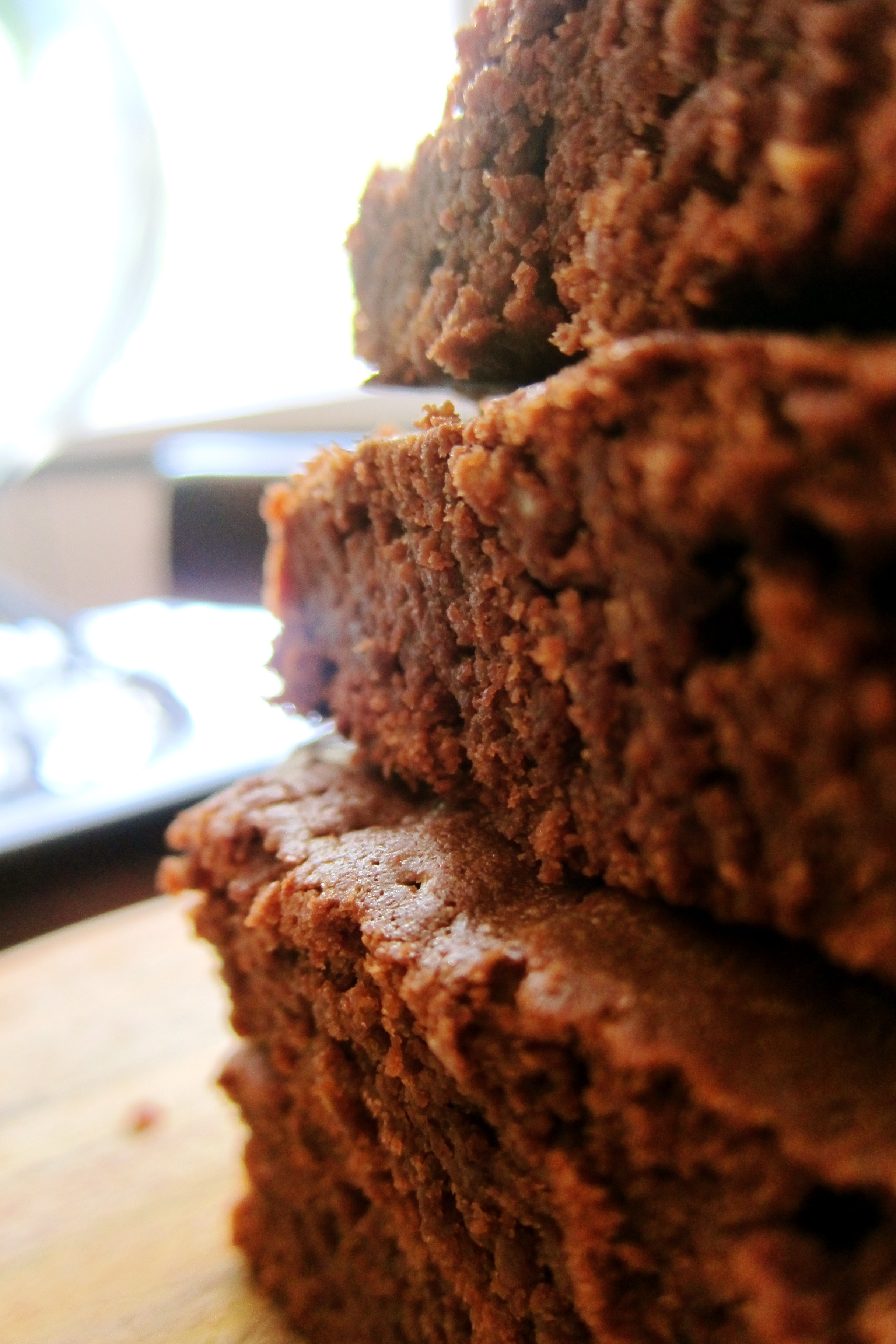
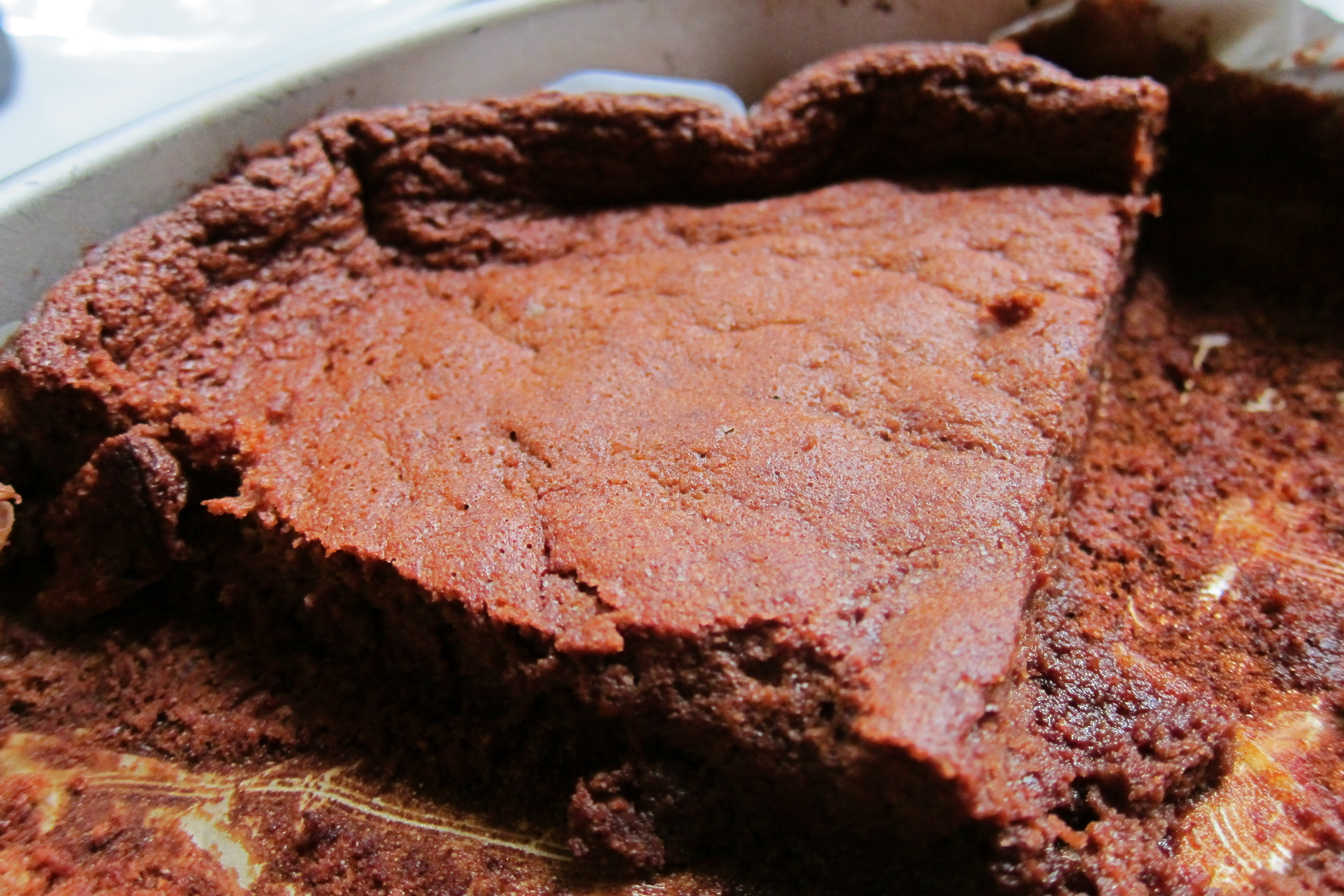
I’m sure there’s a Brownie Consortium somewhere that meets regularly to debate such topics as Cakey vs Fudgy, The Role of Cocoa, and Walnuts: A Fresh Perspective. I also recently learned the brownie isn’t technically a cake at all, but a cookie. Fanny Farmer listed it as such in the 1906 edition of her Boston Cooking-School Cook Book and in some ways that’s what a brownie really strives to be. Think of the best chocolate chip cookie you’ve ever tasted – the memory of the oven still lingering over it, a shatteringly tender shell, a warm, melting middle, rich but light and gone in seconds. I have used a brownie recipe from a children’s cookery book for the last few years and it’s served me well. It’s child’s play (as all baking should be, in my opinion) and not remotely fiddly and the results delight all humans. My allegiance is definitely to the fudgy camp. Why have cake when you can have a dark, dense bar, baked to a sugary crackle on the outside, with gently weeping chocolate within?

The brownie (named after its original ingredient, molasses) took off in the early 1900s in Chicago when it was made as a dessert item for ladies attending the fair. It needed to be flat and square, hence the absence of raising agents, so they could eat it easily from a ‘boxed lunch’. Touchingly, our most recent guests carried them around in a foil parcel in much the same manner.

I know it’s almost heresy to say this, but I don’t like walnuts in brownies. I prefer to keep to similar textures, something that releases its flavour in a liquid burst, rather than a hard, grainy morsel. Sour cherries, prunes, chocolate chips, cooked beetroot would all work. I don’t mind the bitterness of a cocoa nib, or the sunken, darker hit of alcohol. I just don’t want to be picking things out of my teeth.

Chocolate Orange Brownies
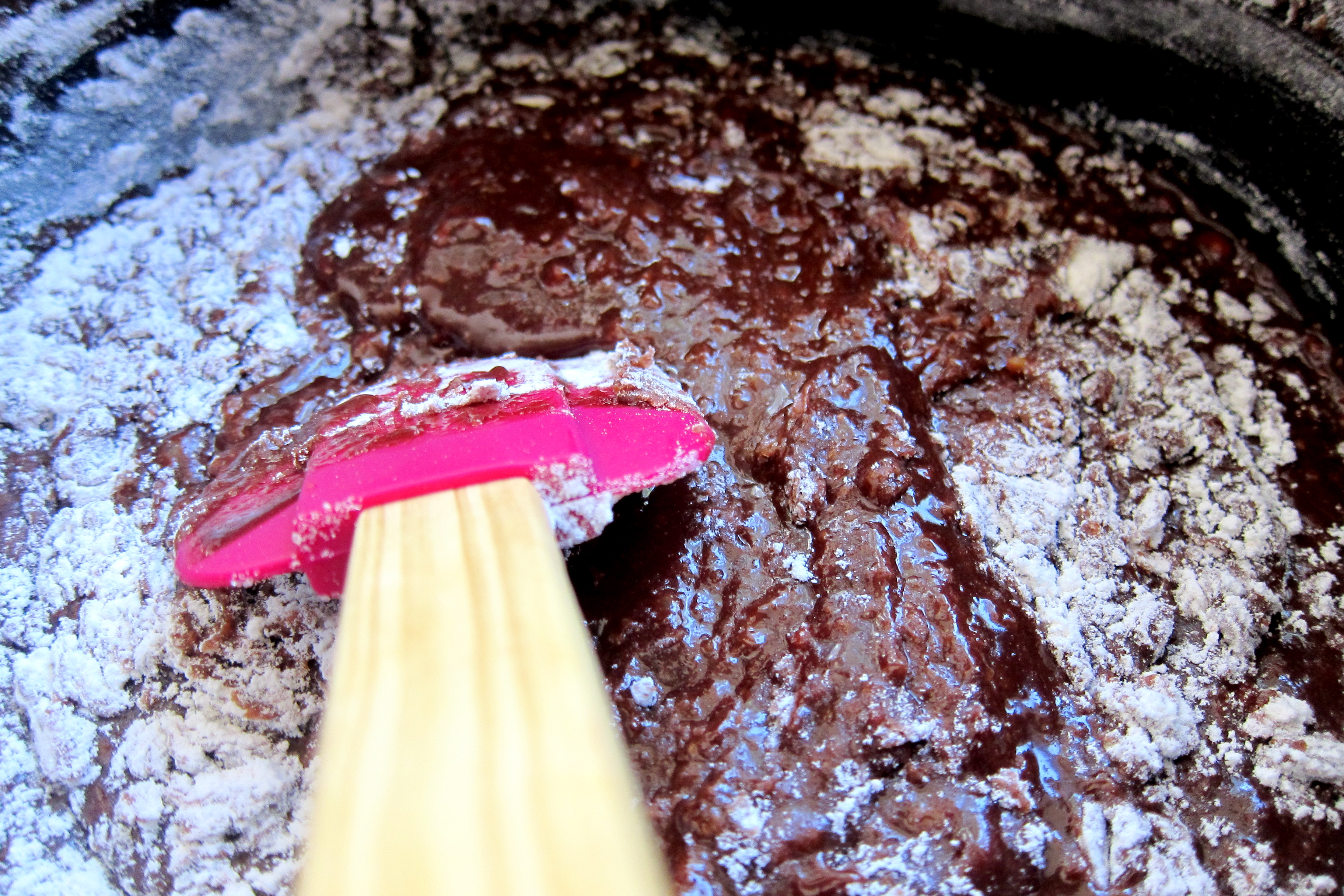
This recipe uses whole oranges boiled and pureed – skin and all. As it takes a couple of hours for them to be cooked through, add the zest of a large orange, and maybe try an orange-infused chocolate, such as Green and Black’s Maya Gold if you are pushed for time. However, there are dividends in using the whole orange approach – if you chuck another two on to boil, you can try Claudia Roden’s lovely almond and orange cake from her Book of Middle Eastern Food. The puree can also be added to muffins and quick bread, used as a base for custard or ice cream, as well as spread over baking salmon or mashed into a herby butter.

The orange is fresh and sharp here – ‘on the lip’ you could say – which is what a brownie needs. The chocolate is deep and steady, and the cocoa keeps things earthbound. Incidentally, the fudgy, chewy texture of these brownies comes from melting the butter with the chocolate, which prevents any air from being trapped. If you want something cakier and crumblier, go for the creaming method. And, of course, you can have a straightforward, orange-less brownie, by simply leaving out the orange component entirely.

Chocolate Orange Brownies

Inspired by Sweet Treats, Williams-Sonoma

175g (6oz) *good quality chocolate (60-70% cocoa solids)

25g (¼ cup) cocoa powder (such as Green and Blacks)

250g (2 sticks/1 cup) unsalted butter, cut into chunks

300g (1½ cups) organic cane sugar

3 eggs at room temperature

70g (½ cup) plain flour

1 tsp vanilla extract

Pinch of salt

2 organic, unsprayed oranges

Method

Put the whole oranges into a pan and cover with water. Bring to the boil, cover and simmer for two hours or until soft. Drain and leave to cool, then cut them in half and remove the pips and any stalks. Put the oranges, including the skin, into a blender and puree until smooth. Set aside. This can be made in advance and kept in the fridge for two days.

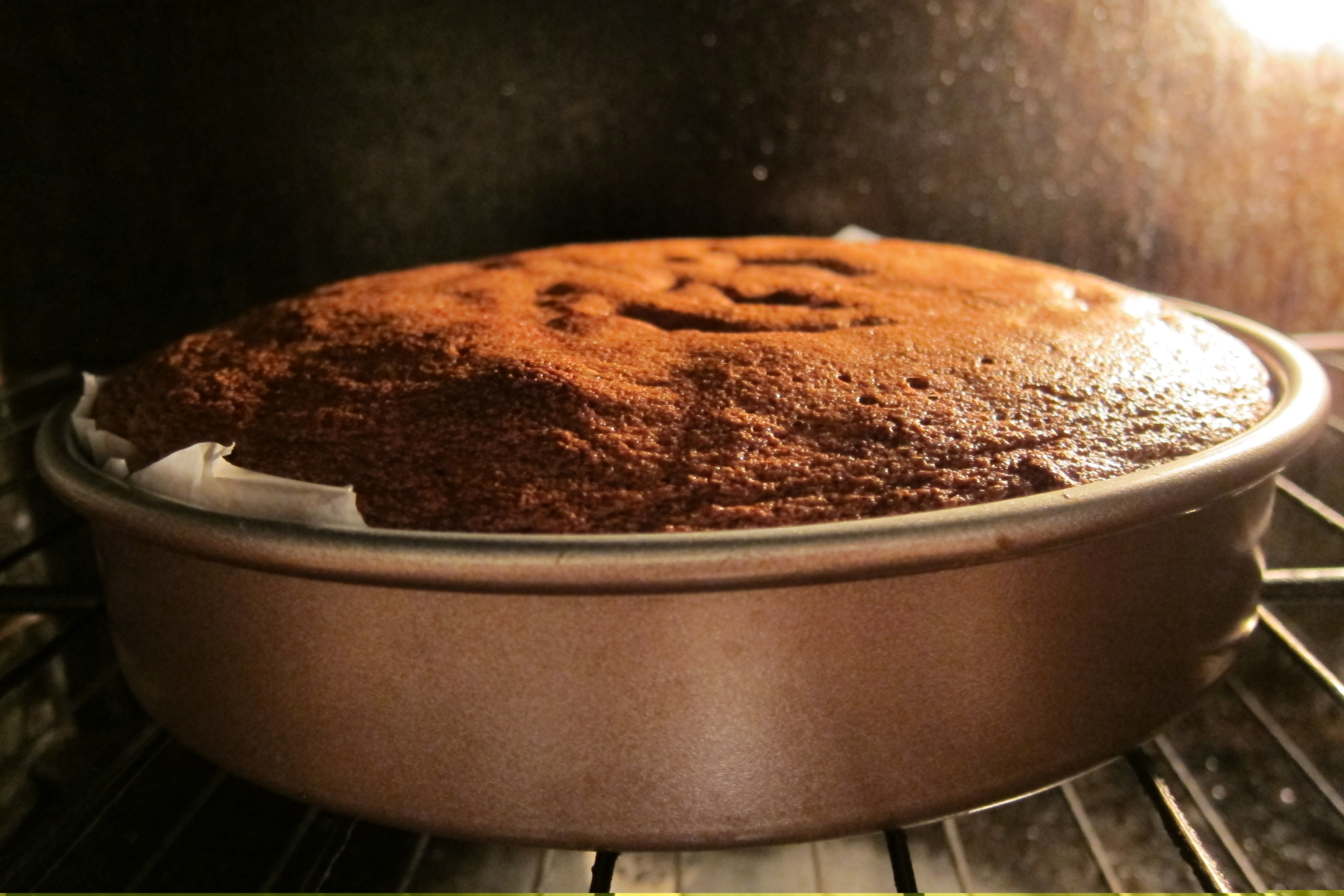
Preheat the oven to 350F/180C. Butter and line a 9 inch/23cm x 23cm baking pan with parchment paper. Break the chocolate into smallish pieces and put in a pan with the butter. Melt both over a very low heat, stirring occasionally with a spatula. Pour the melted chocolate and butter into a bowl and whisk in the cocoa powder until smooth. Stir in the sugar and the vanilla extract. Whisk in the eggs, one by one, beating well after each addition. Now add the orange pulp. Whisking the mixture vigorously at this point will create a crisp outer layer to the brownie.

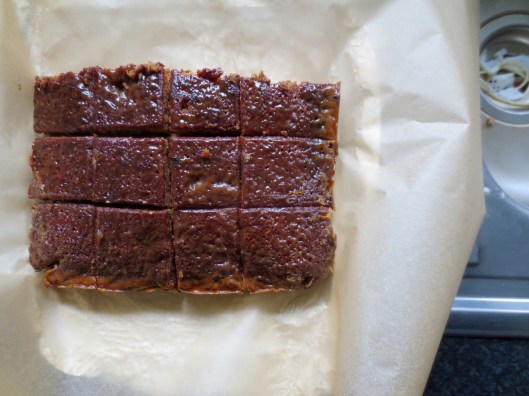
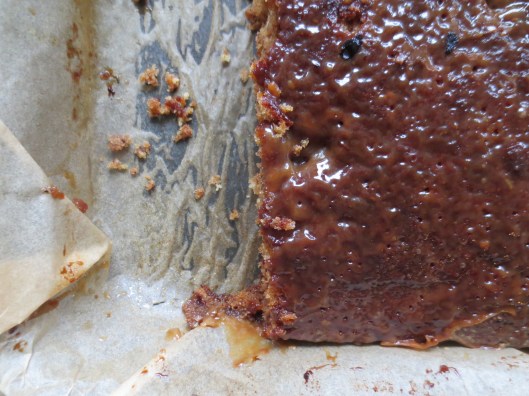
Gently fold in the flour and salt. Stir well to make sure there are no streaks. Scrape the batter into the baking pan and smooth the top. Bake for 35 – 40 minutes or until a skewer comes out with a few crumbs attached but no raw stuff. Let the brownies cool a little before cutting them into squares. Serve warm with some ice cream or a dollop of crème fraîche. If you don’t want instant gratification, these actually improve with time; store in an airtight container and enjoy picking.
*The orange-infused chocolate will have less cocoa content, so you will need to slightly increase the cocoa powder.

Share this:

  • Share on X (Opens in new window) X
  • Share on Pinterest (Opens in new window) Pinterest
  • Share on Facebook (Opens in new window) Facebook
  • More
  • Share on Reddit (Opens in new window) Reddit
  • Share on LinkedIn (Opens in new window) LinkedIn
  • Share on Tumblr (Opens in new window) Tumblr
  • Print (Opens in new window) Print
  • Email a link to a friend (Opens in new window) Email
Like Loading...

Muffins

26 Thursday Apr 2012

Posted by Sophie James in Recipe

≈ 5 Comments

Tags

Almonds, Baking, Food, Ingredients, Recipes, Spices, Stories

IMG_7234

I came late to the American muffin. It was too close to the cupcake for comfort, architecturally at least. And the last shop-bought muffin I tried was like eating my own washcloth. There was also a disconcerting bounce to it, no doubt the result of all the preservatives required to keep it ‘fresh’.

The craggily homemade version is much nicer; unprecious, easy, malleable. It’s a great one for using up left-overs, marmalade bits, old cranberries, stewed this and that, collapsed bananas and it’s good for experimenting. I like the deliberate under-mixing, and then watching it rise into smooth little balls through the smoky glass. It also absorbs and holds onto the essential flavour of things in interesting ways, like ginger nubbins, dates, vanilla and cinnamon. The botanically named ‘flavedo’ of citrus zest comes through startling well. It’s honest fare; simple, good, true, the workhorse of the kitchen. Wet into dry is the only rule, and then it likes to be left alone. But breaking it open, and getting a headful of that steamy, sweet interior, the texture reminiscent of soft, hot bread is lovely. And it has that essential lick-the-bowl-clean component, central to all great baking expeditions.

Muffins are what is known in the trade as ‘quick bread.’ Bread that uses yeast – ‘slow bread,’ you could say – has a long fermentation period, whereas quick breads use chemical leaveners such as bicarbonate of soda and baking powder and need to go straight in the oven. Muffins favour the casual, almost sloppy cook. A few desultory swipes with a spatula is all you need for the mixture to be ready – any more and the gluten will start to work, and the result will be tough and dense. Keeping a light hand also creates all the nooks and crannies for the butter and jam to fall into later, and hopefully – if the muffin is still warm – liquefy and dance around your mouth in a delightful way.

IMG_7252

This recipe can be made as a loaf or as individual muffins, and you can substitute the raisins for a cup of something else (prunes would be nice). Fennel is an acquired taste, I admit, being the Marmite of flavourings, but the liquorice warmth balances the sweetness here. Play around with spices though, and see what takes your fancy. I have added ground almonds to the mix because I believe that the muffin’s downfall is its tendency to dryness which almonds will mitigate. If you are less catholic in your muffin persuasion, and want to keep things simple, stick to two cups (250g) of flour.

Fennel, orange and raisin quick bread

Adapted from Nick Malgieri’s The Modern Baker

1 cup (160g) raisins

1¼ cups (150g) plain flour

¾ cup (90g) ground almonds

⅔ cup (130g) sugar

2 tsp baking powder

½ tsp baking soda

1 tbs fennel seeds

Pinch of salt

¾ stick (6 tbs/3 oz) butter

Finely grated zest of 2 oranges

⅔ cup (160 ml) buttermilk

(or make up 1 cup/250 ml of milk and add 1 tbs of lemon juice.  Let this stand for 5 minutes and use the required amount)

2 large eggs, at room temperature

Method

Put the raisins and about 75 ml (5 tbs) of water in a small saucepan and bring to the boil. Remove from the heat, cover, and leave until the raisins have absorbed most of the liquid. You don’t have to do this but it makes the raisins very plump and juicy. Drain and leave to one side. Heat a dry frying pan/skillet over a medium heat and add the fennel seeds, shaking the pan so they toast evenly. They are ready when they start to release their fragrance and are beginning to brown; then whizz them in a spice or coffee grinder for a few seconds.

Preheat the oven to 400F. Lightly coat the muffin pan or loaf tin with butter. Put the flour, ground almonds, sugar, baking powder, baking soda, blitzed fennel seeds and salt in a medium-sized bowl and combine well. In a saucepan, melt the butter gently with the orange zest. Turn off the heat and add the buttermilk to the melted butter and let it sit for a few minutes, until it’s tepid. Pour the melted butter mixture into a bowl and add the eggs and whisk until well blended.

Add the wet ingredients to the dry and stir gently with a wooden spoon or spatula. Mix until just blended. Gently fold in the raisins. Use an ice cream scoop or a spoon to pile the batter into the muffin cups (fill to the top if you want a billowing ‘crown’), or simply pour into the loaf tin. Bake the individual muffins for 18 – 20 minutes and the loaf for about 35 – 40 minutes. The top should feel firm and a skewer will come out cleanish when it’s ready. Leave the tin to cool for five minutes and then prise the loaf/muffins out using a thin knife and leave on the rack until okay to handle, but still tender and steaming. Eat very soon.

Some things to remember: All the liquid ingredients must be brought to room temperature before beginning. If, when you whisk the milk, eggs and butter together, the milk or the eggs are chilled, the butter will congeal and won’t blend well. Always add any zest to the melted butter rather than to the dry ingredients, as this releases the essential oils. Stop mixing the batter as soon as you can see no streaks of flour or liquid; don’t worry about lumps, they’ll even out during baking. Just get the darn thing in the oven.

These muffins, unlike their commercial counterparts, have a shorter shelf-life. After a day, they need a zap in the oven to bring them back to life, but by day three it’s all over. Freeze them once they’ve cooled on the rack, if you want to keep them for a while; they freeze for up to a month, wrapped and sealed in a freezer bag. When you’re ready to eat them, thaw for 30 minutes and then reheat. Alternatively, prepare the dry and wet ingredients, cover and store them separately until the morning (keep the wet in the fridge), and then whip them together and bung in the oven.

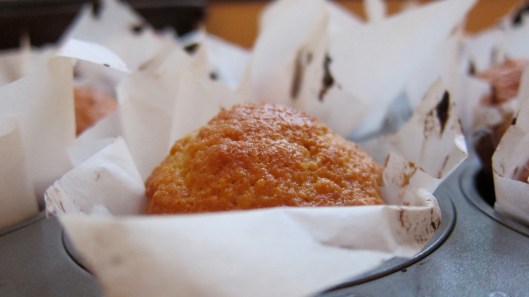
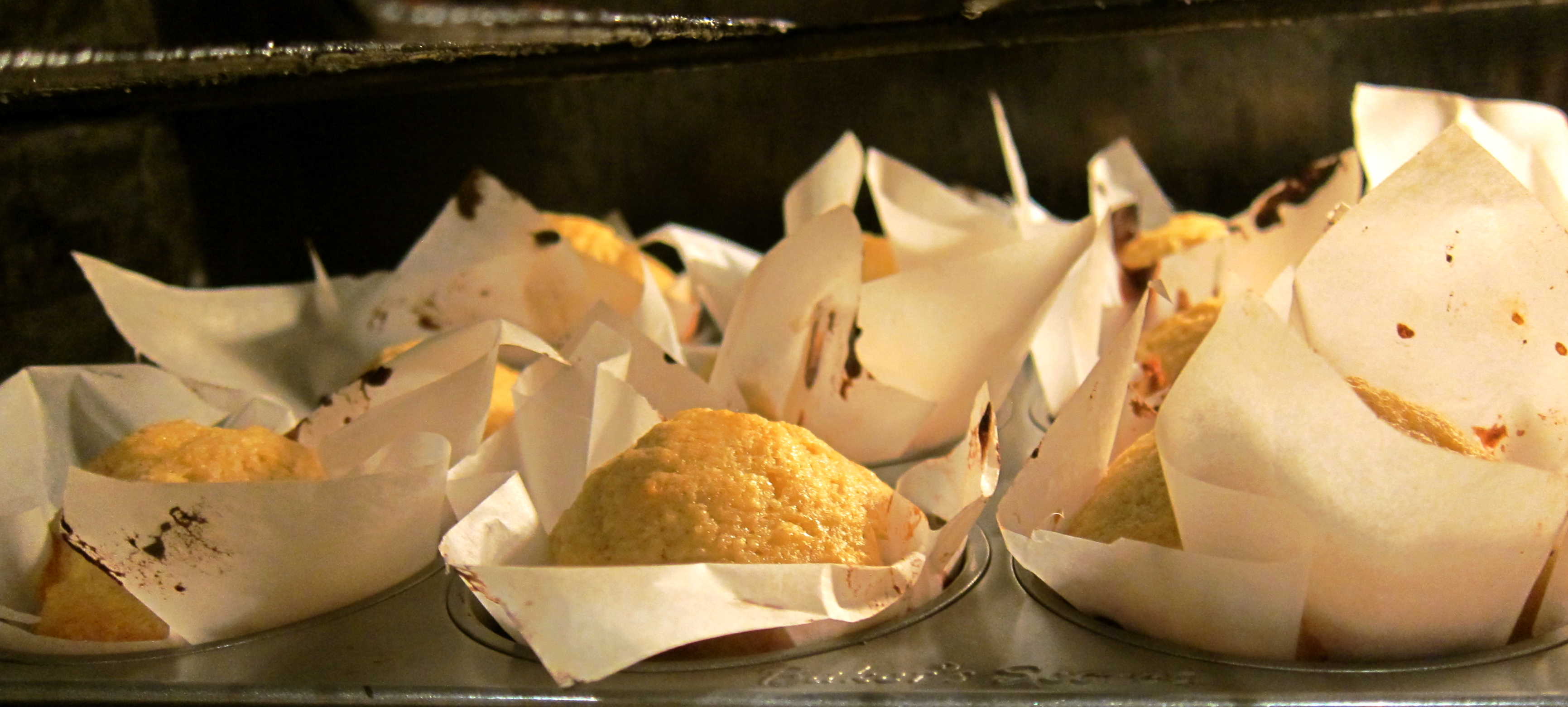
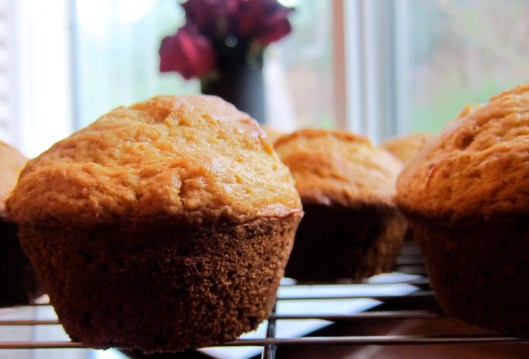
You can put the batter into squares of parchment paper, which then sit in the muffin tray, as pictured below. Though it looks quite pretty, the downside is the paper’s tendency to cling to the muffin, thus tearing it asunder. This makes it easier to eat though – doing the job of fingers. 

Share this:

  • Share on X (Opens in new window) X
  • Share on Pinterest (Opens in new window) Pinterest
  • Share on Facebook (Opens in new window) Facebook
  • More
  • Share on Reddit (Opens in new window) Reddit
  • Share on LinkedIn (Opens in new window) LinkedIn
  • Share on Tumblr (Opens in new window) Tumblr
  • Print (Opens in new window) Print
  • Email a link to a friend (Opens in new window) Email
Like Loading...

A word about bitterness

06 Friday Apr 2012

Posted by Sophie James in Recipe

≈ 12 Comments

Tags

Baking, Dessert, Food, Fruit, Ingredients, Marmalade, Nonfiction, Recipes, Seville oranges, Stories

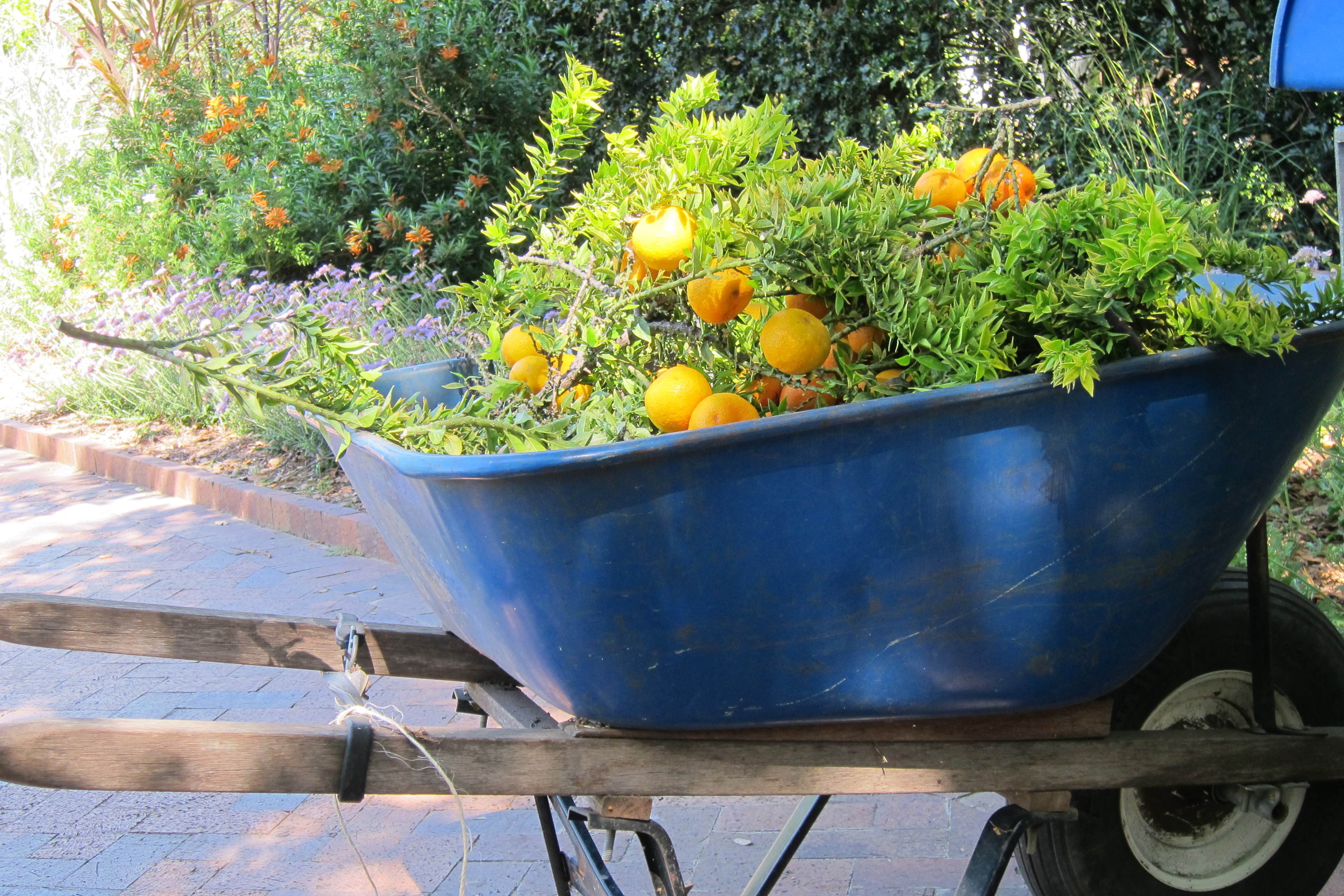
Up until relatively recently all oranges were bitter. They originated – as did all varieties, right down to the tangerine and the kumquat – from China, and go back 3,000 years. Arab traders brought them to Europe at the end of the Roman Empire, along with spices, silk and sugar, and the main crop was established around the area of Seville, in Andalusia, hence the name we English know them by. The skin of the bitter orange (Citrus aurantium) is distinct from its sweet cousin (C. sinensis) in that it is baggy and heavily dimpled, reminiscent of cellulite. Here in southern California, bitter oranges are often left to rot on the branch, untouched and overlooked, but up until the nineteenth century it was the bitterness that people prized the most. The aromatic peel and sharp juice were symbols of opulence and sensuality, and the flowers were distilled and used to flavour food as well as to perfume baths and make-up.

They make the best marmalade, without a doubt. In fact they made the first marmalade, if you ignore the Portuguese quince version and the pear, plum and gooseberry pastes of Tudor England. And of course it was all fluke: a ship containing a cargo of Seville oranges took shelter from a storm in Dundee. Local greengrocer James Keiller bought the lot, and his wife, Janet, turned them into marmalade. By 1797, they had the first marmalade factory.

IMG_7491

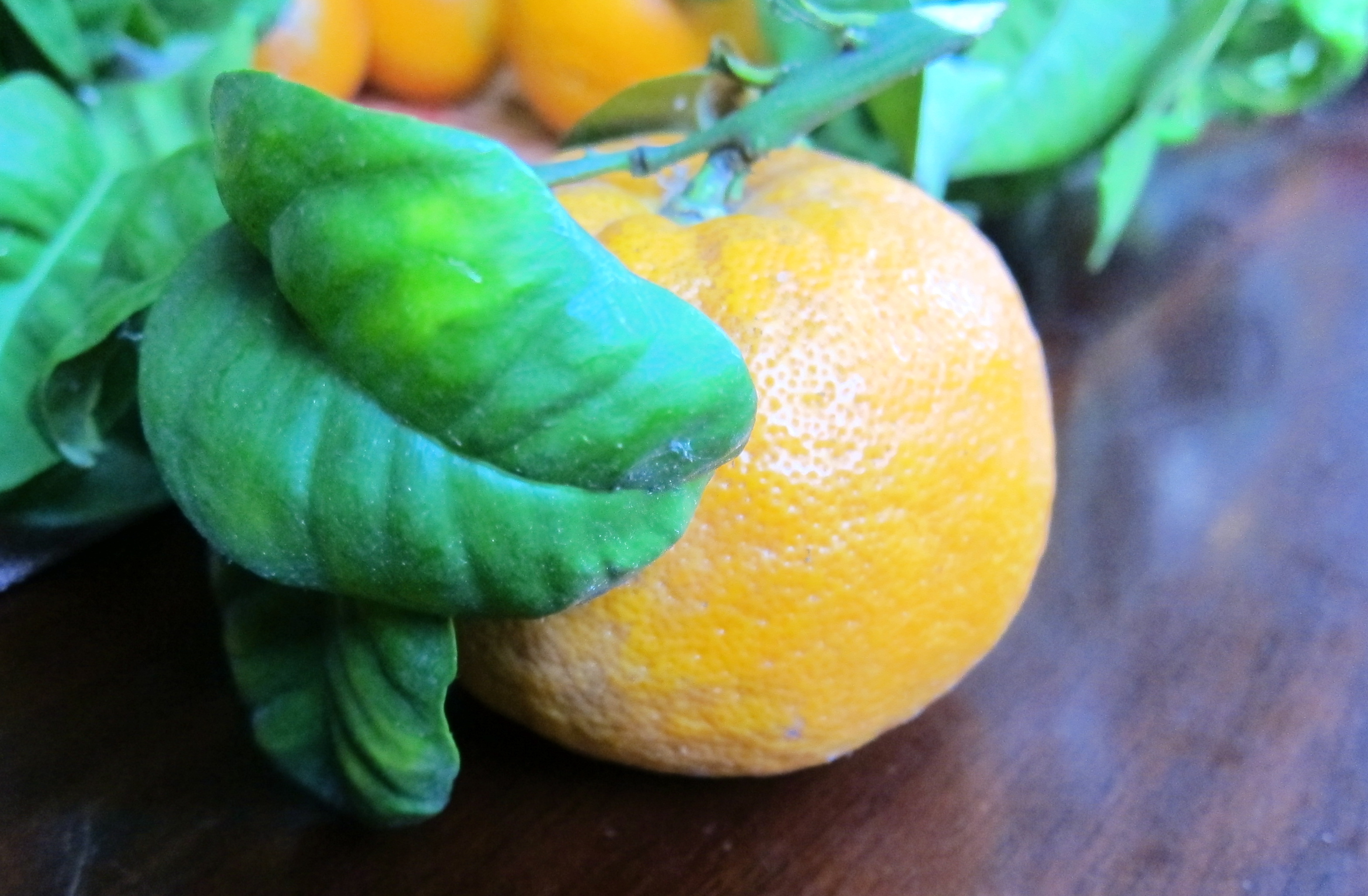
I have to include a recipe for marmalade. I came by some Chinottos here (a variety of bitter orange) and needed to put them to good use, but there are many other things you can do with them. Bitter oranges and their peel freeze well, so if you’re ever in doubt, always say yes. Their juice is a good replacement for lemon or lime, particularly to accompany rich meat, such as duck. The peel can be used for a bouquet garni which deepens and adds character to stews – pare strips of zest using a potato peeler from the fruit and hang up to dry in a warm, sunny place before adding it to a herb bundle.

The marmalade recipe below uses demerara, similar to turbinado, cassonade or Hawaiian washed sugar, which is darker and coarser than cane sugar and adds a treacly dimension. It is in no way intended to be a definitive version. Marmalade, I’ve realized, is a very personal thing and everyone has their peccadilloes – thick cut or thin, syrupy, solid, wobbly, astringent, ladled over ice cream, eaten only at night etc. In other words, marmalade is a minefield. So with that in mind, I tentatively ask you to please consider this version and we’ll hopefully leave it at that.

Bitter orange marmalade

Adapted from Pam Corbin, River Cottage Handbook No.2: Preserves

1kg (2.25lb) bitter oranges

75 ml (5 tbs) lemon juice

2kg (4.5lb) Demerara sugar

2.5 litres (4½ pints) of water

Makes 5-6 450g (1lb) jars

I followed the instructions for the bergamot and orange marmalade recipe here, with one difference: the lemon juice is added to the pan with the sugar, not before. The emphasis on weight rather than individual oranges helps keep the ratios balanced, but always taste as you go. I often add three-quarters of the warmed sugar to the juice and taste, then add some more, taking it bit by bit; only you know your sweetness threshold.

IMG_6983

Marmalade Tart

This dough is idiot-proof and takes well to being speckled with rosemary. Think of the tart as a ‘shelf’ for the marmalade and you have yourself a fine breakfast. It also makes a suave dessert, delicately poised over a lake of cream with the breath of the oven still upon it. I have a preference for thin, ‘single’ cream, which laps at the edges of the crust and swirls, ripple-like, through the sticky juice. A crisp cloud of vanilla ice cream is also not to be sniffed at.

Adapted from a David Lebovitz recipe for Easy Jam Tart

Serves 8-12

9 tbs (110g) unsalted butter, at room temperature

½ cup (100g) sugar

1 large egg & 1 large egg yolk

Small splash of almond extract

1½ cup (190g) flour

½ cup (70g) ground almonds

½ tsp sea salt

1 scant tsp baking powder

1¾ cups (450g) marmalade or jam (apricot would be lovely)

Zest of a lemon or orange

1 tsp finely chopped rosemary

Demerara sugar

Beat together the butter and sugar until well incorporated. Then mix in the egg, egg yolk, zest and almond extract. In a separate bowl, whisk together the flour, ground almonds, salt, finely chopped rosemary and baking powder. Gradually add the dry ingredients to the wet until the mixture just comes together. Take about ¾ of the dough and pat it into a disc shape, wrap it in plastic and put it in the fridge. Take the remaining dough and roll it into a log shape about 2ins (5cm) in diameter, wrap it in plastic and chill both pieces for about half an hour.

Remove the disc-shaped dough from the fridge and, using the heel of your hand, press it into the bottom and sides of an unbuttered tart pan (9-10ins/24cm). Pat until it looks evenly distributed. Now spread the marmalade over the top so that it forms a smooth plateau. Remove the log of dough from the fridge and slice into cookie-sized rounds, then lay these over the marmalade, in whatever pattern you want; try to cover as much of the preserve as possible as you go. Top with Demerara sugar (about 2 tbs) and bake for about 30 minutes, or until the pastry is golden brown. Let it cool slightly before serving.

Share this:

  • Share on X (Opens in new window) X
  • Share on Pinterest (Opens in new window) Pinterest
  • Share on Facebook (Opens in new window) Facebook
  • More
  • Share on Reddit (Opens in new window) Reddit
  • Share on LinkedIn (Opens in new window) LinkedIn
  • Share on Tumblr (Opens in new window) Tumblr
  • Print (Opens in new window) Print
  • Email a link to a friend (Opens in new window) Email
Like Loading...

Chocolate marmalade slump

27 Tuesday Mar 2012

Posted by Sophie James in Recipe

≈ 13 Comments

Tags

Baking, Cake, Chocolate, Cookbook, Cooking, Dessert, Ingredients, Lucas Hollweg, Pudding

This is a shameless steal from my cousin Lucas Hollweg’s book Good Things to Eat, a collection of quietly ravishing recipes and stories with beautiful photos of real food, made with love, and that (as we say in the West Country).

This cake has been variously called “boss” (as in “this cake is boss”) “rad” (radical) “wowser” (in the absence of a suitable adjective) and “phenomenal.” Our recent German guests thought nothing of tucking into this first thing despite Joe’s concern that, according to his understanding, “Germans don’t like sweet.” But they do and besides, this is not sugar-sweet, but rather darkly fruity, earthy and voluptuous with the marmalade adding depth and spice. Basically, it’s the Eartha Kitt of chocolate cake.

IMG_6734Our English guests had it around mid morning with a cup of tea and then kept creaming off sections until it looked like this. It is both cake and mousse, with a rich-as-a-truffle interior and a seriousness that stops it feeling too indulgent. It’s not a “naughty” cake. It’s too volcanically strong and direct for that. This is my answer to all those American cupcakes I’ve sampled over the years that are the equivalent to eating sparkly Pollyfilla. If I’m going down, I’m taking a damp, tannic wedge of chocolate marmalade slump cake with me, and you can keep your red velvet sprinkled doodahs for another day.

As for chocolate, I used Valrhona Noir Amer, which has 71% cocoa solids in it. Too far over 70% and it starts to feel dry in the mouth; you want dark silk, not chalk. Green and Black’s Organic Dark 70% and Scharffen Berger 70% Cacao Bittersweet Chocolate would be my other faves. Most recently, I used lime marmalade in the mixture and this came through well; clean, bright and sharp, it lifted the cloak of chocolate and gave it zip. The addition of bergamot and orange marmalade on another outing was lovely, too – warm and floral. I’ve also used a jar of shop-bought Seville orange marmalade and it was spankingly good, which goes to show: a good cake is a good cake regardless.

The ‘slump’ occurs right after removing it from the oven, and as well as being quite dramatic to watch, thankfully takes the cake far away from sponge territory. Lucas suggests cream as an accompaniment – I love crème fraîche here, with its clotted appearance and tang, and though sometimes its sourness can be bullying, this cake can take it.

Chocolate Marmalade Slump Cake

Lucas Hollweg, Good Things to Eat

I’m lifting this recipe ‘clean’ from the book, so ounces and grams will feature, and not cups. Apparently, professional bakers always measure by weight, not by volume (i.e. cup size), so a digital scale would probably be a wise purchase in the long run, if you’re on a serious baking jag.

 Makes a 23cm (9in) round cake

100g (3½oz) Seville orange marmalade, with lots of chunky peel

finely grated zest of 1 large orange

125g (4½oz) caster sugar

150g (5½oz) unsalted butter

150g (5½oz) good dark chocolate (60 – 70% cocoa solids), broken into bits

4 medium eggs, separated

a pinch of salt

50g (1¾oz) cocoa powder

icing sugar, for dusting

 “Preheat the oven to 190C/375F/Gas Mark 5. Line the bottom of a round, loose-bottomed 23cm (9in) tin with a circle of baking parchment, and cut a long strip about 4cm (1½in) wide to make a collar around the inside. Put the marmalade and zest in a food processor and blitz to a slush.  Add the sugar and whizz in. Put the butter into a small saucepan and melt over a gentle heat.  Remove from the hob and leave to stand for a couple of minutes, then throw in the chocolate, pushing it under so it’s just submerged. Leave to melt without stirring for about 3 minutes, then mix until smooth and glossy. Stir in the marmalade and orange zest slush and tip into a bowl.

 Beat the egg yolks vigorously into the chocolate mixture, then sift the cocoa powder over the top and beat that in as well. Put the whites in a clean metal mixing bowl with a pinch of salt and, using a scrupulously clean whisk, whip until they form soft peaks – they should flop over at the top when you lift the whisk. Beat a third of the whisked egg whites into the chocolate mixture to loosen it a little, then carefully fold in the rest, scooping the chocolatey goo from the bottom of the bowl as you go, until it’s a uniform brown.

 Pour the mixture into the lined tin, smooth the top and bake in the oven for 30 minutes, or until the centre has risen to form a set and slightly undulating plateau. Remove from the oven and leave to cool for at least 15 minutes, then carefully take it out of the tin on its base and peel the paper from around the sides (I deal with the paper on the bottom when I come to slice it). Leave to cool until just warm – about 30 minutes out of the oven – or room temperature. Just before serving, sift a bit of icing sugar over the top. Serve in slices with double cream, creme fraiche, ice cream or mascarpone.”

Share this:

  • Share on X (Opens in new window) X
  • Share on Pinterest (Opens in new window) Pinterest
  • Share on Facebook (Opens in new window) Facebook
  • More
  • Share on Reddit (Opens in new window) Reddit
  • Share on LinkedIn (Opens in new window) LinkedIn
  • Share on Tumblr (Opens in new window) Tumblr
  • Print (Opens in new window) Print
  • Email a link to a friend (Opens in new window) Email
Like Loading...

Lemon drizzly

06 Tuesday Mar 2012

Posted by Sophie James in Recipe

≈ Leave a comment

Tags

Almonds, Baking, Cake, Dessert, Food, Herbs, Ingredients, Lemons, Recipes

IMG_1525

I’m aware I might be going overdrawn on my ‘lemon’ account with this recipe, but this really is sublime. It also works equally well with limes, if you want something more piercing. In either case, the loaf cake is made doubly moist, first with the addition of ground almonds and then with the soaking it gets from the lemon/lime syrup. It keeps for ages.

I used thyme here too; it is one of those shrubby herbs you can be quite flagrant with, unlike sage or rosemary. Whenever I’ve been tentative, it looks as though a couple of green flies have fallen into the mixture and need fishing out. It should look deliberate, so be generous. Thyme adds a resinous, woodland warmth, and tempers the sweetness. It goes particularly well with lemon; both are part of the Mediterranean palate, and with some light roughing up over heat, the smell can quickly conjure up memories of scorched earth, sea air and the sigh of singed, crackling wood over flame. Needless to say, you can leave it out.

This cake is based on a Nigel Slater recipe, a food writer with the soul of a gardener in my view. I decided on the thinnest layer of lemon icing on top; it has never felt too much and it makes the cake less gooey to handle. Anyway, that’s my excuse. Candied lemons are a good standby.

IMG_1519

Lemon loaf cake

Adapted from Nigel Slater, Crumbs of Comfort, The Observer

At the risk of appearing slightly hysterical, this is the best lemon loaf cake I’ve ever eaten/made. It is simplicity itself and yet tastes quite amazing. People will think you’re professionally trained. 

For the cake:

200g butter, softened

200g caster sugar

3 large free range eggs at room temperature

80g plain flour (rice flour works well here too)

100g ground almonds

2 teaspoons of thyme leaves (optional)

Grated zest of 1 whole lemon (reserve the juice for the syrup)

Half a teaspoon of baking powder

Pinch of salt

1 loaf tin (8″ x 5″)

For the syrup:

4 tbsp sugar

Juice of 1 large lemon (see above)

For the candied lemons (optional)

3 lemons, thinly sliced

100g caster sugar

100ml water

Pre-heat the oven to 350F/175C. Butter and line the loaf tin with baking parchment. Sift the baking powder, salt and flour together. Cream the butter and sugar till they are pale and fluffy. Gradually beat in the eggs, alternating with the flour mixture to stop it curdling. Grate the lemon zest and mash it with the thyme leaves, if using, in a pestle and mortar or with the base of a jar; tearing the leaves helps release their essential oils. Or just add the lemon zest to the cake mixture, along with the ground almonds. Fold the mixture into the lined tin and bake for approximately 40 minutes or until a skewer comes out clean.

While the cake is baking, dissolve the sugar in the lemon juice over a low heat – taste as you go and add more sugar if need be. Remove from the heat and steep for 20 minutes. When the cake comes out of the oven, pierce it all over with a skewer and pour over the syrup. Allow to cool.

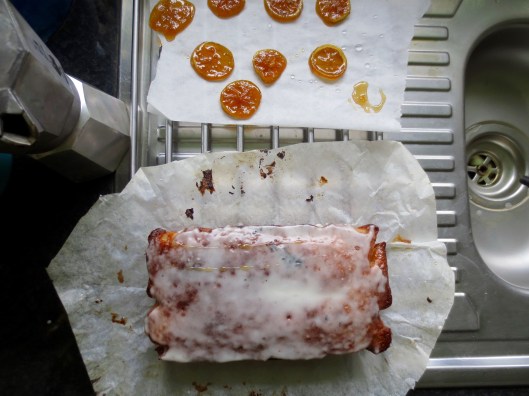
If you want to go a bit ‘Elvis’ with it, as I did, add a thin shell of lemon icing on top of the tacky-dry syrup; wet 6 heaped tablespoons of sifted icing sugar with 2 generous tablespoons of lemon juice and spread over the cake, letting it drip down the sides. Keep the cake wrapped tightly in foil for a few days to moisten if you can.

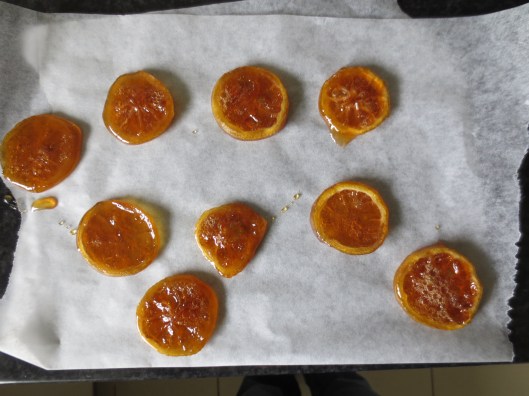
For the candied lemons, bring a pan of water to the boil and blanch the sliced lemons by putting them in the boiling water for five minutes. Drain and set aside. In another pan, bring the sugar and water to the boil, add the lemons and simmer for about 10-15 minutes, or until the white pith turns translucent. The lemon slices will go sticky and shiny. Allow them to cool on greaseproof paper. Store in an airtight container, or place on top of the cake for a pleasant finish. They’re quite chewy.

Optional extra: Add crushed cardamom from 1½ tbsp green cardamom pods (put the seeds in a pestle and mortar and crush to a coarse powder) to the butter/sugar before creaming. I think it gives the cake a slightly mystical, smoky flavour. Shout out to Good Things to Eat by (my cousin) Lucas Hollweg for this lovely addition to a lemon cake.


34.052234 -118.243685

Share this:

  • Share on X (Opens in new window) X
  • Share on Pinterest (Opens in new window) Pinterest
  • Share on Facebook (Opens in new window) Facebook
  • More
  • Share on Reddit (Opens in new window) Reddit
  • Share on LinkedIn (Opens in new window) LinkedIn
  • Share on Tumblr (Opens in new window) Tumblr
  • Print (Opens in new window) Print
  • Email a link to a friend (Opens in new window) Email
Like Loading...

Cocoa and Earl Grey Shortbread

14 Tuesday Feb 2012

Posted by Sophie James in Recipe

≈ Leave a comment

Tags

Baking, Food, Ingredients, Italy, Recipes, Stories

I know for many of us shortbread isn’t exactly a breakfast item, but one of my over-riding memories of living in Rome was seeing my landlady every morning scoffing biscotti and knocking back an espresso topped up with lukewarm tap water. Quite pragmatic really. I also think we may be in danger of taking the whole healthy eating crusade too far, and we live in LA where this is endemic. As long as you are instrumental in creating the food you will eat, you cook the food you love, you know what’s gone into it and hopefully where it’s come from, the rest is just common sense.

These have a lightness about them; I’d say ethereal but that would be going a bit far. The egg yolks and butter keep things crumbly and short rather than cakey, which I’m not a huge fan of. This is probably because I’ve never mastered the hallowed chocolate chip cookie, which takes that subtle interplay of cookie and cake to its ultimate conclusion.

Cocoa and Earl Grey Shortbread

Adapted from Cindy Mushet, The Art and Soul of Baking

Makes about 24 (if using a 6cm round cookie cutter)

12 tbs (175g) butter, softened

Scant 1/2 cup (90g) organic cane sugar

Generous pinch of sea salt

2 medium egg yolks (organic and free range)

Grated zest of a whole orange or lemon

1 heaped tbs Earl Grey tea leaves

2 heaped tbs organic cocoa powder (Green and Blacks is good)

Scant 1 1/2 cup (200g) of plain flour (plus extra for dusting)

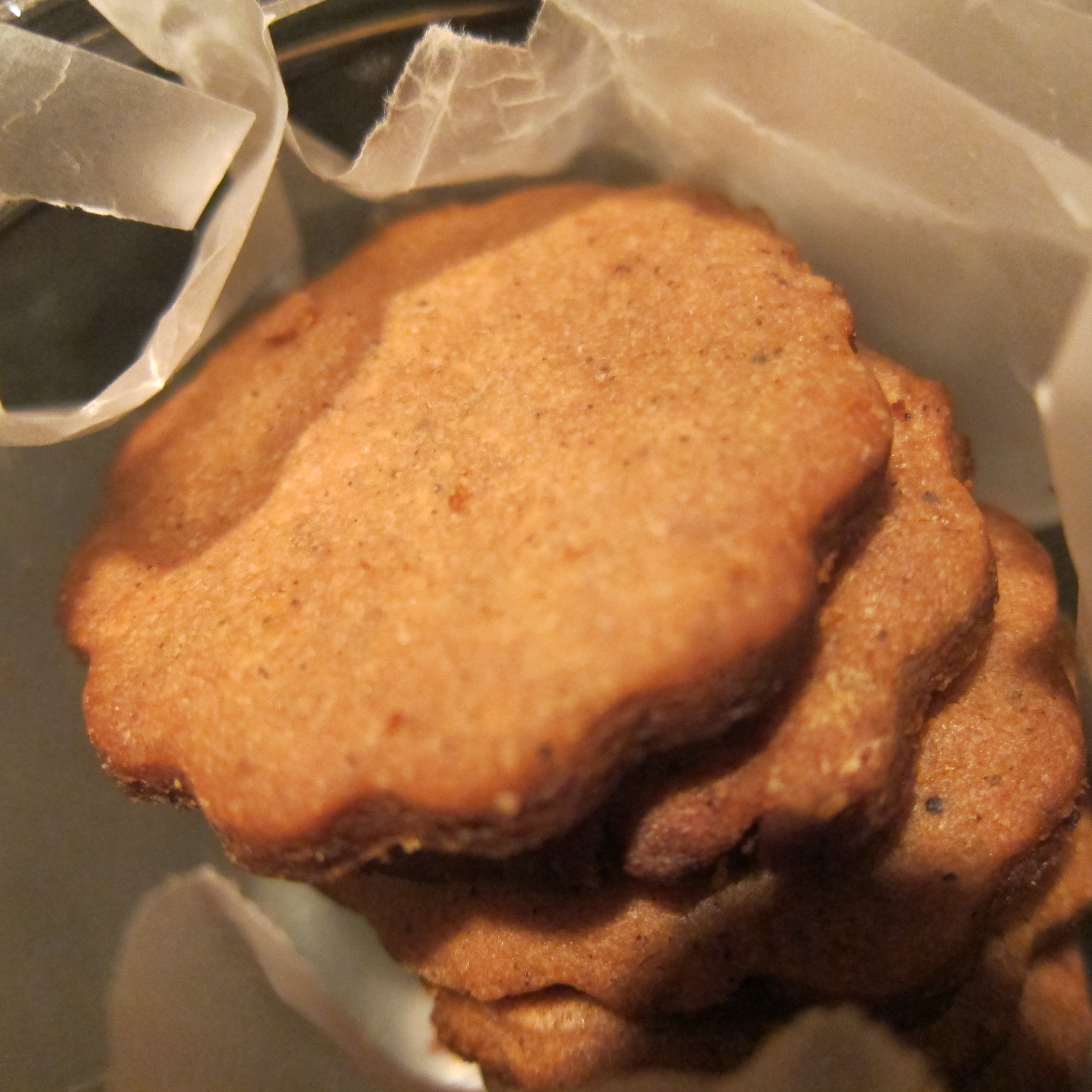
Whizz together the sugar and Earl Grey tea in a coffee grinder or spice mill until the tea leaves are very fine. Now beat this together with the butter until the mixture is light and fluffy. This can take a good 5 minutes but it’s important to get the right consistency. Add the salt, egg yolks and zest. Beat for half a minute. Sift together the flour and cocoa powder and gently fold it into the butter, sugar and egg mixture using a spatula until the mixture coheres. The dough will be very sticky. With floured hands place the dough on to a floured surface and pat into a wide, flat disc. Wrap in plastic wrap and refrigerate for half an hour.  Preheat the oven to 350F. Roll out the dough onto a floured surface to a thickness of about 3mm. You may need to refrigerate again for short while after this bit. Use a 6cm cookie cutter – or whatever shape and size you want – to cut out your shortbreads and use a palette knife to transfer them to a non-stick unlined baking sheet and bake until just firm to the touch. 8-10 minutes. Transfer to a wire rack to cool and store on parchment paper in an airtight container. They keep for about a week.

Share this:

  • Share on X (Opens in new window) X
  • Share on Pinterest (Opens in new window) Pinterest
  • Share on Facebook (Opens in new window) Facebook
  • More
  • Share on Reddit (Opens in new window) Reddit
  • Share on LinkedIn (Opens in new window) LinkedIn
  • Share on Tumblr (Opens in new window) Tumblr
  • Print (Opens in new window) Print
  • Email a link to a friend (Opens in new window) Email
Like Loading...

stp, before 10am

13 Monday Feb 2012

Posted by Sophie James in Recipe

≈ Leave a comment

Tags

Baking, Breakfast, Dessert, Food, Fruit, Ingredients, Recipes

image

Plump, soft dates lend themselves to warm puddings and, yes, I have served this at breakfast time and got away with it. Given its name, sticky toffee pudding has none of the leaden qualities you would expect, and is actually well suited to the breakfast table; rich but not heavy, and rather muffin-like in texture.

I started off trying to perfect a sticky toffee pudding recipe using Jane Grigson in English Food as my source; Francis Coulson apparently invented it in 1948 at his country house hotel at Sharrow Bay on Ullswater, and it’s been fairly unmessed with ever since. Dates, softened with boiling water and bicarb, are added to a basic cake mixture which is then baked and served slathered in piping hot, toffee sauce.

I couldn’t perfect it; it is already exactly as it should be. All I did was add the juice and zest of an orange because it counteracts the rich effect of the dates and gives it a nice early morning brio. Blood oranges are in season, and their tartness is a good foil for the sweetness, but use whatever is available. Raisins also help keep the cake moist, adding pop and juice.

IMG_0884

I  gave the finished cake a light dousing with the toffee sauce and grilled it as the toasted stickiness reminded me it was intrinsically pudding and messy that way. To be eaten with vanilla ice cream I should think, or yoghurt if before 10am.

Sticky Toffee Pudding

Lightly adapted from Jane Grigson, English Food

I’m not entirely convinced that you need to liquefy the dates with water and bicarb. Or at least I’m not entirely convinced about the bicarb, which if you can taste it even minutely, is revolting and tinny on the tongue. Other recipes advise simply chopping the dates very finely, which I’ve tried and also like. You could perhaps try both. Here I’ve stuck to the original for ease and because it’s still delicious (though have reduced the amount of bicarb).

175g dates, stoned and chopped

1/2 teaspoon bicarbonate of soda

175g caster sugar

60g unsalted butter, softened

2 free range eggs (at room temperature)

175g self-raising flour, sifted

pinch of sea salt

Finely grated zest and juice of 1 blood (or normal) orange

Large handful of raisins (optional)

For the toffee sauce:

140g unsalted butter

200g light muscovado sugar

6 generous tablespoons of double/heavy cream

Pinch of sea salt

Zest of 1 orange

Pre-heat the oven to 180C/350F. Butter a square cake tin approximately 24cm x 24cm.

Make the sauce by putting all the ingredients into a pan. Heat slowly until the butter has melted, then turn up the heat and bring to the boil. Simmer for 3 minutes. Add more salt if you like it salty, as is the current style.

Put the dates and raisins in a saucepan, add 250ml of boiling water and bring to the boil. Remove from the stove, stir in the bicarb and leave to stand.

Beat together the butter and sugar until fluffy, and then gradually beat in the eggs. Fold the flour and salt gently into the batter and add the orange zest. Once the dates and raisins have soaked up all the water, add this to the cake mixture along with about 3 tablespoons of juice from the orange, or a hearty squeeze. Don’t over-mix.

Pour into the cake tin and bake for about 30-35 minutes or until a skewer comes out clean.  Then puncture holes over the top of the cake and pour over half the toffee sauce. Heat the grill to medium, and put the pudding briefly underneath, keeping an eye on it as it can easily burn. Serve with the remaining toffee sauce, along with a dollop of ice cream for dessert (fresh ginger ice cream works beautifully), or as is at any other time.

If you want to store this cake before eating, leave it toffee-free and keep the sauce in the fridge. Then, when it’s close to serving time, poke the cake all over and douse with the sauce, cover the cake in foil, gently re-warm in the oven at 150C/300F for about 20 minutes. Finish off with a blast from the grill.

IMG_0897


Share this:

  • Share on X (Opens in new window) X
  • Share on Pinterest (Opens in new window) Pinterest
  • Share on Facebook (Opens in new window) Facebook
  • More
  • Share on Reddit (Opens in new window) Reddit
  • Share on LinkedIn (Opens in new window) LinkedIn
  • Share on Tumblr (Opens in new window) Tumblr
  • Print (Opens in new window) Print
  • Email a link to a friend (Opens in new window) Email
Like Loading...
Newer posts →

Enter your email address to follow this blog and receive notifications of new posts by email.

Join 2,216 other subscribers

Top Posts & Pages

Early Nigel
Plums and Pluots
Recipe List
Power of two
Frilly
Pause

Recent Posts

  • At my allotment
  • A compendium of sorts
  • Mulberries
  • We are nature
  • Leaving home
  • A treacherous herb
  • Just stop it
  • Why I swim

Great books I’ve read

Blogs/Websites I read

  • Letitia Clark
  • Nigel Slater
  • Room to heal
  • Samantha Harvey
  • Stewart Lee
  • The Kureishi Chronicles
  • The Marginalian
  • Tom Cox
Follow Stories from the Stove on WordPress.com

Archives

  • June 2023
  • February 2023
  • September 2022
  • August 2022
  • July 2022
  • May 2022
  • February 2022
  • December 2021
  • August 2021
  • April 2021
  • March 2021
  • January 2021
  • June 2020
  • November 2018
  • August 2017
  • July 2017
  • May 2017
  • April 2017
  • February 2017
  • January 2017
  • November 2016
  • May 2016
  • October 2015
  • July 2015
  • June 2015
  • April 2015
  • March 2015
  • January 2015
  • December 2014
  • November 2014
  • October 2014
  • September 2014
  • August 2014
  • July 2014
  • June 2014
  • May 2014
  • April 2014
  • March 2014
  • February 2014
  • January 2014
  • December 2013
  • November 2013
  • October 2013
  • September 2013
  • August 2013
  • July 2013
  • June 2013
  • May 2013
  • April 2013
  • March 2013
  • February 2013
  • January 2013
  • December 2012
  • November 2012
  • October 2012
  • September 2012
  • August 2012
  • July 2012
  • June 2012
  • May 2012
  • April 2012
  • March 2012
  • February 2012
"A WOW piece!" Claudia Roden on Walnut Bread

Walnut bread

Lucas’s chocolate marmalade slump

Tags

Afternoon tea Allotment Almonds Art Autumn Baking Bread Breakfast Cafes Cake Childhood Chocolate Christmas Citrus Claudia Roden Cookbook Cooking Dessert Devon Dinner Elizabeth David England Exmoor Fish Food France Fruit Gardening Gelato Gluten-free Herbs Home Homesickness Honey Ice cream Ices Ingredients Italy Jam Jane Grigson Lemons London Los Angeles Lucas Hollweg Marmalade Meat Mediterranean Meyer lemons Nature Nigel Slater Nonfiction Nuts Onions Patience Gray Poetry Pudding Reading Recipe Recipes Salad Sea Seasons Soup Spain Spices Spring Stone fruit Stories Summer Sussex Travel Vegetables Winter Writing Yoghurt

A WordPress.com Website.

Privacy & Cookies: This site uses cookies. By continuing to use this website, you agree to their use.
To find out more, including how to control cookies, see here: Cookie Policy
  • Subscribe Subscribed
    • Stories from the Stove
    • Join 2,084 other subscribers
    • Already have a WordPress.com account? Log in now.
    • Stories from the Stove
    • Subscribe Subscribed
    • Sign up
    • Log in
    • Report this content
    • View site in Reader
    • Manage subscriptions
    • Collapse this bar
 

Loading Comments...
 

    %d