• Recipe List
  • Sophie

Stories from the Stove

Stories from the Stove

Tag Archives: Fruit

Mulberries

30 Friday Sep 2022

Posted by Sophie James in Uncategorized

≈ 7 Comments

Tags

Autumn, Childhood, Divorce, Fruit, London, Stories

IMG_0639

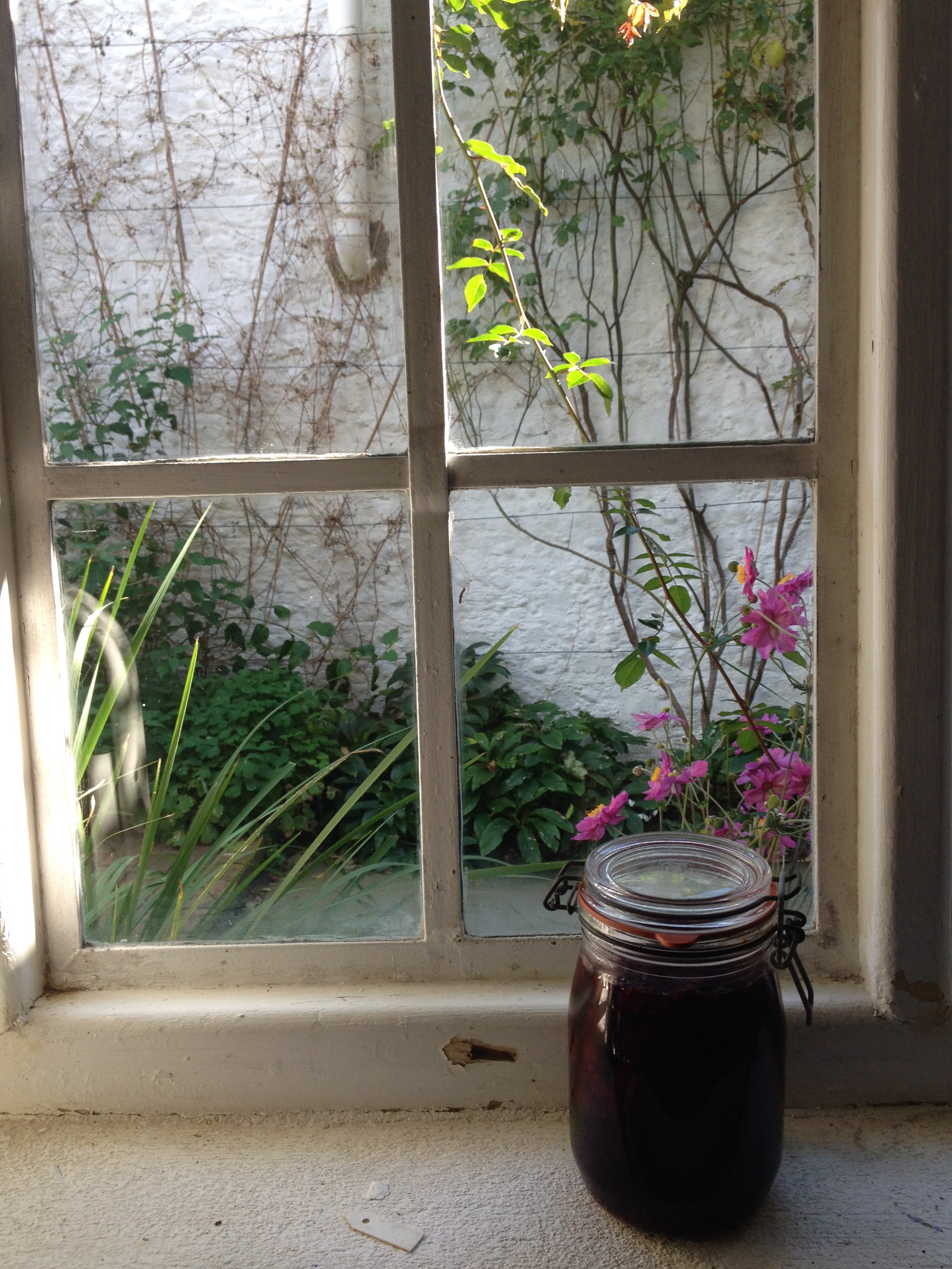
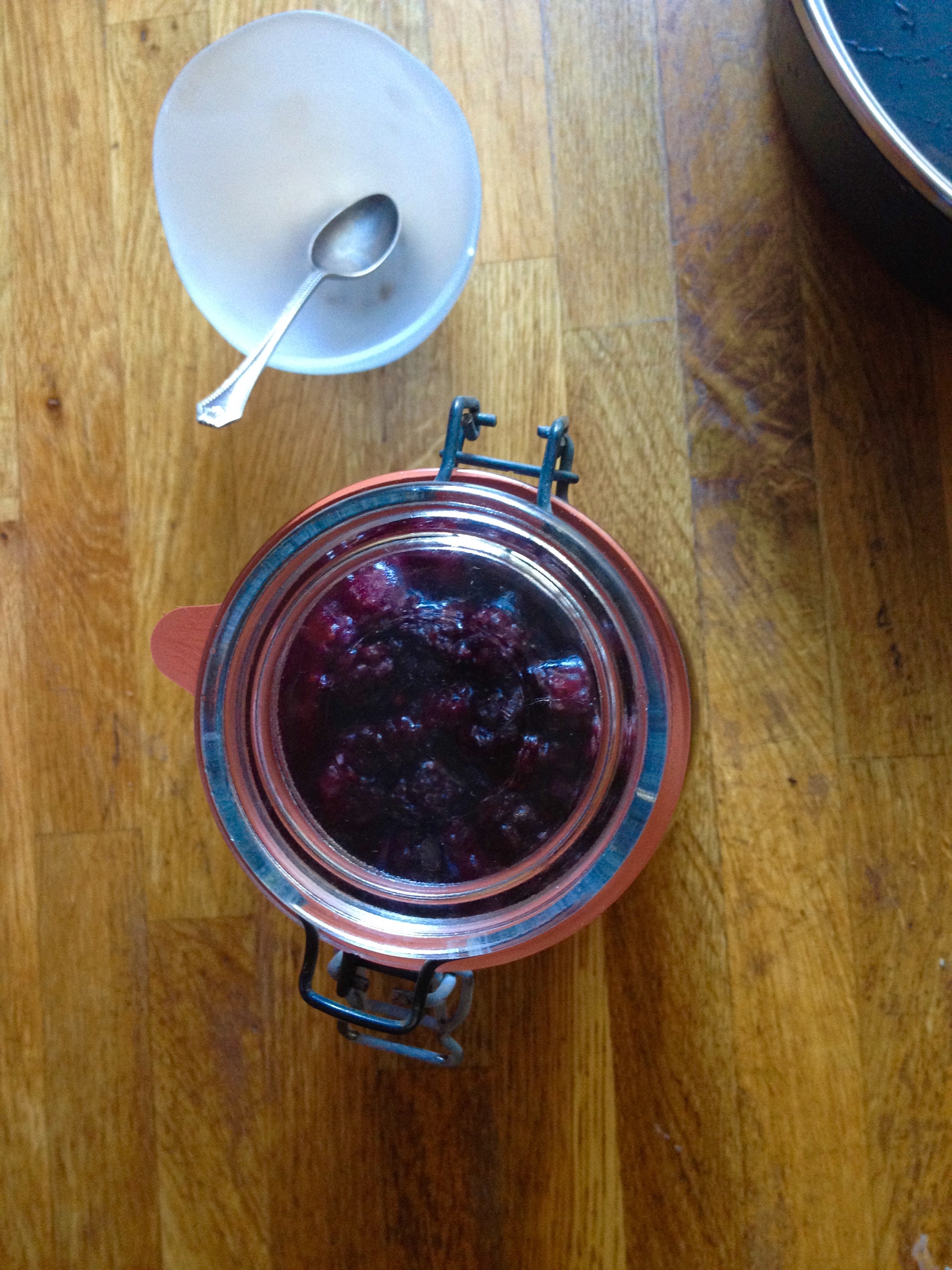
It was late summer, and this was a jar of mulberries we couldn’t open, in an old house that once stood in front of the River Ouse in Seaford. The house was loaned to us for reasons of my mum’s 80th birthday party. In the garden was a spectacularly craggy mulberry tree that had to be held up under the arms – like an elderly person over potentially hazardous terrain. Huge sagging branches, mammoth trunk and mulberries now long gone, potted up in syrup in a jar with suction so intense it resisted every implement we could put to it. So I put it back in the cupboard along with jars of homemade jam. The cupboard made me envious – summer all potted, preserved, labelled, suctioned closed. No entry.

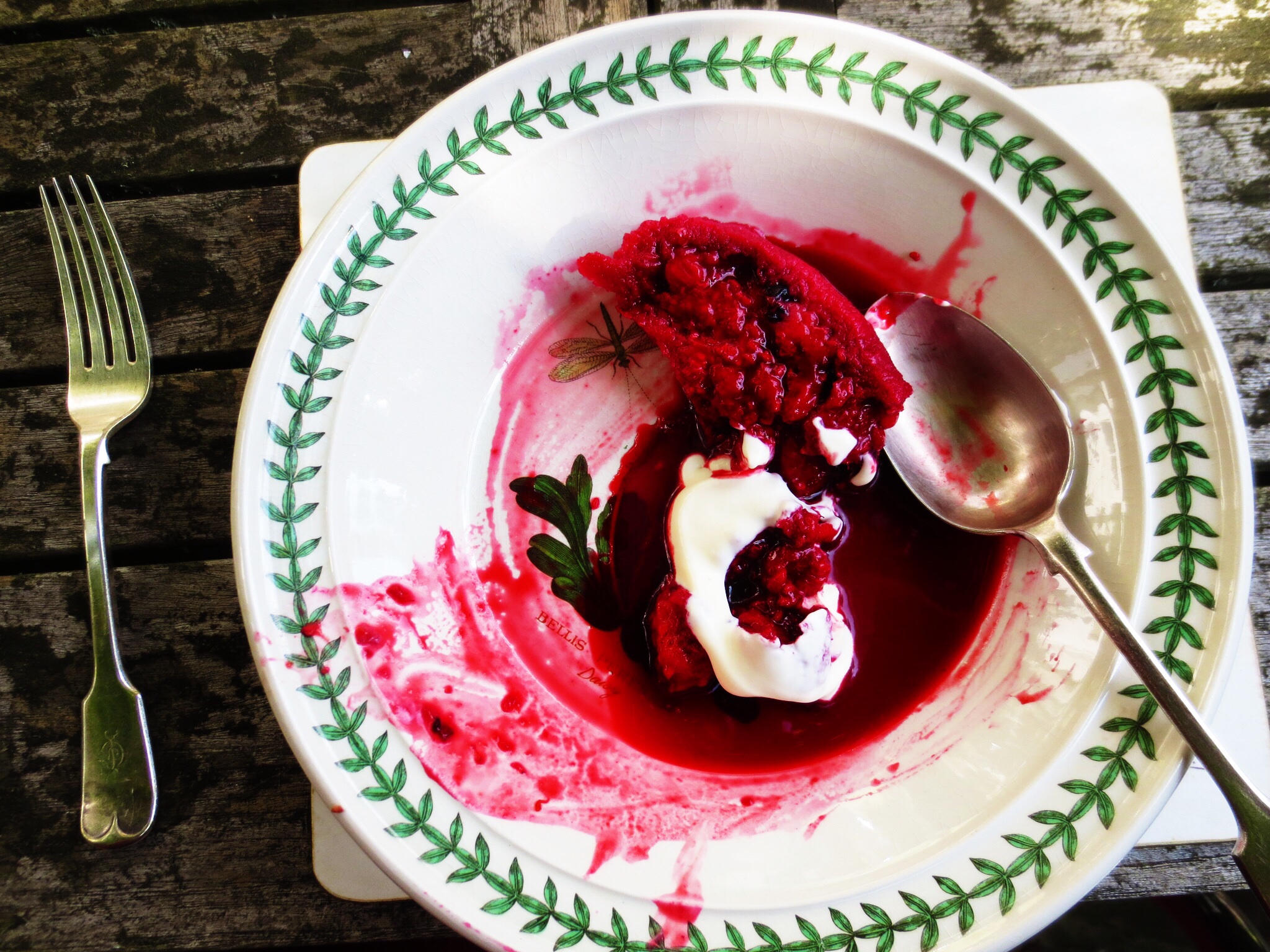
Because I was once in another house as a child, equally but differently imposing, where there was a mulberry tree, I know that there is nothing like them. There is nothing else out there that can touch a bowl of bleeding mulberries – my small hands covered in scarlet juice. Red jelly (probably strawberry) with mulberries suspended magically. And white ice cream (yes it was white). There was a partially blind poodle who we expected tricks from, which looking back was unkind, except I was about six and didn’t know any better. Round and round she’d pirouette for me, her dull white head of curls and milky eyes following my dancing hand as I conducted her and wore her out.
IMG_0650

The poodle lived in a posh flat along with a family of four in Chelsea – Elm Park Gardens – with a communal garden out the back. Black railings kept out the riff raff. I was sent there to live with them while my parents – back in Devon – ‘finalised’ their divorce. I remember not understanding this; why was this necessary? I went to school locally – Bousfield Primary, still there with a Beatrix Potter blue plaque – and endured the weekly humiliation of doing PE in my vest and pants. I spent a considerable amount of time truanting in the toilet.

Nothing was as it should be: the mother of the family, Christina, wore high-heeled slippers with feathers that tickled your toes, bit her nails to the quick, had fierce black hair and a decisive temper and smoked properly. Not like my mother who smoked socially, with wine or in distress. Christina was a rampaging smoker and a hitter.

As if to herald my new urban status I was fitted with a grey coat and velvet collar and each morning had Oil of Ulay cream – pink and obscenely perfumed – slathered on my face, which gave me scales like an alligator. Christina was married to a man called Frank Weir, who was a clarinettist and a band leader. I adored him and threw myself into his arms whenever he walked through the door and folded myself into the gap he made for me in his armchair when he’d settled down to watch television. They had two daughters and it was the younger of the two who sat with me under the mulberry tree where we played with dolls. Just to say, Christina died young, and Frank followed a year or two later, and the two girls were sent to live with an aunt up in Worcester.

I’m not sure still what I feel about being sent away like this, except I remember my first bodily awareness of what it means to be homesick. The silence of the top bunk. What else…Christina’s nubby fingers holding the mulberries, the deep scarlet and the perfumed sweetness of them and the soft suck of the jelly prised from the bowl.

IMG_0646

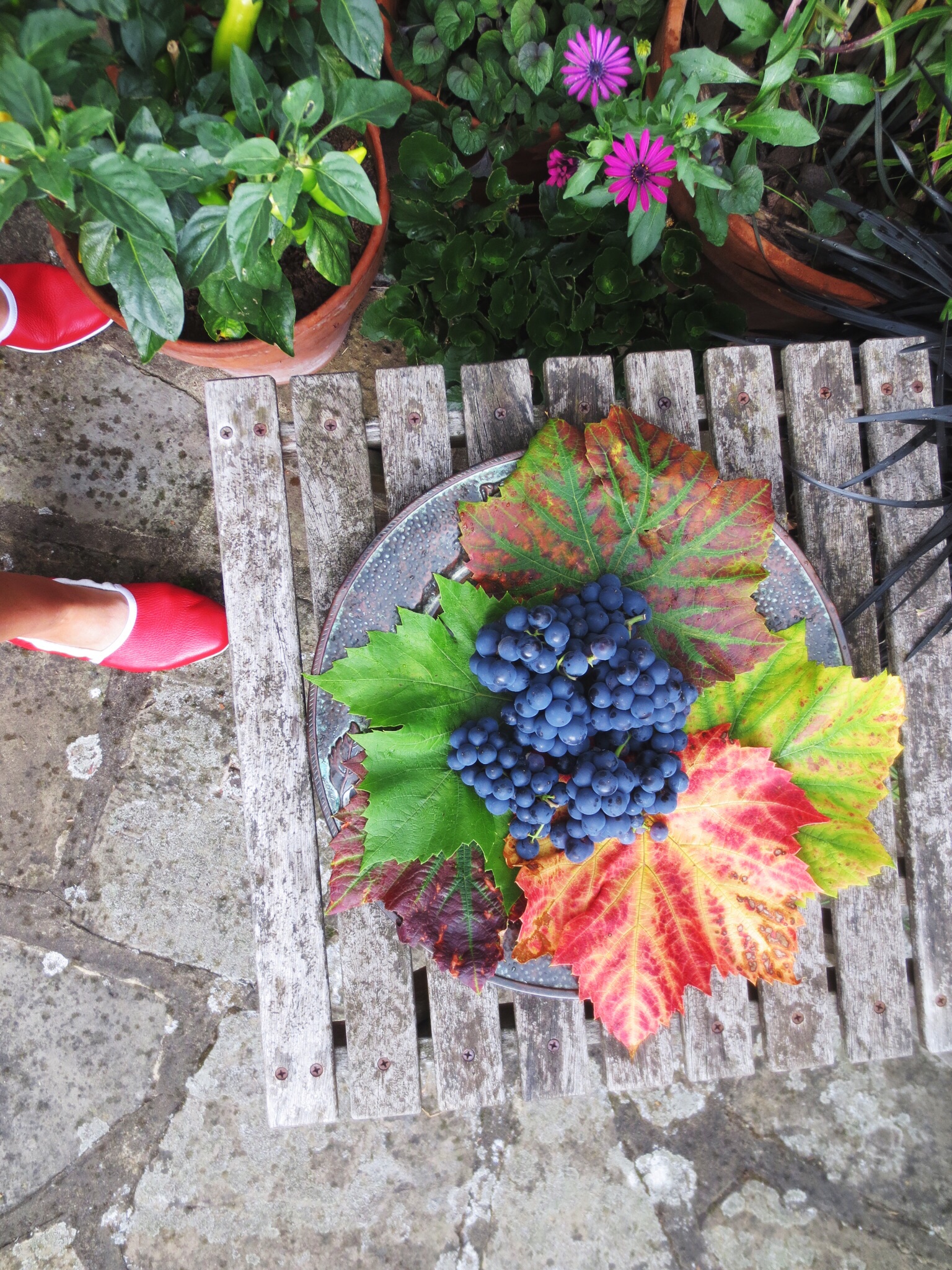
Mulberries, just so you know, come around late summer, early autumn and there is no point seeing if you can buy them, please don’t go to a bearded grocer in Hoxton. They must be pilfered. It might be a bit of a wait, or you can buy a small mulberry tree from a nursery now and grow your own. I have one planted in my allotment and I’ve had my first small rash of berries this year. Elizabeth David put mulberries in her summer pudding: cook them lightly with sugar until the juices flow and use good bread. But Jane Grigson believes – in her fruit book – that the best way to eat mulberries is with cream, completely unadorned. Her compote sounds nice, though. And if you can get hold of a branch of someone else’s tree, stick it in the ground, it will grow. 

A bowl of mulberries

Share this:

  • Share on X (Opens in new window) X
  • Share on Pinterest (Opens in new window) Pinterest
  • Share on Facebook (Opens in new window) Facebook
  • More
  • Share on Reddit (Opens in new window) Reddit
  • Share on LinkedIn (Opens in new window) LinkedIn
  • Share on Tumblr (Opens in new window) Tumblr
  • Print (Opens in new window) Print
  • Email a link to a friend (Opens in new window) Email
Like Loading...

Semi-derelict

17 Tuesday Aug 2021

Posted by Sophie James in Garden, Travel, Uncategorized

≈ 7 Comments

Tags

France, Fruit, Gardens, Nigel Slater, Patience Gray, Pre-Pandemic holidays, Recipes, Stories

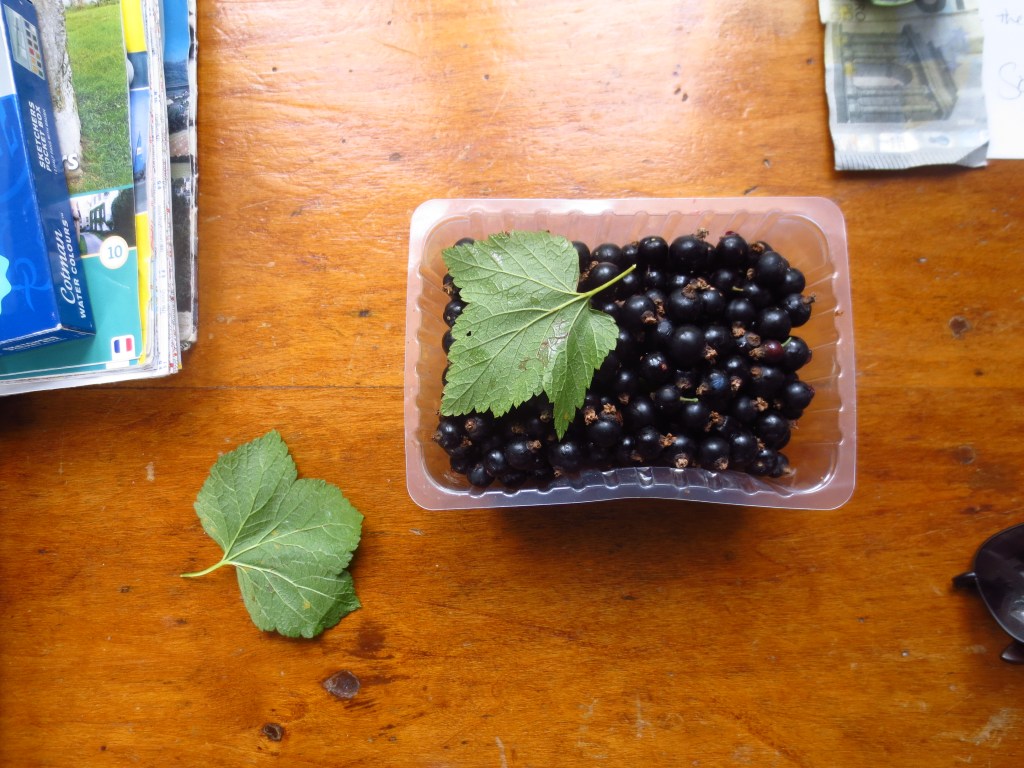
She stood on the doorstep with a carton of blackcurrants, the top decorated with the pungent leaves. English but so long in France that she was a bit like Jane Birkin; she had a way of speaking English that sounded translated. She was an illustrator and had bought the house semi-derelict with her French husband and turned this annexe into a one up one down house for paying guests. I found it hard to warm to her, but I recognise it now as jealousy. The garden was ramshackle but loved and beautiful to me for that reason, with ducks and their ducklings skittering about, while various cats lounged on the vegetable beds. He – the husband – was a fanatical gardener and barely spoke. As if it was all too much, or he’d gone feral here, with the woodland at the bottom of the garden and the stream, and the birds he was protecting. Don’t go near that tree, he said, because they’re nesting. He was French and so his insouciance was more acceptable, don’t ask me why. They were both not exactly host material.

Over the years, I have listened to/read the same story told through various lenses, but the words are the same; rambling, derelict, remote, dusty plain, our hideaway, our tumble-down cottage, our house (well, one of our houses), we couldn’t find the front door for the brambles, didn’t even know there was a swimming pool, it wasn’t on the spec, rotting floorboards.

Often they wonder if it is worth it, because of the upkeep. And travel more difficult now. We are so lucky, they always say. And I think, yes you are. To be in France or elsewhere in the seventies or eighties when property was cheap, and you had a few extra bob. Then you held on to it, improved it, gradually the area became more sought after. These accretions are often slow and subtle.

The pioneer spirit looks different now, more calculated, and documented up the wazoo. I wonder if we could ever return to the relative innocence of Patience Gray in Honey from a Weed (‘I was able to light a fire, start the pot with its contents cooking, plunge into the sea at mid-day and by the time I had swum across the bay and back, lunch was ready and the fire a heap of ashes’.) or Elizabeth David brushing the fish with branches of rosemary dipped in olive oil. My own mother bought a three storey house in southern Spain for £2,000, now long gone. All the walls sloped, and swallows nested in the rafters. We had no glass in the windows only shutters. We would get lifts to places in the back of the post mistress’s van or occasionally the back of a tractor. What I remember was how unrelaxing it was. Hard work. We were dusty, tired, often bored, but our skin shone from the olive oil, sunshine and mountain air. Also: the coffee, the tomatoes, the smell of the bakery with its tough brown loaves. The way bits of wall came off on your clothes.

I suppose my mum’s place too was semi-derelict, or as one guest called it – in the days when strangers responded to an ad in Loot and were sent the keys – ‘your hovel’.


The punnet of blackcurrants are swiftly deployed. And I am left with the tale – that they zoned in on this area of unflashy northern France, their demands were few; a bus stop so their daughter could get to school on her own, relative ease of access to a town, a garden to grow vegetables. Then they got to work, quietly and slowly until they built a life.

The blackcurrants are washed and not dealt with in any way, the ‘beard’ still intact. Then they are gently heated on the hob, with the tiniest splash of water along with the sugar. They are cooked when the skins split, and then you eat them like that with ice cream, yoghurt etc. Or once cooked you can push them through a sieve to get a purée. They still retain their tartness, despite sugar, and always arrive in the same way; offered in an old ice cream carton, from a muddy hand, or a repurposed punnet. Some currants will still be attached to the stalks, leaves will be amongst them, the colour reminiscent of beetles. Or ink. Or soot. They are not glossy. I tend to eat them raw as I work my way round the allotment.


Blackcurrant compote (to add to meringue and cream or rice pudding or ice cream). Adapted from Nigel Slater, Tender Volume 2.

300g blackcurrants, 3 tbs caster sugar (or to taste), a shake of water (2 tbs)

Wash blackcurrants, pull from their stalks if necessary, put them in a stainless steel saucepan, with the sugar, water and bring gently to boil. As soon as they start to burst and the juice turns purple, remove from heat and set aside. Leave to cool, then chill.

Share this:

  • Share on X (Opens in new window) X
  • Share on Pinterest (Opens in new window) Pinterest
  • Share on Facebook (Opens in new window) Facebook
  • More
  • Share on Reddit (Opens in new window) Reddit
  • Share on LinkedIn (Opens in new window) LinkedIn
  • Share on Tumblr (Opens in new window) Tumblr
  • Print (Opens in new window) Print
  • Email a link to a friend (Opens in new window) Email
Like Loading...

Small green plums

10 Thursday Aug 2017

Posted by Sophie James in Recipe, Uncategorized

≈ 9 Comments

Tags

Allotment, Food, Fruit, Italy, Poetry, Stories

IMG_2729

‘Surprise/after so long/of a love/I thought I had scattered it about the world’

This beautiful string of words is by an Italian poet called Giuseppe Ungaretti. This is one of his easier ones. We used to say it in the manner of Cilla Black: Surprise! It sounds just as good in her Liverpool trill, in fact. But funnier and less sincere. This was back in the day when we were at university and revising for our end of year exams and anything to get us through it helped. Small tables in the corners of rooms, a lot of smoking, endless tea, the sound of the put-upon mum next door playing nicely with her children in the garden. My friend Angela would wait for a sigh, followed by the sound of a paperback being closed (she had bionic hearing) before making her entrance with a cup of tea.

Apparently I was a bit of a diva about being disturbed back then, my train of thought snagged by an interruption. It all mattered so much; having to re-sit as I did, because I’d failed a paper the first time round, meant I spent the whole summer revising. But now I still have those poems etched in my memory which I am thankful for, as well as having a free higher education and a huge wealth of actual experiences that did not involve the world wide web.

I remember cheque-books (in the off licence: Who do I make it payable to? Cashier: It’s all right we’ve got a stamp. Me: (writing on the cheque) It’s Alright We’ve Got a Stamp LTD), mix-tapes, actual love letters, long afternoons spent dressing up, sitting up all night talking and walking home at dawn, cream teas. Watching as people were brought over on a plane to see relatives they’d given up for dead forty years earlier on Cilla Black’s Surprise! Surprise!

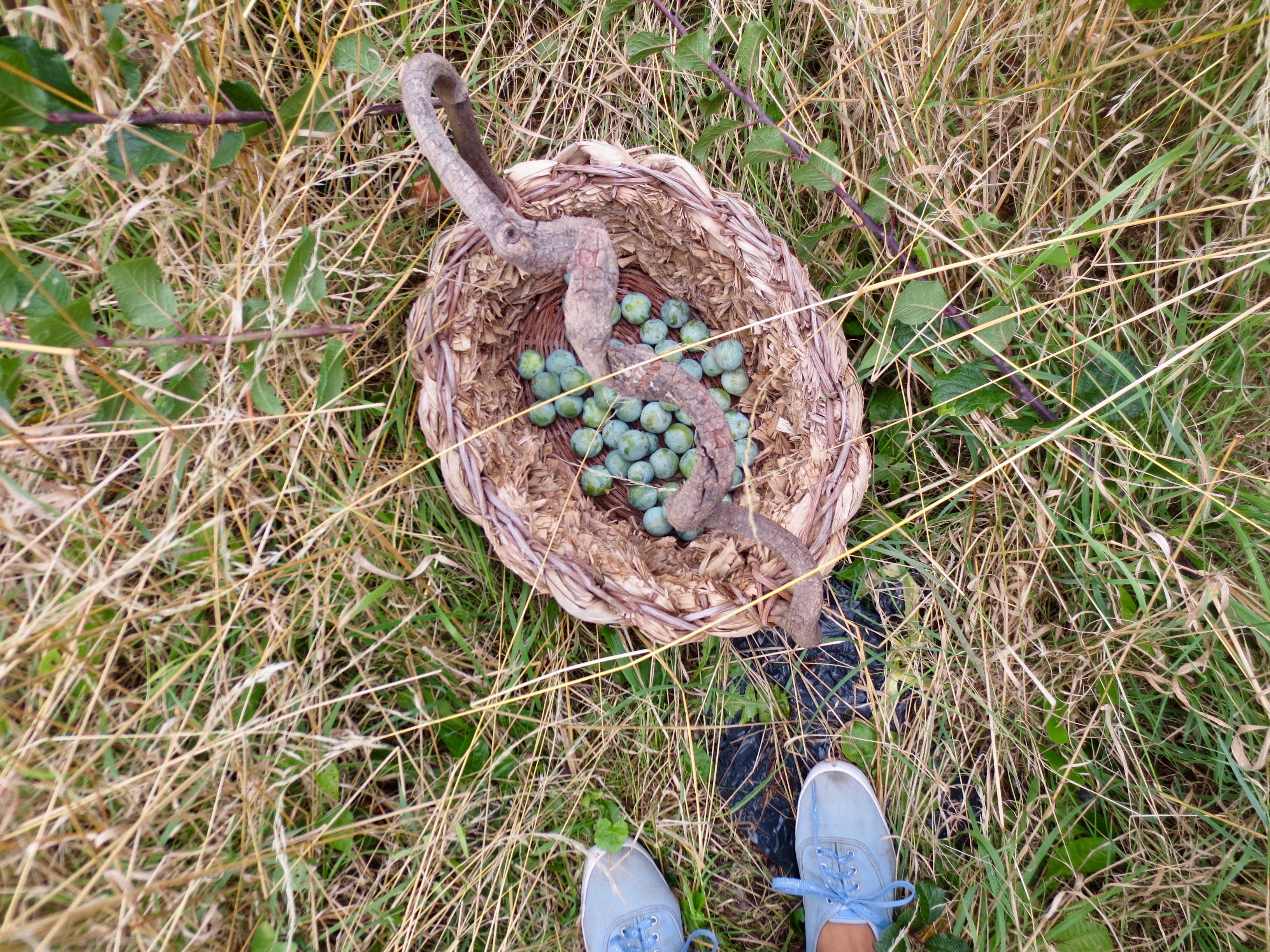
The poem above has meant different things to me at different times in my life. At the time, at 20, it meant: I am an intellectual and I write in pencil in the margins of books I can only buy in Grant & Cutler. Now I understand it to mean, what matters is here. It’s been here all along. Or, it’s behind you, in the case of these plums. After three growing seasons, I have taken on a fallow plot behind me, which has been producing little green plums, Victoria plums, pears, apples, damsons and rhubarb that no one has thought to or been allowed to help themselves to. I’m sure I could have and no one would have been any the wiser. To think these plums have been dropping silently into the long grass all this time to be eaten by wasps and foxes. Which is possibly why our resident fox has such loose bowels.

fullsizeoutput_fc2

We don’t know what they are, a gage of some sort, but they are ripe, small and soft and full of the green juice. Avoid the ones with the caterpillars in; they feed inside ripening fruits and then mid-bite you look down and see a dark brown residue – caterpillar frass (poo). This is often accompanied by a tiny maggoty thing that rears up to meet you, with a massive smile on its face. Surprise!

I met up with Angela recently and we talked about those times – my tendency to fall down stairs, our shrine to Victoria Wood, our innocence and excitement at everything. How we fell in love platonically and how no one ever talks about that. And how we used to talk relentlessly in brackets: Hello Emma (yes, you can come in but your calves have to stay outside). Our love for Joan Hickson and Charles Hawtrey and the complete works of Marvin Gaye.

And here is the poem in Italian, which I will endeavour to remember without resorting to my book:

           ‘Sorpresa/dopo tanto/d’un amore/credevo di averlo sparpagliato/per il mondo’

IMG_2752

I stewed the plums: cover the base of a heavy pan with a film of water, add the (preferably stoned) plums and a little sugar/honey/maple syrup/nothing. I sprinkled on some ground ginger and star anise. Simmer until the plums collapse, about fifteen to twenty minutes. Put lid on and leave until morning and eat with yoghurt. Or pot up and refrigerate. Also lovely sieved and made into a purée.

Share this:

  • Share on X (Opens in new window) X
  • Share on Pinterest (Opens in new window) Pinterest
  • Share on Facebook (Opens in new window) Facebook
  • More
  • Share on Reddit (Opens in new window) Reddit
  • Share on LinkedIn (Opens in new window) LinkedIn
  • Share on Tumblr (Opens in new window) Tumblr
  • Print (Opens in new window) Print
  • Email a link to a friend (Opens in new window) Email
Like Loading...

One year on

27 Monday Jul 2015

Posted by Sophie James in Not food

≈ 28 Comments

Tags

Food, Fruit, Nonfiction, Stories, Sussex

IMG_8200

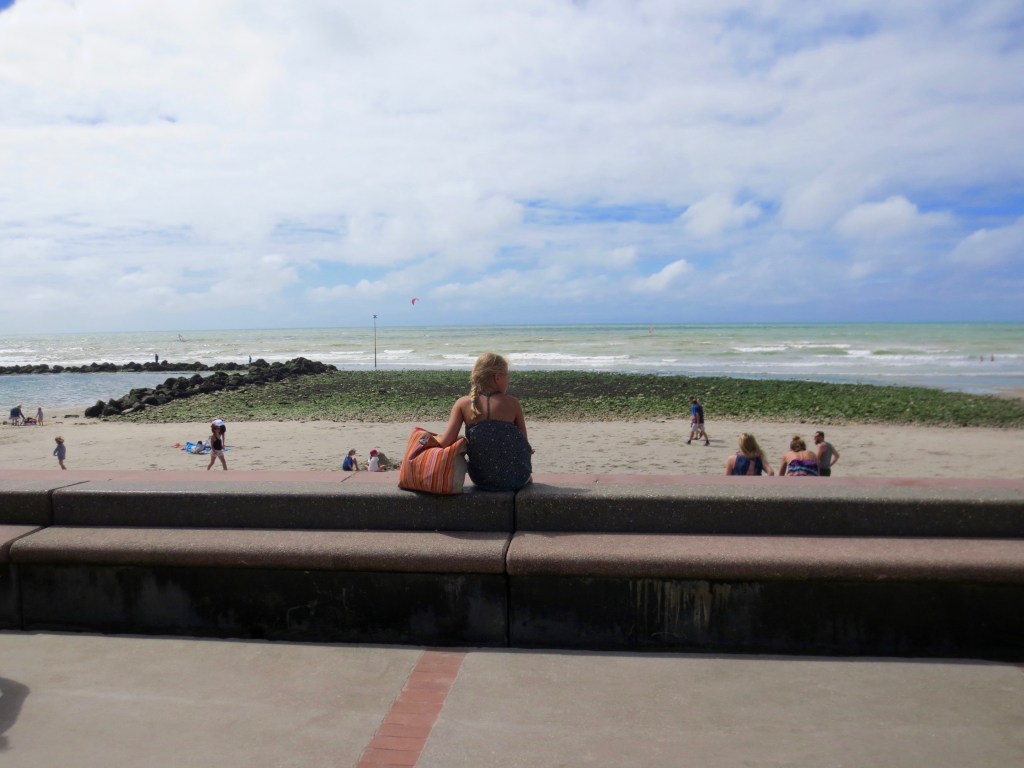
I started with soft fruits. My first blog post back in the UK was on red gooseberries. Lovely in their brown paper bag from the greengrocer in Seaford (in East Sussex), the man with the curly hair and always a kind word. He is also the butcher. Joe approached him as he was carrying a palette of unskinned rabbits. Are they wild? He asked. ‘Wild?’ he replied. ‘They were furious’. He sold me the red gooseberries and invited me to live in Seaford; ‘seeing as you’re here all the time’. The sea is a big draw. And the wildness all around. It’s hard to know where to start.

There’s the ferry, yellow and bulky like a child’s drawing, on its interminable route to Dieppe. Hard to believe it ever gets there. There’s the sun, the sound of the sea crashing and drawing back in the night, the fishermen’s lights illuminating the black waves. The gulls and their grey babies. Clutches of apples already visible from the train. Bramleys, but still.

People have died. People die! I still find this hard to grasp. Every time I walk past Elm Villas and get a snatch of yellow wall I remember great friends who lived there and who are now both scattered over the cliff tops that just recently were covered in pink thrift. It was the house where I learnt about Jane Grigson and how pudding could be two tubs of ice cream from the Co-op and a cup of mint tea. Now the house belongs to someone else and already the furniture strikes me as ill-advised. Their magic has gone. And their magnificent kitchen table and all their books. But mostly it’s them that I miss.

I don’t actually live here. This is my mum’s place, but it’s where I come when I need it. It’s where lots of serendipitous things have happened. The place is full of rememberers – people remember Dirk Bogarde when he lived here, they remember Winston Churchill’s school days. They know – and I do too – where Grayson Perry lives. There are a lot of closet bohemians, because we are after all within thrashing distance of London. And yet, I think you couldn’t be further away. Particularly when you hear someone pronouncing it Sea-ford. I like the cafes – there are five good ones, all worth going to.

IMG_8245

What I have learned, one year on, is that July is curiously the end. Now that I am a gardener in the most rudimentary way I know that this bit of summer is when the inevitable decline into Autumn begins. Things are yellowing now, they bolt and go to seed the minute your back is turned. It is the season of collecting what you’ve grown (and eating other people’s apples) and watering what is still to be harvested – in my case, a profusion of beans and squash. There are apricots from English trees which you must eat immediately, or face comparisons with blissful ones from the Med or California.

One year on: I held a two day old baby, my arms numb from the sheer surprising weight of her, so I laid her on the bed and stared at her twitching mouth. In the corner of the window, in a different house in Seaford, higher up the town, was the sea. The mother, my friend, was the original recipient of that goosegog pudding. Red gooseberries that made their way underneath a terrifyingly ethereal mass of Genoese sponge.

But it all worked out in the end. She’d been born in the corner of the room and, like the party with the pudding and the wild dancing, the place was now, still, full of people, children running in and out, sudden decisions to go to the beach. I was at some point mistaken for the midwife. When the real midwife arrived, I went for the train that took me back to Clapham Junction, not wanting to lose the newborn scent (honey and yeast) and the sight of her perfect Cupid’s bow mouth. So anyway, one year on, see if you can get yourself some red gooseberries. Jane Grigson’s recipe is one I would recommend. And enjoy what’s left of summer.

IMG_7741

Share this:

  • Share on X (Opens in new window) X
  • Share on Pinterest (Opens in new window) Pinterest
  • Share on Facebook (Opens in new window) Facebook
  • More
  • Share on Reddit (Opens in new window) Reddit
  • Share on LinkedIn (Opens in new window) LinkedIn
  • Share on Tumblr (Opens in new window) Tumblr
  • Print (Opens in new window) Print
  • Email a link to a friend (Opens in new window) Email
Like Loading...

The growing season

07 Sunday Jun 2015

Posted by Sophie James in Recipe

≈ 14 Comments

Tags

Allotment, Baking, England, Fruit, Gardening, Summer

IMG_0249

I have an allotment. It’s ‘five rod’ which is 125 square metres and it has known better days. Waving weeds, a broken greenhouse, a shed, three pairs of Wellington boots that are sprouting wild flowers or hold stagnant pools of rainwater. The wellies start from small, a three year old I’d say, to adult. And there is something sad about them, the way they are standing to attention against the shed wall. As if something happened that I’d rather not know about. Whoever she is, she left me some tomato fertilizer, a book on allotments, a watering can and a small parcel of the blackest soil replete with worms. There is also a gooseberry bush, raspberry canes, a mass of rhubarb and one of those barbecues you buy at the garage. It’s almost a friendship. And some bolting tomatoes.

Nothing more is known. Of course I said yes. We’ve been here eight months! I had put my name down, and then forgotten all about it; no one now gets an allotment. But here I am shaking hands with a tall, white-haired man in support stockings, and he’s telling me about cherry trees. About the trio of fruit trees behind the plot I’ve chosen which has similarly been left to grow wild.

There’s something incredibly exciting about a fruit tree. It implies permanence in a way that a line of onions or potatoes can’t. Also a tree is beautiful, its blossom giving way to the fruit. Every year it will come back. Fruit that can be pilfered and pocketed or guzzled round the back of the shed. You can sit under a fruit tree and drink tea and read a book.

img_0449

I threw some netting over part of the cherry tree I could reach, so that there might be some left after the birds and started pulling up weeds with my hands. I can’t yet draw up a plan. If I had a plan, then it would be a job, a task. And already with allotments, there is that whiff of tyranny. You have to maintain ‘your’ path which is always to the right of your plot. You need to decide whether to go down the route of mesh and bark chippings, or cutting it like a lawn. This made me sweat a bit, and so did their pack of instructions for planting from north to south, to dig or not to dig, rotovating, the price of manure. I was to look out for prehistoric flint tools. I was advised to plant spuds the first year. There is a man near me whose plot is all potatoes.

I was thinking more along the lines of thyme and lavender and nasturtium because it reminds me of those slopes in LA rampant with their dusty colour and floppy leaves. Sorrel. What else: fruit that can be picked when ripe (blackcurrants!), a swathe of colourful Califormian poppies for ease and because they like neglect and a dusty ditch. Tomatoes that can feel the sun. Basically I’d like a mulberry tree.

But first it’s a place to come. At the moment there is a wicker chair which when you sit on it gradually subsides so you are actually just sitting on the earth – from here I can be quite invisible and watch the woman mowing her path, the couple bending over their plants. The train rattles by. The man who said something disparaging about my grass is hiding behind a wigwam of sweet peas. I am using a child’s digging fork at the moment. I may or may not get back to work.

IMG_7910

Roasted rhubarb

This is from Mark Diacono’s book A Taste of the Unexpected. He’s the one who tells you to plant Szechuan Pepper and quince and something called Oca. His books are glorious and so are his recipes. He also says ‘you can be a neglectful, even abusive, carer of rhubarb. It is quite hard to kill off.’ Result.

500g rhubarb (trimmed & cut into 5cm pieces)
65g caster sugar
Zest and juice of a small orange

Preheat the oven to 200C/400F/Gas 6. Put the trimmed and chopped rhubarb into a roasting tin, toss with the caster sugar and the finely grated zest of the orange. Arrange in a single layer and then pour over the orange juice. Cover the dish with foil and roast in the oven for 15-20 minutes. Then remove the foil, give it all a good stir and put back in the oven (sans foil) for another 15 ish minutes until tender and syrupy and starting to disintegrate. Lovely with Greek yoghurt or cream or ice cream and an ‘independent crumble’ – see Hugh Fearnley-Whittingstall for this.

IMG_0360

Share this:

  • Share on X (Opens in new window) X
  • Share on Pinterest (Opens in new window) Pinterest
  • Share on Facebook (Opens in new window) Facebook
  • More
  • Share on Reddit (Opens in new window) Reddit
  • Share on LinkedIn (Opens in new window) LinkedIn
  • Share on Tumblr (Opens in new window) Tumblr
  • Print (Opens in new window) Print
  • Email a link to a friend (Opens in new window) Email
Like Loading...

Pickle

03 Saturday Jan 2015

Posted by Sophie James in Recipe

≈ 19 Comments

Tags

Christmas, Food, Fruit, Ingredients, Jane Grigson, London, Pickled, Recipes, Stories

IMG_6804

Christmas, what a slippery thing it is. Odd that the things I made with greatest pleasure when the flat was warm and still, weeks to go before the intensity of it all, were the things that were left and forgotten about on the day. In fact, the last jar of pickled pears I put in my brother’s car just before they left for Cornwall, and there it sat next to the mountain of cases and bags the day after Boxing day. It looked pathetic, so small, and also promising because I think they will be eaten and savoured in a way that’s impossible when you are spooning things on to people’s plates in a manic, hot-faced way, pointing things out, trying to get people to eat massive amounts of food and unwrap presents and play games all within an eight hour window. The cheese grew dry, the quince paste overlooked. I think I forked a pear out of the jar in desperation and stood over the person as they ate it.

So I remember the making of the pickled pears with friendliness and calm. it was about a month before Christmas and I was leafing through Jane Grigson’s Fruit Book, wanting to find some way of not losing the depressed-looking pears in my bowl. I landed on her pickled pears recipe. Like me, she finds chutney ‘unsympathetic’, and so to spiced fruit, which requires a vinegar syrup to which you add what you like – bay leaves, blades of mace, allspice berries, some mustard seeds in my case. And then the fruit: pears here, but you could use plums, peaches, melon etc.

We tried them out when my cousin Lucas came round, and they were eaten scooped on to Stilton and with some goat’s brie, a crater-like round of white cheese which tasted cool like yoghurt and didn’t survive the weeks to Christmas, the smell so rotten and cloying, we were forced to bin it. We tried the quince paste which was nice but still too sweet and unmellow, and Lucas told me to make jelly with the quince debris, which I did that night, spending hours watching it drip soundlessly from its muslin pouch, afraid to move it and then cloud it over. The pears and cheese were followed by a cup of tea and a round of Bananagrams and us all pretending that that had been Christmas. Or could have been Christmas, the kind that takes you unawares.
IMG_6971

I remember our conversation in a way that I don’t of Christmas day, which comes to me largely in images. The park early in the day, the quick furtive walk we did. Red cabbage that had somehow pulverized, standing in the kitchen eating blocks of stuffing, the Christmas pudding ready two hours after everyone had gone and its shining dome so perfect, the smell of concentrated fruit and alcohol sumptuous and totally pointless. We ate it watching Paddington.

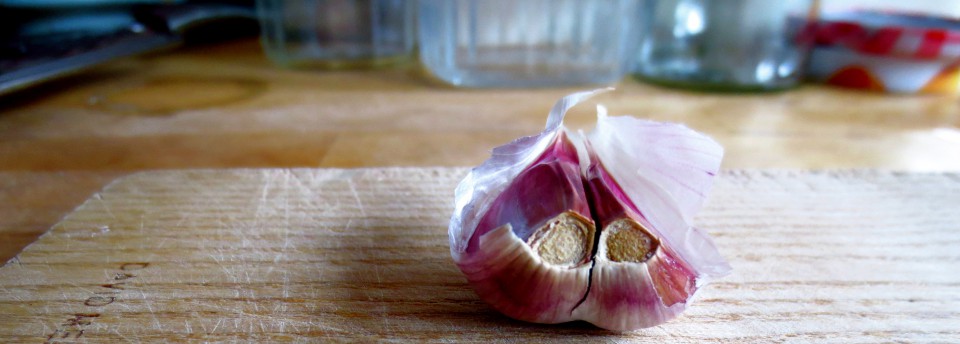
What I have left now is the juice. I have half a jar of it, the pears long gone. Because it has sat unnoticed for this time, it is intense, dark, tea-like. It is gloriously spiced. Now I am using it to add to pulped garlic and honey, because of my rattling chest and snotty nose. There is nothing like a spiced vinegar syrup on January days, when the days are long and calm again. I don’t even think there are pears now, certainly none on the trees which are all black and knotted round here, like long witches’ hands. So make it for the syrup alone. I would. There’s a while before you have to share it. Happy New Year.

Pickled pears

Adapted from Jane Grigson’s Fruit Book

To vinegar: this recipe calls for white wine vinegar, but you could also make it with cider vinegar, which is about halfway between wine and malt vinegar, and not quite as shrieking in intensity. You could use red wine vinegar if you prefer the drama of it. I left my spices in the syrup, as you can see above. They continue to give up their flavour though so cloves might be best left out if you are using them. Other possibilities are a small piece of ginger, bruised, the thinly pared rind of a lemon, a red dried chilli.

6 large firm pears
350 – 450g light muscovado sugar (or to taste)
250 ml white wine vinegar
1 teaspoon of whole allspice
5 blades of mace or small chunk of nutmeg (or both)
3 bay leaves
1 teaspoon of mustard seeds

Peel, core and cut pears into 8 slices each (or thereabouts). Cover with water – about 750 ml. Boil hard for five minutes. Strain off and measure the liquid. To 600 ml of the water add the sugar, vinegar and spices. Pour over the pears and simmer until the pieces are cooked and translucent – about 20 minutes depending on ripeness. Pour everything into a bowl and leave overnight. Drain off the liquid the next day into a pan and boil for five minutes to reduce it slightly and then pack the pears into warm-from-the-oven, sterilized jars along with the spices – unless you’re leaving them out. Pour over the boiling syrup and seal while still warm. Store for as long as possible before using; Jane Grigson says a month. I keep mine in the fridge. Lovely with cheese, ham, duck, or ‘a discreet vegetable or two’.

Share this:

  • Share on X (Opens in new window) X
  • Share on Pinterest (Opens in new window) Pinterest
  • Share on Facebook (Opens in new window) Facebook
  • More
  • Share on Reddit (Opens in new window) Reddit
  • Share on LinkedIn (Opens in new window) LinkedIn
  • Share on Tumblr (Opens in new window) Tumblr
  • Print (Opens in new window) Print
  • Email a link to a friend (Opens in new window) Email
Like Loading...

Roses and kale

07 Friday Nov 2014

Posted by Sophie James in Not food

≈ 20 Comments

Tags

Food, Fruit, Gardening, Los Angeles, Nonfiction, Stories, Travel, Vegetables

229

We have moved into our flat in Hampton (hence the silence, sorry) and I am thinking of getting an allotment. We went to Bushy Park Allotments on Sunday, to see if we could get in and at least get a good view of them, and there was a couple opening the gate carrying in a compost bin. We stood a way off looking at all the plots; they were untidy, shabby even, but there were also a lot of trees, and it looked both unkempt and rather beguiling; little portions of garden side by side as far as the eye could see.

The gentle hum of an engine, and I looked back at a man in a very low open-top car, with a bucket in the back and heaps of pink geraniums. He too looked unkempt and rather beguiling. He hadn’t sounded his horn, just sat in his very low down slightly rusted car waiting for us to move. He had shoulder-length sandy hair and was what people used to call rakish. My grandmother would not have trusted such a man; she would have said something about him being ‘freelance’. But there was a glamour about him and that he’d given us just the right amount of smile, to show he didn’t think we were in any way an irritant, made him alright.

image

The car rattled through the gates and disappeared into the thick brush of trees and stalks and general vegetable matter. That’s when we could have gone, but the couple smiled at us now and so I went up, leaving Joe to loiter, and said hello. Can I put my name down for a plot? (‘Put your name down!’ ‘Have you put your name down?’ has been a mantra of my mother’s since childhood). “Yes, you put your name down,” the lady nodded. And then they gave me advice along the lines of: make a nuisance of yourself, wear them down, and eventually someone will break and give you a piece of earth. “You need to not be afraid of hard work”, she said, looking me up and down in the way people do, thinking they’re being subtle.

They didn’t have much to do; it was cold and rainy and a few minutes later they’d emerged. ‘Put your name up on the gates and ask if anyone wants to share a plot’, the lady who was called Roz now said. I have to put my name up now as well as down. She said they’d picked some roses and they had some nice kale and they were done for the day. It seemed rather a bleak enterprise; coming to pick kale. I like roses but it wouldn’t occur to me to grow them on an allotment.

I think if it was me, I would take my lead from the freelancer driving through the gates and plant things with colour, a bit of rakishness, and some sweetness, some fruit, otherwise it all gets a bit Eastenders. A bit Arthur Fowler.

When I started this blog in LA I wrote about lemon curd. The curd was made from the very few Meyer lemons I’d eked from the tree we’d bought from an extremely rakish garden nursery on Fairfax and Santa Monica. We were promised ‘lemons in abundance’ from  the nice stoned man and although the tree was initially heavy with fruit, it never fulfilled its promise. As Joe Queenan likes to say, it wrote a cheque it couldn’t cash. But the sweetness of those lemons, their strange hybrid flavour and the thin mellow peel, started me off. I loved the colour too, a happy, acid yellow. I was never devoid of fruit thereafter. I fell in love with fruit, probably because there was an awful lot of it about in LA – orange trees mainly and their rampant, swooning blossom – and it was the first thing I genuinely liked about being there. It was growing, it was nature, it was beautiful to watch.

Perhaps I have not got the point of the allotment quite. Although I would be happy to share a plot and I wouldn’t be shy of digging, I’d need to insist there was a splash of colour, some orbs, some blossom, a cage, a tree, some espaliered plums and some brickwork to keep them warm. In the meantime I think I can live without kale, a terrifyingly healthy leaf.

Share this:

  • Share on X (Opens in new window) X
  • Share on Pinterest (Opens in new window) Pinterest
  • Share on Facebook (Opens in new window) Facebook
  • More
  • Share on Reddit (Opens in new window) Reddit
  • Share on LinkedIn (Opens in new window) LinkedIn
  • Share on Tumblr (Opens in new window) Tumblr
  • Print (Opens in new window) Print
  • Email a link to a friend (Opens in new window) Email
Like Loading...

Englishly wonderful

27 Saturday Sep 2014

Posted by Sophie James in Recipe

≈ 18 Comments

Tags

Dessert, Food, Fruit, Ingredients, London, Pudding, Recipes, Stories, Sunday lunch

image

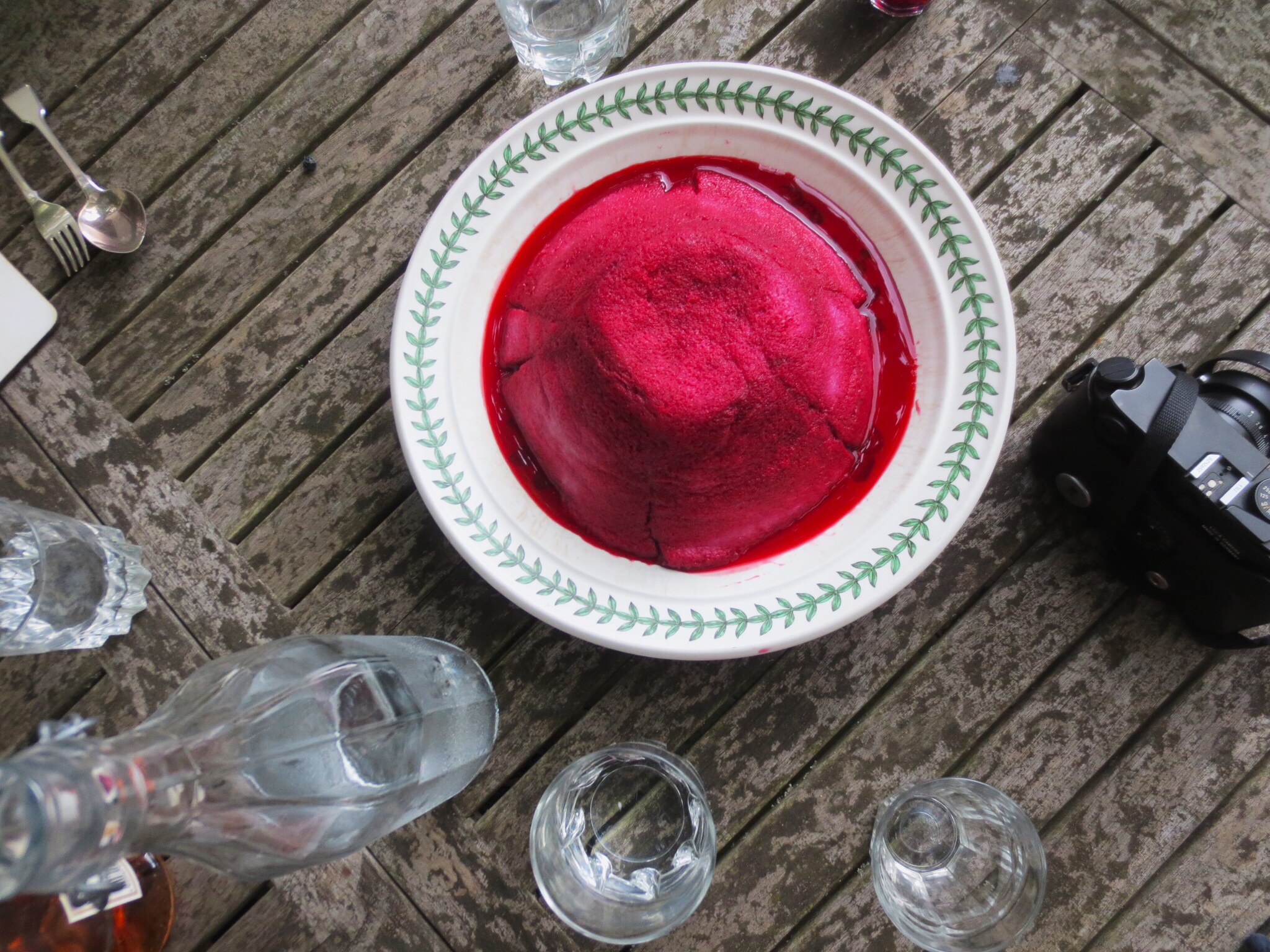
This is summer pudding. Perhaps they were being ironic when they named it, because it’s made using late summer fruit; redcurrants, raspberries. A clutch of other berries perhaps if you’re feeling rebellious. But it is more a dark and winy end to summer days. Bread soaked, I want to say blooded, in the juices of just popping fruit, crunchy berries with rather drastic seeds. This thing, this glorious crimson dome, came at the end of a proper Sunday lunch. I didn’t make it, I simply watched its procession from the kitchen out into the garden to where we sat under a canopy of grapes. I think I may well have actually said all this, Dimbleby-like, as it was carried forth. I might have provided some sort of commentary.

I do this when I’m nervous. I say what’s happening, as if for the benefit of an audience. If you like Brecht, then you’d feel quite at home sitting next to me during one of these events. I say things like: “I can’t believe we’re sitting under a canopy of grapes”. Other popular expressions: “it’s such an amazing colour!” It’s basically meta theatre and it makes things more exciting. And also if you don’t know what to say, you just describe your surroundings.

image

It came with a small jug of the juice – “blood of Christ” – and a bowl of thick and undulating cream – “what an amazing spoon, is it ancient?” – and then there was the eating of it. “How Englishly wonderful!”, said another guest. And it was. Not too sweet, gloriously sodden, the cream a kind of lactic counterpoint. I said all this, but no one was listening. The cold of it was intoxicating.

Liz grows her own fruit in her allotment that she’s had for ages. Fruit is easier to grow than vegetables apparently – blackcurrants, redcurrants, nothing to it – though I think we had her carrots. She also made the apple and mint jelly that accompanied our lamb, and my elderflower cordial was made by her, I think, in France. If this had been me, no one would have needed to ask. I would have volunteered all this information possibly before the removal of coats. But there you go. Some people, Liz being one, have no desire to broadcast their efforts, or to write about them. The festishizing of food is not her style.

image

The trip from Chiswick to Putney had taken ages. We were hungry and it was cold by the time we arrived and I was wearing a dress in denial of the unrelenting autumn wind with stupid bare legs. And then there were the six years of no one we knew making a Sunday roast in LA. Then there was LA, where nothing was full of fat or scaldingly hot, no gravy, no sauce or large florid ears of cauliflower. I was unprepared for the Englishly wonderful aspect of it all.

And I was also reminded of being in England before when I was much younger and the odd thing about Sundays, the melancholy aspect to them; that they were always the end of something that hadn’t quite begun. But more than anything, this meal was served with complete knowledge of what a traditional Sunday lunch should be. And we were coming to it as you might after a long absence. It was all a bit of a shock. We left at 5 o’clock and then talked about it for days. We tried to nail down the pudding, what it was that made it so good. Perhaps more than anything it was that this went on. It was the routineness of it, and next year all being well at around the same time if we’re in the vicinity and we don’t get lost, we’ll try it again. Summer pudding, late. With whatever berries you have, and more if you’re feeling rebellious.

image

The classic summer pudding has only redcurrants and raspberries, but this pudding also had blackcurrants and in fact are a popular addition generally; they add a bit of clout and deep colour. This is Nigel Slater’s recipe, which follows the classic one expounded by Jane Grigson and the like. Spoon over any extra juice which will add drama and will possibly garner you a round of applause. Or pour the juice into a jug to serve along with some thick cream with a preferably ancient spoon.

2nd October – Liz’s thoughts on her summer pudding via email

“So glad you enjoyed the summer pudding! I regret to say, it wasn’t really according to a recipe, although I started with an Elizabeth David one and then adapted it as I went along…. I think it is crucial to use stale white bread , and E D says only use raspberries and redcurrant in a ratio of 3 to 1. The amount of sugar is optional (I think I used about a quarter of a cup) and a little water. Simmer fruit for 5 mins. At that stage I thought mine was too sweet so added blackcurrants, and then not sure there was enough fruit, so added some strawberries. As you can see, I made it up as I went along! A useful tip is to line the pudding basin with cling film before putting in the sliced bread as it makes it much easier to get out.”

image

Share this:

  • Share on X (Opens in new window) X
  • Share on Pinterest (Opens in new window) Pinterest
  • Share on Facebook (Opens in new window) Facebook
  • More
  • Share on Reddit (Opens in new window) Reddit
  • Share on LinkedIn (Opens in new window) LinkedIn
  • Share on Tumblr (Opens in new window) Tumblr
  • Print (Opens in new window) Print
  • Email a link to a friend (Opens in new window) Email
Like Loading...

Still life

13 Saturday Sep 2014

Posted by Sophie James in Not food

≈ 16 Comments

Tags

Autumn, England, Fruit, Home, Ingredients, Nonfiction, Stories, Travel

image

These are pears that have fallen from the tree, next door to where we are staying in Chiswick, west London. It is a temporary stop-gap and we are house sitting and cat sitting a rather somnolent cross-eyed cat, an amazing shade of fawn. In fact everything in the house is on the fawn continuum so sometimes it’s hard to spot her. She is also the same colour as the envelopes that arrive from Hounslow council. Anyway, we have been enjoying the pears, that are apparently diseased. At the end of the street is a mulberry tree, which has just been cut back but earlier in the week the pavement was festooned with them, little car crashes all over the place, splats of pink, ruby spillages. We were keen to walk around them so as not to tramp mulberry stains through the house and spoil the general atmosphere of hotel calm. Which at the moment suits our mood, when normally we would be cradling the fruit in our hands and covering ourselves in the never-ever vanishing juice. Because when could you ever resist a mulberry? Never.

Although I have been posting from England regularly since I started blogging, it was as an LA resident. I would always eventually board a plane back to LA, full up on Bach’s Rescue Remedy pastilles and sodden with days of fraught tears. This time, however, I am writing as a resident of England, because we have moved from LA and are now back on English soil. My blog posts will lack, I imagine, some of the emotional freight they once had – nostalgia for crisps and autumn, the love of a good walk etc – and I will be a bit more, well, down to earth, maybe, but hopefully not prosaic. We will be returning to LA regularly so I’m sure I’ll have some interesting tales to tell from immigration, and the warm and caring LA drivers and those women with faces that look as if they’re made of brown candle wax.

image

In the meantime, I have turned the beam of my affection to those things that are difficult to find here – the type of sun and light in LA, which is almost a hard blue, all angles, and then driving, the thing that tormented me more than anything else; okay, I miss the grid system in LA. I miss grids. I miss driving in a straight line for hours at a time with no pedestrians, no people to ruin it, finding Say You Love Me on the CD player with my fingers (Fleetwood Mac Greatest Hits, track 11) tracing it like Braille in case the driver in front suddenly decided not to bother with indicating. And of course I miss our neighbours, who cordially and kindly took my cakes, sometimes as many as two a day (when things were really bad) and who became our friends, and then finally our family. And all the lovely people who scooped us up and fed us and listened to my various diatribes (“Cats need to be free to express their natural instincts!” “I’m European, I refuse to wear a bra”).

Sometimes I just miss the right turn out of the garage, the car tipping down the hill into the first sun of the morning, like a massive fruit in the sky, knowing it wouldn’t change, and being endlessly surprised by it. Here I’m not so much surprised as bemused by the amount of grown men in tailored suits eating Wotsits. Wealth, that’s a surprise, particularly here in London – it makes me want to go up to the chestnut-haired glossy mares drinking lattes in Chiswick House and ask how they did it, and could I have a look at their bank statements? I don’t remember London ever being so untouchably rich (reading John Lanchester on the subject helps).

image

So in that sense, I’m a foreigner, but in every other way, I’m home. ‘Here no elsewhere underwrites my existence’, Philip Larkin wrote. So no LA, no mad people, no Jessica Biel or citrus to beguile you with, but plenty of pears, cats, mulberries, unpacking and, when in London, extortion. It’ll be an interesting few months, thank you for following me.

Share this:

  • Share on X (Opens in new window) X
  • Share on Pinterest (Opens in new window) Pinterest
  • Share on Facebook (Opens in new window) Facebook
  • More
  • Share on Reddit (Opens in new window) Reddit
  • Share on LinkedIn (Opens in new window) LinkedIn
  • Share on Tumblr (Opens in new window) Tumblr
  • Print (Opens in new window) Print
  • Email a link to a friend (Opens in new window) Email
Like Loading...

Pudding with goosegogs

28 Monday Jul 2014

Posted by Sophie James in Recipe

≈ 19 Comments

Tags

Baking, Cake, Dessert, Fruit, Ingredients, Recipes, Stories, Sussex

goosegogs

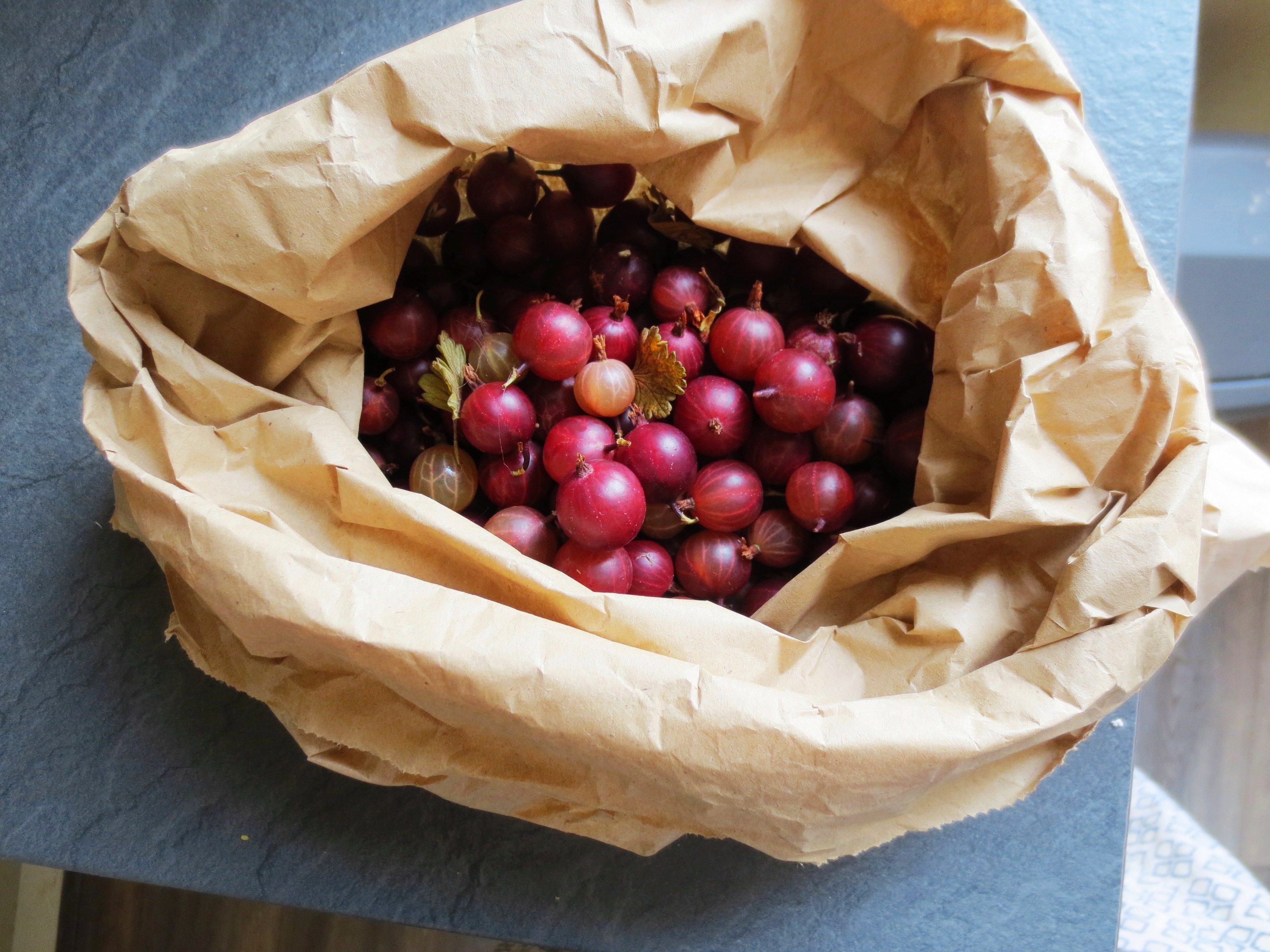
These are red gooseberries, in case you were wondering. I didn’t realize that gooseberries could be anything but green, but here, as in many areas of my life, I am wrong. Red, yellow and white can be the goosegog, though Jane Grigson argues that none are as good in cooking as the green. These red ones were also on the small side, but I was too excited by the colour to do anything but shovel them up in my palsied hands and throw them into the nearest paper bag.

If you are English and have once seen a hedge or climbed a tree, you have also probably eaten a green gooseberry raw. It comes with a certain feral spirit and being too young not to be able to discern what is and isn’t ‘palate appropriate’. I do remember picking gooseberries (along with elderflowers, their natural bedfellows) and sampling the hairy little pod, being slightly put off by the veins, but somehow knowing I couldn’t not eat it. I was bemused by the elderflower picking, as it was for the making of wine, bottles of which would be stacked outside my bedroom window to ferment and mature etc but be still off limits to me.

However, the gooseberries would at some point make their way under a crumble or pie crust and then be served with cream or possibly ice cream. I even liked the sourness, that puckering beyond-lemon tartness, and the errant seeds that could be shot out like a catapult.

goosegogs

All of this under an intermittently blazing and then thunderous English sky. Because I am now back in England, back in time for the thunder and lightning and wild seas and bursts of heat and ladybirds. It’s all gone a bit Brazil here, with long languorous days at times humid and close then cloudy then bucketing down then warm, blank skies of blue. People swim with an abandon I find worrying. Far far out to sea I can see a lone swimmer doing front crawl out beyond the buoy. Children dive in and sometimes they’re naked; another signifier I’m no longer in LA. I’m walking again and so is everyone else.

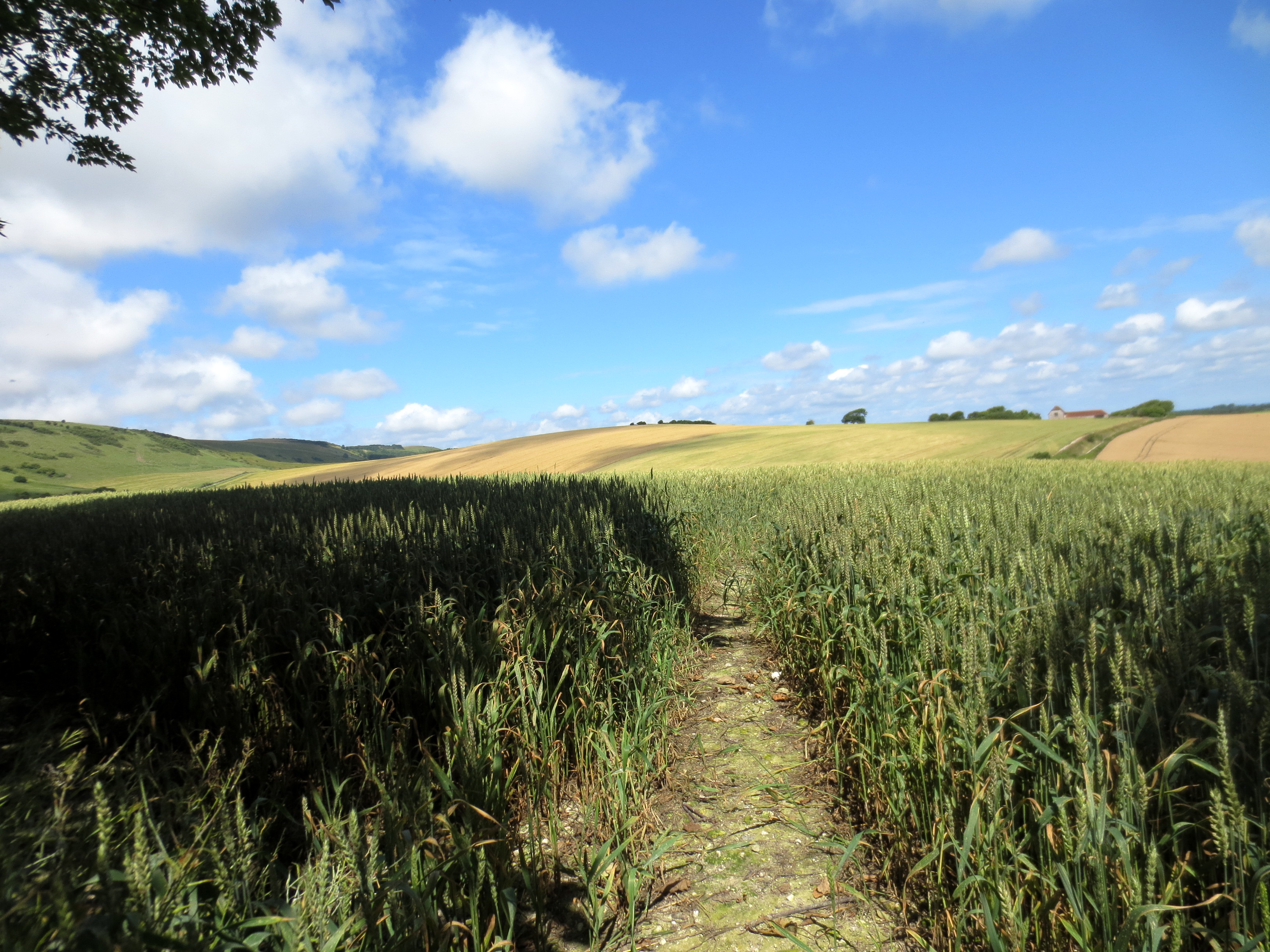
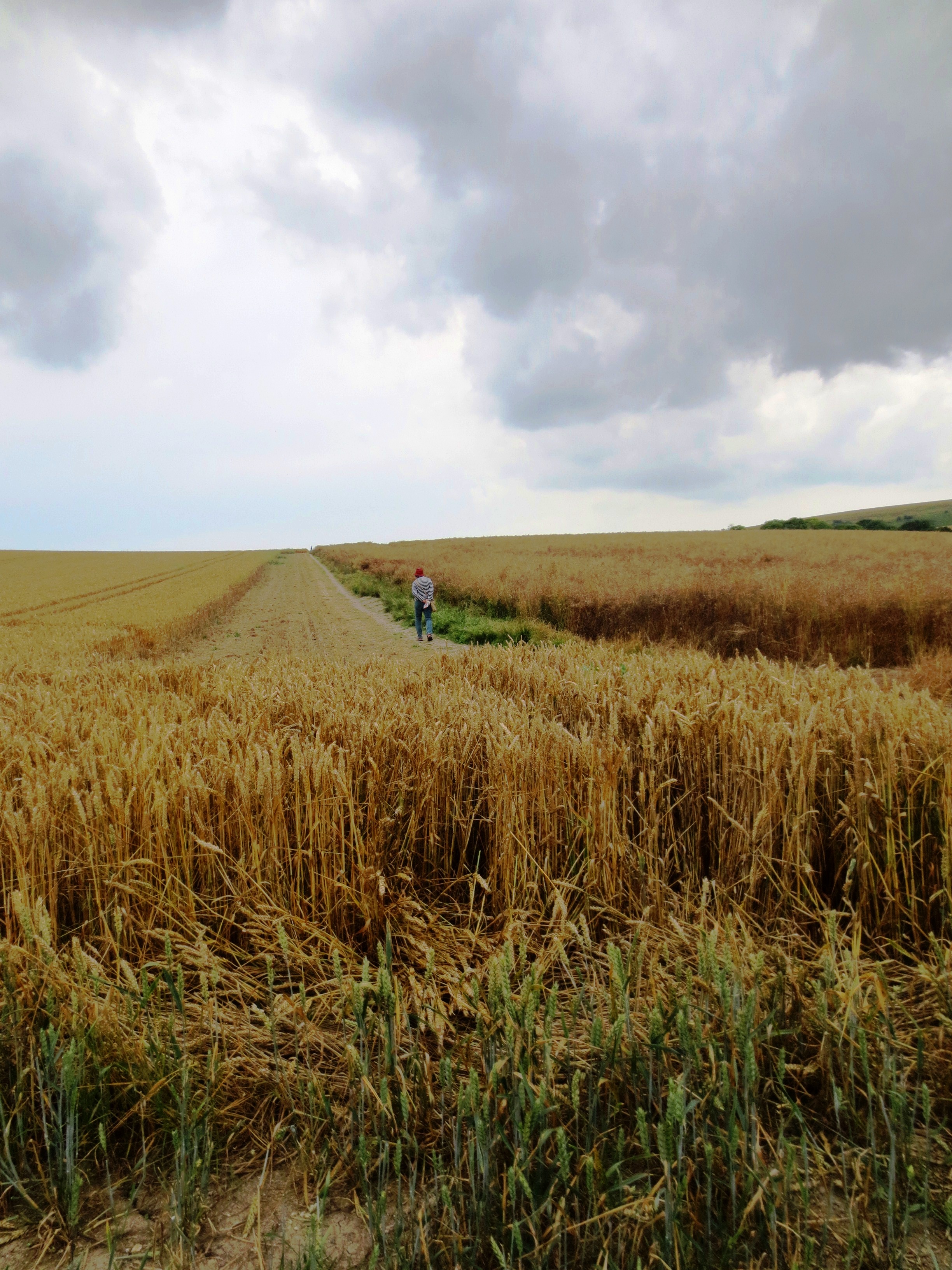
We are all striding out, wading through fields of old rape and thick stiff wheat. Everyone is eating ice cream – big swathes of white – and everywhere there are bodies in various stages of rotundity; tattooed, jolly, in love, or sullen with a fag on, and I find I’m watching them with the tutored eye of an Angeleno. I’ve become aware of size and shape and it makes me feel uncomfortable. Suddenly I’m shallow. I’ve come back just in time.

mum and wheat

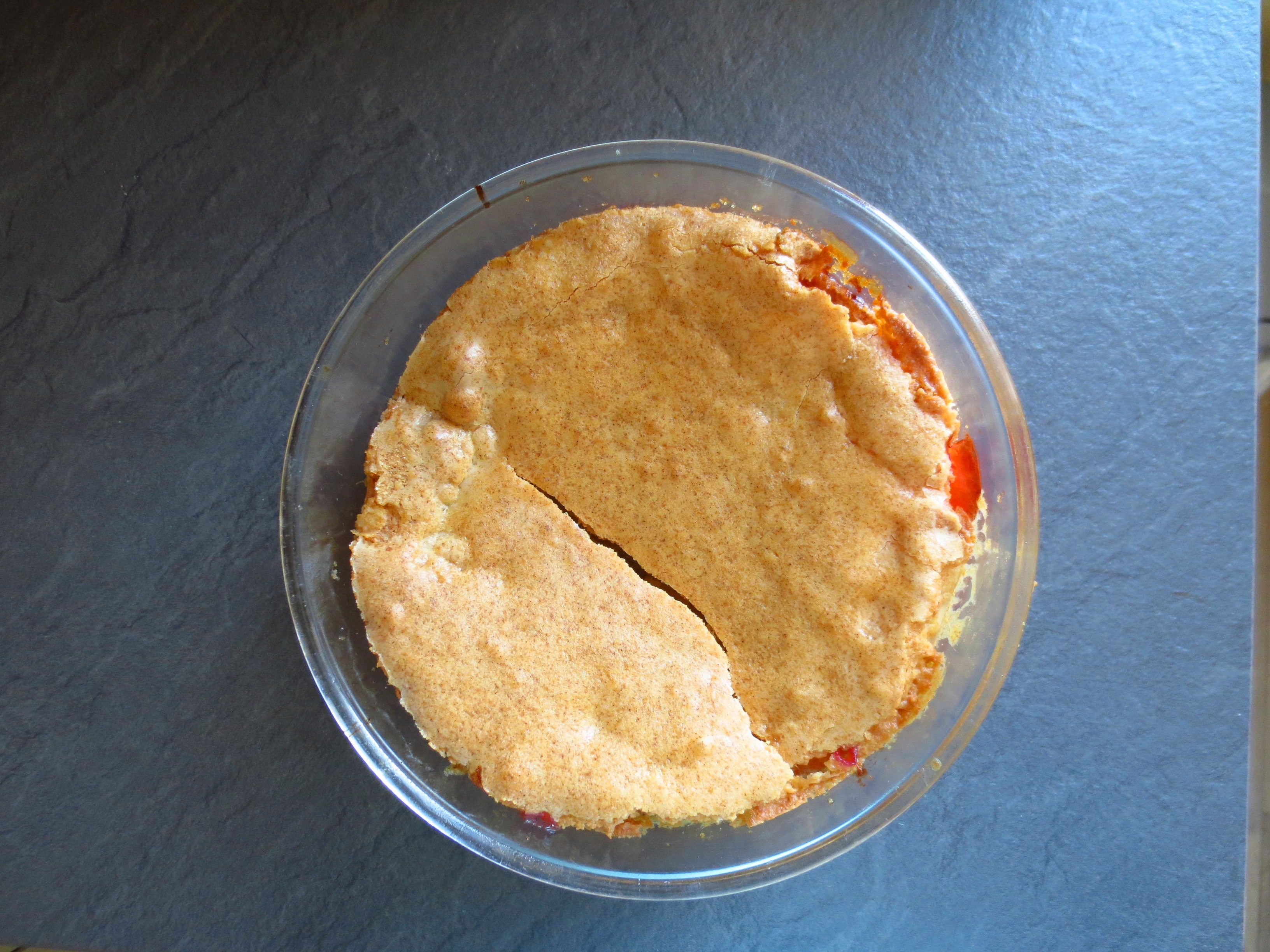
But in the meantime there’s cake, or more specifically baked gooseberry pudding using a genoise sponge. All I previously knew about the genoise was that it was ‘difficult’ and a finalist from The Great British Bake Off dropped his all over the floor and was forced to scrape it back on to the plate, presenting it as a strange cloud of something dark with cream.

I made the gooseberry pudding to bring to a party, which served as an object lesson in what you shouldn’t do if you can avoid it: make something you’ve never made before for people you barely know. It looked fine, beautifully brown in that natural way of burnt fields and it smelled voluptuously puddingy. The gooseberries had risen up in revolt at being smothered and had formed a rim of sweet tacky juice. We walked along the seafront in Seaford to the party and the Pyrex dish kept itself cleverly hot all the way. And then the top collapsed, not in the way a flourless cake slumps, but it caved in the way meringue does. It simply all disappeared down a hole.

I grabbed what was down there and it was lovely and hot and gungy, and, I thought, terrifyingly uncooked. I then started to pick at it until there was an undeniable gaping hole in the centre of the pudding which was now unpresentable. ‘It’s the gesture that matters,’ my mother said reassuringly which translated into British English means, “This is a complete disaster and no one will say anything”.

cake

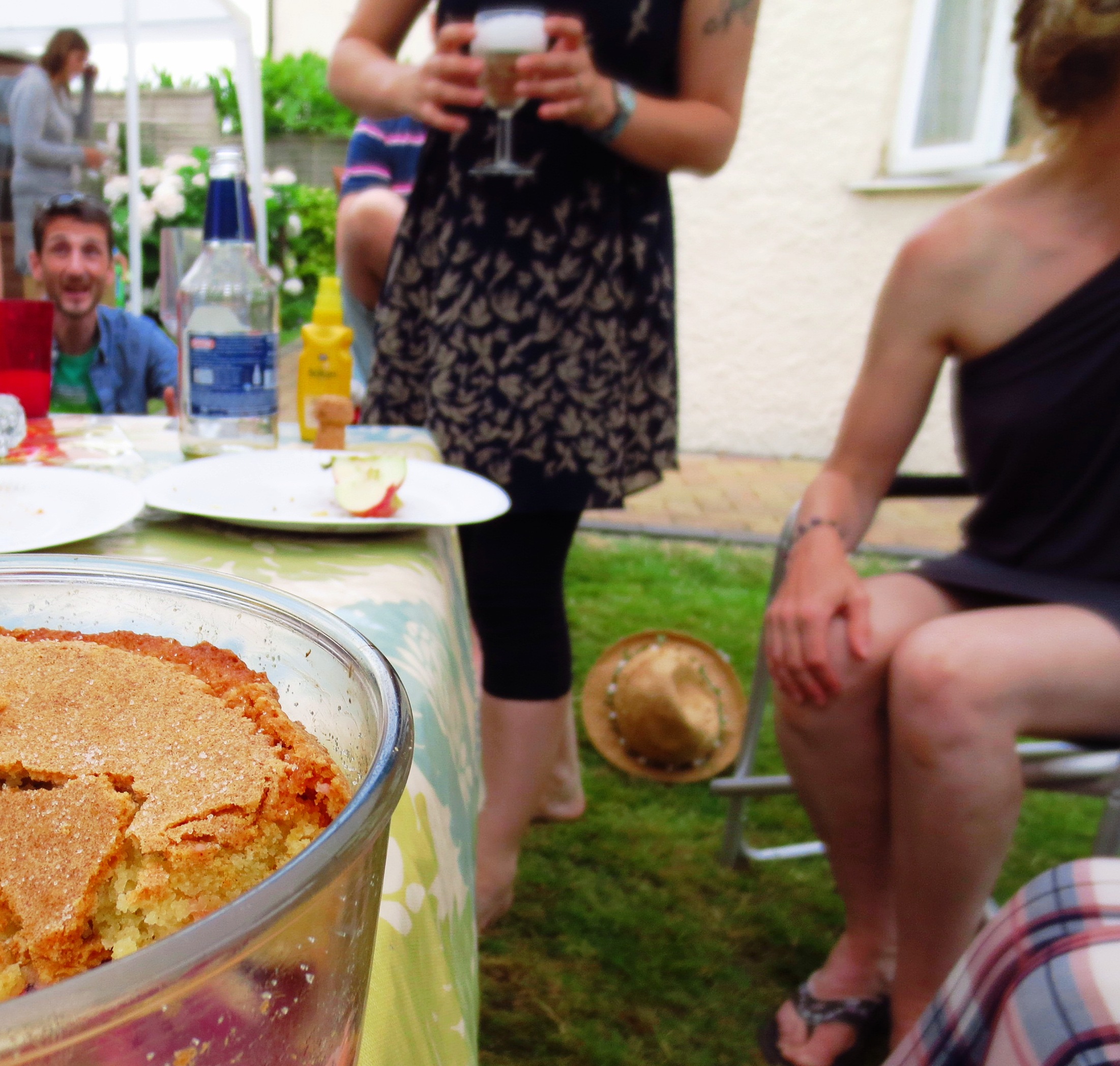
By the time we got there people were peeling off to swim, taking advantage of the sudden heat and sun and all around us were half-demolished cakes, a gammon ripped to shreds, bowls of depleted food and children dancing in that deranged way that happens just before an emotional collapse. My empty cake did not look out of place and by the time everyone had trailed back from the sea under a blanket of rain it appeared to be cooked. It’s rather like meringue in that way, I realize; a crisp outer crust, followed by a hole and then a deep drift of softness below. Actually it’s pudding – that is what it is.

Everyone said ‘Wow!’ a lot but they were also quite drunk. They talked at length about the sweetness, the miraculous crust and the tartness of the gooseberries. And that I had made a cake at all and who was I again? And would I like to come to Faversham? Did I want curry? More Steely Dan! the children cried and they danced red and sweating under the raindrops.

Baked Gooseberry Pudding

Adapted from Jane Grigson’s Fruit Book

I didn’t find the genoise sponge particularly tricky to make, though this might have something to do with my mother’s ancient Chefette free-standing mixer which whisked the eggs and sugar to buggery while I got on with reading the recipe. However, how difficult can it be to stand for seven minutes holding some beaters? This has quickly become my stand-by pudding and is also wonderful with rhubarb – in both cases the fruit can be chucked in raw with the barest tumble in brown sugar. You could use any sharp fruit here – cranberries also work well.

For the sponge

125g butter, plus a bit extra for buttering the bowl

1 large egg and 1 egg yolk (room temp)

175g unrefined caster sugar

100g plain flour, sifted (or rice flour)

½ teaspoon of mace and/or allspice

½ tsp sea salt

For the gooseberries

250-300g gooseberries (they do cook down)

25g-50g demerara sugar or any soft brown sugar

Preheat the oven to 160-170C/325F. Generously butter a Pyrex dish of about 1 litre capacity and 3-4 cm depth. Put in a tight-fitting layer of topped and tailed gooseberries and throw the sugar over them, tumbling them about to get full coverage. Gently melt the butter in a pan and leave to cool slightly.

Now for the sponge – the ‘trick’ is to aerate the eggs and sugar mixture, which means to whisk them together until they are very pale and light, almost white. At first they’ll be gloopy but after about 7-8 minutes the mixture will reach what is known as the ‘ribbon’ stage where it will leave a trail when the beaters are lifted out. Mix the flour, mace/allspice (actually whatever spice you fancy – ginger would be nice) and salt together in a separate bowl and then sift about half over the eggs and sugar, folding very gently using a metal spoon and working in a figure of eight. Fold in the rest of the flour very carefully, so as not to knock out any air.

Now drizzle the melted butter down the sides of the bowl, again gently but quickly working the batter. Now spoon this mixture over the gooseberries, smoothing it out to be level, and then bake for about 45-50 minutes. It will rise and then crack probably. Lovely warm but also gorgeous cold. It is not – though it will appear to be – uncooked inside.

gooseberry pudding

Share this:

  • Share on X (Opens in new window) X
  • Share on Pinterest (Opens in new window) Pinterest
  • Share on Facebook (Opens in new window) Facebook
  • More
  • Share on Reddit (Opens in new window) Reddit
  • Share on LinkedIn (Opens in new window) LinkedIn
  • Share on Tumblr (Opens in new window) Tumblr
  • Print (Opens in new window) Print
  • Email a link to a friend (Opens in new window) Email
Like Loading...
← Older posts

Enter your email address to follow this blog and receive notifications of new posts by email.

Join 2,216 other subscribers

Top Posts & Pages

Early Nigel
Plums and Pluots
Recipe List
Power of two
Frilly
Pause

Recent Posts

  • At my allotment
  • A compendium of sorts
  • Mulberries
  • We are nature
  • Leaving home
  • A treacherous herb
  • Just stop it
  • Why I swim

Great books I’ve read

Blogs/Websites I read

  • Letitia Clark
  • Nigel Slater
  • Room to heal
  • Samantha Harvey
  • Stewart Lee
  • The Kureishi Chronicles
  • The Marginalian
  • Tom Cox
Follow Stories from the Stove on WordPress.com

Archives

  • June 2023
  • February 2023
  • September 2022
  • August 2022
  • July 2022
  • May 2022
  • February 2022
  • December 2021
  • August 2021
  • April 2021
  • March 2021
  • January 2021
  • June 2020
  • November 2018
  • August 2017
  • July 2017
  • May 2017
  • April 2017
  • February 2017
  • January 2017
  • November 2016
  • May 2016
  • October 2015
  • July 2015
  • June 2015
  • April 2015
  • March 2015
  • January 2015
  • December 2014
  • November 2014
  • October 2014
  • September 2014
  • August 2014
  • July 2014
  • June 2014
  • May 2014
  • April 2014
  • March 2014
  • February 2014
  • January 2014
  • December 2013
  • November 2013
  • October 2013
  • September 2013
  • August 2013
  • July 2013
  • June 2013
  • May 2013
  • April 2013
  • March 2013
  • February 2013
  • January 2013
  • December 2012
  • November 2012
  • October 2012
  • September 2012
  • August 2012
  • July 2012
  • June 2012
  • May 2012
  • April 2012
  • March 2012
  • February 2012
"A WOW piece!" Claudia Roden on Walnut Bread

Walnut bread

Lucas’s chocolate marmalade slump

Tags

Afternoon tea Allotment Almonds Art Autumn Baking Bread Breakfast Cafes Cake Childhood Chocolate Christmas Citrus Claudia Roden Cookbook Cooking Dessert Devon Dinner Elizabeth David England Exmoor Fish Food France Fruit Gardening Gelato Gluten-free Herbs Home Homesickness Honey Ice cream Ices Ingredients Italy Jam Jane Grigson Lemons London Los Angeles Lucas Hollweg Marmalade Meat Mediterranean Meyer lemons Nature Nigel Slater Nonfiction Nuts Onions Patience Gray Poetry Pudding Reading Recipe Recipes Salad Sea Seasons Soup Spain Spices Spring Stone fruit Stories Summer Sussex Travel Vegetables Winter Writing Yoghurt

A WordPress.com Website.

Privacy & Cookies: This site uses cookies. By continuing to use this website, you agree to their use.
To find out more, including how to control cookies, see here: Cookie Policy
  • Subscribe Subscribed
    • Stories from the Stove
    • Join 2,084 other subscribers
    • Already have a WordPress.com account? Log in now.
    • Stories from the Stove
    • Subscribe Subscribed
    • Sign up
    • Log in
    • Report this content
    • View site in Reader
    • Manage subscriptions
    • Collapse this bar
 

Loading Comments...
 

    %d