• Recipe List
  • Sophie

Stories from the Stove

Stories from the Stove

Tag Archives: Stories

Nasturtium-leaf sandwiches

02 Monday Apr 2012

Posted by Sophie James in Recipe

≈ 3 Comments

Tags

Food, Ingredients, M.F.K Fisher, Nonfiction, Recipes, Stories, Travel, Writing
IMG_6815

Avram Dumitrescu

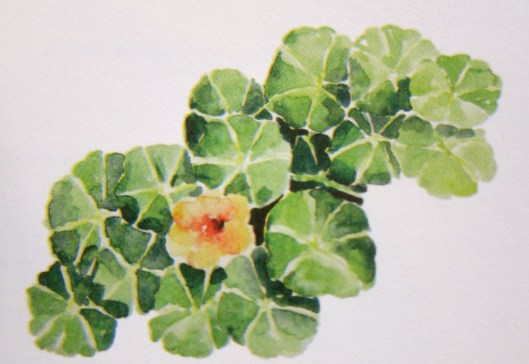
I discovered nasturtiums and the food writer M.F.K Fisher around the same time, so it seems fitting to include them both here. This recipe might also sum up Fisher’s approach to life and cooking, as it is both daring and in some senses obvious; nasturtiums grow wild, as well as being the easiest things to cultivate, and most of us have a loaf of bread knocking about. The rest is up to you.

Her life is hard to summarize without reducing it to the amount of times she moved house. She was a true vagabond, shuttling between France, Switzerland and her native California; back and forth she went like a ping-pong ball. Possibly because of this, she had a complete lack of vanity about where she cooked and with what. Some of her early, settler-influenced dishes read like one of Edward Lear’s nonsense poems – clabber custard, cocoa toast, tomato soup cake – but her message is disarmingly relevant. Eventually, we must ditch the gurus and find our own voice. Fisher herself was entirely self-taught, spurning even her French landlady’s attempts to school her in the basics. She simply made it up as she went along. The limitations of her surroundings, and the lack of equipment – in one house the radiator stood in for a stove, and in another, the cold meant she cooked wearing a fur coat and gloves – dictated what she was able to prepare, and this was what excited her most; that making do is liberating, and we are confined by choice.

She is the antidote to our learned helplessness – our need for ‘experts’ – and the champion of trial and error. She wanted us to feel our way, physically and psychically, through the food we cooked. About this, she said “I believe that through touch, or perhaps because of its agents, other senses regain their first strengths.”

A devotee of offal at a time when Miracle Whip was considered classy, and a life-long hatred of American salads sets her apart in ways that even now appear radical and eccentric. She is often described as America’s answer to Elizabeth David, but I think this is to do her a disservice. To my mind, her writing has the tough lyricism of the survivor. Flinty, resolute, economical, she was a woman raised under big skies in a brave, new world.
IMG_6883

Nasturtium-leaf sandwiches

I know it may be controversial, championing the ‘wich in these carb-free times, but perhaps it’s due a revival. There can be nothing more satisfying than a torn hunk of baguette, with some sharp cheddar (crisps optional), or a few slivers of smoked salmon inside a thin, wheaty shell. And then there is toast, at which even the thought makes my cheeks sing, and gives butter a reason to live.

If you’re craving something cleaner, you could make a nasturtium salad; it works in much the same way as watercress, being from the Indian cress family. In fact, the word originally comes from the Latin nasus tortus, meaning “twisted nose”, supposedly because of what it does to your sinuses. Creamy clouds of pepperiness and a shock of blossom covered in the lightest of dressings is springtime in a bowl.

From With Bold Knife and Fork, M.F.K Fisher (1969) 

Makes about 40

1 loaf white Pullman* bread, crust removed, sliced lengthwise into three 1-inch slices

¾ cup butter, softened

2 cups nasturtium leaves, tightly packed

Nasturtium blossoms for garnish

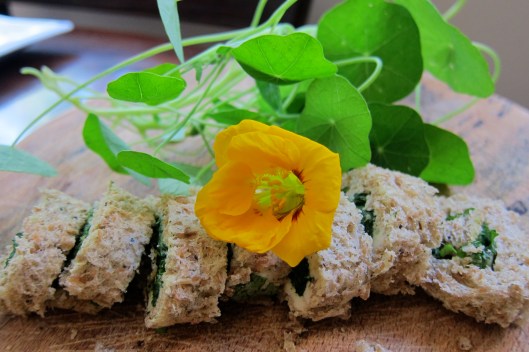
“Using a rolling pin, firmly roll each slice of bread to flatten. Spread each slice on one side with butter. Reserve 6 nasturtium leaves for garnish. Finely chop the rest of the leaves. Spread the chopped leaves over the buttered side of each bread slice. Then, starting from a long side, roll up each slice into a log. Wrap each log separately in plastic wrap and refrigerate until the butter has hardened, about 2 hours. (Once the butter is hard, the logs will stay rolled.) Cut the chilled logs crosswise into ¾-inch-thick slices. Arrange the slices on a platter and serve garnished with nasturtium blossoms and the reserved leaves.”


* Otherwise known as a ‘sandwich loaf’ – the name Pullman comes from their use in the cramped kitchens of Pullman railway cars. These days, most sliced bread is actually a Pullman loaf: square, and baked in a long, rectangular, lidded pan. I used some sliced rye and wheat bread I had in the freezer and lopped off the crusts.

Share this:

  • Share on X (Opens in new window) X
  • Share on Pinterest (Opens in new window) Pinterest
  • Share on Facebook (Opens in new window) Facebook
  • More
  • Share on Reddit (Opens in new window) Reddit
  • Share on LinkedIn (Opens in new window) LinkedIn
  • Share on Tumblr (Opens in new window) Tumblr
  • Print (Opens in new window) Print
  • Email a link to a friend (Opens in new window) Email
Like Loading...

A word about cherimoyas

22 Thursday Mar 2012

Posted by Sophie James in Recipe

≈ 2 Comments

Tags

Custard apple, Dessert, Food, Fruit, Ingredients, Recipes, Stories

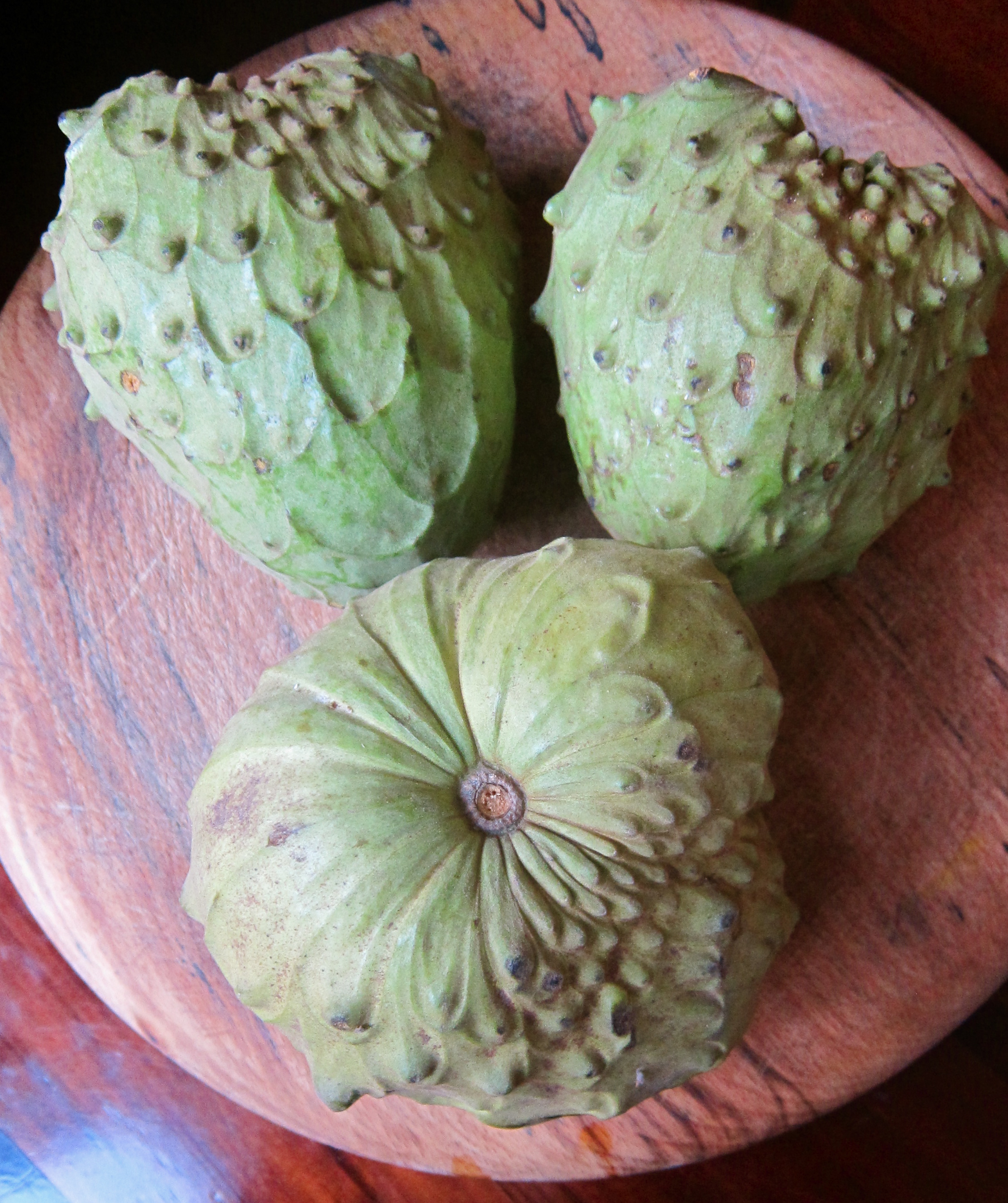
IMG_6430The cherimoya doesn’t so much have a skin as a hide. The green scales covering this frankly prehistoric-looking fruit conceal a milk-white, meltingly sweet interior. Though it’s part of the Annona family, to which the custard apple (Annona reticulata) also belongs, the first mouthful reminded me of drippingly ripe pear, with the scented cream of banana and the gentle acid of pineapple blooming moments later. The texture is both coldly crisp and rich.

As nature has given us a fool* in disguise, it would be crazy to tinker too much with it, I think. You can slice off the top and eat the contents with a spoon, which is fun, but the slippery – and large – black seeds take some navigating. You could pick them out and then eat the fruit out of hand, like I sometimes do with an avocado if I’ve forgotten cutlery.IMG_6725

Alternatively, the gentlest of interventions would be to tease out the seeds, give the fruit a squeeze of lime, add the zest, and then encourage the cherimoya’s sherbet-like qualities with a spoonful of creme fraiche. Any more doctoring and it would become sadly ordinary; no pies or tarts (or vicars) needed here. Another possibility is to cut it into chunks and add it to a fruit salad, but the challenge would be whether its subtlety and gentleness could hold up against other more dashing and showy specimens.

Though it can look quite menacing, it is actually rather a delicate, frail thing. The skin bruises and breaks easily, and, like a pear, the moment of perfection is fleeting, so always buy it firm to the touch and allow it to ripen out of direct sunlight over three to four days.

Custard apples and sour-sops (Annona muricata) – also in the same genus as the cherimoya – were brought to England by West Indians who had enjoyed them in the Caribbean, though the cherimoya tree itself originated in the uplands of Peru and Ecuador; the name is derived from the Inca language, Quechua, and translates as “cold seeds.” In Southern California, the trees have done well in the sub tropical and mild temperate climates of the region since 1871. Their season is short – March to May – and as they don’t travel well, you won’t find them in supermarkets, which makes them something of a curio; both a good and a bad thing. I’m not a fan of the exotic for its own sake, and much is made of its shape and strange armour. Ultimately, I think the cherimoya is a find because it carries within it a palimpsest of flavours and textures we’ve encountered elsewhere. My first mouthful made me think of ambrosial, just-setting custard, which then took me back to Ambrosia Devon Custard in a tin, which as a child – and you’ll have to trust me on this one – tasted amazing.

Cherimoya fool

Traditionally a fool involves cooking the fruit and then either crushing or sieving it before adding whipped cream. If you’re a fan of texture, rather than uniform smoothness, as I am, then simply remove the (inedible) seeds and crush the fruit with a fork, which will start to turn to mush naturally anyway. It’s important to use fruit whose skin is soft to the touch, but not overly bruised or brown; the same principle as an avocado. Cooking here is unnecessary and will strip the cherimoya of its nutrients (it is exceptionally high in vitamin C) as well as the spellbinding freshness. I think lime juice accentuates the cleanness, but a squeeze of orange would work as well.

Serves 2 (fills 2 ramekins)

1 large heavy-sized cherimoya or 2 medium ones

Juice and zest of 1 small lime

1 very heaped tablespoon of creme fraiche (or whipped heavy/double cream)

Cut the cherimoya in half, and then scoop out the flesh, picking out the seeds as you go. Discard the seeds along with the skin. Crush or roughly chop the fruit (you may not have to do either if you have an exceptionally ripe one). Add the lime juice and the zest, along with the creme fraiche, and make sure all the ingredients are evenly distributed throughout. Serve in small glasses or ramekins. Sprinkle with extra zest for prettiness.

* A fool is an old English dessert made of crushed fruit and cream. Gooseberry fool is the quintessential summer pudding and rhubarb fool is lovely in winter. Apparently wild apricot fool is the bees knees.

Where to get them in LA: Rancho Santa Cecilia (based in Carpinteria) sells them at the Hollywood farmer’s market on Saturdays and the ever-helpful Mud Creek Ranch (from Santa Paula) do too, as well as appearing at the Wednesday farmer’s market in Santa Monica.

Share this:

  • Share on X (Opens in new window) X
  • Share on Pinterest (Opens in new window) Pinterest
  • Share on Facebook (Opens in new window) Facebook
  • More
  • Share on Reddit (Opens in new window) Reddit
  • Share on LinkedIn (Opens in new window) LinkedIn
  • Share on Tumblr (Opens in new window) Tumblr
  • Print (Opens in new window) Print
  • Email a link to a friend (Opens in new window) Email
Like Loading...

A word about limes

15 Thursday Mar 2012

Posted by Sophie James in Recipe

≈ 3 Comments

Tags

Citrus, Cooking, Food, Fruit, Ingredients, Los Angeles, Recipes, Stories

IMG_6614

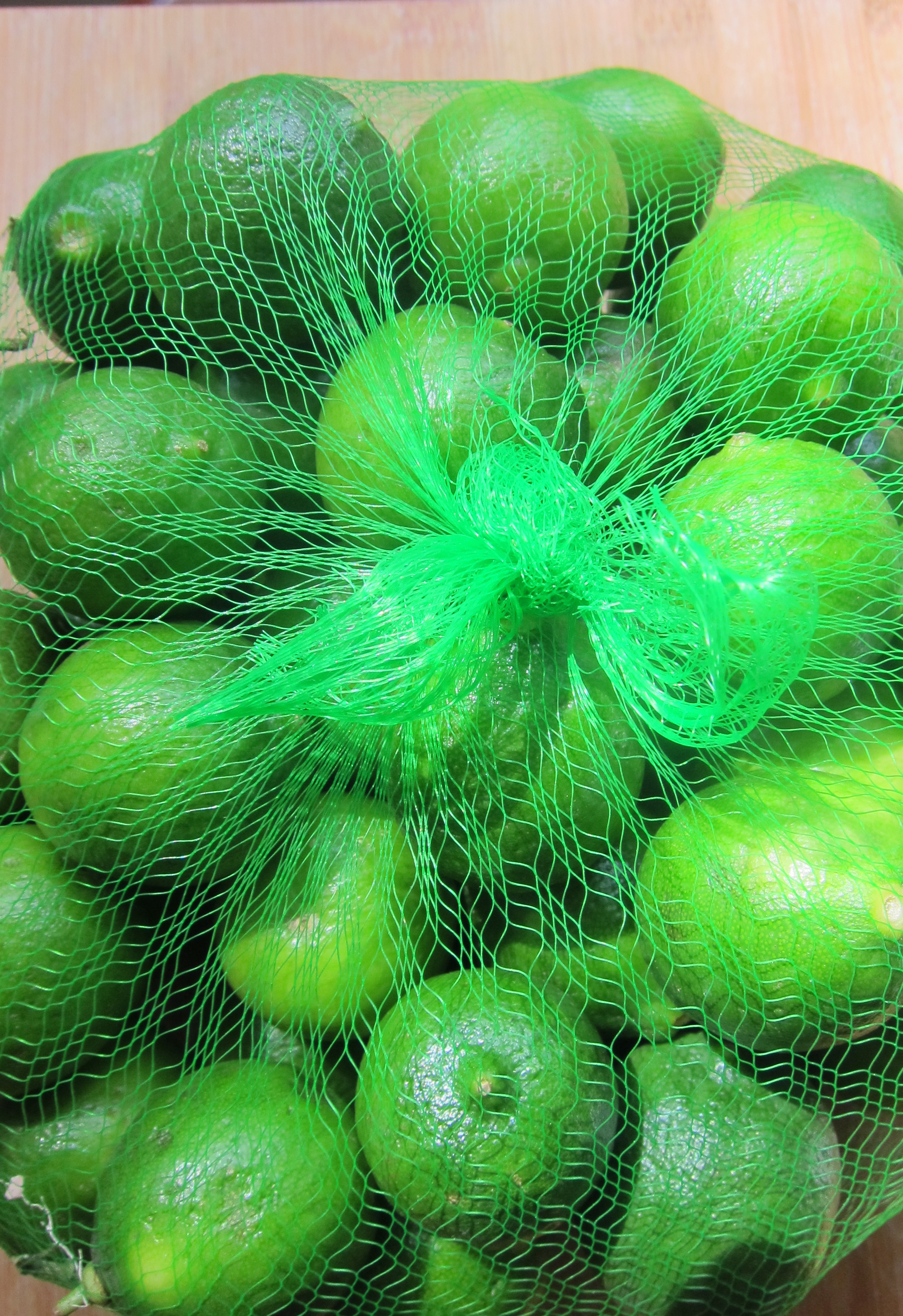
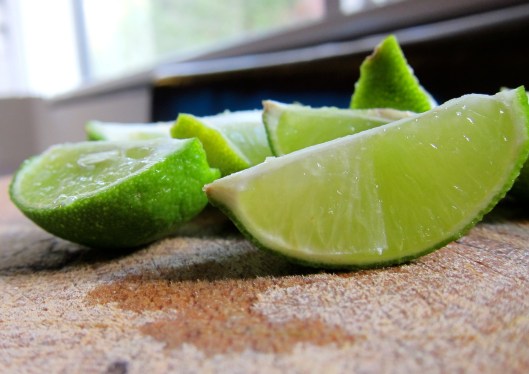
Although lemons and limes are often used interchangeably (and both names come from the Arabic word limah), limes are noticeably different: stronger, sharper, almost darker in taste. Whereas lemons grow well in a Mediterranean climate with long, dry spells and poor soil, true limes favour the tropics. The little beauties above came from an expedition we took to a Mexican supermarket in the valley. So taken were we with the meat section – pickled pigs’ ears daintily presented in trays, sheets of beef honeycomb tripe that looked almost marine-like, and the wonderfully labelled “beef feet” – that we temporarily forgot why we had come, which was to find proper Mexican limes. These nuggets of blistering juice are pretty standard in Mexican cuisine: spritzed over avocados, as a way of ‘cooking’ fish in a ceviche, in margaritas, mixed with sea salt and squeezed into a cold beer, mixed with salt again and sprinkled over chunks of mango, as well as being the star of the show in limonada.

I am embarrassed to say I have often been at a loss as to how to best employ limes. It was only when I chanced upon them at the farmers’ market that I gave them any real thought. These were Persian and Palestine sweet limes, the difference here being the lack of acidity which creates an exceptionally mild flavour. What character they have is concentrated in the rind, which has a light, clean, fresh pine aroma, so I used this in a curd and simply ate the fruit which was at least succulent, and, for an added bonus, apparently cures “everything.”

Tarter and more piercing are the California-grown Key limes. Interestingly, these are lemon-yellow, which according to my sage at Mud Creek Ranch – who patiently puts up with my endless battery of questions – is their natural colour here; green rind can actually be an indication of the fruit’s unreadiness. They are hell to pick. The branches have thick, angry thorns that slash the skin and make it itch for days. The fact that they can grow here at all is due to an amazing micro climate at the ranch, where they flourish alongside bananas and cherimoyas.

I was surprised to find that my brief investigation into US recipes for lime yielded little apart from Key Lime Pie, a local speciality from Florida’s coral islands – the keys – which is made with the juice of the fruit (Citrus aurantifolia ‘Swingle‘), eggs and condensed milk. The lime’s acidity cleverly ‘cooks’ the pie, and this is possibly why the first recorded recipe came from local sponge fishermen who had no access to refrigeration or a stove (and obviously went through a lot of condensed milk). Semi-wild limes still grow in the area to this day, though they are no longer cultivated due to the 1926 hurricane which destroyed all the citrus groves. Growers replaced the Key Lime trees with Persian Lime because they are easier to grow and pick, but have none of the original’s arresting flavour.

I don’t know whether it’s because I’m a Northerner (as in I hail from Northern Europe), but I am instinctively drawn to the more lumpen uses for fruit –  a baked pudding, a warm tart, a crater of puff pastry exuding steam, something thick and hopefully syrupy within, so lime marmalade was pretty much a given for me to try, if only to plunder my childhood memories of Rose’s fluorescent version, with its dainty green shred.

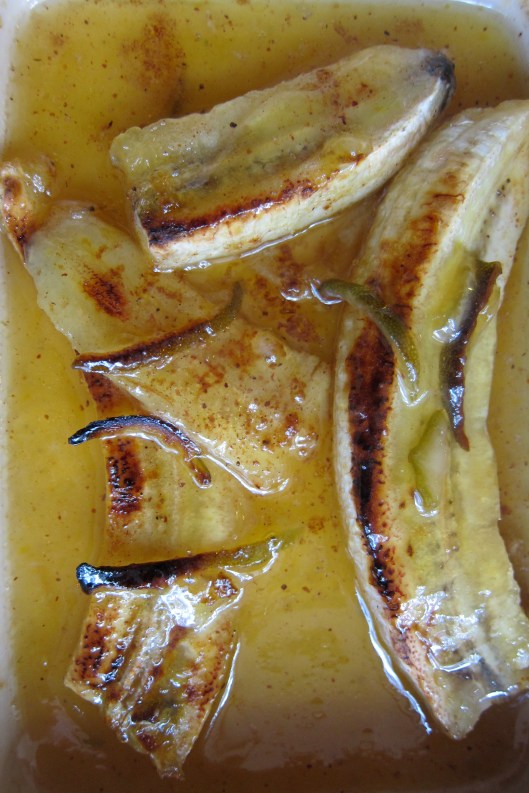
Grilled bananas with lime marmalade and spices

IMG_6587 
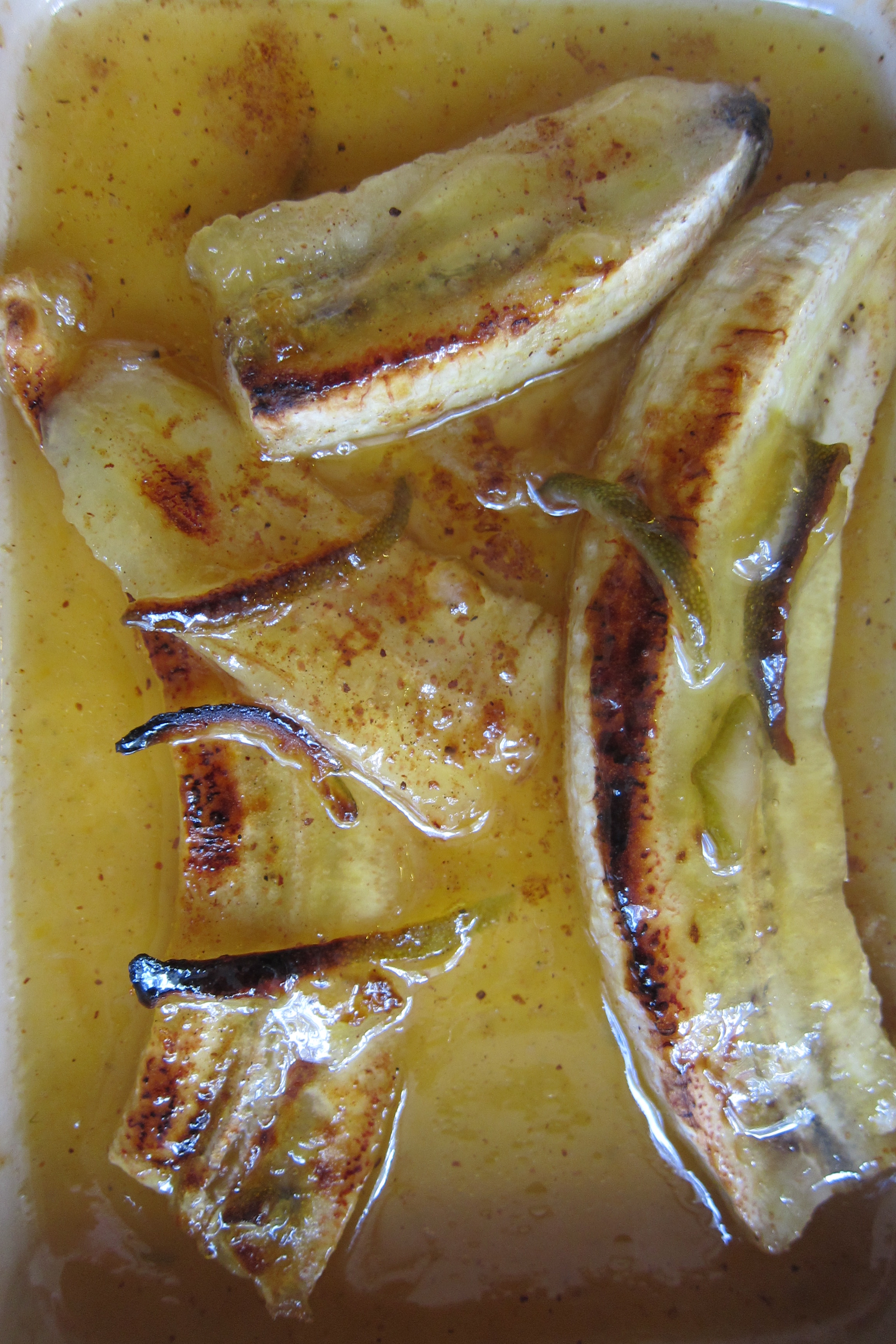
Bananas are best eaten in the spring, according to the experts, so this recipe can make you feel doubly smug. If you haven’t got round to making the lime marmalade – or never intend to – then a squeeze of lime would also work here. Serving this with something creamy is essential if you want the syrup to matter. Thick yoghurt is good in the morning, cream at other times, and add almonds if you want a more interesting texture. Lime is a friend of the banana and opposites definitely attract in this case; soft and placid meets brisk and glossy, yet somehow each makes the other more itself in the process.

Serves 2

2 bananas

2 tbs of juice from an orange or tangerine

2 tbs lime marmalade with shred (or lime juice)

Pinch of nutmeg

Pinch of cardamom

1 tbs butter

Peel the bananas and slice them in half, lengthways. Lie them cut side up, in a shallow baking dish. Mix the marmalade and juice together and spoon over the bananas. Dot with butter which has been mixed with the ground spices. Grill until soft and brown (about five minutes). Scatter with toasted slivers of almond if you have them, and serve with either yogurt or cream. You could also try grilling the whole fruit, unpeeled, until black, tearing off a strip of skin to eat the hot, banana fondant within, and serve the syrup separately.

Interesting fact; British explorers and traders in the West Indian colonies used limes to prevent scurvy, which is why we’re still called ‘limeys’ to this day.

Steering clear of the sweet: Yotam Ottolenghi is a fan of lime. His Iranian legume noodle soup uses the juice to cut through soured cream, and lime halves accompany his corn and squash fritters. If you’re a fan of pickles, then pickled limes can be used as the basis of a sour relish for spicy dishes, and anything with an Indian bent.

Mexican limes


Share this:

  • Share on X (Opens in new window) X
  • Share on Pinterest (Opens in new window) Pinterest
  • Share on Facebook (Opens in new window) Facebook
  • More
  • Share on Reddit (Opens in new window) Reddit
  • Share on LinkedIn (Opens in new window) LinkedIn
  • Share on Tumblr (Opens in new window) Tumblr
  • Print (Opens in new window) Print
  • Email a link to a friend (Opens in new window) Email
Like Loading...

A word about lemons

27 Monday Feb 2012

Posted by Sophie James in Recipe

≈ 1 Comment

Tags

Citrus, Cooking, Food, Ingredients, Lemons, Meyer lemons, Recipes, Stories

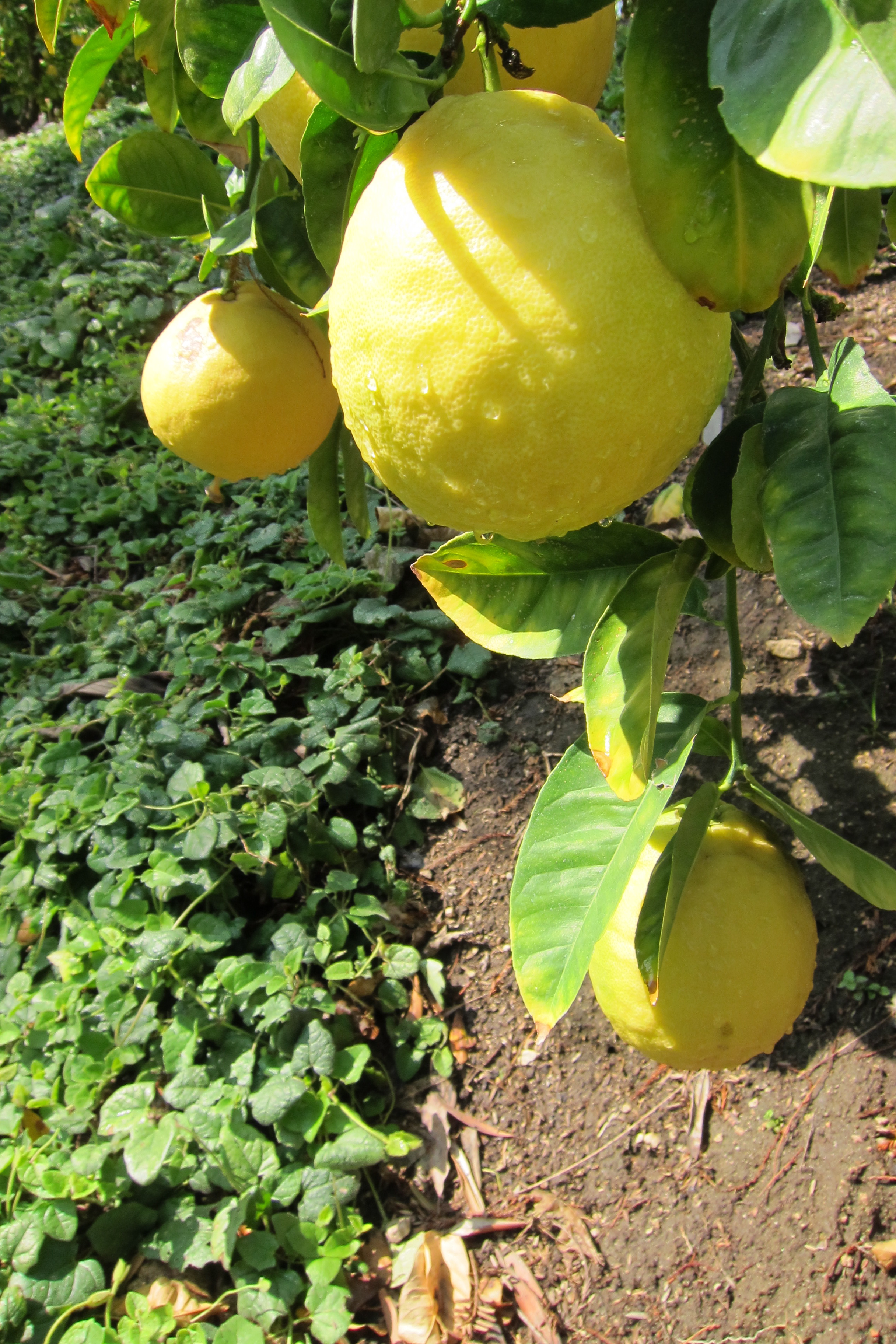
I love lemons. I love the way they sit all plump and jaunty in the bowl, the zing of oil from the rind, that spike of sparkling acid on the tongue. A lemon tree heavy in fruit and blossom is simply a wonder of nature.

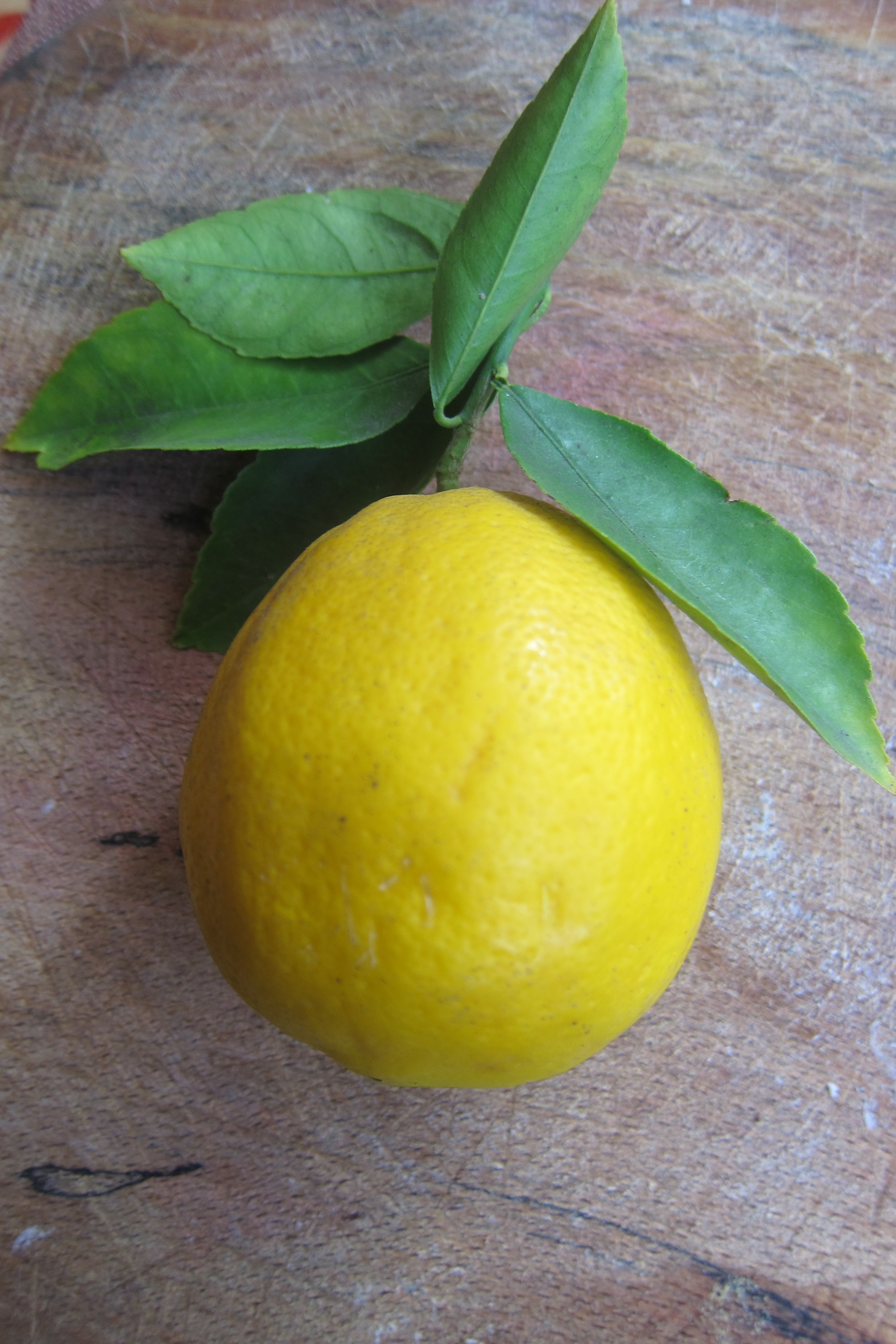
To be mercantile for a moment, a ripe lemon is firm but not hard and should feel heavy for its size. Thin-skinned tends to be juicier than thick and bigger isn’t necessarily better (this is also true in life generally). The juiciest is the very thin-skinned Meyer (Citrus Meyerii), an LA stalwart. Not considered a true lemon at all but a hybrid – a cross between a lemon and a mandarin, some say, though its parentage is unknown – it has a sweeter, more complex, layered flavour, less acidic but still tart enough to perk up discoloured fruits and overly sweet or rich puddings. It cleverly cuts through sugar and cream, lifting a dish to subtle heights of piquancy and freshness. More sour is the Lisbon and Eureka. Lisbon is the juicier of the two, while Eureka is the standard lemon most of us have knocking about. It’s also the one most likely to have been infiltrated with fungicides, insecticides and waxes to make it more appealing. A Eureka picked from the tree is an entirely different animal: cobwebby, misshapen and mottled, and not a bright, waxy yellow at all, but a gentle ochre. With its sea-green leaves attached, it’s almost biblical.

It’s sad we have become such shallow meddlers in the sex life of the lemon. Its journey to ripeness, the subtle changes in colour, weight and fragrance are all to seduce us into plucking it in its prime, thus allowing the reproductive cycle to continue. There’s something almost touching in the knowledge that, being picked, the fruit is experiencing physical pressure for the first time; no longer suspended in mid-air, attached to its parent, it must come down to earth.

You could also try

  • Yuzu (Citrus Yunos) if you can get hold of it. It’s a Japanese citron that fruits early – around September or October here. Because of its exceptional tartness, it holds up well to being cooked at high temperatures and is used as a souring ingredient, specifically in the Japanese sauce, Ponzu. It also works well as marmalade and makes a fragrant, rind-heavy syrup, used often in Korean cuisine.
  • Ponderosa (Citrus Pyriformis) which looked like a grapefruit to me, but is actually a lemon-citron hybrid. The Middle Eastern community in LA apparently makes jam out of the thick rind, which has a floral scent. It also makes a fine lemon curd.
  • Sorrento lemons, also known as Femminello St. Teresa. Native to the Amalfi coast in Italy, they’re typically the variety used in making limoncello, a bitter digestif that uses lemon rind steeped in grain alcohol (which apparently you could also use to run your car). Layers of tufo and limestone in the area create the perfect soil for cultivation, which produces an exceptionally aromatic rind. Locals eat thick slices of this citrus, skin and all, with a dusting of sugar.

Ponderosa Lemons

Some Ideas

  • Hang some lemon peel out to dry in a warm place (by a sunny window, say). When it’s leathery, put it in a jar of sugar and use for baking.
  • I have seen children eat neat lemon quarters here as I used to do oranges (making the segment cover your teeth and then smiling eerily etc). I was both impressed and alarmed by this. I’m not suggesting you do the same, just informing you of the phenomenon.
  • Lemon-infused olive oil, also known as agrumato in Italy, is best made at home, and used within a couple of days. In Skye Gyngell’s recipe, you finely peel the zest – no pith – of 3 lemons using a vegetable peeler. Put in a pan with 1 cup (250ml) of extra virgin olive oil, and heat very gently to body temperature (about 99F). Remove and let steep for about an hour before using. Lovely drizzled over grilled fish, chicken, Burrata, buffalo mozzarella, ricotta or fresh Mexican cheese.
  • Lemon sandwiches, courtesy of Mrs Grigson: “Cut fresh, soft-skinned lemons into very thin slices and sandwich them between thin wholemeal bread slices, thickly buttered. Serve with smoked salmon and marinaded fish.”
  • North African Preserved Lemons

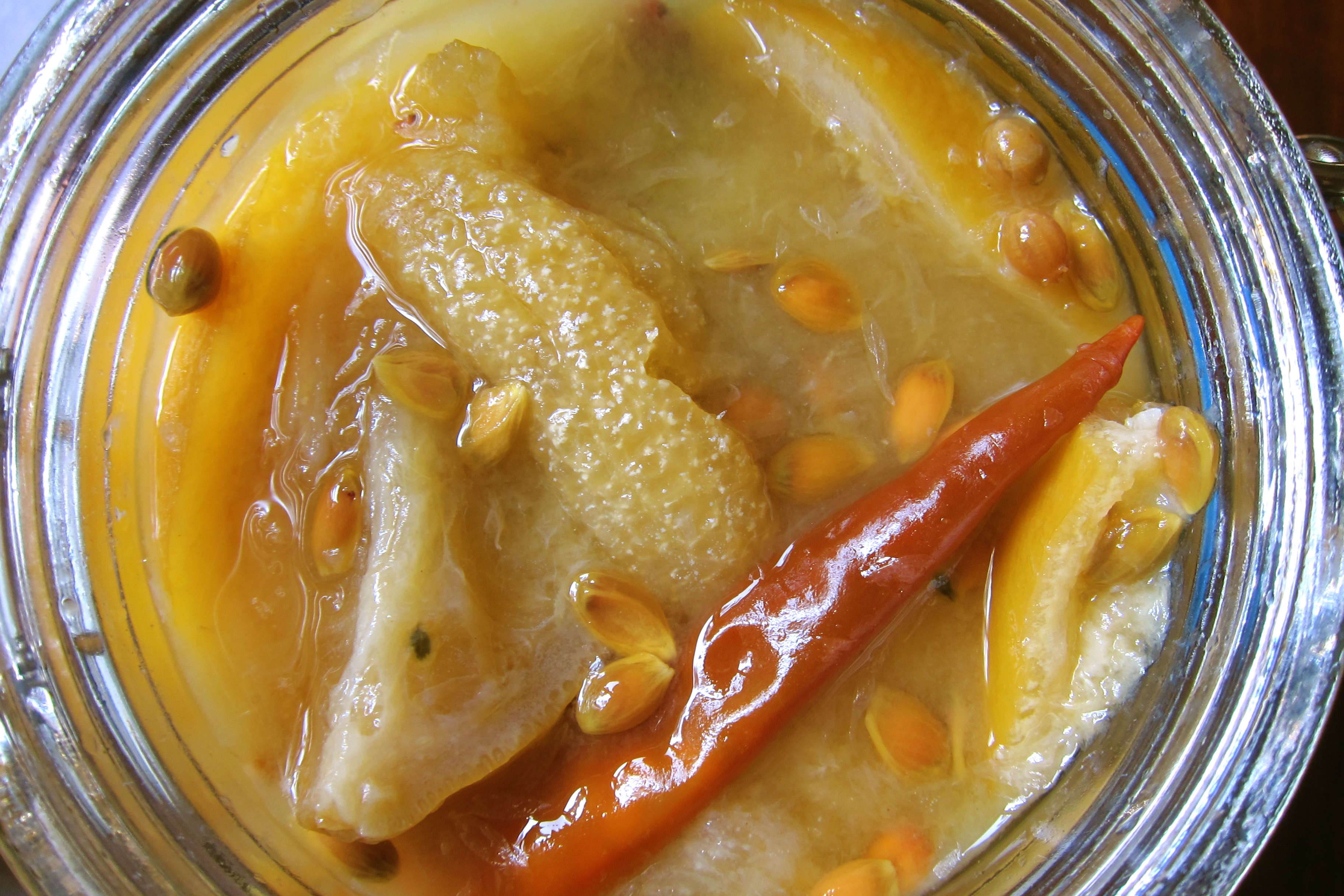
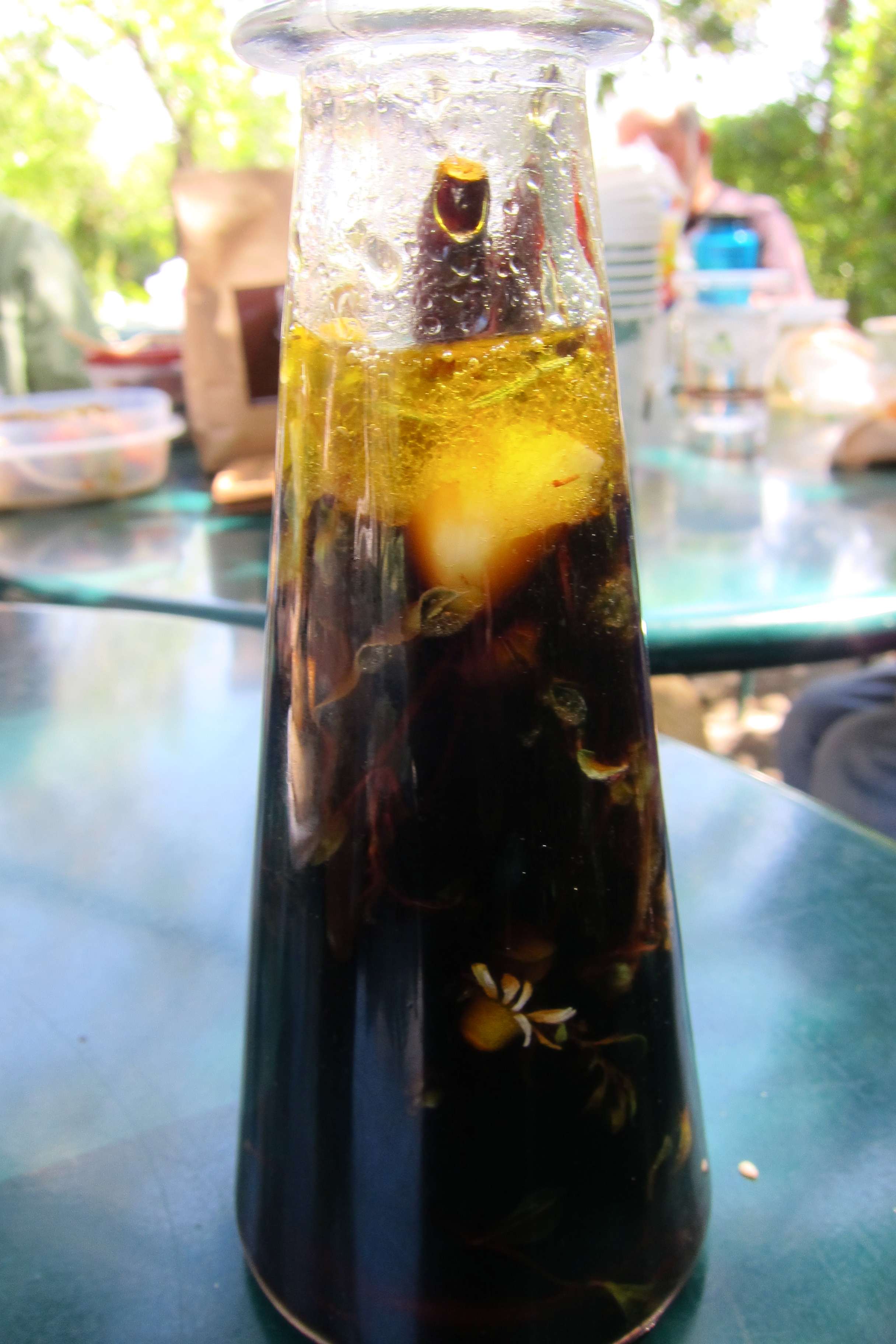
 A doddle, and fantastic strewn over ice cream, in tagines, added to sauteed vegetables, couscous, and mashed into a herby butter. Use Eureka lemons because their thick skins are a bonus here, but make sure they’re organic and unsprayed as the peel is what you’ll be eating, not the flesh. Cut 8-10 washed lemons into quarters from top to stem, without going all the way, and pack the cuts with a generous tablespoon of coarse sea salt (never table salt). Squash the lemons into a large, glass jar, giving them a good ramming to get the juices flowing. Add any or all of these: a cinnamon stick, a whole dried chili, a bay leaf, a few cardamom pods and coriander seeds, then seal and leave overnight. For the next 2-3 days, keep pressing the lemons down, as they begin to deflate. Now top up with fresh lemon juice so that the fruit is fully submerged and leave for about a month, after which time they’ll be ready to use. Keeps for about six months, looking vibrant and virtuous on your kitchen shelf.


Share this:

  • Share on X (Opens in new window) X
  • Share on Pinterest (Opens in new window) Pinterest
  • Share on Facebook (Opens in new window) Facebook
  • More
  • Share on Reddit (Opens in new window) Reddit
  • Share on LinkedIn (Opens in new window) LinkedIn
  • Share on Tumblr (Opens in new window) Tumblr
  • Print (Opens in new window) Print
  • Email a link to a friend (Opens in new window) Email
Like Loading...

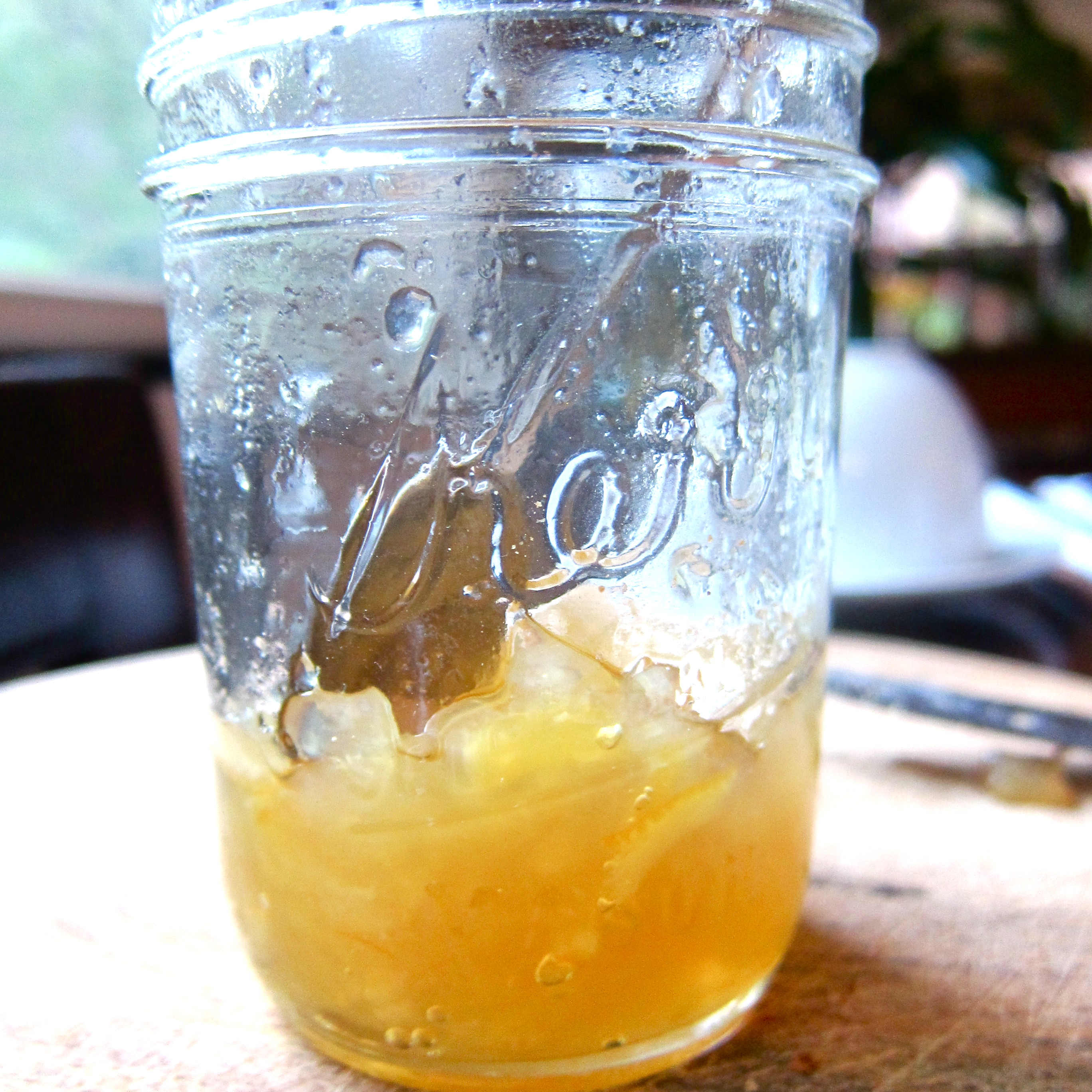
Lemon Marmalade

23 Thursday Feb 2012

Posted by Sophie James in Recipe

≈ 1 Comment

Tags

Cooking, Food, Ingredients, Marmalade, Recipes, Stories


I’m rather old guard in my tastes when it comes to marmalade. I find the alchemy of rind, sugar and, say, lemon juice bubbling itself to a thick amber syrup, and the smell of bitter citrus caramel more than enough to satisfy my needs. It took me about five years just to get over the fact that I’d made a jar of marmalade that was edible. But there is always more to discover – more complexity, more ways, whole fruit, less sugar, honey. I recently had a cooling spoonful of Blenheim apricot jam, and hidden in the lushness were apricot kernels that, when bitten, released their almond essence like a mini gun-shot.

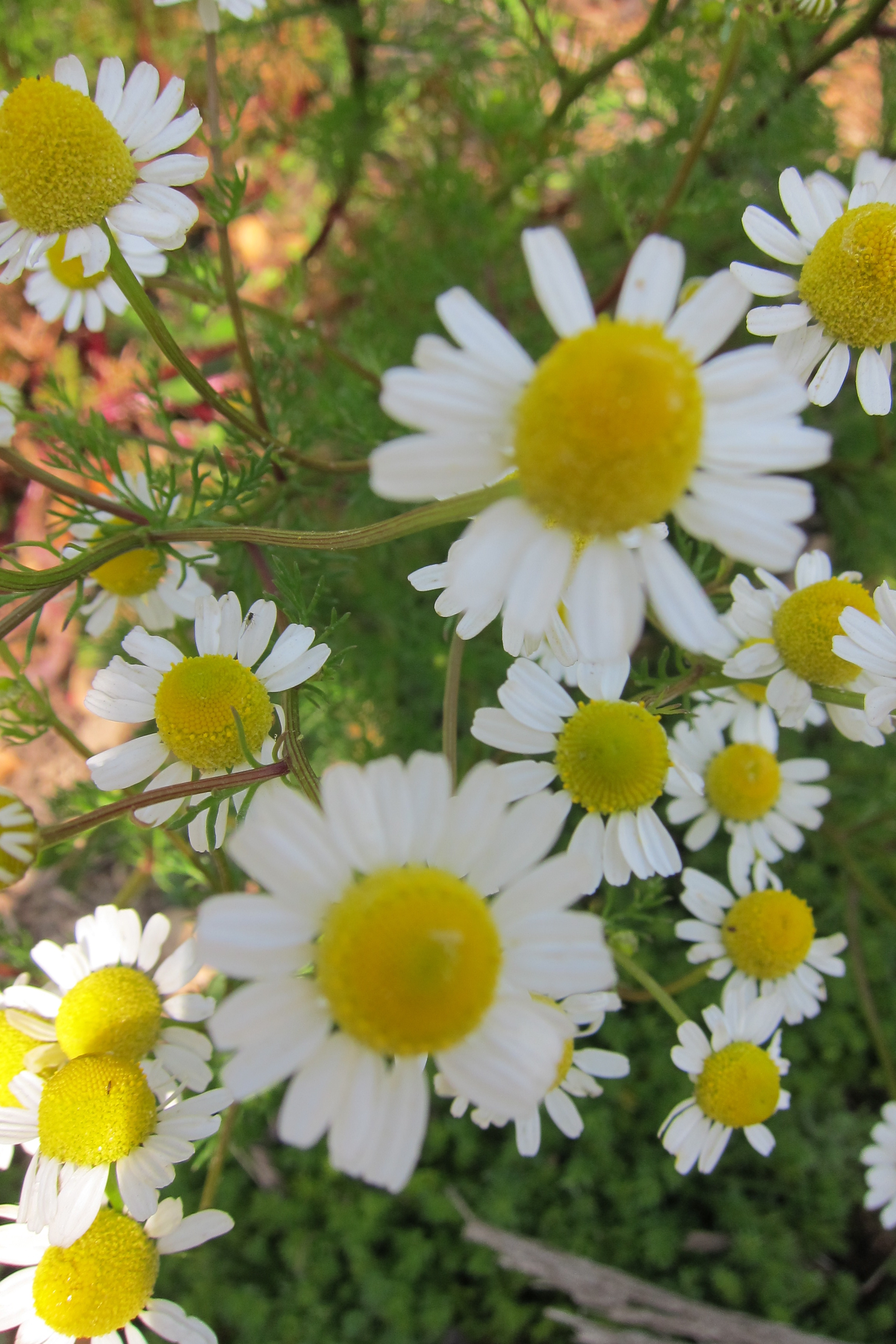
But it’s taken me a while to get to herbs. This idea was introduced to me via the genius of Jessica Koslow. Her company Sqirl (based here in LA) is doing profound and wonderful things with marmalades and jams. I can only ape her originality and skill. Chamomile (meaning ‘ground apple’) adds a fruity, soft, almost soothing backnote here and in no way detracts from the citrus strength of the preserve. Harvest whole flower heads and keep them intact; crushing them releases the oils and there goes the flavour. If in doubt leave them out, or try something else in their place. Lemon balm would be interesting, either fresh or dried.

Chamomile

The Bergamot and Orange Marmalade recipe acts as my control – if I went into that much detail each time, we would probably both be reaching for the Mogadon, so I will simply give you the ingredient list here. You may also want to make the marmalade in one day rather than two, in which case omit the overnight soaking. Fills about 6 8oz/half pint jam jars.

Lemon Marmalade with Chamomile

12 lemons

1.35 kg (3lbs) organic cane sugar

20g (1 1/2 tbs) dried Chamomile (added to the muslin along with the pips and pith)

3 pints (6 cups) water (with 1 pint/2 cups added later if necessary)

A bit of history

Lemon marmalade appeared soon after the 13th century with the arrival into England of oranges and lemons. The oranges were bitter Sevilles from Spain and Portugal, or belonging to the Venetian spice ships. Jars of Citrenade were also imported; this was a kind of lemon marmalade, but solid and eaten in pieces, rather like the Portuguese ‘marmelo’ that began life in the Middle Ages. Marmelo was a stiff paste of quinces – citrus came later – made with honey and spices, cut into blocks and served as sweetmeats or fruit Pastilles (nothing like Rowntrees).


Share this:

  • Share on X (Opens in new window) X
  • Share on Pinterest (Opens in new window) Pinterest
  • Share on Facebook (Opens in new window) Facebook
  • More
  • Share on Reddit (Opens in new window) Reddit
  • Share on LinkedIn (Opens in new window) LinkedIn
  • Share on Tumblr (Opens in new window) Tumblr
  • Print (Opens in new window) Print
  • Email a link to a friend (Opens in new window) Email
Like Loading...

A Word About Dates

16 Thursday Feb 2012

Posted by Sophie James in Recipe

≈ 1 Comment

Tags

Cookbook, Cooking, Dates, Dessert, Food, Ingredients, Recipes, Stories

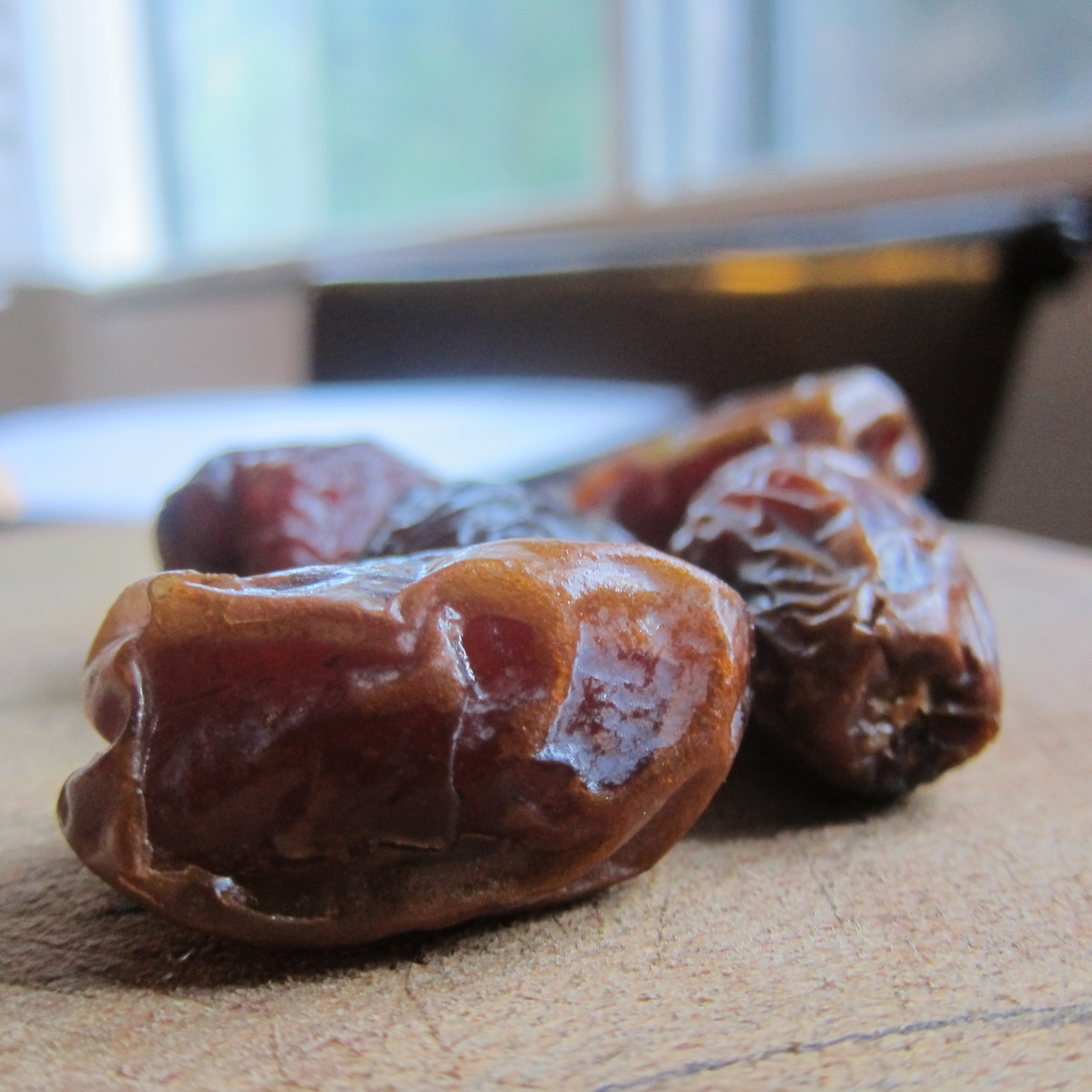
I’ve been on a Medjool date jag for months now. No mean feat if you consider the season is only supposed to run from September to November. Perhaps it’s because they’re grown in Coachella, a mere 132 miles away, that we’re experiencing such a glut. And they store well; six months in the fridge and they’re none the wiser. Medjools, along with Khadrawy, Halawy and Barhi, are classed as ‘soft’ dates because of their high moisture content. I will try to define the texture without straying too far into food-porn territory; your teeth break the sugar-blistered amber skin of the Medjool and the immediate sensation is a densely rich and yielding butterscotch flesh.

Two of these dates are the equivalent in sugar rush to eating a whole Milky Way without the artificially potent high and crashing low. Medjools in particular have a natural affinity with oranges – see the Sticky Toffee Pudding recipe – and dark chocolate. A collection of all three would make a fine dessert plate. Dipping medjools into melted dark chocolate and leaving to harden would also make a fine marriage.

Semi-dried dates, such as Deglet Noor, seem to belong to childhood Christmases; the rounded rectangular box covered in cellophane and decorated with palm trees and camels would always sit alongside a tray of nuts no one could crack. These dates are stickier, tougher and go well with thick yogurt.

But Medjools are the Kardashians of the date world; their demands are such that each date must be hand-pollinated and hand-harvested, while keeping their heads hot and feet wet at all times in order to thrive. This is also why they’re so expensive; cultivation is back-breaking and incredibly complex, with workers having to scale towering date palms several times a day to ensure a satisfactory yield. Talk about high maintenance.

Hot Date Compote (serves 2)

Adapted from Nigel Slater, Real Fast Puddings

1 tbs butter

8 soft dates, stoned and chopped

Generous squeeze of a large orange (about 6 tsp/30ml) and the zest

1 heaped tbs shelled pistachios, roughly chopped

Melt the butter in a pan until just starting to brown and smell nutty. Add the dates and let them soften over a gentle heat, giving the pan a good shake every now and then. Toss in the pistachios and let them brown slightly. Now deglaze the pan with the orange juice; this will pick up all the sticky, chewy bits that have started to caramelize. Add the zest, and let it all bubble for a minute or so, until it begins to look and feel like a puree. Serve hot over Greek-style yogurt or with a ripe, juicy pear. This compote is also amazingly good with pork as well as with a blue cheese such as Stilton or Roquefort (but not for breakfast – this would be stretching it even for me).

Share this:

  • Share on X (Opens in new window) X
  • Share on Pinterest (Opens in new window) Pinterest
  • Share on Facebook (Opens in new window) Facebook
  • More
  • Share on Reddit (Opens in new window) Reddit
  • Share on LinkedIn (Opens in new window) LinkedIn
  • Share on Tumblr (Opens in new window) Tumblr
  • Print (Opens in new window) Print
  • Email a link to a friend (Opens in new window) Email
Like Loading...

Cocoa and Earl Grey Shortbread

14 Tuesday Feb 2012

Posted by Sophie James in Recipe

≈ Leave a comment

Tags

Baking, Food, Ingredients, Italy, Recipes, Stories

I know for many of us shortbread isn’t exactly a breakfast item, but one of my over-riding memories of living in Rome was seeing my landlady every morning scoffing biscotti and knocking back an espresso topped up with lukewarm tap water. Quite pragmatic really. I also think we may be in danger of taking the whole healthy eating crusade too far, and we live in LA where this is endemic. As long as you are instrumental in creating the food you will eat, you cook the food you love, you know what’s gone into it and hopefully where it’s come from, the rest is just common sense.

These have a lightness about them; I’d say ethereal but that would be going a bit far. The egg yolks and butter keep things crumbly and short rather than cakey, which I’m not a huge fan of. This is probably because I’ve never mastered the hallowed chocolate chip cookie, which takes that subtle interplay of cookie and cake to its ultimate conclusion.

Cocoa and Earl Grey Shortbread

Adapted from Cindy Mushet, The Art and Soul of Baking

Makes about 24 (if using a 6cm round cookie cutter)

12 tbs (175g) butter, softened

Scant 1/2 cup (90g) organic cane sugar

Generous pinch of sea salt

2 medium egg yolks (organic and free range)

Grated zest of a whole orange or lemon

1 heaped tbs Earl Grey tea leaves

2 heaped tbs organic cocoa powder (Green and Blacks is good)

Scant 1 1/2 cup (200g) of plain flour (plus extra for dusting)

Whizz together the sugar and Earl Grey tea in a coffee grinder or spice mill until the tea leaves are very fine. Now beat this together with the butter until the mixture is light and fluffy. This can take a good 5 minutes but it’s important to get the right consistency. Add the salt, egg yolks and zest. Beat for half a minute. Sift together the flour and cocoa powder and gently fold it into the butter, sugar and egg mixture using a spatula until the mixture coheres. The dough will be very sticky. With floured hands place the dough on to a floured surface and pat into a wide, flat disc. Wrap in plastic wrap and refrigerate for half an hour.  Preheat the oven to 350F. Roll out the dough onto a floured surface to a thickness of about 3mm. You may need to refrigerate again for short while after this bit. Use a 6cm cookie cutter – or whatever shape and size you want – to cut out your shortbreads and use a palette knife to transfer them to a non-stick unlined baking sheet and bake until just firm to the touch. 8-10 minutes. Transfer to a wire rack to cool and store on parchment paper in an airtight container. They keep for about a week.

Share this:

  • Share on X (Opens in new window) X
  • Share on Pinterest (Opens in new window) Pinterest
  • Share on Facebook (Opens in new window) Facebook
  • More
  • Share on Reddit (Opens in new window) Reddit
  • Share on LinkedIn (Opens in new window) LinkedIn
  • Share on Tumblr (Opens in new window) Tumblr
  • Print (Opens in new window) Print
  • Email a link to a friend (Opens in new window) Email
Like Loading...

A word about bergamots

12 Sunday Feb 2012

Posted by Sophie James in Recipe

≈ 1 Comment

Tags

Fruit, Herbs, Los Angeles, Stories

Ber-ga-mot from the Turkish ”beg-armade” which means “Lord’s Pear”

Image

Citrus Bergamia Risso

The bergamots I used in the marmalade recipe were the less photogenic, exceptionally bitter Italian kind (citrus bergamia risso) rather than their sweeter, more fragrant French counterparts (citrons doux). ‘Balmy’ has been a word accurately used to describe the sensation of eating marmalade made exclusively with the Italian bergamotto. The sour, cheek-chewing intensity is always welcome in a marmalade but too much floral bouquet and it’s like eating a jar of Yardley.

The bergamot season is late and short – January to February – and as there are only three fruiting bergamot trees in the whole of southern California you should start chatting up the fine people at Mud Creek Ranch, and get in there before the restaurateurs do. Calabria in Southern Italy is where 80 percent of the world’s bergamot is grown with southern France also a producer, so you may still get lucky if you live in Europe.

This is an interesting one: Monarda fistulosa is an aromatic woodland herb, a member of the mint family, and native to North America. It is called ‘bergamot’ because its scent is very close to that of the bitter citrus but has nothing whatsoever to do with it, and is not the source of the bergamot essential oil used in Earl Grey tea and approximately half of all women’s perfume. The herb is also known as Bee Balm for its ability to attract bees and butterflies. Who knew?


Share this:

  • Share on X (Opens in new window) X
  • Share on Pinterest (Opens in new window) Pinterest
  • Share on Facebook (Opens in new window) Facebook
  • More
  • Share on Reddit (Opens in new window) Reddit
  • Share on LinkedIn (Opens in new window) LinkedIn
  • Share on Tumblr (Opens in new window) Tumblr
  • Print (Opens in new window) Print
  • Email a link to a friend (Opens in new window) Email
Like Loading...

Bergamot and Orange Marmalade

05 Sunday Feb 2012

Posted by Sophie James in Recipe

≈ 6 Comments

Tags

Breakfast, Citrus, Cooking, Fruit, Ingredients, Los Angeles, Recipes, Stories


Today I picked up my first stash of bergamots (below) from Mud Creek Ranch at the Hollywood Farmers’ Market. Knowing only of the bergamot oil in Earl Grey tea and various beauty products, it was exciting to have one in the hand. In appearance it resembles a gnarly, yellowy-green orange. The first thing I did was dig my nail into the peel to see if it would offer up that unique perfume and it still lingers as I write this two hours later; a searingly bright and fizzy citrus scent, with earthy, oily undertones. A kind of Earl Grey champagne, if you can imagine such a thing

Neat bergamot marmalade would probably take your eyebrows off – it has an intensity so startling and heady (surpassing even Seville oranges) that it would be wise to temper it with a gentler presence. Here, I’ve used sweet oranges and a couple of Meyer lemons, but you could also try something from the tangerine family.

This is a British-style, clear marmalade with a loose set and a generous scattering of peel throughout – though apparently the less peel, the more British. It is on the bitter side, as marmalade should be, and is best eaten slathered on hot, buttered toast at any time of the day or night. Fills about 6 8oz/half pint jam jars.

IMG_1406

Bergamot and Orange Marmalade

Adapted from Delia Smith

6 Bergamots

6 Navel oranges

2 Meyer lemons

1.35 kg (3lbs) organic cane sugar

Begin by squeezing the juice from the bergamots, oranges and lemons into a jug. Remove all the pulp, pith and pips as you go and place them on a square of muslin or cheesecloth laid over a bowl; this contains the pectin which will enable your marmalade to set. Now cut the peel into shreds and add it to the juice. I like mine fine cut, but you may prefer a chunkier, more manly  ‘lade. As you go, add any lingering pith or pips to the muslin. When you’re done, add 3 pints (6 cups) of water to the juice and peel, tie up the muslin to form a small bag – make sure nothing will escape – and add that too. Leave in a cool place overnight.

The next day, tip the juice and peel into a large saucepan, or preserving pan, and tie the muslin bag to the handle so that it bobs like a cork in the liquid  (but doesn’t touch the bottom). I add an extra pint (2 cups) of water here as I find the muslin bag draws up a lot of the juice even after I’ve wrung it out a few times.

Now is the time to put some saucers in the freezer so you can begin testing later. Bring the liquid gently to the boil and then lower the heat and simmer. It is ready when the peel is completely soft – you can test a piece by pressing it between your finger and thumb. This can take anything from 35 minutes to an hour and a half; be aware that once sugar meets rind, it will no longer soften. Pour your sugar into a roasting dish and warm gently in the oven (200F) for about 10 minutes. This helps it to dissolve quickly later.

When the peel is ready, lift out the muslin bag and leave it on a plate until it’s cool enough to handle. Pour the sugar into the pan and stir over a very low heat until it has dissolved. When there are no crystals left, increase the heat and bring the marmalade to a rolling boil. Now squeeze every last bit of the jelly-like pectin that oozes from the muslin bag into the pan (I use a spoon to cream it off). Every little helps here, so be vigilant. Skim off any froth or scum that comes to the surface and leave the marmalade at a fast boil for 15 minutes. Now put a tablespoon of it on one of the cold saucers and let it cool in the fridge. If when you push the marmalade with your finger the mixture crinkles like a furrowed brow, then you have a ‘set’.  Keep testing at 10 minute intervals until it has reached setting consistency. If you find this too much of a faff, a thermometer is a reliable alternative; when it reads 221F (105C), it’s ready.  Leave the marmalade to settle for about 15 minutes otherwise all the peel will float to the top of the jar. Ladle into sterilised jars and seal immediately. Label when completely cold. See the Self-Preservation post on how to keep things clean and safe.

A bit more on bergamots here.

Share this:

  • Share on X (Opens in new window) X
  • Share on Pinterest (Opens in new window) Pinterest
  • Share on Facebook (Opens in new window) Facebook
  • More
  • Share on Reddit (Opens in new window) Reddit
  • Share on LinkedIn (Opens in new window) LinkedIn
  • Share on Tumblr (Opens in new window) Tumblr
  • Print (Opens in new window) Print
  • Email a link to a friend (Opens in new window) Email
Like Loading...

Lemon Posset

04 Saturday Feb 2012

Posted by Sophie James in Recipe

≈ 1 Comment

Tags

Cooking, Dessert, Food, Ingredients, Lemons, Meyer lemons, Nonfiction, Recipes, Stories

Image 06-12-2020 at 11.42

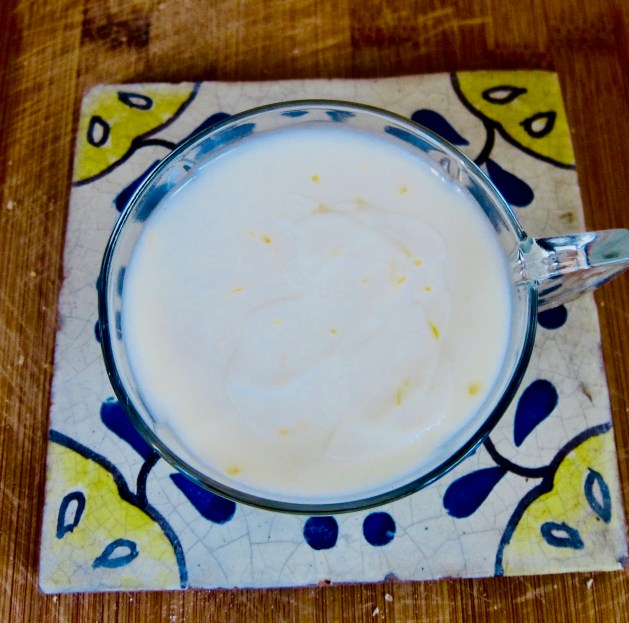
The beauty of the posset lies in its simplicity. There are only three ingredients – cream, sugar and lemons – so provenance is all. Get organic, unwaxed lemons; better yet get Meyer lemons (if you can), which are less tart, less acidic. Possets have been traced back to 15th century England where they were used as a remedy for colds and ‘minor illnesses’. Lady Macbeth used a posset to knock out the guards in the Scottish play, though in fairness it was probably the ramekin that did it.

I have served this to our B&B guests for breakfast, who partake of it as you would a rich yoghurt. Poached, seasonal fruit is also a welcome addition. It takes a certain bravery to serve it as pudding; it is very modest-looking, but lovely as a bright, clean finish to a heavy meal. There’s something in the method of boiling the cream with the sugar and then, with the addition of the lemon juice, feeling your spoon gently drag that is quite different to the heavier set of a mousse, say, and more akin to a delicately wobbling custard or blancmange. I am also remembering the quivering junkets of yesteryear.

Here, I’ve used Meyer lemons, and on a separate outing, bergamots.  Blood orange also works well, with some added lemon juice to give it bite. It’s the middle of the season for these citruses, so seek them out.

Lemon Posset

Adapted from Hugh Fearnley-Whittingstall, Dairy Queen, The Guardian

150g of caster sugar

600 ml of double cream

3 good sized lemons to yield 80ml of juice

Zest of 1 lemon

Finely grate a whole lemon, being careful to avoid the bitter white pith (a Microplane zester is brilliant for this), and set aside the zest. Squeeze enough lemon juice to make 80 ml. Put the cream and sugar in a non-stick pan and warm gently to dissolve the sugar. Bring to the boil, and boil for exactly 3 minutes without stirring. Remove the pan from the heat and stir in the lemon juice. Strain into a jug, add the zest and leave to cool, stirring occasionally to stop a skin forming – I put the jug into a bowl filled with ice cubes. When the mixture is at room temperature, pour into 4 ramekins or small glasses, cover with foil and refrigerate for at least 4 hours, or overnight. Serve with the Cocoa and Earl Grey Shortbread, a smattering of raspberries or simply as it is.


Share this:

  • Share on X (Opens in new window) X
  • Share on Pinterest (Opens in new window) Pinterest
  • Share on Facebook (Opens in new window) Facebook
  • More
  • Share on Reddit (Opens in new window) Reddit
  • Share on LinkedIn (Opens in new window) LinkedIn
  • Share on Tumblr (Opens in new window) Tumblr
  • Print (Opens in new window) Print
  • Email a link to a friend (Opens in new window) Email
Like Loading...
Newer posts →

Enter your email address to follow this blog and receive notifications of new posts by email.

Join 2,214 other subscribers

Top Posts & Pages

Weathered
A field of fennel
Crema Catalana plus fennel
One jar only
Is it me, Lord?
Chocolate marmalade slump
Swimmingly
Small Crumbs of Comfort
Unfurl
Apple and sultana cake

Recent Posts

  • At my allotment
  • A compendium of sorts
  • Mulberries
  • We are nature
  • Leaving home
  • A treacherous herb
  • Just stop it
  • Why I swim

Great books I’ve read

Blogs/Websites I read

  • Letitia Clark
  • Nigel Slater
  • Room to heal
  • Samantha Harvey
  • Stewart Lee
  • The Kureishi Chronicles
  • The Marginalian
  • Tom Cox
Follow Stories from the Stove on WordPress.com

Archives

  • June 2023
  • February 2023
  • September 2022
  • August 2022
  • July 2022
  • May 2022
  • February 2022
  • December 2021
  • August 2021
  • April 2021
  • March 2021
  • January 2021
  • June 2020
  • November 2018
  • August 2017
  • July 2017
  • May 2017
  • April 2017
  • February 2017
  • January 2017
  • November 2016
  • May 2016
  • October 2015
  • July 2015
  • June 2015
  • April 2015
  • March 2015
  • January 2015
  • December 2014
  • November 2014
  • October 2014
  • September 2014
  • August 2014
  • July 2014
  • June 2014
  • May 2014
  • April 2014
  • March 2014
  • February 2014
  • January 2014
  • December 2013
  • November 2013
  • October 2013
  • September 2013
  • August 2013
  • July 2013
  • June 2013
  • May 2013
  • April 2013
  • March 2013
  • February 2013
  • January 2013
  • December 2012
  • November 2012
  • October 2012
  • September 2012
  • August 2012
  • July 2012
  • June 2012
  • May 2012
  • April 2012
  • March 2012
  • February 2012
"A WOW piece!" Claudia Roden on Walnut Bread

Walnut bread

Lucas’s chocolate marmalade slump

Tags

Afternoon tea Allotment Almonds Art Autumn Baking Bread Breakfast Cafes Cake Childhood Chocolate Christmas Citrus Claudia Roden Cookbook Cooking Dessert Devon Dinner Elizabeth David England Exmoor Fish Food France Fruit Gardening Gelato Gluten-free Herbs Home Homesickness Honey Ice cream Ices Ingredients Italy Jam Jane Grigson Lemons London Los Angeles Lucas Hollweg Marmalade Meat Mediterranean Meyer lemons Nature Nigel Slater Nonfiction Nuts Onions Patience Gray Poetry Pudding Reading Recipe Recipes Salad Sea Seasons Soup Spain Spices Spring Stone fruit Stories Summer Sussex Travel Vegetables Winter Writing Yoghurt

A WordPress.com Website.

Privacy & Cookies: This site uses cookies. By continuing to use this website, you agree to their use.
To find out more, including how to control cookies, see here: Cookie Policy
  • Subscribe Subscribed
    • Stories from the Stove
    • Join 2,082 other subscribers
    • Already have a WordPress.com account? Log in now.
    • Stories from the Stove
    • Subscribe Subscribed
    • Sign up
    • Log in
    • Report this content
    • View site in Reader
    • Manage subscriptions
    • Collapse this bar
 

Loading Comments...
 

    %d